

Dr. Amir Marvasti, Eye Surgeon, Reveals The Founder Blind Spot Quietly Destroying Success (#524)

Send a text “Spend and enjoy more time with your loved ones.”-Amir Marvasti Exclusive Insights from This Week's Episodes Dr. Marvasti reveals why many vision problems develop silently, why founders often delay care until damage is harder to fix, and how screen driven work is fueling a new wave of eye strain. He also explains how the eye can reveal early signs of deeper health risks and why protecting your vision may be one of the most overlooked advantages for founders who rely on focus, clar...


“Spend and enjoy more time with your loved ones.”-Amir Marvasti
Exclusive Insights from This Week's Episodes
Dr. Marvasti reveals why many vision problems develop silently, why founders often delay care until damage is harder to fix, and how screen driven work is fueling a new wave of eye strain. He also explains how the eye can reveal early signs of deeper health risks and why protecting your vision may be one of the most overlooked advantages for founders who rely on focus, clarity, and high performance.
EPISODE HIGHLIGHTS
04:10 The childhood moment that led Dr. Amir Marvasti to dedicate his life to restoring eyesight
08:40 The immigrant advantage and how perspective shapes opportunity
12:40 The digital eye strain problem created by screen driven work
18:00 How artificial intelligence is transforming ophthalmology
21:20 The myths many people still believe about glasses and eyesight
24:10 Contact lens hygiene mistakes that can lead to serious infections
26:00 How your eyes reveal hidden health risks like diabetes and cardiovascular disease
29:00 The truth about blue light glasses and what they actually do
38:20 The mistake many people make by delaying cataract surgery too long
46:00 The life lesson Dr. Marvasti would share with his younger self
Full show notes, transcript, and resources for this episode:
https://podcast.deepwealth.com/524
The Deep Wealth Podcast
Most entrepreneurs do not fail.
They just carry too much for too long.
The business grows. Pressure grows faster. Profits get harder to predict. Decisions cost more energy. Over time, focus slips and health takes the hit.
The Deep Wealth Podcast and Deep Wealth Mastery are built from real experience. We're the only system based on a 9-figure exit. This system exists because guessing gets expensive.
🧠 Deep Wealth Mastery
This is for you if you want to:
• Grow a profitable business without becoming the bottleneck
• Build real value so selling is optional, not forced
• Optimize your health before it limits your business and life
One proven roadmap for real decisions.
⭐ Explore Deep Wealth Mastery
https://iapdw.com/idm
🎧 Subscribe
https://iapdw.com/podcast
📘 Free eBook
https://iapdw.com/ebook
💬 Have a question you keep circling back to?
Leave a short voicemail
https://podcast.deepwealth.com/voicemail/
Built by entrepreneurs. For entrepreneurs.
Loved this Deep Wealth Podcast episode?
You built your business from nothing.
Now make it pay off big.
📱 Subscribe Now
As a bootstrapper, every move counts. Subscribe on your favorite platform for Jeffrey Feldberg’s 9-figure exit strategies. From your morning grind to late-night planning, get insights from founders who did it without investors. These tips could change your future.
Drop a Quick Review
Got 30 seconds? Leave a 5-star review. It helps us make better episodes and reach entrepreneurs like you, hustling without a safety net.
Don’t Lose Your Exit (And Your Financial Freedom)
You’ve poured everything into your business. A bad exit could cost you millions. Most deals fail, and even “successful” ones lose half their value. The 90-day Deep Wealth Mastery program teaches you to make your business run without you and boost profits so you capture the best deal instead of any deal.
What Others Say
“Deep Wealth Mastery is pure gold. I wish I’d had it before my exit,” says Stacey C. “The value I’ve gained dwarfs the investment,” adds Sanjay S. “It makes my business great to own and sell,” shares William S.
📘 Grab Free Tools
Check out client success stories for proof. Master the Deep Wealth Strategy Map to plan your exit. Or snag the eBook, From 7 to 9 Figures: The Exit Playbook, for a clear guide.
Click here to start your legacy-defining exit today.
00:00 - Purpose Meets Precision
03:00 - Meet Dr Marvasti
03:54 - Immigrant Origin Story
04:31 - Why Ophthalmology
06:49 - Giving Back Access
07:57 - Immigrant Advantage
10:23 - Eye Health Trends
10:57 - Early Screening Basics
12:19 - Digital Eye Strain Fixes
14:22 - Life as Eye Surgeon
17:10 - AI in Ophthalmology
20:18 - Glasses Myths Busted
23:02 - Perfect Eye Care Day
27:02 - Blue Light Glasses Myth
28:16 - Inside Lighting and Sleep
29:22 - What to Expect at Visit
30:42 - Insurance and Practice Reality
34:04 - Paying Out of Pocket
35:15 - Second Opinions Matter
36:25 - How Often to Get Checked
37:44 - Preventable Surgery Patterns
41:04 - LASIK Myths and Facts
45:08 - Life Lessons Time Travel
48:07 - Where to Reach Amir
49:08 - Subscribe and Final Thanks
524 Amir Marvasti
[00:00:00]
Purpose Meets Precision
Jeffrey Feldberg: What does it take to dedicate your life to restoring something most of us take for granted? Eyesight.
Dr. Amir Marvasti is not just an eye surgeon. He is someone who has chosen precision over ego, mastery over mediocrity and service over spotlight. In a world obsessed with scale and speed, he operates in millimeters and moments that change lives forever.
As a leading surgeon at Coastal Vision Medical Group in Orange County, Dr. Marvasti has built a career around one of the most delicate and high stakes disciplines in medicine. Every decision carries consequence. Every moment demands focus. Every patient trusts him with something deeply personal, their ability to see the world clearly.
But behind the credentials and surgical experience is a story about discipline, resilience, and the psychology of performance under pressure.
What does it feel like to hold someone's vision in your hands?
How do you stay calm when the margin of error is microscopic?
And what does leadership look like [00:01:00] inside an operating room?
This is a conversation about mastery, responsibility and what happens when purpose meets precision.
And before we hop into the podcast, a quick word from our sponsor, Deep Wealth and the Deep Wealth Mastery Program. We have William, a graduate of Deep Both Mastery, and he says, I didn't have the time for Deep Both Mastery, but I made the time and I'm glad I did.
What I learned goes far beyond any other executive program or coach I've ever experienced. Or how about Bruce? Bruce says, before Deep Wealth Mastery, the challenge I had with most business programs, coaches, or blogs was that they were one dimensional. Through Deep Wealth Mastery, I'm part of a richer community of other successful business owners.
The idea shared forever changed the trajectory of the business and best of all, the experience was fun. And we'll round things out with Stacey.
Stacey said, I wish I had access to the Deep Wealth Mastery before my liquidity event, as it would have been extremely helpful. Deep Wealth Mastery exceeded my expectations in terms of content and quality.
And you know what, my Deep Wealth Nation, why they're saying this [00:02:00] is because Deep Wealth Mastery, it's the only system based on a nine figure deal. That was my deal. And as you know, I said no to a seven figure offer, and I created a system that we now call Deep Wealth Mastery that helped myself and my business partners, welcome from a different buyer, a different offer, a nine figure exit.
So if you're interested in growing your profits, preparing for a future liquidity event, if that's two years away or 20 years away, and you want to optimize your post exit life, Deep Wealth Mastery is for you. Please email success at deepwealth. com. Again, that's success, S U C C E S S, at deepwealth. com. We'll send you all the information about Deep Wealth Mastery, otherwise known as Scale for Ultimate Sale. That's where you want to be. You want to be with other successful business owners, entrepreneurs, and founders just like you who are looking to create market disruptions.
And they want to lock in their financial freedom and have success and fulfillment.
That's the 90 day Deep Wealth Mastery Program. It has your name on it. All you need to do is take the next step. Send an email to success at [00:03:00] deepwealth. com.
Meet Dr Marvasti
Jeffrey Feldberg: Deep Wealth Nation welcome to another episode of the Deep Deep Wealth Podcast. Well, you heard it in the official introduction. We have a doctor in the house, but he doesn't wanna be called as a doctor, so we're gonna speak to him, friend to friend. As we've been chatting offline, he's a terrific fellow, but deep Deep Wealth Nation let me ask you this. When it comes to your health, specifically your vision, how are you doing?
Are you having some kind of issues with the eyesight?
Maybe it's affecting your business as well, your personal life, all those things in there. You're wondering, my goodness, is there a ray of light here?
Pun intended to get to a better place.
It seems like I'm going in the opposite direction. Well, hold onto that thought. We're gonna address that and a whole lot more. But am Mihir, welcome to the Deep Deep Wealth Podcast. An absolute pleasure to have you with us. Always a story behind the story. You're quite the accomplished doctor. What's your story?
What got you from where you were to where you are today?
Amir Marvasti: Thank you, Jeff. It's a pleasure to be with you and all your listeners. And thank you everyone for listening to our show.
Immigrant Origin Story
Amir Marvasti: Jeff, my story is a. Really a immigrant story. I uh, grew up in Iran, [00:04:00] a country and culture and you know, everything about it is different than you know, what we know in the United States.
And looking back, I think growing up in two very different systems gives you a lot of perspective as an immigrant. So I call it the immigrants leverage. You see how things we take for granted here are not. The defaults everywhere else. So it's a very fragile thing. And having seen both systems, I think immigrants look at opportunities a little bit differently.
So looking back at it, I think that's done a lot for me in terms of where I got today.
Why Ophthalmology
Amir Marvasti: But in terms of how I got to ophthalmology, it has to do with a childhood story. I remember going on a trip with my family and there were other families and all of us kids starting playing soccer and I noticed one of the kids, was looking at the ball the wrong way, and he was trying to kick the ball, but he couldn't, and the ball was to his left, but he was looking to the right and something just felt off. Later on that day, I realized he was blind, completely a distant family member. And as a small kid, that really weighed very heavily on me.
And I [00:05:00] started asking a lot of questions, why should he be this way? And I noticed they have a helper in their family to help him dress and be fed. But everything in his world was different than all the rest of us kids. You know, the way we interacted with him, the way he interacted with others. So I realized.
Vision is not just another sense. It's really a gateway to your identity, your dignity, your independence. And as a kid, you know, looking back, I think that is a defining moment and why I chose my why in ophthalmology. And later on when I turned 18, I moved to United States and I picked ophthalmology as a field and went through the training to medical school and all the trainings that's necessary.
And I realized. What a, a unique field this is. You can usually, in a matter of minutes impact someone's vision, which is a deeply, deeply human sense, and it's a very personal sense we always say. Things like, here's how I see it. And I just [00:06:00] use this to say how personal of a sense vision is.
And that's why I chose ophthalmology. I've worked really hard to have the persistence and the resilience to get to where I am today. Ophthalmology tends to be a more. Competitive field and my, path was certainly not linear. I heard a lot more nos than yeses, like many of your listeners I know are entrepreneurs.
Were, were used to that. And how do you feel that rejection into your, daily work and how do you. Use that as a data point to change your strategy, get better, get up again and do what you have to do to get where you want to be. And that's how I ended up with ophthalmology. And I've been doing it for about seven or eight years now.
I think I'm at the end of the first third of my career and as I've enjoyed the success I've had within my field.
Giving Back Access
Amir Marvasti: I think now I'm turning into things like, how can I give it forward? How can I make eye care more accessible to a lot of people that don't have it and needed a lot of fields? You may have a condition where it's [00:07:00] a terminal illness, there's no great solution for it, but ophthalmology, 99% of the time we have great solutions, but sometimes people don't have access to it.
So I've tried to take steps to change that, just. Started a foundation to make it possible to have vision care for people that don't have it. Again, because we have such great solutions, that's usually not the problem. It's access to care. That can be the limiting factor. So that's where my focus is these days.
Alongside my practice, I try to take steps to make it more available.
Jeffrey Feldberg: Wow. So much there and thank you for sharing with that. On a personal note, a few things. Firstly, we're not a political podcast. We won't get into that. My thoughts, prayers and heart is with you for any family members or friends, colleagues that you might have back in Iran or in the headlines these days quite a bit.
And hopefully everything will work out for the best for everyone. So our thoughts and prayers are, are with you on that from one immigrant to another. 'cause I've been there on the immigrant story myself as well.
Immigrant Advantage
Jeffrey Feldberg: How did being an immigrant, when you look back now, [00:08:00] perhaps you can connect the dots. How did that shape you as not only being a doctor, which you are a very accomplished doctor, which you're gonna talk about, that you're also an entrepreneur in your own right, with what you're doing with your practice.
Did that play a role for you? And if it did, how so?
Amir Marvasti: Looking back, I certainly think it did in many positive ways. I think when you tell someone I'm a. Grants. The first thought is all the perceived negative things that may come with it. Oh, you don't speak the language, you don't understand the culture and all the steps you needed to take to fit in in the new society.
But I, I see it differently. I don't see it as a disadvantage at all. In fact, I think it's an. Advantage. And I feel like I had a lot of leverages that if you're a non-immigrant, you didn't have, or you had to find it in different ways. So some examples is just the perspective that, as I said in the beginning, a lot of things that we take for granted here are not the status quo or defaults in many other systems.
So. You take advantage of opportunities a little bit differently. you're [00:09:00] looking for them. And I think that's something that many immigrants can relate to. The other part is you become socially adaptive early, maybe language is not your, when I first moved, you know, English was, and, and still is my second language.
So I had to be able to read the room better and faster and fit in. Without using language. And that's a skillset that I think an any entrepreneur can use. I moved when I was 18 and we sometimes think of identity as something that's not flexible and it's fixed.
I spent a lot of my formative years in Iran and also here, and you realize. what we call identity is a lot more flexible than what you think it may be. You can change it. And once you realize that, I think that's a powerful realization. And lastly, as an immigrant, I think in zoomed out terms, what's the end goal?
What's the bigger picture? why did I wanna move to a different country? And when you look at life in that way, you kind of, Have answers to those kind of questions earlier in life to know what's the bigger picture, why do I do everything that I [00:10:00] do? And it's important to ask those questions early and not wait until they're in life to do that.
So I think these are all advantages that immigrants have. And it certainly worked to my advantage.
Jeffrey Feldberg: I certainly did and grateful that you're able to do that and it's the American success story. You came here, you had that ambition, that drive to really make a difference. You're contributing to society in, in such a powerful way. So thank you for all that.
Eye Health Trends
Jeffrey Feldberg: Let's zoom back now, if I can use some of your words here.
And I would love to get your thoughts. You've been in practice for some time now as you look to society in general. I'm gonna focus on entrepreneurs, founders, business owners, because that's where we typically are here on the podcast. When it comes to our eyesight, how are things going are, is it getting worse?
Is it getting better? Is it about the same? Is it the good old Ritos law? The 80 20 principle? Yeah. Jeffrey, you know what? For my patients, 80% of these same, we'll call 'em issues. I call 'em, opportunities are happening from the same 20% of the root causes. What's going on out there? What are you seeing?
Early Screening Basics
Amir Marvasti: I think vision is one of [00:11:00] those senses that we take for granted, and it's, again it's one of the things, you always have it until you don't. So the good news is most of vision loss that we fear, you know, you know, can I lose my vision? Can I go blind? Most of those conditions are treatable or preventable or imp improvable.
The name of the game is early screening. A lot of eye conditions. And we can talk about some, you know, day-to-day tips that your audience can use for their eye health. But the most important thing I can say today is early screening. Most eye conditions we call it the silent thief. They don't hurt in the beginning.
They're very subtle in terms of signs. They're very slow in progression. And by the time you feel like something's off with your vision and then seek care, it can sometimes be too late to restore your vision fully. So the most important thing I can advise anyone with eyecare is early screening.
Typically, I say. If you're in your early adulthood, it's a good idea to have a baseline exam if, if in your, [00:12:00] forties and fifties, getting regular eye checkups like every few years and in your sixties, yearly exams if you have some risk factors like diabetes, like some family history of glaucoma, or you have really high prescription.
Nearsightedness or farsightedness. Those are good reasons to see get a baseline exam sooner.
Digital Eye Strain Fixes
Amir Marvasti: But in terms of day-to-day things that people can use, you know, there's a new term called digital eye strain. We're all, you know, entrepreneurs, I'm sure we're all on our phones and computers, and it's a big chunk of our day.
And it turns out we blink about half as much when we're on the screen. So no wonder dry eye, things like dry eye have really exploded in the digital age. So a common thing I recommend to all my friends and family and patients is what we call the twenty twenty twenty rule. Every 20 minutes or so take a 22nd break and look at 20 feet or farther or infinity.
Find a window, look at the sky, and that really helps relax the muscles in your eye and your [00:13:00] blink rate will come back to normal and just. Getting away from the screen every now and then is can make a difference sometimes.
Jeffrey Feldberg: Okay, so it's sounds like, would you say it is getting worse? Not. Necessarily better because everyone is looking at these small little screens and it's not just a moment here, there it's hours at times for the day that what I'm hearing you say is it's affecting our eyes. How? How am I doing with that on base, off base?
Amir Marvasti: Exactly. I would divide it in, you know, younger age patients. The most common reason to, you know, see me is digital eye strain. You know, just spending a lot of time on phones and screens. But most serious eye conditions come with age. So usually in our sixties and seventies, things like cataracts, things like macular degeneration.
And as we're all aging longer and longer, there's more and more eye conditions that we're seeing in the clinic. So, i'd say for younger, what we talked about with digital eye strain and screen time applies and getting a baseline [00:14:00] exam for older than 60 more regular eye exams because most of the true eye conditions that I address day-to-day, again, things like cataract happen in our sixties and seventies.
Jeffrey Feldberg: Okay, so we have that going on there and it sounds like we all have some challenges ahead for us as we tend to look at more of the screens and spend our, our focus and, and our time doing that.
Life as Eye Surgeon
Jeffrey Feldberg: Let's take a step back though, because you're a surgeon. And you have doctors, and then you have surgeons, and it's entirely different.
No judgment, , no pointing fingers. It's a different world when you're a surgeon. So as a, a surgeon, firstly, why don't you share with us what does that mean? Because eyesight, as you mentioned earlier, it's so precious, and I could be off base with this. I, I wanna say that of all the organs in the body, the quickest to heal are the eyes, which to me would make sense because if we don't have our vision.
Well back in the day, and even today, some not so great things can happen to you, so the ability to heal the eyes is paramount for the body. As a surgeon of the [00:15:00] eyes though, what's going on? What's your worldview from that perspective?
Amir Marvasti: Thank you, Jeff. it's a high privilege to be a surgeon and yes, as you said in ophthalmology, most of the surgeries I do is, a seven to 10 minute surgery, and within those seven Seven to 10 minutes, you're fixing someone's eyesight. Things like cataract surgery, things like refractive surgery such as lasik.
So, and you get to see the wow factor. You get to see them waking up from the bed and suddenly seeing when they haven't been able to see. So that's highly and deeply rewarding. But with it comes. A lot of responsibility. I mean, 99.99% of the time everything goes well. But we're talking about someone's vision and just think about what if you didn't have your eyesight and one of two of your eyes, what big of an impact that can have on your life?
And as a surgeon, every time I touch someone's eye, I'm thinking of that. I mean, for me. You know, maybe a day of 20 surgeries, but I try to humanize every [00:16:00] individual surgery that, you know, it's someone's eyesight we're talking about here. It's not just case number X, Y, and Z. And it, that responsibility weighs heavily.
And when things go really well, everyone's happy. And you get the gift cards and the flowers and the thank you letters. But once in a while when things go south, then. That's when you really really you know, have to go back to why you chose the field you did. And obviously you want to improve your technique and use the best technology.
But at its core, we always say, if you don't wanna have complications, don't do surgery. It comes with it and developing that mindset of growing, becoming better. And even when things go wrong to hold the patient hand to the end line, do the best you can for them. I think that's what differentiates surgeons and doctors.
Again, as you said, nothing against doctors. They, they do great work. But with surgery, that responsibility, I, I find it's something that not everyone can handle. And even myself, a lot of surgeons have coaches to how to navigate [00:17:00] that. Path with a patient, especially when things don't go right.
It's a lot of responsibility. It comes with a lot of high reward. As I say, the highs are really high but the lows can be really low too.
AI in Ophthalmology
Jeffrey Feldberg: Artificial intelligence, just before we start doing a deep dive in some of the other areas. How is that impacting with what you're doing as a surgeon? With what we know about the eye and in general from where we are today, is AI gonna be making an impact?
And if we look in the very near future, one year, three years, thoughts about that?
Amir Marvasti: I do, and I'm so glad you brought it up. I actually think ophthalmology is going to be one of the specialties most impacted by ai, and in some ways I think it already has. Ophthalmology is a very. Data rich fields, we have a lot of pictures we take of the front of the eye, the back of the eye. Every time you see your eye doctor, they're taking multiple pictures.
Each of these scans have measurements and numbers. So there's a lot of data within ophthalmology that AI can look at, come up with pattern recognition. And I think the biggest [00:18:00] advantage or space that AI can help our field is things like early detection screening A lot of times. Patients may not have access to care to see someone like me readily, but maybe a picture of your eye can screen for things like diabetic eye disease or glaucoma or eye pressure.
And that's gonna really change the, landfill with ophthalmology. If we can make screening available to a wider patient base, detect earlier. And lastly, and what's most exciting to me is improving our treatment algorithms. A lot of ophthalmology is punching in numbers and optics and physics, figuring out what lens power we should put in someone's eye.
Figuring out if you have. X, y and Z prescription, what should I enter into my laser machine to get your vision perfected? And we have nomograms and a lot of formulas and adjustments that we do, but we are now realizing that AI may be the strongest tool instead of coming up with the next formula or algorithm, just give AI all the data we have for the past [00:19:00] 20 years and see the results of what happened with those patients.
AI can now produce a new algorithm for me to, to choose for our patients, so it's already affecting our field. I think ophthalmology will be a field that AI can shine and really show its true value. A common question is, do you think it's gonna replace. The surgeon or the doctor is, AI gonna be better?
And I think that's just the wrong way of looking at it. I think it's something that will enhance my abilities. It's gonna optimize my time that I can spend with a patient. If AI can do something that I would otherwise do, I would take that time to spend eye to eye, face to face with my patient and I, one example I use is ai.
May be able to analyze an image better than me, but it's not gonna be able to replace the human aspect of medicine. Things like me reassuring the patient, I think you're gonna be okay. Things of that nature. I think as humans, we want a human interaction and AI can optimize that, but not replace it.
Jeffrey Feldberg: [00:20:00] Okay, good to know that Hopefully some good things down the line for us and couldn't agree with you more. Some people say AI is gonna replace everything. I agree with you. We get the best out of AI when we take AI and we combine it with what we're bringing as the professional, as the artisan of our craft.
And combine the two together to get some terrific results.
Glasses Myths Busted
Jeffrey Feldberg: So let's talk about eyesight now because I know I'm gonna date myself somewhat. Growing up as a kid, really all I learned about eyesight was my parents saying, Jeffrey, don't sit too close to the TV and don't look at it for too long. And that was really about it.
So you share the 2020 rule in terms of, okay, looking at the screen and then 20 minutes, then take some time away, 20 minutes take a break, give the eyes a, a break, my understanding, and you can share on base or off base. If we begin to put glasses on as an example, or contacts on perhaps too early, like a muscle, if we don't use that muscle, the muscle begins to atrophy and that the eyes, if I can use the word, I dunno if lazy is the right term or not.
[00:21:00] If we have glasses perhaps too early or for too long, or reading glasses where we may not need it for the entire time, the eye stops exercising its muscles and eyesight becomes worse, not better. It's counterintuitive. Can you either confirm or dispel that myth?
Amir Marvasti: It's so interesting, Jeff. I think ophthalmology is one of the fields that most of the myths in medicine may belong to our field. you know, I'm gonna answer your question, but alongside the same thought process. You know, some myths that I hear in my clinic are things like wearing glasses are gonna make my eyesight weaker.
That's essentially what your question was, or if I can see fine then I don't need to see an eye doctor or things like blue light glasses. I'm sure it's come up at some point for you. So the answer to your question is that's not true. If you need glasses by wearing it, you're not weakening any muscle or further worsening your prescription needs down the line.
The key part is having the correct prescription that is prescribed by [00:22:00] typically an optometrist that's meant for your eye as opposed to, I I have a lot of patients who let's say they have farsightedness and they just choose to wear it over the counter reader to do the job for them, but that was not meant for their prescription.
So the short answer is the correct prescription for your eye should not make your eye any weaker. And it's something you should wear. In fact, as a small child, if you need glasses and you don't wear it, you can develop something called lazy eye or what we know as amblyopia because the brain just never received a good signal vision quality that it's, it wanted to receive.
And as a result, it may ignore one or both of your eyes growing up, and the neural circuitry between the eye and the brain can be affected. So I think that's a myth. It's something we've all heard and it's simply not true. If you need glasses, make sure you see a good optometrist that can fit you with the glasses that's meant for your eyes, and that should improve things, not weaken things.
Jeffrey Feldberg: Okay, so we had some myths, dispelled and some [00:23:00] facts actually brought out there.
Perfect Eye Care Day
Jeffrey Feldberg: So let's do a quick thought experiment. We have a clean slate. I'm going into the world with perfect eyesight and I'm living the entrepreneurial life, which Amir, you know exactly what that's like offline. You're saying, Jeffrey, it's five 30 my time and I'm doing this now because it's so busy during the day.
It is hard to find a good, solid block of time to do important things like this. So you know what the workload is like as an entrepreneur. The stresses. The pressures, what we're doing, what we're not doing. If you could design the perfect day. That's going to help me get my results as an entrepreneur, but I'm also not just protecting my eyes, I'm also ensuring that I get the most out of them, not just for today, but for the long haul.
These are the only eyes that I haven't got rolling. I have them for the rest of my life, and they're in top condition. What would that look like for you? Knowing what you know with your medical background and specifically as a surgeon and all the procedures that you're doing with what you're seeing, with what you're not seeing?
What does a perfect day look like? For my eyes and taking care of myself.
Amir Marvasti: Very good. [00:24:00] A big ticket item is contact lens hygiene. Many of us entrepreneurs and you know, entrepreneurship. Age range from young adulthood to 60 seventies rely on contact lens. And I still get surprised how I see patients that they say, well, the box said it's okay to sleep in my contact lens, so therefore my contact lens have been in for the past two weeks.
And to me that's the quickest way of getting into trouble with things like an eye infection and a corneal ulcer. So for anyone who wears contact lens, making sure you don't sleep in them, no swimming in them, and just you know, follow the contact lens hygiene that your optometrist tells you. That's number one.
Number two protecting our eyes, like our skin. I think it's become very normalized to use things like sunscreen. You know, you don't have to educate as much as we had to do years ago that sunscreen is a good thing and it's gonna protect against skin cancer. But when it comes to UV protection of our eyes, wearing sunglasses that actually have UV protection in [00:25:00] it.
And yes, not every sunglasses has the UV protection you need in it. So you want it. Double check on that. That has not become normalized. Most of us use sun sunglasses as a fashion statement sometimes. So taking care of our eyes, protecting it against uv because UV is the most common reason to have things like tum, which is a scar that can grow on the eye or cataract formation, which we all will get with age, but protecting our eyes against UV can delay that hopefully.
And lastly, you know, our eyes are not a separate organ. It's part of our body. It's actually the only place in the body that you can look at and visualize the blood vessels, which will tell us something about your cardiovascular health. And there's many, many studies that show if you have vascular events in the eye, things like a vein occlusion, that's a risk that you may be at a actual cardiovascular event.
Things like stroke down the line. So yes, we're talking about eyes and how to protect your eye and protect your vision. But going [00:26:00] back to the screening that we talked about, your eyes can actually tell you a lot about your general body health A lot of times. Seeing a patient in my clinic, maybe the first time of, finding out they may have diabetes or high blood pressure, and I see some vascular changes on their eye in a young patient and I ask them, you know, diabetes, blood pressure, and they say, well, I've never checked it.
And that may be the entry point for them to see a primary care doctor and, and see that. You know, I was just looking at some data, the number one reason of blindness in working age adults, and you were talking about entrepreneurs and your audience. The number one reason of blindness in working age adults is diabetic eye disease, something that we can screen very effectively for.
We have great treatments for. All if that disease was caught early enough and not until it's too late. So just summarize screening contact lens hygiene and UV protection would be my three. Go-to recommendations to your audience.
Jeffrey Feldberg: [00:27:00] Okay. So some terrific insights there.
Blue Light Glasses Myth
Jeffrey Feldberg: And let's circle back to something that you mentioned earlier, blue blocking glasses. And if we zoom out for just a moment, let's talk about blue light in general. And it's a sad fact, but true. Most of us these days spend more time inside. Not outside. We don't have the benefit of the sun and all the healing waveforms and lights that, that it has.
So we now have today these LED lights and at the beginning they're supposed to be the greatest thing around. Now I'm hearing all kinds of potential negative things going on with that. So when it comes to blue light in general and our eye health, and we're indoors most of the time, morning, afternoon, evening, late evening, what's going on there?
What would you want us to know?
Amir Marvasti: Blue light and blue light blocking glasses is another common question for any ophthalmologist and probably another myth. So here's what we need to know about blue light. The blue light glasses that you see a lot of marketing spent around and you're gonna see on your social media having [00:28:00] ads, they actually do not protect.
Against any eye condition for our eyes. So if you're wearing them because you think they're somehow gonna protect your eye, or your lens, or your retina, there's a very nice study out of a very reputable journal that showed there is no such thing.
Inside Lighting and Sleep
Amir Marvasti: There is an effect. However, with blue light, blue light effects are sleep hormones.
So if you're someone who's gonna be on your iPad or your screen. Late at night, the light of the screen is gonna affect your sleep hormones, and the hope is that by wearing a blue light blocking glasses, you can minimize that effect On your hormones and body. So the myth again is that blue light blocking glasses will help the health of your eye.
That is not true and it's been scientifically proven. But despite that, the marketing around it has been so effective that I think some, I see patients every day that they say, oh, when I put my blue light glasses, I feel better or my eyes doing better. Honestly, I think that's a placebo effect. I think it's true advantage and its impact on [00:29:00] our body is through this sleep cycle hormones.
Jeffrey Feldberg: What I'm hearing you say in Deep Wealth Nation, hope you're paying close attention to that. Have your blue blocking glasses. Terrific. That's serving one purpose. That said, though, obviously it's not gonna serve all purposes, different lighting conditions, different kinds of things you need to be looking out for, and it's something that we need to be aware of.
Thank you for that, Amir.
What to Expect at Visit
Jeffrey Feldberg: So let me ask you this, because. Prevention is where it's at. If something comes up, we let it go for a while. Like you mentioned earlier, we can have more serious problems. Not all ophthalmologists are the same, just like all accountants aren't the same.
Some are better, some are worse. I know you, the team, your practice, you're out there in terms of quality and being proactive and doing all the right kinds of things, walk us through what it'd be looking like. So I come to you for the first time, never seen you before. Okay, Amir. I heard you on the Deep Wealth Podcast.
Wanna make sure that my eyes, not just for today, are in great condition, but also going forward, what's some of your [00:30:00] methodology? Let's roll back the curtain here. What would you or the team be doing with me and what does that look like? What would you want me to know?
Amir Marvasti: So I'll tell you a few things. I mean in terms of what I would do for you. You know, eye practices are generally divided between general ophthalmology or more sub-specialized. And our practice does all of it. So we would be looking at front of your eye, the back of your eye. We would take scans of the front of the back, take your measurements screen for any eye conditions.
These are all routine and typical tests at any reputable eye practice would do, but in terms of, you said, not all eye doctors or doctors are the same, just like accountants and, what is the differentiator these days? And I think that's a bigger topic that we can delve into.
Insurance and Practice Reality
Amir Marvasti: What's happened to a lot of fields in medicine and ophthalmology is not immune, is all the. Reimbursement cuts that the insurances do. So as a practice then you have to kind of decide what's your strategy. You're getting less paid, there's more demands by the patient. It [00:31:00] takes more to keep the lights on and run the business.
And you have to keep a certain level of quality that you think it's right for your patients. And that's where. I think that differentiation comes into place. How do you handle the financial stress of, with the reimbursement that's going on, still providing a quality of care that you would want for your family and friends, and then you have to get creative and that's when the entrepreneurship comes in.
How do I. Run a practice that takes care of Jeff's eyes and allows me to spend at least 10, 15 time face-to-face with him, do all the technology, do all the scans and yet have a viable business. And I think each practice has a different answer to that. But it's fundamentally making us think differently about the field.
A lot of eye doctors are stopping to take insurance and they just do only out of pocket for that reason, because it's just not sustainable. And it's been interesting over the past few years being part of our practice navigating this [00:32:00] path. How do I. Make everyone happy, my patient, my team, our business, and at the end, what matters is wearing the doctor hat first before a business hat.
I think that's one of the most important lessons I learned, that I'm always gonna be a doctor first and a businessman second, because when I enter that room, I don't care about. Who's paying, how much they're paying. I care about a patient who knows nothing about eyes, and here I am to tell them all about it and help them screen or treat their eye condition.
So that's how you know doctors. Many of us are entrepreneurs, but you kind of view it through different lens. You have a patient in front of you that you know, knows nothing about their, that that body part that there or issue that they're seeing you for. and navigating that, the business aspect and the medical aspect of it it's been quite interesting for me past few years.
Jeffrey Feldberg: Interesting. So on that side, it's interesting, we, we've had a number of medical professionals on, and they've been talking about insurance. We could probably do an entire series on that. So Amir, are you taking both insurance as well as patients [00:33:00] who aren't insured? You're doing both on, on that side for your practice or no insurance?
Amir Marvasti: Correct. No, we take almost you know, almost all insurances, if not all and out of insurance patients. One of the nice things with ophthalmology is that you know, I feel like every field has found a out of insurance aspect to their field and with ophthalmology. Things like refractive surgery, lasik, or any surgery that's meant to minimize or eliminate your glasses needs.
I mean, everyone has heard of lasik, but that's not the only one. And within cataract surgery there's a category of premium lens implants. Things that insurances would not cover, but would correct your vision in addition to your cataract. Eliminating your glasses needs after. So that's the nice thing with ophthalmology that we still have that so many of us still take insurance and have very viable practices and businesses thanks to that aspect of our field.
But yes, we take all insurances. I'd say about 10 to 20% of our patients are outside of insurance. To my surprise, they have insurances [00:34:00] that another eye doctor would see. But they choose to come see us for their eye care.
Paying Out of Pocket
Jeffrey Feldberg: And so Amir, from one entrepreneur to another, what I'm hearing you say, and I don't wanna put words in your mouth, you can correct me. What's best for the insurance company isn't necessarily what's best for myself and my eye health, just because an insurance company may or may not cover it. Shouldn't stop me from getting something done, particularly when it comes to my eye health on base, off base with that.
Amir Marvasti: Could have not said it any better. Jeff? Yes. I'm not even gonna repeat it because you said it so perfectly.
Jeffrey Feldberg: Okay. So Deep Nation beware. Just because you have insurance and they don't wanna cover it, or they'll cover a portion of it, take a step back. It's like saying, okay, I'm gonna go to my accountants. I'm gonna use that example since we talked about that earlier. And my accountant is saying they're only gonna run the cashflow analysis for me.
They're not gonna do the profit and loss. But I really need the profit and laws, but they're not gonna do it for me. Well, maybe it's best for the business. Probably not. Same thing with the insurance company. Put yourself first. Be your own health advocate. Take your own health. Put that first and foremost, even if it's coming outta pocket, because Amir, I would suspect [00:35:00] by the time I come to you in heaven forbid if I need surgery.
It's great for your business and thank goodness you're in business to be in business. It's not gonna necessarily be great for my health nor my pocketbook. If I could have done something earlier proactively, even if it meant paying outta pocket for that.
Amir Marvasti: That's correct.
Second Opinions Matter
Amir Marvasti: And what I would add to that, in addition to you know, advocating for yourself as a patient is when you see your eye doctor, a lot of eye surgery. There's no just one path to your treatment. Maybe there's path A, B, and C through different surgeries, different lens implants, different strategies.
So if something doesn't align with your goals and doesn't sound right. It's a very big field with a lot of options for almost every eye disease. So seek a second opinion, a third opinion. Make sure you have a doctor that listens to you, you know, vision. We measure it in very objective ways, things like, you know, 2020 we put a, you know, number to your vision.
But at the end of the day, it's a very subjective sense and it's something that you and your doctor should spend face-to-face, [00:36:00] time to discuss. And if you're seeing someone that. It's just not putting the time. Then what are the chances if things don't go well? you're gonna be able to find them and ask your question.
So I'd say there are many good eye doctors, there's a lot of good technologies, and if something's not adding up to you certainly seek a second or third opinion. Educate yourself and ask your doctor to educate you before you choose a surgery or strategy for your eyes.
How Often to Get Checked
Jeffrey Feldberg: So Amira, as your patient, how often am I seeing you in a, call it a 12 month calendar year? And what am I doing when I am seeing you?
Amir Marvasti: In my practice, I think my patients are divided in one of two categories. Category one is you have a very easily identifiable eye issue that needs a surgery. Let's say you wear glasses or contacts, you want to get rid of it. We're talking about lasik. Or let's say you have cataract. It's causing blurriness of your vision.
You need cataract surgery for those patients. I'm seeing you. I'm taking care of your eye. And then once your eye heals and we're both [00:37:00] happy with your result, we're probably not gonna see each other again, and you're gonna go to your primary eye care provider, typically an optometrist. The other category is patients that have some version of a chronic eye disease, things like.
Dry eye syndrome, things like glaucoma or diabetes and diabetic eye disease, and these would require annual or biannual visits. So I'm seeing you once or twice a year, but if you otherwise have a healthy eye, we're just seeing you for your, you know, screening. Making sure you don't have things like glaucoma or cataract.
It's probably a every one or two years. But if we do find something that we're addressing dry eye or a whole host of list of eye conditions, it could be annual or biannual visits, I.
Preventable Surgery Patterns
Jeffrey Feldberg: And speaking of visiting and eye health best practices strategies, if you look back at the patients that you've seen, are you seeing a certain pattern where they're now on the operating table or the condition has gotten a lot more serious? It was [00:38:00] completely preventable. And if something's coming to mind, what could have been done?
And I know it's very high level, generally speaking, what could have been done to have prevented that? And I'm just going from my own business experience. Oftentimes knowing what not to do is even more important than knowing what to do both in business and in life.
Amir Marvasti: Great question, Jeff. And yes, there's a lot of parallels with what I do and what happens in real life. I'd say, you know, the most common surgery I do is cataract surgery, the trend I've noticed over the past few years is, you know, the. Average age of cataract surgery is probably in the low seventies.
And the trend I'm noticing is you know, there's two groups of people, one that delays the surgery so long until practical blindness before they seek care. Or maybe they even saw me, but their vision was not as impacted. So they decided to wait a lot longer until on, you know, verge of blindness. And that becomes a whole different.
More complicated kind of a surgery. You know, the lingo I [00:39:00] use in my practice is you don't want to get your cataract surgery when it's like a stage one or two, but you don't also don't want to stay wait until it's a nine or 10 because it becomes a Fundamentally different kind of a surgery. So I've noticed a lot of patients are dealing things and it may be for a, whole host of reasons.
It may be financial, it may be, I've noticed cultural, I serve a big Cambodian population in one of our practices, and I think there's a cultural belief that, you know, whatever. God or the higher power wanted for me, that's the way it's gonna be. And if it means I'm gonna go blind, then that's the way it's gonna be until they turn, blind in one eye before seeking care.
So that's one trend I've noticed. And the other trend is. Actually patients that get surgery or seek surgery earlier, things like needing reading glasses. it's a big topic. We call it presbyopia, which is the need for having an over the counter reader to be able to see your phone. It typically happens in our late forties or fifties and a lot of patients are seeking.
Options for that outside surgical options. So outside of glasses, what options do I have? [00:40:00] And we have many solutions for it, and some of them work great, but it's not meant for every patient. So my advice, you know, you said sometimes not doing something. Is the best thing you can do. So, and I think that applies to this category of patients.
Those who seek surgery earlier, let's say in their forties and fifties for reading glasses needs and get the wrong strategy. Now they're not happy. And I've seen so many of those patients and it's kind of too late for me to wanna reverse their surgery because sometimes I can't do that. So again, educating yourself, getting multiple opinions it's your vision we're talking about.
it's a huge deal.
Jeffrey Feldberg: Okay, so better to be on the cautious side. I'll make the time. I'll find the time. I don't have the time, but I'll find the time. I'm going to see you and the team, make sure everything's okay, doing it at at least once a year or depending on what's going on and what you and the team or the optometrist is asking us to do, but to take care of that.
And it sounds like, again, prevention is the best cure. If we're taking care of it early, if it's not even [00:41:00] happening, then we are golden. As the saying goes. We have nothing to worry about.
LASIK Myths and Facts
Jeffrey Feldberg: So as we're talking about this, Amir, is there an important question that I haven't yet covered with you?
Amir Marvasti: We covered a lot today, Jeff, eyes, things to do, things not to do. Myths, specifically within my field, I think something that we can, we did not talk about and we can talk about briefly is a very common surgery called lasik. And there's been a lot of negative marketing around it.
It's the kind of thing that if I do LASIK on a 25-year-old school teacher and she's very happy and she posts it on social media, it's not gonna get the clicks or the views. But if someone doesn't like their outcome, maybe they had some dry eye after, or their vision wasn't exactly what they expected it to be.
And they put something on social media it gets a lot of attention. And that's the kind of world we live in. The more drastic the story, the more views it gets. And I think LASIK has gotten to that bucket lately. [00:42:00] And not just lasik refractive surgery, these are elective surgeries that you would choose to get to eliminate or minimize your glasses needs.
And now that I have this opportunity, I just have to say a lot of the negative marketing, there're truly myths. LASIK is one of the most studied procedures in all of medicine for about 20 or 25 years. This technology has been around on every five to seven years.
It only gets better to the point that the results we get are things like 99.9% of patients and one study. A hundred percent of patients could achieve 2020 vision or better. But I think what's happening is. Refractive surgery. The biggest example, LASIK is different than every other surgery. In medicine.
Most surgeries are knee based. You have knee pain, you get knee surgery, you have a heart attack, you get a heart surgery. But getting an elective vision surgery, it's choice-based. You don't have to get it. You're [00:43:00] choosing to get it because of. You know, a whole host of reasons. Maybe it's convenience. Maybe you want to travel, maybe you wanna wake up and not have to deal with glasses or contact lens.
And when you talk about a choice-based surgery, people look at fear that comes with it differently. It's not about survival or having a successful surgery, it's about. Am I gonna regret my choice later down the line? That's from the patient's perspective. From the doctor's perspective, it's also interesting because you can do a technically perfect surgery and still have a unhappy patient, and that's why the psychology behind, well, why does that patient even wanna get LASIK understanding?
Answers to questions like that is just as important as doing a technically good surgery. So it's been fascinating to see what's happening to refractive surgery, LASIK and procedures alike, and how surgeons and patients are handling it. I think that's a big topic that I hear in the news. I think there was a Netflix series on it and you see a lot of social media content about it.[00:44:00]
Jeffrey Feldberg: Okay. And a big takeaway is make sure you have the right, in this case, medical team around you. And by the way, Deep Wealth Nation should have mentioned this earlier. Everything that we're talking about today, myself, Amir has two friends having a fireside chat. This is not medical advice. Always seek professional medical advice before you do anything.
And Amir, what I'm hearing you say is, Hey, make sure you have the right medical team for your eyes around you, and this way you can get the right kind of insights, the advice, the proper kind of eye care to make the most out of these incredible organs that we have otherwise known as our eyes. I think it's the only part of the brain.
You can correct me if I'm off or off-base. OnBase, the eyes are the only part of the brain that we can see. It's outside of the head. It's it's external. We can see it directly. It's connected directly to the brains. An incredibly important thing that so often we take for granted until, heaven forbid, one day there's no sight or something's happening with that.
And so whether it be cataracts or having surgery done, because I don't want to have [00:45:00] glasses or to fix some kinds of things. Make sure you see the right expert, the right doctor in this case is what I'm hearing from you and some terrific advice out there.
Life Lessons Time Travel
Jeffrey Feldberg: All of that said, and speaking of advice, Amir, we're at the point now we're gonna begin to wrap up.
This episode is a tradition here on the Deep Wealth Podcast. It's my privilege and my honor, I ask this. Same question to every guest. It's a fun question. Let me set this up for you. When you think of the movie Back to the Future, you have that magical DeLorean car that will take you to any point in time. So imagine now it's tomorrow morning, you look outside your window and the mirror.
This is the fun part. Not only is the DeLorean car curbside, the door is open, waiting for you to hop on in which you do. You're now gonna go to any point in your life, Amir, as a young child, a teenager. Whatever point in time it would be. What would you tell your younger self in terms of life lessons or life wisdom or, Hey Amir, do this, but don't do that.
Amir Marvasti: That's a fun one. I'm looking outside of my window and imagining this car that you're mentioning. So it's very interesting, Jeff. I'd say for me it would be my childhood [00:46:00] years when I was back in Iran. And the reason for that is I think I took my. You know, pursue to my career and profession to extremes to the point that I think it took away from my time with my family.
And I wish I could go back and recreate the memories that I had with my family. We recently had some losses in my family, so it's made me, zoom out as we said in the beginning of the talk and look at the bigger picture, what matters. And I think if I could. I would go back and just spend as much family times with my mother, with my dad if it meant I had to let go a little bit about my career and everything that I poured into it, if I could spend more time with them.
for me it's been a reminder to kind of keep in mind the bigger picture and the whole purpose behind life. And I would go back to Iran to my childhood years.
Jeffrey Feldberg: So interesting that you're saying that because it's not only enjoy the journey, you're giving us some specifics, which is also one of the themes. I hear on the Deep Wealth [00:47:00] Podcast guests who say, Hey Jeffrey, I don't know if I would necessarily change a thing, so enjoy the journey because it made me who I am.
You've also taken it a step further. Not only enjoy the journey, enjoy the people that are in your life today. Nothing's a given, nothing's a guarantee and Deep Wealth Nation. I want you to do this thought experiment. Imagine for just a moment. You took a picture right now, whatever you're doing with whomever you're with, and 20 years from now, 30 years from now, you looked at the picture that you took, right now, you're probably gonna look back and say, oh my goodness.
Wow, those were the days. Look at me. Oh, so sad. So-and-so is no longer here with us. I really missed that person. Or I miss those times. And Amir, it's a very visceral reminder. The people around us, our loved ones, our friends, family, team members, the important people in our lives. Enjoy the time with them, make more time with them because you're right, Amir.
I can't tell you a meeting that I would've had or a phone call that I would've had from five days ago, let alone five months ago, [00:48:00] or five years ago. But I'll always remember those magic moments as I called them with my loved ones and family members. So it's some great advice.
Where to Reach Amir
Jeffrey Feldberg: And Amir, someone in Deep Nation, they have a question for you.
They wanna speak with you. They want to have you and the team help 'em out with what they're doing. Where would be the best place online to reach you?
Amir Marvasti: Great. Instagram would be the best. I can share it with you. They can message me. I'm very active on it. That would be the best place to reach me. And on it, you're gonna find my email. So if there's something, a bigger you know, longer note you wanna send me, you can find my email on my Instagram page.
Jeffrey Feldberg: Nation. The great news is it's a point and click. Everything is in the show notes. Just go there, point and click, and off you go and reach out to Amir. Maybe you have a question. Perhaps you're looking at getting some eye surgery done, or maybe it's something preventative, or something's just been nagging at you.
You wanna get to the bottom of it, reach out to him, take him up on his offer. He put his email out there on the account. You can get there and speak with them. You'll come out of it a whole lot better than what you did. Well, Amir, it's official. Congratulations. This is a wrap. And as we love to say [00:49:00] here, Deep Wealth may you continue to thrive and prosper while you remain healthy and safe.
Thank you so much.
So there you have it, Deep Wealth Nation.
What did you think?
Subscribe and Final Thanks
Jeffrey Feldberg: So with all that said and as we wrap it up, I have another question for you.
Actually, it's more of a personal favor.
Did you find this episode helpful?
Have you found other episodes of the Deep Wealth Podcast empowering and a game changer for your journey?
And if you said yes, and I really hope you did, I have a small but really meaningful way that you can actually help us out and keep these episodes coming to you.
Are you ready for it?
The dramatic pause. I'll just wait a moment. Drumroll, please. Subscribe. Please subscribe to the Deep Wealth podcast on your favorite podcast channel. When you subscribe to the Deep Wealth Podcast, you're saving yourself time. Every episode automatically comes to you, and I want you to know that we meticulously craft Every one of our episodes to have impactful strategies, stories, expert insights that are designed to help you grow your profits, increase the value of your business, and yes, even optimize your post exit life and your life right now, [00:50:00] whatever you want that to look like.
And every time you subscribe and a fellow entrepreneur subscribe, it's a testament to how together, Yes, we are. We are changing the social fabric of society. One business owner at a time, one liquidity event at a time. So don't let the momentum stop here. Subscribe now on your favorite podcast channel.
You'll never miss an episode. You'll be the first to hear from the top industry leaders, the innovators, the disruptors that are really changing and shaping the business world, and maybe you're commuting, maybe you're at the gym, maybe you're taking a well deserved break that we spoke all about on this episode.
The Deep Wealth Podcast, it's your reliable source for the next big idea that could literally revolutionize your business. So once again, please hit that subscribe button, stay connected, inspired, and ahead of the curve. And again, your next big breakthrough moment, it might just be one episode away. Maybe it was even this episode.
So all that said. Thank you so much for listening. And remember your wealth isn't just about the money in the bank. It's about the depth of your journey and the impact that you're creating. So let's [00:51:00] continue this journey together. And from the bottom of my heart, thank you so much for listening to this episode.
And as we love to say here at Deep Wealth, may you continue to thrive and prosper while you remain healthy and safe.
Thank you so much.
God bless.
Marvasti
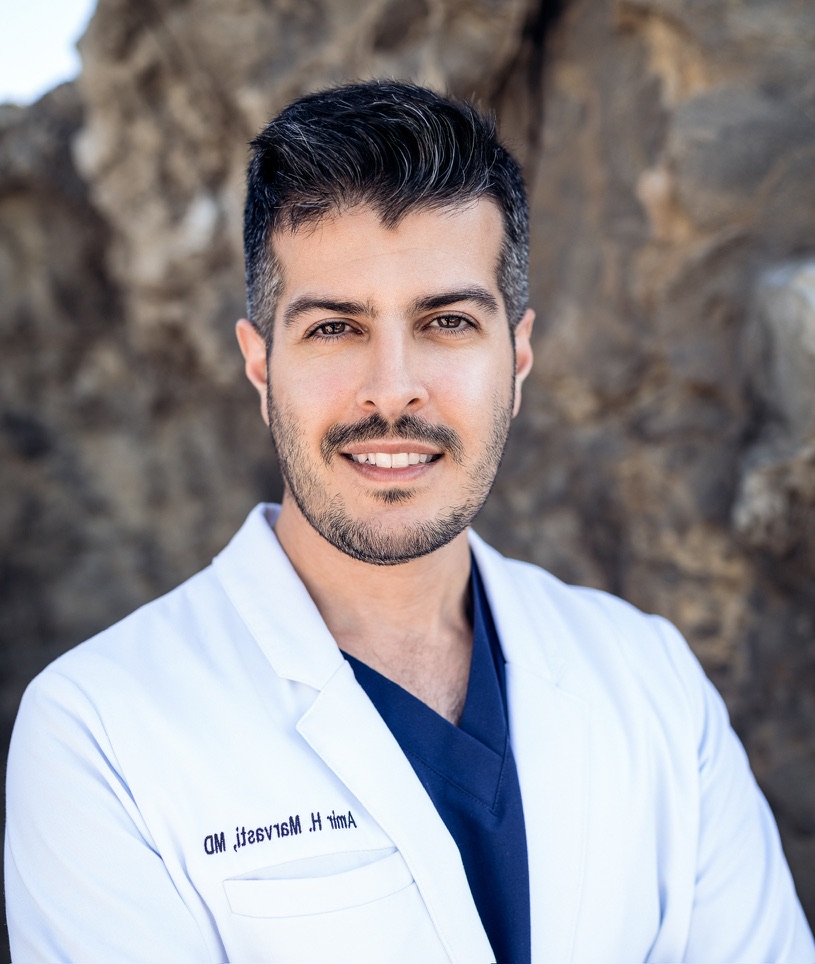
What does it take to dedicate your life to restoring something most of us take for granted… sight?
Dr. Amir Marvasti is not just an eye surgeon. He is someone who has chosen precision over ego, mastery over mediocrity, and service over spotlight. In a world obsessed with scale and speed, he operates in millimeters and moments that change lives forever.
As a leading surgeon at Coastal Vision Medical Group in Orange County, Dr. Marvasti has built a career around one of the most delicate and high-stakes disciplines in medicine. Every decision carries consequence. Every movement demands focus. Every patient trusts him with something deeply personal: their ability to see the world clearly.
But behind the credentials and surgical expertise is a story about discipline, resilience, and the psychology of performance under pressure. What does it feel like to hold someone’s vision in your hands? How do you stay calm when the margin for error is microscopic? And what does leadership look like inside an operating room?
This is a conversation about mastery, responsibility, and what happens when purpose meets precision.