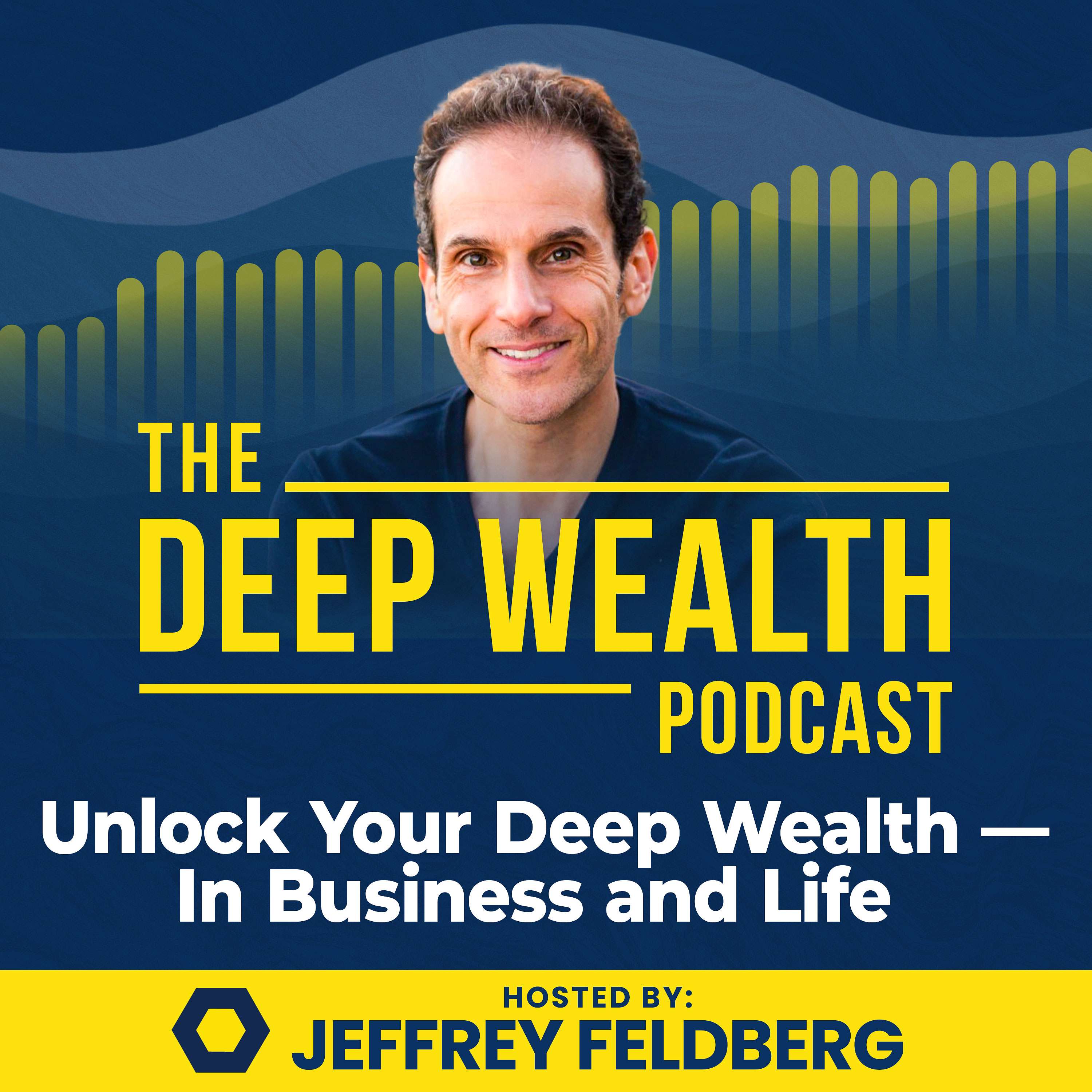



Fortune 50 M&A Leader Kendra Dahlstrom Reveals The Culture Mistake Costing Millions (#519)

Send a text “Trust your instinct and do it anyway.”-Kendra Dahlstrom Exclusive Insights from This Week's Episodes What if your company's culture is the silent killer sabotaging your biggest deals and draining millions? In this explosive episode, Kendra Dahlstrom, Fortune 50 M&A leader, delivers hard-hitting truths on why 80% of mergers fail due to cultural mismatches—and how to fix it. You'll learn to spot emotional intelligence gaps, de-risk your leadership team, and build a culture that...






“Trust your instinct and do it anyway.”-Kendra Dahlstrom
Exclusive Insights from This Week's Episodes
What if your company's culture is the silent killer sabotaging your biggest deals and draining millions? In this explosive episode, Kendra Dahlstrom, Fortune 50 M&A leader, delivers hard-hitting truths on why 80% of mergers fail due to cultural mismatches—and how to fix it. You'll learn to spot emotional intelligence gaps, de-risk your leadership team, and build a culture that accelerates growth without burning out. Transform doubt into dominance, align ambition with self-trust, and create sustainable success that feels human. Don't miss these game-changing strategies—listen now and secure your edge.
EPISODE HIGHLIGHTS
00:06:00 Why 80% of mergers fail after the deal closes
00:10:00 The three leadership mistakes that quietly destroy culture
00:18:00 How command and control leadership kills psychological safety
00:21:00 Why emotional intelligence can be measured and improved
00:32:00 The 3 daily decisions that separate effective leaders from overwhelmed founders
00:43:00 Why emotional intelligence will outperform AI in leadership
Full show notes, transcript, and resources for this episode:
https://podcast.deepwealth.com/519
The Deep Wealth Podcast
Most entrepreneurs do not fail.
They just carry too much for too long.
The business grows. Pressure grows faster. Profits get harder to predict. Decisions cost more energy. Over time, focus slips and health takes the hit.
The Deep Wealth Podcast and Deep Wealth Mastery are built from real experience. We're the only system based on a 9-figure exit. This system exists because guessing gets expensive.
🧠 Deep Wealth Mastery
This is for you if you want to:
• Grow a profitable business without becoming the bottleneck
• Build real value so selling is optional, not forced
• Optimize your health before it limits your business and life
One proven roadmap for real decisions.
⭐ Explore Deep Wealth Mastery
https://iapdw.com/idm
🎧 Subscribe
https://iapdw.com/podcast
📘 Free eBook
https://iapdw.com/ebook
💬 Have a question you keep circling back to?
Leave a short voicemail
https://podcast.deepwealth.com/voicemail/
Built by entrepreneurs. For entrepreneurs.
Loved this Deep Wealth Podcast episode?
You built your business from nothing.
Now make it pay off big.
📱 Subscribe Now
As a bootstrapper, every move counts. Subscribe on your favorite platform for Jeffrey Feldberg’s 9-figure exit strategies. From your morning grind to late-night planning, get insights from founders who did it without investors. These tips could change your future.
Drop a Quick Review
Got 30 seconds? Leave a 5-star review. It helps us make better episodes and reach entrepreneurs like you, hustling without a safety net.
Don’t Lose Your Exit (And Your Financial Freedom)
You’ve poured everything into your business. A bad exit could cost you millions. Most deals fail, and even “successful” ones lose half their value. The 90-day Deep Wealth Mastery program teaches you to make your business run without you and boost profits so you capture the best deal instead of any deal.
What Others Say
“Deep Wealth Mastery is pure gold. I wish I’d had it before my exit,” says Stacey C. “The value I’ve gained dwarfs the investment,” adds Sanjay S. “It makes my business great to own and sell,” shares William S.
📘 Grab Free Tools
Check out client success stories for proof. Master the Deep Wealth Strategy Map to plan your exit. Or snag the eBook, From 7 to 9 Figures: The Exit Playbook, for a clear guide.
Click here to start your legacy-defining exit today.
00:00 - Meet Kendra Dahlstrom: Building Success That Feels Aligned
01:32 - Sponsor Break: Deep Wealth Mastery Program (Real Liquidity-Event ROI)
04:53 - Welcome to the Deep Wealth Podcast: Why Culture Predicts Your Future
05:43 - Kendra’s Origin Story: From Corporate M&A to Culture Advisor
08:20 - Why Culture Makes or Breaks M&A (The 80% Failure Problem)
10:39 - Kendra’s 3 Patterns: EQ, Culture Due Diligence, and De-Risking Leaders
14:04 - Culture as an Asset: What Buyers Really Pay For
15:40 - Emotional Intelligence 101: Awareness, Self-Regulation, and Flexibility
17:35 - From the Trenches: Command-and-Control Leadership & Psychological Safety
19:48 - Can EQ Be Learned? Assessments, Coaching, and Measurable Growth
22:34 - Hiring the C-Suite: What to Look For (and What to Run From)
25:10 - Founder Confession: When Pedigree Beats Fit—and the Cost of Ignoring Personality
27:14 - The 8-Hour Plane Test: Chemistry Beats Skillset
28:46 - Why Personality & Culture Matter More Than Credentials
29:50 - Low-Hanging Leadership Win: Reflection Time for Innovation
31:54 - The “Top 3” Daily Priorities System (and Creating Space)
32:54 - Choosing the Right 3: Eisenhower Matrix, Gut + Risk Profile
34:42 - Eat the Frog & the Trap of Hiring Out What You Must Own
36:13 - Firing Yourself: Hiring Leaders Who Fit Your Values & Culture
39:01 - Kendra’s Aim True Process: Values, Culture Mapping & Stakeholder Input
41:04 - Biggest Myth: Lowering Standards in Tough Times
42:55 - Emotional Intelligence as the AI-Era Differentiator
44:23 - Using AI as a Thought Partner (Not a Decision Maker)
46:53 - Back to the Future Advice: Trust Your Instinct
47:51 - What Holds Us Back: Conformity, Fear, and the Need to Belong
49:04 - Where to Find Kendra + Final Wrap-Up & Subscribe Call-to-Action
519 Kendra Dahlstrom
[00:00:00]
Meet Kendra Dahlstrom: Building Success That Feels Aligned
Jeffrey Feldberg: Some people build businesses by following the rules. Others quietly question the rules, break the ones that no longer serve them and end up building something far more meaningful in the process. Kendra Dahlstrom is one of those rare builders. Her journey is not just about growth, revenue or visibility.
It's about identity, courage, and the internal rewiring required to step into leadership when the old version of you no longer fits. Kendra has built a powerful platform at the intersection of business, self-mastery, and conscious leadership, helping high achievers create success that actually feels aligned, sustainable and human.
What makes Kendrick compelling is not just what she's built but how she has evolved. She speaks openly about the moments of doubt behind the scenes, the pressure of expectations, and the quiet cost of success when ambition outpaces self-trust.
Her work [00:01:00] resonates with leaders who've achieved external wins, but know there's another level waiting, one that requires more honesty than hustle. Kendra brings clarity without ego, depth, without heaviness, and a grounded wisdom that can only come from lived experience.
Her perspective challenges the idea that success must come at the expense of self, relationships or health, and instead invites a more intentional way forward. This conversation is an exploration of growth from the inside out.
Sponsor Break: Deep Wealth Mastery Program (Real Liquidity-Event ROI)
Jeffrey Feldberg: And before we start this episode, a quick word from our sponsor, Deep Wealth and the 90 Day Deep Wealth Mastery Program. Here's Jane, a graduate who says, and I quote, the Deep Wealth Mastery Program prevented me from making what would have been one of the biggest mistakes of my career. I almost signed on the dotted line with an unsolicited offer that I now realized would have shortchanged my hard work and my future had I accepted that offer. Deep Wealth Mastery has tilted the playing field to my advantage.
[00:02:00] Or how about Lyn? Wow, he gets right to the point, and I quote, Deep Wealth Mastery is one of the best investments ever made because you'll get an ROI of a hundred times that. Anyone who doesn't go through this will lose millions.
And as you're listening to these testimonials, are you wondering if you have the time? Are you even thinking that you've got this covered, you have the advisors or people in your network? Well, I got to tell you, these myths, they're often behind the 90 percent failure rate for liquidity events. Think about it. You have one chance to get it right for your financial freedom. You really want to make it count.
And when it comes to time, let's hear what William has to say. We just got in this testimonial, William says, and I quote, I didn't have the time for Deep Wealth Mastery. But I made the time and I'm glad I did. What I learned goes far beyond any other executive program or coach I've experienced.
So what do you think?
As I hear that, that's exactly what gets me out of bed every day. That's my mission. That's the team's mission here at Deep Wealth to literally change the social fabric of society. One business owner at a time, [00:03:00] one liquidity event at a time, and my Deep Wealth Nation, what I want you to know, the Deep Wealth Mastery Program, it isn't theory.
It's from the trenches. It's the only one based on a nine figure deal. And that deal, that was my deal. You know my story. I said no to a seven figure offer. I created the system that later on, myself and my business partners, we said yes to a different buyer, a different offer, a nine figure deal. That's what we now call the Deep Wealth Mastery Program or the Scale For Ultimate Sales system.
It's built by business owners, for business owners, so if you're interested in growing your profits for preparing for a future liquidity event, and that may be two years away, it could be 22 years away, whatever the time may be, you want to do this now, and you want to optimize your post exit life, Deep Wealth Mastery is for you.
To get started, email success at deepwealth. com. Again, that's success. S U C C E S S at DeepWealth. com. You'll receive all the information about the Deep Wealth Mastery Program or [00:04:00] better yet, why not hop on a complimentary strategy call.
We'll go through exactly where your business is today and what's standing between you and your financial independence and your dreams. So that's where you want to be. You want to be with other successful business owners, entrepreneurs, and founders, just like you they're looking to grow their businesses, create markets.
Market disruptions and unlock their financial freedom to get what they deserve. And whether you've been in business for three years, 40 years, you're a startup, you're manufacturing you're in high tech, low tech, whatever the case may be, coming in and network with other business owners, it's a safe space.
It's a confidential space with business owners, with businesses just like you, because they all wanna lock in their financial freedom and enjoy both success and fulfillment. So again, the 90 Day Deep Wealth Mastery Program, it has your name on it. All you need to do is take the next step. Please send an email to success at deepwealth. com.
Welcome to the Deep Wealth Podcast: Why Culture Predicts Your Future
Jeffrey Feldberg: Deep Wealth Nation welcome to another episode of the Deep Wealth Podcast. Deep Wealth Nation. You know here at Deep Wealth, we have that saying, show me your [00:05:00] team and show me your culture, and I will tell you your future. So if you're honest about a Deep Wealth nation, what's your future like? Look at your team.
Look at you. How are you as a leader? How are your leaders in your company? Perhaps you're a founder and you've brought on the C-suite those hired guns that help take the company to the next level. Maybe you're saying, Jeffrey, I don't know. I've got this toxic culture. Oh yeah, culture's okay, but it could be better.
I know you have more questions and answers, but great news. We have an expert in the House of Deep Wealth, a fellow podcast, sir, a fellow thought leader, just an all around terrific person and leader in our own right. Kendra, welcome to the Deep Wealth Podcast. An absolute pleasure to have you with us.
There's always a story behind the story. What's your story? What got you from where you were to where you are today?
Kendra’s Origin Story: From Corporate M&A to Culture Advisor
Kendra Dhalstrom: Thank you, Jeffrey, for having me here and great to be with all of you listening. So the, my story really started as a child. I was a. student of leadership behavior and human behavior. And in that process I was always very just curious about what made things successful versus not [00:06:00] successful in group dynamics.
And so fast forward this into my, the corporate world, I. Learned very quickly that certain cultures and certain behaviors within cultures and dynamics and and mechanisms within that really lended themselves to whether companies were successful or not. And then as I led mergers and acquisitions or Fortune 50 companies over the years, I started to.
Come up with a list of characteristics that I noticed that lended themselves to companies being more successful and what we would call a quote-unquote successful integration or acquisition or merger versus unsuccessful. And so through that process and me doing my own leadership development work, I started to become a trusted advisor to the C-Suite.
Very quickly, they started to ask me for advice and questions on how to not only communicate, but how to make sure that. They were doing things that would set them up for success culturally, which is really underscored by behavior. And so that led me into the work I do [00:07:00] today where I really work within high risk environments to help make sure that cultures are gonna be able to be sustainable, especially during pre IPO merger acquisition valuation type work because errors are very expensive.
Jeffrey Feldberg: Couldn't have said it any better, especially on the error part, and especially when it comes to mergers and acquisitions, but even putting mergers and acquisitions aside, errors in general. I mean, No one wants to make those and so let me. Ask you this, and I'm gonna talk outta both sides of my mouth because I'll tell you right here and now in the Deep Wealth mindset roadmap, step two X-Factors, which is foundational to everything that we do.
One of the X-Factors is the company culture. And as we like to say here at Deep Wealth, that your company culture, it could be for better, it could be for worse. It's so unique. It's like a fingerprint that all the money that your competition has is very difficult to copy your culture, but it can go both ways.
But I'm now thinking of someone in Deep Wealth Nation who says, yeah, culture smchulture or [00:08:00] whatever, how important can that be? Last time I looked on my p and l statement, it never showed up, and I'm not gonna pay a lot of attention to that. For that member of the community, what would you say to them of culture and actually.
Perhaps, Hey, you know what? It's actually a lot more important than what you're saying it is. Why is culture so important? Where are you seeing this? Take companies either side of that.
Why Culture Makes or Breaks M&A (The 80% Failure Problem)
Kendra Dhalstrom: Love that question. And so here's what I would say, that mergers, acquisitions they don't just stop when the deal's done. They have a long tail. So if we wanna look 18 months to 24 months after, let's say we say, okay, yes, we're done with due diligence, we're gonna move forward or whatnot. That is where the rubber meets the road. And according to statistics, 80% of. Mergers acquisitions are considered failures. Even if they look good on paper, they're considered failures because of the cultural mismatch, and I think that is a very high risk for anyone listening, and that would be [00:09:00] my case for them to really stop and look at how behavior drives culture and how a mismatch in culture can really lead to a lot of pain. During the due diligence process after, or even post merger acquisition, and that is what is gonna be impacting, employee satisfaction, market share, whatever it is you're looking at.
Jeffrey Feldberg: You're talking about 80% of post M&A activities don't work. Out and the numbers are absolutely horrible. Even going into a liquidity event, into a merger acquisition, up to 90% actually never crossed the finish line. They fail. So imagine Deep Wealth Nation, nine out of 10 customers you're losing. They never.
Work out, and I've heard 80%, I've also heard over 90% have done deals fall apart and fail. So we're talking trillions of dollars on the line here. So from a cultural side of things and from, I know you're all about emotional intelligence and you're [00:10:00] working on the leadership style and in terms of what's going on, Kendra, can you walk us through?
The method to your secret sauce. We're gonna take back the curtain here a little bit. I'm coming to you. Okay, Kendra? Yes, I'm a founder, but you know what? I have my whole C-suite here and they're really running the operations day in, day out. I want this company to go even bigger and better than what I can do on my own.
That's why the team is here. Please help us. What's your process? What are you walking us through? And I know you'd be right to say, Jeffrey, hey, every company's different. Can't really tell you specifically. That said, generally speaking, what's going on? Where are some of the biggest patterns that you're seeing?
The mistakes, the errors that most companies are making that they don't even know.
Kendra’s 3 Patterns: EQ, Culture Due Diligence, and De-Risking Leaders
Kendra Dhalstrom: Absolutely. So I'd say there's three patterns that I typically see. The first is at the individual level. Each person that is a leader at the company or is, has a stakeholder position, needs to look internally and really ask themselves honestly about their emotional intelligence how emotionally [00:11:00] intelligent do they believe they are.
This means that you can self-regulate in moments of high pressure. It also means that you wanna look at. It doesn't mean that you're not great under high pressure, but what are you collapsing in the moment or what is gonna be the first thing to collapse? Because the question isn't whether or not it is, ever gonna happen.
I'm telling you it will, and it's just a matter of the pressure. And, the needles on the haystack, I guess you could say the hay on the haystack or on the camel's back. Actually, getting to a point where it just happens. And so I think it's really important that it's not a matter of if it's when and that each person look at themselves individually to really determine where are they feeling they get dysregulated in what types of situations.
And really do that internal work because it's gonna require that in the moments of ambiguity and transition The second. of failure. I see really common was what you had mentioned earlier, and it's around not really adding culture into due diligence. A lot of them [00:12:00] treat it as. Oh, we'll get to that later.
Let's look at, IT systems. Let's look at the numbers. A sales pipeline. Let's look at a manufacturing overhead. All these things that are very important. However, at a Fortune 50 company, I actually introduced bringing culture into due diligence it's very first time in a 20 year history.
And my argument was this, it doesn't mean that you're not gonna move forward with a deal when you find one that make. Work. But what it does is it gives you data and information to go in eyes wide open at what resistance you're gonna have, so that then you can develop a change management and communications plan to adequately address it. Companies still are not doing that today. there's a lot to do in due diligence and they're getting caught up in all of that. they're getting caught up in, crossing the T's and dotting the i's and not really taking a hard look at the culture to look at where there's misalignment and mismatches.
For those of you that aren't even looking at selling yet, this is something you could still do internally. There could be some dissonance between organizations or departments. [00:13:00] So I, again, they always say culture eats strategy for breakfast, right? One of our favorite friends said that. So I think it's really important that second gap be addressed. And then the third place I'm seeing quite a bit of air that a lot of people aren't willing to look at is how are you de-risking your leadership team, not just in terms of a skillset, but in terms of mindset. And so this goes in parallel with the first point I made, but it takes it in a slightly different direction because many leaders. Are very capable. They've been in the business for a long time. They find themselves very successful. But what they're not realizing is it's not so much about adding a skill as it is, as about taking away something that is currently in your toolbox that may not be working for you anymore. So it's really important that we look at it on a team level as well as individually. how can we de-risk the team? How can we de-risk any sort of operations that are [00:14:00] going on internally as well as leadership traits and styles?
Culture as an Asset: What Buyers Really Pay For
Jeffrey Feldberg: Kendra, as you're talking about this, my wheels are turning because really what I'm thinking about is whether it's for a merger acquisition, but really, even if it isn't, in some ways it almost doesn't matter because if the culture isn't right. The company is likely doomed to failure. What's the point of a merger in acquisition if there's no longer a business?
It goes outta business because you had infighting. It was a toxic culture. People aren't getting along. And DePaul Nation, what you need to know is buyers or investors don't invest or buy a company just because of your profits. Yeah, sure. The profits are nice, but sometimes they'll buy your company because of your culture, because you have a terrific team, and that team is able to do incredible things.
And as we look out today, there's a shortage of incredible talent. And so oftentimes it's the culture. It's the talent. And Kendra, to your point, when my deal closed. I sat down with the buyer who's now the owner, and I said, okay, deal's over. No more secrets. Everything's out on the table. [00:15:00] Why did you buy the company?
You have more money than us. You have smarter people than us. You clearly, you could have done this on your own and said well, Jeffrey, that's where you're right, and that's where you're wrong. Sure, we have more money than you all take that. Thank you very much. And yes, we have smarter people. Yes, thank you, but we couldn't beat you.
And as the old saying goes, if you can't beat them by them because your culture, it's ferocious and I can't create that Internally. We want your culture, we want your methodology, your systems, and your people to help. Take us to new levels and to your point, if we didn't have the kind of culture, sure, our prophets were great.
But there's lots of profitable companies out there, lots of choices. The culture in large part made a huge difference for that.
Emotional Intelligence 101: Awareness, Self-Regulation, and Flexibility
Jeffrey Feldberg: And let's go back to something I happen to gloss over, but it might be new for someone in Deep Health Nation, emotional intelligence. What is that? What does that really mean when we get beyond the headlines and the hype around that?
Kendra Dhalstrom: Yeah, it's really about self-regulation and it all starts with awareness. How aware are you of what you may be feeling in any moment, [00:16:00] and then how do you respond to that? So it's really about generating more awareness and then more flexibility, I'll call it in the moment, to be able to traverse a different series of emotions.
And so those that are more emotionally intelligent can. Use all of the emotions that are in these assessments as tools, let's call it in the toolkit, so they know when to lean into empathy. They know when to maybe lean a little bit more towards flexibility or a little bit more towards reading the room, or more towards understanding the dissonance between what they're thinking and what they're saying. So it's about really being able to navigate and self-regulate your own emotions. And it's gotten a little bit of a bad rap because. We have always had the core belief, I think in corporate and in business, that we don't show emotions and emotions are soft. But at the end of the day, we're now realizing that emotions are very much connected to our behavior, our mental health and into [00:17:00] culture.
And so it's really important that we actually can self-regulate in these moments if we want to be able to operate under high stakes pressure, and situations.
Jeffrey Feldberg: And so as you're talking about that, is there on. Spot. Is there a situation that you can share with us on either side, Hey, Jeffrey, because this leader had this emotional intelligence, this situation, which could have been a disaster, actually turned out to be one of the best things that happened or, yeah, unfortunately I came in after the fact because this leader just didn't have it and a huge error was made.
Can you share something from the trenches just to illustrate how important emotional intelligence is?
From the Trenches: Command-and-Control Leadership & Psychological Safety
Kendra Dhalstrom: Yeah can give both actually. So. There was a founder that was brought into a Fortune 50 company and you know, very nice person. Great on paper. However, really worked with a command and control model and as a former engineer, engineers. I'm not saying they're not emotionally intelligent, but what I'm gonna tell you is that my 25 plus years has shown me is that we tend [00:18:00] to behaviors that are rewarded, and engineers are usually not rewarded for emotional intelligence.
They're rewarded for iq. They're rewarded for being the smartest person in the room. And so that is the behavior that they tend to replicate over and over again. And so this gentleman was no different. And so he had a command and control model that he brought into this Fortune 50 company. He was used to being the smartest person in the room. And what that did immediately was that it created a lack of psychological safety. And so he was not emotionally intelligent enough in that moment to be able to recognize that he was undermining trust. He was. apart psychological safety, even if it had existed prior to the merger, and that he was actually starting to create a lack of psychological safety in the company that he had been brought into.
And so it really was a train wreck and we had to pe pull it apart and pull him aside and, have some honest coaching conversations with no judgment or shame and just make [00:19:00] him more aware of. The cost of doing this, and then once he was able to recognize that and turn it around, we were able to get things back on track.
But it, it was a tough go at it for a while, Jeffrey.
Jeffrey Feldberg: I'm wondering because when you're working with your clients on your podcast, you've titled a very interesting title, the Unworthy Leader and The Unworthy Leader Podcast, and some of the topics are people just feel that imposter syndrome or that whole worthiness, I don't feel worthy, or, why me? Why am I here?
All those kinds of things. So for someone who really isn't. Necessarily emotional, intelligent enough to recognize yeah, I'm like that bull in the China shop when I walk in, but I don't even realize that at times. How do you begin to work with a leader to bring out the best in them working with what they're bringing to the table?
Kendra Dhalstrom: Great question.
Can EQ Be Learned? Assessments, Coaching, and Measurable Growth
Kendra Dhalstrom: So first I'll start by letting everyone know that EQ is not like iq. It's not something that you just either have or you don't have, and it stays the same your whole life. EQ is something that can be built and grown over time. [00:20:00] I have hundreds of clients I've worked with where we start to work on a specific skill and three months later they take the assessment and that skill is. exponentially. So it is something that if you deliberately take the time to generate awareness and have conversations about it and put intentions into place in order to grow, you can grow it. So that is the positive. Part of the side of the equation. And that's usually where conversations will start with these executives is I usually will do an assessment just because people respond best to data they can't argue with, it.
It's not just my opinion, it's not a coworker's opinion. It's not a board member's or an investor's opinion. And so we usually start with an assessment and then we use that as a baseline to have a real honest conversation about how things generally play out for them in their world. And then we start to talk about, okay, if you could lean into one or two of these. where, what would they be and what would that look like? And then we put together an action plan for them to lean into those. And then over the next three months, we take it again. hundred percent of the time those [00:21:00] grow. And so that's really how I initiate the conversation, especially in high tech.
'cause I tend to be working with very data oriented people. If I'm working in a different industry where, let's say it, it isn't leaning into data quite as extensively as high tech would, then oftentimes we just have really honest conversations and that's up to someone like myself that's an expert in human behavior. Executive advisor or consultant type person who can understand the dynamics to create a safe enough space and a conversation and normalize what's going on with them enough by sharing use cases from other leaders that they can feel comfortable enough saying, you know what? I really think I could be more empathetic.
But in the moment when we're in meetings and I'm making decisions, it's just not happening. And then that opens the door enough that we can start to have a real conversation about what they'd like to be able to do differently in their leadership.
Jeffrey Feldberg: And as you're talking through this, again, you're taking me down memory laden and probably Kendra. I look back to some of my mistakes, and believe me, I've made many [00:22:00] mistakes. I often joke on the podcast if I had a dollar for every mistake, I would not have needed my nine figure exit. I'd be even wealthier from all the mistakes that I made.
One of the mistakes that I made was when I realized that I had to fire myself. From the company to bring in people. That's all that they did. They were better than me in those areas. Where I failed was, I didn't see some of the early warning signs on the initial hires that I was bringing into the C-suite.
Made some huge mistakes there just. Big mismatches and some of the candidates, some of the people even brought on board, never should have even gotten that far into the process, let alone be brought into the company.
Hiring the C-Suite: What to Look For (and What to Run From)
Jeffrey Feldberg: So speaking now to a founder or even another leader in the C-Suite who's looking at bringing on another senior member of the team to help lead the team, the company, into new areas.
What should we be looking for in an individual who's got some great emotional intelligence coming in? Sure you can help 'em make it even better, but they're good coming in. They can fit into the culture. What am I looking for? What am I running away from?
Kendra Dhalstrom: Yeah,
I think first of all, you know, you obviously need [00:23:00] to look at experience, right? You wanna look at resume, you wanna look at experience. I don't wanna limit it with just saying, have they done this kind of work before? I'm a big believer in transferable skills. So just because someone hasn't been in, a electrical company doesn't mean they can't bring great knowledge from Frito-Lay.
If, and I've seen that work so many different times and people say, what do you mean? But it's, it kind of reminds me back when they brought, I think it was the old CEO or from Pepsi, went over to Apple for a bit before Steve Jobs came back and so we wanna really be looking at transferable skills.
We also wanna be looking at. How we're weighing skillset and experience versus what do we believe their willingness and passion is? To do the work because people can learn a lot and people, if they're willing, they can learn a lot. There's certain things that we need to have as table stakes, as skills and experience. And, sometimes this falls into credentials or understandings of certain public policies, [00:24:00] governance, those kinds of things. But at the end of the day, there's a certain layer of skills that we're looking for that can be learned. And if we have a person that has the will and passion and smarts. Then they're going to be willing to do that. I think personality is a huge one that people tend to overlook. It doesn't mean we have to be friends with everyone that we hire and we look at, but if you don't feel like there is a, chemistry, and I don't mean that romantically, but I mean like a chemistry in which like you can have a conversation and understand how to flow together in a conversation and understand how to work with one another, then I think it doesn't mean it's impossible, but I think you just need to go in eyes wide open knowing that could continue to be a constraints.
People often think, oh, it'll get better once I get to know them. And oftentimes I find that it does not. So I think tho that's really important as well. I think, for me, I think those are the top ones. I think as we look through learned expertise and then [00:25:00] we also look at personality.
It has me curious though, Jeffrey, if you don't mind me asking you a question. What is it that you didn't listen to that you know now in your experience?
Founder Confession: When Pedigree Beats Fit—and the Cost of Ignoring Personality
Jeffrey Feldberg: It's interesting as I'm thinking about this just in, in real time with you, it's actually going back to the title of your podcast, the Unworthy Leader Podcast, compared to all the corporate accomplishments. Even though my company was a massive success creating a market disruption out there, in my mind it was still Jeffrey in his parents' at.
Who is running this company's zero corporate experience would not last a day in the corporate world. I would fire myself as an employee in the corporate environment. I know the only job I had. Was I was having an internship when I do my MBA program, I would've fired me within the first few days of being on there.
I'm just not built for that. And so for me, I thought, oh, big company name. I recognize that. Look at the credentials, look at the pedigree. Everything else. What do I know? Let me give this person a shot. So it was really [00:26:00] looking at, the shallow. Signs or these shallow sides of things coming from the resume as opposed to the person, him or herself that was coming onto the scene with that.
And I know I'm not alone with that. I've spoken to other fellow founders who, different names, different companies, similar types of outcomes. But to your point, what I've now seen and learned, and we talk about this in deep health mastery personality, is everything. And as I look back at my failures. Just because I'm an entrepreneur, most people think Jeffrey, yeah, you're a huge risk taker.
Actually I, I'm not, most entrepreneurs aren't risk takers. At the beginning of this conversation, before I pressed the record, I was sharing how I wear two belts and two suspenders in terms of recording this. In case one system fails, I got another one. And what I found was when I was bringing on some of the corporate hires, they were just personality wise.
I thought, I'm not a risk taker. They're not a risk taker period. And that just drives me nuts. But I didn't listen to that [00:27:00] because well, they've got the corporate experience again. What does Jeffrey know? Let's just go with that and learning from that. And offline, I was sharing in the Deep Wealth 9-step Roadmap, a lot of the strategies are from some of our biggest failures.
That came there.
The 8-Hour Plane Test: Chemistry Beats Skillset
Jeffrey Feldberg: We have a thought experiment, and when we're talking about both step three, future buyer, which by the way is not just an investor or buyer for your company, it could be a future client, but also step six advisory team. When you're bringing on an advisor, it could be an investment banker, it could be an M&A lawyer, it could be a financial advisor, whatever the case is gonna be.
Here's the thought experiment, Kendra. I want you to think about this for a second. Imagine you're with this potential. It could be a hire, it could be a potential advisor, even a client. You're on an airplane. And you're about to take off. You're going on a short trip, it's an hour plane ride. You're going somewhere to see something business related.
Pilot comes on and says, ladies and gentlemen, we have a mechanical problem. We can't go back to the gate because a plane can't move. They're flying in a [00:28:00] part, and unfortunately we're gonna be stuck on this plane for eight hours. So are you saying to yourself, oh my goodness, after 30 seconds I'm crawling outta my skin.
I can't stand the person next to me. I can't do 30 seconds. Never mind. Eight hours or the time goes by, Hey, wow, you know what wasn't so bad. I actually had some fun of that conversation. Would I have chosen eight hours stuck on a plane? No. But hey, I enjoyed myself with that person. And depending on where you pun intended, land on that, maybe you should move forward or you shouldn't move forward with that person.
Nothing to do with skillset. Everything to do with personality and culture and how the two of you get together with that business chemistry that you're talking about earlier. That's how crucial it is that we've built that into our roadmap and our mastery program. Would love your thoughts on that.
Why Personality & Culture Matter More Than Credentials
Kendra Dhalstrom: It's beautiful. I love that so much, and I couldn't agree more. I've seen so many situations where people have rose above. Expectations and they didn't have, the PhD or the Master's [00:29:00] or some of the expertise that people were looking for. They just had the will and the intellect, and they had loyalty and commitment, and that comes from personality.
So I love that story. I, in essence, think that when you're going. Into business with someone. And I think that the smaller the company, the more intimate it is, quite frankly, you're essentially marrying them in some capacity. And so, you know, or they're becoming a family member. And so do you want to, spend time with these people and do you need to trust them?
And so I think it's really important that those things exist. And I think we often get, a little bit more into an idolization mode when we start to look at big corporate names on resumes or experience or degrees. Not saying they don't matter, but they should not be the driving, decision making factor.
Jeffrey Feldberg: Absolutely.
Low-Hanging Leadership Win: Reflection Time for Innovation
Jeffrey Feldberg: And so let me ask you this, as I'm here listening to us talk, I'm imagining now I am a listener in Deep Wealth Nation who's thinking about this. [00:30:00] What would be a low hanging fruit that's easy for me to do? Perhaps doesn't take a lot of time and has a very high return on investment for me in terms of an action that I can either start doing something or I can stop doing something that begins to bring out the best leadership qualities in me, my highest form of perhaps emotional intelligence that I can bring not only to the business.
What I love about this, what we're talking about, sure, it's business related, is just as applicable in our personal lives as it is in our business lives. Any thoughts about that?
Kendra Dhalstrom: Yeah, and the one that I am a big believer in and comes to mind first, Jeffrey is. Spend some time in reflection. I think it's really important, not only for our subconscious, but for the cognitive load and the brain to have some time where we're not always constantly doing reading typing just to actually be, and if you're walking while you're doing that, or if you're meditating or [00:31:00] if you're just. Sitting down, not watching TV or scrolling on your phone please, you'll be amazed at how new ideas will come in, and that's really where, the innovation part of the brain lives. And so I think it's just really important that you as a leader, allow that time for not only the relaxation and restoration. But also the innovation to come in. And innovation isn't always gonna come from doing. We have to actually be a little bit passive at moments in order for us to get ideas and, for us to get those insights. It's hard to get insight as we're moving.
Jeffrey Feldberg: Let me make this personal. As you look to yourself, again, we're always our own canvas. No one's ever perfect. When you look at your journey in terms of bringing out the best leadership for you so that you can make a difference for your clients and for your community, what have been some things that have helped you really take your skillset, what you're bringing to the table, to the next level?
The “Top 3” Daily Priorities System (and Creating Space)
Kendra Dhalstrom: Well, For me it's been creating more space in my day. Like I actually play a game where I, every morning. [00:32:00] And I got this a little from some of the Tim Ferris, methodology, but back in the day. But I asked myself, what are the three things that I absolutely have to accomplish today?
If they don't happen, then everything falls. And what has been so fascinating about it is I've been doing that project for about 10 years now, and I will often have 20, 30 things on my list. But what you start to realize is the dominoes start to fall. 'cause those three things if you're doing it, in the way that it's intended.
Those three things are the levers that have the most impact. And so by handling one of those three things, you realize it actually knocks down five other dominoes. And so that has been something that's been highly valuable for me to stay productive, but also stay very focused while also allowing for space in my day so I don't have to feel like I'm moving from. Thing to thing. Meeting to meeting from six in the morning to 10 at night.
Choosing the Right 3: Eisenhower Matrix, Gut + Risk Profile
Jeffrey Feldberg: And as you're looking at that, how do you even begin to know, okay, these three, not those [00:33:00] seven, but these three, everything else pales in comparison to that because I know for myself. Sometimes I'll start the day. Yeah, this is really important. Never get to any of it and just, I would rather be lucky than smart.
As the saying goes, by pure luck I stumble onto something. Wow. I'm sure glad I did that activity because that was foundational. That made all the difference. So how do we know, in your case, how do you know these three are the three that I should be focusing on?
Kendra Dhalstrom: You can use something as simple as the Eisenhower's matrix, right? To help you determine okay, is this critical anti bound or is this just critical and nice to have done, or critical, and it needs to be done, but. Out for six months, or is this something that's nice to have but time bound.
And so you can start to look at the different paradigms and look at, in terms of importance and criticality when things need to be done. I am a big gut instinct person, which I know is not a great answer for a lot of people on here. But I am a big believer that if you sit and look at the list. And you really just allow yourself the time to [00:34:00] look at it. You will automatically either have a thought or you will get a feeling like in your gut or body that like, oh like a pole. Like I need to do that. And I actually operate quite a bit like that, but I always like to back it with data. So I also will look at the risk profile.
What's the risk of doing this versus not doing this, and the things that have the highest risk or impact. In a negative way will be the things that I will tend to do first instead of in a positive way, because I feel like especially as entrepreneurs, founders, people trying to grow businesses in any capacity mental weight of doing something that can weigh on us negatively is much greater than a positive. So I think it's important to look at the risk profile for the negative things.
Eat the Frog & the Trap of Hiring Out What You Must Own
Jeffrey Feldberg: As you're talking about that, it reminds me of that saying of eat the frog first thing in the morning. And deportation you're saying. What do you mean eat a frog? It's figurative, not literal necessarily. Maybe you do eat the frog What it's saying is take the most difficult thing, the one thing you don't really want to do, and you know [00:35:00] what I'm talking about.
Deep palpation. This is the one action you keep on putting off. I'll do this other mind distracting activity over here and then I'll get to this big one. I don't really like doing, I have to do it. Not that I want to do it, but do that first, and when we get that done, you've won the day, you feel great.
Whatever it was that needed to get done, you check the box and it was important. You got it done. Really builds some momentum and gets us going in the right direction in terms of doing that. Thoughts about that?
Kendra Dhalstrom: Yeah, and I love that you said that because a mistake I've actually seen quite a bit with. Whether it's in large corporations or family owned businesses and or smaller companies, is that they will often keep delaying that one thing and then they'll hire out for it. But what ends up happening is the mistake isn't necessarily hiring out for it. The mistake is that. person they hire to do it will never be able to do it to the quality you want it done, and so it still doesn't meet your needs. So in some of those instances, I'm not saying not to hire out, but it's really important to take a look at what your [00:36:00] intentions are and plans are, because if it's something that you could just do yourself, you're most likely better off just doing it yourself and getting it done in the short term instead of pushing it out over a longer period of time to hire out and then not being satisfied with the result.
Firing Yourself: Hiring Leaders Who Fit Your Values & Culture
Jeffrey Feldberg: And Kendra, let's now speak to that founder who has to make that difficult decision. They've realized they need to fire themselves, so in other words, they need to bring on somebody who all they're gonna be doing, it's in this one role. Perhaps it's president, perhaps it's CEO. Maybe it's even a managing director or a director in one part of the company, but they've come to the realization they have to do it.
Now, in their mind, what they're saying is. They're not as good as me. It takes them twice as long to do what takes me a millisecond. It takes them much more time to be able to do that. I'm so much better. Maybe I won't even go down that path, but they overcome that kind of thinking and check the ego at the door of, okay, maybe I can find someone who's smarter than me, who's better than me, and even if there's 70% as good as me, that's all that they're focusing on and this [00:37:00] is what the company needs.
So in that kind of an instance. What should I be looking for as a founder in terms of that personality, in terms of the culture, both of that person, my company, of how to find that I'm not gonna use the word perfect fit, but the best kind of fit at the time that I'm hiring, using the information that I have, what should I be looking for in that particular candidate?
Kendra Dhalstrom: Well, I think there's two elements. I think the first is. A personal element in terms of personally as the founder, what is it that you want to see in this next person? I am a big believer in values mapping and writing down the, what are the values of your company? What's the mission of your company? What kind of traits do you think this person should have? What are traits that you've been told by people you work with? Inside the company and or your ecosystem of colleagues that are admirable, that people like about you. And then I would go actually to the employees and at the company and ask them the same questions. What is it that's important to you about working up here? What do you like about [00:38:00] working here? That way you're doing a little bit of a cultural assessment, but you're also understanding behaviors that exist that are important to the people that work there. And that's what's gonna keep. the light's on.
That's what's gonna keep the business running for continuity. And so I would start there and then I would create a list of, here's things that are important in terms of behaviors, personality maybe there's some elements of obviously experience that are gonna be non-negotiables. And then there's gonna be some items that are gonna be negotiable.
Do they have to have a PhD? Do they have to have a master's? Those kinds of things. But I would definitely start. Not only from an internal perspective so that you can do almost a self assessment, but also going to employees of the company, investors, anybody that's in your network.
Customers, even to some extent to say, what is it that you love best about working with us so that you don't lose that in the transition.
Jeffrey Feldberg: Nation, if you're saying, wow, that sounds complicated and a lot of time, I know that's what I'm thinking, but de Nation. That's why someone like Kendra can become part of your [00:39:00] team to help you with that.
Kendra’s Aim True Process: Values, Culture Mapping & Stakeholder Input
Jeffrey Feldberg: Kendra, when you're brought on to do that, whether it's from the founder, whether it's from the investor or the buyer to help take that company or that investment or that portfolio company to the next level, how are you inserting yourself into that process?
What's again, that secret sauce that you're bringing to not have it a 90% failure rate? Hey, no guarantees in life. We're gonna make this a 90 plus percent likelihood of success. So what's going on with your methodology and with your system?
Kendra Dhalstrom: Yeah, so I, I walk them through a process that I have that's called the Aim True Process. And so it's just a mnemonic for the seven steps that I have, and I walk the C-Suite through that process. Typically, the CEO or founder is my primary client. However, usually there's a group of stakeholders and we all meet and I come back with a proposal on what I feel, needs to be done.
I'll be honest, some of these companies. Don't even have, the core values yet. They speak to them, but they don't have it actually documented or they don't have any sort of tenants in [00:40:00] terms of how they make decisions and how they run the business. So I work, from everything from not having it and helping them create that.
So that can be the baseline and the compass for them as they move through. All business decisions to people who already have that in place and they're just wanting to help look at culture mapping and doing some surveying and some. Inflection point navigation in terms of understanding, okay, here's the culture we have.
Here's what's important to us. Let's talk to our partners. Let's talk to our customers. Let's talk to the employees and figure out, what the map looks like. And then let's. Look at it also globally, 'cause it's gonna be different. If you're outside of the United States or in other countries or a global company, you very well know that different things are important to different cultures.
And so that's where it gets a little more complex. But it's quite easy to actually do a culture map and then bring it all back together to highlight things that may be mismatches as you're looking to hire people or if you're even looking for valuation.
Jeffrey Feldberg: It's interesting, so a [00:41:00] culture map, you're looking at different things that are there as we're talking. Talking about this, you got me wondering.
Biggest Myth: Lowering Standards in Tough Times
Jeffrey Feldberg: Kendra, what do you think the biggest myth that's out there? Again, this is where conventional wisdom, not only is it wrong, it's certainly not wise at all. It's taking us in the wrong direction.
Kendra Dhalstrom: The first thing that comes to mind, that's a great question, Jeffrey, is that I think a. Because globally and economically, there's so much going on in the world right now, today. I think it's so easy for all of us to fall into sort of a. A norm or status quo, even though we want more, I feel like we're all collectively reducing expectations because things are just so bad, anywhere you look.
And so I think that could be a really big risk as we start to look out at okay, let's make sure that we're not doing that. Let's make sure that we actually are really clear on what our non-negotiables are and how we can keep the integrity. Of our company and what we're our mission and our products and services or whatever it is you're selling in together, [00:42:00] keep that integrity intact so that doesn't by default because of what's going on around you start to create discord.
Jeffrey Feldberg: It's interesting, some very interesting times that are out there. And Kendra, to your point in terms of your sandbox of what you're working with, having leadership who is very high on the emotional intelligence, they know what they're about, they know what they're not about. And by the way, deep Deep Wealth Nation.
Just because you're an engineer doesn't mean you can't have high emotional intelligence. Many engineers have off the chart emotional intelligence, just like because you're a creative person or an artist doesn't guarantee that you have high emotional intelligence. There's lots of artists or creative types that don't even rank unfortunately, and so we're not stereotyping.
It's really going within every person is on his or her own journey. And Candra, it sounds like you're bringing out the best within us of what we're born with and taking that to the world. I'm wondering, we're not wrapping up just yet.
Emotional Intelligence as the AI-Era Differentiator
Jeffrey Feldberg: Before we go into rapid mode though, is there an important question that we [00:43:00] haven't yet covered, or even a topic or message that you wanna get out there?
Kendra Dhalstrom: That's a great question. think the one thing I wanna say is that I really view and. Emotional intelligence that it can either become a constraint or an accelerator. And I think it needs to be looked at like that, like any other leadership skill and that it's a use it or lose it skill.
And I think it's important that people understand that. So if you studied Spanish for 10 years and you were fluent in Spanish and then you stop for 10 years, you're probably not fluent anymore. or you may be a little rusty. But you're not, it's not gonna be the same. Emotional intelligence is the same.
So to your point, just because somebody isn't using it actively doesn't mean that they can't change that paradigm. And I believe that in this world that we're in right now, compounded with artificial intelligence, emotional intelligence is gonna be the skillset that's going to differentiate. Leaders from the true leadership, from everything else, because we're gonna start looking to artificial intelligence to do a lot of [00:44:00] delegation and tasks and everything.
So we're gonna have to lean more and more into humanity. We heard the wef just tell us this a few weeks ago in Davos, and I've been saying it for the last two years, and I really do believe that emotional intelligence is something we're all gonna have to lean into more because that intuitiveness and that ability to, create trust is something that AI cannot replicate.
Using AI as a Thought Partner (Not a Decision Maker)
Jeffrey Feldberg: And speaking of ai, we're just covering that now. And to your point, it's making headlines every day. It's changing life as we know it. So ai, how is that playing a role in your world and where do you see that taking us? Or on the flip side, not taking us.
Kendra Dhalstrom: Yeah. I think it's really important in terms of how we look at using ai. I think a lot of people. Regardless of whether it's company or self or taking as, oh gosh, I better get up to speed. I gotta use it for everything. And, or people are getting lazy and using it for everything. And I think it's really important that we look at AI for what it is, it's pattern [00:45:00] recognition, and it should be used to synthesize large amounts of data. And I use it as a thought partner. That's it. I think of it as I can have a Jeffrey in the room when I don't have Jeffrey, right? And that's how I think of it. It should never be in lieu of Kendra or Jeffrey or making decisions for me. It's a thought partner. So that's step number one. I think the other thing that I think we have a huge opportunity to look at here is how do we build emotional intelligence into ai? Not because we wanna replicate ourselves. But because we want to make sure that it's not fawning or has has a fawning response. But it's Jeffrey, brilliant idea, great idea. And it plays into our own ego and biases.
And I think we need to be careful about that as a culture. And so I do think that emotional intelligence can be built into ai and I think that's a whole new area that's not really being looked at yet. And then the third piece in terms of playing out I do think, like I said, leadership are gonna change.
If we look at how much work they're [00:46:00] doing I would expect the percentage of strategic work to increase and the percentage of that to actually be requiring more relationship building and rapport building. And we know from Harvard Business Review that actually. It's a really unfortunate number, but like less than 30% of C-suite actually have really strong strategic And so I think it's really important that we use this opportunity to lean more into emotional intelligence, what it means, how we can self-regulate, but it's not just for us. It's about creating a good, healthy environment for others. So it's about meeting with others and being able to be a better leader.
Jeffrey Feldberg: Some interesting times ahead and throw that mix into ai. It's the human condition. It's as though it's not complicated enough. AI sure makes it interesting. That is for sure. It'll be fascinating to see where that takes us and what that looks like.
Back to the Future Advice: Trust Your Instinct
Jeffrey Feldberg: And that said, Kendra, we're gonna go into wrap up mode. It is a tradition here on the Deep Podcast.
It's both my privilege [00:47:00] and my honor to ask every guest the same question. It's a really fun question. Let me set this up for you. Imagine the movie Back to the Future, and in that movie you have that fabulous DeLorean Carr that will take you to any point in time. So imagine now it's tomorrow morning. And Kendra, this is the fun part.
You look outside and not only is the DeLorean car curbside. The door is open, waiting for you to hop on in what you do, and you're not gonna go to any point in your life, Kendra, as a young child, a teenager, whatever point in time it would be. What would you tell your younger self in terms of life lessons or life wisdom or, Hey Kendra, do this, but don't do that.
What would it sound like?
Kendra Dhalstrom: It would say trust yourself more. It doesn't matter if anybody else is doing it yet or if they even understand what you're saying yet, trust your instinct and do it anyway. I.
Jeffrey Feldberg: I love that. Trust your instinct and do it anyway.
What Holds Us Back: Conformity, Fear, and the Need to Belong
Jeffrey Feldberg: What do you think is holding us back? When we hear our inner voice, we just don't trust it, and we're doing the opposite.
Kendra Dhalstrom: Well, I think it's [00:48:00] a few things. I think first it's kind of conformity. We have a fear of being different. you know, We want belonging, right? So I think for me, I know I've always been a visionary and so I've often proposed ideas that companies. And they all look at me like you're crazy.
And then in six to 12 months they're like, I have an idea. And it's my idea. And I don't think they took it from me. I think they just got the idea. And now it was at a point in time where it made sense. And so I think for those of us that tend to be visionaries and. Very future looking. We often were always looking for that belonging and acceptance. And we probably didn't do a lot of things that we wanted to do 'cause it was so far out there that were like, people just aren't ready for this yet. But again like they always joke, Henry Ford would've invented a faster buggy, right?
So it's like somebody's gotta do it. I think the other part of it, to answer that question, Jeffrey, is that. We get caught up in fear. We get caught up in doubting ourselves and change and change can be fearful for us. We don't wanna lose the people we love. Status, reputation, whatever it is.
Jeffrey Feldberg: Yeah, there's so much there. In fact, [00:49:00] that can be a whole other, not just. Episode, it could be an entire series, but there's a lot there.
Where to Find Kendra + Final Wrap-Up & Subscribe Call-to-Action
Jeffrey Feldberg: Deep Wealth Nation and Deep Wealth Nation. Before you do another thing, please go to the show notes and click on the links. And Kendra, that reminds me where would be the best place online?
Someone in nation, they have a question for you. They wanna bring you on board. They want you to help take their company to the next level or their leadership to the next level. Where'd be the best place online to reach you?
Kendra Dhalstrom: The best place would be on LinkedIn. They can find my profile. It's Kendra Dahlstrom and we'll put the link in the show notes and you can just message me there. Alternatively you can go to my website, kendra dahlstrom.com and you can also check out my podcast on Spotify and Apple.
Jeffrey Feldberg: And the great news deportation. This is all in the show notes. It doesn't get any easier. It's a point and click. Well, Kendra, it's official. This is a wrap. As we love to say here at Deep Wealth, may you continue to thrive and prosper while you remain healthy and safe. Thank you so much.
Kendra Dhalstrom: Thank you. It's been a pleasure.
Jeffrey Feldberg: So there you have it, Deep Wealth Nation.
What did you think? [00:50:00]
So with all that said and as we wrap it up, I have another question for you.
Actually, it's more of a personal favor.
Did you find this episode helpful?
Have you found other episodes of the Deep Wealth Podcast empowering and a game changer for your journey?
And if you said yes, and I really hope you did, I have a small but really meaningful way that you can actually help us out and keep these episodes coming to you.
Are you ready for it?
The dramatic pause. I'll just wait a moment. Drumroll, please. Subscribe. Please subscribe to the Deep Wealth podcast on your favorite podcast channel. When you subscribe to the Deep Wealth Podcast, you're saving yourself time. Every episode automatically comes to you, and I want you to know that we meticulously craft Every one of our episodes to have impactful strategies, stories, expert insights that are designed to help you grow your profits, increase the value of your business, and yes, even optimize your post exit life and your life right now, whatever you want that to look like.
And every time you subscribe and a fellow entrepreneur subscribe, it's a testament to how together, Yes, we are. We are [00:51:00] changing the social fabric of society. One business owner at a time, one liquidity event at a time. So don't let the momentum stop here. Subscribe now on your favorite podcast channel.
You'll never miss an episode. You'll be the first to hear from the top industry leaders, the innovators, the disruptors that are really changing and shaping the business world, and maybe you're commuting, maybe you're at the gym, maybe you're taking a well deserved break that we spoke all about on this episode.
The Deep Wealth Podcast, it's your reliable source for the next big idea that could literally revolutionize your business. So once again, please hit that subscribe button, stay connected, inspired, and ahead of the curve. And again, your next big breakthrough moment, it might just be one episode away. Maybe it was even this episode.
So all that said. Thank you so much for listening. And remember your wealth isn't just about the money in the bank. It's about the depth of your journey and the impact that you're creating. So let's continue this journey together. And from the bottom of my heart, thank you so much for listening to this episode.
And as we love to say here at Deep Wealth, may you continue to thrive and [00:52:00] prosper while you remain healthy and safe.
Thank you so much.
God bless.
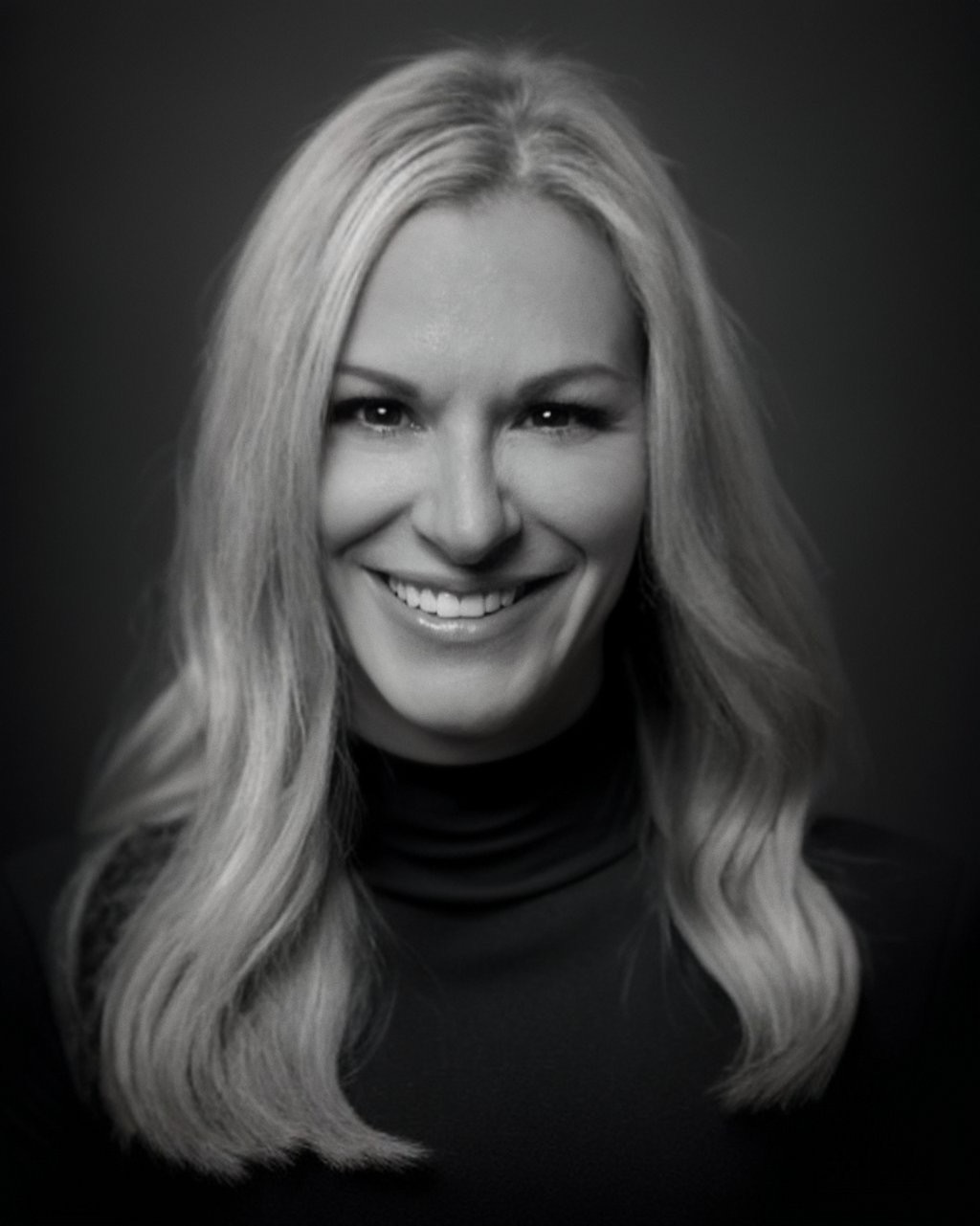
Podcast Host | Emotional Intelligence Advocate | Leadership Reformer
Some people build businesses by following the rules. Others quietly question the rules, break the ones that no longer serve them, and end up building something far more meaningful in the process.
Kendra Dahlstrom is one of those rare builders.
Her journey is not just about growth, revenue, or visibility. It is about identity, courage, and the internal rewiring required to step into leadership when the old version of you no longer fits. Kendra has built a powerful platform at the intersection of business, self-mastery, and conscious leadership, helping high-achievers create success that actually feels aligned, sustainable, and human.
What makes Kendra compelling is not just what she has built, but how she has evolved. She speaks openly about the moments of doubt behind the scenes, the pressure of expectations, and the quiet cost of success when ambition outpaces self-trust. Her work resonates deeply with leaders who have achieved external wins but know there is another level waiting, one that requires more honesty than hustle.
Kendra brings clarity without ego, depth without heaviness, and a grounded wisdom that can only come from lived experience. Her perspective challenges the idea that success must come at the expense of self, relationships, or health, and instead invites a more intentional way forward.
This conversation is an exploration of growth from the inside out.