


Given Months to Live: Dale Atkinson's Entrepreneur Playbook for Radical Health & True Wealth (#510)
Send us a text “Do it because it’s the right thing for you.”- Dale Atkinson Exclusive Insights from This Week's Episodes Dale Atkinson was given months to live. And instead of accepting the script, he did what high performers do when everything is on the line: he went to work. In this episode, Dale breaks down the entrepreneur mindset that helped him challenge assumptions, research relentlessly, and build a radical health playbook designed to protect energy, extend capacity, and create true w...
 Apple Podcasts Apple Podcasts
  Spotify Spotify
  RSS Feed RSS Feed
  Amazon Music Amazon Music
  Podcast Addict Podcast Addict
  iHeartRadio iHeartRadio
  Castro Castro
  PlayerFM PlayerFM
  Podchaser Podchaser
  Overcast Overcast
  RadioPublic RadioPublic
  PocketCasts PocketCasts
  Audible Audible
  Pandora Pandora
  YouTube YouTube
 “Do it because it’s the right thing for you.”- Dale Atkinson
Exclusive Insights from This Week's Episodes
Dale Atkinson was given months to live. And instead of accepting the script, he did what high performers do when everything is on the line: he went to work. In this episode, Dale breaks down the entrepreneur mindset that helped him challenge assumptions, research relentlessly, and build a radical health playbook designed to protect energy, extend capacity, and create true wealth that lasts. This conversation is a wake up call for every founder running on adrenaline and denial. If you want to build a bigger business, you better build a stronger body first.
Episode Highlights
00:04:10 The moment he heard “terminal” and why he refused to accept it
00:06:20 The research rabbit hole and the experts he contacted worldwide
00:08:10 How he built a personalized protocol instead of following a template
00:12:10 Why quality of life mattered more than “extra months”
00:14:30 The truth about the system, off label options, and why patients must self advocate
00:17:10 What he removed from his home first to reduce toxic load
00:20:40 The exercise mistake most people make when their body is under stress
00:22:50 The power of testing, bloodwork, and ruthless iteration
Full show notes, transcript, and resources for this episode:
https://podcast.deepwealth.com/510
The Deep Wealth Podcast
Most entrepreneurs do not fail.
They just carry too much for too long.
The business grows. Pressure grows faster. Profits get harder to predict. Decisions cost more energy. Over time, focus slips and health takes the hit.
The Deep Wealth Podcast and Deep Wealth Mastery are built from real experience. We're the only system based on a 9-figure exit. This system exists because guessing gets expensive.
🧠 Deep Wealth Mastery
This is for you if you want to:
• Grow a profitable business without becoming the bottleneck
• Build real value so selling is optional, not forced
• Optimize your health before it limits your business and life
One proven roadmap for real decisions.
⭐ Explore Deep Wealth Mastery
https://iapdw.com/idm
🎧 Subscribe
https://iapdw.com/podcast
📘 Free eBook
https://iapdw.com/ebook
💬 Have a question you keep circling back to?
Leave a short voicemail
https://podcast.deepwealth.com/voicemail/
Built by entrepreneurs. For entrepreneurs.
Loved this Deep Wealth Podcast episode?
You built your business from nothing.
Now make it pay off big.
📱 Subscribe Now
As a bootstrapper, every move counts. Subscribe on your favorite platform for Jeffrey Feldberg’s 9-figure exit strategies. From your morning grind to late-night planning, get insights from founders who did it without investors. These tips could change your future.
Drop a Quick Review
Got 30 seconds? Leave a 5-star review. It helps us make better episodes and reach entrepreneurs like you, hustling without a safety net.
Don’t Lose Your Exit (And Your Financial Freedom)
You’ve poured everything into your business. A bad exit could cost you millions. Most deals fail, and even “successful” ones lose half their value. The 90-day Deep Wealth Mastery program teaches you to make your business run without you and boost profits so you capture the best deal instead of any deal.
What Others Say
“Deep Wealth Mastery is pure gold. I wish I’d had it before my exit,” says Stacey C. “The value I’ve gained dwarfs the investment,” adds Sanjay S. “It makes my business great to own and sell,” shares William S.
📘 Grab Free Tools
Check out client success stories for proof. Master the Deep Wealth Strategy Map to plan your exit. Or snag the eBook, From 7 to 9 Figures: The Exit Playbook, for a clear guide.
Click here to start your legacy-defining exit today.
510 Dale Atkinson
Jeffrey Feldberg: [00:00:00] What if the body isn't broken, but simply unheard. Dale Atkinson spent his life listening, where most people rush past. A wellness entrepreneur, educator, and founder in the organic health space, Dale's journey didn't begin with certain. It began with questioning ingredients, questioning systems, questioning why so many people feel unwell while doing everything right.
Over time that curiosity turned into conviction. Dale immerse himself in nutrition, detoxification, and natural living, not as trends, but as disciplines rooted in responsibility and respect for the human body. His work has helped thousands rethink what health actually means.
Not perfection, not extremes, but alignment between food, environment, stress, and intention.
What sets Dale apart isn't just what he teaches, but how he teaches it. He bridges the gap between modern life and ancestral wisdom between convenience and consciousness, between reacting to symptoms and designing a life that [00:01:00] supports vitality from the inside out.
This is a conversation about reclaiming agency over your health, unlearning what no longer serves you, and building a lifestyle that quietly compounds into clarity, energy, and resilience. Once you hear how Dale thinks about the body, you may never relate to your own health the same way again. And before we start this episode, a quick word from our sponsor, Deep Wealth and the 90 Day Deep Wealth Mastery Program. Here's Jane, a graduate who says, and I quote, the Deep Wealth Mastery Program prevented me from making what would have been one of the biggest mistakes of my career. I almost signed on the dotted line with an unsolicited offer that I now realized would have shortchanged my hard work and my future had I accepted that offer. Deep Wealth Mastery has tilted the playing field to my advantage.
Or how about Lyn? Wow, he gets right to the point, and I quote, Deep Wealth Mastery is one of the best investments ever made because you'll get an ROI of a hundred times that. Anyone who doesn't go through this will lose [00:02:00] millions.
And as you're listening to these testimonials, are you wondering if you have the time? Are you even thinking that you've got this covered, you have the advisors or people in your network? Well, I got to tell you, these myths, they're often behind the 90 percent failure rate for liquidity events. Think about it. You have one chance to get it right for your financial freedom. You really want to make it count.
And when it comes to time, let's hear what William has to say. We just got in this testimonial, William says, and I quote, I didn't have the time for Deep Wealth Mastery. But I made the time and I'm glad I did. What I learned goes far beyond any other executive program or coach I've experienced.
So what do you think?
As I hear that, that's exactly what gets me out of bed every day. That's my mission. That's the team's mission here at Deep Wealth to literally change the social fabric of society. One business owner at a time, one liquidity event at a time, and my Deep Wealth Nation, what I want you to know, the Deep Wealth Mastery Program, it isn't theory.
It's from the trenches. It's the only one based on a nine figure deal. And that deal, [00:03:00] that was my deal. You know my story. I said no to a seven figure offer. I created the system that later on, myself and my business partners, we said yes to a different buyer, a different offer, a nine figure deal. That's what we now call the Deep Wealth Mastery Program or the Scale For Ultimate Sales system.
It's built by business owners, for business owners, so if you're interested in growing your profits for preparing for a future liquidity event, and that may be two years away, it could be 22 years away, whatever the time may be, you want to do this now, and you want to optimize your post exit life, Deep Wealth Mastery is for you.
To get started, email success at deepwealth. com. Again, that's success. S U C C E S S at DeepWealth. com. You'll receive all the information about the Deep Wealth Mastery Program or better yet, why not hop on a complimentary strategy call.
We'll go through exactly where your business is today and what's standing between you and your financial independence and your dreams. So that's where you want to be. You [00:04:00] want to be with other successful business owners, entrepreneurs, and founders, just like you they're looking to grow their businesses, create markets.
Market disruptions and unlock their financial freedom to get what they deserve. And whether you've been in business for three years, 40 years, you're a startup, you're manufacturing you're in high tech, low tech, whatever the case may be, coming in and network with other business owners, it's a safe space.
It's a confidential space with business owners, with businesses just like you, because they all wanna lock in their financial freedom and enjoy both success and fulfillment. So again, the 90 Day Deep Wealth Mastery Program, it has your name on it. All you need to do is take the next step. Please send an email to success at deepwealth. com.
Deep Wealth Nation welcome to another episode of the Deep Wealth Podcast. Deep Wealth Nation, let me ask you something. When you think of your long-term plans, when you think of your business, whether you wanna grow it forever or sell it figuratively tomorrow, how's your health? Do you ever think of your health?
Do you ever think of how can I have a bigger and better business [00:05:00] if my health is at the next level? And I gotta tell you, in my early days, health wasn't even on the radar. It was the old I'll sleep when I'm dead. Kind of attitude. And thankfully I've learned since then. But I am very fortunate to have a special guest in the House of Deep with us.
Say you heard the official introduction. We have a fellow entrepreneur, an author, a thought leader, and an entrepreneur with a wake up call for all of us. So Dale, I'm gonna put a plug in it right there. Welcome to the Deep Wealth Podcast. It's truly a pleasure to have you with us. There's always a story behind the story.
Dale, what's your story? What got you from where you were to where you are today?
Dale Atkinson: First of all, thank you very much for having me, Jeffrey. And hello to everyone on the line and everyone who can hear me. It's great to meet you all. Sorry, where to start? Let's take things right back to the beginning. So prior to the story, I'm gonna tell you I was working in finance. I was relatively successful in my thirties.
I was sitting as a board member of, various different finance organizations from Wellington Management through to HSPC [00:06:00] and various others. From the outside, everything was going absolutely fantastically. I had the career you wanted, I had the life you wanted. I had, a great Dane puppy and two little boys and everything looked perfect.
Then comes the summer of 2024 and unfortunately my partner had a bit of a funny turn. They thought she'd had a heart attack. They rushed her into hospital. And they actually found during one of the tests that she had a small cell lung cancer. Fast forward, about a month and a half, two months, she went in and had a full lobectomy, so the upper right lobe of her lung entirely removed in order to remove the cancer.
That was on the, I think that was off the top of my head, on the 3rd of October, 2024. Fast forward 12 days. She'd been outta hospital for about seven or eight days at that point in time. And on our youngest little boy's first birthday on the 15th of October, 2024, I then went in to have what's called an endoscopy, which is essentially a camera down your throat.
I'd been suffering with heartburn for a number of years. I've been going to the doctor on and off for probably [00:07:00] five, six, maybe even seven years. They kept putting it down to stress because at that point in time, I was in my early thirties, they kept telling me, it's your lifestyle, it's stress, it's all these sorts of things.
In the meantime, I'd basically quit drinking. I'd sorted out my diet. I was doing a fair amount of exercise. However, I was working very stressful roles. I was starting a new company at that point in time. I was just in the throes of signing a multimillion pound contract with a retail bank in the uk to take on a just over a hundred staff to do a basically what's called a remediation on the compliance side.
So going through and looking at their books and fixing issues. And it was always put down to those sorts of things. I then started having a number of pains going up through my shoulder. They now liken it to an angina pain. It's essentially mini heart attacks on a minutely secondly basis I was having, and at this endoscopy, they then ended up finding a nearly 10 centimeter tumor in my esophagus. And it turned out that tumor had been pressing against a cluster of nerves, was causing this pain. It was also causing me issues where I was struggling to, to [00:08:00] swallow and eat. It was causing a number of other issues throughout my body as well.
We then went on to find within a couple of days that when I met with my oncologist and had a scan, et cetera. That it wasn't just one singular tumor. I had a full metastatic stage four, so terminal cancer. I had a 9.2 centimeter primary tumor. I had a tumor attached to my aorta. So the val coming off of your heart, I had another one on the neck of my pancreas and I had a number of lymph nodes somewhere around.
So double figures. Of lymph nodes involved as well. I was unfortunately, within a matter of weeks, told that they saw it as a terminal diagnosis. They gave me a, roughly a prognosis about 11 and a half months, and they essentially gave me a pat on the back, sent me home and told me, make yourself comfortable.
We will see you when we are admitting you into hospice in a few months time. And yeah, that's pretty much the start of my story is I was given the prognosis that nobody wants at the grand old age of 35. My partner [00:09:00] was still recovering from our own cancer journey. And we decided to take everything that had happened to us at that point in time.
And instead of accepting the prognosis, instead of accepting the terminal diagnosis and, the dire outlook that I was given, I decided to go off and start researching. I came across a lady called Jane McClelland, she was formerly a physiotherapist she's now a bestselling author around cancer and using metabolic pathways to cure cancers, et cetera.
I came across the likes of Dr. Thomas Siegfried, who I reached out and spoke to and if your listeners may have seen him on the diary of the CEO, et cetera recently, he's become a very famous name and in that space, and I reached out to probably a few hundred other experts globally. And the consensus that came back was that this doesn't need to be the end.
That there are a number of ways outside of the standard of care, which is what we would normally call the normal route within the NHS as it is in the uk or the medical system in the us. There were a number of routes outside of that and a number of theories around cancer outside of that.
Which [00:10:00] have paid dividends for a lot of people. And there are a lot of terminal cancer survivors at this point in time who have followed these roots and had great successes be that things like the Joe Tippens protocol, et cetera. You'll have seen your viewers and whatever else will have seen a number of these popping up, especially with the health changes in the US at the moment.
There are a number of people coming outta the woodwork and very much talking about these in the mainstream now, which is fantastic. So I went off and looked into these and I then started to essentially define and refine my own protocol. So I undertook next generation sequencing, which is essentially a genomic testing of my body and my tumor to work out what pathways and what individual sort of roots my cancer was using to survive.
And I then went to some of the best specialists in the UK in order to find a set of drugs which weren't necessarily the right drugs for the standard of care pathway. They were repurposed medications from other diseases, et cetera, that had been found to have really sort of efficacy outputs in cancer in oncological [00:11:00] situations.
I pieced these together with a number of other complimentary therapies, so hyperbaric oxygen red light therapy the use of infrared saunas. Pulse, the EMF lots and lots of other things, including exercise mindset breathing, so using things like the WII.FM Hof breathing techniques. And I essentially have managed to, in the last, just over a year, go from a stage four metastatic cancer to having one singular lymph node that is currently still involved.
And I'm hoping to be cancer free or NED as they call it here, which is no evidence of disease within the coming couple of months.
Jeffrey Feldberg: Wow. My goodness, Dale, so much there to unpack. Firstly, you're in myself, my thoughts, my prayers, the whole deep team, deep community for where you are right now and where you're heading. And congratulations on your success to date. I wanna go back for just a moment, and by the way, Deep Wealth Nation, this is not medical advice.
This is simply Dale and myself. We're two friends having a fireside chat. You're listening into anything that we're [00:12:00] talking about. If you're thinking about it for yourself, please check with a medical professional who can give you the proper advice. And so Dale, I know as myself as an entrepreneur and Deep Wealth Nation in general, we are so busy.
Asking, you know, going out, here's my goals, I'm gonna achieve it. I'm gonna get to the top of the one mountain. We're not thinking of the health. I want you to go back if you could, as painful as it might be to that moment where you've got the diagnosis for the first time, what was going through your mind, what happened to your world at that point?
Dale Atkinson: So at that point in time, I had a. 1-year-old, I was diagnosed on his birthday. I had a little boy who was just about to turn three as well. I had a partner who'd just been through her own journey. We had a great Dane puppy, a house and a life to support. And then additional to this, my mother also died in that small period.
Meantime as well. Just after a, a week or so after my diagnosis, my mother also died. So I was flooded with so many emotions and so much going on at that point in time. That first of all, I couldn't remember if I tried right now [00:13:00] to be able to tell you what I was going through exactly. And second of all, I was so caught up in the emotion of what I felt that I dunno, it's very hard to describe to anybody listening unless you've been through it.
But it was an emotion I'd never felt before and it was an emotion that I got so caught up in. And so consumed by that it's sort of impossible to describe apologies. I know that's not sort of the answer you're looking for, but I dunno how else to describe it.
Jeffrey Feldberg: Yeah, it's. Really unimaginable is never me. It's always okay. Maybe that person there or that family member and my heart goes out to them, but we never think it's gonna be me. And so once that sunk in, okay, this is the diagnosis. What was running through your mind as an entrepreneur, you are out there, you're doing some amazing things on the finance side, and I'm gonna make things happen, and I've got all these plans and all of a sudden, wow, it just feels like the world comes crashing down.
What happened next for you? And just. In terms of your own mind chatter and the thoughts that were running through your [00:14:00] minds after it sunk in, okay, this is not a bad dream. Wake me up. Okay. I can't wake up. This is for the moment. This is where things are at. Then what?
Dale Atkinson: So that point at WII.FM, it sunk in is very much sort of the nexus of where things changed. So much like many of your listeners, and much like I had experienced many times in business before, when you come across great failure and huge roadblocks and issues, there is only really one way to deal with them, and that is perseverance.
It's knuckling down. It's working out what your next steps are. It's taking things back to basics and really rebuilding piece by piece, knowledge, piece by knowledge piece, understanding the problem you're dealing with, understanding what your options are, and then piecing together which one of those makes the most sense for you from both a risk perspective and from a knowledge based perspective, and from an asset sorry. The chemotherapy means my brain goes sometimes, so apologies. There's a word I'm looking for one's own sort of Wealth, et cetera. It's what we can afford to do. It's what we have the ability to do. It's what we have the knowledge base to do, and it's where we can [00:15:00] then drive that.
And that's where I went. I went to what I could understand. I sat down, I read through somewhere around four to 5,000 research papers in the space of around two months to understand exactly the problem I was dealing with. I went out and reached out to pretty much every global expert I could get my hands on from Thomas Creed through to the Hope for Cancer Clinic down in Mexico through to a number of others worldwide.
To stem cell researchers, to university researchers, to oncologists and all sorts of people to understand what my options were. And from there I then built a plan using my knowledge, the options available, and my own personal resources, and worked out what exactly I could do, what sort of timeline I could do it on, and how that might sort of look as an output.
Jeffrey Feldberg: Sure. And Dale with my next question. Let me give you some context on this and I would love to hear. Sites, I'm gonna speak from the US perspective. I love your accent, although I'm sure I have the accent to you. You're over the pond over there. In the uk, in the US at least, we spend the most amount of money [00:16:00] of all the nations and countries out there.
Yet our population is one of the sickest and we're in some incredible turbulent times. Some market shifts are happening. Our food pyramid just got reversed upside down, which is interesting. We have the MAGA movement going on and bringing what I feel are some great changes to society. But generally speaking, putting all that aside for just a moment, the social programming, what we are trained to do as people when we get a diagnosis is to blindly follow what the doctor in the white coat tells us to do.
And if you're a doctor. No offense, no judgment here. You're doing what you know to do what you've been trained to do. You don't know what you don't know. That's probably part of the challenge here. But Dale, you didn't do that. You didn't say, I'm gonna follow blindly what the doctors are telling me and I have to share with you whether they be an entrepreneur or a family member, or a friend or a loved one.
Sadly, in my own life, I'm sure people can relate to this, there have been people close in my orbit who have had cancer diagnoses and other kind of health [00:17:00] ailments. The immediate response is I'm just gonna do what the doctor tells me to do because if anything else was so good, the doctor would know.
The doctor would tell me to do it, and that's not what I'm being told, so I'm just gonna go down that particular path. You didn't do that, and I'm wondering what led you to say, Hey, thank you, but no thank you. And if I can use the word courage, gave you the courage to say, I'm gonna go outside the system, do my own research, come to my own conclusion and see where that takes me.
Dale Atkinson: So the mindset initially started off as following the doctor. My mother worked in the NHS, so the National Health Service in the UK for pretty much her entire life. She started at about the age of 16, trained to become a nurse right the way through until her death in her late sixties. I was initially of exactly that mindset.
It wasn't until I was sat down by the oncologist and the surgeon and told that unfortunately there was very little they could do The only treatment available was palliative and the initial chemotherapy they offered me was going to essentially destroy my quality of life. It was going to leave me potentially bed bedbound.
It was going to leave me unable to hug [00:18:00] my children. It would likely make my hair full out. Not that I'm worried about my hair, but it would give me lots and lots of side effects that would make my life. A living hell essentially. And the aim of that was to buy me the grand total of one to two extra months to live at the cost of six to nine months worth of, extremely grueling.
Hellish chemotherapy in order to put me in that position. Now, I should stay here. I did actually accept chemotherapy. In the end. I did take immunotherapy and chemotherapy, but after some negotiation, I didn't take the initial one they offered. I went away and did some chemo sensitivity testing and found one that was better suited to my body and all sorts, and managed to convince them into it.
However, at that starting point, I wanted to follow my doctor, but following my doctor would've put me in a position that I couldn't hug my children. It would've put me in a position where the last year of my life. Would've been spent in extreme amounts of pain, unable to spend time with my loved ones, unable to get up and do anything, and [00:19:00] just as a shell of a human being.
Therefore, to me, it was the option of accept that or look for other options, and initially those other options weren't looking to be curative at all. They were looking at improving my quality of life, trying to extend my life in a way that made sense for the lifestyle I was living, and gave me the best chances of being able to.
Hug and spend time with my children of giving my children an idea of what their father was like and making memories with them, not just having this sickly sort of Gola esque, from Lord of the Rings, a gola esque creature in bed just trying to survive. I didn't want my children and my partner to remember me like that.
I wanted them to remember somebody who was fighting hard to give every opportunity to be with them, so I couldn't not.
Jeffrey Feldberg: Absolutely in deep Deep Wealth Nation. A few things as we're talking about this, again, with what I am sharing with Dale and he's sharing with me, this is not medical advice. Always seek your own professional medical advice from an authorized medical person in [00:20:00] your particular life and whoever you deal with on the medical side.
And this is also not about let's tug at your heartstrings and woe is me story here because actually it isn't. And this is really helping to shine a north star, de both nation for you. Should you find yourself or your loved ones or a colleague in a situation that on the surface doesn't look that great, you begin to have some questions to ask.
And Dale, what's interesting? At least you were told by your doctors, Hey, you might have a month or two at the most. I know a lot of people who get some kind of a diagnosis, they're never told, Hey, look at the stats, because I know generally speaking, and I'm perhaps overgeneralizing here, but generally speaking, with a lot of these fatal diagnoses, when you go through the recommended treatment, 97% of the population, three years from now, five years from now, isn't here.
In other words, there's a 98 to 99% likelihood you're not gonna make it even after you go through this painful treatment in two years, three years. And maybe for some people they're saying I'll take that [00:21:00] versus a few days or a few weeks or a few months, I'll take that. But we're not really getting that full information.
And Depo Nation, when a situation is prescribed to your business, hey, your profits are faltering. Do you just sit there, do nothing about that? Or are you doing what? Dale did a deep dive. You're looking into it. Okay, what can I do? I'm not gonna be like everyone else. Let me see what I can do to get some different results here.
And Dale, if we zoom out for just a moment now, and I know you are making a difference out there based on your journey, you're helping others, you're sharing information, you're giving alternative narratives to look into, that can literally save lives when you zoom out. And there's no judgment here against any of the medical professionals or anyone that you had dealt with.
What's your narrative of what you're telling yourself of, Hey, I was told this, but I found that, and here's where I am today. What would be, in a few sentences, what you'd wanna share with Deep Both Nation? I.
Dale Atkinson: I should probably point out exactly as yourself has already. Jeffrey, I have no issue with doctors in any way, shape, or form. I will always default to listening to a doctor. First of all, I have a [00:22:00] lot of respect for doctors and clinicians within the health services, whichever country that is. I have a lot of respect for how much learning they've done and how well they know they're subject.
But cancer, at this point in time specifically, cancer has no known cause. Other than the occasional bit, which is genetic, most people agree in the oncological world that there is no singular way to treat it and that every cancer is different. Nobody can quite give you one singular answer as to whether chemotherapy, whether immunotherapy, whether stem cells, whether all of these magical things that we're looking at the moment, the immunizations they're talking about for cancer, all these sorts of things.
No one can give you one direction. That definitely works. So it's not so much about not listening to a doctor. It's not so much about going against their advice. It's about working out your personal circumstances. Much like you do in a business, you don't base your exact business on the model of what everyone else is doing.
You base it on what your p and l says. You base it on your [00:23:00] business plan. You base it on what your business is set up to do. You know if you are an apple, you don't turn around and base it on. I dunno, PlayStation, similar sort of things, but you don't try and map your business directly one-to-one.
You can follow your competitors, you can look at their model. You can try and improve your own model against that. You can take ideas from other places and pick pieces from other business models, other ideas, other marketing plans, other, whichever way you want to go with it and add it to your own to improve your approach.
But it all comes down to your business and how your business runs and what is right for your individual business. And I looked at my health the same way, and I would suggest anybody in a similar situation, no matter, whether it's a terminal diagnosis or a lower level diagnosis, or a chronic illness, et cetera, do the same.
They break it down into little pieces. They work out what their aim is, whether that's an increase in quality of life, but a sacrifice in length of life, whether that's trying to buy as much time as they possibly can. Whether that's trying to cure themselves in whatever way, means, or shape [00:24:00] possible, whether they're willing to accept that five year potential of death for chemotherapy, whether they're looking to do any of these things, they need to sit themselves down, work out what information is relevant, and find the information that is relevant.
They need to then quantify what that means for them in their exact personal situation and circumstances, and they need to work out then. Whether the doctor is giving them the right opportunity to apply that, because unfortunately, in the same way that you go to a McKinsey, you go to A-K-P-M-G, a lot of these consultants will base things outta the box.
It's the same as a doctor. They have a set template, a set format, a set way that they deal with these things because they are dealing with so many different people at once it doesn't get highly personalized all the time.
Jeffrey Feldberg: Yeah, and I am just thinking as you're going through that, what's interesting about what you're sharing, Dale, and now more than ever, especially with artificial intelligence, ai, we're at a point where we can do a data point of one. Up until this point. Let's face it, at least here in the us, when I go to my general practitioner, my family [00:25:00] doctor, if I get seven minutes, that's a lot.
The doctor is packed. They have other agenda items. I'm not necessarily at the top of the list. Again, no judgment here, no finger pointing, but I'm expected to do what everyone else does. But we know even anecdotally, you may follow one particular way of eating and that works terrific for you. If I follow that exact same way, it doesn't work so well for me.
Every person, every body is different. And what works for one person may not work for another person. And now we're finally gonna be able to do that. And I don't wanna get into all of these conspiracy theories and everything else like that, but I do wanna ask you based on the research, because you did a deep dive, I love how you took your entrepreneurial mindset.
Your financial background of data, facts, numbers, let me see what's there. And you put that into the medical situation of looking at all these different studies, all these different research papers. There's one school of thought that says it's actually not healthcare. It's sick care. And if we're gonna be very open and honest about it from a business model, [00:26:00] big pharma, other companies, it's to their advantage to not have aswell.
It's to their advantage to have us. Sick or continuing to be sick or sick longer than we normally should be because there's more money than for us getting healthy or if I can use the word cured or trying something that's even not a prescription drug that heals me because there's no profits in there.
I mean, I can go on and on with that narrative. What are your candid thoughts with that? Is there anything to that with what you saw in the research?
Dale Atkinson: Unfortunately, yes. There was a big one that actually came out in the last couple of weeks with regards to COVID vaccines, and this is a published paper. You guys can look it up. I can't remember the name of it off the top of my head, but if you Google it, you will find it very easily. And it's around how essentially some of the companies and some of the research teams who created the vaccines knew that they were causing heart failure.
In some patients, they knew that some of the population were having, heart inflammation, cardiac inflammation, they were causing all sorts of other issues around this. But because they also knew that their funding was going to be pulled and some of the big pharma companies had turned around and told them that they would [00:27:00] pull their funding if they continued checking into this route.
A lot of them closed it off and essentially decided to go for willful blindness, and sadly, I came across that in a number of different ways and a number of different pieces along this whole journey from the use of things like Metformin, which is a very well known diabetes drug. It has massive anti-cancer properties.
It can be used for the sake of pennies, but it's not patentable in oncology because it ran out of its patent many years ago. It's off patent, so nobody's willing to do. The checks into it. Nobody's going to spend the money to do the trials. Nobody's willing to invest in patients trialing this and putting in data and all sorts of things because it'll cost 'em to millions.
And therefore, because the big pharma companies aren't willing to invest in them, it's not used. Yet anecdotally, there are so many thousands of people who use it in an oncological setting and have positive outcomes. There are so many, smaller tier three studies, so not the study you want, [00:28:00] essentially, you need, there's lots of different tiers.
We'll come, I'll go into that right now. But there's also different tiers and ways that you can approve drugs. But nobody's willing to pay for them. I wouldn't say it's so much of a conspiracy theory. I would say unfortunately the healthcare system has fallen too foul of commercial gain. It is an over corporatized system and it's unfortunately in a position now where it is not helping the very people that it was designed to help for various other different reasons, as well as just corporate greed, but it is not set up in order to help the individual underlying to it. It is not necessarily there in order to keep people sick, but it's just not there to focus on helping everybody.
It's there to focus on trying to do the maximum good at the quickest point possible.
Jeffrey Feldberg: And so really Dale, it almost sounds like healthcare. Is a business and it really is a business. It's a big business. It's a multi-billion, perhaps trillion dollar business. And I know in business, Hey, how can I get this done the fastest, the most [00:29:00] effective, the most profitable way? There's a difference though, and at least for me, there's a hard line when it comes to health versus offering a business service or something else.
So with all of that said, dela, I'm wondering someone in Deep Wealth Nation, they find themselves in an unfortunate situation. Maybe it's them directly. Maybe it's a loved one, a family member, again, a colleague, a team member who gets some kind of a diagnosis and they don't just wanna blindly follow what they're being told.
It literally is patient beware. Just like buyer beware. Patient beware. I know there's so many people saying well, I don't know where to start. Yeah, I heard Dale, but I'm not a financial guy like him. I don't know how to research like that. I can't run the numbers. I would just be overwhelmed. I wanna do something.
Where do I do? Where do I start? What does that look like? What would you say to that, Dale?
Dale Atkinson: So I would say two things. Number one is I personally subscribe to what's called the limitless mind. Theory it's a theory that was written by a lady called Joe Bola, and it essentially posits that anybody can do or learn anything if they have a reason and a want to. So it's about [00:30:00] perseverance. It's about pushing yourself through it even though it's uncomfortable.
And that could be anything from learning your accounts in business, learning how to do marketing, even though it doesn't feel like your thing or any of these sorts of things. Anything you could possibly want to do or learn in life. Pretty much anyone can do it if they persevere and push themselves too.
The second thing would be try to break it down into as smaller pieces as you possibly can. In my case, I decided to ignore the outcome. I decided to ignore everything else that was going on and focus specifically on chemotherapy. At first, focus specifically on working out what was happening in my body and how.
Essentially it was affecting me in order to then pick off piece by piece, one by one each of the individual pathways, finding the right drug, the right thing, focusing in on research on this for two weeks at a time in chunks in order to then pick out and design my protocol off the back of it.
What I'm essentially trying to get at is if you break it down into teeny tiny chunks as within a [00:31:00] think you can pick up, and you can start to understand quite quickly what those chunks together start to mean. And when you piece that together, you will find that you have made a lot more progress, a lot quicker than you think you have by focusing in on the smallest possible pieces.
Jeffrey Feldberg: And Dale, as you're talking about that, I'm gonna use what's probably a very bad analogy and then I'm gonna put it back into the health space. And I know in dealing with some medical professionals, the bad analogy I'm gonna use, it's like you're in a restaurant and you're gonna order something. You wanna make a change to whatever you're gonna order, and whoever is taking the order says, Hey, Jeffrey.
Very sorry about this. I spoke with a chef, and the chef doesn't wanna change it, so either take it as is or you're not gonna get that at all. And some restaurants do that. Not all restaurants, but there are some that do that where the chef is, Hey, it's my way or the highway again, probably not the best example, but now I know in the medical world there are health professionals, there are doctors and others who are saying, Hey, if you're not gonna go along with this prescribed regimen, exactly as been suggested as what I'm telling you to do.
Then either you're [00:32:00] probably gonna die or I'm just not gonna deal with you. So here you are, you're doing your research, and you said a number of times I came back, I was ready to go with a prescribed way of doing things, but it had to be on my terms, on my way. So did you run into the doctors or health professionals saying, Hey Dale, it doesn't work like that.
It's gotta be like this or nothing. And how did you deal with that? And I also mentioned that with the subtext, again, that social programming, it's as though we shut down. Number one, we get this horrible diagnosis. In your case, Dale, you're gonna die and you don't have a lot of time to live. And then it's in that shock and you have that white coat in front of you and we're programmed, just do whatever they said.
And you grew up with your mother and condolences again on the passing of your mother have, Hey, this is how it's gotta go. And this is what it does. So how did you get beyond that when you ran into some resistance from the medical team of, Hey Dale, no, not happening. It's this way, or it's our way or the highway.
What do you do there?
Dale Atkinson: So first of all, I met a lot of resistance with everything from the diet that I followed. So I followed a low carb [00:33:00] vegetarian style rainbow diet. When I first went into one of the meetings with the nutritionist for the NHS, they turned around and told me to eat lots of chocolate and lots of ice cream and to put on as much weight as possible by eating junk food.
And I already, thankfully at that point, knew it was not the route I was going to take. It was not the route that worked for people. It was not actually, aligned to cancer, biology, et cetera. So I went in with the mindset of smiling and nodding, agreeing to what they said, and then quietly doing my own thing in the background for those ones.
We also then, when I disclosed the off-label medications I wanted to take and the complimentary therapies I wanted to take directly to my oncologist, we ended up having a two and a half hour long consultation in which, first of all, she threatened to pull my care at multiple points during the conversation.
She called me stupid. She called me lots and lots of things that I probably can't repeat in polite company. And under no uncertain terms told me that I was going to kill myself and die even quicker. But I spent 20 years as compliance officer. I have been called the [00:34:00] anti-business unit. I have been called every name under the sun by investment managers through to all sorts for doing my job.
I have sat through, trying to define and create regulations and put them into procedures to then have them ripped up and thrown in my face and told that we're never gonna do this, and that's not the way business works and all these kind of things. So I have a very thick skin. Very luckily for me, I grew that thick skin through essentially having to through work, and it just happened to play so well and so neatly into this and allow me to essentially.
Keep going without letting the opinion of somebody who doesn't know me, who didn't stop to look at my situation in the same way that I was trying to put it across, who didn't see that I had a need to survive, not just a want to survive, didn't see that I was fighting for a family for two little boys who need a father, and that I was willing to go far and above and beyond what most people were in order to achieve that. And I think that's the same with entrepreneurship. [00:35:00] It's going above. It's ignoring the people who tell you that you're going to fail. It's ignoring the people who tell you that it's a bad idea. If you have the data, if you understand the market you're looking at, if you understand what you are trying to do and how you want to get there, then how is Joe Blogs off the street who has no idea of your determination of your business plan or of your underlying idea?
How were they qualified to tell you? How to live, how to run a business, how to do things, and I saw it exactly the same way.
Jeffrey Feldberg: And so what's interesting, Dale, what I'm hearing you say, and my goodness, easier said than done. I don't know if I would've been as well schooled as you in that situation. You heard what you knew for you anyways was truly wrong, incorrect, or maybe even going to get the final exit for you quicker than you would've otherwise.
But you sat there, you smiled, you nodded. You didn't necessarily go against the grain. You were just there listening and in the back of your mind saying, okay, I hear this, I'm gonna. Do what I wanna do anyways. But then when you had that direct confrontation with your [00:36:00] oncologist, it's not just calling you names, which is unprofessional, unethical, and that's a whole other conversation.
Probably should have. All kinds of things looked at from their board of professionals. At the same time, though, you were threatened with, and you have socialized medicine a little bit different than in the us but you're threatened, Hey, you're gonna be on your own for this. You're not gonna have this paid for by the government.
I'm gonna yank this because what I'm hearing is. Ludicrous. It's crazy. It's just not gonna happen yet. You sounds like you kept your calm and you just talked it out, and somehow you navigated your way through that. They found some kind of a comfort level, whatever looked like, and you did, and you got to the point where you wanted to get to through discussions not losing your cool listening and having a thick skin.
How am I doing with that?
Dale Atkinson: Yeah, I think that's exactly it, Jeffrey I managed to keep my calm. I managed to essentially just let it roll off of me. What I realized very early on was that the NHS specifically often runs on fear. Because it's quicker and easier to get a [00:37:00] patient to bound to fear than it is to sit and talk them through with things.
And because of the volume of people at the moment with cancer, which is, I think it was growing by, I think it was 31% year on year or something? No, I'm sorry. 13% year on year. It was some crazy number that we have more and more people every single year with cancer. But we have less people qualifying in oncology, so they are extremely pressed for time.
They're stressed, they're tired, they're fed up. They are overworked, underpaid, and all these other things that you can say about the medical profession. And I understood this and I understood as a result of which they go for pressure tactics because it is normally the fastest, quickest way to deal with people.
But I'd done my research. I knew they couldn't legally pull my care without a fight. I'd already made outreach to the head of the local NHS. We do it in trusts, so each one's run by a trust, essentially a charity, which is then funded by the government. I'd reached out to and already had conversations with the head of the local NHS Trust.
I knew that I had roots to escalate [00:38:00] things where I needed to. I knew that if they tried to pull my care, I could kick up a bit of a fuss and they would have to bow to essentially because of the UK law. So for me, I had all of these things that I knew I could do in the background as plan B, and I walked into that meeting.
Well armed, informed. And knowing exactly what my rights and what my ability to push them was. And therefore I could sit there and smile and nod and I could sit there and take all of the whatever she wanted to say to me, because I knew half of it was just for bluster. And just because, in 30 years an oncologist or whatever her timeline is, since qualification.
She probably hadn't had that many patients try the same, and she felt probably a little bit attacked by it. And therefore this was her lashing out her as a result obviously for many years in my profession I know that a lot of people lash out in these circumstances more out of their own ego, in their own fear than out of reality, and I was able to just sit there, let it all roll off of me and move on.
Jeffrey Feldberg: And so Deepp Nation, there [00:39:00] are so many takeaways and we're gonna get into even more. But before we do that, deepp Nation, one of the golden takeaways, not even golden platinum takeaways here, Dale, you are sharing. Be your own advocate. Do the research. Know what's out there. Firstly, know what the actual science the data is saying.
Know what your right is as a patient, whatever country, whatever the laws of the land are, know how that applies to you. So you're not gonna get easily pushed around and from your perspective. What's right, what's not, what's ethical, what's not, so that you have some solid ground to be standing on.
And so Dale, with all that said, now when you're looking at your journey, and again, this is not medical advice to anyone who's listening to de Palpation, always consult with a health professional. That said, Dale. Where are we getting it wrong in society? Because we can all agree on this. The numbers for cancers are skyrocketing.
If this were a business, it'd be a terrific business to be in because the growth rate is unbelievable. Despite the amount of money that's being spent on these [00:40:00] cures, despite the amount of money that goes into the research and everything else that we're hearing, where are we getting it wrong in terms of let's talk about what not to do.
What should we be doing? So how have you fundamentally changed your life? Perhaps you can talk about exercise or diet or sleep or environments or toxins. Where do you want us to begin? What's the quick Dale prescription here of having a life where we don't run into the kind of situation that you originally got yourself into?
Dale Atkinson: First of all, I just wanna reaffirm exactly what you said just then in terms of everything is personalized, everything is focused on the individual. Nobody should follow exactly what I've done because I have done it based on my biology, on my genome, set up on my cancer specifically, and therefore what I did will not necessarily work for another person in a different situation.
It is all about understanding that situation to be then able to apply exactly the measures you need in order to combat it. And for me that included everything on the list you've just mentioned. I put in water filters, whole house water filters. We put in a [00:41:00] full air filtration system in the house, which is not a standard thing in the uk.
I know you guys have HVAC in the US quite often, and air conditioning, that's not normal here. We did all of those things. We replaced everything from our polyester carpets with pure walled carpets. We repainted the house in low VOC, so volatile organic compound paint in order to stop any carcinogen in the air.
We have cleaned our diet completely. We have no processed food whatsoever. We have no high carb food. The only sort of carbs we tend to eat are first of all, low processed, but second of all, fresh based carbs. So instead of getting flour from the store that's been there for potentially months and has quite often gone ranted, et cetera, we buy wheat berries, which is the actual pieces of wheat, and we then mill it mill the grain ourselves and then make our bread outta that.
And it's much fresher and it has more vitamins in. We don't have any seed oils in the house because they're pro-inflammatory. I'm not saying they're the devil and they're the cause of cancer. Like some people online, [00:42:00] that's not categorically not true, but they're extremely high in Omega-3 omega sixes, sorry.
Which then sets off the balance of Omega-3 versus omega six in your body, which then causes inflammation, which can then. Cause cancer to essentially perforate and get worse. We went through, you name it, we've done it. Essentially we bought in. I've got an infrared sauna in the room just across here.
I've got a hyperbaric oxygen chamber in the garden room. We have done everything we possibly could within our power. In order to try and gain every single little percentage margin of gain in order to get a better overall outcome. Now, some of those are only, on a grand scale of things, a n point NNN 1% gain.
But when you mount up a hundred or a thousand of those, they do end up consolidating into a decent gain, and that's where I've made my progress. Is picking up those little bits and pieces, putting them all together in a way that makes sense and just taking the little bit by little bit.
Jeffrey Feldberg: Yeah. [00:43:00] Dale, what I'm hearing you say is, number one, you're recognizing, okay, I live in a modern world. It's not as though I'm in nature and I'm living in a cave. That said though, there are certain things that I can do to, as best I can give my health the advantage here. So I'm hearing you say anything such as polyester rugs.
You just remove that from the health. Anything that could be airborne toxins to the best of your ability. Let me filter this out. Let me remove it from the health. Let me go as natural as it possibly can. So from the air that you breathe to the filters for the water that you drink, I'm hearing you say, I want to eat.
Foods that aren't processed. So in other words, whole Foods, not the store, but Whole Foods here in the us. One of the things that a lot of people say is, if you showed this food and the label to your grandmother or your great-grandmother, would they recognize and understand what's on the label? Because if they don't, then you probably shouldn't be eating it.
And if it's gonna be fruit where possible organic fruit, organic produce where you can. So what I'm hearing [00:44:00] you say is you took the time, the effort, you invested the money. Into clearing things out that shouldn't be in your house or ingesting food as medicine and went the way of, let me do the best that I can with what I have to have the best air, the best water, the best possible food that I can have.
And someone in nation, I'm sure they're thinking. Yeah, Dale, that sounds great. I either don't have the time or my money is spoken for. I don't really wanna put it into those areas. What would you say to them?
Dale Atkinson: What can you really take to someone who, who thinks like that at this moment in time? From my perspective, having been that person probably 2, 3, 4 years ago, I would say you don't know what you have until you lose it. It is an investment in your future. Your health is something you cannot neglect because if you do, you won't be here to do the business growing to, reap the rewards in the future, et cetera.
So you're better to invest a little bit now, focus it into the right places. And I would say when talking about things like organic food, it's not about going a hundred [00:45:00] percent organic on absolutely everything. It's about looking at things like, there's a thing called the Dirty Dozen. So there are 12 fruits and vegetables that are particularly liable to pick up what's called glyco phosphate.
I think you guys in the US call it Roundup which is known to be carcinogenic. And there are 12 fruits and vegetables that are particularly bad at picking this up and they soak it through their skin. Strawberries, I think is the worst one. I think they did a punnet of strawberries where they rung out enough to spray a whole other plant and all this kind of stuff.
As long as you focus a little bit of extra into the right places, you can make a huge amount of gains. And for us, that's been the secret of it, is working out where those gains and which are the right places to press those buttons, which are the right places to allocate those resources.
Exactly the same as you would in any business as well. It's, do you stop and do for look talking about, let's say a, a commerce website. Do you stop and focus on CRO? So optimization of conversion, or do you throw more money into adverts? Which one's going to get you the best gains [00:46:00] overall? And we did exactly the same sort of treatment to our lifestyle.
We worked out, first of all where the first big things we needed to change were, and then the smaller and smaller until we got down into the little tiny marginal changes at the end that we could leave or pick up or whichever way around we wanted to go.
Jeffrey Feldberg: And so Dale, what I'm hearing you share is for you, you came up with what you think is the best and the most important for you, but you tested it. So as an example, if it was the research saying if. Eat this one type of fruit and everything's gonna be great. And you try that one type of fruit and for whatever reason it wasn't great actually.
It made you feel sick or nauseous. Not gonna be for me. I'm not gonna do that. So you did the research, you then applied it, Hey, does it work for me? Does it work for my specific situation? Does it work for my body? Type in terms of what's going on there. And you also did the best that you could, whatever your preferences were.
If it made sense, great. But you also prioritize. And again, it sounds like very high level. The food that was consumed going organic were possible, and you looked at the dirty dozen, okay, I'm gonna avoid those. Either [00:47:00] not eat them at all, or if I am gonna have them let me get the organic varietals, or things like I believe avocados or pineapples.
The skin is so thick that the likelihood of getting glyphosate. There might be some there, but it's much less than other types of things, like you mentioned, like berries, like blueberries or strawberries or other kinds of things. So you're prioritizing doing that and the water, the air. How about exercise?
Getting outside sunlight, air outside, what was going on there? Did you change anything in terms of your routine there with exercise and movement?
Dale Atkinson: Absolutely. So I bought a treadmill. You name it, I've probably got it in my house at this point, from vibration plates through to, I've got a boxing set up and all sorts of things. We put in a lot of time and effort to working out, first of all what to do in terms of exercise around cancer, because some some exercise is actually not very good for cancer.
And if you're going off and doing marathons or if you're trying to push endurance racing or if you're just pushing your body until the point of sort of exhaustion and breaking, it's actually not [00:48:00] very good in an oncological setting. So we stopped and worked out which exercises were the best, which ones would help with things like lymphatic drainage, which would help with body detoxification, which would help with overall sort of oxygenation of the body, et cetera.
And then worked up from there and started piecing in little bit by little bit. So I'd add, a half mile jog once a week for a month. The next month I'd go and add 15 minutes of boxing. The next month I'd go and add something else and I'd slowly build my way into it so that it became habit and it became routine as opposed to, having to throw yourself into it and find the effort every single time you build the habit, little bit by little bit until you realize that you are doing everything you could possibly want to and more without even having really changed your lifestyle or noticed it as such.
Jeffrey Feldberg: That's what I love about rituals because a ritual. We're not thinking about it. It's not a to-do list item that I have to check or put a lot of action into. Our rituals form our days, which form our weeks, [00:49:00] months, quarters, years, decades, and we don't even think about it. And deep Deep Wealth Nation, I hope you picked up on this, what Dale is saying is so often overlooked.
This is not about well, I'm gonna run a marathon every day because I'm told hat's healthy. You're actually saying the opposite. When you did the research, that kind of strenuous exercise, it was too much. Now to not do it. No, I'm not saying not to do it, but I'm hearing you say, okay, maybe once a week I'll do it.
And it's not gonna be for a long period of time. I'll do it for a shorter period of time and listening to your body and perhaps measuring your HRV or other kinds of things, that's a whole other episode that we can go down and see what's there. But I'm hearing you say everything done in moderation and what ultimately had you feel good when all was said and done.
Dale Atkinson: And also with testing as well. So that's one of probably the important things we haven't picked up on yet is the fact that I continuously tested through this as well. I took my bloods every couple of weeks. I have an amazing naturopath called Amanda King, and I have an amazing in integrative oncologist called Dr.
Henry Cohen who both helped me with that as well. And every single month we did a full blood panel. Every couple of weeks we did various other [00:50:00] blood tests as well. We looked at with that, say one month of doing a, half mile jog every day or whatever else. We looked at the changes in my body.
We looked at what extra vitamins we needed to support that. We looked at what the effect of that was, and everything from inflammation markers through to creatinine levels through to. Different levels of various different things through to the effect of my immune system, et cetera, et cetera, et cetera.
And it was about continuous testing, continuous iteration, adding in bits and pieces, taking away bits and pieces as well, and cutting things that weren't necessarily the right thing to do at certain points in time. As any good investor would do, if you have a bad investment, you're better to cut it now instead of holding onto it and making further losses in the future.
And we were quite ruthless with that process to do that. And I spent the whole of what, 15 months really obsessed with every single month going through my blood with a fine tooth comb and working out the effect of everything I'd added or changed or done that month in order to get, like we said earlier, the marginal gains.
Jeffrey Feldberg: Deep Wealth [00:51:00] nation. It's the old adage what gets measured, what gets done. We do that on the business side. Our health, that's our primary business. That's gotta be our first order of business. And Dale, what I'm hearing you say is. I didn't just take it at face value. It's a good old Ronald Reagan quote, trust, but verify.
Okay, I hear that such and such, or this supplement or that exercise should help me. Okay, I'm gonna try it, but I'm gonna do the blood labs. I'm gonna measure consistently. I'm gonna get a baseline and make sure that it's actually going in the right direction, not in the wrong direction, or nothing at all, and if it's in the wrong direction, nothing at all.
I'm gonna stop it. Maybe it works for someone else, but not for me. Going back to that data point of one, which is the most important data point, and that's myself, my body, how it reacts, how it doesn't react. And you know, Dale, as we're talking about this, I'm actually reminded of a former team member. He was in my IT department and he said, Jeffrey, you can either pay me now or pay me.
You'll always pay, and that's an adage as good for business as it is for life and our health and Deep Wealth nation. It's the same [00:52:00] thing. Everything that Dale and I have been talking about, let's face it, it's an investment, but I'd rather do small incremental investments today because I don't need to do it.
Then at the very end where I get a health diagnosis that it might be too little too late, and it's my health that I'm investing in. It's my future. How can you even put a price on that? So Dale, with all that said, my goodness, there is so much that we can continue to talk about. We're running into some time constraints here.
Before we go into wrap up mode, let me ask you this. Is there a question topic or even a theme that we haven't yet covered that you wanna share with DePaul Nation before we move into wrap up mode?
Dale Atkinson: So I think the last thing I'd like to cover is where things then went, so looking. Back sort of I did a year or in 15 months roughly of hard pushing on the health side. We have now switched to a point where with everything I learned in that journey with everything I went through, first of all I have now become a, patient advocate.
I tend to live on LinkedIn and Facebook and you can come and find me there [00:53:00] and I put out a lot of information about. Things people can research for themselves about, the idea of what chemotherapy is versus the reality of chemotherapy of how fasting salts or hydration salts can actually be bad for your health, rather than all of this marketing stuff that says they're great.
I put out a lot of information in terms of those sorts of things in order to try and help other people in similar situations. And then additionally, we have now since essentially changed the entire of myself and my partner's careers. We've recently bought an e-commerce business, which we're hoping to use to try and subsidize a lot of the equipment that we have used and found extremely helpful during my journey for other people.
Which is called Peak Health and Fitness. It's a UK based e-commerce business. We have also since started a charity with a lady called Jane McClellan, who is a very well known cancer author. She authored a book, which is a New York Times bestseller called How to Starve Your Cancer. And we are in the process of starting a charity called Beyond the Standard in order to initially help the UK government and to.
[00:54:00] petition the UK government and I can't think of the word I'm looking for to essentially push the UK government to try and make institutional changes in the way we look at off-label medications in the way we treat complimentary therapies, et cetera. And then further to that, we also then want to bring it into the US and try and push for some more global change as well.
Very thankfully, with things like the RFK change to the the food pyramid in the us, et cetera, it looks as though us is already heading in the right direction, which is fantastic to see. I know some people will be slightly against that because of mag, et cetera, but taking the politics out of it, that nutritional change is absolutely incredible to see in a nation like the United States, and we hope it'll filter down as part of what we're doing over here.
And then lastly, we are also in the process of reinvestments precede for a clinic concept in which we are looking to try and create one of the world's first truly complimentary clinics within which we will use a lot of things that I use along my journey. And a lot more as well that will help other people along theirs.
Everything from looking at nutrition, because as we've already said, for things like the keto diet doesn't work for everyone. If you have something like a prostate [00:55:00] cancer, which is led by amino acids, the keto diet's actually horrendously bad for it because you're essentially feeding the cancer in most cases.
And it's all about trying to find those different things to give people the right gains in the right place for their specific cancer and the cancer phenotype. So yes. Nothing else to really say from my side except self-advocate. Live for yourself. Focus on your health wherever you can. I'm just trying to live happy.
Jeffrey Feldberg: And nation, we are gonna go into wrap a mode, but before we do deportation, not to worry. All of that will be in the show notes. And Dale, I know as we're recording this, some of these things are still in the works. I would ask as they get up and out there, as you have websites for them, send that to us and we'll put that in the show notes so people can come and click and help you and get the word out there and we'll continue to pay that forward together.
But absolutely love what you're sharing. And Dale, you also point out something so important. Any one of these topics, these subjects that we've either talked about or haven't talked about, it could be an entire episode. In and of itself that we can go deep [00:56:00] down the rabbit holes along the way for that.
There's only so much that we can do in one episode. And so Deep Nation, your takeaway exactly as Dale has done and exactly Deep Wealth Nation, what you're doing for your business. Do you ever stop learning about your business? Are you always looking how can I take you to the next level? What's new out there?
What should I know? What should I do? What should I stop doing? Take that same philosophy, that same lifestyle, if you will, and apply it to your health. You'll be the better for it your future self. We'll, thank you for that. Start that today. Don't wait. And so that said, Dale, let's go into wrap up mode because it's our tradition here on the Deep Podcast.
It's really my privilege of my honor. Every guest I ask the same question. It's a fun question. Lemme set this up for. When you think of the movie Back to the Future, you have that magical DeLorean card that will take you to any point in time. So Dale, imagine now is tomorrow morning you look outside your window.
Not only is the DeLorean card curbside, the door is open, it's waiting for you to hop on in what you do, and you're now gonna go to any point in time. Dale has a young child, that teenager, whatever point in time it would be. What would you tell your younger [00:57:00] self in terms of life wisdom, life lessons, or, Hey Dale, I'll do this, but don't do that.
What would it sound like?
Dale Atkinson: It would have to be around perseverance and self-advocacy. I think the only real gains in life come from, first of all, knowing yourself and having enough confidence in yourself to push forward. No matter what anyone says or what anyone thinks, do it because it's the right thing and the right thing for you.
And on the other side is to persevere when perhaps most people have stopped. I came to a position where I was told by health professionals categorically that I was going against my own health, that I was going to kill myself and all these sorts of things. I continued to persevere. I continued to learn until I was at a point where that confidence and the self-advocacy became natural because of the instinct to learn and the perseverance.
Jeffrey Feldberg: I love that. Believe in yourself no matter what anyone else thinks. Continue to persevere and to learn and keep on pushing that forward and one entrepreneur to another. And here at Deep Wealth Nation, I mean, isn't that what we're doing anyways for our businesses? We're being told we're crazy, it's never gonna work.
Who would do that? And guess what we [00:58:00] turn impossible into. I'm possible. And it's a great reminder for us. Why not apply that same philosophy? To our health, to our personal lives, to take it to the next level. And so Dale, all of that said, if someone has a question for you, they wanna speak with you, they wanna have a conversation, perhaps they'd like to be pointed in the right direction, whatever it is, where would be the best place online to reach you?
Dale Atkinson: So there's two or three places you can reach me. First of all is my LinkedIn, which is Dale j Atkinson. And then additionally, thelifeorganic[dot]com is where I write my blog, and you can contact me through the website there as well.
Jeffrey Feldberg: And Deep Wealth Nation again, this doesn't get any easier. It's all in the show notes. It's point and click. Do me a favor, go to thelifeorganic[dot]com . Become a subscriber to Dale's blog. I've gone through the articles with some amazing articles, some insights. Dale has done a lot of the heavy lifting. Why not benefit from that?
Dale is paying it forward. Let's help him pay it forward, become part of his community, share some insights, pass it along, and we will make together our health and the world a better place. I know it sounds [00:59:00] corny, but it's so true. And so Dale that said, it's official. Congratulations. It's a wrap. And as we love to say here at Deep Wealth, may you continue to thrive and prosper while you remain healthy and safe.
Thank you so much.
Dale Atkinson: And the same to you, Jeffrey. Very much appreciated and thank you everyone for listening. It's been great to speak with you today.
Jeffrey Feldberg: So there you have it, Deep Wealth Nation.
What did you think?
So with all that said and as we wrap it up, I have another question for you.
Actually, it's more of a personal favor.
Did you find this episode helpful?
Have you found other episodes of the Deep Wealth Podcast empowering and a game changer for your journey?
And if you said yes, and I really hope you did, I have a small but really meaningful way that you can actually help us out and keep these episodes coming to you.
Are you ready for it?
The dramatic pause. I'll just wait a moment. Drumroll, please. Subscribe. Please subscribe to the Deep Wealth podcast on your favorite podcast channel. When you subscribe to the Deep Wealth Podcast, you're saving yourself time. Every episode automatically comes to you, and I want you to know that we meticulously craft Every one of our episodes to have impactful [01:00:00] strategies, stories, expert insights that are designed to help you grow your profits, increase the value of your business, and yes, even optimize your post exit life and your life right now, whatever you want that to look like.
And every time you subscribe and a fellow entrepreneur subscribe, it's a testament to how together, Yes, we are. We are changing the social fabric of society. One business owner at a time, one liquidity event at a time. So don't let the momentum stop here. Subscribe now on your favorite podcast channel.
You'll never miss an episode. You'll be the first to hear from the top industry leaders, the innovators, the disruptors that are really changing and shaping the business world, and maybe you're commuting, maybe you're at the gym, maybe you're taking a well deserved break that we spoke all about on this episode.
The Deep Wealth Podcast, it's your reliable source for the next big idea that could literally revolutionize your business. So once again, please hit that subscribe button, stay connected, inspired, and ahead of the curve. And again, your next big breakthrough moment, it might just be one episode away. Maybe it was even this [01:01:00] episode.
So all that said. Thank you so much for listening. And remember your wealth isn't just about the money in the bank. It's about the depth of your journey and the impact that you're creating. So let's continue this journey together. And from the bottom of my heart, thank you so much for listening to this episode.
And as we love to say here at Deep Wealth, may you continue to thrive and prosper while you remain healthy and safe.
Thank you so much.
God bless.
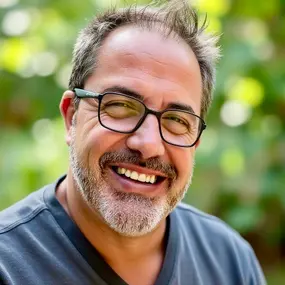
Business strategist, Author, and Speaker
What if empathy was the core metric of leadership — not just profits?
Tullio Siragusa has built a career proving that emotional intelligence isn’t a soft add-on, but the foundation for innovation, trust, and sustainable growth. For over 30 years he’s been a disruptive force in tech and business, helping companies scale, leaders reconnect with purpose, and teams perform with authenticity. He is the founder of a leadership advisory firm and the creator of the EmpathIQ Framework™, which blends disruptive technology, design thinking, and human-centered leadership.
His journey is one of transformation: from early roles in technology to becoming a fractional executive, coach, and speaker who pushes beyond typical KPIs. Along the way, he’s become a board advisor in programs focused on design thinking, ethical AI, and cultural leadership. His published books explore leadership, innovation, and the self-awareness needed to lead well.
This is a conversation about the kind of leadership that asks hard questions: How do you lead when your team doesn’t see you? What happens when systems grow faster than your capacity to care? And how do you balance tech and humanity, speed and meaning?
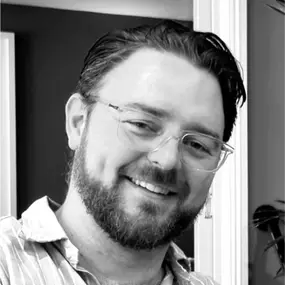
Atkinson
What if the body isn’t broken—but simply unheard?
Dale Atkinson has spent his life listening where most people rush past. A wellness entrepreneur, educator, and founder in the organic health space, Dale’s journey didn’t begin with certainty—it began with questioning. Questioning ingredients. Questioning systems. Questioning why so many people feel unwell while doing “everything right.”
Over time, that curiosity turned into conviction. Dale immersed himself in nutrition, detoxification, and natural living—not as trends, but as disciplines rooted in responsibility and respect for the human body. His work has helped thousands rethink what health actually means: not perfection, not extremes, but alignment—between food, environment, stress, and intention.
What sets Dale apart isn’t just what he teaches, but how he teaches it. He bridges the gap between modern life and ancestral wisdom, between convenience and consciousness, between reacting to symptoms and designing a life that supports vitality from the inside out.
This is a conversation about reclaiming agency over your health, unlearning what no longer serves you, and building a lifestyle that quietly compounds into clarity, energy, and resilience. Once you hear how Dale thinks about the body, you may never relate to your own health the same way again.


