

Health Founder John Goldman Lost His Health While Building Success. Here Is How He Took It Back (#566)
Send us Fan Mail “Have grace for yourself and others in times of conflict.” -John Goldman Exclusive Insights from This Week's Episodes John Goldman built success while his energy, focus, and health quietly disappeared. He reveals how founders can reverse decline before poor health weakens leadership, growth, and the future they are working to create. Episode Highlights [00:05:00] John wakes up at 45 overweight, exhausted, unfocused, and afraid his best years are over [00:09:00] Why being told...


“Have grace for yourself and others in times of conflict.” -John Goldman
Exclusive Insights from This Week's Episodes
John Goldman built success while his energy, focus, and health quietly disappeared. He reveals how founders can reverse decline before poor health weakens leadership, growth, and the future they are working to create.
Episode Highlights
[00:05:00] John wakes up at 45 overweight, exhausted, unfocused, and afraid his best years are over
[00:09:00] Why being told you are “just getting old” can hide a preventable decline
[00:12:00] Casual obesity and the dangerous health debt most founders underestimate
[00:15:00] The moment founder health starts weakening business performance and leadership
[00:28:00] The “lie of fine” inside blood tests compared with an unhealthy population
[00:48:00] John reveals whether his former self could have built Rebel Health
[00:53:00] How John stopped turning success into sickness and created a legacy of health
Full show notes, transcript, and resources for this episode:
https://podcast.deepwealth.com/566
The Deep Wealth Podcast
Most entrepreneurs do not fail.
They just carry too much for too long.
The business grows. Pressure grows faster. Profits get harder to predict. Decisions cost more energy. Over time, focus slips and health takes the hit.
The Deep Wealth Podcast and Deep Wealth Mastery are built from real experience. We're the only system based on a 9-figure exit. This system exists because guessing gets expensive.
🧠 Deep Wealth Mastery
This is for you if you want to:
• Grow a profitable business without becoming the bottleneck
• Build real value so selling is optional, not forced
• Optimize your health before it limits your business and life
One proven roadmap for real decisions.
⭐ Explore Deep Wealth Mastery
https://iapdw.com/idm
🎧 Subscribe
https://iapdw.com/podcast
📘 Free eBook
https://iapdw.com/ebook
💬 Have a question you keep circling back to?
Leave a short voicemail
https://podcast.deepwealth.com/voicemail/
Built by entrepreneurs. For entrepreneurs.
Loved this Deep Wealth Podcast episode?
You built your business from nothing.
Now make it pay off big.
📱 Subscribe Now
As a bootstrapper, every move counts. Subscribe on your favorite platform for Jeffrey Feldberg’s 9-figure exit strategies. From your morning grind to late-night planning, get insights from founders who did it without investors. These tips could change your future.
Drop a Quick Review
Got 30 seconds? Leave a 5-star review. It helps us make better episodes and reach entrepreneurs like you, hustling without a safety net.
Don’t Lose Your Exit (And Your Financial Freedom)
You’ve poured everything into your business. A bad exit could cost you millions. Most deals fail, and even “successful” ones lose half their value. The 90-day Deep Wealth Mastery program teaches you to make your business run without you and boost profits so you capture the best deal instead of any deal.
What Others Say
“Deep Wealth Mastery is pure gold. I wish I’d had it before my exit,” says Stacey C. “The value I’ve gained dwarfs the investment,” adds Sanjay S. “It makes my business great to own and sell,” shares William S.
📘 Grab Free Tools
Check out client success stories for proof. Master the Deep Wealth Strategy Map to plan your exit. Or snag the eBook, From 7 to 9 Figures: The Exit Playbook, for a clear guide.
Click here to start your legacy-defining exit today.
566 John Goldman
[00:00:00]
Founder Becomes Proof
Jeffrey Feldberg: What happens when the person building a healthcare company becomes the first proof point? John Goldman is the founder and CEO of Rebel Health Alliance, a precision-based health company built for business owners, executives, and high achievers who are tired of reactive medicine, short appointments, generic advice, and being told that decline is simply normal aging.
But John's story is not just about building a company. It began with his own frustration, doing the annual checkups, following the standard advice, and still feeling exhausted, foggy, and disconnected from the person he knew he could be. That frustration became a mission to rethink healthcare for people who refuse to fade.
Today, John is also putting that mission to the test in his own life, publicly documenting a personal transformation that challenges one of the most accepted stories in modern health: that decline is simply what happens as we age.
His work is about more than [00:01:00] longevity. It's about agency, identity, and what becomes possible when people stop outsourcing their health to a broken system.
For founders and high performers, John's message lands hard. Your body is not separate from your business, your leadership, or your future. It's the operating system behind all of it.
And before we start the episode, a quick word from our sponsor, Deep Wealth and the Deep Wealth Mastery Program. Here's Bill, a graduate, who says, the Deep Wealth Mastery Program has transformed the KPIs we're using to accelerate growth and profits.
Or how about Emry, who says, and I love this, and I quote, the Deep Wealth Mastery Program helped me create the right mindset for both growing my business and later my future exit. I now know what questions to ask, what to do and what not to do, which is priceless. The team and I have found dangerous skeletons and gaps that we're now addressing due to the Deep Wealth program. Today, our actions have a massive ROI.
[00:02:00] Absolutely love that.
And now, speaking of growth and adding value, check out what Bruce says, and I quote, As a business owner, I'm always looking for new programs, systems, CEO peer groups, and strategies to improve my business. Hands down, the Deep Wealth Mastery program is the absolute best. I'm both growing my business and preparing for a future exit at the same time. It doesn't get any better.
And I gotta tell you, as I hear these testimonials, this is exactly why I do what I do. My mission, the team's mission here at Deep Wealth, is to literally change the social fabric of society, one business owner at a time and one liquidity event at a time.
The Deep Wealth Mastery program, it's the only one based on a nine figure deal. And that deal, that was my deal. You know my story. I said no to a seven figure offer. I created a system that we now call Deep Wealth Mastery and that's exactly what helped myself and my business partners welcome from a different buyer, a different offer, a nine figure deal.
So if you're interested in growing your profits, [00:03:00] preparing for a future liquidity event, Whether that's three years away or 33 years away, and if you want to optimize your post exit life, Deep Wealth Mastery is for you.
Please email success at deepwealth. com. Again, that's success, S U C C E S S at deepwealth. com.
We'll send you all the information about the Deep Wealth Mastery Program, otherwise known as the Scale for Ultimate Sales System. Better yet, why not hop on a complimentary strategy call? We'll see where you are at your business and what's standing between you and your financial independence and your dreams.
So that's where you want to be. You want to be with other successful business owners, entrepreneurs, and founders, just like you, who are looking to create market disruptions, whether you're a startup, whether you've been in business for three or four decades, whether you're manufacturing, whether you're a high tech, SaaS, low tech, whatever the case may be.
Come on in and network with other business owners, with other businesses, just like you, because they all want to lock in their financial freedom and enjoy both success and fulfillment. [00:04:00] Again, the 90 day Deep Wealth Mastery Program, it has your name on it. All you need to do is take the next step. Please send an email to success at deepwealth. com.
Welcome And Stakes
Jeffrey Feldberg: Deep Wealth Nation, welcome to another episode of the Deep Wealth Podcast. Deep Wealth Nation, you heard the official introduction. We have a very special guest in the house of Deep Wealth. We have a fellow founder, but not just a founder who's doing some incredible things out there when it comes to health.
We're gonna be talking all about that because you know me, health is our sovereign right. Health is our first wealth. Where are you on your health side? Because I can make you a promise, the best strategy, the best business idea in the world, it's gonna pale in comparison if your health is off.
But where do you start?
What do you do?
John, welcome to the Deep Wealth Podcast.
An absolute pleasure to have you with us. Man, you have quite the story. So what is the story behind the story? What got you from where you were to where you are today?
John Goldman: Jeffrey, thanks for having me. I really appreciate it. Where do I wanna start on that story? We can start on the health and how we ended up building Rebel Health Alliance and [00:05:00] why.
Johns Wake Up Call
John Goldman: I was 45 years old. I had been a lifelong athlete, lots of sports in high school, power lifting, bodybuilding, CrossFit as an adult.
I was a Muay Thai champion in my 30s, and yet in my 40s with my wife and family and kids and business and startup life and all the things my health became less of a priority, and eventually one day I woke up feeling terrible. Absolutely feeling terrible. Overweight, low energy, bad focus, bad sleep.
And said to myself, "Look I, I'm 45. If this is how it's gonna be for the rest of my life, and probably worse by worse by worse each day, this is bad. I'm in a bad spot. Like, have I peaked, and am I gonna feel worse every single day for the rest of my life? If I live you know, to 60 or 70, God, I'd be lucky," the way I was feeling.
And I asked one of my friends who was in the, call it the biohacking space back then, I said, "Man, guys my age who say they feel better than ever, they're totally lying and full of crap, right?" [00:06:00] And he said, "No. Actually, there are guys your age that feel great every day and know they're gonna feel better tomorrow, and they're living their best lives."
And I was, "Man, okay. We have to figure out how to do that for me." And he introduced me then to the world of functional medicine, deep diagnostic tools for your health, a different way to look at your health and wellness in a way that leads to optimization and performance and longevity, rather than me just relying on the traditional healthcare system to try to take care of me.
Diagnostics To Turnaround
John Goldman: So my doctor at the time had seen that I had high AST, ALT liver enzyme numbers, said, "Ah, we'll take, keep an eye on that." He saw at the time that I had high cholesterol. He said, "Oh, we'll keep an eye on that." He saw at the time that my sugars were out of whack. "Oh, we'll just keep an eye on that." He looked at me and saw that I was probably 30 or 40 pounds overweight, and he's like, "Ah, whatever.
We'll just keep an eye on that. You should probably eat better." So what I learned through the diagnostics that my friend put me through was that I had fatty liver disease. Never had heard of that before. [00:07:00] Had an ultrasound on my liver, didn't even know you could do that. Got a DEXA scan to scan my full body composition analysis.
I had five pounds of visceral fat content. Didn't even know what a DEXA scan was, didn't know what visceral fat content was. Turns out it's five pounds is an astronomical figure for people to have. I had C-reactive protein of over five, which is, again, very high. My lipids were all screwed up. All of my sugars were screwed up.
And I was generally feeling like crap and sleeping terrible. And through understanding these real diagnostics and what it meant, we then implemented protocols. I leaned on my network of friends that are doctors, and trainers and dieticians, and we crafted a plan. And after six months of following the plan, I had 12% body fat.
I was back to my, like, fighting weight. My C-reactive protein was down. My fatty liver disease was cured. My liver enzymes were down. My lipids were in line. My sugars were in line. I was sleeping through the night, and I actually woke up feeling energetic and ready to take on the day. And I thought, look, I if I, [00:08:00] at 45, professional married guy with three kids, found value in this whole thing that I put together, which took me six months, I imagine there are other people out there feeling the same problems, having the same pains, that would like a done-for-you, high touch, high level of service product put together that would give them the deep diagnostics, craft them a custom plan, give them the full team of people and end the days of, "That's fine, we'll just keep an eye on it," kinda BS from the traditional healthcare system, and provide a total escape route.
And that is how Rebel Health was born, and that was phase one, and I can't wait to tell you about phase two and three, because I'm super excited about the final product that we have built. But that's how we got started, and that's how I got started with Rebel Health about four years ago.
Jeffrey Feldberg: Terrific, and we will get there.
Myth Of Fine
Jeffrey Feldberg: Before we do that though, I want to dispel right off the bat some myths that as founders we're probably hearing, and let's have you just burst that bubble in a good way because let's face it, especially when it comes to health, it's just easier [00:09:00] for me to bury my head in the sand and not have to deal with it, and I'm getting reassurance from everyone else that it's okay.
One of the big myths, and tell us what's going on behind the scenes with that, I spend my seven minutes, maybe 15 minutes if I'm lucky, at my annual physical with my doctor. "Ah, Jeffrey, everything's okay. Yeah, those aches, those pains that you're feeling, don't worry, it's just old age. Nothing you can do about it."
So talk to us about that. Where are you on that?
John Goldman: Yeah, absolutely not. You, first of all, you're right on the seven minutes or 15 minutes, and I would go even further to say that even for the folks that are getting executive physicals or flying to the Mayo Clinic or, getting these, like, expensive packages, you're getting a bunch of analysis in the one hand, and what are you gonna do with it?
And on the other hand, you got a primary care in the traditional system who's telling you "You're just getting old. Deal with it." Both useless.
Age Is Not Decline
John Goldman: So is getting old something that's a permanent condition? I am 50 years old. I run 45 miles a week, cross-train [00:10:00] seven hours a week. I am training to qualify for the Boston Marathon this year.
I run faster and farther than I ever have in my life. I'm leaner than I've ever been, and my cardio respiratory fitness is through the roof. VO2 max of 50 and above at age 50, where I am, is elite level. And I'm doing it because I saw a mountain that I wanted to climb, 'cause that's just the kind of guy I am when it comes to qualifying for Boston Marathon.
But also because the higher you get your VO2 max, the better your cardio respiratory fitness, the better your mitochondrial function, the deeper your capillaries, the longer you live. It is time, proven time and time again, that the better your cardio respiratory fitness is, the lower your chance for all-cause mortality across the board.
That's falling down, that's accidents, that's diseases, that's cancer, that's everything. All-cause mortality across the board reduced greatly if you just move more. And guys will say, "Oh, I got bad knees. I [00:11:00] got arthritis in my knees." Odds are that arthritis in your knees or in your joints is due to inflammation from your diet and your inactivity, and you will find that once you get your body composition in line, and once you get moving and you start eating the right foods and you reduce that inflammation, your knees will actually get better.
my knees were so bad that I was getting regular cortisone injections from the orthopedics and the orthopedic surgeon. The surgeon wanted to operate on me, and I was, like almost there. Then I went through my, journey. My knees have never felt better. I feel incredible. The arthritis has gone away.
The knee pain has gone away, and I ran seven and a half miles this morning before the sun came up, at age 50, and I plan to run even more and qualify for Boston at an elite level this year
Jeffrey Feldberg: Absolutely love hearing that. And for someone in Deep Wealth Nation who's hearing us talk, they're not necessarily understanding, okay, I've heard of VO2 max, no idea what that really means or why that's important.
Silent Killers Basics
Jeffrey Feldberg: If we put the acronyms aside for just a moment, founder to [00:12:00] founder, what am I probably either not doing at all, not doing right, so I, in other words, I should stop doing some things, start doing some things.
Again, let's burst some more myths out there, and then we'll talk about what you're doing at Rebel Health and what that should look like. But what would be some things I'm probably not even aware of that I'm either doing or not doing that is literally, and choosing my words very deliberately here, literally killing me, not tomorrow, but it's like that frog in boiling water.
It's so slow I don't even notice it until then it's almost too late, or maybe it is too late by that time because it's taken not days or weeks or months, oftentimes years before it shows up
John Goldman: I got a bunch of things to say on, this subject. I think the first one that I observe in most people is what I call casual obesity. You think that you're probably 20 to 25 pounds overweight, and just a quick diet'll get you into summer condition. Odds are you're probably 30 or 40 or even 50 pounds overweight if you think you're 20.
No one has an accurate assessment of what their [00:13:00] body composition is unless they're actually tracking it, and everyone underestimates it. And when you do get a DEXA scan, which is a full body composition analysis test that looks at your body composition, it is incredibly eye-opening to see how much excess fat you're carrying around.
That leads to metabolic disorders of all kinds. Your inflammation is going up, your sugars are bad, your lipids are bad. You're building up plaque on the inside of your arteries, and you're putting yourself in position for a heart attack later in life because you're not doing the things you're doing now.
You're probably working too much. You may be driving to the office, coming home. You're not getting your heart rate up over a s- i- beating fast at all. Maybe you're not lifting or you go to the gym and you kinda screw around without a real program. You're eating the foods that you probably shouldn't eat.
You're probably drinking too much And that's a heavy one for people to deal with. And all these things are leading to subtle degradation in your performance at the moment, but they're also building ti- ticking time bombs [00:14:00] that are gonna lead to metabolic disorders. Metabolic disorders lead to, health crises, and eventually could lead to things like heart attacks, cardiovascular disease, arteriosclerosis, neurodegenerative disease, dementia, Alzheimer's.
And those events that happen in your 50s and 60s and 70s, the seeds for them are planted in your 20s, 30s, and 40s. And it's not too late, at any point in your life to reverse any of these things, but you have to do the foundation.
Peptides Versus Pillars
John Goldman: And so I wanna dispel one thing right now, and I know it's a very hot topic right now.
Peptides. What are peptides? And everybody's thinking this is gonna be the thing that saves them. It's the latest craze. It's like, "Oh, I got a shot that I can take that's gonna solve all of my problems." The truth is aside from the GLP-1 categories of, like, semaglutide, tirzepatide, retatrutide, most peptides are not gonna be your saving grace.
You have to do the basics, and there's no end to doing the basics. And you have to [00:15:00] lift. You have to get lean. You have to be strong. You have to move a lot. You have to eat the right foods. You have to sleep the right amount. You have to have community. You have to have meaning in your life. These are our seven pillars of longevity, and without those, without the meat and potatoes of health and wellness, you will be unoptimized, your life will be unoptimized.
And the real kicker is that once your health goes, everything that you care about in life goes. And so you have to focus on your health first to unlock the good life for the rest of the things that you care about. You, your business. I always like to say this to founders. I talk to them all the time. Most of our clients are similarly focused.
Your business will only be as optimized as you are, and you need to get your health together so that you can perform at the highest level possible. Eat that glass every single day, the we're so here, we're so dead life cycle that goes through the founder's mind sometimes multiple times in a day, to manage that stress, to be cognitively strong, to be a leader.
You [00:16:00] gotta do the meat and potatoes and have your lifestyle stuff taken care of.
Jeffrey Feldberg: Pun intended with the meat and potatoes. We'll get there in just a moment. And John, you're absolutely right with that. In the 90-day Deep Wealth Mastery systems that we have, Deep Wealth Mastery Growth, Deep Wealth Mastery Exit, offline I was telling you about Deep Wealth Mastery Health. One of the reasons why we're creating Deep Wealth Mastery Health behind the scenes, let's be honest with each other, if I'm going into an exit, maybe I'm taking some of the chips off the table, maybe I'm gonna sell the entire company, or maybe I'm not even having an exit, but I want to grow the company.
I want it to be my legacy, maybe hand it off to my children, multi-generational. What's the point of doing all that if I can't get out of bed or I have brain fog or I don't have the energy, I don't have the clarity, I can't make the decisions? And then let's say somehow, some way, I do have a terrific exit.
What's the point of that if it's short-lived and I'm not there to enjoy? I'm not having an exit for the sake of having an exit. I'm having an exit for the financial freedom, the financial time I can hopefully, God willing, [00:17:00] spend with my family, my children, my grandchildren and beyond, and I can run with them and play with them.
What's the point of all that if I'm not around for that? And with that in mind, I'm a big believer in taking accountability for our actions.
Obesogenic Environment
Jeffrey Feldberg: So what I'm about to say next, and I'd love Jeffrey off base or on base, in some ways it's not entirely our fault because the food, the water, the air, our environment, it's so polluted.
And I do believe food is medicine. And if we look at what's in the food today versus back in our grandparents' or great-grandparents' time, it's a different story, that we are set up to fail before we've even begun. Thoughts about that?
John Goldman: 100% on base there, Jeffrey. Maybe 50, 60, 70 years ago, you could go through your daily life without a focus on health and wellness and be healthy. The food, the movement, the exercise, maybe some labor, the materials of the clothing that we're wearing, the lack of [00:18:00] chemical infestation and everything.
Today, if you are not actively fighting against the tides, you will be pulled out to the sea of obesity, chronic disease, and an early nasty death that could have been avoided. Now, it could be a source of resentment, meaning, like, yeah, it's not entirely our fault, our default operating system does not jive with the current environment that we live in.
And man, we, we have done a lot of looking to the causes of obesity, and there's a number of different models looking at it. My research showed me something insane findings that not only is America and Americans, and worldwide really, growing in obesity every day But our farm animals and wild animals are as well.
Why are wild animals obese? Why are our farm animals obese? I cannot rule out that there's not something in the air or in the water or something that is actually obesogenic in our [00:19:00] environment. So I just like to think that we live in an obesogenic environment from whatever the cause may be, whether it's abundance, whether it's engineered food that's meant to be addictive and not be very healthy for you and just make you want to eat the whole bag.
I I'm a victim of that at times. Everything in... Oh and our lack of mobility, our crisis of sedentarism of just getting up, driving, sitting, driving, going home, Netflix, scroll, bed, cycles that so many people are in. Everything around us is obesogenic. We live in a, in an obesogenic soup.
So what that means is you have to be proactive, exerting energy and agency on a daily basis to fight back against the obesogenic environment that we live in. And if you don't, you will be sucked out to sea, like I said earlier. And that means regular resistance training, regular cardio respiratory training, regular focus on acquiring the right foods and cooking them in the right way.
Adherence to a sleep [00:20:00] schedule, people that start businesses are highly agentic. But you've got to exert that same level of executive function on your health. And then on top of it, there's so many confusing things out there.
There's so many new technologies. There's so much information. There's so many podcasts. There's so many gurus. There's so much Instagram. There's so much deluge of information overload that it's difficult to even know what the right thing to do is. And that's where a team, not to pitch, but that's where a team like Rebel comes in because we can wrap around you, craft a full plan for you, and enable you to be your highly agentic self and fight back against the obesogenic environment and to be as optimized as you can be
Why Hire Health Team
Jeffrey Feldberg: And so let's talk about that now because the way I look at it, and I've said this many a times on the podcast, much to the detriment of Deep Wealth Nation, and I'm gonna say it again, when it comes to taxes, I have a choice. I can attempt to learn the tax code and then file my own taxes, and it'll take me who knows how long, maybe years or decades, probably never, [00:21:00] to truly master it, make all kinds of mistake, and have the IRS and Uncle Sam down my back with everything, or I can go to a chartered accountant, they'll get it done for me.
They've been there, they've done that, they're always on top of things. So why would it be any different with our health? Because as founders, I can't be an expert at everything. I need to stay in my lane, focus what I'm truly magnificent at, and then have the right advisors, the right people around me to help me do the rest.
So at Rebel Health, you and the team, John, from a very high level, and you'd be 100%, 1000% right to say Jeffrey, every person when they show up, they're on their own unique journey." I get that. That said, though, one of my favorite questions in this kind of scenario, a fancy term, Pareto's law, the 80/20 principle.
So John, for 80% of the founders coming to you when it comes to their health... Yeah, Jeffrey, you know what? 80% of the founders, it's the same 20% of these issues over here, these challenges over here that [00:22:00] are all affecting them, and we're gonna walk them through that. what are some of the common patterns when it comes to founders in particular that you and the team are helping with?
What's your system like? How long does it take? What can I expect?
John Goldman: I'm happy to share all that. I just wanna say one thing about the last comment that you made. Any founder that's been through a contract dispute or a legal situation, anything at all, you learn to appreciate lawyers, and you learn to know, "Man, I better call the lawyers in on this and get this thing papered up the right way."
And oftentimes you learn that lesson the hard way a number of times, and then finally you're like, "I call my lawyer first thing for so many things." Health is exactly the same way. You need a trusted team of advisors that you can bring in to be specialists in this particular area of of work, and you need to just think of them as another professional team that you're hiring, just like your legal team.
Rebel Precision System
John Goldman: When it comes to Rebel Health and what we do we pride ourselves on what we call N of one or precision health. And so everything that we do is gonna be completely customized to each [00:23:00] individual that comes in the door. That being said, we have the same protocol for discovering what that N of one needs to be and what that precision medicine needs to be.
And the first thing that we do is we map your entire biological terrain, the deepest physiological dossier on you ever put together, DNA testing, the deepest and best blood work you've ever had, pictures of your heart and artery, inside shots of your visceral fat content, body composition analysis, cardiorespiratory fitness analysis, cancer screening.
You name it, we have access to over 3,000 tests, and as a health fiduciary, meaning we don't sell any of these, we only recommend what's best for you, we can access anything best in class and market and only order the tests that you need. Once we figure out exactly who you are from your DNA, from the inside out and ground up, we build a custom specific N of one protocol for you that covers every area of your health and wellness.
So that's with your medical plan. So, the medical plan is gonna cover anything having to do with your metabolic health or any other [00:24:00] health issues that might come up. Second thing is gonna be a strength and conditioning plan. Movement is medicine, just like you said food is medicine earlier. We are going to give you a day by day, step by step, set by set, pound by pound exercise regimen that's going to optimize your metabolic health and your performance.
You're gonna have a registered dietician who's gonna look at your DNA and look at your blood work and talk to your doctor and talk to your trainer and craft you a very specific diet plan so that you can maximize your health plan and maximize your strength and conditioning and maximize your overall health.
We give you an epigenetic counselor who's gonna review your DNA and analyze your lifestyle choices and give you recommendations to maximize your epigenetic expression. And then we're gonna give you top of that, every meal, every macro, every micro, everything that you should be consuming, any recommended supplements, any recommended medications, hormone optimization, peptide therapies, longevity protocols, advanced therapies.
You name it, we have access to absolutely everything, and you'll have a custom plan for each of those areas. With a [00:25:00] specific dedicated team member, top-of-the-line certifications in strength, top-of-the-line certifications in diet, top-of-the-line physicians in their field trained at the Cleveland Clinic and Institute for Functional Medicine, really amazing, excellent physicians.
You're gonna get to know all of them. You have unlimited access to all of them. You can text them or talk to them every single day if you want to. We are there. We believe the more you talk to us, the healthier you're gonna be, so we encourage an open dialogue. Basically, what you have is a healthcare family wrapped around you that's gonna analyze you, craft a plan, give you the team, and all the coaching and support you need to execute that plan.
And then once you hit your first round of goals, then we discover the next round of goals, and we're always thinking in one-year and three-year and 10-year planning as we put you through our clinical 10-step longevity protocol that's gonna cover absolutely every area of your physiology so that we can get each and every component of it optimized.
We do all of your regular primary [00:26:00] care, and the product that we've just recently released is we also can now be the backstop for you in the event of surgery, accidents, pregnancy, rare disease, so you get financial protection wrapped around all this as well, and we've built really what I believe is the best option to eject out of the existing healthcare industry and into a self-contained unit that optimizes you, optimizes your health, optimizes your payments, and manages your risk
Jeffrey Feldberg: So what I'm hearing you say, and I don't want to confuse simple with simplicity, is more or less I show up, you do everything else for me. "Okay, Jeffrey, we're gonna do this blood test over here," or, "We're gonna do this over there." And there's a difference between me getting a blood test done. There's lots of blood panels I can go and I can take.
That's fine in and of itself. It's the next part. What does it mean? How do I interpret it? What does it really mean for me?
Beyond Normal Ranges
Jeffrey Feldberg: Because I know one thing, John, again, Jeffrey, on base or off base, we have become so unhealthy [00:27:00] that the medical standards have changed. So when it comes to a blood panel as an example, what maybe 20 years ago would've been deemed unhealthy, really unhealthy, today is healthy.
So if I go by what my doctor is saying, what the system is saying, everything looks great, but in reality it isn't. And so with what I'm hearing you say is you and the team, you're not only doing all these tests for me, you know which tests I need to have done, and then how it's gonna be interpreted, what it means specifically for me, and then most importantly, okay, what do I do with this?
What does it practically mean? What am I gonna be implementing in my life to start or stop? Thoughts about that?
John Goldman: Yes, absolutely right. I mean, the reference markers on your blood tests are comparing you to the general population. For example, we have guys come in that have testosterone in the 300s, and their old doctor has said that's okay. Okay for who? So our goal is to... we totally ditch all of those.
We've got our own set of standards and guidelines for your blood markers. We [00:28:00] have optimization targets rather than are you within this wide band range of, quote-unquote, "normal" as compared to a sick population. Everything that we do is about optimization, the best levels that you can have, the best way to extend your health span, the best way to avoid chronic disease, the best way to make sure that you're feeling, performing, and looking your best every single day, leaner, stronger, faster, all of it, better cognitive ability, better recall, better stress management, better emotional resilience, better sleep, everything.
None of it has anything to do with the traditional standards or what the general population is going through. So you're absolutely on base with that, Jeffrey, and it's another one of the problems of going to a regular primary care doctor, having them run your blood work, which is a very limited panel, first of all.
Doesn't even look at the advanced markers, doesn't look at anything proactive or forward-looking, and they just say, "Oh, this is fine." We call that the lie of fine, and it is endemic in the traditional healthcare [00:29:00] system. They don't have the time or the energy or the inclination to actually dig deep and work with you because of the whole way that the incentive structure is designed in the existing healthcare system for those physicians.
So I, I blame them, but I also understand that they're trapped in a system that's not set up for success. But 100%, don't go by what your standard blood panel says. Don't go by what the normal ranges are there. And if you've gone to a place like Function Health or InsideTracker or SuperPower and bought their blood markers and bought their blood tests and then been left asking yourself, "Now what?"
Absolutely. We hear from people all the time who went to Function, got their 399, oh, 100 biomarkers blood test thinking that they're doing something good for their health, but they get the results and they're like, "What do I do now?" And Function's like, "I don't know. Go talk to your doctor." That's us.
Jeffrey Feldberg: So you're putting that all together as really a one-stop shop where I'm doing the tests that you're prescribing for me, you're analyzing that, and then walking me through step by step what to [00:30:00] do. And John, again, and by the way, for Deep Wealth Nation, this is not medical advice, simply two friends having a fireside chat here.
Anything that we're talking about, before you do anything for yourself, please check with your doctor or a medical professional.
Onboarding Timeline
Jeffrey Feldberg: So John, all that said though, in terms of, okay, yeah, John, heard you on the Deep Wealth Podcast and Rebel Health of what you're doing. Sign me up. Let's start. From when we first begin to when I'm now beginning to implement these various health strategies, these health KPIs into my life, how long does that typically take?
John Goldman: Great question. So we have mastered our onboarding process, and it's a very quick sign-up. Let's say you have a consult with me, for example. I've built an amazing team, chief medical officer, chief of staff, operations. They take care of everybody, but I still like to sit on the front door and talk to people as they come in.
We do a consult. It's a very quick sign-up. You get a phone call from the office the same day. You meet your physician within two days for a meet and greet to establish care and get [00:31:00] tests ordered. You get your blood work done. Blood work comes back in seven to 10 days, and you're meeting with your physician within generally about two to three weeks after sign-up with a full blood panel in hand, ready to do a 60-minute deep dive conversation on your health From there, they're gonna begin crafting your plan and getting you started.
You get introduced to your strength coach, your dietician, your genetic counselor all in order. You do equal part consultations and intakes with them. You will have the beginning parts of your first plan within 30 days of signing up with Rebel Health. You will hit the ground running. You will be lifting different, eating differently, taking different supplements perhaps and managing your medications if you've got any.
We wanna get you off of medication rather than put you on it. And you will have your first plan really within 30 days, and you'll be active, within the first month or, four to six weeks. And then from there, we're gonna do regular check-ins. So we're gonna have meetings with your [00:32:00] physician as your protocols demands.
For some people, they're meeting with them every month. Some people, it's quarterly. At a bare minimum, we have our annual health summit where everyone on your team gets together and you meet with them, and it's like the boardroom for your health where all of your advisors come together and they're having a conversation and presentation on where you were, what you've accomplished, where you are now, and where we're gonna go.
And it's a constant iteration. We test and retest, and we're constantly changing the plan. We're constantly updating it. If your diet plan, your strength plan rather changes, your diet plan changes, your blood work changes, then your diet and your workouts will change. Everything is dynamic and based on the data and based on how you're feeling, and it's a continuous ongoing conversation because health is not a destination, Jeffrey.
There's not a place that you get to where you're like, "I'm done. I'm healthy." I hate the word maintenance. Maintenance makes it sound like you're just going to get an oil change, every six months or replacing the tires every 40 or 50,000 miles. [00:33:00] No.
Maintenance Mindset
John Goldman: Maintenance means that you have your active, proactive, protocols that you're doing on a daily basis to maintain the new level of fitness and health that you've already created.
So it's not a coasting period. It's where you... It's become second nature to You've built a new lifestyle. You've become a new person. You've gone through a whole transformation from being whether you come into us unhealthy and then you become healthy, or you come to us relatively healthy, which a lot of people do, and then you're feeling completely dialed in.
So we don't necessarily-- You don't have to be sick to come see us. We're here to prevent chronic disease in the first place, make you healthier, and then get you dialed in 100% looking, feeling, and performing your best every single day. And that process is ongoing forever
Jeffrey Feldberg: And so with that said, we've gone down the weeds somewhat, and that's okay.
Why Testing Matters
Jeffrey Feldberg: We're starting to get into some of the details, but let's zoom out for just a moment. Let's tune in to the world's favorite radio station, [00:34:00] WII.FM, the what's in it for me, where the me is actually the listener in Deep Wealth Nation.
So we're not doing a blood test for the sake of doing a blood test or having these weekly or monthly or quarterly meetings with you and the team. We're doing it because we want optimal health. Can you describe for us whether, John, it be yourself or one of your clients, kind of like the Dickens Christmas story.
Okay well, here's what the past was looking like, but here's what the future's looking like as a result of Rebel Health in terms of how either you feel or the success story, how he or she is feeling, and the difference that it's made for them.
Transformation Stories
John Goldman: In my own personal story, I went from waking up feeling like crap every day with low energy and poor focus to being able to start Rebel Health and build it from a very small, boutique you know, longevity clinic into a 50-state national healthcare company that offers full-spectrum, high-performance health for those who refuse to fade.
So that I attribute 100% [00:35:00] to the protocols at Rebel Health and being able to reach my peak in terms of my fitness and my performance and my optimization. We've had founders come in that ran, like, say, small, This guy I'm thinking of who had a small software development company. Not only has he lost, like, almost 70 pounds since he's been with us, but thank God slash it's so terrible, we found cancer.
We found a cancer in his lungs that no one else had even gone to look for, and we were able to catch it at a early stage and get him treated. So not only this guy changed his life on the way that he looked and he felt, but he literally saved his life by coming to a medical team that cared enough about him to give him the diagnostics that would do early detection so that they could have the cancer taken care of before it became a huge problem for him.
So I don't know if I've got a better story than this guy. He runs a team of, like, 15 people distributed all around the world, software dude, sitting around just coding, getting fat all the time, and now he is lean and trim and high-powered, and [00:36:00] the business is growing like crazy. Oh, and he didn't get cancer and get sick and lose everything.
So, this is a amazing story on both perspectives of the aggressive prevention and early detection that we do, which literally saved his life. We found another couple of cancers as well, a couple leukemias as a matter of fact. And then he's dialed. Like, y- I see the guy and, like, his face is completely different and his energy and his mood is completely different, and he loved us so much that he bought it for everybody on his executive team.
So everybody on the executive team is now getting the same treatment, and we see that happen time and time again. Founders or C-level guys come in. They have amazing results. They you know, share it with their partners, or really their partners are like, "Dude, what are you doing? Why are you looking so good?
Why are you so amazing?" And then, they bring them in and before you know it, we've got the whole C-suite as members.
Jeffrey Feldberg: Absolutely love hearing those kinds of stories.
Health Advocacy Reality
Jeffrey Feldberg: And again, it goes to show that we need to be our own advocate when it comes to health. We can't outsource our health, and that's why it's not called the [00:37:00] healthcare system, it's the sick care system. Rebel Health, it's a healthcare system. Let's go back though, John, to something that you said earlier, because right now for someone in Deep Wealth Nation, this may feel somewhat overwhelming.
You said earlier Jeffrey, look, if we can get movement in, we're eating the right things, we're optimizing our sleep, that's a terrific start to some massive change ahead." So all those are relatively free. Sleep is certainly free. Movement, we don't have to have some fancy expensive gym that we're spending hours in the day.
It could be something as simple as walking after every meal and getting the steps in and the movement in, and the sleep is just the biggest underrated superpower of what's there.
Longevity Basics
Jeffrey Feldberg: Talk to us about some of the fundamentals. Sleep, food, movement. What's going on there?
John Goldman: Absolutely. So our pillars of longevity are get and stay lean, so that's, like, being mindful about what you're eating and what quantities. Doesn't take anything fancy to do that. Eat the right foods. We all know what the right foods are. Whole foods, good [00:38:00] healthy fats, lean meats, fruits and vegetables.
Stay away from the bad crap, and you know what the bad crap is. That includes alcohol. Try to limit it to two, two, and two, which is what we say, which is no more than two drinks twice a week and always two hours before bed. That way you don't disrupt your sleep and you keep things at a minimum. Although once you stop drinking no one ever says, "Gosh, I quit drinking. What a terrible move that was." stopped drinking, except for special occasions, and I have, no interest in disrupting my health and sleep by, by consuming alcohol at this point. Movement. People come to me sometimes online, and I do i'll give some free advice online.
If you're significantly overweight and you haven't been moving, the best thing you can do is just try to walk two miles a day. Two miles a day. If you're just ambling around, it'll take you 40 minutes, and that's not fast. Just get the blood flowing. Do it after you eat. It's called postprandial ambulation.
It's the best time to take a walk, right after you eat. Clears your blood sugar really quickly, helps with your [00:39:00] insulin resistance, helps move you towards a state of insulin sensitivity, which is where you wanna be. Just start moving. You will find that as you start to move, you will want to move more, because you understand that it makes you feel good.
Teddy Roosevelt, president, used to walk the trails right by my house here in Rock Creek Park, they named a trail after him and everything, because that's where he cleared his mind and his best ideas came to him. How many great leaders and thinkers in history have said that they like to go for a walk to think?
There's philosophers and scientists and everybody knows that you get out there and you start walking around and your brain starts firing. That goes into hyperdrive when you start running, by the way. I run without music by myself in the dark in the mornings oftentimes, and I process so much information while I'm running, it's incredible.
So just start with moving and walking around. Start with not eating the crap. You know what the crap is. Stop eating it. Start, a basic resistance training program. There's a million of them online that you can do. [00:40:00] You can just start with body weight exercises. And I think as you said, the superpower, the underrated thing is the sleep Absolutely, 100%, guard your sleep with your life.
Even if you're super stressed, even if there's a million things to do at work, try to get your six or seven or maybe eight. Seven hours seems to be plenty enough for most people. Go to bed at the same time, dark, cool room, close the windows, close the blinds, turn the AC up. Go to bed at the same time every night, try to get up at the same time every day, and it will be transformative on your health.
Absolutely, 100%.
Sleep Apnea Wakeup
John Goldman: And if you think you have any inkling that you might have sleep apnea, get a sleep study, get the CPAP, do the thing. I have a CPAP. I have apnea. At first it was awkward. Now I travel with it. I take it everywhere. I use it for naps. One time, Jeffrey, I even hooked it up on a transatlantic flight because I wanted to get a good night's sleep on the plane because it's that important to me.
It will change your life. It'll put 20 IQ [00:41:00] points on you. It'll help with so many other things and prevent bad things from happening down the road. So those are some easy basics and, I'm happy to share those with you. We're not gatekeeping those kind of secrets. What we're giving you is precision.
What we're giving you is full coaching and support. We're taking you from 50 to 75 to 90 to 99th percentile and really doing everything that we can do, but you can get started with those basics easy
Sleep Boundaries Story
Jeffrey Feldberg: And John, I'll share a quick personal story with you and then a follow-up question to that. I love what you're talking about sleep, and I've shared this on the podcast before with Deep Wealth Nation. My schedule, my life now revolves around sleep. I've lost some friends, by the way, along the way with that because I know I want to ideally be in bed by this time, so I've begun to say no to certain social activities if it's gonna take me that way.
But a quick story. I was traveling and, sometimes the rules are meant to be broken. We can't help it, or it's a special event, or it's a family get-together, something of significance that you always have exceptions, but I can count on my hand the number of exceptions I have [00:42:00] in a year. Because if every night's an exception, well then what's the point?
But in this one particular situation, I was traveling. The flight kept on getting delayed and delayed, and then spoke to the airline. "Okay well, the next flight is going to get you in a little past 11:00 PM or 12:00 PM." And John, I'm early to bed, early to rise. I'm typically sleeping by 8:30 PM, up at around 5:15, 5:30 AM.
And I said, "You know what? No way. I will stay the night even though I'm gonna be away from home, and I'll take a morning flight tomorrow morning." The old Jeffrey would have said, "Okay, yeah, sure. I'll just go on the flight and I'll be like the masses, do what I'm told, be a good boy. Here's your flight. Get in at 1:00 AM," or whatever the case may be, and off we go with that.
So quick personal story of I know what my rituals are and I know where my lines are that I'm not willing to cross, especially when it's something so trivial. What's the big deal? I'll just take a flight tomorrow morning. Life happens. That's just how it goes.
John Goldman: 100%.
Jeffrey Feldberg: Here's the question for you, though. We don't have the time in [00:43:00] this podcast to go through all the things that you're doing.
There is so much there, but I will say that the dose makes the poison, as the saying goes. I can do too little of something, I can do too much of something, and my sense, and offline we're talking about this with Rebel Health, what would give me peace of mind is, okay, Jeffrey, here's where you want to be.
Here's what you're shooting for. If you don't get there, that's okay. We'll talk about that. Not a big deal. You're not gonna put stress on it, but I'm having a done-for-you system that's customized for me. We didn't even talk about DNA. You're looking at my DNA if I choose to. Jeffrey, not that your DNA or your genes are a foregone conclusion of what's gonna happen in your life, but at least you know what you're up against.
As an example, maybe you metabolize caffeine really quickly or maybe you don't. You should probably know that, especially if you like having caffeinated drinks like coffee or espresso or tea, whatever the case may be. But you're putting that together for me, and I'm not having to do the heavy lifting and the research.[00:44:00]
Again, I'm staying in my lane. I'm doing what I want to be doing while behind the scenes you're figuring all that out for me.
AI Powered Precision
Jeffrey Feldberg: Talk to me about artificial intelligence, AI. What's going on behind the scenes with you and the team for your business? And now the data point of one that you referenced, which before AI was never possible.
Jeffrey, forget about it. Your data point of one can help you where that's probably the future of health as we know it. So what's going on there?
John Goldman: We use AI at every layer and every part with every employee in our business. I call us AI native. ChatGPT-3 came out, like, right when we were getting started and, we've been on the cutting edge. I currently have like 12 Claude Code tabs open on my computer as we speak.
Everyone we've coached up everybody on the team how to use it. We have built AI HIPAA-compliant AI systems where we can take our medical records, our call and consult transcripts and DNA and upload them into and engage with [00:45:00] health-focused AI LLMs. We use them in sales and marketing.
We use them to code up our own software platforms, our own membership platforms. We use them to draft documents. We use them to draft plans. We're using AI everywhere and every place that we possibly can, and it's enabled us to become a 50-state national healthcare company with a staff that would probably shock most people in terms of how small it is outside of our frontline providers.
I'll say this You'll never engage with an AI chatbot with us. We believe 100% in our bones that the patient-doctor relationship, the human element, is 100% essential, and we're gonna use AI to make us super powered at all of our jobs, but we're never going to relegate our members to using AI in a way that substitutes for actual human-touched healthcare.
There are certain things that require human judgment, [00:46:00] perception, empathy, kindness, compassion, caring, a detective sense for when somebody is being slightly evasive a question where you know you're actually digging into something that might be very serious that they are reluctant to talk about. It certainly won't come out in a text-based AI interaction.
And we believe that that human layer is essential for us. We're the human layer wrapped around all these AI tools and, we have in the roadmap this year to give our folks access to analyze their data and whatnot using our AI systems. But it's not a replacement. It's just, it's merely a supplement.
And I'll say this too, that our members, much like your audience I'm sure, super agentic, entrepreneur, builders, creators, visionaries, early adopters, they're all using AI anyway, right? And they're taking all the results from the tests that they get from us. They're uploading them to Claude or Chat or whomever and having a conversation about it with the LLM and then coming to us and saying, "Okay, this is what [00:47:00] we talked about with Claude and my health.
What do you think about that?" And then that's where the human touch comes in. And so, I believe 1,000% in using AI in every way possible. We, in our roadmap on our platform, we're gonna have AI agents continuously scanning everyone's wearable information, nutritional inputs, exercise protocols, flagging things for us but only to just make us super powered, never to replace the human touch
Jeffrey Feldberg: And so what I'm hearing you say is AI is baked into what you're doing even behind the scenes. Should I have a wearable? You're analyzing that data behind the scenes. You're doing it all for me. My goodness, as you're talking about it, it sounds exhausting, but the great news is you've done it. I don't have to think about it.
I don't have to code it. I don't have to do it. Let me do this.
Health Fuels Founders
Jeffrey Feldberg: Founder to founder, look at the John before Rebel Health when you're going along the journey, and now look at the John of Rebel Health, but specifically when you're starting Rebel Health. It's a bit of a loaded question because you're now eating what you're baking.
Rebel Health as where it stands today, and I have a sense the best [00:48:00] is yet to come. You're a national company. You've had some incredible success stories and growth. The John before Rebel Health: overweight, brain fog, aches and joints. Could you have done Rebel Health? And then what's it been like creating Rebel Health as a result of where you're at today?
Just to give us a contrast of, okay, here's where I was, here what I probably could have done, here's what likely wouldn't have happened, but look at what has happened because of my health.
John Goldman: That's a great question, and there's so many different layers to that. I mean, the protocols that we discovered and implemented for me turned me into a person physically, mentally, emotionally capable of building Rebel Health. And then by, those old HairClub advertisements, I'm not only the president, but I'm a member.
use Rebel Health team. I use it in the exact same way that any of our members can, and I have gone from being in good shape to being in elite level condition for my age. am, running like crazy, [00:49:00] training like crazy. Physical condition's never been better. My, sugar profile, lipid profile, everything, organ function, joint function, everything is better than it's ever been, and, like, l- like, literally better than it's ever been And thank God, because the challenges that you face in building a business, especially one as highly regulated, as highly competitive, as complicated as healthcare is, I have to be the best version of myself possible so that I can help build the company to be the best version of itself possible.
And it's an interesting question that you've offered me because could the old me have performed in such a way that I need right now in order to take the business from where it is at this moment into the future? Probably not. And it is because of Rebel Health that I am physically, mentally, emotionally, cognitively capable of solving the problems, right?
'Cause every founder knows it's just a daily deluge of problems to solve and fires to put out and complex situations [00:50:00] to manage. Of eating the glass, as we like to say, which is just dealing with the stress, dealing with all of the, there's fear. You know, Let's just be real, right?
There's fear. Like, the bigger you build the thing, the more successful it is. The fear doesn't go away, that I have discovered. The fear actually increases relative to how successful you've been, because now failing and losing would be even more dramatic and more substantive than it would've been to fail very early and to burn out with you having not having any success.
So Rebel makes me the person that I can be in order to build this innovative new model for healthcare that is a bonafide replacement and better than your CareFirst or Anthem or Blue Cross package. And I feel like we have taken on one of the single biggest challenges in the 2020s in America, which is how to fix American healthcare system.
And the path to solving that problem is littered with the skeletons of many a person who has tried and failed to solve American [00:51:00] healthcare, and we believe that we have solved American healthcare for so many people, and we're trying to get the word out, Jeffrey, and so I'm very grateful for the opportunity to speak about it here.
And we're just so excited, and truly the beginning has only ended, and now this is really the real story where we bring this product all the way to market and to bring it to hopefully hundreds of thousands, if not millions of people.
Best Shape at 50
Jeffrey Feldberg: And John, again, it's data point of one, but that's exactly the point. So you're the data point of one. How you feel today versus how you were before Rebel Health, let's forget your biological age. It doesn't matter whether you're 50 or 70 or whatever you are. You're 50. Age-wise, in terms of how you feel, when's the last time that you felt that?
If you had to throw a number on that, "Yeah, Jeffrey, I know biologically I'm 50 years old, but to tell you the truth, the way I feel now, it is like I was," I'm making this up, "like back in the days when I was a teenager or in my early 20s." I mean, what's that [00:52:00] story for you?
John Goldman: Yeah, that's a great question. So I joke sometimes that I feel better than ever, but I can't remember how I felt in my 20s anyway, so who knows?
Jeffrey Feldberg: A whole other story behind this story.
John Goldman: But, you know, like, there was a period in my life in my 30s where I, did Muay Thai and became a Muay Thai champion, I was in pretty good shape then.
But it faded, and the memories of that faded. But I also never really pushed my cardio or my story fitness, and I wasn't as lean as I am now. So, like, today at age 50, I can say confidently that I am in the best condition I've ever been in ever in my life, ever. My fitness is the best that it has ever been.
My stress management is far and away the best it's ever been, because I always before self-medicated. I drank, I used THC, I screwed around. I ate my feelings, you know? like, I don't have any of those crutches today, and I solely manage my stress through exercise and diet and good sleep and mindfulness.
I'm as lean as I've ever been. I've got six-pack. Uh, I'm, like, totally [00:53:00] shredded. I look incredible, if I can say that. And, I know that I am in a position to, to perform the best really at any point in my life without any crutches, without any self-medication, with no sleeping pills, with no alarm clocks.
I do drink a lot of caffeine, but I really like it. And, other than that, man, like, I was, been an entrepreneur my whole life, right? So, in my 20s, we found really good success, but what did I do with it? I went out to dinner a lot. I drank a lot. I ate luxurious meals with high, rich calories.
I got fat. Like, I turned my success into me being fat and sick.
Like, what, is that? That's so dumb. Now, I'm turning my success into me being even healthier and more productive and higher performing so that my success can continue.
Legacy and Leadership
John Goldman: And I really wanted to say one last thing here. It's about my family.
It's about being the leader for my family that they deserve and the duty that I have as a father and a husband, as a son and a brother, to model for [00:54:00] everyone in my life what it looks like to be healthy and fit and take care of themselves. And luckily, I've been able to transmit that message to my children.
I got two D1 babies out of it. They're very athletic and successful at what they do, and we just have a life built around health and fitness, and they're gonna give that gift to their children, too. So I'm dialing myself in to build my business, but m- more than anything I've built a a generational legacy of health that's gonna outlive me and into multi-generations' past and that is something I'm super proud of
Jeffrey Feldberg: But I'd imagine even as you're talking about that, I'm looking at your face and your expressions, even though you can't see it, it's really beyond words because there's a confidence that comes from that, "Hey, I don't know what tomorrow is going to bring." None of us know that. I do know I'm doing everything that I can.
I'm showing up the best version of me, the healthiest version of me, and God willing, I'll be here for a long time with my children, their children's children, to enjoy life the way it was meant to be. And I love the [00:55:00] way how you're rewriting the narrative. You're throwing out hey, it's normal that you can't get out of bed, or you have brain fog, or you have no energy, or you have an alphabet of prescriptions that you're following, and you have a whole schedule of what you gotta take when.
It's healthy. It's on your own terms, and you're loving every part of that, so it's a terrific way to rewrite that narrative and a wonderful example of time more than ever than what we need. Before we go into wrap-up mode, I'll share a quick story. Was watching a documentary, and it's not that far back. It was only in the 1970s.
Think about that. It's not that far back. And there was a street shot. Okay, so aside from the bell-bottoms and the crazy clothes that was going on, there was a huge difference of how the people looked back then compared today, and it's not looking good today in terms of our body composition and our faces and the energy levels and just what was going on.
It was remarkable at what's happening, and I'm hoping and praying [00:56:00] that we can swing the pendulum back to the healthy side, which is, again, that's our God-given right. Health is our first wealth. We're gonna go into wrap-up mode.
Back to Future Advice
Jeffrey Feldberg: It's a tradition, John, here on the Deep Wealth Podcast where it's my privilege, my honor to ask every guest the same question.
It's a fun question. Now let me set this up for you. When you think of the movie Back to the Future, you have that magical DeLorean car that will take you to any point in time. So John, imagine now it's tomorrow morning. This is the fun part. You look outside your window. Not only is the DeLorean car curbside, the door is open.
It's waiting for you to hop on in, which you do. You're now gonna go to any point in your life. John, as a young child, a teenager, whatever point in time it would be, what would you tell your younger self in terms of life lessons or life wisdom or, "Hey, John, do this, but don't do that"? What would it sound like?
John Goldman: I look back on the times in which I have made poor decisions that have affected personal relationships and I regret them tremendously and wish that I could have had [00:57:00] more wisdom to have more grace for myself and others in times of conflict and really work towards the preservation of relationships and rather than, trying to be right. People are important. Your loved ones are important, and the relationships that you have with people and the community that you build are, after your health, the most important things that you've got, money or no money.
And guard them with your life
Jeffrey Feldberg: Such terrific advice here. So really what I'm hearing you say is, and I love how you said this, have grace for yourself and others in times of conflict. It takes a lifetime to build up a relationship and seconds to destroy it. Something to cherish and something for us to think about.
Where to Find John
Jeffrey Feldberg: And for Deep Wealth Nation, John, they have a question for you, the team.
Better yet, they want to start working with you and the team, get their health back on track of where it always should have been and can be. Where's the best place online for someone to reach you?
John Goldman: Ah, great [00:58:00] question. I am home-based on Twitter or X. You can find me @johngoldman, very easy. I've been on Twitter a long time, 100,000 followers. Come drop me a DM. Also on Instagram @johngoldman__ or on LinkedIn, John Goldman, Rebel Health, and then of course the website is rebelhealthalliance.io, rebelhealthalliance.io
Jeffrey Feldberg: And Deep Wealth Nation doesn't get any easier. Go to the show notes. It's all point and click. It's all there for you. John, congratulations. It's official. It's a wrap. And as we love to say here at Deep Wealth, may you continue to thrive and prosper while you remain healthy and safe. Thank you so much
John Goldman: Thank you very much, Jeffrey. Thanks everyone for listening
Subscribe and Closing
Jeffrey Feldberg: So there you have it, Deep Wealth Nation.
What did you think?
So with all that said and as we wrap it up, I have another question for you.
Actually, it's more of a personal favor.
Did you find this episode helpful?
Have you found other episodes of the Deep Wealth Podcast empowering and a game changer for your journey?
And if you said yes, and I really hope you did, I have a small but really meaningful way that you can actually help us out and [00:59:00] keep these episodes coming to you.
Are you ready for it?
The dramatic pause. I'll just wait a moment. Drumroll, please. Subscribe. Please subscribe to the Deep Wealth podcast on your favorite podcast channel. When you subscribe to the Deep Wealth Podcast, you're saving yourself time. Every episode automatically comes to you, and I want you to know that we meticulously craft Every one of our episodes to have impactful strategies, stories, expert insights that are designed to help you grow your profits, increase the value of your business, and yes, even optimize your post exit life and your life right now, whatever you want that to look like.
And every time you subscribe and a fellow entrepreneur subscribe, it's a testament to how together, Yes, we are. We are changing the social fabric of society. One business owner at a time, one liquidity event at a time. So don't let the momentum stop here. Subscribe now on your favorite podcast channel.
You'll never miss an episode. You'll be the first to hear from the top industry leaders, the innovators, the disruptors that are really changing and shaping the business world, and maybe you're [01:00:00] commuting, maybe you're at the gym, maybe you're taking a well deserved break that we spoke all about on this episode.
The Deep Wealth Podcast, it's your reliable source for the next big idea that could literally revolutionize your business. So once again, please hit that subscribe button, stay connected, inspired, and ahead of the curve. And again, your next big breakthrough moment, it might just be one episode away. Maybe it was even this episode.
So all that said. Thank you so much for listening. And remember your wealth isn't just about the money in the bank. It's about the depth of your journey and the impact that you're creating. So let's continue this journey together. And from the bottom of my heart, thank you so much for listening to this episode.
And as we love to say here at Deep Wealth, may you continue to thrive and prosper while you remain healthy and safe.
Thank you so much.
God bless.
CEO
What happens when the person building a healthcare company becomes the first proof point?
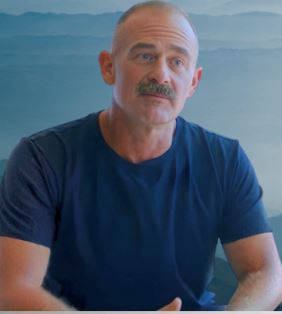
John “Jack” Goldman is the Founder and CEO of Rebel Health Alliance, a precision-based health company built for business owners, executives, and high achievers who are tired of reactive medicine, short appointments, generic advice, and being told that decline is simply “normal aging.”
But John’s story is not just about building a company. It began with his own frustration: doing the annual checkups, following the standard advice, and still feeling exhausted, foggy, and disconnected from the person he knew he could be. That frustration became a mission to rethink healthcare for people who refuse to fade.
Today, John is also putting that mission to the test in his own life, publicly documenting a personal transformation that challenges one of the most accepted stories in modern health: that decline is simply what happens as we age.
His work is about more than longevity. It is about agency, identity, and what becomes possible when people stop outsourcing their health to a broken system.
For founders and high performers, John’s message lands hard: your body is not separate from your business, your leadership, or your future. It is the operating system behind all of it.