

AI Expert Sam Sova: How AI Destroys The Big Company Advantage Founders Fear (#557)
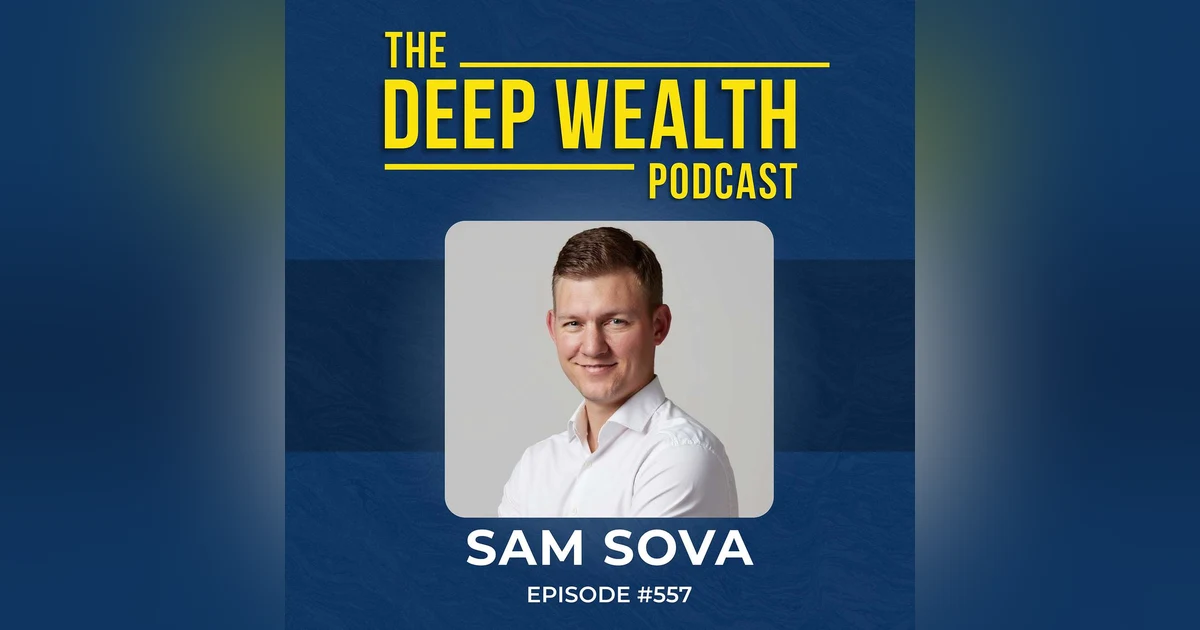

Send us Fan Mail “Use every experience, “good” or “bad,” as a learning lesson.”-Sam Sova Exclusive Insights from This Week's Episodes AI can either create growth leverage or add tool overload. AI Expert Sam Sova reveals how founders can use AI coworkers to reclaim speed, protect knowledge, and compete with larger companies. EPISODE HIGHLIGHTS [00:07:00] Why AI point solutions create tool overload instead of real growth [00:13:00] How AI coworkers help founders break through the growth ceiling...
 Apple Podcasts Apple Podcasts
  Spotify Spotify
  RSS Feed RSS Feed
  Amazon Music Amazon Music
  Podcast Addict Podcast Addict
  iHeartRadio iHeartRadio
  Castro Castro
  PlayerFM PlayerFM
  Podchaser Podchaser
  Overcast Overcast
  RadioPublic RadioPublic
  PocketCasts PocketCasts
  Audible Audible
  Pandora Pandora
  YouTube YouTube
 “Use every experience, “good” or “bad,” as a learning lesson.”-Sam Sova
Exclusive Insights from This Week's Episodes
AI can either create growth leverage or add tool overload. AI Expert Sam Sova reveals how founders can use AI coworkers to reclaim speed, protect knowledge, and compete with larger companies.
EPISODE HIGHLIGHTS
[00:07:00] Why AI point solutions create tool overload instead of real growth
[00:13:00] How AI coworkers help founders break through the growth ceiling
[00:18:00] The 1995 AI moment most companies are misreading
[00:25:00] How AI protects institutional knowledge when key people leave
[00:34:00] When bad data turns AI into a dangerous company skeleton
[00:40:00] Why Subatomic IQ changes how organizations think, decide, and act
[00:44:00] How AI gives smaller companies an unfair speed advantage
Full show notes, transcript, and resources for this episode:
https://podcast.deepwealth.com/557
The Deep Wealth Podcast
Most entrepreneurs do not fail.
They just carry too much for too long.
The business grows. Pressure grows faster. Profits get harder to predict. Decisions cost more energy. Over time, focus slips and health takes the hit.
The Deep Wealth Podcast and Deep Wealth Mastery are built from real experience. We're the only system based on a 9-figure exit. This system exists because guessing gets expensive.
🧠 Deep Wealth Mastery
This is for you if you want to:
• Grow a profitable business without becoming the bottleneck
• Build real value so selling is optional, not forced
• Optimize your health before it limits your business and life
One proven roadmap for real decisions.
⭐ Explore Deep Wealth Mastery
https://iapdw.com/idm
🎧 Subscribe
https://iapdw.com/podcast
📘 Free eBook
https://iapdw.com/ebook
💬 Have a question you keep circling back to?
Leave a short voicemail
https://podcast.deepwealth.com/voicemail/
Built by entrepreneurs. For entrepreneurs.
Loved this Deep Wealth Podcast episode?
You built your business from nothing.
Now make it pay off big.
📱 Subscribe Now
As a bootstrapper, every move counts. Subscribe on your favorite platform for Jeffrey Feldberg’s 9-figure exit strategies. From your morning grind to late-night planning, get insights from founders who did it without investors. These tips could change your future.
Drop a Quick Review
Got 30 seconds? Leave a 5-star review. It helps us make better episodes and reach entrepreneurs like you, hustling without a safety net.
Don’t Lose Your Exit (And Your Financial Freedom)
You’ve poured everything into your business. A bad exit could cost you millions. Most deals fail, and even “successful” ones lose half their value. The 90-day Deep Wealth Mastery program teaches you to make your business run without you and boost profits so you capture the best deal instead of any deal.
What Others Say
“Deep Wealth Mastery is pure gold. I wish I’d had it before my exit,” says Stacey C. “The value I’ve gained dwarfs the investment,” adds Sanjay S. “It makes my business great to own and sell,” shares William S.
📘 Grab Free Tools
Check out client success stories for proof. Master the Deep Wealth Strategy Map to plan your exit. Or snag the eBook, From 7 to 9 Figures: The Exit Playbook, for a clear guide.
Click here to start your legacy-defining exit today.
557 Sam Sova
[00:00:00]
AI Becomes Coworker
Jeffrey Feldberg: What happens when AI stops being a tool? You open and starts becoming a coworker you trust. Sam Sova is the co-founder and CEO of Subatomic and AI agent platform helping enterprises deploy AI coworkers into the workflows teams already use.
Subatomic's Promise is not another dashboard, another SaaS subscription, or even another shiny AI pilot that never touches the real work. It is AI that monitors systems, executes, workflows, surfaces, insights, and helps organizations reclaim capacity without adding more head count.
Sam brings more than two decades of experience across marketing, strategy and technology. And his work now sits at the center of one of the most important questions facing every founder and leadership team:
Are we using AI to look innovative or are we rebuilding how work actually gets done?
Subatomic is built [00:01:00] by operators, engineers, and agentic AI practitioners who come from the operational trenches, not the research lab. That distinction matters because the companies that win the next era may not be the ones with the most AI tools. They may be the ones brave enough to rethink their people, processes, data, and decision making from the inside out.
And before we start the episode, a quick word from our sponsor, Deep Wealth and the Deep Wealth Mastery Program. Here's Sanjay, a graduate of Deep Wealth Mastery, and he says, the investment I made in the Deep Wealth Mastery Program, it's a rounding error compared to the value created today and the future value I'll receive.
Or how about William, who says, and I love this, A company that's attractive to sell is also a great one to own. The Deep Wealth Mastery Program gives me the best of both worlds.
Now speaking of growth and adding value, check out what Leon says. He says that the Deep Wealth Mastery Program changed how and who we hire. We've now begun to hire talent today [00:02:00] that we never would have hired if it weren't for the program. The talent we're hiring today is helping both increase our growth and profits and our future enterprise value.
Man, I love that kind of feedback because it's that kind of feedback that's what gets me out of bed every day.
Deep Wealth Mastery System, it's the only system based on a nine figure deal. That was my deal. And as you know, I said, no to a seven figure offer, created a system that we now call Deep Wealth Mastery, and that's what helped myself and my business partners all welcome from a different buyer, a different offer, a nine figure deal.
So if you're interested in growing your profits, preparing for a future liquidity event, whether that's two years away or 22 years away, and if you want to optimize your post exit life, Deep Wealth Mastery is for you. Please email success at deepwealth. com. Again, that's success, S U C C E S S at deepwealth. com. We'll send you all the information about Deep Wealth Mastery, otherwise known as the Scale for Ultimate Sales System.
That's where you want to be. You want to be with other successful business owners, entrepreneurs, and founders, just [00:03:00] like you, who are looking to create market disruptions. Whether you're a startup, whether you've been in business for three or four decades, whether you're manufacturing, whether you're high tech, SaaS, low tech, whatever the case may Come in and network with other business owners, with other businesses, just like you, because they all want to lock in their financial freedom and enjoy both success and fulfillment.
Again, that's the 90 day Deep Wealth Mastery program. It has your name on it. All you need to do is take the next step. Please send an email to success at deepwealth. com.
Podcast Kickoff AI Focus
Jeffrey Feldberg: Deep Wealth Nation, welcome to another episode of the Deep Podcast. Well, deep Nation, let me ask you a question. Obviously you've heard about artificial intelligence, and if you haven't, what rock have you been hiding under? So when it comes to ai, are you using AI with your company just to say, Hey, we're using ai, or are you asking how can we leverage AI to take our company to the next level?
But where do you begin? What do you do? We're not gonna have a theoretical conversation. You heard the official introduction. We have a fellow founder in the House of Deep Wealth [00:04:00] doing all things AI with some incredible insights. Sam, I'm gonna put a plug in it right there. Welcome to the Deep Wealth Podcast.
Very excited to have you today. What's your story behind the story? Because you don't have a typical story, so what got you from where you were to where you are today?
Sam Origin Story
Sam Sova: Yeah, absolutely Jeffrey. Thanks for having me. So my story actually starts at 14 and I like to start there 'cause I think it's kind of the root of everything that has culminated over the last 35 plus years. When I was 14 I wanted some Jordans. I think every kid in, my dad said, there's no way I'm buying you $150 basketball shoes. A you're not that great at basketball. He was a very honest person and also like we're not spending that money. So he said, Hey, I will give you a little bit of capital. Why don't you start a lawn business? So I started a landscaping business, which eventually grew with a business partner and, we exited when we were 18 years old and went to college.
But I was hooked at that point. I didn't start my company right after that. I went into the corporate world and spent about 20 plus years [00:05:00] in the corporate world really taking roles that were entrepreneurial nature within Fortune 500 companies. So think of. Riding the waves of technology, early on, running digital marketing within very large organizations, social media, working in internet of things, digital transformation. And then now we're in the world of machine learning and ai. And then about three years ago, decided to jump ship from the corporate world and start my own adventure. So Jeffrey, I'd love to dig in from there, wherever you'd like.
Jeffrey Feldberg: Let's talk about that offline. We're talking about that. Let's share that with you both nation.
Leaving Corporate Speed
Jeffrey Feldberg: Because what I love about your story, Sam, is you started on the other side of the table on the corporate side, and so from the corporate side, very different from the world of a founder and a business owner and entrepreneur.
What were you or were you not seeing in the corporate world that you said, Hey, you know what, this has been great. Thank you very much. Time for me to go do my own thing.
Sam Sova: Yeah, so I think there was just a lack of speed that we [00:06:00] see in the corporate world and, and as we dig into. The world of ai it's a very similar thing, so there's processes, procedures, you know, layers of, people that have to approve initiatives. And it was hard to really move new ideas through large organizations. I think, myself and the teams that I worked on and worked with me we found ways to work through that in a non-traditional way within some large organizations. But it was still really tough. And I was lucky enough to just be in the position and the right point to actually start my own business.
Now I did it. You know, Partially because it was the right time, partially because I have a, great wife who actually said, Hey, you're turning 40 soon. You always had a goal of starting a business you're 40 you're 39 and a half. If you're gonna do it, now's the time. And that was the extra nudge to dive in and figure out what I was gonna do next.
Jeffrey Feldberg: And what's great about that in Deep Nation, are you doing this? Are you involving your family, your significant others in your journey? So they're right there [00:07:00] with, you're not doing the data. Today, but big picture wise, they know exactly what's going on. And so Sam, you threw your hat into the world of ai.
We're gonna start talking about that in subatomic. What was missing out there with AI that you said, okay, sure, there's a gazillion solutions going on, and even more by the day, by the time this episode airs even more AI companies that are there. But what was that gap in the marketplace that had you say, okay, this is exactly the problem that I'm gonna be solving and here's why and how it's gonna be helping you?
Pivot Beyond AI Wrappers
Sam Sova: Yeah, Jeffrey, I think listening to. a lot of your past episodes and just knowing your audience and they've gone through this, a lot of this was just the ability to recognize where you were at in the process and would say failing fast or pivoting fast. We're seeing a lot in the market right now is what I call point solutions with AI wrapped on it, right?
So software as we're used to buying it, that just is now a little bit better and has AI features or AI assistant built into it. We actually went down that path and we were lucky enough to do that in [00:08:00] 2023, and we built a SaaS product, so software as a service product that had an AI wrapper around it. And we did a beta with, about 50 companies mostly in the fortune thousand. And they loved the product, but the feedback when we said, Hey, you now have to pay for, it was like the critical point that we understood, what is the future actually going to look like, not just the now. And that feedback was, we have way too many tools in our organization right now. What we're finding is AI is actually adding more complexity, we're adding more tools, and none of them talk together. None of them work together. we're still going to all these different platforms and clicking to get things done. Is that really the future with ai? I have a co-founder, his name's Carl Simon. He's in the Bay Area extremely smart. Built our platform, of same journey as me in corporate.
And we recognize right away with the AI wrapper is really not the way that people are going to be working in the future. And we pivoted. And that's a really [00:09:00] hard thing to do for those listeners out there that have done this before especially if you bootstrapped it like we did, you're putting your time, your money, giving up certain things to build what you're so passionate about and then realizing, oh man, what we built is actually not what the market wants.
It's a really tough thing to recognize. But we were lucky enough where we convinced ourselves there is something better, which is what we built now with subatomic.
Jeffrey Feldberg: Amen to that. And as you're talking about that, you're taking me to the Deep Wealth nine step roadmap. Step one, big picture. Hey, what's a problem? Maybe not necessarily full ahead. Headlines, but it's out there. It is growing. Not a lot of people are addressing it. And as you're talking about that, I'm thinking of conversations I have with friends in the corporate world and Hey, what's going on?
Yeah, I just had that meeting with the board and they wanted to see all about ai, so we threw some things together. So yeah, we're using ai, and I said, well, how effective is that? Well, Jeffrey, to be honest, it's kind of surface level. It's expected of us. I don't know how much value we're really gonna be getting.
To your earlier point and people [00:10:00] nation, I don't know if you've noticed SaaS companies, their values, especially if they're public, are being decimated because AI is coming along. Not necessarily that they're all gonna go outta business. But the world is rethinking how we're doing things.
What Is AI Agent
Jeffrey Feldberg: And so let's cover a a few basics for Deep Nation who obviously have heard about ai, they may not know what an agent is, and I like how you call it a concierge in the background, those all these AI agents.
So what's an AI agent? As we're talking about this, I'm thinking of the Matrix and when you hear about all these agents that are showing up for someone in Deep Nation who's new to this, so what's going on with an AI agent? Why is that different than just me using ai? What would you want me to know?
Sam Sova: Yeah, absolutely. So Jeffrey referenced the matrix. I'm gonna build on that and then I'll go a little bit deeper. we talk about this all the time. the First Matrix movie when they're saving Morpheus and Trinity has to uh, fly a helicopter and Neo says to her, do you know how to, fly the helicopter?
Do you know what she says next?
yet is the answer. [00:11:00] And zapped in, you know, from the, the mothership and she knows how to fly. A helicopter and they escape. And it's a really cool scene If you haven't seen the movie in a while or you haven't seen it at all, but that's how we think about AI agents is we actually call them within subatomic, and this is something we learn from the market, it resonates when we talk this way.
We call it AI coworkers. And the way that you can think about it is if you like, think about if you, Jeffrey, if you hire a new employee. You're going to do a couple things. You're gonna give them a job description. You're going to give them a set of tasks that they have to do. You're gonna give them access to the tools and data that they need, and you're gonna give them feedback along the way to just be better and better over time.
We can now do that with AI agents, what we like to call AI coworkers, where we can teach them your, we can give them exact role and task and build up a skillset. Can teach them your exact SOPs within your organization, and as they start to do work and [00:12:00] produce work for you we can actually give feedback as a human and they get better and better over time due to the cognitive nature of AI and memory and things like that.
Jeffrey Feldberg: And so as you're talking about that, I know currently, and it's probably gonna change right now, Wealth management and manufacturing are two areas that you're honing in on and helping. Very big picture wise though, for someone in Deep Wealth Nation who's hearing okay, subatomic and AI coworkers, it sounds good.
Let's roll back the curtain. What does that really look like? Hey, Sam, heard you on the Deep Wealth Podcast. This is my company. Work your magic. Go ahead. So behind the scenes, what are you doing with these AI coworkers? At around the clock? They're gonna be working for me 24 7 without all the, let's just say challenges.
I'm being polite with that word. Challenges that the human condition can bring up as I look to scale a team or begin to expand or scale growth, all those kinds of things. What's going on behind the scenes? What are you doing?
Sam Sova: Yeah.
Data Layer And Growth
Sam Sova: So first off, we're tackling exactly what you're talking about, Jeffrey [00:13:00] is what we call the growth ceiling, which is really outcome driven, right? So in the past, as you grow your. Company and your organization, you have to continue to throw more humans at it, which is harder and harder to do as you grow. We believe through What I'm gonna share here, if you do this right, you can grow, but have a team of AI coworkers collaborating with you. Our organization, just so you know, we're about 15 humans and a hundred plus AI coworkers. We can dig into that once I get through what this really means, Jeffrey, and answer your question here, but what it starts with is data. Data is the most important piece. If you think about the example I gave of my story and how we, got feedback from the market of we have so many tools and they don't talk to each other. This is pretty common in most organizations. And now with ai, we have the ability to create a data layer where we're taking all these different tools and platforms that we've used suck in the data into a data layer. move it through the medallion [00:14:00] architecture. We don't have to get into exactly what that means, but basically what we're doing is we're taking structured and unstructured data and we're getting it to a gold record where AI can now access that and do work that we've never seen any kind of technology do before. So let me give you an example, Jeffrey. Let's say you mentioned Wealth management. Well, in Wealth management, I could be in a platform or in all these different tools in different ways. Meaning I could be Samuel, I could be Sam, I could be Sammy, I could be SAN, where maybe it like a note taker, misspelled my name because it heard it wrong when we were recording the old way of taking all this data and putting it into a database or a data lake. It would be hard to semantically understand that is the same person now with ai. And what we help organizations do is we can build the next layer that is cognitive, where AI understands, oh, Samuel, Sam, Sammy, and San are all the same person. And when we have AI [00:15:00] collaborate with us now in our AI coworkers, they're going to realize that's the same person, similar to how a human would do so if they analyzed all those situations.
Jeffrey Feldberg: And so as you're going through that, in the back of my mind, I'm now imagining, okay, our systems, our processes, and Jeffrey OnBase off base. You can tell me if I'm going about this in terms of my thinking. This is not like you're putting AI on autopilot. It's just gonna be doing whatever it's doing.
It's gonna come back, share some of the insights and results. And to your point, because it's working around the clock, we may get some insights of a business. That we never knew or saw before. There's just too much data for us to do or didn't have the resources. But now we can take the best of AI with the best of us humans, how we think combine the two.
And it's not one plus one equals three or two, or five or a hundred. It might be one plus one equals 300. How am I doing with that?
Sam Sova: You're on base for sure. I think you're right. And there's a couple ways of looking at this. There's [00:16:00] autonomous AI and there's, human in the loop and what we see the most comfort with most organizations is human in the loop, which means humans are. Somewhere in the process before work gets completed, right? So you're checking the work, you're giving feedback again, just like hiring a new human coworker within your organization. So yeah you're, right. So there's a human in the loop aspect of it. But now because we have all this data that is now normalized and AI has access to. we can ask any question, we can get any insight, we can set up any workflow possible. We can create, so you mentioned SAS before, and all the companies getting crushed. Part of the problem is some of the moats for these organizations for the user interface, think of a CRM, you're locked into, I click here, I put in this information. You no longer need to do that once you go through the process that I shared, because AI has access to all this information [00:17:00] and is constantly updating it and so on where you're, you no longer have to access these legacy SaaS systems to get work done.
Stop Buying Start Hiring
Jeffrey Feldberg: And it goes to your tagline, and hopefully I'm getting this right as I recall. Stop buying ai, start hiring it so effectively. What does that mean when I bring you the team subatomic onboard.
Sam Sova: Yeah. Great question. So think of this as, there's a lot of options out there. Everybody's getting bombarded by AI solution to do this, AI solution to do that. If you think about AI, the same way we've thought about buying software in the past, you're going to fail because you're going to have these same problems where you just have tool overload and you have AI doing these specific tasks in your organization, but they're not talking to each other. We believe, if you reframe it, rethink about this, about AI is actually more like hiring people for roles. Because we can train, we can have memory, we can give feedback. [00:18:00] You can now unlock the possibilities that a hundred different point tools could with one solution like ours, where you're thinking about this as a hiring problem.
Jeffrey, I talk about this a lot. I think we're in, this 1995 moment, so for the listeners out there I'd love you to just go back to 1995. Think where you were, some of you may have not even been alive, so go on YouTube and look at. Internet 1995 today show, watch this video and it'll show you just mass confusion about the internet email what does this mean?
you're gonna laugh, like every time I show it in a keynote, I do, I get a ton of chuckles. if you think about taking yourself back there and looking at the 30 years after. The problem that there's all this confusion, is there's just no context to what the future would be because you're looking at it as if we're trying to lay the internet on the things we're doing now, right?
We're trying to go from the [00:19:00] typewriter to the desktop computer, to a mobile phone like that. That is really hard to understand, right? So when you think about AI that way, we're in that 1995 moment where there is no context for what the future is going to be. And that's why we get trapped as organizations thinking about buying AI like software versus completely reframing how we can use AI to completely unlock growth capabilities within our company.
And that's really how we think about it.
Jeffrey Feldberg: Sam, it's somewhat ironic because as you're talking about this, lemme go back to a quote and it may not be a hundred percent, but it's close enough That goes way back to the previous century. And Henry Ford said, if I asked my customers what they want, they would tell me a faster horse saying that we just don't know what we don't know.
And you're right. So when it comes to ai, it's a whole new paradigm, a new framework. Well, we don't know what we don't know. We're thinking in the horse and buggy as opposed to, Hey, there's this new thing. It's called The automobile doesn't need a horse and a carriage. There's all these other things.
DIY AI Myth Busting
Jeffrey Feldberg: But [00:20:00] let's dispel a myth because I'm sure there's some in Deep Nation saying, okay, well Sam, that sounds good.
I'm gonna cut you out though. I'm gonna save some money because I hear this. AI is really smart, so I'm gonna have ai, I'm gonna tell it to interface with my systems and give me all that I needed to do and just go down that path. I'm gonna save a lot of money. Yeah, it may take me a little bit more time, but not a big deal.
Over the long run, I'll get that back. What's the flaw in that thinking?
Sam Sova: The flaws that it's as easy as just doing that, right? It's not. And this is what we get a lot, right? There's this because there's been so much talk over the last two years. Everywhere you look is ai, every product has AI now, it's like hitting the easy button and it's not there are so many horror stories out there of not thinking about security.
The ability to observe what AI is doing, thinking about what you're really trying to accomplish. Like we always start the conversations. organization, we take a really consultative led approach, so we'll say, what are the biggest pain [00:21:00] points you have based on what you've been testing with ai?
What's worked, what hasn't worked? And we take all these things into consideration before we even recommend doing anything but doing it right. You really need the right organization. It is not just like doing something like open Claw for those that are, familiar with Open Claw, where you know, in a matter of couple days, maybe a week, you now have AI running your personal life.
If you do it right, it's not that easy for businesses. 'cause there's so many considerations. You have to think about long term and short term.
Jeffrey Feldberg: And so big picture wise, regardless of the industry that I'm in, and again, Jeffrey OnBase off base, really it's subatomic coming in and instead of me and my team saying, okay, well here's this system, AI connected to that system behind the scenes. You're doing this all day long. This is what you do. This is your focus.
These are your step two X-Factors as we call, and this is what you're world class in. So you're taking my company, figuring out, okay, what do we need to connect? We'll do all the connections behind the scenes, and then you're [00:22:00] creating these AI agents or these coworkers, as we call them, that it's a done for you boutique kind of system.
It's exactly for my company, with my culture, what we need. All the guesswork is out of it, and then behind the scenes you're managing all that. So it's almost as though, okay, Sam. You have in the old model, you have all these people and access to talent. Go find me the right person, put them into this particular role here, train them, have them do the weekly reports into you, and you just manage all that and tell me about it afterwards.
But now you're doing that with the AI coworkers. How am I doing with that?
Sam Sova: That's great context.
Concierge And Adoption
Sam Sova: the double click on it Jeffrey is. A lot of people when they, hear like, oh, we're gonna have hundreds of these AI coworkers, now we have to manage AI instead of manage humans. We've solved for this, so we call it the concierge. So the concierge basically everyone's chief of staff that is in your organization that is using a [00:23:00] platform like Subatomic and what the concierge is. Is your entry into those coworkers. So all you're doing, let's say you want the concierge to analyze a bunch of data for you on a customer segment that you have within your data, we build out the concierge will then take that request and find the team of AI coworkers and the data to access to get the job done. So as we build out these different skill sets, you don't need to know which one to go to. of like What you would do in a, team situation, right? You go to a manager or a leader and you'd say, Hey, I need this task done. Can you get your team to do it? It's a very similar mindset of how we can get this done. it makes it a lot easier to adopt versus traditional technology and software where you have to go take training sessions. On where to click and how to, get there, and what are the steps to fill in a form or whatever you need to do to get your job done. Now, your concierge does everything for you.
Enterprise Value Upside
Jeffrey Feldberg: So with [00:24:00] that said, Sam, let's dispel a myth right now with what you and the Subatomic team are doing. In fact, I had a guest on the Deep Health Podcast. He said, Jeffrey, when I speak to other founders, the biggest fly in us as founders sometimes we're so focused on efficiency. Yeah, I'm going to increase that by 5% or maybe 7% or get my profits up 10%.
And this founder said right on the podcast, Jeffrey, I don't get it. Why are you focusing on being more efficient for 5% or even 10%? Why don't you stop doing that and figure out how you can 20 x or 30 x your profits and your growth? And so where I'm going with that, there's this conception or this myth.
Yeah, I can. Put AI into the organization, it's going to lower my cost versus what not A lot of people are talking about when I say enterprise value, that's the value of the company as a whole. Maybe it's increased profits or I'm finding some skeletons in the closet through AI that I'm gonna be removing.
So walk us through with [00:25:00] subatomic how it's not lowering costs, which I'm sure it does, but it's actually increasing the enterprise value of my company, whether I'm a company of three. Or at 3000.
Sam Sova: That's right. Well, I think there's a lot of ways to slice and dice this, but I think that you. Easiest way is when you're incorporating AI, that eventually, once you continue to give feedback it is efficient. It's not making as many mistakes as humans. We've already seen this in the implementations that we've done, but also you now have this collaborative nature in your organization that as people come and go, which they do in every organization. You just tap right into it and you don't lose the institutional knowledge. I think that's the big thing is like de-risking yourself from losing institutional knowledge because it's all being piped into this ecosystem now of your data talking to each other and laying AI across it.
Jeffrey Feldberg: And as you're talking about that, Sam, for me, that [00:26:00] was my observations with, let's just call it big corporate, the younger version of Jeffrey just getting in business. I never understood why these companies had all these. Different layers. And then as I started running my own business, I understood, okay, they have those layers.
Replacing Key Person Risk
Jeffrey Feldberg: So if Sally walks out today. I have Sue or Jimmy or whoever else. I have all these different layers that can step in and it's not a big deal. And sure, that's great. It comes at a cost, money. Cost moving slow like you referenced earlier, versus. Well, the founder myself, okay, I can't afford that. So if Sally leaves, wow, I'm taking a big hit to the company because now I've gotta find someone I have to train and it can sidetrack me.
And so with the AI concierge, the AI coworker, not to oversimplify it or confuse simple simplicity, I can eliminate that regardless of how big my company is. How am I doing with that?
Sam Sova: You're right. Yeah.
AI Chief of Staff Mindset
Sam Sova: Because you're holding that institutional knowledge and now you know the, [00:27:00] think about The reframe again is like getting away from SaaS and thinking of the concierge as truly your chief of staff that is going to know everything about your organization that's going on because we have access to it. And when you think about it that way, you can literally ask any question about the organization. And we set guardrails based on roles and things like that. But you can pick up that institu knowledge right away. So we think about that as we're building our organization, we have the luxury of being AI first.
We use our product, so we're finding ways to future proof ourselves as we continue to grow. And we always ask the question does it make sense to hire a person? Does it make sense to hire AI or a team of ai, or a combination of both to do what we need to do next? I think that's how most organizations need to be thinking Now.
Jeffrey Feldberg: And as you're talking about that, actually the mind works in incredible mysterious ways. A memory just flashed up for me.
Thinking Like an Owner
Jeffrey Feldberg: [00:28:00] As you're talking about that in Embanet and in all my companies, one of my goals, I don't want a quote-unquote employee. I call 'em team members. Let's just go with employee. That's what most people call them.
I don't want the employee to think like an employee. I want the employee to think like an owner. And putting myself under the microscope. I've tried that. For the most part, I failed in doing that. Yes, there have been some terrific examples where the team member is now thinking like an owner, and wow, our results are through the roof in that particular area.
Easier said than done, takes a lot of time and effort, and more times than not, it doesn't necessarily go anywhere for a whole number of reasons. With the concierge or the AI coworker. That's exactly what I can do though. It's like having a fellow founder. Without me having to give up ownership in the company or a board seat or whatever the case is gonna be, where, yeah, the AI is thinking like an owner and coming up with these insights or plans or strategies that a regular team member wouldn't necessarily do.
Thoughts about that.
Sam Sova: [00:29:00] Spot on. Spot on. there's a lot of stories you're seeing of very well-known CEOs that are creating AI coworkers. AI agents is another term as we talked about. We're, it's almost like their chief of staff to collaborate and bounce things off of. We're building this at Subatomic where, Carl, again, co-founder of ours and I can use our AI coworkers to collaborate and figure out different ways to build the business. Our team is using it, and that's critical too. But yeah you're spot on. You're not alone, or it's not just you and a couple people. If you're starting this out now. if you do this right, you have the ability. To have AI really be your chief of staff, your companion, your collaborative coworker of the future as you're building your company.
Wealth Manager Case Study
Jeffrey Feldberg: And Simon preparing for today when I was just getting familiar with what you and the team are doing, you shared a sample example of, okay, imagine now you're a Wealth management [00:30:00] company or a Wealth management advisor. Here's what Subatomic is doing behind the scenes. Why don't you walk us through that to give us an example of what this could look like and whether it's a Wealth manager and you happen to be a Wealth manager and we have a number of those in Deep Wealth Nation, or you are maybe just starting out and a company of two or three for illustrated purposes, what does that look like with Subatomic behind the scenes in the Wealth manager example?
Sam Sova: I got a great case study and. case study starts out with us sitting in a room with a Wealth management firm, if you're familiar with the industry, about a billion in assets under management. And we sat down with them and just talked about pain points and started doing a whiteboarding session. And, where are there opportunities for us to have a significant impact with this new thinking of ai. what bubbled up was they were spending 8,000 hours, they got about 2000 clients. They were spending 8,000 hours just on preparing for meetings with those clients. So if you have an advisor or you're in the space, usually you sit down quarterly with your [00:31:00] advisor. You go through all your portfolio things that you talked about, current state, short term, long term, and they're spending 8,000 hours doing that.
So what we did is we again, started with the data. all the data into a data layer with a cognitive thinking around it, which is ai. And we completely automated their agenda prep. So what that means is we have an AI coworker that is looking at the advisor's calendars and five days before have a meeting, it's sending this agenda, which is, this isn't just, and I said automation because it's doing this automatically, but it's actually has this. Cognitive thinking to it, which means the AI coworkers are trained to look at past conversations. So they record their conversations, emails, text their CRM system, any notes they have on the client to then give recommendations of what they should talk about in addition to just going over their financial situation.
AI Jobs and Growth Unlock
Sam Sova: the [00:32:00] great thing about this story. Is we saved 8,000 hours, but there are people doing this, there's this common theme we hear of like, AI's gonna take jobs well in every technology main technology advancement in the last a hundred years. It's transitioned jobs, right? It's had it's opened up new opportunities and taken away things that don't need to be done anymore. they did is they took the people that were doing. This agenda creation, and now they move them to more of the front of the house client experience and completely rethought. How they can service their clients better and become more profitable now that they have one view of the client that they can access.
And anybody can answer any question about a client. Now that's the unlock, get the efficiency, look to growth, and now we can, have better client satisfaction and we can have better EBITDA revenue and the things that really matter to us as a business owner.
Jeffrey Feldberg: And this may change down the road. You're exactly right. With that though, what the early studies are showing is, [00:33:00] okay, you can have AI on its own. You can have myself, whether it be as a founder or an employee on my own, and the output of each has its advantages and disadvantages. It's when you combine them, that's where the magic really begins to happen.
AI Skeletons Bad Data
Jeffrey Feldberg: So let's dispel another myth with that in mind here at Deep Wealth in our nine step roadmap. Step eight, skeletons and Rembrandts, whether you're looking to raise capital, whether you're looking to have a full or partial exit, whether you're looking to not sell it all and grow the company forever as skeleton in the closet, something that we're not necessarily aware of.
My goodness, that could put us outta business. And it's a skeleton in the closet 'cause I don't even know it's there. And so I suspect, and you can confirm this one way or the other, with AI being so new today, there's a lot of companies, organizations, leaders, that are saying, okay, I have ai. We're good.
That's not a skeleton. It's gonna do all kinds of things for us. When could AI be a [00:34:00] skeleton? That's actually. Threatening the company, putting the company at risk. It could lower the profits or the enterprise value. If I'm looking to go into a liquidity event, two fancy words for raising capital or taking some chips off the table or selling completely that a investor or a buyer's coming in, Jeffrey, yeah, I see you got ai.
But you know what? This AI is creating all kinds of problems over here for you. So when is AI a skeleton and not a valuable remand?
Sam Sova: When you don't address the data piece, Jeffrey, if you don't address the data piece and getting your data right. AI has the potential of giving you the wrong answers. It's not even not being effective. It means literally giving you the wrong answers because you haven't done your data right? So just think about those that are in the audience. Think about like simple things like your foldering and SharePoint and version control. If you now give AI access to something that is messy. and may have old versions of things that it's accessing. We can get the wrong answers. That can be problematic [00:35:00] long term, not only for customer facing things, but things that you talked about with valuation and things of exiting. But I also think, what I see a lot of in many of the middle market industries is like. Decisions makers are thinking of AI as like digital transformation. Oh, I got time, oh, ERP, that was a really hot topic 10 years ago, and I still see middle market organizations doing that now. I don't think it's the same with ai. I think you really need to think about this in a different, that 1995 context. Not just the, do we open a copilot, and let our employees access it because you're not gonna see the value, and there's a huge long-term risk and a skeleton in the closet that you can have.
Security and Data Privacy
Jeffrey Feldberg: And so let's talk about that because one of the other skeletons that most people don't realize, and it's starting to come to the forefront right now, is my proprietary data and information and systems. And the challenge right now with any of the current [00:36:00] ais is. If that information's on my website, it probably already knows it.
Or if I'm sharing specific things, even though there's disclaimers, we're not monitoring or learning from this, well, history tends to tell us otherwise they probably are. So for someone in Deep Nation who's thinking, okay, Sam, this sounds great. What about my proprietary data? I don't want the marketplace or my competition to know about.
How does Subatomic deal with that?
Sam Sova: Spot on. So since day one, security, has been core to how we built this out. And what that means is when we do implementations of subatomic, it actually sits within the IT infrastructure of an organization. You spent time, you spent money, you either have an in-house team or an outsource team to manage this. To keep your current data safe. When we now add AI components onto it, it should be the same way. So we actually, if you think about not getting too technical, but if you're a Microsoft shop and you have Azure, we're literally just plugging into a tenant and deploying subatomic ai, [00:37:00] that, and it has all the security boundaries, cybersecurity and so on. We also have our own security features. And a product we have called Deep Lens that we now offer for every one of our clients that is monitoring the usage of our AI coworkers inside your instance. So you can see everything going on. Full transparency. And we believe that is critical because again, there are so many horror stories of people, like not purposely within organizations. Putting out content into, an enterprise version of an LLM and come to find out that, oh, that data's actually not sitting in the US anymore. It's sitting in China, or it's sitting in India, which is probably a no-no from an IT security standpoint.
Jeffrey Feldberg: And not to name names. It's not just with companies. One of these AI companies, it's a big company accidentally put their entire source code out there in the public domain. And this is the AI company itself. So if it can happen to them, [00:38:00] it can happen to us.
Deep Lens and Rollout Strategy
Jeffrey Feldberg: My next question, it is an unfair question because every company is unique and specific that said, let's rely on Pareto's Law, the 80 20 principle Pareto's Law.
Two fancy words, but the 80 20 principle. Yeah, sure. Jeffrey. You know what? 80% of your results are coming from 20% of your actions. So when you onboard a client and you've had subatomic now doing your magic behind the scenes, maybe it's been for 90 days, 120 days. Are there some patterns that you're seeing that are coming to the surface, that you're going back to the client and saying, Hey, take a look at this, or take a look at that, and it's, wow, in a million years, never would've known that or thought of that.
Are there some general areas or patterns that you're seeing where you're uncovering that, that the company can now leverage that?
Sam Sova: A hundred percent. this is an ongoing activity where, so we have a, I mentioned this product called Deep Lens, but we have AI observing and [00:39:00] auditing everything going on, and it's, also learning and giving recommendations on either how we can do it better. As your AI partner and your data partner, or how the organization might be able to do work better. One of the things we find too, Jeffrey, is, you know, I mentioned a very consultative led approach. When we start with organizations, we don't say, Hey, we're gonna come in and completely reorganize your company to be around ai. We say, Hey, listen, let's start with the data that's key and let's pick some big use cases that we can tackle. But then over time, let's keep knocking off more and more use cases to embed this in your organization. This is where the comfort level is right now. You could call it crawl, walk, run A lot of organizations we're finding our crawl run. They skip the walk because they see the value. It's different for everybody, but I think the learning that AI can do, again, thinking about this. As like this is completely new of how we need to think about traditional software of the [00:40:00] past, of what we can do now. It's self-learning in nature to continue to get better and better.
Subatomic IQ The Brain
Jeffrey Feldberg: And so with that said, why don't you talk to us about the Subatomic iq. We've talked about the AI concierge, the AI coworkers, your deep lens, also how you're dealing with security. What I found fascinating though, and I wanted to get that foundation out there first. To me, the Subatomic iq. Wow. That's an X-Factor that is incredibly unique.
So for Deep Nation Subatomic iq, yeah, I know what IQ is, but what's the subatomic version of that? So what's going on with the Subatomic iq? What is it?
Sam Sova: yeah, I love it. It's the brain. this is very different than traditional SaaS implementations, and we now have the cognitive thinking, the memory behind what we do. So what that means is we're training our system and it continues to get better with feedback and outputs and so on. the brain behind it now, with the access to the data can look at all your SOPs, all your workflows, all the feedback that we get, and [00:41:00] actually have a cognitive response. Meaning it's not like it set up a workflow and we get an answer. It's not like RPA. Some people are familiar with RPA. It's like, let's get back to wealth management.
Hey, I have a scenario where a client wants to take out. A hundred thousand dollars from their IRA, they're 71 years old. Look across their entire portfolio. Look at interest rates today. Look at current economic performance in the last six months, and look at external news of what's happened in the world, and give me a recommendation if this is a good idea for the client and what the impact would be for them. That is not something traditional software could ever do. Now we have the brain behind it. That is, again, our chief of staff helping us think about this and we continue to ask and so on. That's the core of Subatomic iq, the knowledge, the memory, and the ability to have that cognitive nature.
Once we learn your organization on how to really collaborate with you.[00:42:00]
Jeffrey Feldberg: And it's like having that genius locked away in a room who comes up with these gazillion dollar ideas and, but this is all they're doing. It's not one idea a year with a subatomic iq. It's around the clock. Coming up with these insights. Okay, we're gonna evaluate. Yeah, this one. It's good. This one's even better though.
Hey, let's go with this one and see what's there. So it's fascinating in terms of what's going on.
Avoiding Shiny AI Objects
Jeffrey Feldberg: Speaking of what's going on, before we go into wrap up mode, let me ask you, I'm looking at my questions, barely scratch the surface here. Is there one question yet that you and I haven't covered? It's an important question for you, or even a theme or a topic that you wanna get out to Deep Health Nation before I go into rapid mode with my favorite question.
Sam Sova: Yeah, since we, I mean we're talking a lot about AI and I think, going back to my background. In mainly the Fortune five hundreds and thinking about like, how do you really tackle big problems, and new technology. More importantly, we saw a lot of chasing the shiny red [00:43:00] ball over the last 30 years of new tech and what's happening, and we're seeing the same thing with ai. I think every organization, wherever you're at in your journey, especially if you're early on. You need to take a step back here and think about what are we really trying to tackle? What are use cases, what are outcomes that we want? And then apply AI to that. I think there's just a lot of the tools and this and Oh my God, we could do this.
And people are losing sight of what they're really trying to accomplish as a business and, outcomes for their customers.
Jeffrey Feldberg: I have some great insights there in terms of what it is doing, what the possibility is.
Small Teams Move Faster
Jeffrey Feldberg: Let me ask you, we've been talking about it, but let's do this head on before we go into wrap up mode. And so for all the founders out there who are saying, okay, yeah. Hey, I'm bootstrapping, or I have a limited amount of resources, otherwise known as capital And people with what Subatomic is doing in ai, what's out there now, share with us, and you've come from a huge corporate world, of all the resources [00:44:00] and teams that they have that most entrepreneurs, business owners, founders, simply don't have.
How has that gap now shrunk? Maybe it's even no longer there because what AI has allowed me to do or can allow me to do when I do it the right way.
Sam Sova: you're a smaller organization or you are just starting, you have an unfair competitive advantage. I truly believe this, I say this a lot on stage because you can move at a speed that larger organizations just aren't ready for. it's common across the board, but I think about the industries we play in. I am extremely excited about what we're doing because we can move extremely fast with what we do. I'll put it this way, right? this is a great example Jeffrey. If you and I were sitting here right now and talking about your business and some of the pain points you had. We could take that conversation and because we use our platform, we can take a recording and our AI team internally will actually build out the workflows, the recommended AI [00:45:00] coworkers that we would build for you. We would have a human review at Hit Go, and it would actually build this out and build out a demo proof of concept user interface in a day. Traditional big companies just can't do that. So whatever industry you're in, think that way, like you have the ability to go at a speed that nobody could ever go at before, and larger organizations just can't move at.
Jeffrey Feldberg: What's amazing about that is it takes what could be perceived as a disadvantage, and now we completely flip it. It's actually an advantage because speed is everything. Speed to market is everything speed to make decisions, and you saw it on the other side. From the corporate world, then one of the reasons why you left, my goodness, it's taking so long.
We have meeting after meeting and things are slowing down. Absolutely love it in terms of what we can now do that's the key when we do it the right way, we can take our smaller size, but actually use it to our advantage.
Back to the Future Advice
Jeffrey Feldberg: And so all that said, let's go into wrap up mode. It is a tradition here on Deep Wealth [00:46:00] Podcast.
It's my privilege and honor where every guest I ask the same question. It's a fun one. Lemme set this up for you. So Sam, when you think of another movie Back to the Future, there's that magical DeLorean car that will take you to any point in time. Here's the fun part, it's tomorrow morning, you look outside your window.
Not only is the Dolorean car curbside. The door is open. It's waiting for you to hop on in what you do. You're now gonna go to any point in time, Sam, as a young child, a teenager, whatever point in time it would be. What are you telling your younger self in terms of life lessons or life wisdom or, Hey Sam, do this, but don't do that.
What would it sound like?
Sam Sova: Don't start a company when you're 40. No, I'm kidding. I think, I, there are a lot of moments in my life that I wanted to start something and I, I actually think there's an advantage. So I would say learn along the way. I would tell myself every moment you have good and bad in your career, use it as a learning lesson. And that's really helped us, you know, starting your own business. For those that are listening, that have done it, it's a roller coaster. [00:47:00] There is, extremely high moment at one period and then you turn around and there could be a low moment and it's very hard. I think what has really helped. Myself as well as Carl, my co-founder, go along the way is learning from all the experiences that we've had to get through it and know that it's a marathon, not a sprint.
Jeffrey Feldberg: I absolutely love that insight. Use every experience, and I'm using air quotes now, good or bad, because what may seem bad at the moment is actually a blessing in disguise is the best thing. So use every experience, good or bad. As a learning lesson, and that's really not just with business, but life itself where we can look back, reflect.
Okay, got it. Wow. What an insight I have. I can now apply that to everything else that's going on.
Where to Connect Online
Jeffrey Feldberg: And speaking of applying that to everything else that's going on for someone in Deep Nation, they have a question. They wanna work with you and the team, they wanna find out what's going on. Where's the best place online to reach you?
Sam Sova: I'm pretty active on LinkedIn Sam, SOV, like Victor, a you can find me there. please reach out. I love having [00:48:00] conversations about this space. It's so fascinating for our company. It's get subatomic.ai and you can learn more about us there as well. And we're on LinkedIn and x and so on.
Jeffrey Feldberg: And Deep Wealth Nation, it doesn't get any easier or better. It's all point and click. Go to the show notes. It's all. All there for you. Well, that said, congratulations, Sam. It's official. This is a wrap and as we love to say here at Deep Wealth, may you continue to thrive and prosper while you remain healthy and safe.
Thank you so much.
Sam Sova: Thanks for having me Jeffrey..
Subscribe and Final Sendoff
Jeffrey Feldberg: So there you have it, Deep Wealth Nation.
What did you think?
So with all that said and as we wrap it up, I have another question for you.
Actually, it's more of a personal favor.
Did you find this episode helpful?
Have you found other episodes of the Deep Wealth Podcast empowering and a game changer for your journey?
And if you said yes, and I really hope you did, I have a small but really meaningful way that you can actually help us out and keep these episodes coming to you.
Are you ready for it?
The dramatic pause. I'll just wait a moment. Drumroll, please. Subscribe. [00:49:00] Please subscribe to the Deep Wealth podcast on your favorite podcast channel. When you subscribe to the Deep Wealth Podcast, you're saving yourself time. Every episode automatically comes to you, and I want you to know that we meticulously craft Every one of our episodes to have impactful strategies, stories, expert insights that are designed to help you grow your profits, increase the value of your business, and yes, even optimize your post exit life and your life right now, whatever you want that to look like.
And every time you subscribe and a fellow entrepreneur subscribe, it's a testament to how together, Yes, we are. We are changing the social fabric of society. One business owner at a time, one liquidity event at a time. So don't let the momentum stop here. Subscribe now on your favorite podcast channel.
You'll never miss an episode. You'll be the first to hear from the top industry leaders, the innovators, the disruptors that are really changing and shaping the business world, and maybe you're commuting, maybe you're at the gym, maybe you're taking a well deserved break that we spoke all about on this episode.
The Deep Wealth Podcast, it's [00:50:00] your reliable source for the next big idea that could literally revolutionize your business. So once again, please hit that subscribe button, stay connected, inspired, and ahead of the curve. And again, your next big breakthrough moment, it might just be one episode away. Maybe it was even this episode.
So all that said. Thank you so much for listening. And remember your wealth isn't just about the money in the bank. It's about the depth of your journey and the impact that you're creating. So let's continue this journey together. And from the bottom of my heart, thank you so much for listening to this episode.
And as we love to say here at Deep Wealth, may you continue to thrive and prosper while you remain healthy and safe.
Thank you so much.
God bless.

CEO
What happens when AI stops being a tool? You open and starts becoming a coworker you trust. Sam Sova is the co-founder and CEO of Subatomic and AI agent platform helping enterprises deploy AI coworkers into the workflows teams already use.
Subatomic's Promise is not another dashboard, another SaaS subscription, or even another shiny AI pilot that never touches the real work. It is AI that monitors systems, executes, workflows, surfaces, insights, and helps organizations reclaim capacity without adding more head count.
Sam brings more than two decades of experience across marketing, strategy and technology. And his work now sits at the center of one of the most important questions facing every founder and leadership team:
Are we using AI to look innovative or are we rebuilding how work actually gets done?
Subatomic is built by operators, engineers, and agentic AI practitioners who come from the operational trenches, not the research lab. That distinction matters because the companies that win the next era may not be the ones with the most AI tools. They may be the ones brave enough to rethink their people, processes, data, and decision making from the inside out.


