


Author & AI Strategist David Dean: AI Won’t Fix Your Business But Will Reveal What’s Broken (#594)
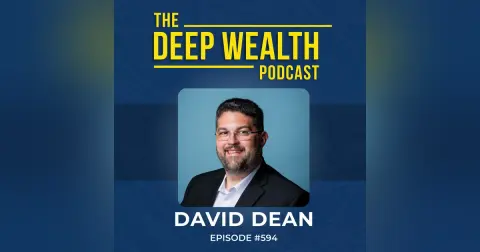
Send us Fan Mail “It’s going to be all right.” -David Dean Exclusive Insights from This Week's Episodes AI can expose the broken workflows, missing judgment, and leadership silence already costing your business. Author & AI Strategist David Dean reveals why organizational self-discovery must come before automation. Episode Highlights 00:09:56 Why nobody is truly an AI expert and why founders should stop looking for a magic solution 00:15:14 The written company versus the unwritten busines...
 Apple Podcasts Apple Podcasts
 Spotify Spotify
 RSS Feed RSS Feed
 Amazon Music Amazon Music
 Podcast Addict Podcast Addict
 iHeartRadio iHeartRadio
 Castro Castro
 PlayerFM PlayerFM
 Podchaser Podchaser
 Overcast Overcast
 RadioPublic RadioPublic
 PocketCasts PocketCasts
 Audible Audible
 Pandora Pandora
 YouTube YouTube
“It’s going to be all right.” -David Dean
Exclusive Insights from This Week's Episodes
AI can expose the broken workflows, missing judgment, and leadership silence already costing your business. Author & AI Strategist David Dean reveals why organizational self-discovery must come before automation.
Episode Highlights
00:09:56 Why nobody is truly an AI expert and why founders should stop looking for a magic solution
00:15:14 The written company versus the unwritten business that actually gets the work done
00:22:04 How AI can make the absence of human judgment visible
00:23:16 Why leadership silence is becoming measurable and increasingly difficult to hide
00:27:09 What spreadsheets can reveal about organizational dysfunction and invisible workarounds
00:41:50 Why human-directed AI may outperform handing judgment over to machines
00:50:22 Why organizational self-discovery should be Step Zero before an AI rollout
Full show notes, transcript, and resources for this episode:
https://podcast.deepwealth.com/594
The Deep Wealth Podcast
Most entrepreneurs do not fail.
They just carry too much for too long.
The business grows. Pressure grows faster. Profits get harder to predict. Decisions cost more energy. Over time, focus slips and health takes the hit.
The Deep Wealth Podcast and Deep Wealth Mastery are built from real experience. We're the only system based on a 9-figure exit. This system exists because guessing gets expensive.
🧠 Deep Wealth Mastery
This is for you if you want to:
• Grow a profitable business without becoming the bottleneck
• Build real value so selling is optional, not forced
• Optimize your health before it limits your business and life
One proven roadmap for real decisions.
⭐ Explore Deep Wealth Mastery
https://iapdw.com/idm
🎧 Subscribe
https://iapdw.com/podcast
📘 Free eBook
https://iapdw.com/ebook
💬 Have a question you keep circling back to?
Leave a short voicemail
https://podcast.deepwealth.com/voicemail/
Built by entrepreneurs. For entrepreneurs.
Loved this Deep Wealth Podcast episode?
You built your business from nothing.
Now make it pay off big.
📱 Subscribe Now
As a bootstrapper, every move counts. Subscribe on your favorite platform for Jeffrey Feldberg’s 9-figure exit strategies. From your morning grind to late-night planning, get insights from founders who did it without investors. These tips could change your future.
Drop a Quick Review
Got 30 seconds? Leave a 5-star review. It helps us make better episodes and reach entrepreneurs like you, hustling without a safety net.
Don’t Lose Your Exit (And Your Financial Freedom)
You’ve poured everything into your business. A bad exit could cost you millions. Most deals fail, and even “successful” ones lose half their value. The 90-day Deep Wealth Mastery program teaches you to make your business run without you and boost profits so you capture the best deal instead of any deal.
What Others Say
“Deep Wealth Mastery is pure gold. I wish I’d had it before my exit,” says Stacey C. “The value I’ve gained dwarfs the investment,” adds Sanjay S. “It makes my business great to own and sell,” shares William S.
📘 Grab Free Tools
Check out client success stories for proof. Master the Deep Wealth Strategy Map to plan your exit. Or snag the eBook, From 7 to 9 Figures: The Exit Playbook, for a clear guide.
Click here to start your legacy-defining exit today.
594 David Dean
[00:00:00]
AI As A Mirror
Jeffrey Feldberg: What if artificial intelligence is not really exposing the future of your business, but exposing everything that's been hiding inside it all along?
David Deane has spent two decades inside enterprise technology and transformation, including the past decade leading work across AI, automation, data, governance, and organizational change.
His experience spans complex environments from healthcare and insurance to hospitality and consulting, where the cost of getting technology, people, or accountability wrong can be significant. His work has also produced measurable results, including helping reduce a major enterprise service process by more than ninety percent.
But David's thinking goes somewhere most conversations about AI never reach. He argues that AI is not simply a productivity tool, it's a mirror. It can reveal the undocumented work, hidden judgment calls, informal workloads, broken [00:01:00] handoffs, and accountability gaps that quietly determine how a company actually operates.
David is the author of An Inbox Between Us, a provocative examination of what happens when technology moves faster than organizational clarity. His central idea challenges leaders to confront an uncomfortable possibility: AI may not fix a dysfunctional organization. It may simply make that dysfunction move faster.
This is a conversation about AI, but underneath it, something much more human: judgment, responsibility, trust, leadership, and what remains uniquely ours when machines can do more than ever before.
And before we hop into the podcast, a quick word from our sponsor, Deep Wealth and the Deep Wealth Mastery Program. We have William, a graduate of Deep Both Mastery, and he says, I didn't have the time for Deep Both Mastery, but I made the time and I'm glad I did.
What I learned goes far beyond any [00:02:00] other executive program or coach I've ever experienced. Or how about Bruce? Bruce says, before Deep Wealth Mastery, the challenge I had with most business programs, coaches, or blogs was that they were one dimensional. Through Deep Wealth Mastery, I'm part of a richer community of other successful business owners.
The idea shared forever changed the trajectory of the business and best of all, the experience was fun. And we'll round things out with Stacey.
Stacey said, I wish I had access to the Deep Wealth Mastery before my liquidity event, as it would have been extremely helpful. Deep Wealth Mastery exceeded my expectations in terms of content and quality.
And you know what, my Deep Wealth Nation, why they're saying this is because Deep Wealth Mastery, it's the only system based on a nine figure deal. That was my deal. And as you know, I said no to a seven figure offer, and I created a system that we now call Deep Wealth Mastery that helped myself and my business partners, welcome from a different buyer, a different offer, a nine figure exit.
So if you're interested in growing your profits, preparing for a future liquidity event, if that's [00:03:00] two years away or 20 years away, and you want to optimize your post exit life, Deep Wealth Mastery is for you. Please email success at deepwealth. com. Again, that's success, S U C C E S S, at deepwealth. com. We'll send you all the information about Deep Wealth Mastery, otherwise known as Scale for Ultimate Sale. That's where you want to be. You want to be with other successful business owners, entrepreneurs, and founders just like you who are looking to create market disruptions.
And they want to lock in their financial freedom and have success and fulfillment.
That's the 90 day Deep Wealth Mastery Program. It has your name on it. All you need to do is take the next step. Send an email to success at deepwealth. com.
Welcome And Guest Intro
Jeffrey Feldberg: Deep Wealth Nation, welcome to another episode of the Deep Wealth Podcast. Well, Deep Wealth Nation, let me ask you this. What would you do if you could speak to one of the smartest people in the room about something that could affect either way, for the better or not, your business, your personal life?
And it's in the headlines every day, otherwise known as artificial [00:04:00] intelligence, maybe even super intelligence as it's now called. We've got that individual. You heard the official introduction. We have an enterprise AI strategist, an author, a speaker, a terrific individual, and th- all that said, David, welcome to Deep Wealth Podcast.
An absolute pleasure to have you with us. There's always a story behind the story, and wow, you have quite the story. So what's your story? What got you from where you were to where you are today?
David’s Career Journey
David Dean: Thanks for having me, Jeff. I really appreciate you having me on the show. My journey has changed a lot throughout it. You know, I'm not an entrepreneur out there, but ultimately I'm kind of that what would you say, sage that you would have side-loaded with an entrepreneur or a founder to basically help an organization be successful and think about some of these kind of out of the box ways or thinking and being able to practically make these happen or especially from a technological standpoint on it.
And my career from that aspect kind of derived on being [00:05:00] around being people-oriented and, human-oriented around how people behave organizationally, especially around technology, but not from a top level and not necessarily even from a product level, but from an intimate productivity level.
You know, How everyday people, and even executives are everyday people when it comes to what they are ultimately trying to do day to day with it, is like how are they productive? How do they behave? What... How do they interact with systems? How do they do certain things? Why? The human emotional aspect on that, the struggles, the challenges, all these kinds of things.
And, throughout my career, I had the opportunity to, grow more from the systems administrator type of role and getting thrown into the business and ultimately trying to understand why the business does business and do the things that they do every day. And a lot of my background came from larger enterprise, healthcare, finance organizations, and kind of the [00:06:00] expectations and challenges around, being in kind of those ecosystems.
But listening from like the individual team, business unit level and divisional level on what those are actually and what, they ultimately need to be able to do their jobs every day. And so I grew over time, and while I was still in the space of system architecture and security architecture relating to it, I had the opportunity to be plugged in more and more into the business world and just being that liaison between where is the opportunity with technology that'll provide value to the business.
How do I translate that technology so people can actually move forward and take action with this? So, you know, My resume, my career, I've had the opportunity to either build, design, or support thousands of solutions in different business units in those different industries, and it gave me a unique lens on it.
It made me really good at forecasting and when someone ultimately tells me [00:07:00] a pain point, relating to, their issues or problems, like I already actually know the answer how to fix it The reality is that when I'm consulting around this is I don't spend the time convincing me- myself and understanding where it takes to get to it.
It's convincing them to understand how to get to that, with it, to be able to see that picture and educate them on that path with it. I was a teacher in the past. I was, college professor, and allowed me to engage and really kind of reach in to create organizational change management exercises relating to these different types of things, and that's where it helped me when I moved into the AI world, like full time around from a focus standpoint.
It allowed me to have this lens and purview to basically say, "What does this mean? What is this relationship with AI with an organization?" Because that's how I describe it. It's a relationship. and this was like a several years ago at this point on it, and then eventually came started writing the book a couple years ago [00:08:00] and it hasn't really changed.
In fact, if anything that I've put together is even more relevant today, than it was because I forecasted a lot of this stuff. So that's how been my journey is, relating to it. Not to get over-specific, it's just there's been-- I've been involved with a lot of different things, and it's allowed me to provide a lens that a lot of people find very valuable
Jeffrey Feldberg: It's a needed lens. And by the way, Deep Wealth Nation, go to the show notes, click on the link, pick up David's book, An Inbox Between Us. And what I love about that, exactly what you've been saying, David, AI is so much in the news, and let me put this out there, for better or for worse, I'm gonna box myself in.
I'm very bullish on AI. I'm not buying into these doomsday narratives that we're hearing. When you follow the money, or at least when I follow the money, it becomes very clear why we're being fed these things on social media. Don't get me going on that, of giving these groups a soapbox to put that on there.
I, truly believe big-picture wise, AI has a wonderful narrative, that it's [00:09:00] not gonna destroy humanity. It's not gonna put everyone out of work. And we're gonna talk about your thoughts with this. Like anything else, though, it's a tool. It actually reminds me of my grandfather, may he rest in peace. AI was never around when he was alive, but he would always say, "Jeffrey, in business and in life, it's always about moderation."
Just like water can save your life, or if you drink too much, it can kill you. And so it's the dose that makes the poison. But let me ask you this. David, this is been interesting for you. You've been doing the rounds on the podcast for the book, and as you shared offline with me, you're wrapping things up here with this interview being one of the final ones on the book itself.
Let me ask y- you this. When it comes to questions you've been asked about the book, is there a question that you haven't been asked that you wish to date you would've been asked about the book? Why don't we start there, start at the end, and we'll work backwards and see where that takes us.
David Dean: Yeah.
No One Is An AI Expert
David Dean: a lot of the podcasts have been really great, conversations around it. [00:10:00] And, there's a lot of focus around opportunity with it. I just think one of the biggest things is that what I've been trying to push around from that question is that, where is that opportunity, with it, is that right question.
and I think the one thing is that, why was AI designed to begin with? Like, why does it exist with it? And this is one thing I really try to push as a part of it, because, a lot of the hype and a lot of the questions, it's- it's all about get ahead, you know, the what ifs. A lot of what if, you know, type of thing.
Follow my framework, do X, Y, and Z, and then you'll succeed and do yada, yada, yada, do all these kinds of things with it. And I'm not saying that there isn't opportunity in that, but the reality is, is that AI was designed to mimic human behavior, like that's its purpose with it. But the reality is, is that have we actually figured out human behavior as a species?
Not at all, with
Jeffrey Feldberg: go see.
David Dean: So the way I see it is, the question is is [00:11:00] anyone actually an AI expert? My answer is no, no one is, and no one really ever will be, as a part of that. Because just as we have people that are knowledgeable about it, but the real kind of expert with the, the perception that people have, it doesn't exist and it won't really exist with it.
That's just a label, but that real expert concept of it. So if no one's really an expert on this, then we're still always trying to figure it out. We're always still trying to understand that, with it. And so this is kind of when I talk about AI being a relationship, how many of us, with a spouse or a friend, you know- No matter from the very beginning to the end, we're still, you're still always figuring out your relationship overall the entire time that's out there.
How's that gonna be any different with AI out there? So it's that kind of dynamic and that kind of understanding is that a lot of this portrayal out there as AI is like you need to portray it as we're still figuring [00:12:00] things out, and we will always still figuring things out in regards to this, and you need to think it in human terms of that with it.
You can't blindly trust it. There's gonna be a lot of dynamics. There's gonna be a lot of issues and problems and all that different type of thing with it. But but I think that there's been this presentational aura that it's this amazing, magical thing around, and then like, it can be, do all kinds of amazing stuff with it.
The problem is you need to understand what that really actually means. And what is the best way for humans to learn is to fail. We have to fail to truly understand what that relationship means, and then we come back to it. And so where I've grounded my book, with this aspect is it's really a step zero, concept of it.
You're gonna fail, you're not gonna succeed, it's not gonna work, with it, and the reality is because your head space around this relationship with AI is not in the right space. You [00:13:00] need to take a step back and change the way you think in that relationship with that. And I'm talking about from large business, but from a leadership standpoint on it.
There is no quick magic thing for this to make it happen. It's gonna take time. It's gonna take effort, and it's never going to be what you ultimately picture it and what is ultimately being sold out there. So let's be real, and that's why I call myself a business AI realist. You gotta be real about it.
You got real human behaviors, real relationships. That's the dynamic and that's kind of where my focus is on is understanding human behavior and the dynamics of humans and that relationship with AI. What does that mean? So that I can slowly succeed over time.
Jeffrey Feldberg: Love what you're saying because I've often scratched my head. For anyone that says business isn't personal, I take a step back. What do you mean it's not personal? It's completely personal. It's all personal. And what I love y- h- of how you bring it to the forefront, and I'm gonna jump ahead a little bit here, [00:14:00] but two things: chapter 11, and they just as easily could be strategies.
Strategy 11, AI as a mirror, and strategy 12, AI replaces behaviors, not people. Because what jumped out to the forefront, it's a tool, and you talk about this. When you're talking about inbox, at least my interpretation, and Jeffrey, you're on base or off base, it's not just like my inbox for email. It's well beyond that, where we now for the first time, we really have a tool.
It was maybe possible before, but likely not because it's just too much to do and too much data was there, that AI can look at all the communications, the chats, the channels that we're on, the meeting transcripts, in addition to the email and everything else, to begin to get to the story that myself and the team tell ourselves of how we are as a company and what we think we're like versus well, actually, Jeffrey, not really.
Here's what's actually [00:15:00] going on. If you look at what you're doing, your actions, or what you're not doing versus what you're telling yourself, there's a gap that's there. And would love to hear, yeah, Jeffrey, you're on base or off base or where you are with that and the fascinating things that you found.
Unwritten Contract Of Work
David Dean: Yeah, 100%. you are on track. When I talk about an organization, there are two aspects of an organization. There's the official contract, which is all the information and knowledge that we present out to say, "This is what we do. This is how we do things with this," and the data that's gathered and accumulated to present to leadership, to present to the outside world.
That's a written contract. And job descriptions ultimately are a written contract aspect on that. It's like, "This is what I I'm supposed to do as a job, and I present that out to people." That is a controlled set of knowledge and information with it, and that controlled s- knowledge and information is constructed [00:16:00] in such a way to present to certain audiences.
And that's an important purpose on it, but that's only a portion of the lens of your organization with it. If you wanted to ask "How do my organization works?" It's all being controlled, and it's controlled narrative specific to that. And so the unwritten contract is really how the organization actually behaves in order to get all the job done, in order to create that material that's going to be presented to provide information and knowledge, for whoever the audience or to take action with it.
And that is the bulk of everything that's out there from an organizational dynamic standpoint. So with that you want to... All of your challenges, all your processes efficiencies, all that knowledge is living in this unwritten contract because you already have it published out to a certain degree on it.
But when you say, "Where are our pain points? Where are our [00:17:00] issues with it?" When you only see that constructed narrative, you really actually don't understand what it takes to get that job done with it. And so, with that dynamic, because, you know, there was a lot of narratives, and what kind of the starting gate around this was is that I was talking to a lady about AI.
This was before I put the book and I was kind of getting started from this. I was talking about this and, on potential opportunities and trying to slightly educate her on it, and she just started bawling. She started crying, you know, because she's like, "I just feel like I'm training my replacement.
I'm not gonna have a job." And for me, with all the years' experience, you know, understanding, how the business people behaves, like I know that's not true at all with it, but I look at all the narratives out there that's being pushed out and I'm like, you guys are doing a disservice.
You're not recognizing the majority of the population that's out there." And so I felt like I had to come out with a book to help educate not only them, but also leadership and the kind of business decision makers out there relating [00:18:00] to this relationship with AI with it. Someone needed to be more realistic about this approach with it.
So writing this book, I needed to create a frame of reference and mindset around when you look at a job description of someone, they talk about digital coworkers and all that kind of stuff with it. I actually really don't like that term because they aren't coworkers.
They are, if any in terms, they are helpers. They are assistative in some way. But when you look at a job description and when you write something for an agent, it's written in such a way for how an official job description is written. But where do humans come into play? When you write a job description, I don't hire them for the official duties, you know, secretly behind the scenes.
That's not why I'm hiring for. I hire them for the last line, "Other duties apply And what I mean by that is when I'm evaluating someone to hire someone, I know in my head everything I'm gonna potentially throw at this person [00:19:00] to deal with this role and the expectations of it. How well can they handle that?
How well can they make decisions? how well can they deal with the ambiguity of everything that's relating to this with it? And the only way to do that is lived experience and lived consequence. That's why we hire people in the first place with it. And because of that, AI, agents, super intelligence, all of those things will never have that.
It will never have that until those machines, those concept re- come out of the machine, live amongst humans, and understand loss, love, issues, problems, fear, all these different types of things with this around it. And it's funny, as aligning with this podcast with it kind of reference, things that are actually that just came out that are coming out recently is Marvel's Vision Quest, you know, with it, and it's all about, artificial intelligence trying to figure out its relationship, of being [00:20:00] human as a part of this and trying to deal with the emotional aspect of that.
And then, like it's... and just showcases that how even pulled out of this concept of living amongst human, it's still trying to understand and figure it out, but it still doesn't understand, these different types of things. And that's the reality. And so the biggest thing is like, well, if you eliminate all these people and replace all these people, look at where you're eliminating.
Yes, they could probably provide insight, provide opportunity relating to certain duties and tasks, but they're not providing lived experience and lived consequence because there's so much upstream and downstream stuff that a human just naturally makes the decisions like that to basically say, "This is what we need to do.
This is how we need to handle it. This is the decision we ultimately need to make relating to this around it." So the idea is, is that AI with that lived experience and lived consequence well, it lives somewhere. It lives up here, in here. It also lives in our communication and collaboration [00:21:00] data to a certain degree.
It has a certain set of signals that helps identify that. And so if you start pointing AI in your behavioral record and start asking questions on, what are our challenges, what are our issues around, a team, a process, or a situation with it, it will help reveal signals that you can take with your knowledge and work together to understand where to go from here.
So my selling point around AI is, not about tooling. It's about self-discovery. That is the frontier of AI, is that how can I recognize signals and merge it with my knowledge to move forward? And that scales. That scales for any ... As an individual, as a team, as a whole company, that concept scales.
And if you take a step back and think about your organizational self-discovery and start looking at those types of [00:22:00] things, that's where you're going to improve and move forward from a long run standpoint
Judgment And Authentic Leadership
Jeffrey Feldberg: It's interesting, and quick story when I was preparing for today. It was so easy to miss, even though it's right there in front of us, right on the cover of the book. I had to stop myself. I hadn't even cracked it open, and I had to stop and think with what you're saying because it's so obvious, yet it isn't.
And you say it's one of the subtitles, "AI is not here to replace human judgment. It is here to make the absence of judgment visible." And I thought, "Wow, that encapsulates what I've often wondered." At the same time, I have struggled to put into words, especially when helping companies prepare to increase their value, increase their profits, and just blank happens.
You can fill in the blank with an expletive. It's exactly what you're talking about, where the judgment simply wasn't there, or there were assumptions, or I've [00:23:00] abdicated instead of delegated, and the list goes on and on. Here for the first time, potentially, is something to take those blind spots, those inflection points right there in front of us, but they're hiding, and make them visible.
Would love your take on that.
David Dean: one thing I tell leaders, especially in this AI world, is that, what skill do, and I, need to focus in on, in the long run as a leader?" And it's like the skill you need to work on as a leader is authenticity.
Because the biggest thing now is that AI can potentially harvest literally anything, harvest insights, harvest telemetry, harvest information, internal, external as a part of this with it.
And so the idea is that your dynamic, how you behave and how you execute yourself to a wide variety of different people with it, potentially is all discoverable with it. And so the idea is that people naturally trust people, whether [00:24:00] they agree with them or not, they naturally trust people if they're the same person no matter what, no matter who they talk to, how they interact with it.
There's consistency. People like consistency with it. Even as a child, we like consistency to a certain degree with it. But from a personality standpoint, your behaviors are not necessarily hidden anymore, with it, and AI can reveal those behaviors and that's the one thing is that those behaviors also can be exploited, with it as well, because it's all potentially discoverable.
So the best thing is like instead of being all over the place with your behavior, be consistent, with behavior and ultimately present yourself that way in that manner. And because from a judgment standpoint, people make decisions all kinds of different w- ways around it, but, as an executive leader or as a business leader, why are you in that position to begin with?
You're in that position to accept risk, make larger [00:25:00] decisions, and and be able to put the things in place in order to move forward with those decisions on it. And a lot of times decisions don't happen, with it and that's a judgment call. And so the one thing is and that's kind of one of the biggest lenses that gets revealed in the communication and collaboration is silence
That is now measurable out there.
I can be able to discover that this individual was presented this information, they never did anything with it, for months and now all of this catastrophe essentially happened because they never chose to make a decision to move forward, relating to that. That's a solid example from a leadership standpoint.
So it's better to make a decision and fail and be able to back up why you made that decision, That creates consistency, that creates authenticity out there. P- companies move forward from a directional standpoint on it and that type of thing. and so [00:26:00] that's where it ultimately reveals, some of this lack of judgment.
But sometimes it's not just a lack of judgment. Sometimes they don't feel like they have the right authority to make this judgment call in there. And all of that behavior out there can tell that story as well. And so sometimes you don't even need a tool to solve a business problem. You just need to go and have a conversation and say, "We trust you.
You got it. Go and make these decisions. Don't bottleneck," these different types of things with this. And as I said, you don't need a tool for everything to solve every single problem with it. Make it human. Identify that there is a potential human problem in here, and then be a human and go take action with it, those types of things
Jeffrey Feldberg: And so as we're talking about this, when you look at when you're putting the book together, and since then speaking to different organizations and the work that you've done, what's been most surprising about this the absence of judgment or it's just not being there, or the quote-unquote human condition [00:27:00] that you never saw coming, but, "Oh, wow, look at this.
Yeah, now that I see it, it makes perfect sense. Up to that point, though I can see why I missed it"?
Spreadsheets And Hidden Behavior
David Dean: I think the best way to describe it is, you talked about moderation, in regards to, dealing with change or issues with that. And what I think is, and one of the times I spend a lot in this book is, there is known behavior, that leaders and people do every day.
But I spend a lot of time on the unknown behavior, the things that we naturally take granted for automatically, you know, with the ways that we think about stuff, the way we handle stuff, you know, all those different types of things. It's just an automatic like to, to a certain extent, we're like robots.
We just like, we'll naturally just go and do this, around it. And like an artifact as an example, I talk about this a lot, is if you wanna really understand how much organizational I'll use the term dysfunction, there is an artifact out there that that identifies that, and that's the spreadsheet.
So from [00:28:00] a regular business user out there, when someone needs a system to do something and take action and track and be responsible for something, that is one of the most natural tools that people use to spin up, do something, manage something, and take action and move forward. And we do thousands of these, all the time, even as an individual potentially, with it to do X, Y, and Z on it.
And so But that's an automatic behavior. They don't think about anything else. They just go to what they know and how they handle these different types of things with it. So ultimately that's where this automatic behavior needs to be understood out there relating to it. I would've guessed but not guessed is that when I started to reveal this opportunity to see this behavior, to around it, that people aren't Worried, around the discovery of, of this kind of behavior with it.
I think the biggest problem with that is [00:29:00] just scale, with it at this point. Like I'm a very small person talking about this, lens out there with it, and I'm not a big stage type of individual.
Governance Risks In Behavioral Data
David Dean: However, if I was a big stage individual, I think it would be a different tune because the one thing is is that pointing AI at our communication and collaboration data provides a lot of opportunity.
It also provides a lot of risk, from an organizational standpoint, and it's risk to information that people already should have access to. And because the behavioral dynamics is something that there's an understanding out there around it. There are tools out there to do this, and and when I presented at a, a legal conference about this and what that ultimately meant, they were kind of stunned about this lens because they're like, "We are not prepared for this," like from a legal standpoint on.
And what I mean by that is there ... A, a tool has existed for many years out there, and so if you've ever been sued [00:30:00] or have ever had an investigation, attorneys come in, and they pull all your emails and chat messages and collaboration, and they put together a story, on what happened, what are the situations, so they can trace it out with it.
Now AI basically can do the same thing, but now you have just given it to the every single user in your organization when you connect their email communication chat messages. And what I'm saying is that they have information in between the lines in those messages, in those chat conversations, in those meeting transcripts.
I don't have to have the full picture, but I can have enough of the picture to tell a story now. And now that it's industrialized, I can ask questions over time over across multiple knowledge. I can start revealing things that are both positive intent and potentially negative intent around it with it, [00:31:00] and those are the kinds of secrets that organizations are not ready to embrace.
And so when I talk about this from a governance and policy standpoint they don't know what to do with it. They're not mentally prepared to address it, but have the right mindset about their secrets that can be potentially revealed. And so I would have thought that as this, some of this stuff gets presented from a governance and compliance standpoint, they would try to take some more action and measures in regards to acceptable use, types of behaviors, with it.
Like an example, is it appropriate to build personality profiles on your boss or your peer and then be able to utilize those personality profiles to be able to X, Y, and Z, type of stuff. And in some cases it might be fine, in some cases it's not. That's acceptable use behavior. And so those kinds of things, it's really hard to control with any kind of security product out there because it can be used in a positive way with a kind of the same lens, [00:32:00] and it can be used in a negative way, same lens, but from an LLM standpoint, it can't...
it doesn't really understand the difference, between the two with it. So you have to rely on acceptable use policies from an organizational standpoint. So it's like that lens, and I'm surprised that message hasn't really gone out more, with it. But I think it's getting clouded by the opportunity of AI.
It's like, "Oh, we don't care about ultimately what that behavioral record actually means. We want to move forward and make money." And I'm like, " Are you ready?" Because people in the organization are doing this right now.
All they have to do is start asking daisy chain questions, and they will start revealing when a layoff is occurring,
you know, With it.
So it's those types of dynamics leaders are not ready for out there. And so my biggest thing is be aware, have the right mindset, embrace it, understand that it's going to exist. This is... Behaviors are going to happen. It's going to be really hard to control that. So be more authentic. That's the best way.
Self-discovery. Understand yourself. what kind of secrets can people [00:33:00] reveal about you? And try to own your authenticity because you can't hide from some of the stuff you originally hid before, or with it
AI Like The Early Web
Jeffrey Feldberg: It's interesting as you're talking about that because earlier you said, I couldn't agree more, not making a decision is making a decision. So Deep Wealth Nation, you could say, "Yeah, this AI stuff, whatever. It is what it is. I don't really care. We'll just keep on doing what we're doing." You're hearing a different perspective.
And it's neither that AI is, I'm gonna put labels on it, good or bad or even evil. It's none of those things. It's how the tool is being used. And David, it actually goes back, I remember when this thing called the World Wide Web just came around . It was brand new. And the sage advice that was given back in the day, particularly around email, don't send an email that would make you embarrassed if it were published in a major newspaper and it was the headline, front page number one, and your mother was reading it.
[00:34:00] And it's the same kind of things here. Deep Wealth Nation, where are you? as a leader, as the founder, as a visionary, are you consistent or are you changing the message deliberately? Are you being sneaky? Are you being authentic in all of your interactions? So if this new tool called AI begins to compile Jeffrey said this over here in this keynote presentation that he gave, and oh, in this internal meeting, he's doing that there."
Is it stacking up to the same thing or are you all over the map? It gives us a lot to think about. Where do you think it's heading from now? And what I mean by that, David, is if we go back to when the World Wide Web, which we now, the internet, the net, we take it for granted.
Future AI Growing Pains
Jeffrey Feldberg: And back in the day when you had these webpages, all these flashing bells and whistles and graphics, today we look back and we chuckle.
But back in the day, no one really knew any different and we're trying all these different things. If we're to look back a decade from now, two decades from now, to right here, right now of where we are, where we're [00:35:00] just learning the possibilities in the mainstream of uncovering the invisible. It's always been there, we just haven't had the tools to piece it all together.
What do you think we'll be looking back right now and critiquing the human dynamic, human behavior in a business sense? Best guess what we're gonna be saying. Are we laughing? Are we crying about this?
David Dean: we learn by failing, you know, with that around it. I think that our relationship and understanding around AI with it, I think the one thing is is that I think this frontier of AI is I'm gonna be able to save all this money right away and save on personnel and that type of stuff.
The reality is it's not any different with any kind of org change management in the history of things with it. Change takes time, with it. And and ultimately we're going to fail. There's companies are going to fail out there. Big companies are gonna potentially fail or have large profit losses around it because the realization is that the relationship between humans and AI is [00:36:00] going to take time.
You can't just overtake that, with it. So the growth expansion and being able to understand that integration with it, if it was done right to begin with, we would've been able to grow slowly and exponentially over time. But now it's gonna be one of those things where we've come hard and then boom, it's gonna fail, and then we're gonna have to pick ourselves pieces up and figure that out, and then we will basically figure out that balance.
But we have a lot of external challenges like energy, location anti-AI, considerations, but also behavior aspect on that. And the cat's out of the bag, with it.
AI Used Against You
David Dean: So I think it comes down to what I was trying from a lens standpoint is with companies, yeah, there's a lot of opportunity and a lot of opportunity to get ahead, but do you want AI to be used against you also with this?
That is a lens. It's like, hey, let's do this frontier, let's do all these different types of things. But guess what? Even from policy, even from laws that we may have, that's not gonna stop [00:37:00] overseas companies or other countries investing AI in their areas and trying to attack us, do different types of things relating to this around it to be able to get ahead.
And it was funny because I was at a- another conference, and I asked this question against several representatives during it, and I said, I'm an AI architect," and I walked through all these booths, you know, with people showcasing their products and opportunities with this.
And I'm like I know how you built it. I know how you designed it. I can reverse engineer that and go build my own, you know, with it. Whether I'm just doing it in-house and I'm not gonna sell it, or I'm gonna take it and sell it, with it.
Data Harvesting Threats
David Dean: So the one thing is, like, how much information do I put out there relating to my behaviors as a company?
Because all of my behaviors as a company is potentially harvestable. So you take the lens that I talk about from a personality standpoint, all the marketing, all the projection, all the solicitation, all the [00:38:00] transcripts, all of that information can be harvested as a company and and as an individual.
Now, how can that be used against me? How can a competitor use that against me? Could I hire an offshore team to start building company profiles and individual profiles in the company and start attacking in certain ways, social engineering in certain ways? We can synthesize voices.
We can do all kinds of things around it, and people don't know and they don't understand with this. What do you think other countries are going to potentially do or other companies in those countries or even within the United States, you know, right now with it? People, all, everyone wants to get ahead, with it.
So when it comes to an entrepreneur, it's getting really hard to protect any kind of intellectual property or concepts with it because AI has industrialized human behavior. So now I have an army that can just deconstruct everything, put it together. Is it gonna be exactly the same? No, but I can probably get it ninety-five percent there, and then I'm gonna go take it, and I might be big and I'm just gonna steal it from you.
[00:39:00] Or I'm just gonna go build my own, and then I'll deal with the losses, later on, but I'm gonna make a whole bunch of money off of it with it. So that's the thing is that's the world that it's eventually going to happen because of how these tools naturally work, and so it comes down to intent.
So there's intent for good and intent for opportunity, and then there's intent from bad actors with it. And so it kind of shapes how do we want to be as a company and how do we protect from that behavior coming at us with it. It's not a security, tool is ultimately gonna solve it, endpoints and that kind of stuff.
That will help, but it's a whole social engineering. Data is power and and now people can harvest that data. So then it comes down to how much should I market? How much information should I put out there relating to me and my company with it? That's gonna be a hard lesson to people, for people to figure out and what that's gonna mean and the relationship around laws and how do you actually enforce it
Jeffrey Feldberg: Yeah. Oh my goodness, David, that is a mother lode. We could take that one [00:40:00] topic, that's not just an episode, that's an entire series in terms of what's out there and Deep Wealth Nation, so many takeaways from that. One of them, though, is like with anything else, with any tool out there, there are good actors and there's bad actors, and guess what?
We have no control over any of that, so how prepared are we? And it got me thinking, David, as you're talking about this, as an AI architect, we know that AI is trained on what we are right now and today.
Human condition being what it is, if I look back to Jeffrey of today versus Jeffrey of tomorrow or Jeffrey of yesterday, I can only hope that the Jeffrey of tomorrow is operating at a better and higher level than the Jeffrey of today and even the Jeffrey of yesterday.
But because of my understanding, I could be off base with this, AI is based on inferences that it makes from the information that it has, could AI that's [00:41:00] trained on a company from what we've done up until today, could it actually be like an anchor and hold us back because the information that it's giving us, this goes to some of the dangers that you're talking about, it's out of date.
We've made a mindset which isn't necessarily showing up in the latest transcript or in my emails just yet or anything else, yet I'm asking AI to give me some insights or put together some kind of strategy on it's new, but it can't make those inferences yet because it hasn't learned it yet, but I'm relying on it.
It's this vicious circle of something that we need to be careful of, okay what's this trained on then? What's the basis for this? And I gotta really challenge this, that maybe yesterday was true, but today it isn't because we're different as a company. Do you see where I'm going with that? Am I on base, off base?
What would you want me to know with that?
David Dean: Yeah.
Human Directed AI
David Dean: I actually talk about this from a design approach that you hear human in the loop concept with it. I actually change that flavor, with it. I call it human-directed AI [00:42:00] with it. Humans hold the lived experience and lived consequence. We know what we want, with it. We just need to be presented the options that we want, you know, related to it, and we need to guide a
guide us just as much as we guide AI as a part of that experience with this. This is part of one of the issues with chat agents to begin with. Chat agents are really great just for accum- asking knowledge with it. But most people don't even know how to interface with the knowledge and how to e- even ask the right questions out there with it.
So why even present them an open-ended type of thing with it? You need to provide a controlled experience, with it, and that's majority of I would say 79% of the workforce, that's how they work, with it. They work left to right, with it, not top down when it comes to a business process with it.
What does AI do really well? It helps answer and provides understanding and signals to a really small question with a lot of knowledge with it, around it. And so the idea is that [00:43:00] controlling that knowledge, keeping that knowledge up to date, and providing your lived experience as a part of that, and then this is what I talk about that human-directed AI.
After I go through that experience, I ask the question that I want and produce the expected output, assess and do those different types of things that are brought up with it. I need to get what's up here
Into the system with it. So it's asking the question, why did you make that decision? What about you allowed you to say, "This is right.
This is correct," with it. It's that lessons learned. Not a thumbs up, not a thumbs down. I need context, with it. So because over time, that knowledge, that institutional knowledge, while it would still is not the same as lived experience, it will just make that a little bit more accurate over time with it.
and so it creates this relationship as AI-- humans are directing AI in the right way at the beginning and at the end, and AI is really just in the middle [00:44:00] of this. And so humans feel like they have control over the whole thing. And the reason I bring that up is it comes down to change management.
If seventy-nine percent of the workforce are what I call AI survivalists, they're not against AI, they're not for AI, they're just doing their jobs, with it. They're never gonna know how to prompt. They're never gonna know how to like, build agents or systems. They want push button.
They want a vending machine, essentially with that. And so if you can feel like they have control and just AI ultimately works behind the scenes in order to be able to provide that opportunity and value with it, then that relationship will start building over time, with it and they'll start trusting it more and more around their knowledge, the knowledge that they control with it.
And I think that's the biggest thing and is to control at what knowledge it has access to and how it can make decisions around it in a kind of a controlled domain, like knowledge domain specific [00:45:00] to those things. Everyone wants to throw everything into a giant pot, swirl it around and tell me the magical number, that comes out of that.
That's not real. That's not practical. That's not realistic. But that's what's being sold out there, and I'm saying that's not how you need to do it. You need to look at how your humans behave in your organization, how you behave, and you need to be able to be guided and work together in or-- in like a symbiotic relationship in order to be able to make this work in the long run.
Culture Over Technology
Jeffrey Feldberg: And David, what's interesting with what you shared just now, it's AI today, 10 years from now, who knows what it's going to be? Fill in the blank, whatever tool, technology it happens to be. We could have had this conversation back three decades ago,
And we could perhaps have different words at that time because it's not relevant some of the things that we're saying today back then and vice versa.
But it all comes back to culture, transparency, leadership. Where are [00:46:00] we on that as an organization? Being open and willing to hear the not so great feedback so we can become better as a company. It's the human condition, it's leadership, and it could be at the best, it could be at the not so best. It goes a, really around, through, over, under whatever the shiny object happens to be, and it, just speaks to why these are such timeless tools.
And how's my business culture today? Is it rich, vibrant, and thriving? Is it toxic? What do I want to know? What do I need to know as a leader to make sure I'm in the right direction? Thoughts about that?
David Dean: Yeah, 100%. That's what I had in mind with my book is even 10 years from now, everything is still 100% relevant because humans are not really gonna naturally change as a species and how we do things and how we handle things. As you said, going 30 years back or 30 years forward, we still operate the way we operate with it, around it.
And from a messaging standpoint, it's w- [00:47:00] we're trying to save money and, the relationship with all the people out there. What if I was a leader and I came out instead and I said, we recognize everything that you do and what you provide to this organization with it right now.
We wanna partner with you to help move the company forward. And so what we recognize is we throw all this ambiguity at you. You're constantly surviving in your role, out there. So what if we can utilize AI to basically help overcome some of these ambiguous tasks that we throw at you with this around it?
Because we want to use you the way w- we really should have used you in the begin with, is your critical thinking, your creativity, your, forward-thinking, proactive aspects, the things that humans do best, out there with it. What if we were able to give you time to do that exploratory stuff to help move you forward, but [00:48:00] as well as your team and as your organization, the breathing room out there?"
That is a way better message and have organizational change management and buy-in around what this relationship of AI looks like. And so we're gonna start looking at things to try and eliminate some of this stuff so we can kinda move forward and take advantage of these different types of avenues. And that's really the lens that needs to be out there because you have all these people, and you still need all these people, and you haven't actually really been taking advantage of all these people to begin with on it.
So let's take our investment, people and resources are investments, and they pr- provide a lot of stuff. We are undercutting ourselves because we have not allowed that investment to capitalize. So let's make that happen. let that human thrive and help us thrive and be able to move forward.
Jeffrey Feldberg: And David, what I really appreciated is you have the two extremes. On the one hand, everything's [00:49:00] utopian. "Oh, look at this. Look how wonderful it's gonna be and how terrific. We've never had this before, and it's gonna be a bed of roses." On the other side, it's, "Oh, my goodness, look what's in store for you. You don't want this.
Be careful." And really, both are too extreme. You're coming along, and it's neither negative nor positive, although it's really more on the positive side. "Hey, it can be a great tool. Let me educate you, though, on how to work with it properly, and if you don't, what you need to be aware of so you're not surprised should something happen."
It'd be like going back, I'm oversimplifying, to the 1990s when the web was just coming out. "Jeffrey, you can choose not to have a website, and that's fine. I want you to know, though, this is the future of where things are, and if you want your business to continue to grow and reach your current audience and new audiences, you probably wanna get on the web sooner than later, have a presence, and make it professional and everything else."
And going through the book, it's the same kinda thing, "Hey, this [00:50:00] can be whatever you want it to be. Here are some of the ground rules. Why don't you make it the best form of you, your company? You're putting your best foot forward and the best that you can. There's always gonna be surprises, but you're minimizing that because I'm giving you the rules of the game, at least as they are right now, and the rest will come, but you have a solid foundation."
Thoughts about that?
David Dean: Yeah, absolutely.
Step Zero Self Discovery
David Dean: And that's what I talk about organizational self-discovery, step zero. So a lot of companies have failed, and there's a lot of companies that are still ultimately trying to figure out what this relationship with AI means. And I feel bad for a lot of IT managers and leaders.
They're there to, just make sure systems are available or be able to utilize these things, but organizational change and the human element of an organization, that's not IT's expertise or forte. You need to stop looking at AI as a technology tool. It is an organizational change tool with it, and you need your domain experts that are in the business to be a [00:51:00] part of that and leading that effort with technology teams to help, make it available and happen.
But don't leave it just to that. And so this opportunity for organizational self-discovery, IT's not gonna be able to tell you how to rediscover yourself from an organizational standpoint. You need to. And so you need to help define and put those things into place and work together in order to be able to say, "This is where we need to start."
And if you wanna scale it, you can start asking those questions to the people. "Hey, we've given you AI. Here's an opportunity to start asking questions on it." And a lot of individual people are like, "I don't even know what that means, for me. I don't even know what self-discovery means around this."
I say "Well, you know, everyone has a mobile phone," you know, essentially with that or they have a headset or mic. Start telling your story, your business story, what you do every day, why you do it every day, and how you handle things every day with it. Honestly, it's very therapeutic. Just start dictating that.
Let it [00:52:00] come out raw with it, and spend a week doing that. Now I have a bunch of information to say, "Okay, AI, what does this tell me," with it. Where are there opportunities? Where are there challenges? These different types of things. That tells you signals. It creates awareness on things that you may not have initially thought of with it.
Now I take that, and I marry that with my communication and collaboration type of data. That tells even more stories more aspects on that. And then you start painting pictures. So now Where's the opportunity? Where do I take action, relating to that? That concept can scale, from individuals to teams with that, and so that's why self-discovery is so critically important, and it's really the step zero in this AI frontier, and that's where companies ultimately need to start.
Jeffrey Feldberg: It's some terrific insights. Speaking of insights, two insights I'm gonna ask you. The first insight before we do go into wrap up mode, is there a question, perhaps an [00:53:00] important question or even a, a theme or a topic, David, that we haven't yet covered that you want to get out to Deep Wealth Nation?
Choosing Real Advisors
David Dean: I think that the one thing is that there's a lot of people out there, that present themselves as AI experts, you know, on it. There's a lot of marketing out there with it, and I'm not saying that people don't have domain insights out there. But real understanding of AI is real understanding of relationships of proximity.
So when you are looking for a consultant out there to help you in your AI journey, you need to really ask them how much time have they actually spent with ground-level business behavior because that's really where that AI expert thrives, is that they can correlate business process with natural human behavior, and not just from a marketing lens, but from a general productivity operational types of lens out there and some of their challenges and failures [00:54:00] with that.
People get sold on a lot of things, and I come and see what some people out there have done with it, and I'm just like, "I'm so sorry. They did not ask you the right questions." And one of ... a lot of things are being sold to people out there is not sustainable. Small business, medium business, they think it's sustainable, and it is not.
The only way to make it sustainable is really to reach in and understand your organizational behavior and be able to map that so it can scale properly and execute properly out there. That's really more that message, and I just ... I feel really bad when I see organizations picking up the pieces after they've worked with some AI expert out there around it.
No one's an AI expert. Focus around behavior. That is where you're gonna succeed in the long run with it
Jeffrey Feldberg: And David, as you're talking about that, you're taking me to the Deep Wealth 9-step Roadmap inside Deep Wealth Mastery. Step 6, actually, advisory team. So Deep Wealth Nation, is it [00:55:00] amateur night for you? I'm gonna be oversimplified, over facetious on this. Are you working with your aunt's best friend's second cousin removed because they happen to have an AI title behind them?
Or is it somebody like David who's been there, done that, he's a true AI architect, he understands where things are, where they're heading, and where you want to be, what you need to be doing? That's really the question. It's the good old, as we say at Deep Wealth, is it platinum in, platinum out, or garbage in, garbage out?
You choose, Deep Wealth Nation. You always do. I'm hoping you choose platinum in, platinum out, so when it comes to, okay, I don't wanna just survive with this AI or this superintelligence, I wanna thrive. Speak to David, my goodness, and we'll talk about how you can reach David before we wrap things up there.
But you wanna have someone who's been there, done that, who gets it. It's all about the questions. Deep Wealth Nation, you have the questions that you're ready to answer. You have the answers. You just don't have the [00:56:00] questions. David has got the questions, and that's where you always wanna be. So that said, David, some sage advice there.
Back To The Future Wisdom
Jeffrey Feldberg: Speaking of sage advice, we're gonna go into wrap-up mode. It's our tradition here on the Deep Wealth Podcast. It's really my privilege and my honor. Each guest I ask the question, it's the same question every time, and it's a fun one. When you think of the movie Back to the Future, you have that magical DeLorean car that will take you to any point in time.
So imagine now, David, it's tomorrow morning. You look outside your window. Not only is the DeLorean car curbside, the door is open. It's waiting for you to hop on in. This is the fun part. You're now David, you're gonna go back to any point in your lifetime. David as a young child, a teenager, whatever point in time it would be, what are you telling your younger self in terms of life wisdom or life lessons?
"Right, David, do this, but don't do that." What would it sound like?
David Dean: Yeah. So if I were to go back in time with that, I think that some of the stuff that I was worried about, especially from a [00:57:00] confidence level, standpoint, because I was a very shy, type of individual, with it very early on. I didn't have a lot of friends, you know, and relationships.
I had a hard time talking with people, with that. And I was afraid in the long run this is how it was going to be, and it was gonna ... And I knew ahead even as a kid it's hard to get ahead if you're not able to engage with people and talk with people. And I think the biggest thing is, probably just from traditional sage advice for anything, being able to go tact- is it's gonna be all right.
You're gonna have failures and you're gonna have successes. But look at yourself. This is what I do. This is what I was able and capable of. I could have a lot more opportunity with it, and I would probably guide, probably some suggestions around that, but you're gonna be okay, with it.
You don't need to know the future in all detail. And I think that's where someone, someone, if you're a younger self and you're just like, "I don't need to have all the information. I just need to know it's going to be okay, with it," [00:58:00] that would be a natural confidence booster in decisions and risks that I may take moving forward to eventually get to that point.
And I won't be that same person now with it, but I might be l- naturally even better than what, came to me as a part of that
Jeffrey Feldberg: It's terrific. Not just terrific, it is platinum. Speaking of platinum, it's platinum advice. Hey, Deep Wealth Nation, it's going to be all right. It's all gonna be okay. Just look with the HIN. That's where it's always been, where it always will be. Absolutely love that. And again, Deep Wealth Nation, go to the show notes, click on the links.
It's all there. Please pick up a copy of David's book, An Inbox Between Us. Better yet, phone up David. Begin to work with him. Have him meet with your team.
Where To Find David
Jeffrey Feldberg: David, that said, how can someone in Deep Wealth Nation, how do they reach out to you? Where's the best place to find you online to have that conversation?
David Dean: Yeah. My website davidchristopherdean.com. You can also find the book at inboxbetweenus.com. It's, you know, available in all major retailers. I also have an audiobook version out there as [00:59:00] well, and that's been a big hit with it. But also l- I'm very active on LinkedIn, so a lot of times people reach out to me directly on LinkedIn to just follow and converse out there, and so happy to talk with anyone
Jeffrey Feldberg: And the great news again, Deep Wealth Nation, go to the show notes. It's all there. It's a point and click. It doesn't get any easier. David, it's official. Congratulations. It's a wrap, and as we love to say here at Deep Wealth, may you continue to thrive and prosper while you remain healthy and safe. Thank you so much
David Dean: Thank you for having me. It was great
Subscribe And Final Thanks
Jeffrey Feldberg: So there you have it, Deep Wealth Nation.
What did you think?
So with all that said and as we wrap it up, I have another question for you.
Actually, it's more of a personal favor.
Did you find this episode helpful?
Have you found other episodes of the Deep Wealth Podcast empowering and a game changer for your journey?
And if you said yes, and I really hope you did, I have a small but really meaningful way that you can actually help us out and keep these episodes coming to you.
Are you ready for it?
The dramatic pause. I'll just wait a moment. Drumroll, please. [01:00:00] Subscribe. Please subscribe to the Deep Wealth podcast on your favorite podcast channel. When you subscribe to the Deep Wealth Podcast, you're saving yourself time. Every episode automatically comes to you, and I want you to know that we meticulously craft Every one of our episodes to have impactful strategies, stories, expert insights that are designed to help you grow your profits, increase the value of your business, and yes, even optimize your post exit life and your life right now, whatever you want that to look like.
And every time you subscribe and a fellow entrepreneur subscribe, it's a testament to how together, Yes, we are. We are changing the social fabric of society. One business owner at a time, one liquidity event at a time. So don't let the momentum stop here. Subscribe now on your favorite podcast channel.
You'll never miss an episode. You'll be the first to hear from the top industry leaders, the innovators, the disruptors that are really changing and shaping the business world, and maybe you're commuting, maybe you're at the gym, maybe you're taking a well deserved break that we spoke all about on this episode.
The Deep Wealth [01:01:00] Podcast, it's your reliable source for the next big idea that could literally revolutionize your business. So once again, please hit that subscribe button, stay connected, inspired, and ahead of the curve. And again, your next big breakthrough moment, it might just be one episode away. Maybe it was even this episode.
So all that said. Thank you so much for listening. And remember your wealth isn't just about the money in the bank. It's about the depth of your journey and the impact that you're creating. So let's continue this journey together. And from the bottom of my heart, thank you so much for listening to this episode.
And as we love to say here at Deep Wealth, may you continue to thrive and prosper while you remain healthy and safe.
Thank you so much.
God bless.

Author
What if AI is not really exposing the future of your business, but exposing everything that has been hiding inside it all along?
David Dean has spent two decades inside enterprise technology and transformation, including the past ten years leading work across AI, automation, data, governance, and organizational change. His experience spans complex environments from healthcare and insurance to hospitality and consulting, where the cost of getting technology, people, or accountability wrong can be significant. His work has also produced measurable results, including helping reduce a major enterprise service process by more than 90%.
But David's thinking goes somewhere most conversations about AI never reach.
He argues that AI is not simply a productivity tool. It's a mirror. It can reveal the undocumented work, hidden judgment calls, informal workarounds, broken handoffs, and accountability gaps that quietly determine how a company actually operates.
David is the author of An Inbox Between Us, a provocative examination of what happens when technology moves faster than organizational clarity. His central idea challenges leaders to confront an uncomfortable possibility: AI may not fix a dysfunctional organization. It may simply make that dysfunction move faster.
This is a conversation about AI, but underneath it is something much more human: judgment, responsibility, trust, leadership, and what remains uniquely ours when machines can do more than ever before.


