


Founder & Sleep Expert Devin Burke: The Deadly Sleep Mistakes Stealing Your Health & Profits (#544)
Send us Fan Mail “Failure is just feedback for you to welcome and celebrate.”-Devin Burke Exclusive Insights from This Week's Episodes Founder sleep mistakes quietly drain health, focus, profits, and enterprise value. Devin Burke reveals why forcing sleep often backfires and what exhausted high performers must rethink. Episode Highlights [00:07:00] Why doing all the “right” sleep tactics can quietly create the belief that your body cannot sleep naturally. [00:10:00] The stress and anxiety loo...
 Apple Podcasts Apple Podcasts
  Spotify Spotify
  RSS Feed RSS Feed
  Amazon Music Amazon Music
  Podcast Addict Podcast Addict
  iHeartRadio iHeartRadio
  Castro Castro
  PlayerFM PlayerFM
  Podchaser Podchaser
  Overcast Overcast
  RadioPublic RadioPublic
  PocketCasts PocketCasts
  Audible Audible
  Pandora Pandora
  YouTube YouTube
 “Failure is just feedback for you to welcome and celebrate.”-Devin Burke
Exclusive Insights from This Week's Episodes
Founder sleep mistakes quietly drain health, focus, profits, and enterprise value. Devin Burke reveals why forcing sleep often backfires and what exhausted high performers must rethink.
Episode Highlights
[00:07:00] Why doing all the “right” sleep tactics can quietly create the belief that your body cannot sleep naturally.
[00:10:00] The stress and anxiety loop that turns one bad night into years of sleep struggle.
[00:17:00] Why sleep is the engine check light, not the actual problem.
[00:20:00] How caffeine, alcohol, pain, inflammation, and environment can block real recovery.
[00:25:00] Why founders who try to solve sleep like a business problem often make it worse.
[00:32:00] The entrepreneur who stopped controlling sleep and started sleeping again.
[00:48:00] Devin’s one practical starting point: ask better questions about what in life needs attention.
Full show notes, transcript, and resources for this episode:
https://podcast.deepwealth.com/544
First Interview: https://podcast.deepwealth.com/541
The Deep Wealth Podcast
Most entrepreneurs do not fail.
They just carry too much for too long.
The business grows. Pressure grows faster. Profits get harder to predict. Decisions cost more energy. Over time, focus slips and health takes the hit.
The Deep Wealth Podcast and Deep Wealth Mastery are built from real experience. We're the only system based on a 9-figure exit. This system exists because guessing gets expensive.
🧠 Deep Wealth Mastery
This is for you if you want to:
• Grow a profitable business without becoming the bottleneck
• Build real value so selling is optional, not forced
• Optimize your health before it limits your business and life
One proven roadmap for real decisions.
⭐ Explore Deep Wealth Mastery
https://iapdw.com/idm
🎧 Subscribe
https://iapdw.com/podcast
📘 Free eBook
https://iapdw.com/ebook
💬 Have a question you keep circling back to?
Leave a short voicemail
https://podcast.deepwealth.com/voicemail/
Built by entrepreneurs. For entrepreneurs.
Loved this Deep Wealth Podcast episode?
You built your business from nothing.
Now make it pay off big.
📱 Subscribe Now
As a bootstrapper, every move counts. Subscribe on your favorite platform for Jeffrey Feldberg’s 9-figure exit strategies. From your morning grind to late-night planning, get insights from founders who did it without investors. These tips could change your future.
Drop a Quick Review
Got 30 seconds? Leave a 5-star review. It helps us make better episodes and reach entrepreneurs like you, hustling without a safety net.
Don’t Lose Your Exit (And Your Financial Freedom)
You’ve poured everything into your business. A bad exit could cost you millions. Most deals fail, and even “successful” ones lose half their value. The 90-day Deep Wealth Mastery program teaches you to make your business run without you and boost profits so you capture the best deal instead of any deal.
What Others Say
“Deep Wealth Mastery is pure gold. I wish I’d had it before my exit,” says Stacey C. “The value I’ve gained dwarfs the investment,” adds Sanjay S. “It makes my business great to own and sell,” shares William S.
📘 Grab Free Tools
Check out client success stories for proof. Master the Deep Wealth Strategy Map to plan your exit. Or snag the eBook, From 7 to 9 Figures: The Exit Playbook, for a clear guide.
Click here to start your legacy-defining exit today.
544 Devin Burke
Jeffrey Feldberg: [00:00:00] What happens when the thing high performers sacrifice first turns out to be the very thing costing them everything?
Devin Burke has built his life's work around a problem. Millions of people quietly normalize exhaustion, not the kind. You post about the kind that reshapes your mood, your decisions, your ambition, and eventually your identity.
As the founder of Sleep Science Academy, Devin has become one of the most trusted voices helping exhausted insomniacs, entrepreneurs, and high achievers restore their natural ability to sleep through a science-backed, medication-free holistic approach. He's a bestselling author, TEDx speaker, and was named one of the Top 25 Health Coaches in America.
His book, The Sleep Advantage has helped bring the conversation around sleep, out of the wellness fringe and into the center of performance, leadership and everyday life.
What [00:01:00] makes Devin so compelling is that he doesn't talk about sleep like a luxury. He talks about it like leverage. Like the hidden force behind energy focus, emotional steadiness, relationships, and the quality of the life you're building.
In a world addicted to pushing through, he asks a more uncomfortable question.
What if the life you want doesn't require more effort, but instead deeper recovery?
And before we hop into the podcast, a quick word from our sponsor, Deep Wealth and the Deep Wealth Mastery Program. We have William, a graduate of Deep Both Mastery, and he says, I didn't have the time for Deep Both Mastery, but I made the time and I'm glad I did.
What I learned goes far beyond any other executive program or coach I've ever experienced. Or how about Bruce? Bruce says, before Deep Wealth Mastery, the challenge I had with most business programs, coaches, or blogs was that they were one dimensional. Through Deep Wealth Mastery, I'm part of a richer community of other successful business owners.
The idea shared forever changed the trajectory of the [00:02:00] business and best of all, the experience was fun. And we'll round things out with Stacey.
Stacey said, I wish I had access to the Deep Wealth Mastery before my liquidity event, as it would have been extremely helpful. Deep Wealth Mastery exceeded my expectations in terms of content and quality.
And you know what, my Deep Wealth Nation, why they're saying this is because Deep Wealth Mastery, it's the only system based on a nine figure deal. That was my deal. And as you know, I said no to a seven figure offer, and I created a system that we now call Deep Wealth Mastery that helped myself and my business partners, welcome from a different buyer, a different offer, a nine figure exit.
So if you're interested in growing your profits, preparing for a future liquidity event, if that's two years away or 20 years away, and you want to optimize your post exit life, Deep Wealth Mastery is for you. Please email success at deepwealth. com. Again, that's success, S U C C E S S, at deepwealth. com. We'll send you all the information about Deep Wealth Mastery, otherwise known as Scale for Ultimate Sale. That's where you [00:03:00] want to be. You want to be with other successful business owners, entrepreneurs, and founders just like you who are looking to create market disruptions.
And they want to lock in their financial freedom and have success and fulfillment.
That's the 90 day Deep Wealth Mastery Program. It has your name on it. All you need to do is take the next step. Send an email to success at deepwealth. com.
Deep Wealth Nation, welcome to another episode of the Deep Wealth Podcast. Well, Deep Wealth Nation, we have an alumnus of the podcast. He's back. He's a fellow founder doing some incredible things. Actually, as we record this today, Devin's first interview just dropped a few days back, and the response has been terrific.
So many more questions came out of it. In fact, Devin, firstly, welcome to Deep Wealth Podcast. It's great to have you with us. I know even after, it was milliseconds after we stopped recording, we both said the same thing, "Wow, there's so much we didn't have time to go into. Maybe we need a second kick at the can to get that going."
But let's get there in just a second. So welcome back. It's great to see you. For some of the [00:04:00] Deep Wealth Nation who haven't just had the chance to listen to the first episode, and by the way, Deep Wealth Nation, it'll be in the show notes. So Devin, who are you? What's your story behind the story?
Maybe it's the abbreviated version. What's going on? And
Devin Burke: First and foremost, Jeffrey, blessed and grateful to be back. Thank you so much for giving me a platform to, to share this message of really helping people get better sleep. we help people sleep all across the country, and how I got into that was almost a decade ago, out of really not my own pain, out of a lot of entrepreneurs and business owners that I was coaching out of their pain.
They were not sleeping. They were struggling. They were looking for answers. The answers that they were finding, they weren't happy with, which were sleeping pills, and that really piqued my curiosity. And one particular person was like, "Hey, listen, if you could figure this out for me, it would change my life."
And so I went on this little journey to understand sleep and really dive into the science of it, what works, why it works, that was the start of Sleep Science Academy. And there's a whole other backstory, but you're gonna have to [00:05:00] listen to that the story on the first episode, because I'm not gonna get into the backstory of what led me up to that point.
But that's the abbreviated version of how Sleep Science Academy started and the work that we're doing today.
Jeffrey Feldberg: love that. I also love what you're doing with sleep because every day, the more I think I know, I read a new study or some research, or I talk to you, Devin, and I walk away saying, "I don't know anything. What I thought I knew is a rounding error. It's a drop in the bucket." And again, like I said in the first time that we spoke together in that first interview, you're so modest.
Deep Wealth Nation, we're talking to America's one of the top 25 coaches, Devin has been named, and he's been helping founders and elite athletes and you name it, and of course, the lay public. But especially founders, where sleep is our superpower. We just don't know what to do and how to go about doing it.
And I'll share one quick thing before we start diving into some of these root causes of why perhaps we're not sleeping, and offline you and I were talking somewhat about this. It seems to me that this whole freemium [00:06:00] model that's come out there in the marketplace, hey, everything's for free. I expect it for free.
Go and do it. There's a danger to that, and I'll let you talk about one part of the danger. The first part of the danger is my mindset of I expect everything for free now, even though people are in business to be in business. But even if it's completely free and it's coming from a great place, you share some great points of, yeah, maybe it's gonna work, but it probably isn't.
And I'll let you finish off of especially when it comes to sleep, why is it it really is now a data point of one, n plus one? So what's going on of why what we hear the most trending thing about sleep, or I saw this great recording on my favorite social platform, why is it probably not gonna work for me?
Not that we're being cynical, but this is data-backed
Devin Burke: Yeah it's, it's the truth. sleep is one of those things in life that is, is quite mysterious, and there-- it is complex, Sometimes in sleep, the difference between getting the result and continuing to suffer [00:07:00] and struggle is a subtle shift in your behavior, in your mindset, in your belief system, in your environment, often in a few of those areas.
And you can't see the picture when you're in the frame, and you could be doing all of the, quote-unquote, "right things," and you still struggle. And this is a common story that we see at Sleep Science Academy very often, is people tell us, " I'm doing-- My room's cold and dark. I'm listen-- I listen to the podcast.
I have my red light. I'm doing all of these things. I'm taking my magnesium. I'm doing all the, quote-unquote, 'right things,' and I'm not sleeping." And the unfortunate part about that scenario is the more of these things that you try to piece together yourself, even if you're tracking your sleep, and the more of those things that you're piecing together are not working, whether you're aware of it or not, you're developing a belief that you're not gonna be able to figure this out or you need something outside of your own body's intelligence in order for sleep it-- to happen naturally.
And that is a dangerous thing because we're [00:08:00] born knowing how to sleep. There's nothing too good to be true about a deep, peaceful night's rest, consistent rest. And if it's not happening, really all it means is there's something to discover and learn, and it's often very difficult to discover and learn what you need to in order to actually get the result, and that's where the support comes in.
Jeffrey Feldberg: And it goes back to that saying, the same saying we have at Deep Wealth and Deep Wealth Mastery, hey, the skills to start a business are different to grow a business, and the skills to grow a business are very different to either raise capital or to sell some or all of the business. So how do you win at a game you've never played before?
And when it comes to our health and to our sleep, wow, I don't wanna be gambling with that. I don't wanna take 10 years to find something out that one conversation with you, I could have had those 10 years back of even better health. So why don't we start with what you're seeing, your own research, your own data of some of the top root causes.
And again, Deep Wealth Nation, this is two friends. We're just talking. This is a fireside [00:09:00] chat. This is not medical advice. Anything that you're gonna do, always check with your doctor or a medical professional before you do that. And again, Devin is sharing broad strokes what's going on out there. For the absolute best picture, have a call with Devin and team of, "Hey, here's me.
Here's who I am. What do you think is really going on here?" But that said, let's at least begin to illuminate some of the top root causes. I may not even know that they're there or what's going on. So when it comes to not getting the sleep that I really want to have, what would you begin to share with us?
Devin Burke: Yeah. So we touched a bit about this in our first conversation. The main thing that we see that is keeping most people's bodies from doing what it's designed to do is stress and anxiety, and that is a blanket word. So if you start to go a couple levels deeper, i- what is that actually look like in my life, and how is that affecting my sleep, and where is it showing up?
And the... there's usually an event, and an event could look like a stressful time in your business. Event could [00:10:00] look like a stressful time in your marriage. it could be actually just traveling across time zones. it could be whatever in life. Life happens, there's an event.
That event throws off your body. There's a couple of nights where you're not sleeping, and then what happens is people start to get worried. " What's going on? Why can't I sleep? What do I gotta do to fix it?" And this leads us into one of the primary patterns, the root causes that keeps people continuing to suffer, for some cases decades, is trying to force and control sleep, trying to do something to make sleep happen.
Sleep is something that there's a reason why we call it falling asleep. It's a letting go process. So often people, whether they're aware of it or not, they're doing all of these things to try to control something that- When you try to control, it actually pushes it further away because it c- puts the body in a stressed state, even in a subtle [00:11:00] stress state where you're releasing a little bit more cortisol or a little bit more adrenaline at the wrong times.
This is what we call that wired and tired feeling. You might be, exhausted. Y- you worked out, you did all the right things, you crushed the day and now you lay your head on the pillow, you're tired physically, but your mind is going. And now you start to think, the thought drops in, "Oh my gosh, is tonight gonna be another night where I'm up, or it takes me an hour to fall asleep, or I wake up at 3:00 AM again?"
then I start to think about all the things I have tomorrow on my list. "Oh, I got these meetings. I gotta take the kids to school. I got, the dance rehearsal for my daughter. I got..." And then the body starts to respond, and the body's doing what the body knows how to do. It's trying to keep you safe, and now that becomes a pattern, a root cause pattern that affects millions and millions of people every single night, and people just do not understand. that is one of the root patterns that root causes... I like to use, [00:12:00] root cause, root pattern. What's upstream that causes the downstream result of sleep? 'Cause sleep is not a problem, it's a result. And if we look at it like it's a problem, we're gonna totally miss what's upstream to actually address to then have things in our sleep be different.
Jeffrey Feldberg: Okay. And because everyone is different, perhaps through your help, the team's help, we identify this. I would imagine you're now looking at various lifestyle factors and what's going on that the prescription, if I can use that word, the prescription or hey, the solution. Let's use solution because pres- prescription I think of meds and not so great.
So the solution here, "Jeffrey, here's a solution," it's gonna be individual to me, and that's where general advice, in my opinion, becomes dangerous. Because what's gonna work for you, no guarantee it not only won't work for me, but it may make it even worse for me, and that's where the dose is the poison, as they say, and you, the team, your [00:13:00] system, all this research that you've done.
"Okay, hey, Jeffrey, you know what? In 90," I'm making this up, "in 97% of the cases, someone with your lifestyle and this situation, here's what's gonna work for you." And you're diagnosing, and we're trying it, and we're checking in, and we're seeing how that goes on. So the first thing I'm hearing you say is there was some kind of event that was a change for me of perhaps what I normally do that's a stressor, and it's disrupting my normal pattern.
How am I doing with that?
Devin Burke: Yeah. Exactly. And let me, give you an example of a client. I worked with a very successful wealth manager And it took us a while to actually get to the actual pattern that was creating the, three, four-hour nights consistently. Now, at first he was convinced, "Oh I'm just a three, four-hour guy."
This is just... I said, "Whoa, hold on here. We're... let's explore this a little bit more." So we, we went through a lot of diagnosing and questions and coaching and really he had this breakthrough one day. He says, "You know what, Devin?" He says, " I realize that [00:14:00] I withhold what I think and feel in my business environment."
And I said, "Okay, that's interesting." I'm like, "Where are we going with this?" And we start to open this conversation up, and he starts to tell me, "When I do that, then I start to beat myself up because I'm like, 'Man I wish I would've said that. I should've said this.' And that thing of not saying what I think and feel in the moment is the thing that I realize creates this looping in my mind that keeps me up." I said, "Okay, great. Now we identified something. We've identified the root pattern, a root pattern." just in being able to see that all of a sudden changed his sleep. He started to, in his meetings, share what he thinks and feels in the moment versus withholding, which allowed him not to start to have this cognitive loop of, "I wish I would've said that," or, "Man I should've said this," which allowed his brain more space, which allowed the tension and pressure in his body to be reduced, which allowed sleep to just happen.
[00:15:00] And now he's, getting... I call him the sleep king. So he went from three to four hours consistently six and a half, seven and a half hours just with that little shift. And this is an example of a, like you might think, " how is that connected to sleep?"
everything's connected to sleep, and sleep's connected to everything else. that's just an e- an example. I mean, There... I could give you many more examples, but just one example of how subtle sometimes really dialing in what's going on in the mind and the body to then have the result be different, how subtle that actually can be for someone.
Jeffrey Feldberg: Interesting. And I'm gonna overgeneralize here. I would imagine that particularly for men, we tend to take things in, don't necessarily verbalize that or share that with others. You're calling it cognitive load, and now you add that to a founder. Okay, I've dealt with this problem, personal business. Maybe it was a negative problem.
Maybe someone passed away. Maybe it was a failure in the business. I'm just taking that in and not really talking about it. I'm burying it, or there's a big thing that's coming up, but I've got to be [00:16:00] strong. Everyone's depending on me. I can't show my vulnerabilities. I'm gonna be weak if I do that.
And so my cognitive load is probably going through the roof. My nervous system is probably now saying, "Okay, let's protect Jeffrey." This is a big worry. He's not gonna be sleeping as well because I gotta make sure he's safe, and instead of a full night of sleep, I'm gonna wake him up throughout the night just to make sure there's no danger.
He's not gonna be eaten by some tiger or a lion or whatever the case may be of how we're wired, not for today, but back in the day. So now I'm obviously over-exaggerating with that, it's some kind of worry that we're internalizing, that we're not expressing, we're not identifying or getting out there, and that's potentially what could be creating havoc with our sleep.
How am I doing with that?
Devin Burke: You're doing fantastic. and the fancy term for that is a conditioned arousal loop or a conditioned hyperarousal loop. And again, it could be very subtle. It could be very, and often is very subtle. So, you know, in our first conversation, I shared that sleep is the engine check light in your [00:17:00] life, and there are th- over thirty million adults that are driving around with the light on. it's telling us, "Hey, pay attention. Something in your life needs attention." And then what most people do is they focus on, on, "Well, if I'm not sleeping, it's sleep. Sleep needs the attention." No, it's not sleep. Sleep's the result. Sleep happens when you focus on what actually needs the attention, which is maybe, it c- it could be a lot of things, and that's where the intake forms and really diving into someone's life and life story and mindset and behaviors and beliefs really makes all the difference, especially for people that
have tried all of these approaches, and those- these approaches haven't worked for their sleep.
Jeffrey Feldberg: so that's one potential root cause, and I suspect for founders in particular, it's probably high up on the list. It's probably happening for most we don't even realize. And Devin, I gotta be honest here, putting myself under the microscope, I see a lot of myself in what you're sharing. And okay, in Deep Wealth Nation, for myself, everything's all about [00:18:00] sleep.
I've now changed my life to go around sleep. But here again, I'm learning from the sleep master himself and definitely taking some notes here of how to relook at some things. Okay, so that, that's one of the potential items that might be going on. What else are you seeing out there?
Devin Burke: Yeah. N- and I just want to add one more thing to that piece with f- specifically for founders. The reason why most of us don't say what we think and feel, and then it leads to this cognitive like, "I wish I would've done that," is because founders tell themselves the story that they don't have enough time
And so they don't make the time to express authentically, have those difficult conversations with employees or partners or whatever and then it compounds, and then it can become a sleeping challenge.
So that's just to put a cap on that pattern there. So some of the other things, just at a very basic level, the first thing we, we talked about, we'll just say that's stress and anxiety, but that's a very blanket term for, an example that we just went into where a founder is not expressing authentically how he feels, the chain reaction of what that looks [00:19:00] like.
Some things, that people are doing, caffeine. This is a big one, and we did talk about it a bit in the first conversation we had. Caffeine and alcohol, right? People are loading up with caffeine. Caffeine blocks adenosine. Adenosine is what? The chemical in our bodies that creates this thing called sleep pressure, this hunger or drive for sleep from our bodies, and there's a consequence to that.
Then we're taking in alcohol because now we're... we had this big day, back-to-back meetings. We're all revved up. There's tension and pressure built in the bodies. We need to relax. So what do we do? We go get a bottle of wine, open it up, and alcohol gets in the way of our bodies getting to deeper stages of sleep.
It's also a way that most people in America manage their tension and pressure or stress, and unfortunately it really does get in the way of these deeper stages of sleep. Physical pain and inflammation. This is a big one. If you're physically in pain, that could be one of the many reasons why you're not sleeping.
And people, again, focus on sleep. Well, no, focus on [00:20:00] what's going on in your body that's creating the pain that's leading you not to be able to sleep, which leading you not to be able to recover. So again, it could be pain, it could be inflammation in the body. It could be your environment, and this is a, a conversation that, we kinda touched on in the beginning of our call that we didn't really talk that much about.
But your environment might not be conducive to your rest and recovery. your environment could be a stressor that's contributing to your body not being able to fall and stay asleep. Usually, at least with the clients that we see at Sleep Science Academy, this is a very small thing, whereas the patterns, the mental behavioral patterns are a very big thing, but it can be a thing.
often people start here. They're like, "Oh, I need a new mattress. I need new bedsheets. I need, white noise machine. I need all of these... I need the perfect sleep environment order to get sleep." And then that becomes A way of trying to control sleep, which doesn't work.
But if you can do it and separate the control piece to [00:21:00] it, which control is, is a strong root cause pattern. People that are controlling and wanna control their environment, wanna control their... That's a root cause pattern of most people not sleeping, is not seeing the ways in which they're trying to control things they have no control of.
Jeffrey Feldberg: Okay. And just before we go on, so a quick recap. I'm calling it cognitive load, perhaps fancy words, but not sharing what's on my mind, or some worrying, or not talking about an event that has me look at the world in a different way, or was a disappointment or feels scary. And then caffeine. Number three is physical pain.
Number four is environment. On the caffeine, just quickly circling back to caffeine, and again, everybody is different. As I say that, I'm reminded that some people, they can go through caffeine and their body absorbs it as though it's not even there, and others, it can be in the system for days on end afterwards.
And so we're all different. General rules of thumb of just what I should be weary [00:22:00] of when it comes to caffeine, and by the way, it's not just coffee, it could be in some of the drinks that we're consuming and other kinds of food. So thoughts about that?
Devin Burke: Yeah, I always recommend people get a genetic test to see what kind of caffeine metabolizer you are. If you're a fast metabolizer, you probably could just tell without a test, to be honest. If you're someone that has a little bit of caffeine and you're wired, you're a fast metabolizer.
Your body know, you know, it's... Which I am. And so for me, if you're gonna consume caffeine, you definitely wanna wait at least an hour after you wake up, because cortisol is highest in the morning, and it fluctuates raises and and it's like a wave throughout the day. So if we have caffeine too close to when that cortisol spiked in the morning, it's gonna leave us in a stressed, hyper-aroused state throughout the day, and there's consequences to that. Generally speaking, I recommend people don't take caffeine after noon. A lot of people do that 3:00 pick-me-up, and often people do that 3:00 PM pick-me-up, coffee, [00:23:00] espresso, energy drink. It's actually because our body temperature starts to naturally drop in our circadian rhythm around that time, and it's great to take a nap.
That's a great time to take a 20-minute nap,
1:00 and 3:00 without... And because it's our body temperature is dipping during that time if we have healthy circadian clock, and the body wants to rest during that time. But then for most people, they're like, "Hey I don't got time to rest.
I do have time to take a cup of coffee, take an espresso, and try to blast through the rest of this day, and then there's an effect to that.
Jeffrey Feldberg: Okay, so some general rules of thumb, but again, they're just general. Everyone's gonna be different. Where are you on metabolizing caffeine and how you're dealing with, "Well, what do I do when I get that dip? Should I be getting that dip?" And to a certain degree, yes, I'm hearing that's normal, but there's likely better strategies that we can do.
Okay, so again, number one, cognitive load. Number two, caffeine. Number three, physical pain. Number four is environment. What's coming in at number five?
Devin Burke: Yeah. this is one [00:24:00] of the things we touched on before. The way I see the world is in patterns. It's control. So the pattern of trying to control sleep through any other, through any means. So that could be you know, taking a sleeping supplement, that could be h- overly hygienic.
That could be... Anything that you do that you think is gonna make you sleep, the forcing and the controlling, that is a root cause pattern that we see all the time, even in the most subtle ways, that keeps people, is a barrier for natural sleep to happen. Now, sure, you could take a sleeping pill and knock yourself out, but that's not real sleep.
There's a difference between sedation and sleep. We touched on that in our first conversation. But that is a huge one for most people that at least we see, is what are the subtle ways that you're trying to control this? And by this, the outcome of sleep. That's a root cause pattern.
Jeffrey Feldberg: And it's not as though as founders we are type A personalities who love to control. Of course, we're not that. Nudge, nudge wink, wink.
Devin Burke: You know what's interesting? So [00:25:00] we did a little bit of a, it's not a scientific study, right? Anecdotal. A lot of the personality types that we find we attract, this is who we attract. Highly intelligent, care a lot.
Often pretty hard on themselves, there's this pattern of, wanting to do good and really perfectionist, right?
it's this type of person that we found often experiences insomnia.
It's somebody that shows up in the world like that. They're highly, and often a little bit of an engineer type of person. They're a problem solver.
They're a problem solver. They look at the world in a way where they're like, "What problem can I solve?"
And then all of a sudden when sleep, quote-unquote, "becomes a problem," they try to solve it.
In trying to solve sleep as a problem, they're missing that sleep is a result, and the problem is upstream, and they're looking at the symptoms of not sleeping, and then they're confused as to why they're still not sleeping.
Jeffrey Feldberg: And it sounds as [00:26:00] though my own words uh, you know, Jeffrey, on base, off base, the more we try and control, the more out of control we are. We're losing it quicker. We're just not able to do that.
Devin Burke: Yes. And the gift is learning how to let go. The gift is learning how to accept
What's uncomfortable, 'cause that's another big... That, you know, when we're not sleeping, it's extremely uncomfortable. It is painful.
And we, often, understandably, no one wants to be in pain. No one wants to suffer.
No one wants to be tired, brain foggy, dragging, their butt through the day, not having the energy to, to do the things they love. And when you can get to a place where you actually can accept the pain in the moment, all of a sudden it creates some space, in that space, things start to change.
And that can take... it can be almost like a spiritual journey for people. And you could look at recovering, sleep recovery as a spiritual journey, really, 'cause a lot of the things that actually really help people are, you could say spiritual principles. They're found in almost every religion across the [00:27:00] world.
Acceptance is a big piece of all religions. Letting go. trusting, right? These are elements that are extremely helpful when people start to embody, not just intellectualize them, but actually experience them
Jeffrey Feldberg: So you've shared some of the top reasons why our sleep may not be as optimal as we would like, and I gotta tell you, Devin, as you're sharing those, I'm looking at myself and I'm comparing, and I see a number of those things that are, yeah, "Jeffrey, that's sounding a lot like you.
Maybe there's some more things going on below the surface than what I initially thought there was." So the magic behind the scenes, we spoke about this in our first interview. Let's talk more about this. So yeah, "Hey, Devin, heard you on the Deep Wealth Podcast. Here I am." You do all kinds of questions and surveys, not taking a lot of time, but some time to get to know me, and you're now seeing some of the top reasons why my sleep is not where it could be.
So from [00:28:00] there, what could I expect? What does that begin to look like?
Devin Burke: Yeah. So again, a big part of what we do is first we create the awareness of what's actually happening. Until you understand what's actually happening in your mind and body, change is next to impossible. At least sustained change. And so the first part of what we do is take in the data, at that data, and really help you understand, well, what is it or what potentially could it be
Is it cognitive load? Is there pain? Is there something in your behavior that you're doing in your life that is a barrier? Are you trying to force and control sleep? In what ways are you doing that? Really getting honest, really getting clear. And once we get that, we actually have this amazing tool that we use.
It's like a diagnostic tool, almost like a mechanic... If you pull your car into a, shop, and the mechanic, man, they know every little fuse. They know how to... We have something like that we use at Sleep Science Academy, where we have the [00:29:00] primary patterns that we see, and we look at, okay, is this going on?
Check the box. Is this going on? Check the box. Nope, that's not going on. we can really specifically see these primary patterns very clearly, and then we help you see it. And now once we see it, we can't unsee it, and now we can work with it. And now it's a matter of figuring out, well, what tools, what techniques, what strategies, what small changes are gonna make the difference?
And we view it as an experiment.
We encourage people to get really curious about their situation, and rather than looking at this thing like, this big, scary thing... A lot of people, when they're not sleeping, they make sleep really big and their life really small.
We help you make sleep really, really small and life really, really big. And that's a process, and it takes... our process is eight to 12 weeks,
And it unfolds as we're really helping work through some of these patterns that are now clear to the person that we're working with
Jeffrey Feldberg: And so Devin, as you're talking about [00:30:00] this, there's two sides to the coin because here's what's exciting as you're walking me through this, that when you really get to know me, not what I'm telling you, which is the narrative that I'm telling myself, when you actually take a look and you go behind the scenes, "Okay, Jeffrey, here's what's really going on," and you have all these diagnostics and it's based on a decade plus of research and gazillions of people that you've put through the Sleep Science Academy, and it's not a guess, it's based on science, it's based on where we are today, and it gets better every day.
Here are some life strategies. So you're not asking me to start buying a supplement that I have to be on for the rest of my life, and it could get expensive, it could get complicated. Take this at this time, take that at that time. It's life strategies that are free, and they're rituals. And sure, some of the strategies are maybe some cost would, but it's not like I'm signing up for life and having to take all these pills, and now I'm walking around, pills everywhere.
[00:31:00] And that's terrific. On the flip side though, at least as a society, we want the pill because it's it's easy. Tell me what pill to take, how often, and it's gonna fix my problems. Yeah, sure, I'll take it every day. I don't have to think about it. So there's this tension that's there between the two.
But I imagine it's liberating, it's freedom because now it's really mindset and taking certain actions or inactions, start doing some things, stop doing other things for a better life through sleep. Can you walk us through that some more in terms of what's behind all that?
Devin Burke: I'll give you just an example of this week someone that we're working with, something that he did that was really helpful. for instance, he realized that he was in the pattern... he's an entrepreneur, business owner. He realized that he was in the pattern of doing-- trying to control sleep.
He had a whole list of things that he felt like he had to do in order for him to sleep, and he still wasn't sleeping. So he literally had, let's say, eight things that he would do. He'd take a shower, he'd take his magnesium. He would put on his blue [00:32:00] light blocking glasses. He would sleep in another room.
He wasn't sleeping in the room with his spouse. So he identified all of these things that he felt like he had to do, and if he didn't do them, his sleep was gonna get worse, He wrote them down on the fridge. Him and his wife, they rolled a dice to make it fun so it's less serious, and whatever the number came up, they would cross, "Okay, you're not gonna do this thing tonight.
You're gonna stop this." They started to cross things off the list. As he did that, as he started to cross all of these things that he felt like he had to do, that he needed to do, that he r- he heard on podcasts, Andrew Huberman, all this stuff. As he started to cross this list off, guess what started to happen for him?
Jeffrey Feldberg: Life got-- Yeah, life got better. His sleep got
better.
Devin Burke: sleep happened. And when it happened, now guess he had the evidence, "Oh, my gosh, I had the proof that, my body knows how to do this. I don't need to do any of this, all this stuff." So that was a primary pattern for him, a huge revelation. Now he's sleeping in the room with his wife.
He was able to travel, sleep in a different bed. So this is [00:33:00] just an example of someone that realized a pattern they were caught in, and then a simple strategy, just write them out, roll some dice, cross them out, and then all of a sudden, lo and behold, this thing starts happening. It could be that simple.
It could be that
simple. Isn't that the truth? And I'm thinking of myself. I find someone that I really respect, and they give this suggestion, and I don't think about it. Hey, if it's good for them, it's good for me. I add it. And maybe as a one-off it's okay, but when I take a step back in this particular situation, it's not just a one-off.
Jeffrey Feldberg: There's, I'm making this number up, there might be 20 different things, and they're all now stacked together, and I'm just taking it at face value. This is actually better for me than where I was before, but it's actually worse for me. One, I don't realize it, and two, without someone like you and the team behind the scenes, it may feel scary for me to stop doing that.
Devin Burke: Exactly. Yeah, and it's not just what you're doing, it's how you're thinking about what you're doing that makes the difference [00:34:00] in the realm of sleep. So you could be doing things that are actually that logically and scientifically make sense, but how you're thinking about what you're doing could be the thing that when you change, it makes it actually click, and the body responds to it. So that's where it gets-- it can get really frustrating for people because, again, sleep's the one thing that everywhere else in your life, the more you focus on it, the more attention you give it, often the better the outcome is gonna be. In the realm of sleep, there's a lot of paradox, and it's the complete opposite.
It's like one of the few areas in life that the more you focus on it and the more you try to get it, or it just moves further away.
Jeffrey Feldberg: Okay. And so in this particular case, you helped this particular client really see, sure, you think these may be helping. We know that they're not, but we're not gonna tell you to take them all out at once. Have some fun. Try this experiment. You can stop it any [00:35:00] time so you feel safe, but see where it can go.
Devin Burke: you keep using a word that's so important that I hope people really are connecting to. You're using the word safe.
That is when you're in a state of mental and physical safety, sleep happens. You could be lying on a bench and sleep can happen. When you're in a place where you feel like you're not safe, You could still sleep. There's people that are sleeping in war zones, but you're not gonna get great sleep, and it could become a pattern where you consistently don't get sleep. So it it's actually a very interesting thing. There's a lot of people in the world that do all of the wrong things, and they're still able to sleep.
Now, the quality of that sleep, yeah, it's probably not the best. It could be a lot better. And then there's this whole group of people that are doing, quote-unquote, all of the right things, and they're sleeping worse than the people that are doing all the wrong things. How do you explain that? it's because of some of the patterns that we're discussing here that people just don't see
Jeffrey Feldberg: Mm-hmm.
Devin Burke: they're thinking about what they're doing.
Jeffrey Feldberg: And as you're talking about that, let's go to an expression. It's probably an overused expression, and it's not exactly [00:36:00] as it sounds, but there's a lot of truth to it. I slept like a baby. Some form or another, that expression, what's going on when we're first born, when we're young, where we really do sleep like a baby, where we could be playing and in the middle of wherever we are, we just feel tired, boom, we're out like a light.
We are sleeping, and it's a solid sleep, and that you fast-forward all these years or decades later, it's anything but that.
Devin Burke: Yeah, it's so interesting you say that. So, Well, a couple things from a physiological level. If you look at a child sleeping in a crib,
Jeffrey Feldberg: Mm-hmm.
Devin Burke: from their diaphragm.
If you look at most adults throughout the day and in bed, they're breathing from their chest. That's a stress response.
That's a sympathetic response. Where you breathe from tells you if your body's in fight or flight, even in the subtlest level. So if you tune in and actually like, again, look at a baby. A baby is breathing when it sleeps big, deep diaphragmatic belly breaths. they're relaxed.[00:37:00]
They're safe. There's not a lot of complexity. There's not a lot of story. There's not a lot of obligation. There's not a lot of to-dos. There's not a lot of all of this... and that's what really, as you go through life, people say, "Oh, when you get older, you need less sleep." Not true.
As you get older, life is... You have more life. People die. You lose businesses. Marriages end. You have more complexity. You have more trauma. You have more y- responsibility, and that, there's a weight to all of that. And if we don't know how to process that, if we don't know how to be with that, that can show up in our sleep.
children, man, kids- Go out playing, you're in the sunshine, you're in the dirt, the most stressful thing about being a kid is mom telling you to come in and sit down and eat dinner, right? So it's like there's so much less complexity and, that's ... I believe that's one reason why children of course they need more sleep from a physiological standpoint for development, but it's also they don't have all of this extra big T, small T trauma.
Most of them, right? [00:38:00] So.
Jeffrey Feldberg: it's so ironic that all these years later, ideally, we're looking to get back to where we started all those days back again. that's amazing in terms of what's there. But if we look at-- Those are the bookends. Here's where we started. This is where we are. It's that gap. And Devin, when you shared, "Okay, here are all the reasons why you're likely not sleeping as well.
We don't know which one is at the top of the list for you. Item number six actually might be your number one reason why you're not." But it's your system, and I'm using the word system very deliberately, that's, "Okay, Jeffrey, here's where it is for you. For ninety-five percent of the population, this isn't it, but for you, it is.
And here, science-backed, data-proven, from the trenches, this is what's gonna work for you. Let's put together a plan, and we're gonna work together however long it takes. We're gonna get you there." How am I doing with that?
Devin Burke: doing great. Yeah, you're hired. pitched you on the last
podcast, but gonna pitch you again. y- you're on the team. Just from a [00:39:00] personal experience I'll share a little bit about my own experience and my own sleep journey just for a second, 'cause it's relevant.
I notice for me on the days that I have connection to other humans, real connection, not like this, even though this is beautiful and amazing, but actually I'm out, I'm with friends outside, I sleep better. It's very clear. on the days that I'm interacting with people physically, I sleep better. On the days where I spend more time outdoors, I'm getting more natural light on my skin and through my eyes, I sleep better.
And the days where I'm, playing and being creative and ... I sleep better, right? It's like these simple things that often sometimes we don't connect the dots and we need a little bit more connection, or we need a little bit more light,
Or we need to be a little bit more lighter in terms of how we're thinking about our life, right?
Or our situation, 'cause it can sometimes feel heavy if we're working through something. And yeah, and those are the ty- that having the awareness to ask those questions and [00:40:00] connect the dots allows you to do more Of those things, which compounds and adds to better sleep, which then adds more energy, more creativity, mental focus. it does take slowing down, it does take a level of awareness and presence to then see that.
Jeffrey Feldberg: Yeah. And that's the whole key. It's being able to identify it, and oftentimes it's so personal for us, and there's so much noise going on. And then who am I? Why would I necessarily know that this is exactly what it should be? I don't necessarily have that confidence. But when it's with you, with the team, okay, hey, Devin and team, they're experts.
This is all that they do. They've got a gazillion people that they're helping. Yeah, I've got some confidence, and maybe some of it's the placebo effect. Who knows? But if it's working, I'll take it. And if you're giving me that confidence that's gonna help open up my mind to even better results, I'll take that as well.
Thank you very much.
Devin Burke: What's interesting, you said, sometimes we often see this, not... I mean, it's, people when they, finally g- get the support that they've been missing, they [00:41:00] join our curriculum, just the fact of g- like, "Oh, I don't have to try to figure this out on my own. I don't have to continue to waste time and, more money on things that I'm not sure will work for me," just that alone reduce...
helps them feel safe, and sleep, improves.
Jeffrey Feldberg: Yeah.
Devin Burke: It's amazing. I mean, It really is. it's fascinating to me how that can happen. But it's finally throwing your hands up and saying, " I need help." when you can trust and put your trust not in us, but back in yourself, that's when all of a sudden massive changes start to happen for people
Jeffrey Feldberg: So really, as we're talking about this, Evan, and as we begin to start to wrap some things up here, my biggest takeaway is you've shared, give or take, half a dozen or so of the top reasons, particularly why founders, business owners, entrepreneurs are likely not getting the optimal sleep that they need. And we never really said it directly.
I'm gonna say directly now. When we don't get the optimal sleep, everything in our life suffers, from who we show [00:42:00] up with our family, with our loved ones, with our friends, to how we're showing up or not showing up in our business. So if we take the opposite of that, when we get optimal sleep, we're the better significant other, the better family member, the better parent, the better friend.
We're the better founder. We have the likelihood of higher profits, a more valuable company, a more fulfilling and joyful life. And it doesn't necessarily have to cost a gazillion dollars, and we're not saying sign up for these expensive supplements or these things for the rest of your life. A lot of it are strategies, life strategies that we can do, and it sounds great.
The challenge is, and I love to challenge, let's take a challenge and replace with opportunity, it's knowing what to do, when to do it, and how to do it, and that's where you and the team at the Sleep Science Academy, you'll come in and say, "Okay, Jeffrey, here's exactly what's going on. We see it clear as day, and here's what we're gonna do.
And by the way, if we're off, we'll adjust it. We're gonna [00:43:00] get you there, but we know where we need to be. We've identified the gap, and we're gonna get you there together."
Devin Burke: That's it. That's exactly it. And that we know that that works. It works really well, and it has been, and it'll continue to work really well because it's based in science, and it's based in what works.
Jeffrey Feldberg: Yeah. And Deep Wealth Nation, let me ask you this. Taking all those words that I said, let's just simplify it. Wouldn't you want to show up and have a more fulfilled life because you're happier in what you're doing on the personal side? You feel fulfilled from the greater levels of success that you're getting on the business side?
And I know that may be an oversimplification. I don't really think it is. And it's because primarily of changing how you're sleeping or in many cases how you're not sleeping and putting it back to how you're sleeping and optimizing that. Wouldn't that be a better place to live on this game, this journey called life, to come from that perspective?
And for me, yeah, that is where it's at, and we said this on our first interview together. It's just a [00:44:00] few episodes back. It's not that far back, of sleep is the most underrated superpower around, and it's free. It's our God-given gift. It's our God-given right to enjoy our sleep We may need a small nudge, a reminder, a gentle reminder to go back to the basics of how it all began with our sleep.
Thoughts about that?
Devin Burke: Yeah. you're selling sleep really well, Jeffrey, and it deserves to be sold because it is the foundation that, of our health, of our mental health, of our physical health, of our emotional health. It is the tide that rises all the boats. it really does make a huge difference, and it's often the thing that, that gets the least attention.
It's sadly, and that conversation is changing with having conversations like this, which is beautiful because it does... W- when you are getting consistent natural sleep, life's just better. You're better, and honestly uh, the world is better. The way I look at it, there's a ripple effect. The truck [00:45:00] drivers that are cutting you off because they're sleep-deprived, the people that are flipping you off on the road because they're angry, because they're irritable, there's really a ripple effect that happens just from because people are less angry, they're less irritated, they're more relaxed, and that makes the world a better place.
And that's, kinda how I see this work, it's not just about sleep. It's about having people be able to show up in a way that's, their best possible selves. And we know, at least I know, when I don't get to sleep, I'm not showing up the way that I could. I know. You ask my wife.
She does. And again, there's no perfect night every night. I don't sleep perfectly every night. But I should say, and most nights I do,
and that's because it's really understanding that, how important it is and understanding some of the things that we, spoke about on this conversation today.
Jeffrey Feldberg: And Devin, I gotta share with you, I am not a golfer, full disclosure. I mention that though because of the analogy I'm about to give. I-- Actually, I [00:46:00] began to pick up golf right before I started my online company, Embanet, and when I started the company, guess what I had to give up? Or guess what I wanted to give up because it was just too much time.
So all you golfers out there, no offense. But I gotta tell you, when I was practicing golf and I hit, in my mind, what was that perfect swing, and you hear the crack of the ball, and it's sailing up, it has that incredible arch, and it's going, and it's going. The feeling that comes from that, it's the same kind of feeling when you wake up and you've had a night of terrific sleep.
You don't even need to have a sleep tracker to tell you that. You just know it. You feel it. You open your eyes, it's the very first thing that comes across your mind of, "Wow, I feel great. What an incredible night of sleep."
Imagine, not every day because we have our ebbs and flows, but if most mornings we wake up, we can have that feeling, what a gift we're giving to ourselves, and it's gonna spill over to everyone else.
And although we can't control the actions and how people feel around us, we'll be one less person who's in that flipped-off [00:47:00] mode and in that happy mode that we can control to, in our own way, make the world a better place.
Devin Burke: Yes, I'm with you.
Jeffrey Feldberg: So let me ask you this before we go into wrap-up mode. If there was one thing, other than signing up for your program, and we're gonna talk about that right at the very end, but if there was one action or strategy someone in Deep Wealth Nation could start right now to begin that path of getting some better sleep or at least the realization of here's why I'm not where I want to be, what would that strategy be?
Devin Burke: Yeah, I'm gonna answer this question differently on this episode than our first conversation. And in the first conversation I said having, making the space during the day because our day into our night, right? Creating that space, and you asked me what would that look like.
So go ahead and go listen back to that episode to hear that strategy. Today, I'm gonna say take the time to really do some inquiry in your life
Because, again, sleep is the engine check light for your life. And so [00:48:00] what feels like it could use a little bit more attention or balance or where do you need a little bit more support?
Is it do you need more connection? you know, are you overly stressed? Do you need support in some area of your life? So just create the space to start asking better questions, you'd be surprised, what the answers start to come up when you create the space to ask better questions.
It's amazing, and this is really the process of coaching. But you can do it-- You could start the process yourself. But it, means creating the time to ask, "Hey, look, what in life right now feels like it needs a little bit more attention?"
Jeffrey Feldberg: Deep
Devin Burke: And then once whatever the answer comes up for you, then go and get the support that you're missing in order to address that, especially if it's affecting your sleep.
Jeffrey Feldberg: Wealth Nation, it is sage advice. Give yourself the space and the time of some reflection of really what's going on, not just the casual, "Oh, how am I feeling? I'm great." You're really not. You know it. It's journaling out perhaps the good old-fashioned pen and [00:49:00] paper, the best technology. It never crashes. It never needs to reboot.
It doesn't matter what operating system comes out, it's always gonna be there for you to read, good old-fashioned pen and paper. But to really get what's going on there. And Devon, I'd add to that because you're always the modest guy. I know for myself, when it comes to very specific areas, I always seek out the world's expert Who's the world's best in this area?
Because again, if it's going to give me the insights in one session that would otherwise take me 10 years or maybe I would never get, especially when it comes to health, which is my first wealth, why would I want to waste my time and spend more money on things that don't work and the frustration that goes along with that?
And so I, I hear you on that. Sure, we can do that on our own, but why not speak to you and the team? Because I know every time offline, before we record, after we record, you and I are just catching up and you're sharing a few things like, "Oh, wow, never thought of that. Devon's right," and it makes a huge difference in Deep Wealth Nation.
Think about that, and I want you to think about that as we're gonna circle back to Devon now [00:50:00] and go into wrap-up mode, and you have the first kick at the can. I'll share the question with you again, and for the first time listeners, we're so blessed. We continue to grow and add more members to the community, and let's see where you come out.
You may come back with the same response you did a few episodes back, or maybe it's something new, but let me set this up for you because it's our tradition here on the Deep Wealth Podcast. Every guest I have the honor and privilege of asking the same question. So Devon, when you think of the movie "Back to the Future," you have that magical DeLorean car that will take you to any point in time.
It's now tomorrow morning. That's the fun part. You look outside your window, not only is the DeLorean car curbside, the door is open, it's waiting for you to hop on in, which you do. You're now gonna go to any point in your life. Devon, as a young child, a teenager, whatever point in time it would be, what are you telling your younger self in terms of life lessons or life wisdom?
"Hey, Devon, do this, but don't do that." What does it sound like?
Devin Burke: Wouldn't that be amazing to get in that DeLorean? For me it would sound like Failure is just feedback. And I'm not sure if that's what the [00:51:00] answer I had in my first-- the first episode, but really some-- I realized that failure is just feedback, it gave me the permission and the freedom to fail more, and through that failure to succeed and really-- and continue to grow.
And as a child a-and growing up in the traditional school system and in the church and all the things, I had a totally different perspective on what failure meant. I was f- Afraid to fail, and that fear kept me from trying things that would have really, I think, me in times of need. failure's just feedback.
welcome it. celebrate it. It's all it is feedback. That's it. that's what I would tell myself, is serving me now and, and would have served me a lot better back then as well.
Jeffrey Feldberg: It's great advice. Failure is just feedback for you to welcome and celebrate. It's like try again, and try again some more. Because for so many people, when it's failure to their own detriment, they just [00:52:00] stop instead of just going. It reminds me of that Napoleon Hill story I've talked about on the podcast, Three Feet From Gold.
We're so close to our own gold if we keep on going, but more times than not, we fail. We don't even realize how close we are. So I love that failure is just feedback for you to welcome and celebrate, learn from it, and we'll get to our final destination, wherever that is, better, smarter, the wiser for it.
And as I like to say, our success is waiting for us. We're just not quite ready for it yet. It's a few zigs and zags that make us ready for it to get there. So I love that. And Devin, for Deep Wealth Nation, they want to optimize their sleep. They want to learn more about how your system can make the absolute difference for them.
Where's the best place online to do that?
Devin Burke: uh, Devinburke.com or Sleep Science Academy. Sleep Science Academy probably if, if you're looking for sleep support. want to have me on a podcast or learn a little bit more about my background, devinburke.com. But either website will lead you to the resources and support that would [00:53:00] be able to help you continue to improve your sleep and life.
Jeffrey Feldberg: So there you have it, Deep Wealth Nation. Go to the show notes. It's all there. And Devin actually reminded me of something. You speak to another founder, and why not have you speak to an entire team? Not just the founder, but speak to the entire team for that company because of leadership. If they're firing on all cylinders from a great full night of sleep, wow, that company is going to go places it likely wouldn't have gone before.
So Deep Wealth Nation, go to the show notes. It's all point and click. Well, Devin, thank you so much. Once again, it's official. Congratulations. It's a wrap. And as we love to say here at Deep Wealth, may you continue to thrive and prosper while you remain healthy and safe. Thank you so much.
Devin Burke: Thank you, Jeffrey. Appreciate you.
Jeffrey Feldberg: So there you have it, Deep Wealth Nation.
What did you think?
So with all that said and as we wrap it up, I have another question for you.
Actually, it's more of a personal favor.
Did you find this episode helpful?
Have you found other episodes of the Deep Wealth Podcast empowering and a game changer for your journey?
And if you said yes, and I [00:54:00] really hope you did, I have a small but really meaningful way that you can actually help us out and keep these episodes coming to you.
Are you ready for it?
The dramatic pause. I'll just wait a moment. Drumroll, please. Subscribe. Please subscribe to the Deep Wealth podcast on your favorite podcast channel. When you subscribe to the Deep Wealth Podcast, you're saving yourself time. Every episode automatically comes to you, and I want you to know that we meticulously craft Every one of our episodes to have impactful strategies, stories, expert insights that are designed to help you grow your profits, increase the value of your business, and yes, even optimize your post exit life and your life right now, whatever you want that to look like.
And every time you subscribe and a fellow entrepreneur subscribe, it's a testament to how together, Yes, we are. We are changing the social fabric of society. One business owner at a time, one liquidity event at a time. So don't let the momentum stop here. Subscribe now on your favorite podcast channel.
You'll never miss an episode. You'll be the first to hear from the top industry [00:55:00] leaders, the innovators, the disruptors that are really changing and shaping the business world, and maybe you're commuting, maybe you're at the gym, maybe you're taking a well deserved break that we spoke all about on this episode.
The Deep Wealth Podcast, it's your reliable source for the next big idea that could literally revolutionize your business. So once again, please hit that subscribe button, stay connected, inspired, and ahead of the curve. And again, your next big breakthrough moment, it might just be one episode away. Maybe it was even this episode.
So all that said. Thank you so much for listening. And remember your wealth isn't just about the money in the bank. It's about the depth of your journey and the impact that you're creating. So let's continue this journey together. And from the bottom of my heart, thank you so much for listening to this episode.
And as we love to say here at Deep Wealth, may you continue to thrive and prosper while you remain healthy and safe.
Thank you so much.
God bless.
Chief Energy Officer
What happens when the thing high performers sacrifice first turns out to be the very thing costing them everything?
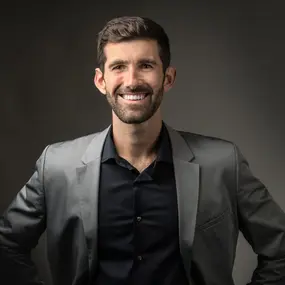
Devin Burke has built his life’s work around a problem millions of people quietly normalize: exhaustion. Not the kind you post about. The kind that reshapes your mood, your decisions, your ambition, and eventually, your identity. As the founder of Sleep Science Academy, Devin has become one of the most trusted voices helping exhausted insomniacs, entrepreneurs, and high achievers restore their natural ability to sleep through a science-based, medication-free, holistic approach. He is a bestselling author, TEDx speaker, and was named one of the Top 25 Health Coaches in America. His book, The Sleep Advantage, has helped bring the conversation around sleep out of the wellness fringe and into the center of performance, leadership, and everyday life.
What makes Devin so compelling is that he does not talk about sleep like a luxury. He talks about it like leverage. Like the hidden force behind energy, focus, emotional steadiness, relationships, and the quality of the life you’re building. In a world addicted to pushing through, he asks a more uncomfortable question: what if the life you want does not require more effort, but deeper recovery?


