

From Convict to Inc. 5000 Founder: Fleet Maull’s Radical Responsibility Blueprint For Unstoppable Success (#549)

Send us Fan Mail “We’re magical beings designed to live magical lives.”-Fleet Maull Exclusive Insights from This Week's Episodes Founder stress turns costly when blame, survival thinking, and reactivity drive decisions. Fleet Maull reveals how radical responsibility protects health, leadership, and freedom. EPISODE HIGHLIGHTS [00:07:00] Fleet rebuilds from federal prison, debt, and a criminal record into executive coaching, consulting, and Inc. 5000 growth [00:17:00] Radical responsibility sh...
 Apple Podcasts Apple Podcasts
  Spotify Spotify
  RSS Feed RSS Feed
  Amazon Music Amazon Music
  Podcast Addict Podcast Addict
  iHeartRadio iHeartRadio
  Castro Castro
  PlayerFM PlayerFM
  Podchaser Podchaser
  Overcast Overcast
  RadioPublic RadioPublic
  PocketCasts PocketCasts
  Audible Audible
  Pandora Pandora
  YouTube YouTube
 “We’re magical beings designed to live magical lives.”-Fleet Maull
Exclusive Insights from This Week's Episodes
Founder stress turns costly when blame, survival thinking, and reactivity drive decisions. Fleet Maull reveals how radical responsibility protects health, leadership, and freedom.
EPISODE HIGHLIGHTS
[00:07:00] Fleet rebuilds from federal prison, debt, and a criminal record into executive coaching, consulting, and Inc. 5000 growth
[00:17:00] Radical responsibility shifts founders from blame, betrayal, and victim thinking into ownership, possibility, and better decisions
[00:24:00] The drama triangle exposes how rescuing, controlling, and being right quietly damage team morale, profits, culture, and trust
[00:33:00] Breath, meditation, and self-regulation help founders move from survival reactivity into clearer leadership under pressure
[00:46:00] Fleet shares simple breath practices founders can use before high stakes decisions to protect health, clarity, and execution
Full show notes, transcript, and resources for this episode:
https://podcast.deepwealth.com/549
The Deep Wealth Podcast
Most entrepreneurs do not fail.
They just carry too much for too long.
The business grows. Pressure grows faster. Profits get harder to predict. Decisions cost more energy. Over time, focus slips and health takes the hit.
The Deep Wealth Podcast and Deep Wealth Mastery are built from real experience. We're the only system based on a 9-figure exit. This system exists because guessing gets expensive.
🧠 Deep Wealth Mastery
This is for you if you want to:
• Grow a profitable business without becoming the bottleneck
• Build real value so selling is optional, not forced
• Optimize your health before it limits your business and life
One proven roadmap for real decisions.
⭐ Explore Deep Wealth Mastery
https://iapdw.com/idm
🎧 Subscribe
https://iapdw.com/podcast
📘 Free eBook
https://iapdw.com/ebook
💬 Have a question you keep circling back to?
Leave a short voicemail
https://podcast.deepwealth.com/voicemail/
Built by entrepreneurs. For entrepreneurs.
Loved this Deep Wealth Podcast episode?
You built your business from nothing.
Now make it pay off big.
📱 Subscribe Now
As a bootstrapper, every move counts. Subscribe on your favorite platform for Jeffrey Feldberg’s 9-figure exit strategies. From your morning grind to late-night planning, get insights from founders who did it without investors. These tips could change your future.
Drop a Quick Review
Got 30 seconds? Leave a 5-star review. It helps us make better episodes and reach entrepreneurs like you, hustling without a safety net.
Don’t Lose Your Exit (And Your Financial Freedom)
You’ve poured everything into your business. A bad exit could cost you millions. Most deals fail, and even “successful” ones lose half their value. The 90-day Deep Wealth Mastery program teaches you to make your business run without you and boost profits so you capture the best deal instead of any deal.
What Others Say
“Deep Wealth Mastery is pure gold. I wish I’d had it before my exit,” says Stacey C. “The value I’ve gained dwarfs the investment,” adds Sanjay S. “It makes my business great to own and sell,” shares William S.
📘 Grab Free Tools
Check out client success stories for proof. Master the Deep Wealth Strategy Map to plan your exit. Or snag the eBook, From 7 to 9 Figures: The Exit Playbook, for a clear guide.
Click here to start your legacy-defining exit today.
549 Fleet Maull
Jeffrey Feldberg: [00:00:00] Some people built credibility through success. Fleet Maull built his through collapse consequence and what he chose to become after both.
Before he became a respected executive coach, meditation teacher, social entrepreneur, and founder of multiple mission-driven organizations, Fleet spent more than 14 years in prison on a drug trafficking conviction. What makes his story so compelling is not the fall, it's what he built from inside it: discipline, meaning service, and an entirely new philosophy of leadership rooted in radical responsibility. Today, Fleet is the founder of Heart Mind Institute, Prison Dharma Network, Prison Mindfulness Institute, and Windhorse Seminars and Consulting. He's also a longtime executive coach and consultant working with entrepreneurs, [00:01:00] business owners, and C-suite leaders on transformational leadership, resilience, and performance.
He's the author of Radical Responsibility, a book that asks a confronting question, most high achievers spend years avoiding what changes when you stop blaming your circumstances and take full ownership of your life?
Fleet's journey sits at the intersection of business identity, trauma, leadership, and inner freedom, and this is what makes him so rare.
He doesn't speak about transformation like a theory. He speaks about it like someone who's had no choice but to live it.
And before we start the episode, a quick word from our sponsor, Deep Wealth and the Deep Wealth Mastery Program. Here's Sanjay, a graduate of Deep Wealth Mastery, and he says, the investment I made in the Deep Wealth Mastery Program, it's a rounding error compared to the value created today and the future value I'll receive.
Or how about William, who says, and I love this, A company that's attractive to sell is also a great one [00:02:00] to own. The Deep Wealth Mastery Program gives me the best of both worlds.
Now speaking of growth and adding value, check out what Leon says. He says that the Deep Wealth Mastery Program changed how and who we hire. We've now begun to hire talent today that we never would have hired if it weren't for the program. The talent we're hiring today is helping both increase our growth and profits and our future enterprise value.
Man, I love that kind of feedback because it's that kind of feedback that's what gets me out of bed every day.
Deep Wealth Mastery System, it's the only system based on a nine figure deal. That was my deal. And as you know, I said, no to a seven figure offer, created a system that we now call Deep Wealth Mastery, and that's what helped myself and my business partners all welcome from a different buyer, a different offer, a nine figure deal.
So if you're interested in growing your profits, preparing for a future liquidity event, whether that's two years away or 22 years away, and if you want to optimize your post exit life, Deep Wealth Mastery is for you. Please email success at deepwealth. com. Again, that's [00:03:00] success, S U C C E S S at deepwealth. com. We'll send you all the information about Deep Wealth Mastery, otherwise known as the Scale for Ultimate Sales System.
That's where you want to be. You want to be with other successful business owners, entrepreneurs, and founders, just like you, who are looking to create market disruptions. Whether you're a startup, whether you've been in business for three or four decades, whether you're manufacturing, whether you're high tech, SaaS, low tech, whatever the case may Come in and network with other business owners, with other businesses, just like you, because they all want to lock in their financial freedom and enjoy both success and fulfillment.
Again, that's the 90 day Deep Wealth Mastery program. It has your name on it. All you need to do is take the next step. Please send an email to success at deepwealth. com.
Deep Wealth Nation welcome to another episode of the Deep Wealth Podcast, Deep Wealth Nation. Let me ask you something. When it comes to you, your life, your business, where do you stand? I mean, Where do you really stand? Not when things are going well, but when things go off the [00:04:00] rails, how are you handling that?
What are you doing? Do you like the person that you've become and where you're going? I want you to think about that because we have a very special guest in the House of Deep Wealth. You heard the official introduction. We have a fellow founder, a author. Thought leader, someone who is really paying it forward, making a huge difference out there.
I'm gonna put a plug in it right there. Fleet, welcome to the Wealth Podcast. It's an absolute pleasure to have you with us, man. There's always a story behind the story. You have quite the story. So what's your story? What got you from where you were to where you are today?
Fleet Maul: Well, thank you very much for having me. It's great to be here and uh, I just. I'm an entrepreneur myself, as you mentioned, and I love entrepreneurs, and so it's, it is great to be with your audience. So, I'm gonna try to encapsulate it. So I'm a baby boomer and I think I always had entrepreneurial instincts.
I grew up in a middle class Midwestern family and they had a family business started by my. Great-grandfather and I was not that attracted to working in the family business. I worked there summers during high school and then I took [00:05:00] off from college for a year and worked for that for about a year there.
But it just wasn't my thing. It wasn't, I knew it wasn't what I was intending to do with my life. Good solid business in the food manufacturing industry but I think, growing up in a family business I had those instincts. My grandfather on my mother's side was a corporate CEO with a company that made serums medicines for animals.
He was also a veterinarian and both my grandfather and father were involved in the family business I just referenced. So I think I kind of grew up with those genes and those instincts. But. also arrived in young adulthood as an angry young man with a big hole in my gut. We had alcoholism in my family, a lot of early childhood trauma as a result of family with good values, but suffering with alcoholism, unfortunately.
And I had one parent who was kinda like Dr. Jell, Mr. Hyde. You never knew which one you were gonna get. Arriving into late adolescence, early adulthood with that big hole in my gut. Also coincided with counterculture going into full swing. So I just went full [00:06:00] blown into that.
So I spent years in a counterculture, then became an expat living in South America. And, at the same time was always a spiritual seeker, and so I became almost like a lot of people in that generation for a while. I, I kind of had this very anti-capitalism attitude and anti materialistic attitude and, lot of different confused things. All, All that made sense in terms of that time and what the culture was going through, what I was going through. But it took me a while to wind my way through that. And along the way I earned my way into a federal prison sentence for drug smuggling. and I spent 14 years in a federal prison.
By the time I went in, I had a. A graduate degree in psychology. I did a very deep three year clinical training program. A lot of the training in that program still serves me today, so I came into prison with a lot of skills, a lot of background, and I was able, even though it was a very rough place, very rough environment, I was able to turn that into my.
Ashram my laboratory, my postgraduate education, and really focused on training [00:07:00] myself and serving that community. I started two national organizations while I was there. I catalyzed the growth of the prison meditation movement and the prison hospice movement and those organizations continue today.
I knew I'd be 50 years old when I got out of prison in 1999 pretty late to start your life in debt with a criminal record. And I had to figure out, some way to create a life for myself so, I decided to hang out my shingle as a management business consultant and took me about six months to get my first client, and then I was off and running.
I negotiated back in 1999, a $5,000 month retainer with my first client, and helped them completely reshape their business. And set them up for a lot of success following that. And I was off and running, so that was, I was doing a lot of business management consulting, executive coaching for 20 years, and eventually tried to take, wanted to take that online because I wanted to move beyond just trading hours for dollars.
It's, you know, you can only work so many hours and you can only [00:08:00] charge so much. And, so I was trying to figure out the kind of world of digital marketing and online education but it really took off in 2020 when we did our first online summit. I've been involved in other people's summits for.
Probably 5, 6, 7 years before that as a host, as a speaker, helping them organize summits. But we did our first summit through our company, heart Mind in 2020. And it was successful. It was right timing. The pandemic had, lockdowns had just begun. I was inspired to do a summit on resilience because I felt we really needed to have a collective conversation about resilience and I was successful and we were off and running.
So, and then during the pandemic years, we, we really grew very quickly. And we hit the Inc 5,000 this two times coming out based on that growth. We were named in 2024 and then again in 2025. And we'll be named again this year. But we are in a very challenging phase right now. Because AI has a number of things.
The bulk of our business has been online summits, although we do online coaching programs and other [00:09:00] courses and all kinds of things. But the bulk of the revenue was driven and the lead generation was driven. By online summits and now there's been a lot of oversaturation in that space.
There's a lot of fatigue amongst the audience for that format. And then AI now has completely commodified. Information and knowledge such that similar to what happened in the recording industry, a recording artist can really not make any money selling records or downloads or DVDs or whatever the format is these days.
They have to go on tour to make money and right now you could go to. One of the AI engines and say, build me an eight module course on fleet, multi neuro somatic mindfulness method, and it'll do it for you. And it won't be too bad, right? So, it's getting really tough for they've scraped all our intellectual property and, you know, there's some lawsuits around that with big players, but it is way beyond the scope of anything I could get involved in.
So anyway, that's just how things change. And so we're having to pivot really strongly and [00:10:00] innovate and think outside the box and figure out how to, we've been early adopters with ai both operationally and programmatically, but still it's takes big investment to make these changes and, but it's exciting.
I knew that the very profitable business we had going for several years would not continue. I knew we had to be prepared to innovate and I was trying to prepare. I didn't think the change would come as fast as it did, and along the way, I'm very grateful that I really started off in the world of personal evolution, personal change, personal growth, spiritual growth and that's what we've been marketing.
Those kind of programs for my company, but I've always been intent on walking the talk so I know how to take care of myself. So I take very good care of myself. I work very hard at my own energy levels and I'm on the edge of being maybe a bi close to being what you call a biohacker, but I'm, really focused on my own health, wellbeing and my energy, and optimizing my energy every day so I can lead the company and manage this very challenging time we're in. I've managed to maintain my relationships and a beautiful [00:11:00] marriage and an ever deepening marriage and close friendships, while also building a fast paced company. So I feel good about that.
Jeffrey Feldberg: Firstly, congratulations on that and quite the journey in Deep Nation. Go to the show notes and what I want you to do when you go to the show notes, buy a copy of fleet's book, pick it Up, radical Responsibility, how to Move Beyond Blame Fearlessly, live your highest purpose, and become an unstoppable force for good.
So Fleet, figuratively speaking, going back to your prison days, and my goodness, that can be an entire episode in and of itself, but figuratively speaking, what part of you would you say passed away or died in prison, and what part of you was finally born there?
Fleet Maul: So, when I arrived there fort, I had a lot of training already. I had kind of this mixed up life. I was deep into meditative training. I had very proactively studied with an amazing meditation master from the Tibetan tradition for 10 years. I did this three year clinical master's program in psychotherapy and psychology.
So I'd done a lot of deep training and deep work, but I had this whole [00:12:00] shadow side going on that I hadn't figured out how to get rid of yet. I earned my way into that federal prison sentence. But when I got locked up it was very clear to me all the craziness had to stop. My son was nine years old.
I was. Absolutely devastated over what I'd done to him. And he was gonna grow up without a dad. Originally, I thought I was gonna be in prison for 30 years. And fortunately I learned af it took me a while. I was actually in for probably 18 months before I even figured out how the. They give you good time.
What's called good time, time off your sentence, and back then before 1987 and with a long sentence, you got a lot of good time if you stayed out of trouble. So I realized I'd served 18 and a half, but I didn't know that going in. I thought I'd be serving 30. and then I, among p they knocked off one count of a five count aggregate sentence.
So I took my cents from 30 to 25, and then I knew I'd serve 14 and a half, which I did if I stayed outta trouble. And it's not easy to stay outta trouble in prison. So the shock of that and what I'd done to my son just made it absolutely clear to me and [00:13:00] I wanted to. I was just really driven to leave a better legacy for my son than just his dad went to prison or his dad died in prison.
because I had no surety that I would survive my time. so I was really clear about that. And the other thing was when I got there, I realized very quickly. That I was in a incredibly negative and corrosive environment full of a lot of violence, but where basically all my fellow incarcerated human beings mostly had big victim stories going on.
And of course, society sees them as the perpetrators, but most people. And incarcerated feel victimized. And most of them, to tell you the truth, have had terrible, really rough childhoods. And were victimized and many are over prosecuted. And there's a lot of either, whether it's intentional or default racism in our criminal justice system, our sentencing policies and all the rest of it.
And so, a lot of people in prison do justifiably feel victimized and also because. The process of being arrested and tried and incarcerated [00:14:00] is whether, again, whether intentional or by default is an incredible process of shaming and dehumanization. You just buried under this mountain of, shame and guilt and dehumanization.
So human beings just to protect themselves, just. Shift into armoring up and they armoring up with their own victim story and bitterness and anger and so forth, which is really tragic because it prevents us from getting in touch with the genuine remorse and regret. We need to feel over any harmful behaviors we've been involved in, which is really foundational.
To our own process of change and our own process of rehabilitation, but they naturally armor up. I saw that was the world I was in and I didn't wanna come out of prison, angry, bitter with a big victim story. But I didn't live, wanna live that way while I was there. Fortunately, I'd already had enough spiritual and psychological training.
I didn't wanna live that way while I was there. But I knew if I wasn't proactive, I would just absorb that and I would be that. I also knew that whatever life I could create for myself. I was in prison and if I had [00:15:00] any hope of surviving and any life I could create for myself beyond prison was gonna be based on really taking radical, 500% ownership for having got myself into that situation, what I was gonna do with it, and what would follow from that.
I chose not to cooperate with the authorities and not testify against anyone. And I wasn't trying to be some tough guy or stand up guy, just I was a Buddhist, a long time Buddhist. And the idea, okay, somebody else is gonna suffer somebody else's family, somebody else's children are gonna suffer so I can get a lighter sentence or go free.
It just didn't make sense in terms of my values and, but it did make sense for a lot of people. So I did a lot of people's time. A and also when the government prosecutes you, they don't play by the rules. They break all the laws, they break all the rules, they play hardball and they make no bones about it.
So I could have spent all my time focused on all that. All the former associates, even some sensible friends would stuck their knife in my back pretty deep. The government, yeah, I could have focused on all that and, but I realized right up front it was completely useless. To [00:16:00] do a complete waste of my time.
And I really wanted to walk out of prison without any enmity towards anyone. In fact, I wanted to live without that. So I was using spiritual practices that are part of my tradition to really dissolve any enmity I held towards anyone at all. And I was able to do that. And I actually found myself eventually with deep spiritual practice, deep psychological and meditative practices.
Being able to live in a very corrosive negative environment really in a very positive state. And then to be very creative and create a lot of amazing programming within the prison system. And then create the possibility of having a really extraordinary life since I left prison.
And I've had nothing but opportunity since I left. So all that was really born of being in that circumstances philosophy of radical responsibility was born out of that. And then the deep meditative training that's helped me learn how to not only. Have the philosophy of radical ownership, but learn how to actually do it at the neurophysiological level.
Was really born of that experience.
Jeffrey Feldberg: Oh my [00:17:00] goodness, so much there. And as you're talking about that, it may have even been Buddha, I'm not quite sure if I'm on base with that or not, but what along the lines of something like holding a grudge is like drinking poison and waiting for the other person to die. And so much of that we're seeing in society today, especially with social media.
But I'm gonna ask you something. We're going to take a deep dive now for Deep Wealth Nation so from a radical responsibility side of things, for a founder especially. What would you want them to know of living radical responsibility when they've genuinely been betrayed?
Perhaps they've been involved in a scam, but they're, they truly are the victim. They've been blindsided or even treated unfairly, but they still wanna lead in a way that, well, they're not bitter or acting small or reactive. What does that mean from a radical responsibility side of things?
Fleet Maul: Yeah, let's go into that. So, and that quote I've, used that quote many times. It's generally attributed to loud Sue one of the [00:18:00] early figures in the. This movement, very ancient figure. And, what I ask people to embrace with invite people to embrace with radical responsibility is and one of the key understandings is I understand that the distinction between ownership and blame, so I often describe it as, voluntarily embracing 100% ownership for each and every circumstance we face in life.
Both those, we can see we had some contribution to. And those, which we can't. So let's talk about the former first. So. Getting radically honest, if you will, and looking at circumstances we find ourselves in, we can often see that we maybe had a little something to do with creating, maybe we created a whole cloth if we really get honest.
Or maybe maybe we have some unconscious. Programming this, promote setting ourselves up for that. You know, In our childhood, we were constantly explaining what's happening to ourselves and we created what are called life scripts, like a script for a movie or play. We tend to play those out until we don't.
And so maybe [00:19:00] we're setting ourselves up. To be betrayed or setting ourselves up to be taken advantage of or victimized in some way unconsciously. So can we become aware of that and if something similar is repeatedly happening to us, that's something you get curious about. It's very likely we've got some internal program going on.
Or can we just look at, maybe I just allowed this to happen by being overly naive, not getting a clear agreement, not doing my due diligence, not having the difficult conversations I should have had, just going willy-nilly down the road, with wishful thinking, well, I hope it'll work out. I hope it'll work out.
And not really challenging myself to see does this really make sense? Or maybe I just wasn't paying attention, or maybe I'm, enabling behaviors or people pleasing or something in it for me, but somehow maybe I'm kind of unconsciously allowing the circumstance. So can I see any of that stuff and all of the important thing about all of that.
None of that is for the purpose of blaming myself. This is about shifting out of the blame game altogether. Now, we've all been pretty strongly enculturated to believe that when anything unto [00:20:00] happens, somebody's gotta take the blame. Somebody's gonna get blamed. And of course, we've all been blamed on our lives.
We've all experienced blame in the attendant shame that goes with it. And we don't wanna experience that again. So we unconsciously deflect blame, and we shouldn't feel bad about that. It's instinctual. So anything happens, we're just immediately gonna, who can I blame? What can I blame? Something, anything to blame.
We don't want to take it on ourselves. because we think if we don't blame out there, then the blames gonna come in here. But there's another alternative. And that alternative is ownership, which has nothing to do with self blame. So I can look at what is my part in something, either having created it or maybe set myself up on unconsciously or allowed it in some way.
Because if I can learn from that, then I can do different things in the future to get different and better results. So it's purely, the only reason I'm looking for my part in things is for learning. So I can learn how I get from point A to point B to point C and learn to do things in such way where I'm gonna get more desirable results for myself.
So that's one piece. Now, maybe I got as [00:21:00] radically honest as I could and I can't see that I had anything to do with it. Unless it's like past life, Carmen who could, blaming your past life would be kind of ridiculous. And who knows about such things, but at any rate, I can't see that I had anything to do with it.
I could get a whole group of very smart people to agree with. No, you are totally innocent. You're just an innocent bystander. And alright then what, what would radical ownership or radical responsibility mean in that case? Well, in that case, I still have a choice. What's the choice I really have there?
Am I gonna let this take me down? And get caught up in a victim mindset and how much time, it's natural. We're always gonna find ourselves vetting, complaining, but how much time am I gonna spend doing that? How much of my creative energy am I gonna spend doing that? How much free space in my head?
Am I gonna give to someone else holding on the resentments, like the La Sue quote you mentioned. There's also, I like, I don't know if it was Fred Luskin that came up with this. He's a researcher at Stanford, he's done a lot of research around grievance formation and forgiveness and so forth.[00:22:00]
And the idea of giving someone free rent in our head, like they did something, they moved on. They haven't thought about us for months or years. They're on the beach in Bali somewhere and we're still chewing on it. We're chewing on it and chewing on it. We're giving them not only free rent in our head, we're giving them a big leather couch and a Wise Green TV and making nachos for them every night.
And we're chewing who's suffering. I am. So can we really look at how much energy do I wanna put into this? Sense of victimization and do I wanna get locked into that? I don't think either one of those are gonna serve us. So instead we can move back to what I call the radical responsibility question.
No matter what situation I find myself in, however unjust or unworkable or horrible or whatever maybe involves criminal activity on the part of others, whatever it might be. The RAC responsibility question is, what can I do? Very simple question, but it takes me out of the victim mindset into the realm of possibility.
because there's always a million things we can do. There's a million solutions, there's a million [00:23:00] ways we can approach anything. There's a million ways we can approach any individual and different ways we'll get different results. So asking the question, what can I do? Or we're a team, what can we do?
Shifts us out of the victim mindset. Into the realm of possibility. For example, as I mentioned with my company, now we're having to really radically pivot and we don't even know where we're pivoting to in some case. because who knows where the landscape's gonna be with AI in six months or a year, 18 months.
Things are changing so quickly. So we could just be sitting around and complaining about that and feeling defeated. We had a business that was just taking off and then went over a cliff, and so it's like we could just be sitting around feeling terrible about that and blaming the world and blaming AI and blaming these AI companies for ripping off our intellectual property, et cetera, et cetera.
Or we can come back to, okay, this is reality now. This is the changing landscape. What can we do?
Jeffrey Feldberg: Yeah. I love that from playing the victim and my goodness, with social media more than ever, it is so easy to play the victim and get the likes and other [00:24:00] people saying, yeah, go Jeffrey. Go with that. We have a platform, a soapbox that never in human history before have we had it. Makes it all too easy.
That's a whole other conversation fleet of where our moral compass has gone and our North Star, but we'll put that off to the side. I wanna ask you something in preparing for today. I know in your work you referenced the term drama triangle quite a bit. And so a bit of a two part question. So for Deep Nation who's never heard of the drama triangle, what is that?
And then very specifically for them in the drama triangle itself. Generally speaking, what role do most founders often play and then mistake for good leadership and not realize what it's quietly costing them or their team, their profits, their culture.
Fleet Maul: Yeah, absolutely. So the drama triangle was built by a psychologist named Steven Carman, and he was a transactional analysis. And so it's kind of in that [00:25:00] transactional analysis model and for the football fans in our audience, he was a football fan and he liked to do the X's and O's and he was a doodler and liked to watch football and, script out the plays with the X's and O's and somehow he was doing that and came up with this thing one day.
Now it's amazing he gets credit for it because it's such an obvious human dynamic. But he does, it's called Karpman Drama Triangle. So, this is a classic melodrama, you've got the hero, the villain, and the damsel in distress, so yeah that's the drama triangle. Now for him he used the terms.
Persecutor, rescuer, and victim. And to be very clear, these are not labels we put on people. These are personas or mind states that we all go through. We get caught up in the persecutor mind state. We get caught up in the rescuer mind state. Or the victimized state. And these are patterns of reactive behavior.
And it's all about power and control. So if I'm feeling victimized in some way, by definition I'm experiencing a sense of powerlessness, I may not wanna [00:26:00] get outta powerlessness back into power. So how do I do that? Well, one way, as I move. Generally unconsciously through habitual patterns, into a persecuting mode where I'm judging and controlling, criticizing, trying to dominate.
Why? Because I'm looking for power. So what's the underlying position of the persecutor position? It's the victim mindset, or I move into rescuing. Well, I'm ostensibly helping people, but I'm, I need to do it from up here, I'm the rescuer, the fixer or the savior. I'm riding it on the white horse to save the day.
And why am I doing it? Because that's how I feel ostensibly to help people, but actually because it's how I feel good about myself. It's how I feel strong. It's how I, again, power. So again, it comes outta that feeling of powerlessness. Now, sometimes. Like a mining accident, a skiing act. People need rescuing.
We're not talking about that kind of rescuing, we're talking about psychological rescuing. And of course, nobody's a pure rescuer. Nobody, very few people are a pure helper. But the extent that our, natural instincts to be helpful and to serve. Get conflated with rescuer psychology [00:27:00] are helping, is less helpful because it actually keeps other people down.
It colludes with the victim mindset, it enables other people to be victims. It's kind of parental, we're treating people like children. So you mentioned the CEO of the business leader very often gets caught up in the rescuer mindset, is trying to rescue their team. But often then sometimes we'll go into the persecutor, to can kind of pound my team into the results I need.
Or they start beating up on themselves. We all have a drama triangle going on between our ears. We beat up on ourselves, we rescue ourselves. We play the victim vis-a-vis ourselves. And so if you have a lot of people riding around with drama triangles between ears, guess what? They create with each other.
They create drama. And these strategies work to a degree, we get emotional payoffs, for the classic drama triangle behaviors are blaming others holding on the resentments. That chewing on resentments. The giving people free rent in your head, the old loud sue quote about taking poisoning, hoping the other people will die.
Justification. Justifying our own behaviors and being right. Oh, that's a juicy one. We [00:28:00] love to be right. We'll get divorced over being Right. we'll lose our kids over being. Right. We'll go to war over being Right. We'll, we'll do untoward things over being Right. because it's really addictive.
So we get emotional payoffs for blaming yeah, it's their fault. justifying, yeah. I had no choice. I had to do that. Or as I said, being right. We get these emotional payoffs for doing that or shame shaming ourselves. So it's, to me, this is like the junk food or the emotional, you get a quick emotional payoff, but then lasting suffering because these approaches to power and control just create.
Never ending chaos. And this plays out in our own heads. It plays out in companies and can really destroy organizations and companies. People will sabotage companies, sabotage other employees, drive people out of companies. Based on this, I did management and business consulting for 20 years and I saw this happen again and again in companies where the drama triangle would destabilize companies.
force out good employees and do all kinds of things like this. It plays out in our families and leads [00:29:00] to divorce creates tremendous suffering for children and it plays out of the world change. I mean, Just turn on the news, what we have going on now. It's just never ending.
Interlocking drama triangles that keep perpetuating suffering and chaos and wars and conflicts, right? So this is the drama triangle and the way we learn to get off the drama triangle is by learning to recognize it. Taking ownership for our participation in things. Learn to resource ourselves so we can unhook from the emotionality that we've gotten hooked into, and then getting a new perspective on thing and owning our feelings.
Yeah, I'm really pissed off. I'm really angry. I not, you're pissing me off and you're making me angry, but I am angry. It's my anger. I think it's. Related to something out there, but what I know for sure, it's my anger. and then going into, well, what's that anger really arising from? Well, our emotions, we may think our emotions are caused by other people in situations and things.
That's not exactly the case. Our emotions arise are the perception of our needs being met or not being met. [00:30:00] So we all have the same similar needs, right? Food, warmth, shelter, love, belonging. Creative expression workability safety. You know, We have all these same needs, and when I perceive my needs are made getting met, how do I feel?
Well, I have all the warm and fuzzy emotions, but when I perceive my needs are blocked or not getting met, then I start feeling frustrated, anger, envious, jealous hateful scared, afraid, all these. What we think of as the more difficult, challenging emotions all arise out of our perception that our needs are not being mattered.
They're thwarted or blocked in some way. So are, my perceptions always accurate? No, not at all. Our perceptions are at the very best, a limited interpretation of a limited set of the available data. We're constantly projecting our own internal basically childhood landscape onto the world, and we're making assumptions and then coming into conclusions.
So, when we really look at something, our perceptions are usually marginally accurate. But even if they are. Okay, [00:31:00] this situation is not meeting my needs. Is it the world's responsibility to meet my needs? Is it that other person's responsibility to meet my needs? Okay, then once I get to that place, how could I approach this?
Maybe I can have a conversation with someone about needs without blaming them. because we all have the same needs. So we may be able have a conversation about needs and how we might mutually get a win-win set of needs met without blaming them. Because the minute we even blame them a little bit, what happens for them, they're on the defensive.
We're off to, we're back on the drama triangle. So there's lots of teaching around how to get unplugged from the drama triangle, how to learn to avoid the drama triangle and how to really live a drama free life. And boy, if you're an owner or a CEO or a founder. That's what you want is a drama free company, a drama free life.
because all founders realize that drama is just a killer in terms of the morale of your company. It wastes huge amounts of money. It will make you uncom competitive. It, It literally will just draw our company. [00:32:00] So how do we create a drama free environment? So I find this drama triangle to be a core teaching and a core construct that really helps us understand how drama gets created and how to uncreate it and how to avoid it.
Jeffrey Feldberg: From the drama triangle I wanna circle back to something that you said because we're all interconnected, but it's not necessarily intuitive and fleet. That's what I love about your work of how you piece this together. You very subtly said earlier on when we started talking that you go to great lengths to take care of your health, and at the surface it's easy to gloss over offline.
Before we started, you're sharing a few things of what you're doing and the time and effort that you're putting into. And you're talking about perception just now and how perception, whether it's right or wrong, and not to put any labels on it, that becomes our reality. So with what I'm gonna ask next, for most people, it seems counterintuitive.
Some people would say it's got no place in business. It's even woo woo. For you though, this is center stage, this is mainstream, and [00:33:00] it's breath and meditation, and the question for you is. As a person, or it could be a CEO founder, just fill in the blank. We're human. We all go through the same thing When the, you know, what hits the fan when the pressure hits, how can meditation and breath, as counterintuitive as it sounds, how can meditation and breath take someone from being reactive and move them into radical responsibility, and what would that breath reveal about the way that we're about to lead or we are leading in that moment.
Fleet Maul: Well, we have two basic operating systems. One is for survival and protection. It's very necessary. We wouldn't be here as a species if we didn't have that. And then we also have another operating system for connecting with others and for getting our needs met with others and out in the natural world.
And Stephen Porridge is the founder of Polyvagal Theory, calls that our social engagement system. So we're always moving back and forth between these two systems. We're either contracting and withdrawing to protect ourselves physically, emotionally, so forth, or we're [00:34:00] opening to get our easement to connect with others, to connect with the world.
There's nothing wrong with either. We need them both, but can we be conscious about that? Can we actually train ourselves to. Feel when we're starting to contract, and maybe I'm contracting in a situation where that's not so helpful. What I really need to be doing is opening, or maybe I'm wide open in a situation where that's not helpful.
I really need to be coming back and contracting a little bit and taking care of myself so. Can I learn to feel that? So I'm navigating it instead of letting the world navigate it. We all live at the intersection of our childhood programming that we had nothing to say about, which is deeply embedded in our neurophysiology and the world around us.
And unless we take ownership for learning to self-regulate. That's what's happening now. If our childhood programming was completely benevolent, which is not the case for most of us, and if the world around us was a bubble of benevolence, well maybe we could be in there somewhat habitually and mechanically and things would work out, but that's not the case.
The world is very challenging, and for most of us, our childhoods, were a mixed bag. So we're in [00:35:00] there just kind of getting pushed around and shoved around. Thinking we're free autonomous adults making free autonomous decisions all day long, and we're not at all, we're very robotic. We're very reactive, we're very habitual, and we're just getting shoved around.
And the answer is. We have to take ownership for regulating our own neurophysiology, our own autonomic nervous system, which has two brands, one upregulates, one Downregulates. There's a balance going on all the time. There's an appropriate balance for any human activity. There's an appropriate balance to be able to make the best decisions in the workplace, and we can.
Navigate that balance by working with breath because the autonomic nervous system is connected to our breath. When we breathe in, we get a slight upregulation of the sympathetic branch, which is alertness and goes into stress and panic and overwhelm. And when we breathe out, we get parasympathetic, which is rest and digest relaxation.
So we can learn to work with breath to regulate our own autonomic nervous system. And the good news is if we practice breath work and meditation, which also does that. On a regular basis, our nervous [00:36:00] system learns and it learns to regulate itself. So it generally stays in a more regulated state and kind of dances with the challenges of life automatically without us having to do it so much.
But when we get beyond the edges of our autoregulation capacity, then we kick in with our intentional self-regulation. And I know I can bring myself back to the state. That's the optimal state to deal with whatever I'm dealing with. So the only way to really earn those abilities. Is are through body mind practices, like breath work various forms of yoga, martial arts, meditation, all the whole realm of body mind practices that teach us to become aware of our own neurophysiology.
Literally feel our nervous system and feel what is doing moment to moment, and then learn to be. In a self-leadership position where we're directing that instead of letting the world around us direct that. And this is just critical to making good decisions. One of the things that impacts leaders a lot is decision fatigue.
We're making so many decisions and our mind state is already colored with challenging [00:37:00] emotions, with frustration, with fear, with all kinds of things. And so we may not be making the best decisions and we're having to make a lot of decision and we get into decision making fatigue, and we can make a lot of decisions that are not so great.
So. How do we counteract that by taking care of ourselves and reducing the amount of decisions we're making. So we're only making the decisions we need to be making as a CEO or founder, and we have the resilience to do so to make the best decisions we possibly can because we're in the optimal neurophysiological state.
And all this requires work, but I think it's critical. And you'll find actually, if you look out at some of the really well-known, super successful founders in the world, some of the billionaires. Almost all of them have some kind of body mind practice these days.
Jeffrey Feldberg: And so as you're talking about that, I can imagine people in Deep Wealth Nation saying, Hey, fleet Jeffrey, love the conversation, but you lost me when it came to breath meditation. I've got the monkey mind. I've tried the meditation. I can't do it for more than 30 seconds. And on the cynical side, I can imagine them saying, [00:38:00] well, fleet, I hear you, but really body mind practices, things like breath, meditation, yoga.
How would that possibly help me to see what the thinking mind, what my logical mind is missing or not seeing? How would you respond to that?
Fleet Maul: I'm gonna give you a little secret right here. Right? So a lot of people find it very difficult to practice any kind of meditation or mind body work. And they talk about they have the monkey mind, the mind's racing all the time, and they maybe try and it's. Hard, they're struggling with the monkey mind.
The body hurts. Doesn't seem like it's do anything, so why should I do it? It's boring, it's hard, and I quit. So. I had like everybody just to imagine for a moment in your audience. I would imagine everybody who's tried to thread a needle at one time or another, or at least maybe beta fish hook or something like that, or tie a fly.
But imagine that we're trying to thread a needle for, so we have the thread, maybe we look the point to get a sharp point. We got the needle with that little tiny hole. And just imagine yourself for a moment, really literally do this. Try to put that thread through the hole at least for a second. Your mind gets [00:39:00] very quiet.
We've all had that experience, we may not be able to sustain that, but for a moment your mind will get very quiet because you're really focused. So what's going on there? That represents the ship between two neural networks in the brain. There's a neural network known as the default mode network, which is active when we don't direct our attention, and it's responsible for that monkey mind.
It loves to ruminate about the past. It loves to go into the future and worry and fantasize about the future. It keeps it running. Commentary about the imagine present, which isn't really the present, is constantly reinforcing our separate sense of self and our separation. And it's just that very busy mind, and it's pervaded by fear and anxiety because of something called the negativity bias, where we pay more attention to threat than anything else, of course, because Job one, Freddy speeches is survival.
So we have a long term memory that's mostly full of threat experiences and danger, and that creates an implicit memory, and we spin everything to the negative. So actually that Tomo network. Can be a tremendous source of creativity and problem [00:40:00] solving if we can free it of anxiety and fear. So again, we can use meditative processes to free ourselves of anxiety and fear, then let the mind wander.
That can be a great space in which to come up with brilliant solutions to problems we've been struggling with and you know, that's been happening for millennia. Some of the great scientific discoveries happened. Somebody in a bathtub, they were relaxing, who was there was some very famous stories like that.
So, but for most of us, it's the source of our self-created stress. Well, fortunately, that neural network, the De Pablo network has a mutually inhibitory relationship or a mutually antagonistic relationship with a different neural network called the Task Positive Network. So if I bring online the Task Positive Network.
The default network goes offline naturally. And so when I focus on trying to thread that needle, I'm activating the tax positive network. And that's why you notice your mind getting really quiet for a second or two. Now, how do we sustain that? Well, the. We take an approach to mind body work that really [00:41:00] emphasizes feeling the body a deeply embodied approach and not just feeling the body because body's a concept.
There's really no such thing as a word pointing to a lived experience. We focus on feeling the micro sensations that make up the experience of being alive in a body or breathing. And if we take this approach, which is what I teach in Neuros Somatic Mindfulness, a very deeply embodied neuroscience informed, trauma informed approach to meditation.
Beginners can learn to meditate very easily and then start experiencing the benefit. Used to have to practice five, 10 years for people can start realizing those benefits very quickly. And in our experience, we have people that have been meditating for 5, 6, 7 years and you know, fairly established meditators.
Radically changes their practice. We have people coming to us who've been practicing for 30 years, done all kinds of retreat practice, radically changing their practice by doing it in this deeply embodied way, instead of trying to do it in top down mode. Most of us have been trained inculturated to do everything from a cognitive top down mode and even [00:42:00] meditation.
We're trying to do it from a top down mode. In fact, even some people that talk about somatic meditation are still really approaching it from a top down mode. This is bottom up. We're learning to work from our nervous system up. Actually we know that in terms of the information, it goes back and forth between the skull, capsulate brain, and the rest of our nervous system, which includes many different brains, the brain and our gut, which is a hundred million neurons.
The brain and. In the heart center, but all the different nerve plexes, all different energy centers of the body all have neural networks. So we tend to think, oh, I'm directing everything from the brain, right? That's the command center and I'm directing everything out. Actually, we know that 80% of the data is moving up to the brain where it's being processed.
Only 20% is going down. And so we need to learn to, bring our self-regulation practices and our consciousness and the way we lead and make decisions to a more bottom up way, a more embodied way that's gonna give us clarity of mind, clarity of decision making [00:43:00] keeps our nervous system well regulated.
We're not exhausted. We don't experience decision making fatigue. So all this can be learned and we could think of it as embodied leadership or whatever we want to think about it. You know, It's, and that's really our work at Heart Mind. It's helping people become more embodied, and in that way they become more heart-centered in a positive way, just more connected with their own hearts, more connected with the people that are important to them in their life and more connected with the earth and they're able to make better decisions and lead healthier lives.
So it's really about coming home to the body. I have a friend who says that. Actually, he got this from a friend, I think. But at any rate, this person said that in western culture and which has become global culture, modern culture the body has been relegated to being nothing more than a brain taxi, just something to carry around this supercomputer on our shoulders.
Now, in some ways, I think that's a human condition because we do have this supercomputer up there and we get fascinated with it. We're also very externally oriented, visually auditor. because we get our needs met [00:44:00] by. Being out in the world and connecting with other people in the natural world. So I think it's a human condition for our locus of control to shift up here.
And the Western culture, ever since the Cartesian split has really exacerbated that so most of us ignore the internal landscape of the body unless we experience pain or discomfort of some kind, so it's about coming home to the body and learning to live an embodied life. And that's where all the good stuff is.
In fact, I think you could put. Point to most of the real challenges we have in life, individually at the level of community, and globally with climate change, our relationship to the earth, social problems, war and conflict. It's all because we're so disembodied, coming back to the body, we make completely different decisions.
We're in a completely different relationship with ourselves. It's hard to be connected to the body, connected to the earth, and connected to the heart, and then go make decisions that are harmful to ourselves, harmful to others, or harmful to the earth.
Jeffrey Feldberg: So true with what you're saying in Fleet as you're talking about that, you're actually reminding me now of some of the science [00:45:00] and the studies. And they're confirming, you've known this, the ancient civilizations have known this for eons. It's even built into our language. Follow your heart or do a gut check.
And to your point, the science is now showing you're right that the communication is coming more from the heart or from the gut, and there's more there than what they thought is actually our bigger mind. It's not up in our head, it's in our heart or our gut, or the heart mind as you're calling it. So it's fascinating how.
Ancient civilizations, and we often look to them as well. What do they know? Well, actually, it turns out a lot more than us, especially in those areas. And I'm wondering before we start going into wrap up mode, someone in Deep Wealth Nation, they're listening now. They're fascinated by what they're hearing.
This is perhaps new for them. They're hearing this for the first time. They wanna begin this work, they're not quite sure where to start. So what would be one? I use the word simple, not to confuse simple simplicity. What would be one simple practice that they could begin to [00:46:00] try with radical responsibility?
Something that they can do today, even after hearing us in this conversation, before the next phone call, their next activity or meeting. If they can do one thing from radical responsibility to begin their journey, what would that be?
Fleet Maul: I think I'd like to offer just a very simple breath regulation technique, and it's called straw breath. And we do it by breathing into the nose, like with our mouth closed like this, and then breathing out through purse lips as if we're blowing out through a straw. And then we want the outbreath or exhale to be twice as long as the inbreath or the inhale.
And so we can do that by counting, so people could do it with me. You could do it with me for just a minute here. Just a moment. So I'll start counting. Let's give a little exhale and then start together on an inhale. So in. 2, 3, 4, out, 2, 3, 4, 5, 6, 7, 8, into the nose, 2, 3, 4, out to purse lips, 2, [00:47:00] 3, 4, 5, 6, 7, 8.
So I encourage your audience to try that even for a minute or two, and you'll notice your nervous system just going. Because what you're doing there is you're directly activating the parasympathetic branch of the autonomic nervous system, which is the downregulating branch, the rest and digestive relaxation response.
And if you do that just for a couple minutes, you'll find yourself really chilling out. So you know, when we're getting too upregulated, too stressed out, we can immediately bring us back to a more workable phys neurophysiological state where we'll. Be able to make better decisions, get better results.
Now if we happen to be in a very lethargic state where we have too much parasympathetic, we don't have enough alertness, we're feeling checked out, maybe we're driving and we're feeling well probably pull over and get some coffee or take some rest.
But something we can do quickly is this very fast abdominal breathing. So maybe put your hand down on your abdominal muscles so your focus is there, and breathe really quickly through the nose like this, like you're hyperventilating. Somebody does [00:48:00] that just for a minute. You'll notice it's not relaxing at all, because what that's doing is that's activating the sympathetic branch, the upregulating branch. And so you'll ship from a lethargic state to an alert state immediately, right? So we can use our breath and there are many other simple breath techniques.
There's. 4, 7, 8 breathing where we, it just like the straw breathing except in the middle we add a seven second pause. We hold our breath for seven seconds, which gives us an oxygen booth. So in four, pause or hold for seven out eight. There's also box breathing where it is used by combat soldiers.
In the military and elite units where you have four parts of the breath you have in breath. Pause out, breath, pause. So just like a box or square and you want them to be the same distance. So breathe in for pause, for out, for pause, for in, for pause, for out for. Pause four and it could even become five or six.
But the idea is the same [00:49:00] length and that balances the right and left sides of the hemispheres of the brain, brings our nervous system into optimal regulation. And uh, Navy Seals use that to make decisions that most of us will be in a state of paralysis and a firefight where we have to make a decision.
It's gonna be the life or death for our platoon, and they're able to. Get their nervous system in their brain in a well regulated site in a situation like that to make the best possible decision. And they use skills like that. So very simple breath regulation tools that anybody can learn to bring your optimal nervous system regulation back online so you can make a better decision.
Let go of reactivity and move from that survival fear and survival reactivity back into relational responsiveness, right? So, you know, I get our nervous system going back and forth all the time, right? So we tend to get pushed when challenged back into some kind of survival pattern, reactivity and so forth.
And we wanna be able to shift back into enough [00:50:00] openness, responsiveness so that we can actually see what's really going on and make the best possible decision, even in our own enlightened self-interest, which is our long-term interest. And when we do that, it usually works out for everybody else as well.
I still spend two hours every morning getting myself into the optimal state to go with my day. It involves breath, work, visualization, affirmations, yoga, stretching, meditation, all kinds of things.
I stack up this whole stack of body mind disciplines that I've developed. So by the time I'm ready to go to work. I'm in, in an optimal, positive state, full of gratitude, full of inspiration. I'm well regulated, and that's how I start my day every day. and I've learned that if I try to cheat that process, I'm really not serving myself or serving my team.
So this stuff works. And, you know, to even simplify it further, just take a deep breath, just take one deep breath like this. Oh. It's like pressing the reset button on your nervous system. I teach another quick technique. It's called stop, feel, breathe, and be. So we're getting all winded up or we're a little distracted.
We're not feeling at our best. Just stop. [00:51:00] Say to yourself, stop. It creates a pattern or up then feel whatever you're feeling, physiologically, emotionally, just feel and then say to yourself, breathe so that you're not holding your breath. Just release the breath and then drop into a moment of being, cause our lives are doing.
And we're not served because we don't have enough being in our lives. So just these little micro practices, we can do them anytime and they'll begin to infuse all our doing. With more being and we'll be more well regulated, we'll make better decisions, we'll be healthier, we'll be able to sustain our lives for the long term, have healthy relationships and so forth.
Jeffrey Feldberg: And Deep Wealth Nation. Did you hear that? Fleet is taking up to two hours, maybe three hours each morning before he shows up to make sure he's in peak state, optimal state with his mind, his body showing up, being in the moment as opposed to, oh. Okay, my eyes are away. Here I am world. Let's go. And I'm like the proverbial ship without a rudder going wherever people want me to go because I haven't made that deliberate effort, that [00:52:00] intention and some terrific insights that you're sharing with us.
And speaking of Insights fleet, we're gonna go into our wrap up mode. It is our tradition here on Wealth Podcast. It's really my privilege, my honor. Each guest, I ask the same question. It's a fun question. Let me set this up for you. When you think of the movie Back to the Future, you have that magical DeLorean car that can take you to any point in time.
Fleet. This is the fun part. It's tomorrow morning, you look outside your window. Not only is the DeLorean car curbside, the door is open and it's waiting for you to hop on in which you do. You're now gonna go to any point in your life fleet as a young child, a teenager, whatever point in time it would be.
What would you tell your younger self in terms of life lessons or life wisdom or, Hey, fleet do this, but don't do that. What would that sound like?
Fleet Maul: clearly have the qualities of encouragement, but it would really be letting that young child know that the world is simply full of possibility and there's really nothing to be afraid [00:53:00] of. And you have all the talent you need to succeed on any level. But it is really not even so much about success.
It's just about don't lose that awe you are born with and just explore because the world is this magical place and we're magical beings designed to lead magical lives. And we get talked outta that. So don't let yourself get talked out of that.
Jeffrey Feldberg: I absolutely love that we're magical. Being designed to live magical lives, a world's full of possibility and you have everything that you need within you right now. Some terrific advice. And speaking of advice, fleet, someone in Deep Nation, they have a question for you. They'd like you to give a keynote, perhaps a mastermind or some coaching, speak to their organization, a retreat.
Where would be the best place online to reach you?
Fleet Maul: Well they can find the breadth of our work at heart minus to heart mind.co. Heart mind.co. And you can reach out to me through there. I also have my personal website, fleet mall.com. So either one. And you can find out about all our programs and summits and [00:54:00] so forth at Heart Mind, and you can reach out to me if you wanna work with me through either one fleet mall.com or heart mind.co.
And if they would like to get a free chapter from the RAC responsibility book and get over a thousand dollars worth of free bonuses by buying the book online somewhere. They can go to radical responsibility book.com.
Jeffrey Feldberg: Terrific, and I have great news. Deep Wealth Nation. It doesn't get any easier. This is all in the show notes. It's a point and click Go there, click on the links, take Fleet up on his very generous offer. Well, fleet, it's official. Congratulations, this is a wrap, and as we love to say here at Deep Wealth, may you continue to thrive and prosper while you remain healthy and safe.
Thank you so much.
Fleet Maul: Thank you, Jeffrey. It's been a pleasure.
Jeffrey Feldberg: So there you have it, Deep Wealth Nation.
What did you think?
So with all that said and as we wrap it up, I have another question for you.
Actually, it's more of a personal favor.
Did you find this episode helpful?
Have you found other episodes of the Deep Wealth Podcast empowering and a game changer for your journey?
And if you said yes, and I really hope you [00:55:00] did, I have a small but really meaningful way that you can actually help us out and keep these episodes coming to you.
Are you ready for it?
The dramatic pause. I'll just wait a moment. Drumroll, please. Subscribe. Please subscribe to the Deep Wealth podcast on your favorite podcast channel. When you subscribe to the Deep Wealth Podcast, you're saving yourself time. Every episode automatically comes to you, and I want you to know that we meticulously craft Every one of our episodes to have impactful strategies, stories, expert insights that are designed to help you grow your profits, increase the value of your business, and yes, even optimize your post exit life and your life right now, whatever you want that to look like.
And every time you subscribe and a fellow entrepreneur subscribe, it's a testament to how together, Yes, we are. We are changing the social fabric of society. One business owner at a time, one liquidity event at a time. So don't let the momentum stop here. Subscribe now on your favorite podcast channel.
You'll never miss an episode. You'll be the first to hear from the top industry leaders, the [00:56:00] innovators, the disruptors that are really changing and shaping the business world, and maybe you're commuting, maybe you're at the gym, maybe you're taking a well deserved break that we spoke all about on this episode.
The Deep Wealth Podcast, it's your reliable source for the next big idea that could literally revolutionize your business. So once again, please hit that subscribe button, stay connected, inspired, and ahead of the curve. And again, your next big breakthrough moment, it might just be one episode away. Maybe it was even this episode.
So all that said. Thank you so much for listening. And remember your wealth isn't just about the money in the bank. It's about the depth of your journey and the impact that you're creating. So let's continue this journey together. And from the bottom of my heart, thank you so much for listening to this episode.
And as we love to say here at Deep Wealth, may you continue to thrive and prosper while you remain healthy and safe.
Thank you so much.
God bless.
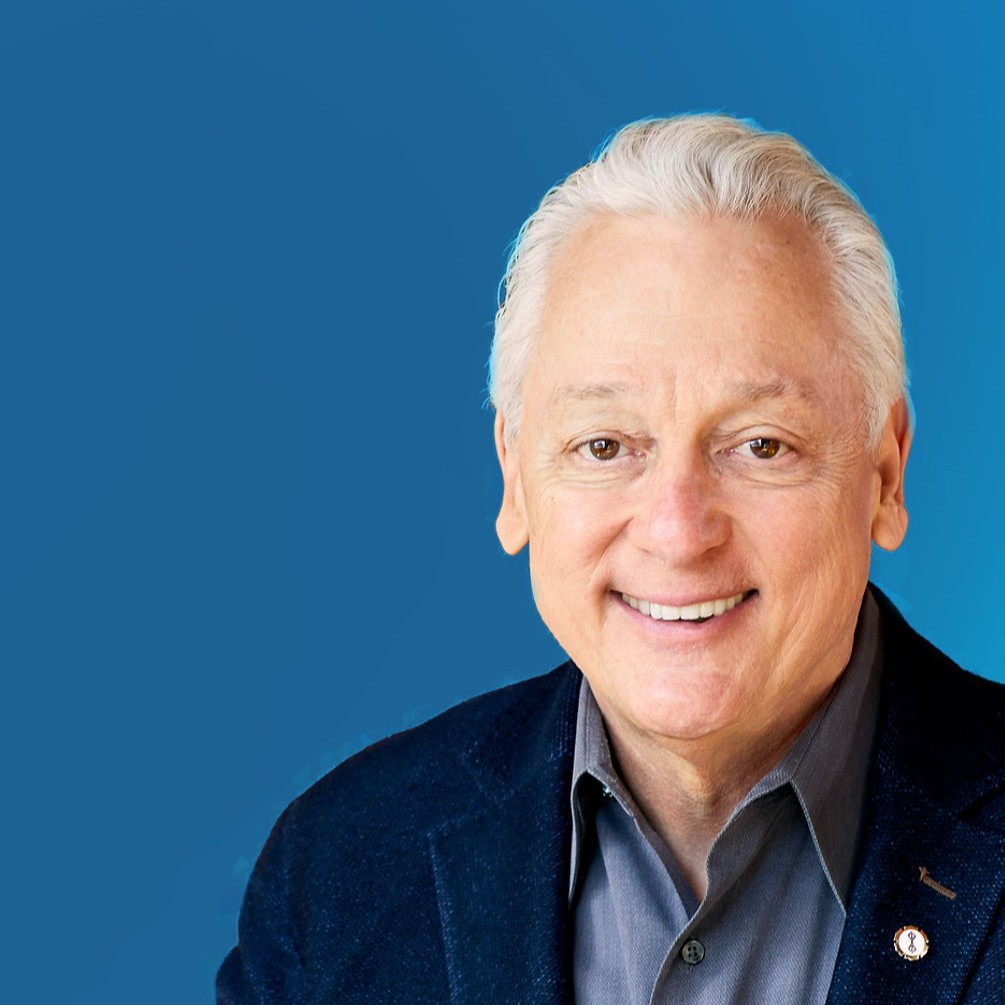
Master executive coach, consultant & trainer
There’s a quiet assumption most founders never question… that their struggles with growth, hiring, and decision-making are about strategy.
But what if that’s wrong?
What if the real constraint isn’t your business model, your market, or even your leadership skills… but something far deeper, something wired into how you think about money, risk, and control?
Fleet Maull has lived a life that forces you to confront that question head-on.
A former successful entrepreneur whose life unraveled into addiction and a 14-year federal prison sentence, Fleet didn’t just rebuild his life, he rebuilt his identity from the inside out. In prison, he founded one of the first mindfulness-based rehabilitation programs, long before mindfulness became mainstream. Today, he’s a globally recognized teacher, executive coach, and founder of Radical Responsibility, working with leaders who want more than success, they want alignment.
His work sits at the intersection of leadership, accountability, and inner transformation. And what makes it uncomfortable, in the best way, is this: he doesn’t let you outsource responsibility.
Because the same patterns that create success… are often the ones quietly sabotaging it.
And once you see them, you can’t unsee them.


