


UFC Hall of Famer Pat Miletich: Living Healthy but Feeling Drained? Ask This One Question. (#587)
Send us Fan Mail “The only time you have trouble in your life is when you don’t listen to your intuition.” -Pat Miletich Exclusive Insights from This Week's Episodes Living healthy but still feeling drained? UFC Hall of Famer Pat Miletich challenges founders to stop treating symptoms and ask what is causing them. Discover the root-cause mindset that can protect health, leadership capacity, and business performance. Episode Highlights [00:04:28] Pat reveals how struggling to breathe taught him...
 Apple Podcasts Apple Podcasts
 Spotify Spotify
 RSS Feed RSS Feed
 Amazon Music Amazon Music
 Podcast Addict Podcast Addict
 iHeartRadio iHeartRadio
 Castro Castro
 PlayerFM PlayerFM
 Podchaser Podchaser
 Overcast Overcast
 RadioPublic RadioPublic
 PocketCasts PocketCasts
 Audible Audible
 Pandora Pandora
 YouTube YouTube
“The only time you have trouble in your life is when you don’t listen to your intuition.” -Pat Miletich
Exclusive Insights from This Week's Episodes
Living healthy but still feeling drained? UFC Hall of Famer Pat Miletich challenges founders to stop treating symptoms and ask what is causing them. Discover the root-cause mindset that can protect health, leadership capacity, and business performance.
Episode Highlights
[00:04:28] Pat reveals how struggling to breathe taught him that harder work cannot always overcome a hidden constraint
[00:11:51] The competitor question that forces founders to confront weaknesses before the market exposes them
[00:22:59] Why Pat ignores the visible symptom and asks what underlying problem made it possible
[00:26:09] The hidden price of shortcuts and why convenience can quietly create bigger problems
[00:28:56] Why accepting low energy as “just getting older” may stop you from asking better questions
[00:39:13] Pat shares one simple food-shopping habit for people who want to start questioning their inputs
Full show notes, transcript, and resources for this episode:
https://podcast.deepwealth.com/587
The Deep Wealth Podcast
Most entrepreneurs do not fail.
They just carry too much for too long.
The business grows. Pressure grows faster. Profits get harder to predict. Decisions cost more energy. Over time, focus slips and health takes the hit.
The Deep Wealth Podcast and Deep Wealth Mastery are built from real experience. We're the only system based on a 9-figure exit. This system exists because guessing gets expensive.
🧠 Deep Wealth Mastery
This is for you if you want to:
• Grow a profitable business without becoming the bottleneck
• Build real value so selling is optional, not forced
• Optimize your health before it limits your business and life
One proven roadmap for real decisions.
⭐ Explore Deep Wealth Mastery
https://iapdw.com/idm
🎧 Subscribe
https://iapdw.com/podcast
📘 Free eBook
https://iapdw.com/ebook
💬 Have a question you keep circling back to?
Leave a short voicemail
https://podcast.deepwealth.com/voicemail/
Built by entrepreneurs. For entrepreneurs.
Loved this Deep Wealth Podcast episode?
You built your business from nothing.
Now make it pay off big.
📱 Subscribe Now
As a bootstrapper, every move counts. Subscribe on your favorite platform for Jeffrey Feldberg’s 9-figure exit strategies. From your morning grind to late-night planning, get insights from founders who did it without investors. These tips could change your future.
Drop a Quick Review
Got 30 seconds? Leave a 5-star review. It helps us make better episodes and reach entrepreneurs like you, hustling without a safety net.
Don’t Lose Your Exit (And Your Financial Freedom)
You’ve poured everything into your business. A bad exit could cost you millions. Most deals fail, and even “successful” ones lose half their value. The 90-day Deep Wealth Mastery program teaches you to make your business run without you and boost profits so you capture the best deal instead of any deal.
What Others Say
“Deep Wealth Mastery is pure gold. I wish I’d had it before my exit,” says Stacey C. “The value I’ve gained dwarfs the investment,” adds Sanjay S. “It makes my business great to own and sell,” shares William S.
📘 Grab Free Tools
Check out client success stories for proof. Master the Deep Wealth Strategy Map to plan your exit. Or snag the eBook, From 7 to 9 Figures: The Exit Playbook, for a clear guide.
Click here to start your legacy-defining exit today.
587 Pat Miletich
Jeffrey Feldberg: [00:00:00] Pat Miletich spent years learning how to win fights. Then his search for human performance led him somewhere few people would expect, into the soil. Pat is a UFC Hall of Famer, former UFC welterweight champion, pioneering mixed martial artist, coach, and founder of Miletich Fighting Systems. His influence extended far beyond his own championship career.
He helped develop fighters who became world champions, including Matt Hughes, Jens Pulver, and Tim Sylvia. But what makes Pat's story so fascinating today is the second act. After decades of studying performance, recovery, resilience, and health, Pat's journey increasingly focused on the connection between soil quality, food quality, and human vitality.
That exploration helped lead to Soil Saviors, a soil restoration company [00:01:00] focused on rebuilding depleted soils, reducing dependence on synthetic inputs, and helping growers create healthier, more resilient ecosystems. It's an extraordinary transition from stepping into a cage where every weakness gets exposed to examining whether some of the biggest weaknesses in human health begin beneath our feet.
Pat has spent his life studying systems under pressure, fighters, teams, bodies, and now ecosystems. Underlying his journey is a compelling question. What happens when a man who spent his life mastering combat turns his attention towards another fight, one involving the health of the soil, the food supply, and ultimately the people depending on both?
And before we start the episode, a quick word from our sponsor, Deep Wealth and the Deep Wealth Mastery Program. Here's Sanjay, a graduate of Deep Wealth Mastery, and he says, [00:02:00] the investment I made in the Deep Wealth Mastery Program, it's a rounding error compared to the value created today and the future value I'll receive.
Or how about William, who says, and I love this, A company that's attractive to sell is also a great one to own. The Deep Wealth Mastery Program gives me the best of both worlds.
Now speaking of growth and adding value, check out what Leon says. He says that the Deep Wealth Mastery Program changed how and who we hire. We've now begun to hire talent today that we never would have hired if it weren't for the program. The talent we're hiring today is helping both increase our growth and profits and our future enterprise value.
Man, I love that kind of feedback because it's that kind of feedback that's what gets me out of bed every day.
Deep Wealth Mastery System, it's the only system based on a nine figure deal. That was my deal. And as you know, I said, no to a seven figure offer, created a system that we now call Deep Wealth Mastery, and that's what helped myself and my business partners all welcome from a different buyer, a different offer, a nine figure deal.
[00:03:00] So if you're interested in growing your profits, preparing for a future liquidity event, whether that's two years away or 22 years away, and if you want to optimize your post exit life, Deep Wealth Mastery is for you. Please email success at deepwealth. com. Again, that's success, S U C C E S S at deepwealth. com. We'll send you all the information about Deep Wealth Mastery, otherwise known as the Scale for Ultimate Sales System.
That's where you want to be. You want to be with other successful business owners, entrepreneurs, and founders, just like you, who are looking to create market disruptions. Whether you're a startup, whether you've been in business for three or four decades, whether you're manufacturing, whether you're high tech, SaaS, low tech, whatever the case may Come in and network with other business owners, with other businesses, just like you, because they all want to lock in their financial freedom and enjoy both success and fulfillment.
Again, that's the 90 day Deep Wealth Mastery program. It has your name on it. All you need to do is take the next step. Please send an email to success at deepwealth. com.
Deep [00:04:00] Wealth Nation, welcome to another episode of the Deep Wealth Podcast. Deep Wealth Nation, I have a very special guest in the House of Deep Wealth. You heard the official introduction. We have a fellow founder. But before he was a founder, my goodness, we have a UFC Hall of Famer. Does it get any better?
What an incredible story. I'm gonna put a plug in it right there. Pat, welcome to the Deep Wealth Podcast. There's always a story behind the story. What's your story, Pat? What got you you were to where you are today?
Pat Miletich: Yeah. Thank you, Jeffrey. I appreciate you having me, number one. And my story isn't unlike a lot of millions of of Americans, really, to be honest with you. I just had to deal with health issues, respiratory illness, and things like that as a kid, I grew up in a community of Bettendorf, Iowa, that's a conveyor belt into Division 1 athletics, very high academic standards.
And so for me, I just wanted to be a great wrestler, a great football player, all those things because there were so many legendary athletes coming out of this area that you become imprinted with that. [00:05:00] And so as I struggled to breathe, I just kept working harder and trying to keep up with the other kids, and eventually went off to college to wrestle for a couple of years.
I say a couple of years because my mother got sick with heart problems. I left college, came home to take care of her, and while I was working three jobs trying to help pay bills, things like that, I joined a kickboxing gym and martial arts gym, and I got pretty good pretty fast. And I decided I was good enough, I think that I was gonna turn professional.
So I decided if I go professional in combat sports, I'm probably gonna get hurt because I can't breathe. It's one thing to lose a wrestling match, another thing to lose a football game because you got tired. It's a whole different thing to lose a fight. You can get hurt pretty badly, right? So I did a lot of research, talked to a lot of homeopaths, a lot of environmental experts because I knew there was something to do with the environment that was impacting my health negatively.
And by the end of all my [00:06:00] research of basically about a year, it took me literally that long reading a lot of books, that I put together a protocol for myself of all natural elements, antioxidants, and other components, and 10 days later, my respiratory system was brand new. I went from breathing through what felt like a straw full of mucus to a crystal clear PVC tube, and suddenly all the work ethic, everything that I'd done to try and keep up with everybody else now pushed me past everyone.
And so that led to a national kickboxing title and of course, eventually a UFC world title and continued research helping, assisting athletes because I basically said to myself "Well, if it helped a sick kid become a world champion, what could it do for already successful, normal, healthy athletes?" it turned out that it could help them a lot, these types of fundamentals and principles, and created, 95 pay-per-view athletes and 12 world champions and had a lot of fun along the way, and it's [00:07:00] been a really interesting life, to be honest with you
Jeffrey Feldberg: Absolutely incredible. So a lot to unpack there before we get to what you're currently doing, but let me ask you this. Back on the health journey, always fascinating to us here at Deep Wealth because you're right, if health is our first wealth, it's gonna spill over onto the business side. So as great as a business idea that we might have, if we're not feeling great, or in your case, hey, it's just really challenging breathing and the energy and the focus, everything else, it's going to impact us as well on the business side.
Ultimately, what was it, do you think, that put you in that health position in the first place and then within 10 days it all clears up after, up to that point, a lifetime of some challenges? What was going on with that?
Pat Miletich: Well, growing up in Iowa, of course, now the second fastest rate or basically diagnosis of cancer in the country. So it's the epicenter of ag [00:08:00] chemicals. Roughly, what is it? 54 million pounds of carcinogenic chemicals are used on Iowa soil per year. Of course, that ends up in our water, our food, our air, all those things.
And I had some black mold infections, some parasitic infections, some other things going on. So that was the problem. Inflammation of course, caused by toxins, and nutrient deficiencies, and a lot of other things. So basically putting together a collection of, like I say, antioxidants and some other elements, colloidal copper, some colloidal silver, and a few other things.
I was freed from, every change of season having pneumonia or bronchitis and all these other complications, and it... I don't know how to explain it, but when I see sick kids, I know basically there are solutions to it, And being a sick kid and knowing what that feels like I just do my best to help educate people on how they can best help [00:09:00] themselves and of course their families.
Jeffrey Feldberg: And by the way, Deep Wealth Nation, as Pat and I talk, it's two friends sitting around a fireside chat. It's our opinions only. This is not medical advice. Before you do anything, please check with a medical professional. And so Pat, what's interesting, and no deference to the medical system, the doctors are doing the best they can with what they have to work with.
It sounds as though you just did a deep dive, and you're looking into all different kinds of modalities that your typical general practitioner, your GP, your family doctor doesn't have the time, probably wasn't educated on, that you then began to, as an experiment or a data point of one, "Let me try this.
Let me try that." You put together a system and you said, "Ah, wow I can breathe. I can now do this. I can think. I don't have the brain fog. I have the energy," that it worked for you, and what a difference that made. What gave you the inspiration to even be doing that? Because so many people would just say, [00:10:00] "Okay, I went to the doctor.
Nothing I can do. I'm just on all these meds, and woe be me. This is life as I'm gonna know it. It is what it is."
Pat Miletich: I think ultimately for me is, you feel fear when you can't breathe. you struggle when you work really hard, and you want to be the best athlete possible, the work you've put in it's not rewarded by the results that you would normally get by that amount of work, right?
So ultimately, my desire to be a great athlete is what pushed me to further research and to look for those solutions that were gonna, allow me to reach those levels. Did I dream of being a world champion? Of course I did. Did I think I could be a world champion when I was sick?
No. No way. And so once you can breathe, once you feel incredible, once you can run as fast as you want to run for as long as you want to run, and you recover 20 minutes later and feel like you could go do it again, that's a huge change, right? It's a massive [00:11:00] amount of weight lifted off your shoulders.
And so I guess it just comes down to always, i- it's stressing for anybody that's listening to this, to always keep an open mind and remember however we were created we were created by nature in one way, shape, or form. We're biological organisms, so it's important to try and follow a little bit of that path along the way
Jeffrey Feldberg: Absolutely. And before we start talking about what you're doing with Soil Saviors, let's go from the business arena, but let's go back to the sports arena, which is where you started. And so when you look at lessons learned from the world of sports, and you're now into the next chapter of your life, and it's gonna be on the business side, were there strategies or insights from the sports arena to the business arena that really made a difference for you?
Pat Miletich: I think the best strategies that I got from athletics, of course, everybody's gonna say teamwork, right? Even if it's a, an individual sport like [00:12:00] wrestling or fighting, you're in there by yourself, but a team had to build you. A lot of people, you're standing on the shoulders of giants, as they say. But the strategy that most people go into a warfare situation, and we can call business war, because it is.
And how do I beat the competitor? How do I analyze the competitor? What are the weaknesses and strengths of their game? Paying attention, say, for instance, business, to their marketing strategies what they're doing. What are they doing right? What are they doing wrong? But I think of it, I look at everything upside down and inside out.
And so I ask fighters, or when I was full-time coaching, are they doing? What strategy are they devising to beat you? And what that does, it forces that athlete or that business owner to be very honest with themselves. And when you become honest with yourself, you realize your weaknesses. Even though you don't wanna work on those things, you're forced to for survival or the quest for a world [00:13:00] title or a successful life in business
Jeffrey Feldberg: Absolutely love that because by asking that question, number one, you're exposing your blind spots, what we call inflection points here at Deep Wealth in our Deep Wealth Mastery program, and then it's always the unintended consequences. If I do this, how's the market gonna respond? And so from that side, like you said, it's okay, what do I need to know that I'm probably not gonna see otherwise?
I'm gonna be super aware of what's around me and where I'm at, where I'm not at. And so with that in mind, you could have chosen just about anything to go into on the business side. So Soil Saviors, tell us the story behind the story on that one. So fascinating with what you and the team are doing.
Pat Miletich: No, yeah, sure. coming from southern Iowa, members of my family, elders in my family of course we came from agriculture. And so in the '70s, that tells you how old I am, when I was a little kid, [00:14:00] I remembered a lot of the elders getting Parkinson's, cancers, things like that, and passing away, a little earlier than, than they should have, to say the least.
That left an imprint on me really my whole life. And as I observed people becoming ill, I just continued to do more research. And ultimately realizing that we are just microscopic organisms crawling around on the host organism. The host organism's health is essential to our health. And so if we understand soil, what nutrients need to be put back into the soil, what diversity of minerals need to be put back into the soil, the collections of fungi, the bacteria, a huge diversity of it, we suddenly create a utopian environment, and nature will balance out and grow nutrient-dense food, and amazing things will happen where weeds won't grow near as prevalently, bacterial and fungal infections won't happen in the soil or the plants, and insects don't come to eat healthy plants.[00:15:00]
Because sick plants give off signals to nature, and that calls in the bugs to digest them, break them down, and put them back in the soil where they belong. So that's really the best way to look at even our own health in a lot of ways, to understand that we are just part of the bigger organism
Jeffrey Feldberg: Okay. Lot to unpack with what you're sharing. And what's interesting, especially now with social media, and don't get me on my social media soapbox of all the, we'll just say, interesting things that are going on there, and this is not a podcast of conspiracies or politics or anything else, but I always ask myself one question, and I say, "Jeffrey, follow the money."
Because when we follow the money, that usually leads to a why is this person saying this? Or wow, what a doomsday story I'm hearing. I- that really the case or are there some motivating reasons behind it? And usually it comes down to dollars and cents. So with what you're talking about now, your company, my goodness, you're [00:16:00] up against big agriculture, which now is big food, sometimes big pharma gets involved with that.
This is not a small competitor you're up to. You're talking multi-billion dollar corporations. I imagine they can't be too happy with what you're doing because it's disrupting, number one, the story we've all been told, and two, potentially their business model. So contrast what you're doing with Soil Saviors and what that means to the industry and, and how that's been impacting you in terms of the reactions to that.
Pat Miletich: Jeffrey, in all of my conversations over many decades with ag professionals, with professors at ag departments at universities, of, really a lot of different people, health professionals experts, I never sought out to compete in any way with big agriculture, because that's an industrialized system, right?
They're producing corn and beans and wheat and things like that generally for either ethanol, feed grain for cattle and livestock, [00:17:00] and, seed corn, say for instance. And I'm not really focused on that. We are focused totally on the, gardeners of America, the small orchard owners, those types of folks that simply want a better-tasting food that is packed with diversity of minerals, biology and healthy soil, and a healthy environment for themselves.
So a lot of millions, tens of millions of Americans are choosing to go chemical-free, of course, chemical-free lawns, chemical-free food, all of these things. We just assist in educating them because we are a ministry. We're not a business. So we are here for the education and allowing people to reconnect to the every holy book, every religion tells us we were sent here to be stewards of the land and caretakers of this place.
So how do we do that? We just wanna make sure that we keep it healthy and chemical-free from my perspective. Others have a different perspective, but that's my perspective on [00:18:00] getting results
Jeffrey Feldberg: Fair enough. And for the typical listener in Deep Wealth Nation, like so many Americans, probably just going to the supermarket and picking up their vegetables, their fruits, their produce, the foods, everything else, not giving much thought to the soil. Let's talk about the conventional soil. Even if I'm a home gardener or I have a small farm and I'm just picking up the typical kinds of chemicals or pesticides or other types of things that I'm told are good for what I'm doing, what's going on there when we roll back the curtain?
And then let's contrast that to what you're educating, putting back out there when it comes to Soil Saviors.
Pat Miletich: Yeah, sure. So if I'm going to grow say a vegetable garden with GMO seeds, for instance, those plants are gonna be resistant to the pesticides, the herbicides, the fungicides, things like that, right? They've been developed to be able to do that. So when I have problems with [00:19:00] weeds in my garden and I use a herbicide to kill them, and somehow those plants die but, the garden plants don't that shows us that anything natural is not gonna do well.
That also in turn, and I'll go back to when you grow with synthetic fertilizers, the plants will grow, they will produce fruit, they will do all these things, but they also struggle with nature. Nature will destroy them if allowed to. So that's what the insecticides are for, because the bugs are gonna come in to eat the vegetables and the fruit more prevalently, the fungal and bacterial infections, the weeds, all those things.
So I have to decimate nature, it's a war against nature is what's being waged, to keep nature out, to disinfect my garden so that only my GMO plants survive to produce tomatoes and cucumbers and things like that for me. So it's the reinstallation of nature is the diversity of minerals that are missing from the soil, [00:20:00] and again, the bacteria, the fungi, all those nutrients that I talk about.
And then when the plant grows, it has a diversity of nutrients, and therefore it's not going to give off signals that it's sick, and it has a great immune system, and therefore nature won't destroy it generally
Jeffrey Feldberg: And so it's interesting how you're positioning this, how you're educating us, because there's an intended way. Nature doesn't mess around. And it makes sense intuitively what you're saying. If a plant is not well I don't want that in the plants or in the gene pool or in the harvest. Let me send in the funguses or the insects to devour that plant, and I'm not gonna touch the healthy plant.
It's nature's own way of protecting itself, also very directly protecting us. And what we call a convenience, it's really not so convenient, at least for us as the end consumers, because ultimately, if [00:21:00] the plants that are genetically modified and we have literally poison that we're putting on the weeds, but that poison isn't killing the plants that we're ultimately eating, we're ingesting whatever is in that plant in addition to whatever it's a fruit or vegetable.
But whatever else is in there, it's also coming into our bodies. How am I doing with that?
Pat Miletich: That's pretty accurate to be honest with you, Jeffrey. And so people have to understand too, why do weeds grow? The weeds that show up, say, in your lawn are telling you if I pick up a dandelion or I do research for the, homeowners out there, any weed that you uh, can identify, do research on what minerals it's pulling out of the atmosphere, what vitamins it's creating, what antioxidants.
There's a lot of amazing things that are happening with those medicinal herbs. Basically, the minerals that are being pulled out of the atmosphere, usually some out of the ground, but most of it comes out of the atmosphere, so that when they die and decompose, they can put in the missing [00:22:00] elements into your soil.
So instead of spraying them with poisons and killing them, I wanna find out what's missing from my soil. So if I have dandelions in my yard and I add calcium, magnesium, iron, and a few other things the dandelions have no reason to be there anymore because that was the, some of the elements that they were putting back in.
So they tend to go away on their own, and we've solved the problem without spraying the herbicides
Jeffrey Feldberg: And so really when we look at a quote-unquote weed, it's really the Earth's way, nature's way of saying, "Hey, there's some deficiencies here. Let me deal with it. Let me address it." But from our perspective, oh, it's a pesky dandelion or weed, and let me get the herbicide, let me kill it, let me attack it, let me get it out of there, as opposed to asking why is it there in the first place?
Maybe it shouldn't be there. Why don't I get to the root cause and deal with that so it doesn't have to be there in the first place?
Pat Miletich: And again, [00:23:00] just what you said, perfect. Getting to the cause. The symptoms are the bugs, are the weeds, are the fungal and bacterial infections. I don't look at those as a problem. What is the underlying problem that caused that to even be a possibility, and addressing that
Jeffrey Feldberg: Got it. And so from that perspective, Patton, just your opinion only. Again, you and I just sitting around talking about this. When you look at where we are today as of this recording in terms of, again, a conventional farm and what's being used and how the crops are being raised all these decades versus when we started way back in the day, where have we gone and where are we going?
So what's really going on with that, that the average American, the typical consumer probably has no idea about? They've given no thought to it. They're not even aware of it
Pat Miletich: Really ultimately we've put ourselves behind the eight ball for five to six decades of using these, chemicals, to be honest with you. We can tie in conjunction [00:24:00] with a parallel of mineral deficiencies in the soil and the people of any civilization, and generally its collapse.
The intelligence levels, the health levels, all of these things through degradation of soil almost always have coincided with collapses of civilizations. So therefore, if we know this through history or at least recognize that pattern, what do we as Americans need to do? We need to remineralize the soil.
We need to put the biology back that has been decimated by chemicals for all these years. Because I'll give you an example again of an environmental situation in the state of Iowa, my home state. 14 lakes and beaches were closed last year due to E. coli populations in the water. Now of course, an overabundance of E.
coli can cause a serious problem for a human being. So what we also have to recognize is that 31 of 35 million acres of American, or of Iowan soil is used for conventional agriculture, chemicals, when it rains, what happens [00:25:00] to those chemicals? Some of them of course end up in the streams, the creeks, the rivers, end up in those lakes.
And how is nature going to fight back? An infection of E. coli potentially in the water to digest those problems and bring that lake back into balance. That's just nature fighting back against things we've done to the environment, entered into the environment that aren't natural, and so therefore nature has to fight back.
And so we just have to look at cause and what's really underlying that's causing these things to happen.
Jeffrey Feldberg: Okay. And so with that said, with the conventional methods and now what you're educating, whether it be a, a hobbyist or a small farm of what they can do, I even hear terms like regenerative farming and obviously organics, those kinds of things. What's different in layman's terms of the ideal soil of what you're doing with Soil Saviors versus the conventional sale?
What would I see in the typical [00:26:00] soil that I'm not gonna see in Soil Saviors of people who are following your systems, your methodology? What's going on there?
Pat Miletich: Yeah, so I guess the biggest thing is if we know the processes of nature fixing the soil, which is rocks releasing inorganic metals into the soil from below, weeds, medicinal herbs growing on top, depositing those nutrients from the top, and fixing from the top and the bottom, how can we speed things up?
How can we do that? of minerals put back into the soil at hyper speed, of course, compared to nature, and then the diversity of biology that is put into the soil to help digest those inorganic metals, and through the exudates that those microorganisms release, bond those metals with carbon to create what's called an organic metal or colloid mineral.
Now it's bioavailable for the plants, and the plants can use it, and they desire it. They desperately need it, [00:27:00] and will pull those things up into themselves to create their immune function. So like I say, once you get all of that nature installed back in nature, you just let it do its thing, human tendency is to look for an easy way of doing things. That's a famous Dan Gable quote, Dan Gable, the famous Olympic wrestler and coach of the University of Iowa. Humans tend to like shortcuts. Shortcuts can get us into trouble. Not doing the work, not doing the research, and understanding how nature operates, and flowing with nature can cost us a lot.
It really can
Jeffrey Feldberg: And what's interesting as you're talking about that, because in some ways society in general, I'm not just talking agriculture now, society in general is all about convenience. How do I save time? How do I save money? And again, not pointing any fingers here per se, but we have these systems for farmers.
Use this system, it'll save you time, you'll make more money, but there's a cost to that. [00:28:00] There's consequences to that in terms of what's going on. And I know in preparing for today, in just hearing some of the testimonials or seeing what you're doing, I'm reading things, my crop output just exploded in a good way.
I got so much more and it tasted different in a good way. It tasted better, more wholesome. Or we ran the analysis before and after, no comparison. The after was so much better than what was with the before. So we're bringing the soil back to health. Now, society's been told a bit of a different narrative in terms of what's going on with the soil, and famine, and the soil is drying out, and we have all these crises a- ahead of us.
But there's a different alternative, a different narrative, a much better narrative that's not science fiction, it's not dreaming, it's possible. What would that be? What would you want us to know about that?
Pat Miletich: What I would say is, by all means, go to soilsaviors.org, [00:29:00] read up, listen to the educational programs. We offer a free art and science of soil course for anybody. All they have to do is just sign up, and we'll send you free videos so that you can watch those videos. And by the time generally when people get done with that educational course, they better understand the environment and how it impacts their family's health and also their own operations.
Look, for anybody out there, and millions of Americans out there are struggling with the ability to just be active, to run, to enjoy their lives, You know, there's a lot of people out there that are marathoners or former marathoners or athletes who just can't do those things. And how many Americans say, "Jeffrey I guess I'm just getting older"?
Meanwhile, the men that live in the Himalayan foothills can father, children into their late 80s, yet Americans are going to TRT clinics and things like that at 25, 30 years old. Generally, what, from my perspective, that the environment always dictates genetic expression and immune [00:30:00] function, so we have to be able to fix our environment and also be able to put things into our bodies that are gonna pull the bad out and re-nutrify the body and do some amazing things that nature w- has intended for us
Jeffrey Feldberg: And what's interesting about that, not to oversimplify, there's that saying, "We are what we eat," which implies whatever's gone into ultimately the soil, into the vegetable, into the fruit, we're absorbing. And I've had so many podcast guests who are saying, "You know, Jeffrey, if we look at the food we're eating today," just take a basic apple.
Everyone takes an apple for granted. Look at the apple today, and it can even be an organic apple, and then let's go back perhaps your grandparents, maybe your great-grandparents, certainly your great-great-grandparents. It's a very different apple that they had, and the guests are saying it's more nutritious, it's healthier.
You're getting more from it than even the [00:31:00] organic apple that you can get today, and it's just a world of difference. And that's one microcosm if you take it from apples to the entire food system. And then, Pat, to your point of it's not just the food, it's the water, it's the air. So it's the whole terrain that, like never before, it's all coming at us in some not so great ways.
Is it any wonder the guests are saying that we're seeing our health for the first time decline for this generation compared to the generation before them? Thoughts about that?
Pat Miletich: Yeah. The, the listeners can go back and research this. Document 264, which was read into the Senate minutes in 1936, 90 years ago, and these documents were read, and these documents were of course prepared by experts, soil experts. And basically what it said was is that we could simply, almost 100 years ago, that we could simply not eat enough [00:32:00] food to supply our bodies with the essential nutrients needed for proper genetic expression and immune function.
So we've been... we've known this as a nation really for almost 100 years, and yet we continue to push deeper and deeper into the shortcuts, and it's just that time that enough Americans have felt enough pain that they want the change. They want the change. They want to do things a different way, and realize that we have been living in an outdated system really is what we've been living in.
Jeffrey Feldberg: Even in what you're sharing Jeffrey, if you use synthetic fertilizers or these weed killers, the word synthetic says it all. So anecdotally speaking, when you're speaking with other people in the community who are following the system that they've learned from Soil Saviors, what are some of the more common things that you're hearing in terms of their health or the foods that they're growing or their soil or their [00:33:00] overall quality of life?
Pat Miletich: We'll just say the farming community itself, there's a lot of pretty drastic health issues. The families can be ill, the children can be ill. Of course, I'm not gonna say that's directly related all the time to the chemicals that they're using. I'm never going to say that because that's not true.
But what I can say, it can be contributing to some issues that they're dealing with. Farmers also deal with high rates of alcoholism, suicide, and a lot of other things. So there's not just physical ailments going on in that community. They are struggling financially. A lot of things have been done recently, you know, with tariffs and cost of inputs, and cost of diesel fuel and everything else that compounds their very slim margins and makes them struggle even more.
So I've always been for the farming community. I would love for the system to be reset. I would love for people to move a different way, but I can't control everybody. All I can do is talk to those [00:34:00] who want a different level of food, a different quality of food, a better tasting food, and something that they can be proud of, and that they're contributing and being the change that they wanna see in the world.
That's all I can do
Jeffrey Feldberg: And Deep Wealth Nation, as we're talking about this, you might be saying what can I possibly do? These are big systems. It's really out of my control. I live in the city. I don't grow my own food. I don't have my own farm." But as the saying goes, you can vote with your wallet, and you can decide what you're buying, where you're buying, the kinds of farms that you're gonna be supporting, working with the local farmers in your area, going to the farmer's market, getting to know them, finding out what's going on with that, and really beginning to have the economics go back to really where we started as a society, these small farmers doing their thing before it became a big business and all about profits.
Thought about that?
Pat Miletich: Yeah, and again, the bottom line, people are trying to make a living all across the board. They have employees, [00:35:00] all these operations, whether it's big food, big pharma, big ag, any of these things. The bottom line is always, profits, right? It's driven by profits. I understand that.
I do. But ultimately, as a nation, when we think about it, it doesn't matter what color you are, re- what religion you are, what financial bracket you're in, any of those things, these toxins that are in the environment and prevalent in our environment, that have saturated our environment for the last 50 to 60 years, are negatively impacting us and all of our children.
I'm just simply a person that doesn't discuss politics. I don't discuss religion. That's not my focus. My focus is that all of our religions did tell us to come here and be stewards of this land, and we have not done a good job of it, and it's time to change that
Jeffrey Feldberg: Absolutely. And so I'm wondering, you mentioned a document that went back to the 1930s. When you were doing your research, if you look back, is there something that really stood out that surprised [00:36:00] you or changed your view of the world as you held it until, hey, after reading this, I can never look at this the same way again.
This was a game changer for me?
Pat Miletich: I think ultimately, for me, having conversations with, agriculture experts and other folks, that they simply didn't understand the things and the principles that I was discussing because they were not taught these things, right? And I was going to them as a guy who my job was to build superhumans, Jeffrey.
Everybody from, world-class athletes, professional fighters, triathletes, all these different types of, NFL players, I've worked with all of them, is that ultimately people are not going to understand the things that I understand right away, and I have to meet people where they're at.
Because not everybody experienced a lifetime, a childhood of illness and struggle, and then became a world champion because of some discoveries, right? Those types of revelations can't be taught overnight, so I have to meet people where they're at [00:37:00] and just help nudge them along a little bit towards a direction that I think will benefit them, and let them discover some stuff.
Once they do, once they get the results, then Katie bar the door. Because once somebody experiences that improvement in their life, they're going to start researching, and they're going to find a path to, a better quality of life
Jeffrey Feldberg: And Deep Wealth Nation, as you're hearing Pat talk about this, there's a lot of subtleties in there. Were you paying attention? Were you really picking up on that? I don't want to oversimplify, and Pat, you can say, "Jeffrey, on base or off base," going back to another saying you hear so much about that food isn't just food really is medicine, and the inputs has a direct correlation to the outputs.
So if I'm giving my body food that's really good for the body, it's healthy, it doesn't have a lot of toxins, the body is going to respond. I'm gonna feel it. I'm gonna see it in my performance [00:38:00] versus not necessarily any fault of my own, but the inputs, the food that I'm eating, it just isn't there. It doesn't have the nutrients or it has toxins already in it.
Maybe not tomorrow, maybe not the next day, but over time it'll build up, it'll accumulate, and I'll begin to feel it. So Deep Wealth Nation, do what Pat says. Begin to research, learn for yourself, educate. The quality of food does matter. And sure, we can save a few dollars here and there on the really inexpensive food, but are we cutting corners at the expense of our health?
Pay me now, pay me later. Love that saying. There's so much truth to it. For so many Deep Wealth Nation, Pat, they're hearing us talk and they're saying, "Okay there's no way I'm ever gonna be a farmer, but I could look into my local farmers. I could look into my food supply. I could educate myself."
If they could do one thing, bit of an unfair question here, but if they could take one strategy, one suggestion, pun intended, one low-hanging fruit, one [00:39:00] action that they could take They've heard us talk. Before they go into their next meeting or their phone call or whatever activity it may be, what could be one thing that could be so beneficial for Deep Wealth Nation that could really begin the process of making a difference for them?
Pat Miletich: When they're shopping in the produce section, look at the stickers on the produce, and those are PLU codes on there. And if the numbers start with anything other than a nine, you should probably not buy it. That's one of the simplest ways to at least start down the path of going the right direction.
And then again, take the Soil Saviors Art and Science of Soil course, and I think that it'll just give people a different perspective all around
Jeffrey Feldberg: And Deep Wealth Nation, it's a great tip, Pat. I use it all the time myself because the marketing today, it's so confusing. We see all these words, we see these beautiful green labels, and then we see these beautiful farms that are on these labels on the food. But look [00:40:00] to the barcode, the scan code, and if it's a nine, it means organic.
Doesn't mean it's perfect necessarily, doesn't mean that it's gonna be toxin-free. Unfortunately, the organic farms can be next to a conventional farm, and you have the runoff, and they'll pick up on these things. But you can start small. Start with only having organics. Go back to what your grandparents, great-grandparents would've eaten.
The, the foods wouldn't have had a label on it. It would've been whole foods. Not the store, but whole foods like an organic sweet potato or an organic apple or carrots, not processed food or ultra-processed food. It can really begin to make a difference. Why not try and experiment, Deep Wealth Nation, for the next 10 days, 15 days, 30 days, only eat organic?
Get to know your local farmer. See where they're at with that. Are they using conventional methods? Are they using what we're talking about here at Soil Savior in terms of the more regenerative farming kinds of methods? And then see for yourself how do I feel? Is the [00:41:00] brain fog gone? Do I feel a little bit lighter, able to breathe so much better?
And see for yourself if that really makes a difference. Don't take us at our word. Do your own research and see what that's like. Invest in your health, Deep Wealth Nation. So that said, Pat, before we go into wrap-up mode, is there a question, an important one that you and I haven't yet covered, or even a topic or a theme that you wanna get out to Deep Wealth Nation before I ask you my favorite wrap-up question as we close out the interview once we get there?
Pat Miletich: So many people have suffered from illness and struggling with all kinds of different things. It's important to remember, the fear, the trauma, all those sort of things that we've been through in life. It's important to look at ourselves through different eyes, a different perspective.
So what I ask the listeners to do is close your eyes for a second, and what I want you to do is imagine how much you love your children, and we know we all love our [00:42:00] children more than anything else on the planet. Now all you have to do with your eyes closed is turn your head to the right and, keeping your eyes closed, look down, and I want you to see your five-year-old self. that child deserve the same amount of love that you give your children? And when we're able to see that ourselves, a five-year-old kid, which we're kids in adult bodies, when we're able to see ourselves through a different perspective from the adult perspective and know that we deserve more love, loving ourselves, this is how we're able to change a direction that we're going as a nation and as a world.
So that's what I would ask people to do
Jeffrey Feldberg: Deep Wealth Nation, did you do it? I just did it, and it's amazing. And Pat, you're so right. It's self-love. It begins there. If we can't love ourselves, can't even forgive ourselves, how are we supposed to love and forgive others if we can't even do it for ourselves? So Deep Wealth Nation, if you didn't do that exercise, [00:43:00] if you're driving, pull off to the side of the road, take the 30 seconds, go back and hear Pat walk you through that quick exercise, and go through it, see how you feel.
It puts so much into perspective, and it's a terrific thought experiment. Just, Pat, I gotta tell you, seeing myself as that little child really changes things up. It puts things back in perspective of, hey, that's where I was, look at where I am, and hopefully, God willing, the road ahead. And it's exciting, it's rejuvenating in terms of what's there, and that can be, again, an entire episode, just that one thought experiment in and of itself.
And thank you. Thank you for sharing that. So that said, we're gonna go into wrap-up mode. It's a tradition here on The Deep Wealth Podcast, really my privilege and my honor, every guest I ask the same question. It's a fun one. Let me set this up for you. When you think of the movie Back to the Future, you have that magical DeLorean car that will take you to any point in time.
[00:44:00] So imagine now it's tomorrow morning. You look outside your window, and Pat, this is the fun part. You see the DeLorean car curbside. The door is open, waiting for you to hop on in, which you do. You're now gonna go to any point of your life, Pat, as a young child or a teenager, whatever point in time it would be.
What are you telling your younger self in terms of life lessons or life wisdom, or, "Hey, Pat, do this, but don't do that"? What would it sound like?
Pat Miletich: It would say always follow your intuition. Do not get strayed, do not go off the path of your intuition, and do not let anything, anything deter you from what your intuition and what your soul is telling you to do. And that to remember that the only time you will have trouble in your life is when you don't listen to your intuition
Jeffrey Feldberg: Absolutely love that. So always follow your intuition, your soul, what it's telling you to [00:45:00] do. The only trouble that you'll have in your life is when you don't listen to it. And Pat, I gotta tell you, when I look back at some of the biggest challenges I went through, you know, back in the day, I knew deep down something was off, but I didn't want to acknowledge it.
I didn't want to, "Yeah, Jeffrey, maybe slow down a little bit. Take a look at this." And you're right, we tend to know, and science is now showing that, sure, we have our brain that we all know about, but also our heart is really where the decisions are actually made, and there's more going on with the heart oftentimes than the brain.
And even, hey, it's a gut feeling, or why don't you sleep on it? See how you feel when you wake up. Science is now showing there's a lot more to it than what we'd previously given credit to, so you're spot on with that. And let me ask you this, Pat. So many people at Nation, they have a question for you. They want to learn more about Soul Saviors or even the Cell Saviors with what you're doing for our [00:46:00] body restoration and getting back to health.
Where's the best place online?
Pat Miletich: honestly, they can find me at pjmiletich.com, and they can also go to Cell Saviors, C-E-L-L, cellsaviors.org if they're interested in focusing on getting the toxins out of their bodies and re-mineralizing their bodies
Jeffrey Feldberg: And that's a whole other conversation. We haven't even scratched the surface o- on that, but Deep Wealth Nation it's amazing with what's going on at Cell Saviors. And again, if we are what we eat how do we get the body back to health? Cell Saviors, it's all there with some incredible things that will have you feeling great in no time flat.
So check that out. The great news is, Deep Wealth Nation, it's all in the show notes. It's a point and click. It doesn't get any easier. That said, Pat, thank you so much. Congratulations. It's official. This is a wrap. May you continue to thrive and prosper while you remain healthy and safe. Thank you so much
Pat Miletich: Thank you, Jeffrey. I appreciate it
Jeffrey Feldberg: So there you [00:47:00] have it, Deep Wealth Nation.
What did you think?
So with all that said and as we wrap it up, I have another question for you.
Actually, it's more of a personal favor.
Did you find this episode helpful?
Have you found other episodes of the Deep Wealth Podcast empowering and a game changer for your journey?
And if you said yes, and I really hope you did, I have a small but really meaningful way that you can actually help us out and keep these episodes coming to you.
Are you ready for it?
The dramatic pause. I'll just wait a moment. Drumroll, please. Subscribe. Please subscribe to the Deep Wealth podcast on your favorite podcast channel. When you subscribe to the Deep Wealth Podcast, you're saving yourself time. Every episode automatically comes to you, and I want you to know that we meticulously craft Every one of our episodes to have impactful strategies, stories, expert insights that are designed to help you grow your profits, increase the value of your business, and yes, even optimize your post exit life and your life right now, whatever you want that to look like.
And every time you subscribe and a fellow entrepreneur subscribe, it's a testament to how [00:48:00] together, Yes, we are. We are changing the social fabric of society. One business owner at a time, one liquidity event at a time. So don't let the momentum stop here. Subscribe now on your favorite podcast channel.
You'll never miss an episode. You'll be the first to hear from the top industry leaders, the innovators, the disruptors that are really changing and shaping the business world, and maybe you're commuting, maybe you're at the gym, maybe you're taking a well deserved break that we spoke all about on this episode.
The Deep Wealth Podcast, it's your reliable source for the next big idea that could literally revolutionize your business. So once again, please hit that subscribe button, stay connected, inspired, and ahead of the curve. And again, your next big breakthrough moment, it might just be one episode away. Maybe it was even this episode.
So all that said. Thank you so much for listening. And remember your wealth isn't just about the money in the bank. It's about the depth of your journey and the impact that you're creating. So let's continue this journey together. And from the bottom of my heart, thank you so much for listening to this episode.
And as we love to say here at Deep Wealth, [00:49:00] may you continue to thrive and prosper while you remain healthy and safe.
Thank you so much.
God bless.
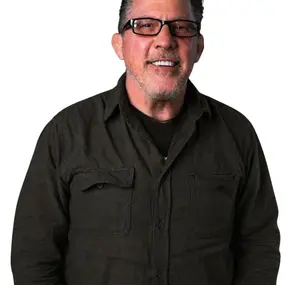
UFC Hall of Famer | Founder, Miletich Fighting Systems Soil-to-Human Health Researcher | Founder, Soil Saviors
What does an elite fighter do when the fight is no longer happening inside an octagon?
For Pat Miletich, the answer has taken him from becoming the first UFC Welterweight Champion and a UFC Hall of Famer to confronting a very different opponent: the condition of the soil that produces our food. Miletich also founded Miletich Fighting Systems, where he coached 12 MMA world champions, and spent years training professional athletes, military personnel, and law enforcement.
But his journey toward soil health began much earlier. Growing up in Iowa, Pat struggled with respiratory problems and couldn't understand why his body wouldn't perform the way he wanted. His search for answers eventually became a decades-long investigation into nutrition, environmental exposure, human performance, and the relationship between what goes into the body and what comes out of it.
Today, through Soil Saviors, Pat is focused on restoring soil biology and helping farmers, gardeners, and land stewards produce more nutrient-dense food. His philosophy connects something he learned through fighting with something he now sees in agriculture: you can't build a resilient system by ignoring what is happening at the foundation.
And that makes his story bigger than MMA or farming. It's about what happens when a lifelong fighter realizes the most important battle may have been underneath his feet all along.


