


Founder & Success Whisperer Stephen Shortt: Blueprint for Massive Success & True Fulfillment (#551)
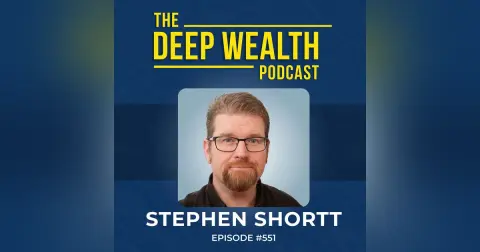
Send us Fan Mail “Believe in yourself, always, knowing that everything will work out.”-Stephen Shortt Exclusive Insights from This Week's Episodes Success without fulfillment quietly traps founders in roles they outgrow. Stephen Shortt reveals how purpose, fit, hiring, and progress help build a business and life that works. EPISODE HIGHLIGHTS [00:08:00] Why founders start to hate the job they created once the business shifts from hustle to optimization [00:12:00] Stephen’s HAPPY framework and...
 Apple Podcasts Apple Podcasts
  Spotify Spotify
  RSS Feed RSS Feed
  Amazon Music Amazon Music
  Podcast Addict Podcast Addict
  iHeartRadio iHeartRadio
  Castro Castro
  PlayerFM PlayerFM
  Podchaser Podchaser
  Overcast Overcast
  RadioPublic RadioPublic
  PocketCasts PocketCasts
  Audible Audible
  Pandora Pandora
  YouTube YouTube
 “Believe in yourself, always, knowing that everything will work out.”-Stephen Shortt
Exclusive Insights from This Week's Episodes
Success without fulfillment quietly traps founders in roles they outgrow. Stephen Shortt reveals how purpose, fit, hiring, and progress help build a business and life that works.
EPISODE HIGHLIGHTS
[00:08:00] Why founders start to hate the job they created once the business shifts from hustle to optimization
[00:12:00] Stephen’s HAPPY framework and why happiness comes from progress toward purpose
[00:20:00] The identity trap that keeps founders stuck in a business long after the role stops fitting
[00:23:00] The real cost of a bad hire, from lost momentum to damaged morale and reputation
[00:28:00] Why the right hire lets the founder fire themselves from the wrong role
[00:33:00] Why founder dependency can reduce buyer confidence and limit exit value
[00:46:00] The AI warning for founders waiting to see whether disruption takes their lunch
Full show notes, transcript, and resources for this episode:
https://podcast.deepwealth.com/551
The Deep Wealth Podcast
Most entrepreneurs do not fail.
They just carry too much for too long.
The business grows. Pressure grows faster. Profits get harder to predict. Decisions cost more energy. Over time, focus slips and health takes the hit.
The Deep Wealth Podcast and Deep Wealth Mastery are built from real experience. We're the only system based on a 9-figure exit. This system exists because guessing gets expensive.
🧠 Deep Wealth Mastery
This is for you if you want to:
• Grow a profitable business without becoming the bottleneck
• Build real value so selling is optional, not forced
• Optimize your health before it limits your business and life
One proven roadmap for real decisions.
⭐ Explore Deep Wealth Mastery
https://iapdw.com/idm
🎧 Subscribe
https://iapdw.com/podcast
📘 Free eBook
https://iapdw.com/ebook
💬 Have a question you keep circling back to?
Leave a short voicemail
https://podcast.deepwealth.com/voicemail/
Built by entrepreneurs. For entrepreneurs.
Loved this Deep Wealth Podcast episode?
You built your business from nothing.
Now make it pay off big.
📱 Subscribe Now
As a bootstrapper, every move counts. Subscribe on your favorite platform for Jeffrey Feldberg’s 9-figure exit strategies. From your morning grind to late-night planning, get insights from founders who did it without investors. These tips could change your future.
Drop a Quick Review
Got 30 seconds? Leave a 5-star review. It helps us make better episodes and reach entrepreneurs like you, hustling without a safety net.
Don’t Lose Your Exit (And Your Financial Freedom)
You’ve poured everything into your business. A bad exit could cost you millions. Most deals fail, and even “successful” ones lose half their value. The 90-day Deep Wealth Mastery program teaches you to make your business run without you and boost profits so you capture the best deal instead of any deal.
What Others Say
“Deep Wealth Mastery is pure gold. I wish I’d had it before my exit,” says Stacey C. “The value I’ve gained dwarfs the investment,” adds Sanjay S. “It makes my business great to own and sell,” shares William S.
📘 Grab Free Tools
Check out client success stories for proof. Master the Deep Wealth Strategy Map to plan your exit. Or snag the eBook, From 7 to 9 Figures: The Exit Playbook, for a clear guide.
Click here to start your legacy-defining exit today.
551 Stephen Shortt
[00:00:00]
Meet Stephen Shortt
Jeffrey Feldberg: Stephen Shortt helps people find work that fits and organizations build teams that last. He asks a question most of us avoid for far too long:
What is the life that you've built around work no longer fits who you're becoming as CEO of Career Fit and Talent Select and creator of frameworks like successful succession, happy Work Life Map and the Leadership Profile, his work is rooted in a deceptively simple mission, happier people in fulfilling, rewarding careers.
He's spoken in more than 45 countries and worked with the organizations including EO, Disney, National Geographic, EY, KPMG, PWC, and Trinity College Dublin.
What makes Stephen especially compelling is that his work is not just about careers on paper, it's about identity. Energy, values, family, and the [00:01:00] quiet cost of staying in the wrong role for far too long.
That lens became even more personal after a difficult period with his health when he openly shared his Type II diabetes diagnosis and the mindset shift that helped him rebuild his habits and sense of purpose. He brings strategy, humor, empathy, and a rare ability to make big life questions, feel both honest and actionable.
And before we start this episode, a quick word from our sponsor, Deep Wealth and the 90 Day Deep Wealth Mastery Program. Here's Jane, a graduate who says, and I quote, the Deep Wealth Mastery Program prevented me from making what would have been one of the biggest mistakes of my career. I almost signed on the dotted line with an unsolicited offer that I now realized would have shortchanged my hard work and my future had I accepted that offer. Deep Wealth Mastery has tilted the playing field to my advantage.
Or how about Lyn? Wow, he gets right to the point, and I quote, Deep Wealth Mastery is one of [00:02:00] the best investments ever made because you'll get an ROI of a hundred times that. Anyone who doesn't go through this will lose millions.
And as you're listening to these testimonials, are you wondering if you have the time? Are you even thinking that you've got this covered, you have the advisors or people in your network? Well, I got to tell you, these myths, they're often behind the 90 percent failure rate for liquidity events. Think about it. You have one chance to get it right for your financial freedom. You really want to make it count.
And when it comes to time, let's hear what William has to say. We just got in this testimonial, William says, and I quote, I didn't have the time for Deep Wealth Mastery. But I made the time and I'm glad I did. What I learned goes far beyond any other executive program or coach I've experienced.
So what do you think?
As I hear that, that's exactly what gets me out of bed every day. That's my mission. That's the team's mission here at Deep Wealth to literally change the social fabric of society. One business owner at a time, one liquidity event at a time, and my Deep Wealth Nation, what I want you to know, the Deep Wealth [00:03:00] Mastery Program, it isn't theory.
It's from the trenches. It's the only one based on a nine figure deal. And that deal, that was my deal. You know my story. I said no to a seven figure offer. I created the system that later on, myself and my business partners, we said yes to a different buyer, a different offer, a nine figure deal. That's what we now call the Deep Wealth Mastery Program or the Scale For Ultimate Sales system.
It's built by business owners, for business owners, so if you're interested in growing your profits for preparing for a future liquidity event, and that may be two years away, it could be 22 years away, whatever the time may be, you want to do this now, and you want to optimize your post exit life, Deep Wealth Mastery is for you.
To get started, email success at deepwealth. com. Again, that's success. S U C C E S S at DeepWealth. com. You'll receive all the information about the Deep Wealth Mastery Program or better yet, why not hop on a complimentary strategy call.
We'll go through [00:04:00] exactly where your business is today and what's standing between you and your financial independence and your dreams. So that's where you want to be. You want to be with other successful business owners, entrepreneurs, and founders, just like you they're looking to grow their businesses, create markets.
Market disruptions and unlock their financial freedom to get what they deserve. And whether you've been in business for three years, 40 years, you're a startup, you're manufacturing you're in high tech, low tech, whatever the case may be, coming in and network with other business owners, it's a safe space.
It's a confidential space with business owners, with businesses just like you, because they all wanna lock in their financial freedom and enjoy both success and fulfillment. So again, the 90 Day Deep Wealth Mastery Program, it has your name on it. All you need to do is take the next step. Please send an email to success at deepwealth. com.
Deep Wealth Nation.
Podcast Welcome and Big Questions
Jeffrey Feldberg: Welcome to another episode of the Deep Wealth Podcast. Well, deep Wealth Nation, let me ask you this. Where are you in your business? Where are you in your life? Do you have success and fulfillment or just [00:05:00] one the other? What if you could have both? What if you can you have your cake and eat it too?
Well, you heard the official introduction. We have a very special guest in the House of Deep. I'm gonna put a plugin right there because we cut the real deal. Stephen, welcome to the Deep Wealth Podcast. It's an absolute pleasure to have you with us. I gotta tell you, by the way. I love your accent from over the pond, although I'm sure I have the accent to you.
But that said, and perhaps we'll get there.
Stephen’s Founder Story
Jeffrey Feldberg: But that said, what's your story, Stephen? What got you from where you were to where you are today?
Stephen Shortt: Well, hi Jeffrey. Thanks for having me on the podcast. Great to be here. So I've grown up in two family businesses, so I've grown up in an entrepreneurial world, from a very young age. Realized early on that I would probably make a horrible employee. So I was destined to only be able to work for myself.
I did the whole working for the people bit for a while, especially when I was learning my way around the industry. I worked in New York for a while. I did odd jobs around the place, but I, always ended up, [00:06:00] taking on a more leadership role is probably a strong word. But trying to make things better, improve things where I saw them, even in environments where people at my level weren't.
Let's say encouraged to step up and make changes and make things better. So, Have grown up. Two entrepreneurial parents grew up in two family businesses, ended up buying both of them. Nearly walked away from the whole lot. Because I was arguing so much of my folks around a couple of things and thought when my wife was pregnant with my, our second child.
I need to leave the family business. 'cause if I don't, my parents will never see their grandkids 'cause we won't be able to be in the same room as each other. And that, as soon as I said that out loud, I had a visceral reaction to it, figured out, built a framework around it now I help lots of other family businesses who are in similar situations.
But I bought both family businesses. I sold one of them that was a hundred percent reliant on international travel. Sold that at the end of 2019.
Jeffrey Feldberg: Oh, just in time.
Stephen Shortt: Just in time did [00:07:00] not see what was coming. everyone always asks me, oh, did I know what was coming? I said, if I knew what was coming, I would've put all my money in Bitcoin, Pfizer stock and PPE equipment.
I didn't do any of those things. So no, I didn't know what was coming. And now we focus on making the world a better place with happy people in fulfilling, rewarding careers.
Jeffrey Feldberg: I love what I'm hearing. You know, At Deep Wealth we have a saying, all the success, all the zeros in the bank, all the accolades mean absolutely nothing if there's no fulfillment. And for a period of time, Stephen, I was at poster Child of success without fulfillment, which is failure. It's no success at all.
So let's take a step back for just a moment. This is one of my favorite questions. Frito's Law or the 80 20 principle offline, you're sharing with me at a very prestigious role. You're the mc at the recent EO conference, and you had a gazillion founders and entrepreneurs there, and you're leading the charge with that, with the work that you're doing when it comes to US founders, we're an interesting lot, aren't we?
We have [00:08:00] a
uh, in interesting is probably the most politically correct way of putting it. Yeah.
Yeah, we could. We could put a whole bunch of explicitives in it,
Why Founders Lose Fulfillment
Jeffrey Feldberg: But when it comes to what you share just now, which I love with fulfillment and joy and happiness and success, where are we perhaps not getting it right? We're gonna go glass half empty, and then we'll go to glass half full as we usually do.
What's out there? Is there a particular pattern? Yeah, Jeffrey, you know what? 95%. Of the founders that I work with, it's the same issue. There's one or two issues over here that are creating the gap. What's going on? What kind of patterns are you seeing, Stephen?
Stephen Shortt: So one of the things that I see most commonly, I wrote an article on ink blog about this, about a year and a half ago, and why you hate the job you created. Because a lot of founders, they have the personality type that they are in it for the hustle. They like getting their, rolling their sleeves up, getting creative, figuring out stuff.
Trying to break stuff to make it work and trying to make it better and all the rest of it. [00:09:00] And we have this thing called the S-curve of innovation. Every company goes through this. Down at the bottom of that S-curve, you might even be dipping below how well things are running because you're breaking everything.
You're just pushing through it. A lot of the time it's the charisma and the comradery of the founding team that are just. By pure will and luck and chewing gum and spit and polish and everything else is just driving this on. Then once you hit a certain point and you start to come up along that optimization curve, as you start to go towards pure optimization, that's when the people who are most comfortable with the hustle and bustle.
They start to feel trapped, they start to feel unfulfilled. They're not feeling that rush anymore. And that's when you hear these founders that long for the days when they were in the parents' basement or in the attic in your case. Long for that kind of excitement and that comradery because now it's gotten a little bit too predictable and board meetings and investor meetings and stuff like that.
And then the company [00:10:00] eventually just gets to the top of that S-curve and it's just about pure optimization. There's no more real innovation. It's just optimization. What happens is the founders that are there at the beginning of that S-curve, as they're coming up along that optimization, the money's coming in, the success is coming in, but they're not feeling fulfilled, so that's when they need to jump to the next S-curve.
They need to jump to the next innovation and start doing things. They can do what I call an inside hustle rather than. Completely breaking or selling the business. They might find a new product, a new service, a new ancillary thing or an in-house, something that they can build so they can be part of that r and d thing.
And then have people who are much more comfortable with the optimizing and their personalities, much more process orientated to be able to bring that to higher level of success. Whereas the founder might be more comfortable in really trying new things and building new products or services.
Jeffrey Feldberg: And so as you're describing that, oh my goodness, I am seeing Jeffrey of all the times [00:11:00] Postex exit, not pre-ex exit, postex exit. I was there. I had all the trappings of success and time was now my own and financial independence and all those kinds of things. But to your point, wow, did I miss the hustle?
Did I miss being needed? I was the business. The business was me. And as I've shared on this podcast with Deep Wealth Nation, they can relate many a times some of the, well just call it what it is, stupidest mistakes that could possibly be made. I made them not preset. Post exit because of that. And so for all the founders out there who are hearing the two of us talk right now, Stephen, in our fireside chat, with your expertise, with your ability to help as founders where we really need the help, what can we be doing today that no guarantees and we'll probably still make mistakes.
That's a human condition. That we can either minimize that, potentially eliminate that. So no matter what's going on in our life, we do have that fulfillment with that success and not going down that unfillable void that typically happens.
Happy People Framework
Stephen Shortt: I had a [00:12:00] mentor years ago. Use the line. No business, no problems, but no problems, no business.
Our businesses ultimately are there to fix problems for our clients. I mean, That, really what it is. So, We always have to have problems. We always have to have things, which means that stuff is gonna go wrong and we're gonna make mistakes.
That is the only guarantee for me. So I built this framework called the Happy People Project and Happy is an acronym for highlights, appreciation, progress, people, and your Contribution. And it's the different buckets that we have in our work life, in our personal life, in everything that we can do. To understand what it is that we actually want outta life, and looking at end goals rather than means goals.
But ultimately, it all boils down to this simple truth, happiness, or success. And success is really just happiness, really in a professional context, really. Happiness is so hard to define on a global level because it is so individualistic and so personal. For every single person. What happiness [00:13:00] means to you can be vastly different from what happiness means to me.
But happiness ultimately boils down to progress towards purpose. If you can figure out what that purpose is for you, what are the goals that you want to accomplish, what are the things you want to have? And the happy framework helps you to identify what those are. If you're making progress, no matter how slowly towards those, that to me is the key to happiness.
If you don't have a purpose and you're just pushing, you're spinning your wheels you're going in any direction. Whereas if you have a purpose, but you're stuck, you're not making any progress, then you feel completely frustrated. But if you can get the two of those aligned, that is to me, the key to a happier life.
What Coaching Looks Like
Jeffrey Feldberg: And as you're talking about that, Stephen, so let's speak to someone in Deep Wealth Nation. They're again hearing us talk. Okay? Yeah. Stephen heard on Deep Wealth Podcast and with your happy system, sign me up. And so now you and I are working together and. From your systems. We're gonna roll [00:14:00] back the curtain here.
A little bit of your secret sauce in terms of what you've done over the years. What does it look like when I'm working with you in terms of I, and I know every journey is different. Every individual is an individual and it's unique. But that said, again, generally speaking, how long does it tend to take and what am I doing that I can begin to unlearn what I've learned that isn't helping me, and now apply your beautiful insights and strategies.
Stephen Shortt: so I just did a workshop last week with group of senior executives, senior leaders. And the workshop itself takes about an hour and a half to get through the whole framework and to start writing down on those lists. And I've had three of them come back to me at least twice in the last week some of them arrived into the workshop thinking, oh yeah, this is a.
Whatever workshop, we'll get through this and then we'll go to the pub and, but they've all shared with me actually how impactful the workshop was, how impactful that framing that I got them into the mindset of [00:15:00] thinking was, and then that they have all continued to add to those lists to really sit and percolate with.
It's not something that you're gonna fix in an hour and a half. That's the start of the process. And then having people go away, think more about the things they want to add to those buckets, seeing where those golden threads are that go between stuff that's happened in the past, stuff that I want to have happen in the future, stuff that I want to put out into the world.
How do we see what progress I need to make? Who are the people? And all of that tying together gives you an idea of what are the goals you want to have? 1, 3, 5, 10, 20, whatever your goals. And that's what I call, then you create your map, your my action plan. So how do I get to those? And then understanding how those goals are in common and what they are together that gives you more of a clarity to your life purpose.
What is it that you actually want to accomplish? Because some people, this notion of, okay, you gotta figure out your life purpose, it's such a massive thing. That can be so many [00:16:00] different things that actually understanding what it is that you want to accomplish, that gives you more of an insight into your purpose.
Jeffrey Feldberg: And so happy, so highlights, appreciation, progress, people, your contribution. When we look at the happy framework, is there one area of the five that people tend to resist the most?
Stephen Shortt: I don't think people resist it as much, but when we get to appreciation, bit like people can the first bit of highlights, people can think what do they want their future highlights to be? Where do they want to visit start a family start or whatever. When I go then to appreciation and I talk about, okay, I want you to think about all the moments that have brought you to here, both good and bad, because there are some people, and look, there's people I've worked with who have had traumatic experiences in their past that is really painful to revisit.
But what I want them to appreciate is that has taught them resilience. They're here today because they've got through that. I'm not saying ignore it, I'm not saying discount it, but understand that those things have taught you resilience, that have helped you to shape who [00:17:00] you are today. But the happy framework is all about looking forward.
So a lot of modern psychology is really. It's very focused on Freud and looking at the backing, looking inward to your history, whereas I'm more of an Adler fan and looking forward and overcoming that imposter syndrome stuff and where are we going because yes we need to deal with stuff that happened in in the past, but if we spend all of our time there, we can't change that.
We can only change what we're doing going forward.
Jeffrey Feldberg: It's interesting and as you're speaking about going forward, that brings me to the progress side. So what is it about the human condition that psychologically. The forward movement is important to us even more than some of the big wins.
Stephen Shortt: I have so many conversations around this kind of stuff, stopping and celebrating the wins with entrepreneurs because they just wanna keep going and keep moving up. And the next mountain is higher and all the rest of it. I think we all need to be, growing is. Yeah, all businesses need to be growing, but [00:18:00] I don't necessarily mean that you need to be increasing your revenue 10 x or you need to be increasing your headcount by whatever year on year.
I think growth can happen in a number of ways, and you can have growth in terms of your leader's growth, their personal abilities to be able to do stuff, because if you just stand still, everything else is moving around you, so you'll start to go back. even if you're just staying still, you've reached a plateau and you're happy where you are, the world around you will move on without you.
So we need to be moving forward. We need to be improving, and we need to be doing things that we want to be doing to get to where we want to get to.
Identity Beyond the Business
Jeffrey Feldberg: And as you're talking about that, Stephen, really what I'm going back to, you're taking me down memory lane what no one told me as a founder, and for me it was such a fundamental failure. Postex exit that now in Deep Wealth Mastery, we have our nine step roadmap. We slide it in. It's really the 10th step that we've built in, and it's not even into, step one is right into the introduction, life after the exit, and [00:19:00] for all your founders out there in Deep Nation, you're saying, well, I'm not gonna sell the business.
Okay, fine. You are gonna have an exit. Hopefully it's not the final exit that we are gonna have, we just don't know what it is. It might be the exit of a family members coming in to take over or the next generation, or maybe you're bringing investors, but you're still involved. You're gonna be on a board of directors.
You're not as involved in the business. And so from my side, I didn't have that identity of life outside the business. And what I really appreciate with what you're talking about right now with the happy work life map. That you're doing. It's right here. Now today. Don't wait for your exit however many years or decades away.
Begin to build that structure or those rhythms or those rituals that don't involve the business and do some trial balloons. Try it out. Hey, I hated that. Couldn't stand that activity the first second I got there. I knew it wasn't for me in an hour. It felt like 10 years. Okay. I'm not gonna do that again or this other one.
Wow. That hour it flew by. It felt like a minute. Well, great. Do more of that. So for [00:20:00] founders, as we're listening to this, Stephen, as we're being introduced to your work now, if we don't already know it, what would you be telling us from things we're probably not considering? That would help us tremendously in not just our personal life, but our business life as well, by being more well-rounded and with the happy work life map.
Stephen Shortt: So the happy work life map it helps us all to figure out. Life by design. So just on the, when you're talking about the exit, I don't work with a lot of founders who exit. I tend to be more at the scale up and then the inside hustle thing where I work with family businesses at succession planning, that's where we have more of a, an issue with.
Current generation who are exiting, who are retiring, who are passing the baton. And I have the whole framework, the five P's of successful succession where I understand that. But the biggest problem that current generation people have is that their identity is wrapped up just in the business. They don't have other stuff beyond that.
So one of the things that I do, [00:21:00] and if you are somebody who's looking at scaling up a business to exit or to look at, maybe stepping back a little bit. I would encourage you to really start looking at what, how do you identify yourself beyond your title or your role or your business? Because if you don't have other things, you're gonna feel trapped into that thing because it'll feel like a death to not be that.
Owner of that business or the vice president of whatever. So having those other things gives us that opportunity. one of the phrases that I use a friend of mine hit me with it a couple of years ago, which is a definition of hell or the definition of hell is on your last day on earth, you meet the person you could have become.
And when I start, the workshop with that and I can see people's faces and they're going, oh my God. And they're thinking about potential and lost potential and they start to feel under pressure. They're like, oh my God, I need to do so much more. I need to do so much this. my wife used to tell me all the time when my kids were younger.
That if it wasn't for her and the girls, [00:22:00] I'd probably be flying around the world doing workshops, doing speaking things, doing consulting and all the rest of it, living the high life, living on a yacht, flying private, all this, all good, fun stuff. But I can tell you with absolute certainty, having done a lot of work on this happy work life map.
Now, if on my last day on earth I meet that version of myself, the high flying, living up to absolutely every possible thing. But I don't have my wife and kids. I want that. It is a different version, but actually that's not what I want because what I'm doing now is building the life that I want to have.
So that is the really important element to this the happy framework. It's what do you actually want? What do other people think you should want? You should be doing or should want or not? What do your parents or your school friends who you haven't seen in 20 years, what do they think that you should be doing to help with that?
What do you want and how can you go about doing [00:23:00] that?
Jeffrey Feldberg: As you're talking about that the wheels are turning.
The True Cost of Bad Hires
Jeffrey Feldberg: I'm also thinking about what you're doing because Stephen, you're a very busy individual making a difference in helping people out there, and I know one of the things that you play a large role in with different organizations and with founders is on the talent side ensuring that I can bring.
Not only the right person on the right bus as the saying goes, but having the right person on the right bus in the right seat. And so let's make this real for Deep Wealth Nation because oftentimes, and I've been there myself as a founder. Okay, I'm too busy to deal with this. Yeah. On paper, the person looks good.
How bad could it be? Let's just bring 'em on. They can do a good interview. Great. Let's see how it goes. We're gonna roll the dice. A bad hire, give us the real deal of what we're probably not thinking about and the actual results from a bad hire that we should really know.
Stephen Shortt: So a cost of a bad hire, depending on which reports you read from various [00:24:00] insiders. I mean, I've seen people claim it's 20 times the salary. I don't think it's that dramatic, but I think anywhere from three to five times that person's salary is a really legitimate. And reliables metric to be able to see, okay, this person, I'm taking this person on at 60,000 if it doesn't work out because of.
Not only their salary that they've been paid, but the impact that they have on their teammates, the impact that they have on the business overall, because they're not doing what they're supposed to be doing. So it's loss of productivity, loss of momentum, loss of morale. It could be reputational damage if they're out there dealing with your clients and the clients are unhappy.
The fees of hiring again and advertising and going through that wholesale Onboarding process and everything else. Not to mention the emotional, I mean that, three to five times, that's just the money. But then there's the emotional damage and the emotional turmoil of the founder or the HR manager or whoever having to go [00:25:00] through this process again and retrain somebody else again.
So it can have a massive impact on your business. And unfortunately, most people aren't very good at hiring people. Because we have these things called unconscious biases that it just, it exists. It is a fundamental part of the human psyche. So you and I like the same sports team.
Brilliant. That must mean you're an amazing CFO. Nothing to do with anything else, so I'm gonna trust you with all my money. So that's the way that we work because we have to like saying unconscious biases shouldn't exist, is like saying we shouldn't be breathing. It's a part like our fundamental Neanderthal brain.
When we met people at the beginning, at the first meeting, people we had to figure out within five seconds, is this person going to. Be my friend, or are we gonna fight to the death because they're gonna try and take my land or something like that. So this is the way we have to be able to categorize where unconscious biases become a problem is when we don't address them and we just go, okay, [00:26:00] well this is what I believed when I was six years old and I'm now 48 and I still believe that group of people are this way.
That's the problem. But when you're hiring, you need to be able to see what do I want in the role? What's the role? What kind of person is required for this role based on my culture of my organization, the personality of what that role needs. So I think most people can understand a chief marketing officer and a chief financial officer probably have very different personality types to be successful in the same organization.
So what kind of personality, what kind of skills like do we want somebody who's. Able to use ai or do we want somebody who's able is more interpersonal for this role? So understanding what that is and then what are they gonna be expected to do? And that's where we need to really start thinking about even at the very first, we need to spec the role based on that.
Jeffrey Feldberg: And as you're talking about that, Stephen, let's use your example of 60,000 in whatever currency it happens to be and doesn't really make a difference. [00:27:00] Bring somebody on board for 60,000, and you're saying it could be up to five times in terms of what we're paying the person. Okay. 60,005 times what math is, right?
That's around $300,000.
Stephen Shortt: huh?
Jeffrey Feldberg: Wow. I can have a lot more fun just blowing that money on frivolous sense, nonsensical things than the misery of having things not work out with that person. Having to deal with the team of why the person isn't working out the mess that they're creating along only because I didn't have the tools, didn't have somebody like you as an advisor in the business helping me to navigate through that, to bring the person on board.
Hiring for Fit and Strengths
Jeffrey Feldberg: Or on the flip side, and hopefully as a founder of Wealth Nation, you've been there. You do bring on the right person. Wow. He or she is a rainmaker. What a difference that means for the business, even for yourself. I get to fire myself from this role in the business because Jane is so much better than how I could do it on my own.
So it's a very real issue.
Stephen Shortt: Jane is so much better because Jane's [00:28:00] interests and Jane's personality means that she actually enjoys the type of work that you hate doing. And she finds the type of work that you enjoy doing really either terrifying or boring or whatever. So you're actually complimenting each other to be able to bring that on.
So it's, it's not saying, oh, I'm. I don't like that work, so I'm just gonna get some peon to do it. It's actually, you're bringing on people whose real talent is to do that thing well, and they want to join. They're aligned with the direction that you want to go in or the values of the organization or whatever it is, and you guys can work well together.
So you're becoming stronger become because of the sum of the parts.
Jeffrey Feldberg: Yes, and as you're talking through that, when we have a new member in our Deep Wealth Mastery Program, even before we get going, one of the first questions that we ask, and it's a straightforward question. Deep Wealth Nation knows this question very well. Does your business run without you? Yes or no, there's no inbetweens, yes or [00:29:00] no, no stories.
And typically we get neither. We get neither the no nor the yes. We get stories. And the truth is, even if there's a leadership team, the founder is the center of the universe.
Delegation Mindset Shift
Jeffrey Feldberg: Everything goes through the founder and the pushback that I get. Well, Jeffrey. Jane is terrific, but I'm better than Jane. I can do it quicker and as great as Jane is maybe 80% as good as me, or 75% as good as me.
So to that listener in deep Wealth Nation, who, that is the narrative that they keep on telling themselves, what would you tell them?
Stephen Shortt: Yeah, I mean I, I've heard this as well. Like they're not as good as me. There might be 70, 80% as good as me, but if that's not your super strength, if that's not where you are, the rainmaker in the organization, if you are having to do that job let's say it's, for me, it would be accounts, I'm. Terrible with numbers and I, I can do it.
I can [00:30:00] go through these spreadsheets and I can put in the numbers. I can put all the other stuff, but oh, my brain starts to glaze over. I can do it. but when I pay somebody else to do it, they do it much quicker with much more interest, and it's much more reliably done, which frees up my time of doing that to actually go and do podcasts and meet potential clients and do videos, and do the stuff that I really enjoy doing.
And maybe I could do it and save myself the salary of that person, but it means that I'm gonna be doing it until 6, 7, 8 o'clock in the evening every night when I could be done. 6, 7, 8 o'clock in the evening doing meeting clients and doing other stuff that's more aligned with where I am bringing the most value to the organization.
Jeffrey Feldberg: Yeah, and the flip side of that, and Stephen, you can say, Jeffrey, you're on base or off base. I bring somebody on, even if they're only 70% as good. is all that he or she is doing the entire time they're in the business, not me. I'm Sporadical. I get to it when I get to it, which means I'm missing it most of the time.
Stephen Shortt: [00:31:00] A hundred
Jeffrey Feldberg: through it. I get distracted onto something else when it's someone's full time. Focus and they really love doing that. To your point, they fit in with the culture they're adding to it. We are infinitely better.
Founder Profitability Myth
Jeffrey Feldberg: Quick story for you, Stephen. I was back in the day, we were talking offline about our exit here that we had with my business partners, with our e-learning company, EPON Net.
We were meeting with one of the potential buyers and I was furious because they came back with. Our projections and our profits were insanely high for every dollar of revenue. We were keeping 53 cents, not gross, but net. And when they did their version of the projections. They came back and it was 20% profit, and I spoke to them, investment, some bank.
I said, what's wrong with this buyer? I wanna speak with them. They're crazy. What are they thinking? That we're lying, that we're not telling the truth. I want to meet with them. And I met with them and in a very calm, cool, collected voice, the buyer said, Jeffrey, this has nothing to do with you. And don't take it personally.
It really isn't personal. I [00:32:00] buy so many businesses and I love my team, but I gotta tell you, they're hired guns. They're not as committed as you. They're not as passionate as you. It's a corporate culture here. It's not a founder who's running it. And on a good day it'll be 20%. In fact, I was considering put it even lower because that's where it's typically at, but I put the 20% in because I knew how you are and the founder kind of culture that you have.
But when it's not you that's there, it's not that as bad. It is what it is, and I just hope that you can respect that. And it taught me something walking outta that meeting that I had never considered before from that founder mindset. In terms of, it's not bad, it's not good. There's no judgment on that.
But the point is that approach, it's far more scalable. So in other words, that kind of approach with a team, that's all that they're doing. Yeah, they may not be as good as me, but they'll have a larger company. They have that skillset, they have the experience. And as the saying goes, [00:33:00] I'd rather have a smaller piece of a bigger pie than having the entire pie, which is a much smaller one.
Build Systems to Exit
Stephen Shortt: But the other thing, just if you're talking about your founder exits really if the company is getting 53% net margin but it's getting that because of the founder's drive charisma, managing and everything else. The founder will never be able to sell that business. It has to work on systems with people that are not the founder.
Otherwise, you're so integral to the organization and the smooth running of the business that you'll never be able to exit it. So if it's something you wanna do, you've gotta get the people in and have those systems, maybe drop 'em. Similar story. I had a, friend who was looking to sell his business had phenomenal margins, but when he was selling to industry and he was.
Decimating his industry averages in all of his margins. But when he went to sell, all of the competitors were like, look, yeah, you're making a lot of money, but we can't pay you based on what you are able to do. We can only pay you based on what we are able to do [00:34:00] with your business. And even if that's a little bit better than what we're currently doing, 'cause you have great systems, we can't match yours.
So we can't give you that.
Jeffrey Feldberg: Absolutely. Yeah. And to your point, Stephen, and this is one of the things that we had done before the exit and nation, what Stephen's saying, as I like to say, it's not gold, it's platinum. You need to replicate yourself. You have to have systems in place. And I know on the EOS side, Stephen, you're all about that and how you approach things.
It needs to be replicable. A team is leading the charge that you can carry this forward. And yeah, maybe it won't be as efficient as you, and maybe short term wise, it's not gonna be as effective. But longer term wise it will be. And you can scale it and take it to the next level. And so many buyers on this podcast have said, Jeffrey, I don't wanna buy a business.
Where it's now my second full-time job because I'm picking up the pieces with the founder no longer being here. And what are you seeing to that side of things, Stephen, when it comes to, we've been talking about talent and scalability and systems. What's that like for you [00:35:00] when you're helping companies and founders get to that next level?
Hire for Future Growth
Stephen Shortt: So the other thing, the other mistake that some people, quite a few people, especially in scaling companies, make when they're taking on new, let's call them C-level people, but senior leaders and people that are growing the business, they don't hire for where they want to be. They're hiring for where they are.
Especially if you're scaling, you need to be thinking, okay, this is what the person needs to be able to do now, but we are looking to grow. We're looking to five X within the next 12 months, for example. So that marketing director needs to have a different skill set. This current marketing director, they need to be much better at, maybe they need to be much better at delegating because they're going to have a team.
They can't be five times as big and still having it flow through one person. Ionically. So understanding what are the traits that you want for the role that you want this person to grow it into. I've [00:36:00] had quite a few clients where we do pre-calls, especially with new clients on the role.
And we go through the job spec and I'm, I push back on them a little bit and go, well, what are you looking to do in the next little while? Because what we do is we don't do a generic personality report and send it to you and go, right now you juggle that. We create a bespoke ideal profile for every role.
So when people are applying, they're applying into that specific role. And then we tell the hiring manager, the founder or whatever. This person is 87% towards what your ideal candidate would look like. This person is 73%, this person is 96%, but on this one key criteria, they're quite low. So you might wanna dig into that a little bit more.
For example. So we. Make every single role specific. And when we're doing this, and when we do the pre-call, a lot of the time, I'll push back a little bit and go, well, okay, well where are you growing to? Because you're saying you want somebody who is, let's say you want somebody who is a team player, but we're going to be aggressively growing.
[00:37:00] but we want somebody who's gonna get along with everybody. It's like, well, if you're growing, you might want somebody who's like, social Bowl score is actually a little bit higher. They might rub people a little bit the wrong way. To push forward, to get to where they want to go, rather than sitting back and going, oh, yes, well, okay, I understand it's really difficult, so take a break.
So it depends on where you're going and what you're wanting to build. I've done a lot of stuff for founders and new invest in new companies that have got investment who are looking to scale their team and how big that company needs to be. We've also done stuff for.
Financial institutions here in Ireland. So in the same week, a couple of weeks ago, we did a, a marketing manager for a tech startup and a marketing manager for a financial services firm. Two vastly different personality profiles that were needed. So we do it bespoke on each one.
Higher for fit. Personality attributes like culture, fit it. It's a lot of that. And then you can teach the skills, whether it's ai, tech, whatever. Yeah.
Jeffrey Feldberg: So from that perspective.
Interview Red Flags
Jeffrey Feldberg: [00:38:00] Red flags. Again, generally speaking, every company's different. Every role is going to be unique. That said, though, what would be some general red flags, very high level that, Hey, Jeffrey, if you're seeing this, whatever this is, run for the hills as fast as you can in the opposite direction.
You don't wanna proceed forward with that candidate. It.
Stephen Shortt: One of the things, and I push back on this, on some of these applications when people put stuff in, like, 'cause we prepare people for interview skills and things like that. When they say I'm trustworthy and reliable. I'm like, nah that's table stakes if you're not that who's gonna want to hire you.
I've done we've interviewed people for ourselves and for the people who spend as much of the interview badmouthing their previous managers and previous employers. In the interview process. And for me that's a, yeah, no the common problem seems to not be them. I don't know if I want to bring that drama on top of myself, no matter how talented you might be in other areas.
There are people who might [00:39:00] want somebody who's confrontational, who's ready to push forward, who's passionate about getting through these different issues, because that's their culture, that's their company culture. That might be more competitive, more results orientated.
Another organization may be in the same industry, might be more collaborative, might be more. People orientated or individualistic or something like that. So really understanding what you're looking for, and then creating your competency based criteria around that. And then if they don't mix, that's a red flag.
Jeffrey Feldberg: And I would even throw this in there and Jeffrey again on base or off base if someone's pushing something too hard or I'm such an honest person. And it's honest. honest, honest, honest. Probably not honest. Something's going on back there. It's funny with the human condition that way.
Stephen Shortt: It's that whole thing. If, you have to tell everyone you're cool, you're not cool.
Signs Youre Drained
Jeffrey Feldberg: You are an expert with what I'm about to ask next. It's one of your areas of specialty, and it's a [00:40:00] tough question that I know I've avoided so many times and so many of us do. Again, it's all part of that human condition and we get distracted and look at other things, but here's a question that you have so much experience with, and your guidance, your leadership, your wisdom can really make the difference.
What would be the tell the telltale signs that I'm chasing a life from the outside, it looks great,
The inside it's draining me. It is literally sucking the life out of me.
Stephen Shortt: I'm, not only do I work with people who have been there, I've been there myself. I've been there going I'm not getting excited in the mornings. I'm getting outta bed in the morning going, oh, do I have to go in and do this again? Do I have to be doing this?
When I first felt that I hadn't done any work around what did I want to be, I hadn't done any work around. The Simon Sinek, what's my why? I hadn't done any real work around what did I wanna be spending my time doing. And it's only when I spent a little bit of time reflecting on where am my in might [00:41:00] flow, what do I actually want outta life?
What do I want to accomplish? What are the things that are important to me to then see where that aligns? And there was I had a, a really important mentor in my life at the time, who, when I was figuring out what I wanted to do. I was still holding onto the business and trying to retrofit what the business did into what I wanted to build.
And he really took me to task and said, look, is this really like it has gotten you to this point? And I'm not saying that it hasn't been, you weren't right at the time to take on this business, but is it still serving what you want to do? And that's really what helped me to figure out to sell that family business because.
The industry was moving in a way that just wasn't exciting for me. It wasn't feel leaving me fulfilled, it wasn't fulfilling the values or what I wanted to bring to the world whereas the other business was positioned to be able to help me with that. So if you're feeling stuck, it might be [00:42:00] that you're on the wrong part of that s-curve.
It might be that you're just not clear on what your purpose is or that purpose has changed over the last 10 years or five years. And what you were chasing then you might have accomplished to a certain degree, or you might have gone down a certain amount of that road and gone, yeah, I, that's not what I want anymore.
Things have changed. Family situation has changed, life goals have changed, relationships have changed. to pivot is not a failure. You can pivot your purpose so long as you're following something that is going to make you happy.
Create Options Beyond You
Jeffrey Feldberg: And as you're talking about that, Stephen, you're taking me back to another setting that we have here at Deep Wealth, myself and the team, not just for business, also for life, when it comes to options or choices. One is never a choice, two is a dilemma. Three is only when we really begin to start having choices and Deep Wealth Nation with what Stephen's talking about.
When you are the business and the business is you. You have zero choices. You're in a prison, otherwise known as your JOB. It's not [00:43:00] even your business anymore when the business runs without you. Okay, well maybe I will still own the business. But, and we have some members in Deep Wealth Nation, they only spend a few hours a month.
Stephen, incredibly lucrative, profitable businesses, and they're doing all kinds of other things. Or maybe I'll be a board member in my business, or, you know what? I'll take some chips off the table, bring some investors in, or, yeah, you know what? I'll exit completely. Now you're talking my language. Now we start having some options that I can decide from when I feel, in your words, even stuck or, oh gosh.
Do I have to do that again today? I just did that yesterday and it's gonna be tomorrow and the next day. It's like Groundhog Day all over again.
Stephen Shortt: I used to say, the business that I had was a an ESL school, English Language School. And when I got to the end of it, I used to say this would be in a brilliant business if it wasn't for the teachers, the students, the families, and.
Jeffrey Feldberg: Let me ask you something. We're gonna go into wrap up mode. I have a few more questions, but speaking of questions, I'm looking at the questions I haven't yet [00:44:00] asked, and there's a lot of them, and I'm wondering, is there an important question to you, that.
Stephen Shortt: you made the mistake of giving an Irishman a microphone and asking him to talk, so
Jeffrey Feldberg: Oh, you're being polite. But is there a question, Stephen, that you and I haven't yet covered? That's an important question for you, that you want to get us to do both nation or even a, a theme, a message topic. I.
Stephen Shortt: No.
Happy People Purpose
Stephen Shortt: For me, really the Happy People Project is something that I'm, really passionate about because I meet so many people who sometimes it's easy when you're feeling, oh, this is terrible. I need to get out from under it. And the pain of not changing. Is so great that you have to change.
Where I find I get a lot of entrepreneurs who are in a business for a couple of years, family businesses that are kind of cycling through. It's just a sense of meh Okay. And almost resentment. And that's, to me that's, not a good place to be either. So that's where I want to get people thinking about what do they actually want outta life and.
can tell you, [00:45:00] selling the family, one of the family businesses, basically, I bought the business, but I was still convincing my parents that it was a good idea to sell their third child. It's not easy. It definitely isn't. But it was, and I've shared this with a couple of people before, like the day after I felt like I was out from under something and felt.
Now, COVID happened a couple of months later, so I was put right back in the hole. it feels at the time, if you are, feel like you're stuck, but you're not in pain, it can feel really difficult to make that change. And that's where you're not making progress towards your purpose. what I want people to really think about is what is that purpose for them and how can they start making progress, even on a small basis to gain some momentum to actually have the life that they want.
Jeffrey Feldberg: Yeah, it's so powerful and we've all been there. That weight is lifted and wow. Why did I wait so long? Why did I wait so long? Life can be short. Let's make it enjoyable, or it's gonna be long. Let's [00:46:00] make it enjoyable.
AI Curiosity Advantage
Jeffrey Feldberg: And I'm wondering, as we're talking about this and making changes and with the Happy Life framework, artificial intelligence, my goodness, so much that could be said about that.
What do you want us to know from where we sit today as founders and artificial intelligence, ai, what are you seeing?
Stephen Shortt: I had a conversation recently and I'm gonna be writing a little piece on this So founders are slightly different because they're probably a little bit ahead of the curve, but Gallup's just or Gallup just released their 2025 work engagement report two weeks ago and one in five almost employees whose companies use ai feel that their job will be gone to AI within five years.
Which is a huge uptick, but where I see people, and this is where it will relate to founders, so there's a lot of founders that might be thinking, okay, AI might be coming for me, but the biggest casualties are not necessarily going to be the people who AI takes or eats a certain amount of their lunch.[00:47:00]
The biggest casualty are gonna be the people who are waiting to see if AI takes their lunch, if they're just sitting waiting. They're in trouble if they're being proactive. If they're going, okay, well how can I use this? How can I adapt this? How can ride a little bit of this AI wave? I might need to pivot my business a little bit.
I might need to adapt a couple of things, or I might need to change completely, but where can I take my curiosity to see where I can implement this to not have it just come up and be the a hundred pound gorilla that's going to destroy me?
Jeffrey Feldberg: So I'm hearing you say, Hey, get curious. Try it out. Make your mistakes, see what's out there. Don't sit on the sidelines.
Stephen Shortt: For me, the curiosity is the number one superpower that any human can have because it answers almost any issue that we have in the world. If we're more curious, do.
Jeffrey Feldberg: Or said another way, Stephen Dreamers dream doers do, and it takes me back. I'm gonna date myself somewhat. When this new thing, I don't know if you heard about it, called the worldwide web. It [00:48:00] was just coming out and
Stephen Shortt: gonna destroy libraries.
Jeffrey Feldberg: but it was, oh, it's a fad. Never going to last. Don't bother. Don't waste your time or money.
Just keep on doing what you're doing. Or the flip side of it, not only did people do the opposite of just ignoring it, but they went all in. Oh yeah. We're gonna decimate bricks and mortars. It's not gonna exist. We're gonna put everyone outta business. And I suspect that it'll be the same with AI and I've heard that with people on the podcast.
We've had the experts and reading the reports out there, AI on its own, doing it on my own without ai. Yeah. We both get results. It's when we combine the two. That's where we get the optimal results. So if I'm just using ai, I'm just relying on AI doing a hundred percent of everything, okay, maybe for some backend tasks.
But when I combine that human element with ai, that's where I get the superior types of results, achievements, milestones, and goals.
Stephen Shortt: Absolutely. Absolutely.
Back to Future Advice
Jeffrey Feldberg: And so that said, we're gonna go [00:49:00] into wrap up mode here and see even it is a tradition here on the Zoopa podcast. It's my privilege, my honor, that every guest I ask the same question. It's a really fun question. Let me set this up for you. When you think of the movie Back to the Future, you have that magical DeLorean car that will take you to any point in time.
It's tomorrow morning. And Stephen, this is the fun part. You look outside your window. Not only is the DeLorean car curbside. The door is open. It's waiting for you to hop on in what you do. You're now gonna go to any point in your life. Perhaps it's Stephen as a young child, a teenager, whatever point in time it would be.
What are you telling your younger self in terms of life lessons or life wisdom, or, Hey Stephen, do this, but don't do that. What would it sound like?
Stephen Shortt: So the purely facetious answer is as soon as you hear the word Bitcoin, buy as much of it as you can. But really what I would probably go back and I struggle with these kind of questions because.
I'm kind of happy where I am. So making [00:50:00] changes. The only thing that I would probably say is believe in yourself a little bit more at a younger age. That's probably the only thing that I was, and I've had, mentors and I've had friends have really driven that home to me as well. And telling me back in my twenties and thirties like you do have what it takes.
You need to believe in yourself a little bit more. And just trying to listen to them a bit more and like it will work out the way that it's supposed to work out.
Jeffrey Feldberg: It is such stellar wisdom. And insights. Believe in yourself. Always believe in yourself. It will work out the way it's supposed to work out. We're not presupposing anything. And it's interesting, Stephen, because at first there was some reluctance I picked up on, well, I don't know, Jeffrey, if I would change anything.
And to your point, that's the most common theme with all of our guests here on the podcast, Jeffrey. I don't know if I'd wanna change anything because what I thought was my darkest hour actually became my North Star. It taught me so many things. I didn't like it at the time, but today it's.
Stephen Shortt: and that's the appreciation piece in [00:51:00] happy. Like, that's the, like the stuff that we've gone through that have brought us to where we are today. And without them, we might not be as far along our journey as we are now.
Jeffrey Feldberg: Yeah, it's that as I like to say, resilience trumps resources and we don't get resilience by just waking up. It's going through the things we don't really want to go through, given the choice, but you don't have a choice and you go through it. You learn and become stronger and better because of that.
Where to Find Stephen
Jeffrey Feldberg: And Stephen that said, someone in Deep Wealth Nation, they wanna speak with you. They have some questions. They'd like you to mentor them, coach them, speak to the team, help the business. Where would be the best place online to reach you?
Stephen Shortt: Easiest is probably stephen short.com. It has links to everything from the Happy Work Life map, the Happy People Project Talent, select Career Fit, successful Success. It has it all stephen short.com.
Jeffrey Feldberg: And deportation. It doesn't get any easier. It's all in the show notes. Go to the show notes. It's a point and click. It's all there for you. Well, Stephen, it's [00:52:00] official. Congratulations. It's a wrap. And as we love to say here at Deep Wealth, may you continue to thrive and prosper while you remain healthy and safe.
Thank you so much.
Stephen Shortt: Thank you very much. It was a pleasure.
Subscribe and Closing
Jeffrey Feldberg: So there you have it, Deep Wealth Nation.
What did you think?
So with all that said and as we wrap it up, I have another question for you.
Actually, it's more of a personal favor.
Did you find this episode helpful?
Have you found other episodes of the Deep Wealth Podcast empowering and a game changer for your journey?
And if you said yes, and I really hope you did, I have a small but really meaningful way that you can actually help us out and keep these episodes coming to you.
Are you ready for it?
The dramatic pause. I'll just wait a moment. Drumroll, please. Subscribe. Please subscribe to the Deep Wealth podcast on your favorite podcast channel. When you subscribe to the Deep Wealth Podcast, you're saving yourself time. Every episode automatically comes to you, and I want you to know that we meticulously craft Every one of our episodes to have impactful strategies, stories, expert insights that are designed to help you grow your profits, increase the [00:53:00] value of your business, and yes, even optimize your post exit life and your life right now, whatever you want that to look like.
And every time you subscribe and a fellow entrepreneur subscribe, it's a testament to how together, Yes, we are. We are changing the social fabric of society. One business owner at a time, one liquidity event at a time. So don't let the momentum stop here. Subscribe now on your favorite podcast channel.
You'll never miss an episode. You'll be the first to hear from the top industry leaders, the innovators, the disruptors that are really changing and shaping the business world, and maybe you're commuting, maybe you're at the gym, maybe you're taking a well deserved break that we spoke all about on this episode.
The Deep Wealth Podcast, it's your reliable source for the next big idea that could literally revolutionize your business. So once again, please hit that subscribe button, stay connected, inspired, and ahead of the curve. And again, your next big breakthrough moment, it might just be one episode away. Maybe it was even this episode.
So all that said. Thank you so much for listening. And remember your wealth isn't [00:54:00] just about the money in the bank. It's about the depth of your journey and the impact that you're creating. So let's continue this journey together. And from the bottom of my heart, thank you so much for listening to this episode.
And as we love to say here at Deep Wealth, may you continue to thrive and prosper while you remain healthy and safe.
Thank you so much.
God bless.

CEO
Absolutely. Here’s the updated intro with that line fixed:
Stephen Shortt helps people find work that fits, and helps organisations build teams that last.
He asks a question most of us avoid for far too long: what if the life you’ve built around work no longer fits who you are becoming? As CEO of CareerFit and Talent Select, and creator of frameworks like Successful Succession, HAPPY Work Life MAP, and the Leadership Profile, his work is rooted in a deceptively simple mission: happier people in fulfilling, rewarding careers.
He has spoken in more than 45 countries and worked with organisations including Entrepreneurs’ Organisation, Disney, National Geographic, EY, KPMG, PwC, and Trinity College Dublin.
What makes Stephen especially compelling is that his work is not just about careers on paper. It is about identity, energy, values, family, and the quiet cost of staying in the wrong role for too long. That lens became even more personal after a difficult period with his health, when he openly shared his Type 2 diabetes diagnosis and the mindset shift that helped him rebuild his habits and sense of purpose.
He brings strategy, humour, empathy, and a rare ability to make big life questions feel both honest and actionable.
If you want, I can also make it a little more emotional, a little more high-status, or more Diary of a CEO in tone.


