


Valuation Expert Matteo Turi: The Hidden Reason Two Similar Companies Sell at 2X And 10X (#565)
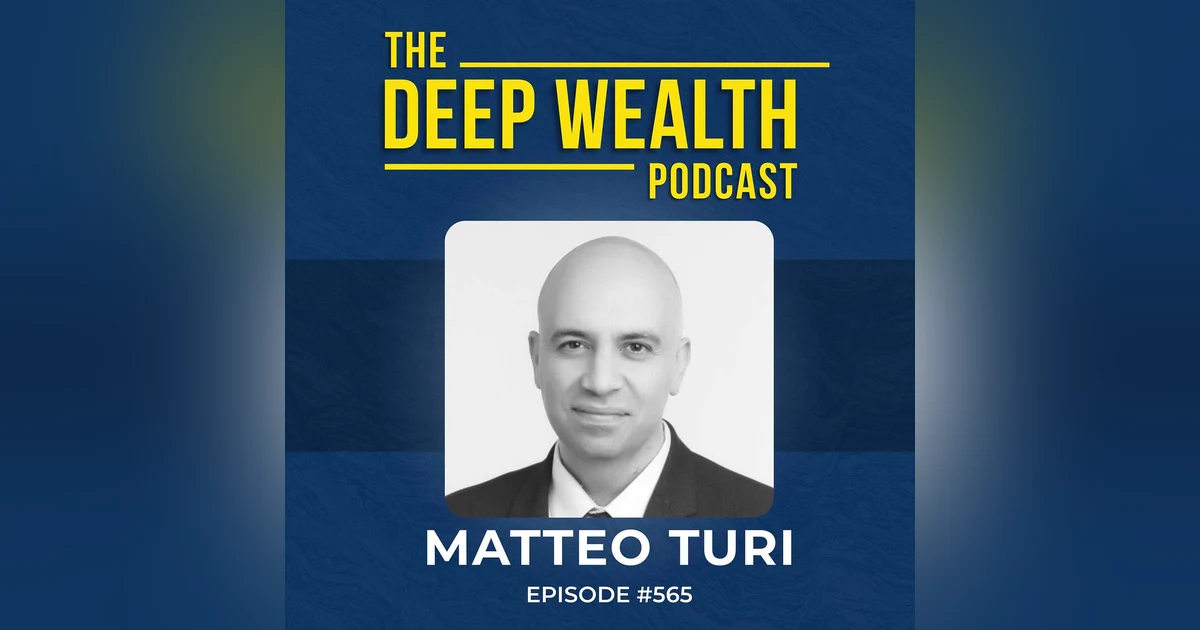
Send us Fan Mail “Enjoy your self-discovery process now, not later, to welcome self-esteem and self-determination.” -Matteo Turi Exclusive Insights from This Week's Episodes Similar profits can produce radically different valuations. Valuation Expert Matteo Turi reveals why systems, intellectual property, leadership depth, and transferability create the gap between a 2X and 10X business. Episode Highlights [00:07:00] Why revenue growth does not automatically create valuation [00:10:00] The th...


“Enjoy your self-discovery process now, not later, to welcome self-esteem and self-determination.” -Matteo Turi
Exclusive Insights from This Week's Episodes
Similar profits can produce radically different valuations. Valuation Expert Matteo Turi reveals why systems, intellectual property, leadership depth, and transferability create the gap between a 2X and 10X business.
Episode Highlights
[00:07:00] Why revenue growth does not automatically create valuation
[00:10:00] The three pillars inside the High Valuation Triangle
[00:14:00] How founders can turn personal expertise into transferable intellectual property
[00:22:00] Why control obsession destroys value during the scale-up phase
[00:27:00] The emotional execution mistakes that quietly derail strong companies
[00:31:00] Why a founder’s absence can become one of the company’s most valuable assets
[00:41:00] How identical financial statements can hide a valuation gap from 2X to 10X
Full show notes, transcript, and resources for this episode:
https://podcast.deepwealth.com/565
The Deep Wealth Podcast
Most entrepreneurs do not fail.
They just carry too much for too long.
The business grows. Pressure grows faster. Profits get harder to predict. Decisions cost more energy. Over time, focus slips and health takes the hit.
The Deep Wealth Podcast and Deep Wealth Mastery are built from real experience. We're the only system based on a 9-figure exit. This system exists because guessing gets expensive.
🧠 Deep Wealth Mastery
This is for you if you want to:
• Grow a profitable business without becoming the bottleneck
• Build real value so selling is optional, not forced
• Optimize your health before it limits your business and life
One proven roadmap for real decisions.
⭐ Explore Deep Wealth Mastery
https://iapdw.com/idm
🎧 Subscribe
https://iapdw.com/podcast
📘 Free eBook
https://iapdw.com/ebook
💬 Have a question you keep circling back to?
Leave a short voicemail
https://podcast.deepwealth.com/voicemail/
Built by entrepreneurs. For entrepreneurs.
Loved this Deep Wealth Podcast episode?
You built your business from nothing.
Now make it pay off big.
📱 Subscribe Now
As a bootstrapper, every move counts. Subscribe on your favorite platform for Jeffrey Feldberg’s 9-figure exit strategies. From your morning grind to late-night planning, get insights from founders who did it without investors. These tips could change your future.
Drop a Quick Review
Got 30 seconds? Leave a 5-star review. It helps us make better episodes and reach entrepreneurs like you, hustling without a safety net.
Don’t Lose Your Exit (And Your Financial Freedom)
You’ve poured everything into your business. A bad exit could cost you millions. Most deals fail, and even “successful” ones lose half their value. The 90-day Deep Wealth Mastery program teaches you to make your business run without you and boost profits so you capture the best deal instead of any deal.
What Others Say
“Deep Wealth Mastery is pure gold. I wish I’d had it before my exit,” says Stacey C. “The value I’ve gained dwarfs the investment,” adds Sanjay S. “It makes my business great to own and sell,” shares William S.
📘 Grab Free Tools
Check out client success stories for proof. Master the Deep Wealth Strategy Map to plan your exit. Or snag the eBook, From 7 to 9 Figures: The Exit Playbook, for a clear guide.
Click here to start your legacy-defining exit today.
565 Matteo Turi
[00:00:00]
Valuation By Design
Jeffrey Feldberg: Most founders believe valuation is the reward for hard work, revenue growth, and ambition. Matteo Turi sees it differently. To him, valuation is not an accident, it's an architecture.
Mateo is a CFO, board advisor, entrepreneur, and creator of the High Valuation Triangle, a proprietary framework built around three forces that investors care about deeply: intellectual property, succession depth, and global scalability. His work is designed to help founders move from operator-dependent businesses to structurally valuable companies that investors want to chase, not politely evaluate.
Across his career, Mateo has advised companies in SaaS, renewable energy, med tech, mining, utilities, and telecom. His background includes more than half a billion dollars in funding, multiple M&A transactions, exits, and [00:01:00] IPO experience. But what makes Mateo's thinking so compelling is not just the numbers.
It's the pattern he's seen again and again. Founders build revenue, customers, and momentum only to discover during due diligence that buyers don't pay for effort. They pay for transferable value. Mateo's work challenges the founder to ask the uncomfortable question: Are you building a business that looks successful today or one that a buyer would compete to own tomorrow?
Deep Wealth Mastery Sponsor
Jeffrey Feldberg: And before we start the episode, a quick word from our sponsor, Deep Wealth and the Deep Wealth Mastery Program. Here's Sanjay, a graduate of Deep Wealth Mastery, and he says, the investment I made in the Deep Wealth Mastery Program, it's a rounding error compared to the value created today and the future value I'll receive.
Or how about William, who says, and I love this, A company that's attractive to sell is also a great one to own. The Deep Wealth Mastery Program gives me the best of both worlds.
Now speaking of growth [00:02:00] and adding value, check out what Leon says. He says that the Deep Wealth Mastery Program changed how and who we hire. We've now begun to hire talent today that we never would have hired if it weren't for the program. The talent we're hiring today is helping both increase our growth and profits and our future enterprise value.
Man, I love that kind of feedback because it's that kind of feedback that's what gets me out of bed every day.
Deep Wealth Mastery System, it's the only system based on a nine figure deal. That was my deal. And as you know, I said, no to a seven figure offer, created a system that we now call Deep Wealth Mastery, and that's what helped myself and my business partners all welcome from a different buyer, a different offer, a nine figure deal.
So if you're interested in growing your profits, preparing for a future liquidity event, whether that's two years away or 22 years away, and if you want to optimize your post exit life, Deep Wealth Mastery is for you. Please email success at deepwealth. com. Again, that's success, S U C C E S S at deepwealth. com. We'll send you all the [00:03:00] information about Deep Wealth Mastery, otherwise known as the Scale for Ultimate Sales System.
That's where you want to be. You want to be with other successful business owners, entrepreneurs, and founders, just like you, who are looking to create market disruptions. Whether you're a startup, whether you've been in business for three or four decades, whether you're manufacturing, whether you're high tech, SaaS, low tech, whatever the case may Come in and network with other business owners, with other businesses, just like you, because they all want to lock in their financial freedom and enjoy both success and fulfillment.
Again, that's the 90 day Deep Wealth Mastery program. It has your name on it. All you need to do is take the next step. Please send an email to success at deepwealth. com.
Meet Matteo Turi
Jeffrey Feldberg: Deep Wealth Nation, welcome to another episode of the Deep Wealth Podcast. Deep Wealth Nation, when it comes to your company, your future, what it looks like, what you do, what you don't do, wouldn't it be incredible, absolutely incredible, if we had the advice ahead of time of what to do, what not to do?
Hindsight's always 20/20, as they say, but what if you had [00:04:00] the right system behind you that could have you make fewer mistakes, better decisions, and you get insights from someone who, as the saying goes, has been there and done that. You heard the official introduction. We have a very special guest in the House of Deep Wealth.
Matteo, welcome to Deep Wealth Podcast. An absolute pleasure to have you with us. Founder to founder, my goodness, you have an incredible story. You have done so much. But take us back to the beginning. What's your story? What's the story behind the story? What got you from where you were to where you are today?
Matteo Turi: Oh, Jeffrey, thank you so much for inviting me tonight. It's a real pleasure to be part of your show. Yeah, I know I'd like to tell about my story. I've been in finance for the last 31 years. During my career I've been in a number of special situation crossing around all kind of phases from the early startup phase to the crisis to the stagnation some glamorous exits, some other not so glamorous , I would say.
All together about just total about half a billion of funding. I think it was five mergers and [00:05:00] acquisition two exit and one, IPO in London as well. This is something really changed me a lot. That was about nine years ago when in my finance profession I found that, you know, finance teams were reporting history while founders were chasing growth without structure.
So many businesses could generate revenue but were not bankable they were not transferable, they were not investable. So that came the bigger insight. I just did some studies, in the middle of my journey and I found that the world was shifting towards intangible value. Effectively, you know, compared to 25, 50 years ago, one generation, two generation ago today if you look for example at the big markets but we can also, look in a small markets.
The S&P 500 today, the valuation is 92% made of intangible. So today for example you go intellectual property, system, governance leadership [00:06:00] and scalability are becoming much more important than physical assets. You know, Data matters more than building machinery. So we are really at a, in a situation where there's such a big change and that's what I would like to talk to you about today really.
That, that would be fantastic to explore and discuss how these changes are really affecting all of us.
Jeffrey Feldberg: Wow, my goodness. There is so much there that we're gonna go into. And by the way, Deep Wealth Nation, before we get going, go to the show notes. In the show notes, there is a link. Pick up the book. Pick up Matteo's book, Fail, Pivot, Scale: How to Rebuild, Reinvent, and Scale So Fast Investors Chase You. My goodness, who wouldn't want investors chase you?
As I always like to say here at Deep Wealth, what's the best kind of business to sell? The one that you don't have to, the one that you don't want to. And Matteo, I'm gonna be jumping all over the place here. There is a method to the madness, I promise you. I wanna talk to you about something.
Myths About Valuation
Jeffrey Feldberg: I wanna ask you a question, because right at the very [00:07:00] beginning, at the very front, you're saying, "If you failed before, good, you're halfway there."
And I love that. So speak to us, what's going on today? You've been talking about the intangibles, how that's so much more important today than it ever has been before, and you're talking about failure up front. You're talking about strategy without the right kind of execution, and growth for just growth's sake.
There's all kinds of things to do, not to do. There's so much noise out there. Let's make it simple for Deep Wealth Nation. Let's start with some of the foundational truths or some of the foundational lies that are out there as well. So what's the biggest myth or potential lie that's out there that we can, you and I right now, we can dispel right here and now for Deep Wealth Nation?
Matteo Turi: Oh, well, there are quite a few things to demystify. The first of all is that growth is valuation, while or revenue is valuation, when we know that's absolutely not true because what investors are looking for, investors are looking for something completely different. They are [00:08:00] looking for scalability.
They're looking for predictability. They're looking for resilience. Fail, pivot, scale is not a slogan. Fail, pivot, scale is a sequence, and in the book many people will find so many case studies. They will also find 26 self-assessment, by the way, so they'll be able to assess their position in order to understand whether they are bankable, they are investable, whether they can be lovable by customer, but lovable investor and by banks as well.
So because, yeah, this is where, there are lots of misconception here. People think that just growing, just revenue will give you the wealth that you need and many people think that valuation is just an event, when in actual fact, you know, I always talk about design.
You have to design your business from day one towards high valuation, towards becoming desired by investors. Every business that has really been successful in this planet in the last, 100 [00:09:00] years as at this cycle fail, pivot, scale. We can think about Steve Jobs, for example.
Apple was on the brink of bankruptcy. They pivoted, and then eventually they were very successful, and they were successful with what I called the system which I designed in 2017. All businesses, they tend to be loved by investor when they have certain characteristic. So the system is designed so that you own those characteristic when either an investor comes to you, whether a bank, you want to get funding from a bank, or even whether you want to really be more successful commercially.
So the high valuation triangle was designed in 2017, and in the book you will find plenty about this. Do you want me to tell you more about the high valuation triangle?
Jeffrey Feldberg: Absolutely read my mind because as soon as you're finished, I was gonna say, "Okay, tell us about your system and the high valuation triangle." So yes, please
High Valuation Triangle
Matteo Turi: Okay, the IP valuation triangle, because we live in a [00:10:00] AI-driven economy I tend to compare many people say artificial intelligence is like the new electricity, where in these economies you need a system, and the IP valuation triangle I would say since obviously we entered into intangible economies even before artificial intelligence started to be in our lives, is your grid.
Because let's face it, electricity is absolutely useless without a grid, and in actual fact, electricity can cause fires, can cause damage, can cause injury if you do not have the grid. Now, in business terms you need a system, and the grid is the IP valuation triangle. Why triangle? Because it's based around three pillars that will make you investible.
There are three components, investible and bankable. Number one is intellectual property monetization, and if we are to compare it with electricity, it's a bit like the electricity generator [00:11:00] because it answers the question, what do you own? Okay? 'Cause many businesses obviously they tend to focus on revenue.
But at the end of the day, what do you actually own? You do not own revenue. You need to own a method. You need to own an asset. You build an asset that will allow you to build transferable value. So the first part of the grid is the intellectual property monetization And the second one is succession planning, and in electricity terms is like the transformer.
While intellectual property is the generator of the electricity the succession planning is what we call the transformer because it allows really the business to be executable, to be transferable. And the last pillars of success with investors and banks is when you become global.
Now, going global is the third side of the triangle, and when you go global, you answer the question [00:12:00] also, how do you scale? So you answer three question really. The first one is what do you own? The second one is how do you transfer value? And the third one is how do you scale? And global markets are where you tend to go back to the first side of the intellectual property w- which is intellectual property of the high-valuation triangle.
Because we see this with all the big company that becomes bigger they tend to really go global by really using already their positioning, the positioning, the structure they created with the intellectual property monetization. So this is what I could say is the comparison that we can make with the nowadays economies really
Jeffrey Feldberg: So as you're talking about that, oftentimes as founders, whether we're in startup mode or a few years out, I find we tend to knock ourselves down unnecessarily. "I can't compete with these big companies. I [00:13:00] can't have these resources or that resources," and yet we overlook some of our biggest strengths.
We're fast, we're agile, we're seeing things before most others see them. So with that said, let me ask this. It's a question of the glass is half full, the glass is half empty all in one. What would be some of the big companies, and it doesn't matter whether they're a gazillion dollars in valuation and revenues and growth and profits or not, but the bigger companies, what would be some of the tactics or strategies that they're leveraging for their benefit that me as a founder, I can do the same thing as well, but I don't have your system yet, Matteo.
I haven't spoken to you yet. I don't know that it's out there. I can't do it. What would be an example of one or even two strategies that I can begin to do that could make all the difference for me?
Monetize What You Own
Matteo Turi: Why this is so relevant in my everyday life, because I meet so many founders who tell me, "Where do I start?" the answer is, well, start with what you already [00:14:00] have. It may sound a silly answer, but it's not, because many founders, they just do not have the education on how to really build ownership.
I'll give you an example. I met a consultant a couple of weeks ago. He told me, "Well, I, sell my time to do change management for businesses. just cannot see how I can scale myself." Well, we started to go through an intellectual property audit, and we found that the services he provided, they were so repeatable they were so scalable, because, he could actually repeat the same service for so many customers without selling the time.
So we started to create the structure, the positioning and the structure. Instead of selling your service to one business, you become someone who owns a method that will then be sold to many customer. So suddenly, [00:15:00] instead of selling your time, selling a service customer by customer, personalized, you do what we call, the intellectual property monetization phase, which consists of five steps.
But I'll just give you the monetization, which is step number four. Now, step number four is where after you document and you protect, you start to really create the revenue link, yeah? The revenue link will allow you to sell, to create so many revenue streams. And that comes really from really mastering the evaluation triangle, starting with intellectual property.
So suddenly, you're not just selling your time. Suddenly, you own a method which you can license, that what really excites investor, that's what excite banks. Because suddenly you got something that is transferable, something that is also valuable to an investor as well. I'll just give you an example [00:16:00] because it's so simple because we find so many people who are using their own time.
They own intellectual property, but just they do not know how to really develop it and how to sell it, and this is so much more relevant in artificial intelligence-driven economies.
Jeffrey Feldberg: Absolutely love what you're hearing. So what I'm hearing you say is, "Hey, Jeffrey, stop selling your time because it's not scalable. You can only be one place at one time, but take a look at what you're doing and put that into a system that you can replicate, that you can scale." Maybe you found a way of doing something that no one else is doing it quite the same way that you're doing.
You can then put that into a system, replicate that, scale that, take that to market. How am I doing with that?
Matteo Turi: Yeah, and that's exactly, how you do it.
Five Steps To IP
Matteo Turi: There are five steps really needed. I'll tell you the five steps obviously, 'cause that's something that we can cover here. First it's about identification, yeah? So you need to ask yourself the [00:17:00] question what do you actually own?
What do you do that makes customer come to you effectively? And you need to start asking yourself the question, what's the economic benefit am I actually transferring to a customer with my service? If I sell something for, 5,000, yeah, what's the benefit to the customer? Is more than 5,000?
Because, you don't wanna sell on price, you wanna sell on value, okay? So identify what is your excellent point, step number one. Step number two, you document it. You codify. Codification. Now, this is so important in AI-driven economies because today you're really at risk unless you document.
If you've got nothing documented, AI has got nothing to scale. Step number three, protection. So you still haven't sold anything, by the way. You don't sell and then you protect. First you protect, yeah? [00:18:00] So step number three is protection. That's where you go ahead and, make sure that what you built, what you own is protected legally, and don't do it on your own, by the way.
Get a lawyer, absolutely. Get a professional. Step number four, after you protected, then you do the commercial embedding. Now, commercial embedding will make your ownership valuable. Until you commercially embed it you just go static IP. Static IP which, you know, can be worth something, but what you want to move is towards dynamic IP.
So especially in AI-driven economies where your intellectual property is no longer a concept that, is something that doesn't move, because you have to move it every day, you have to develop it every day. And step number five, you make it transferable. Now, make it transferable, how do big businesses do and how small founders can do the same?
Well, big [00:19:00] businesses, they tend to do it in four ways.
Scale Through Transferability
Matteo Turi: Do you want me to tell you the four ways in which big businesses do and which small businesses can also do it?
Jeffrey Feldberg: Absolutely
Matteo Turi: Okay. So the four ways in which you then really your positioning becomes valuable and your positioning becomes commercially, you create lots of revenue stream in that way.
So after you've gone through those five steps you choose four methods. Usually, you choose the easiest one first. Now, most businesses that do partnership, it's a big group of activity. One o- one uh, typical partnership is called joint venture, but there are so many other type of partnership, yeah. Think about small businesses like BioNTech that did the COVID vaccine with Pfizer six years ago.
You can also do a partnership between two small businesses. You don't have to do it with a big one. But if you find a big one, your IP, your intellectual property could travel faster as well. The other method is distribution, in AI-driven [00:20:00] economies, that can travel fast, especially for consultant.
Consultant can now distribute their intellectual property in a manner, especially with AI, that was not possible, let's say, five years ago. The third way is licensing. Now, licensing is when you give someone the right really to sell what you own, your intellectual property. The last one is franchising.
Now, franchising is the most complicated because you need to have a system. You must have cloned the system. In the USA, for example, this is very common. The franchising economy is very large. We're talking about, know, trillions of dollars in franchising. But what really, really matters for small founders is to understand that once you define what you own then that can generate additional revenue streams, and that's how you become really transferable.
you create transferable value [00:21:00] effectively. These are really the four ways in which you eventually, you know, create your own revenue stream. The biggest one, however, I would stress partnership. There are thousands and thousands of way that you can actually monetize your intellectual property by working with someone else, and you'll be surprised by how many small businesses can actually do partnership with another small business.
Jeffrey Feldberg: We tend to, exactly, tend to undervalue what we can do. There's strength in numbers, as the saying goes.
Five Business Phases
Jeffrey Feldberg: And so let's take a step back. And again, Deep Wealth Nation, Fail, Pivot, Scale: How to Rebuild, Reinvent, and Scale So Fast Investors Chase You. Let's go now to how you look at a business, because you have the different phases, Matteo, and you talk about five different phases.
So the startup stage, and Matteo, I would say even if I'm beyond the startup, every time I come up with a new service or I want to create a market disruption, essentially I'm back to the startup stage. And so there you're talking about, okay, well you've got [00:22:00] nothing, prove it to me. And so we go from startup to scale-up, and then we have, okay, well you got to a certain point, the stagnation stage.
You gotta break that plateau, break through that. There's always a crisis, and then the valuation and the exit. It's an unfair question. I'll ask it anyways. Of those five stages, for you, which is one of your favorite stages that you've been able to make the most difference with when you're helping other founders?
Scale Up Identity Shift
Matteo Turi: I would say the most favorite stage is where, because businesses are more likely to fail unnecessarily like the scale-up phase because unfortunately there are five phases: start-up, scale-up, stagnation, crisis, and exit. I also like ex- crisis because you resolve, big problem very quickly
But in the scale-up phase, unfortunately, our economy tend to see unnecessarily so many failures. So many failures which are down to lack of [00:23:00] education why am I saying that? When you start up a business, control is everything. Control allows you to function. When you move into the scale-up phase, you as a founder, I'm talking about to the founder now, you have to change identity.
You need to become a completely different person, and that's where you build what I call transferable value. That's where the big outcome is created, and that's where so many unnecessary failure can be avoided with the right financial intelligence. Because let's face it this is very painful.
This is why I'm a finance professional, and my action is designed to really inspire finance professional to stand up really. Stand up and really do what you need to do when you find an entrepreneur who is control obsessed because control obsession [00:24:00] is what kills just too many businesses. It's part of the mindset.
And in the scale-up phase, what I what I wrote on the book and you will find in my articles as well in my newsletter, I tend to compare the business to a football team. You can also choose your own football, American football if you like, where the founder has to go from being a player to a coach.
And the coach must have three leaders to accomplish three goals. Number one, sell. Number two, produce. Number three, generate cash flow. Those three goals require three leaders that you have to find. That's what creates transferable value. That's what make your business investable. Who are those three leaders?
In football terms, the person who does the sales is the attacking force, okay? So football, in soccer, it would be the one who score the goals. In American football, for example, it's the one who [00:25:00] just go and score as well. Then the production, the operation director, the second leader, is like the midfielder, like the person who passes the ball, the person who's, who really ties in all the function of the team produces opportunity effectively.
On the back, you go finance. Finance there is defending, so make sure you don't let in too many goals.
Sellable Means Keepable
Matteo Turi: so that creates really transferable value, and that is really what many businesses should do in that phase- To avoid what happen too many times, too often, which is unnecessary failure. We all lose when that happens because jobs are lost, products are lost just because there's lack of education.
So I would say that's one of my favorite phrases
Jeffrey Feldberg: And Matteo, as you're talking about that, you're actually reminding me of a conversation I had with a graduate of the Deep Wealth Mastery program, Bill, actually. And Bill said, "Jeffrey, a business that is [00:26:00] at the optimal place to sell is also the best business to keep, and I like having my options." And when I look at yourself, Matteo, I'm reminded of that because of your background.
My goodness, you're a leader in finance. You're an investor. You're a board advisor. You've really been on both sides of the table. You're a founder. And so Matteo, from that perspective, whether I'm looking to sell a company, whether I'm looking to not sell a company, it doesn't really matter because best practices are best practices.
And when I have a strong company, I have choice. Keep it forever, sell it tomorrow, the choice is mine, and the point is that I have a choice with that.
Founder Blind Spots
Jeffrey Feldberg: So let's look at the glass half empty for just a moment. Where, as founders, are most of us getting it wrong? And I know you can go in so many different directions, and Jeffrey, my goodness, it depends on the company and where they're at.
But generally speaking, are you seeing these common patterns? Are you seeing the 80/20 principle? Yeah, Jeffrey, 80, 90% of the companies that are having [00:27:00] these challenges, it's only from a very few issues that are causing all these problems. What are some of the common patterns that you're seeing that you'd want us to know?
Fear Attachment Avoidance
Matteo Turi: Yeah, the common patterns is gain its some Financial intelligence is brought in too late most of the time. There is lack of education about risk asymmetry. what I mean about risk asymmetry is that founders needs to learn, need to learn how to manage risk on the upside and the downside, yeah?
So learn how to limit the downside and how to maximize your upside. It sounds really too simple to even mention it, but unfortunately, it doesn't happen. And I would say one of the biggest reason for business failure, I always say great strategies are everywhere.
Execution is very rare.
The reason why this happens a lot is because [00:28:00] there is execution with emotion.
What kind of emotion do I find? Essentially there are three types of emotional, let's call it mistakes, yeah? Number one is fear. Yeah, fear, sometimes fear is because, most of the time because really, yeah, the lack of financial intelligence.
How do I locate capital? Fear is unfortunately one of the biggest reason that makes execution fail. The second one is attachment. Give you an example. Some businesses, they're committed to invest in a product, but it's not going well. They are failing, and then they don't wanna pivot. So that's why the book, Fail, Pivot, Scale as well.
The ability to execute without emotion in this particular matter, just cut something that is not working well, will help you a long way, and by the way, that happens also board level, yeah? they don't really eliminate what they should eliminate, capital allocation in [00:29:00] finance, sometimes it gets wrong because the finance director, the CFO, does not have the courage to say, "We have to cut this."
So attachment is another type of emotional issue. The last one is avoidance. We tend to see founders failing because they want to avoid making a decision and this is why I always say that it's really the job of the finance professional to really steer the company towards execution without emotion.
So for me, this is really important. We're not talking about numbers here. We are talking about real mindset
Jeffrey Feldberg: And what's interesting to your last point, you're not saying, "Well, Jeffrey, it's not having a certain level of cash in the bank or your cash flow." It's all mindset. It's not what we're expecting to find in a balance sheet or profit and loss. It all goes back to mindset, which [00:30:00] is incredible given your experience, given what you've done, where you've been, and where you're going.
Jeffrey, as founders, the biggest mistakes, it's the wrong mindsets that we're having. And so that said, how do I even begin to know that, okay, well, I'm too attached to this particular product or service, or I'm afraid to make that decision. I know the decision has to be made, but I don't want to be wrong or I don't want to make it, or there's too much pressure.
How do we even know that we're doing some of that? What would be some systems that we can put in place that could protect me from me?
Systemize Decisions
Matteo Turi: Yeah, this is why systems-- will say this, you must have heard it in so many places. They say culture is not what people talk about, culture is what gets systemized, creating system, really linking decision to system is one thing every business should do. And that's where really you become investable because investors will understand [00:31:00] that the business possess those quality.
Really founders should understand that investor are really buying today, so that, you move towards that systemat-systematized way to run your business.
Investable Business Traits
Matteo Turi: Now, investors are looking for predictability, okay? So how predictable is your business? How predictable is your cash flow?
How transferable it is. Transferability means the system is working so well that it doesn't matter who's gonna be in charge, again, investors, they will-- I wanna say something, you know. your absence like gold mine. Investors say, "How much, can the business do with your absence?"
And suddenly your absence becomes the asset, build a business that is defensible. Defensible means you build your moat really in a way, especially in AI-driven economies, we wanna talk about dynamic intellectual property. We don't wanna talk about static intellectual property because AI is asking [00:32:00] for professionalization, and you need to really build that.
You need to build recurring revenues, more revenue streams, yeah? Again, systems. System doesn't necessarily mean your IT. It means for example, are your revenue created or generated in a way that there is a standard. You don't have to reinvent the price every time.
So standardized revenue are important. And governance is fundamental. Governance will allow your business to be transferable, again, because you can show investor the decision are really there's a leadership that makes it transferable. And scalable IP, as I was saying, so make sure that your IP is really scalable, yeah
Jeffrey Feldberg: And so Matteo, as we're talking about this, one of the challenges for a founder is, okay, Matteo, that sounds great. Where do I start? What do I do? How do I even know what to be doing, what to look for? And that's what I love with what you've done with the high valuation code and the triangle. You also have a 49-day system.
And so walk us through that. Okay, Matteo, I [00:33:00] heard you on the Deep Wealth Podcast. Here I am, myself, my team, we're gonna go through your system. Walk me through what should I expect? What's likely gonna be happening from when I start, here I am today, to when I'm finished?
12 Outcomes in 49 Days
Matteo Turi: Okay, yeah, well, in fact, the evaluation triangle has led me to actually create a program which is called 12 Outcomes in 49 Days. Effectively, these 12 outcomes are designed so that your business develop, actually, it will create the attachment It becomes a magnet, let's call it like that, with customer, with banks and investor.
Now, the key problem that many businesses face are, for example how fundable am I? How bankable am I? So the first one the first out transformation, the first group of the transformation is bankability, and then we move towards intellectual property architecture and revenue structure as well.
[00:34:00] So creating those three will make your business fundable and bankable. But then we will move towards succession planning and leadership depth. There is a part of the program which I call the founder detox dependency elimination, because founder dependency is one of the main reason why businesses does not move, especially when you go into a scale-up phase.
Then one of the groups of these 12 outcomes relate to financial intelligence as well. For example, how do you organize your capital? How do you organize the narrative with the investors? How do you make sure that you create that kind of confidence for investors when they ask you question?
So you don't wanna be unprepared that's what really this program achieve. And also, this program will tell you how to organize for an exit. Now, an exit plan is actually not really designed just because y- you [00:35:00] exit the business or you will never exit the business. In actual fact, an exit plan will make your business so defensible, will make your business so strong commercially that you might actually never wanna sell it, because the exit plan is a design, is not an event.
You design the business in such a way that it's very defensible commercially to start with. You're much stronger with customer because you do not sell on price, you sell on value. When you sell on price, the customers will leave you on price. When you sell on value, the customer will stay on value.
So- Part of these 12 outcomes is really how do you become so much stronger with with your revenue structure, with your revenue streams. And in AI-driven economies, that matters so much more because you really have to defend and offend as well. So you defend your IP, you make [00:36:00] it dynamic.
It means you develop it every day. You learn about your data, how your data Is an asset. How the data, for example, can generate algorithm. How the algorithm can be worth millions if you develop them in the right manner. So these 12 outcomes are designed really to make a business that it becomes a real, real magnet for customers for banks, and for investors.
Yeah
Jeffrey Feldberg: And Deep Wealth Nation, what's interesting with what Matteo's talking about, this is not theory. Matteo's coming at it not just from a financial level, but from a CFO level. And I know for most founders, having a CFO on the team, especially the early days, isn't possible. You've taken your experience as a CFO and in the marketplace, again, as the investor, as that board member, and you fuse all that together and put that into the system.
AI Rewrites Valuation
Jeffrey Feldberg: So we've talked about artificial intelligence. Let's now go into that area a little bit more with that. So what would [00:37:00] you want us to know as a founder now with AI, knowing that whatever we talk about today will probably be obsolete tomorrow, but that said, big picture-wise, what's going on there?
Matteo Turi: Yeah, AI is really changing valuation. I dare to say the AI is rewriting valuation, is rewriting productivity. And today, well, let's face it, if you're not AI ready, you're not investor ready because AI is asking the same question as an investor. It's asking for you to become professionalized really.
Now, the strong points I would really mention is that intangible assets today dominate modern valuation. Earlier on, I said ninety-two percent of the valuation of the S&P 500 is intangible from seventeen percent in nineteen seventy-five, just to give you an idea how our economy is changing. Now, the other thing to bear in mind is that AI is compressing competitive advantage.
[00:38:00] Now, why is it happening? It's because, you know, information is now a commodity. So it's not about, possessing information, it's about really driving an outcome with obviously much, much faster much faster information management, of course. Yeah. Execution speed matters a lot more.
So if you do not adapt unfortunately you will pay the price. And if you do not professionalize your business, your competitors will do that, and they will win your market share. Now, service businesses without systems become replaceable. that's really important to say. If you do not have system, you're gonna become replaceable.
And valuation increasingly are tied to scalability and transferability. I would mention a couple of external sources here. Ocean Tomo Intangible is a study that [00:39:00] shows this shift, which is happening it's not really stoppable right now the valuation that is more and more intangible.
Also Gartner said that forty percent of AI projects will fail not just because the technology is not good, but because businesses are not ready to be professionalized. And it's gonna be a big problem for founder-centric businesses. And also the other thing I would say as a last observation is that AI makes average businesses invisible faster.
So that's a big threat
Jeffrey Feldberg: Wow, there is so much going on there. I do agree with you. One of the shortcomings of AI, and there's many positives with artificial intelligence. I'm a big believer in it, very optimistic about it. I don't think it's the doom and gloom that we're hearing out there. One of the downsides though, Matteo, to your point, is that AI, okay, it's all fine and good off in the corner [00:40:00] there, but it's not making a difference for your business.
It's almost like a toy rather than something that you can take to market. Always exceptions. Get that. You can point to this company over here or that company over there. But for most, at least what we're seeing here at Deep Wealth, so many founders are going into AI because their board asked them to, or this is what's being talked about so, "Well, if they're doing it, I might as well do it."
They're not putting the strategy, the execution, some of the different five stages that we spoke about there, the proper scale behind that. But what I'm hearing you say, and I agree with you, is once we do, once we have the proper strategies and the execution, we're a, quote-unquote, "grown-up business," then the AI can and will make a huge difference for us, and I couldn't agree more with you on that.
I want to ask you something. This is not wrap-up mode just yet. Is there a question that you and I haven't covered, an important question that we haven't yet covered that you'd like to share with Deep Wealth [00:41:00] Nation?
Private Capital Wave
Matteo Turi: Probably a big question we should ask ourselves because we're living in very fast-changing world. We've spoken about AI, but we're also speaking about the most unprecedented wave of private capital coming into our economy. there's an expansion which never seen before.
In the next 48 months an extra trillion dollars of asset under management are coming to the market. Private capital, by the way, not public capital. The question is, with such a fast change is whether our education systems and also the professionalism that we've seen develop in the last two generation maybe, whether it's not prepared at all for this change because let's face it, one of the big question I would ask, today, are financial statements Are they as useful as they used to be 25 years ago, for example? unfortunately, the answer is absolutely not. [00:42:00] Because today, if you look at your businesses with the same financial statements but with a very different organization one has got low revenue quality, one has got good revenue quality, one has got lots of data algorithm systems, the other one doesn't have that, you could see such a big divergence in valuation.
One could be worth two times EBITDA. The other one could be worth 10 times EBITDA, and they got the same financial statements. So for me that's a big shift that our education system, our finance profession should really think carefully about.
Jeffrey Feldberg: My goodness, so much going on there. And it really goes back to something that you were talking about earlier when we're looking at the five different stages and how I'm approaching it. The one big takeaway is just because it worked today and yesterday, there's no guarantee that it's going to work tomorrow.
And in fact, here at Deep Wealth, that's one of our sayings, [00:43:00] "In today's success are the seeds for tomorrow's failure." Because oftentimes the human condition is, well, it's working. If it ain't broke, don't fix it. I'll just keep on going with that. But as we've been discussing, the marketplace changes, conditions change, and I need to be not only keeping up, but ahead of where everyone else is.
And so with that said, it was a terrific insight. It's a terrific segue as we do go into wrap-up mode, Matteo.
Back to the Future Advice
Jeffrey Feldberg: And here at Deep Wealth, it's our tradition, it's both my privilege and my honor, where every guest I ask the same question. Let me set the question up for you. It's a fun one. When you think of the movie Back to the Future, you have that magical DeLorean car that will take you to any point in time.
So imagine now it's tomorrow morning. You look outside your window, and this is the fun part, Matteo. Not only is the DeLorean car curbside, the door is open and you hop on in. You're now gonna go to any point in your life. Matteo, as a young child, a teenager, whatever point in time it would be, what would you tell your younger self in [00:44:00] terms of life lessons or life wisdom, or, "Hey Matteo, do this, but don't do that"?
What would it sound like?
Matteo Turi: this is really a great question because I always say age is leverage lever age, because, you learn so much, in your lifetime. I would say my younger self enjoy now, not later, enjoy your own self-discovery process.
Because when you start enjoying the self-discovery process, you will enjoy life like you never did before. It will gift you self-esteem. It will gift you self-determination. It will gift you all the qualities you need to to help other people and to be helped. always say the return on kindness investment is infinite because, it's free to invest, you don't have to pay anything. But the return is more than zero of course. You know, The return is infinite, enjoy your self-discovery process as soon as you possibly [00:45:00] can because you will love life a lot more.
Jeffrey Feldberg: Spoken like a true financial genius that you are. So enjoy your self-discovery process now, not later, or as soon as you can for the highest return on investment. Absolutely love that, Matteo.
Where to Find Matteo
Jeffrey Feldberg: And for someone in Deep Wealth Nation, they have a question for you, they wanna speak with you, they wanna go through some of your programs, where would be the best place online to reach you?
Matteo Turi: You can find me on Substack. I've got a newsletter. There are 28,000 people who read me there. Suppose you can find also the link down here, but that's where they can find me. it's been going on for one year and a half now, my newsletter. There you will find also my weekly article and also there are quite a few podcasts.
I'm on LinkedIn Live twice a week, every Monday, every Wednesday. You can find The High Valuation Code on Wednesday. And you also find a special edition about AI, The AI Valuation Code, on a Monday on LinkedIn as well. It's 1:30 UK time. It's 8:30 [00:46:00] New York time, for example. So yeah, you will find me there every week as well.
And on top of that you will also be able to learn more about the AI valuation triangle through my book Fail, Pivot, Scale which is on Amazon. You can also read all about the reviews that have been put since there. There are 26 self-assessments so it's a workbook as well. You will use it for many years to come
Jeffrey Feldberg: And Deep Wealth Nation, I have great news. It does not get any easier. It's all in the show notes. Go to the show notes. It's a point and click. Well, Matteo, congratulations. It's official. This is a wrap. And as we love to say here at Deep Wealth, may you continue to thrive and prosper while you remain healthy and safe.
Thank you so much
Subscribe and Support
Jeffrey Feldberg: So there you have it, Deep Wealth Nation.
What did you think?
So with all that said and as we wrap it up, I have another question for you.
Actually, it's more of a personal favor.
Did you find this episode helpful?
Have you found other episodes of the Deep Wealth Podcast empowering and a [00:47:00] game changer for your journey?
And if you said yes, and I really hope you did, I have a small but really meaningful way that you can actually help us out and keep these episodes coming to you.
Are you ready for it?
The dramatic pause. I'll just wait a moment. Drumroll, please. Subscribe. Please subscribe to the Deep Wealth podcast on your favorite podcast channel. When you subscribe to the Deep Wealth Podcast, you're saving yourself time. Every episode automatically comes to you, and I want you to know that we meticulously craft Every one of our episodes to have impactful strategies, stories, expert insights that are designed to help you grow your profits, increase the value of your business, and yes, even optimize your post exit life and your life right now, whatever you want that to look like.
And every time you subscribe and a fellow entrepreneur subscribe, it's a testament to how together, Yes, we are. We are changing the social fabric of society. One business owner at a time, one liquidity event at a time. So don't let the momentum stop here. Subscribe now on your favorite podcast channel.
You'll [00:48:00] never miss an episode. You'll be the first to hear from the top industry leaders, the innovators, the disruptors that are really changing and shaping the business world, and maybe you're commuting, maybe you're at the gym, maybe you're taking a well deserved break that we spoke all about on this episode.
The Deep Wealth Podcast, it's your reliable source for the next big idea that could literally revolutionize your business. So once again, please hit that subscribe button, stay connected, inspired, and ahead of the curve. And again, your next big breakthrough moment, it might just be one episode away. Maybe it was even this episode.
Final Thanks and Farewell
Jeffrey Feldberg: So all that said. Thank you so much for listening. And remember your wealth isn't just about the money in the bank. It's about the depth of your journey and the impact that you're creating. So let's continue this journey together. And from the bottom of my heart, thank you so much for listening to this episode.
And as we love to say here at Deep Wealth, may you continue to thrive and prosper while you remain healthy and safe.
Thank you so much.
God bless.

Founder and CFO
Most founders believe valuation is the reward for hard work, revenue growth, and ambition. Matteo Turi sees it differently. To him, valuation is not an accident, it's an architecture.
Mateo is a CFO, board advisor, entrepreneur, and creator of the High Valuation Triangle, a proprietary framework built around three forces that investors care about deeply: intellectual property, succession depth, and global scalability. His work is designed to help founders move from operator-dependent businesses to structurally valuable companies that investors want to chase, not politely evaluate.
Across his career, Mateo has advised companies in SaaS, renewable energy, med tech, mining, utilities, and telecom. His background includes more than half a billion dollars in funding, multiple M&A transactions, exits, and IPO experience. But what makes Mateo's thinking so compelling is not just the numbers.
It's the pattern he's seen again and again. Founders build revenue, customers, and momentum only to discover during due diligence that buyers don't pay for effort. They pay for transferable value. Mateo's work challenges the founder to ask the uncomfortable question: Are you building a business that looks successful today or one that a buyer would compete to own tomorrow?