

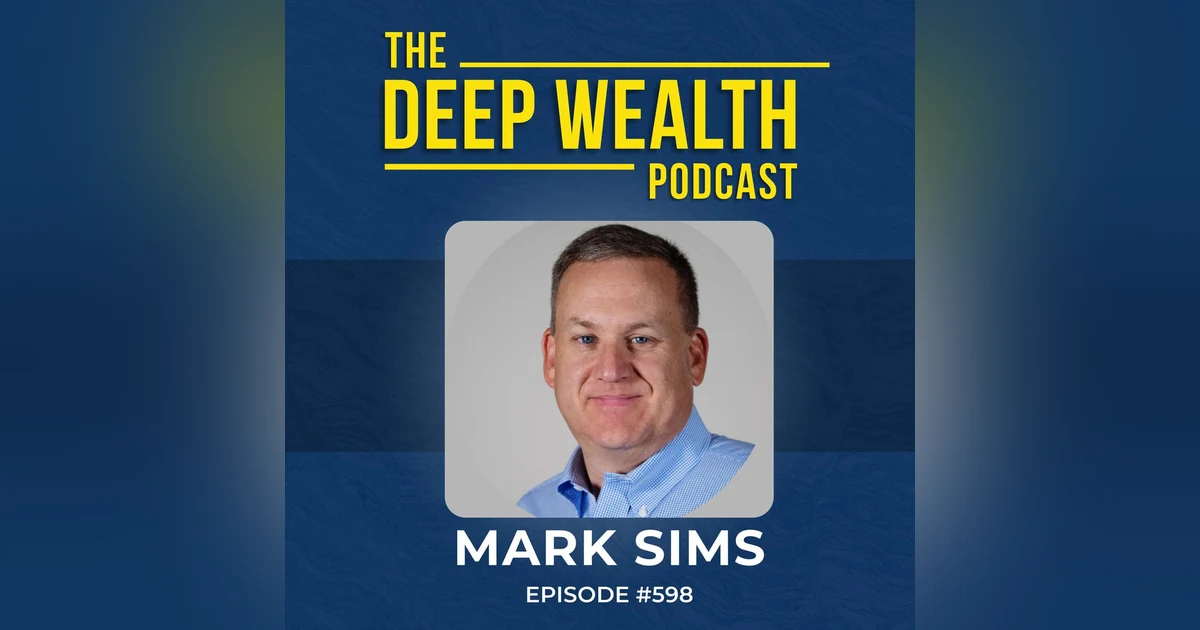
M&A Expert Mark Sims Reveals What Your Future Buyer Sees That You Don't (#598)

Send us Fan Mail “ Don't sweat the small stuff.” -Mark Sims Exclusive Insights from This Week's Episodes Your business may look valuable from the inside while a buyer sees risk. M&A Expert Mark Sims reveals what buyers examine, why transferable value matters, and the blind spots that can weaken your deal. Episode Highlights [00:08:24] Why a business that cannot run without its founder immediately creates buyer risk [00:12:11] The financial visibility gap that makes buyers question how your co...
 Apple Podcasts Apple Podcasts
 Spotify Spotify
 RSS Feed RSS Feed
 Amazon Music Amazon Music
 Podcast Addict Podcast Addict
 iHeartRadio iHeartRadio
 Castro Castro
 PlayerFM PlayerFM
 Podchaser Podchaser
 Overcast Overcast
 RadioPublic RadioPublic
 PocketCasts PocketCasts
 Audible Audible
 Pandora Pandora
 YouTube YouTube
“ Don't sweat the small stuff.” -Mark Sims
Exclusive Insights from This Week's Episodes
Your business may look valuable from the inside while a buyer sees risk. M&A Expert Mark Sims reveals what buyers examine, why transferable value matters, and the blind spots that can weaken your deal.
Episode Highlights
[00:08:24] Why a business that cannot run without its founder immediately creates buyer risk
[00:12:11] The financial visibility gap that makes buyers question how your company really makes money
[00:15:47] Why future buyers care more about tomorrow’s opportunity than yesterday’s accomplishments
[00:21:34] Why AI creates value only when people, processes, and business use cases are already working
[00:26:30] The 5 Cs Mark uses to expose weaknesses before a buyer does
[00:28:43] Why the problem founders think they have is often not the problem costing them value
[00:34:53] The cybersecurity and data risks buyers can no longer afford to overlook
Full show notes, transcript, and resources for this episode:
https://podcast.deepwealth.com/598
The Deep Wealth Podcast
Most entrepreneurs do not fail.
They just carry too much for too long.
The business grows. Pressure grows faster. Profits get harder to predict. Decisions cost more energy. Over time, focus slips and health takes the hit.
The Deep Wealth Podcast and Deep Wealth Mastery are built from real experience. We're the only system based on a 9-figure exit. This system exists because guessing gets expensive.
🧠 Deep Wealth Mastery
This is for you if you want to:
• Grow a profitable business without becoming the bottleneck
• Build real value so selling is optional, not forced
• Optimize your health before it limits your business and life
One proven roadmap for real decisions.
⭐ Explore Deep Wealth Mastery
https://iapdw.com/idm
🎧 Subscribe
https://iapdw.com/podcast
📘 Free eBook
https://iapdw.com/ebook
💬 Have a question you keep circling back to?
Leave a short voicemail
https://podcast.deepwealth.com/voicemail/
Built by entrepreneurs. For entrepreneurs.
Loved this Deep Wealth Podcast episode?
You built your business from nothing.
Now make it pay off big.
📱 Subscribe Now
As a bootstrapper, every move counts. Subscribe on your favorite platform for Jeffrey Feldberg’s 9-figure exit strategies. From your morning grind to late-night planning, get insights from founders who did it without investors. These tips could change your future.
Drop a Quick Review
Got 30 seconds? Leave a 5-star review. It helps us make better episodes and reach entrepreneurs like you, hustling without a safety net.
Don’t Lose Your Exit (And Your Financial Freedom)
You’ve poured everything into your business. A bad exit could cost you millions. Most deals fail, and even “successful” ones lose half their value. The 90-day Deep Wealth Mastery program teaches you to make your business run without you and boost profits so you capture the best deal instead of any deal.
What Others Say
“Deep Wealth Mastery is pure gold. I wish I’d had it before my exit,” says Stacey C. “The value I’ve gained dwarfs the investment,” adds Sanjay S. “It makes my business great to own and sell,” shares William S.
📘 Grab Free Tools
Check out client success stories for proof. Master the Deep Wealth Strategy Map to plan your exit. Or snag the eBook, From 7 to 9 Figures: The Exit Playbook, for a clear guide.
Click here to start your legacy-defining exit today.
598 Mark Sims
[00:00:00]
Hidden Exit Risks
Jeffrey Feldberg: What if the biggest threat to the value of your business, and your business itself, is something that you can't see because you've become too close to it?
Mark Sims has spent more than a quarter century seeing companies from almost every angle imaginable.
As a consultant, CEO, CIO, head of strategy, M&A leader, and advisor to private equity and middle-market companies, he's been inside the room when businesses are evaluated, acquired, integrated, transformed, and sometimes painfully exposed. During his 15 years at Scotts Miracle-Gro, Mark worked in corporate M&A and helped build what the company called its Integration Factory, giving him a first-hand view of what happens after the excitement of a transaction phase and the hard work of creating value begins.
Today, as Managing Principal of Technology Solutions at Consult MSG, Mark helps companies navigate [00:01:00] transformation, technology, due diligence, M&A, and the increasingly complicated world of artificial intelligence. His 5 Cs framework challenges owners to examine the competitive positioning, cash flow, clean financials, concentration risk, and organizational capability before a buyer does it for them.
What makes Mark fascinating is that he understands both sides of the table. He knows what founders believe they've built, and he knows what buyers actually see when they start looking underneath the hood.
And before we hop into the podcast, a quick word from our sponsor, Deep Wealth and the Deep Wealth Mastery Program. We have William, a graduate of Deep Both Mastery, and he says, I didn't have the time for Deep Both Mastery, but I made the time and I'm glad I did.
What I learned goes far beyond any other executive program or coach I've ever experienced. Or how about Bruce? Bruce says, before Deep Wealth Mastery, the challenge I had with most business [00:02:00] programs, coaches, or blogs was that they were one dimensional. Through Deep Wealth Mastery, I'm part of a richer community of other successful business owners.
The idea shared forever changed the trajectory of the business and best of all, the experience was fun. And we'll round things out with Stacey.
Stacey said, I wish I had access to the Deep Wealth Mastery before my liquidity event, as it would have been extremely helpful. Deep Wealth Mastery exceeded my expectations in terms of content and quality.
And you know what, my Deep Wealth Nation, why they're saying this is because Deep Wealth Mastery, it's the only system based on a nine figure deal. That was my deal. And as you know, I said no to a seven figure offer, and I created a system that we now call Deep Wealth Mastery that helped myself and my business partners, welcome from a different buyer, a different offer, a nine figure exit.
So if you're interested in growing your profits, preparing for a future liquidity event, if that's two years away or 20 years away, and you want to optimize your post exit life, Deep Wealth Mastery is for you. Please email success at [00:03:00] deepwealth. com. Again, that's success, S U C C E S S, at deepwealth. com. We'll send you all the information about Deep Wealth Mastery, otherwise known as Scale for Ultimate Sale. That's where you want to be. You want to be with other successful business owners, entrepreneurs, and founders just like you who are looking to create market disruptions.
And they want to lock in their financial freedom and have success and fulfillment.
That's the 90 day Deep Wealth Mastery Program. It has your name on it. All you need to do is take the next step. Send an email to success at deepwealth. com.
Welcome And Big Question
Jeffrey Feldberg: Deep Wealth Nation, welcome to another episode of the Deep Wealth Podcast. Well, Deep Wealth Nation, let me ask you this. When you look down the road, it could be a year from now, it could be 30 years from now, doesn't make a difference, have you ever thought of maybe one day I will sell the company, or perhaps I will bring some investment into the company, take some chips off the table"?
And Deep Wealth Nation, let's be honest, I know you have, even if you're early on in your journey. But the question becomes well, what do you do? Where do you go? [00:04:00] What do you not do? All those questions. You don't wanna be experimenting on yourself when it comes to your financial freedom. You heard the official introduction.
We have a very special guest in the house of Deep Wealth. Mark, welcome to Deep Wealth Podcast. An absolute pleasure to have you with us. There's always a story behind the story, and you have a terrific story. So what's your story, Mark? What got you from where you were to where you are today?
Mark Sims Origin Story
Mark Sims: Jeffrey, thanks so much for having me. Yeah, no, love to share my story. Grew up in Cleveland, Ohio. Proud Clevelander. went to school for engineering. Thought I'd, maybe have a career in, engineering and wound up first job out of college was in consulting.
And really for the next 15 years spent my time in consulting originally working for some boutique consulting firms doing some specialized consulting, and then went to work for one of the Big Four Ernst & Young. and that was really transformational for me in a couple ways.
One got a better understanding of business. And again, I think something that still influences me to this day the people, [00:05:00] process, and technology aspects of a business that always need to be managed and minded and becomes, the unlock for so many businesses.
But when I was in consulting, mainly working for kind of Fortune 500 large companies at the time, and now I'm dating myself, it was called business process re-engineering. Now you would call it digital transformation. But again, it was really looking at, how businesses can reimagine themselves.
A lot of it was based on underlying technology and really had, a lot of great experience. Met a l- learned a ton there. Went to work for one of my clients Scotts Miracle-Gro, the lawn and garden business here in the US, and uh, yeah, not so much global anymore.
But spent kind of 15 years at Scotts and got to do some really amazing and fun things. Ran a large transformation in their European business that they eventually sold off. I was the chief information officer, so I ran the IT department and [00:06:00] all the underlying systems for the company.
And then I pivoted, and I was kinda the last role I had there was head of strategy and M&A for the business, where we were, kinda executing some M&A to build out one of our business units. Left Scotts to actually go work for a business that they had invested in called Riv Capital,
A publicly traded venture capital firm that was investing in the cannabis space.
Then I got back into consulting, but really a, a different flavor of consulting. Now we primarily work with private equity firms and kinda helping them execute their strategy as well as their portfolio companies, trying to improve those. and the way I like to say it is my current role is I help companies transact, transition, and transform.
The transact is obviously either buying or selling. Transition is, stepping into management where needed to cover off for, where they have gaps in resources or need special capabilities. And then the transformation, that [00:07:00] really kinda goes back to the work I was doing kinda at the of my career, which is really how to help companies transform as it relates to kind of the people, process, and technology to improve their business model.
Jeffrey Feldberg: Absolutely really love where you've been, what you've been doing, and let's do something for Deep Wealth Nation to give them the benefit of all these years of experience.
Deal Killers Founder Dependence
Jeffrey Feldberg: Mark, oftentimes you may be sitting across the opposite side of the deal table if I'm a founder and you're looking to either invest or to purchase a, company.
And oftentimes, at least for myself, knowing what not to do is as valuable as what to do. And so from your perspective, I know as founders, you and me, and entrepreneurs, business owners, and what you do, the glass is usually half full. But let's do the opposite of that today. The glass is half empty. So from that buyer's [00:08:00] perspective, from that investor's perspective, what is when you're looking at a company having you run, but run as fast as you can in the opposite direction because you and the team, you're saying, "Okay, yeah, this company here, not happening.
Let's find some other opportunities. We've got so many of them. It's just not gonna be this company because of blank." What's blank? What would you want us to know?
Mark Sims: Yeah I would say the most common thing I would say the most common thing is if you're talking to kind of the founder owner and everything that you hear points to the fact that this business cannot run without them, right? So if it's, "I do all this.
Any decision that's made comes to me. I try to compartmentalize not everybody knows how the business works," whatever that might be. and the fundamental reason for that, and again, the reason that's at the top in, in my mind, is that a buyer wants to pay for value they can see and they can transfer.
If I'm [00:09:00] gonna hand you a big check
Jeffrey Feldberg: Huh?
Mark Sims: Maybe you're gonna tell me, "Yeah, I wanna stay in the business and I'll take a smaller role," et cetera. But you haven't had a boss in 30 years. now you're gonna have a boss, you're gonna have a board, all those good things. it's probably not long for you to stick with the business, and now I have a project 'cause I gotta figure out how to run this business without you.
And to your point, is that really something I wanna take on? and what I would say is, there's different so many private equity firms, so many entrepreneurs they might say, "Hey, that's... I'm gonna take that challenge on, but I'm gonna pay you way less than I would if this was something that I could see where all the value was gonna transfer.
You had a strong team, strong processes, strong systems that I knew was going to allow me to just step in, and run the business and really execute my strategy and my value creation plan versus tr- having to spend the first two years just trying to figure out how to make this [00:10:00] thing run."
Jeffrey Feldberg: Okay, terrific. And I love what you're sharing because when a founder enrolls in our 90-day Deep Wealth Mastery program, either Deep Wealth Mastery Growth, Deep Wealth Mastery Exit, one of the first questions that we're asking, regardless if they plan to sell the business or not, after all, what's the point of down the road having some kind of liquidity event if you're not even in business?
The very first question we ask them, Mark, to your point is, "Hey, does the business run without you? If you have a management team, if you don't, does it really run without you? Yes or no? No hemming and hawing, no in-betweens, yes or no?" And Mark, I gotta tell you, the majority of the time we don't hear a straight yes or no.
"Well, Jeffrey, let me tell you, I have the management team, but..." Or not really." Or sometimes it doesn't." And to your point, it turns out that for most founders, they are the company is them, and to your point, it doesn't run without them. [00:11:00] And one of the most common things that we hear is I can't imagine not being part of the company.
This is all I know what to do. It's scary for me not to be a part of the company." And through Deep Wealth Mastery, we show them a different future for them, where sure, they can still be involved in the company, perhaps as a board of director kind of role, where they choose how much time they want to put into the company.
I hear you loud and clear with that. And Deepultation, did you hear what Mark is saying? "Hey, Deepultation, I don't wanna have a second full-time job, otherwise known as your company that I just bought, picking up the pieces after you ride off into the sunset with all of our money. I wanna know that there's something still there when you're no longer around."
So the company not running without the founder is one of the main reasons. Going beyond that, though, it's the good old Pareto's law, the fancy term for the 80/20 principle of, yeah, you know what, Jeffrey, 80% of the time that we're walking away, it's because of these 20% of these issues, of [00:12:00] those opportunities over here.
Maybe it's 90/10 or 95/5. So in addition to having the company not run without the founder, what would be some of the other big reasons of why you're walking away?
Mark Sims: Yeah, Yeah.
Financials And Data Readiness
Mark Sims: I think another big one obviously comes down to the financials, and maybe you've got a, a very successful business and, you know, have a great lifestyle, but maybe you can't show me and this is a one I look at a- or we see a lot, can't show me how you make money, and that may sound silly but part of it is, again, you know, say you're, manufacturing services business, et cetera, can you demonstrate, kinda these are most profitable customers, these are my most profitable product lines, right? And I can show you in detail how does that translate, because again, as a buyer, I'm trying to think about how can I take this business to the next level, right?
What is my value creation plan? If you don't provide me with the data to really [00:13:00] understand how the business makes money where it, falls short, where there's opportunities, where the margins are high, where the margins are low, et cetera. A- and a lot of times what we see is it's not just, they, maybe they can eventually provide all that information but, what I kinda counsel a lot of clients on, and your listeners should know, having solid systems and underlying kind of, data that you can look at daily, weekly, monthly, is gonna help you run your business better.
But also, when you go to sell the business, you can quickly provide all that information to prospective buyers because we see a lot of times that eventually over months, we finally start to see some of the data that, they've been promising, and that just adds friction to the deal.
And to your earlier point, people may, some people may just say, "You know what? I'm gonna move on," right? "This business isn't mature enough that I can understand." And again, if I'm gonna be stepping in and [00:14:00] I'm not gonna have the data to run the business day to day, it's gonna be very difficult. But ultimately it, it comes down to the numbers, right?
Is, what is the business doing today? How is it making money? And then I can, start to model you know, where I can improve and how I can create value with this, this set of assets.
Jeffrey Feldberg: And as you're talking about that, in Deep Wealth terminology, if I go to the Deep Wealth 9-step roadmap, specifically Step 2: X-Factors, one of the X-Factors for a company, Mark, it's exactly what you're talking about, although most founders hate it because it's boring and it's not exciting, but it's having an X-Factor of something that makes me unique relative to the competition, relative to the marketplace, is number one, I have a business model that's replicable and scalable.
I can show that to you. I have KPIs, key performance indicators, that I can clearly show to you all the numbers are there, that it shows you what I'm doing, not so [00:15:00] much today and yesterday, but what you can look for on a go-forward basis for tomorrow and beyond.
Sell The Future Story
Jeffrey Feldberg: And I would love for you to share with Deep Wealth Nation in your own words, Mark, why tomorrow you value more than today and yesterday.
Because so many founders, when we speak with them Jeffrey, let me tell you about our company and the time that we did this or the time that we did that." And Deep Wealth Nation, I'm sharing with them, a buyer doesn't care about that. It could be yesterday. It could be 10 years ago. They don't care. All they care about is tomorrow and beyond.
That's why they're writing the check. So what would you want Deep Wealth Nation to know of why the glory days have them remain in the past? Don't have that as your future or what you keep on talking about why tomorrow is more important than it is today.
Mark Sims: Yeah, that's a great question. so the one thing I'd say, and I'll, I'll try to tie it back a little bit to the mentality that you talked about of can this business run without you? And kind of the founder saying, "Yes, maybe." I think so much [00:16:00] of, positioning to sell your business you need to think about it through the buyer's lens, right?
And that may require, you, being a little more humble, And whether it's, it's real or it's just, kind of marketing, I'll say. You have to say, "Hey I built this business to X, but you, Mr. Buyer, you could take this business, you could 10X it," right? I'm not as clever as you.
I don't have all the resources that you do. Maybe all the enthusiasm at this point. I built it to this level and you get it to next level." And again, tying it into the future, I think, so many of these founders they know their industry so well and they know what they've chosen not to do, right?
So much about strategy is, where to play and then how to win, right? And so there, may be specific where to play pieces where they just haven't chosen, right? So I currently, you know, operate in this particular geography or these particular channels. My product could do well in other geographies, but [00:17:00] maybe I don't have the capabilities, I don't have the desire, whatever it might be.
So you start to paint a picture of what is your current competitive positioning, and then what is the opportunities as you stack rank them with your deep industry knowledge to say, "Okay, if I were you, and let me paint this picture for you, you could take my products, you could expand into these channels.
You could take my model and you could take it to a nearby geography," right? Whatever that might be. So again, that feeds into the potential buyer pools saying, "Okay, now I get it. This is transferable value that not only I can transfer the business and operate it as is, but I can potentially grow the business organically by expanding."
And you've painted a picture of all the different expansion opportunities, probably way more than they would ever take on. But it starts to a- again, it's marketing, but it's tapping into your deep expertise about what you know about the [00:18:00] business and what you've chosen not to do over the years that it wasn't because they weren't good ideas, but for whatever constraints you had you didn't pursue.
Jeffrey Feldberg: Absolutely love that. And again, from our perspective, Mark, when a founder's going through the 90-Day Deep Wealth Mastery Program, step three, future buyer, and would love your thoughts on this. One of the things that we have them do after they complete the mastery program is to create a narrative for an investor or a buyer of a bright and prosperous tomorrow.
And as hard as it may be to be vulnerable, because being vulnerable is not weak, it's being strong saying, " Hey, you know what, Mark? We failed in this area here because either we didn't have the capital or the team or the experience. Now, we can't promise you this because it's out of our control. We've done our research, we've done our homework.
W- with what you and the team bring, here's what could be possible [00:19:00] in terms of our revenues or going into this new marketplace. Here's what a revenue stream or the profits could look like because of what you bring." Thoughts about that as an investor or buyer, how that changes the game when you hear those kinds of narratives?
Mark Sims: Yeah, no I, think that's 100% spot on. And this is something that investment bankers do really well, right? They write a teaser. They have a, the confidential information memorandum, the CIM. They always paint those pictures, right? Currently we're a tool and die shop, and the space economy is a whole area that we haven't even explored.
But we sell highly engineered products, engineered to order, and that could be a great vector. Or you're a roofing business and, we currently focus on, residential, but we could move into commercial. We just never did it. here would be the unlock and the things you need to do.
and so much about this is, again, painting that picture of what somebody, a buyer could do with these assets. Why is that important? Because, again if it's a [00:20:00] private equity pool of buyers, they're not gonna know your industry as well as you know your industry, right? So part of what you're gonna be doing is educating them on the industry.
What is the playing field, if you will? Where do you sit within that playing field? So again, maybe you're a, residential roofing business, and we get higher margins because we are high service. We've got a great reputation, whatever that might be. Maybe you're a manufacturing business.
we're the low-cost provider, or we have the quickest turnaround. We always have inventory. Whatever it might be, but you're educating the buyer on w- where you play, how you win, and then also talking about all the capabilities that you have, how it can allow them to play in other arenas or market your products in other places and what that value pool is that they could tap into.
AI In Value Creation
Jeffrey Feldberg: And before we go into the secret sauce of you and the team at Consult [00:21:00] MSG, I'm wondering your thoughts on artificial intelligence or super intelligence as it's now being called. How's that looking like firstly on the back end for you and the team? Are you able to leverage that? How so? and then as you look to companies, and perhaps it's a manufacturing company or a high-tech company, companies in general in terms of super intelligence and your thought process as you look to super intelligence and these companies for potential buying or investment opportunities.
Mark Sims: Sure. so absolutely, you know, I use the AI tools every day in, in my professional work. Also have started using, Muse and Grok Bot in my personal life, right? Again, I encourage everybody to experiment. They're pretty amazing tools. But when I talk to clients I always take it back to what I, mentioned at the beginning of my origin story of the people process technology, [00:22:00] right?
And so much about trying to get value out of leveraging AI within a business really is gonna start with the process. It's gonna start with the people, and then it's going to figure out where can this technology, and I've said it a couple times, it's a tool, right? How can I leverage this technology, this tool, to improve my business processes, improve outcomes for customers, speed, make my workforce more efficient, more effective.
and so I think that's the key thing that every- should be thinking through, is, not "Hey, I've got this hammer and let's try to, make everything look like a nail." Part of it is, what are those business problems that you've been trying to solve and how can you potentially reimagine your business model if you were able to leverage some of these AI tools?
And again, does it allow you to get, achieve better outcomes? Does it allow you to achieve the same outcomes but faster? Tap into a broad [00:23:00] range of data that you've collected over the last decade that can be an unlock and provide value to people either internal or external. But so much about it is reimagining kinda how your business could work given the capabilities of all the different AI solutions that are out there.
Jeffrey Feldberg: And when you're looking at a company, particularly for a founder who doesn't want any deal, they want the best deal, and when it does come to super intelligence, is there anything that you're looking for? Okay, yes, this company gets it. The team gets it. We're gonna place a premium on that. Or, hey, you know what?
This is a skeleton in the closet when it comes to super intelligence. They just don't get it. They don't see it. Too many opportunities out there. We're gonna look elsewhere
Mark Sims: I guess maybe a little more basic in where AI would fit in. One of the things that we, always look at is, what are the capabilities of the business, right? And th- this ties directly to what's value that can transfer, but do they have solid processes?
Do they have SOPs? Do they [00:24:00] have systems, et cetera? If they can paint a picture where their marketing process has been improved because they're able to leverage AI to market to the long tail of customers that haven't bought in a year and were able to leverage AI to place calls or, outgoing marketing messaging to try to mine that long tail.
But if they have a true business use case where they're extracting value and it's demonstrable I think that's gonna be pretty interesting. But it's gonna really fit into the bucket of capabilities and knowing that, okay, this is something that could transfer to us, that we could potentially scale up or scale out to really accelerate our value creation plan, right?
But just by them saying, "Hey, we've rolled out Copilot," and, we trained our users," et cetera, that can be good because they're not, ignoring the potential capabilities and trying to empower their employees to figure out how to be innovative. [00:25:00] But really, the unlock would be there's demonstrable value creation that they've achieved through the use of some, AI use case.
Jeffrey Feldberg: Terrific. And Deep Wealth Nation, are you listening to this? Are you picking up on this? Because we're tuning into WII.FM, the world's favorite radio station, what's in it for me? But Deep Wealth Nation, not for you, for your stakeholders or future investor or buyer. And you'll notice Mark is doing exactly what he should be doing.
We're gonna talk about him and the team in just a moment. It's, "Yeah, hey Jeffrey, it's great that you have a, a nice company. So what? I have so many other opportunities. I don't really care so much about you and what it means for you. Tell me what it means for me, for my investment, for my team, for my company."
And Deep Wealth Nation, step three, future buyer, is all about that, of how we demonstrate to Mark, I am gonna give you the currency in the world of M&A. It's not money, it's trust. "Hey Mark, you and the team, you [00:26:00] can trust me. I do what I say, I say what I do. I'm showing you with numbers and everything else. I understand what you're looking for.
Let me demonstrate how I can get you there." And for me, that is a world of difference versus you and the team showing up, Mark, and I'm saying, "Okay Mark, tell me what you're gonna do for me. I don't care about you. I don't care about your check other than does it cash and clear the bank so I can ride off into the sunset?"
So before we talk about your secret sauce, thoughts about what I just shared of what you want Deep Wealth Nation to know about that?
Five Cs Buyer Trust
Mark Sims: Yeah, no, I think that's absolutely right. If you think about everything you and I have talked about, Jeffrey, a lot of this is very pragmatic, kinda logical advice, right? Or insights. None of this is really kinda that challenging, right? I always call it my five Cs.
Competitive positioning, we talked about that. Understand where you play and why you win. Kinda the clear and trusted financials, capabilities. Two other ones that, that I like to talk about, again, very practical, cashflow cycle. Make sure you [00:27:00] understand And you can demonstrate that you have a good handle on your cashflow cycle.
And then the last one is really, and again, this can be a turn-off to buyers, is if you have high customer or vendor concentration, right? So if you're concentration-free. So again, having rattled those things off, they're all pretty straightforward, and things that probably people know. So oftentimes what we see is there's that knowing-doing gap.
I know I should be doing these things, but for whatever reason, everything else gets in the way. and so much about preparing your business for exit is, kinda 18 months, 24 months, whatever timeframe you wanna use, start to put those pieces in place. Maybe some of the projects that you've put off you need to start, building a, business that can, transfer to the next generation if you wanna keep it in the family, or to an external buyer
Jeffrey Feldberg: Absolutely love that. And again, deep wealth nation, I hope you're taking notes and paying close attention. By the way, speaking of notes, go to the show [00:28:00] notes because everything that Mark and I are talking about is in the show notes as a point and click. And so Mark, all that said, we've put the foundation out there of what you're looking for, what you're not looking for.
Consult MSG Process
Jeffrey Feldberg: Let's talk about your secret sauce now. You, the team, consult MSG. So I'm a founder. Yeah, hey, I heard you on the Deep Wealth Podcast, Mark. Wanna speak to you about perhaps I wanna buy some companies, put them into the fold, or maybe I wanna take some chips off the table or even sell my company. What's your process like?
and I know every company is different. Jeffrey, depends on the company, where they're at, what they're doing, not doing. Generally speaking though, how long does it take when I begin to work with you? What would I expect?
Mark Sims: so maybe a couple things. One there's about 20 of us at Consult MSG that are client-serving. And for the most part, all of us are operators and consulting backgrounds, right? So we've been in businesses, CEOs of private companies, CEOs of public [00:29:00] companies. And, so we've kinda been in the shoes of an operator, but we also have been in the consulting world or the M&A world, right?
So I think that's a lot of the experience we bring. we know what kinda both sides of this look like. And then typically, we're a project-based consulting organization. Projects could be as short as, a couple weeks up to if you have a large transformation running.
I've been with a client that it's been over a year that we've just been driving this, large transformation for the client. and so much of what we do starts with what problem are you trying to solve, right? And that's kinda the initial conversation we have. And Jeffrey, you'll be amazed the number of times that a client thinks this is the problem they need to solve, and it's actually a very different problem.
And again I run our technology solutions group. So oftentimes people will tell us, "I need a new system." And then we have a conversation, and it turns out that their system is fine, right? They could spend a lot of money, spend a lot of internal time, internally [00:30:00] focused time to, move to a new system.
But it's really not gonna unlock any new value for them. They really just need to figure out how to leverage their existing system more effectively. And then maybe it's not set up right. Maybe they haven't trained the people on how to use it. Maybe they're not holding people accountable to actually enter the data in the system that's gonna build, as I talked about, kinda that clear set of financials and KPIs.
And so often, again it's amazing that for whatever reason, people just think that's gonna cure all ills is our system isn't gonna work for us. and it's really a lot of times not the system. It may be the process, or it may be the culture and the accountability that people have to follow the process, which includes, updating the data in the system to document what they did, what they shipped, what they produced, whatever it might be
Jeffrey Feldberg: So interesting. Again, Deep Wealth Nation, look how Mark is coming back to, at [00:31:00] Deep Wealth, what we call our Step 2 X-Factors. And Mark, we actually call it the Four Points of Clarity, and we took this from a diamond out there. If I go to a jeweler and I show a diamond, they will look at the four points of clarity within the diamond.
We've taken that concept and we've applied it to the business through documentation, processes, standard operating procedures, and the KPIs. And as boring as it sounds, it's, pun intended, a diamond mine or a gold mine. We've had business owners and founders win new business because they show them this Step 2, this X-Factor, the Four Points of Clarity.
"Hey Mark, I know you're looking at other companies. We put a proposal in front of you. Let me show you what would happen when you become a client. Here's our welcoming procedure, and here's how we onboard you, and here's how we're tracking." And based on that, more times than not, the prospective client is coming back saying, "Wow, I've never seen this before.
This is [00:32:00] unique. Where do I sign up? Because if you're this detailed right at the beginning, you're gonna take care of me and the team on a go-forward basis." So I love how, again, you and the team, you're looking at that of, "Yeah, Jeffrey, don't waste your time on this new system.
Financial Reporting Fixes
Jeffrey Feldberg: You don't need to upgrade." I'd rather you have the right data points or that you're updating the databases as you should be, or you have the right kinds of financial reporting in terms of what's there.
And in terms of the financial reporting, where do most companies fall down, Mark? When you're either brought them on board now, "Hey Mark, can you help run the company, you and the team? Can you help get us to the next level?" Or you're finding some investment for the company. When it comes to the financial side, the reporting or many times the lack of, where are you helping them pick up the pieces, put in place what's not usually there to really make that difference?
Mark Sims: there's a lot of different things. Sometimes it can be, li- like I mentioned earlier, people just aren't updating the system, right? So there's things that [00:33:00] happen in Excel and never find their way into QuickBooks or whatever system you use, right?
We kinda go from, you don't need a sophisticated, kind of big name system. But if you have one, you need to keep it updated, right? That's kinda the, the practical piece. Again, if it isn't set up correctly, meaning you have two accounts you're only using two that's not smart either.
But what a lot of times what we find is kinda shadow books, if you will, where, again, nobody's doing anything nefarious, it's just the level, the detail exists in another system and you only have summary data in the core financial system. So that's kinda one flavor. A- another flavor is that maybe they have multiple businesses that are running on multiple kind of versions of a system, and so it's hard to get a picture of the consolidated view, right?
And sometimes that's where maybe you grew through acquisition, maybe you've started up a, a couple different businesses for whatever reason. A- and so sometimes we're helping companies figure out how do I consolidate onto [00:34:00] a single system so I have a single chart of accounts, single look and view of the business.
That can be achieved there, it can be achieved in a, data warehouse. But a lot of times so much of it is about visibility and is about making sure that the data actually gets into the system in the first place.
Jeffrey Feldberg: Okay. Deep Wealth Nation, you're hearing it there.
Cybersecurity Due Diligence
Jeffrey Feldberg: And let me ask you something that often gets overlooked, and Mark, we spend time on this in the Deep Wealth Mastery program, data privacy, the security of the data. A, a day doesn't go by where I'm not reading, "Oh, Jeffrey, we've had this data breach.
We're just letting you know, and here's what we're doing." So how are you looking at that? And I know at one point in time this was a nice to have. I suspect you're gonna tell me, "Yeah, Jeffrey, that's an actual must-have. It's no longer optional." But where are you on that?
Mark Sims: obviously I run our technology solutions group, and when we do due diligence, it's obviously a, a big area where we [00:35:00] focus in terms of what is the level of maturity as it relates to their cybersecurity and what type of data are they collecting, right? If you have a lot of, personally identifiable information about your customers or your employees, if you're taking credit cards, if you're competing in specific industries like aerospace and defense there's real kind of regulations and, that you need to make sure you're following.
But even businesses that aren't, it's just good in, good hygiene or required hygiene to make sure that I've got all the right, kind of protections in place. I know all the assets that connect to my network. I have all those assets that are protected with an antivirus. I've got firewalls and all the things that, not to get into too much technical detail.
But all those things are so important. I think another thing that we always look at is does this business have cyber insurance, right? So have they invested? we're a small firm. We have it. It- it's not a huge investment, but making sure that if [00:36:00] God forbid you do have a breach you've got the ability to submit a, an insurance claim that will kinda reimburse you for whatever the, business continuity loss was whatever those things were.
The last thing I'll say is make sure that you have reliable backups, right? So if you have systems even if you have paper records, make sure you're not just like you wouldn't wanna store all those in one building, make sure you've got backups, and those backups are stored in the cloud or off-site so that again, you have any kind of failure, could be cyber breach, could be a hardware failure, right?
That, one of your systems went out, you have the ability to recover quickly for fear that you're not able to deliver for your customers because you've got some internal disruption.
Jeffrey Feldberg: And Deep Wealth Nation, are you listening to this? Are you hearing this? 'Cause I gotta tell you, Mark, one of the things that we do is we do a data privacy, I don't know if test is the right word, but [00:37:00] it's an exercise where we walk the founder and the team through questions, and we have a 0% passing rate.
Not that we've made it exceptionally hard, we haven't. It's that most companies aren't even focusing on this until too late. Oh my goodness, look what happened here. Okay, now I'm gonna pick up the pieces, but the horse has already left the gate. The gate was opened by some bad actors. Not a great thing going on there.
Choosing The Right Advisors
Jeffrey Feldberg: And so Mark, for Deep Wealth Nation, as they're looking potentially at a group like yours or even other groups that are out there to help them come in and run the business, take it to the next level, or even do a full or partial sale, what would you say would be some red flags that they should be looking for of, hey, if you see this, run in the opposite direction, or here's what we're doing at Consult MSG that you're not gonna find elsewhere.
This is what makes us unique. What would you want them to know?
Mark Sims: I think, you know, the thing that makes us unique and, if you're [00:38:00] not seeing these things, we obviously wanna have a conversation to understand kinda what are the overall goals, right? Like I, I mentioned kinda the example on the system side, but we're always trying to understand, w- what problem are you trying to solve?
And so as it relates to maybe I'm looking to exit the business part of those discussions is why, right? Are you just at the point in your career, that you just wanna no longer wanna be part of this business? And again, an outright sale may be the right answer, but there could be other potential avenues.
Could you sell the business to some of your employees? Could you do an ESOP? Again, we're not experts in any one of these things but we always like to help our clients think through whatever they're trying to, problem they're trying to solve, what are the potential strategic alternatives and what are the options.
A- and so if, to answer your question in the opposite, if you're meeting some- with someone and they're like you say, "Hey, this is what I wanna do," and they're like, "Absolutely, let me start to put a brochure together," and not really asking the why behind it and really trying to [00:39:00] understand you and collaborate with, what is the best path forward for you and your business and your family at, times that would be a red flag to me
Jeffrey Feldberg: And Deep Wealth Nation, as we're talking about this, Mark and team, they've embedded it right into their name, Consult MSG, management, strategy, growth. You wanna look for that when you're bringing on advisors.
Strategy Favorite And Wrap
Jeffrey Feldberg: Mark, it's an unfair question, I'm gonna ask it though anyways. If you're forced to choose the management or the strategy or growth, it's almost like asking do you have a favorite family member or a favorite child?
But if you had to pick one over the others, at least for you, which one is your favorite and why?
Mark Sims: Probably the strategy piece for me personally. I just love doing that analysis around where are we gonna play, how are we gonna win, right? That is the most invigorating piece. And again, so much... When we have conversations with clients and think through that lens of really reset where are we at today, where could we go tomorrow so much [00:40:00] value gets unlocked.
Even, the choices of what not to do in those discussions are a lot of times as valuable as what we are going to do because you can, cut off branches of the tree, if you will and it helps focus. That you say, " we chose as a team not, that we're not gonna pursue that, so let's not talk about it again," right?
So many times these things just kind of fester or just are under the surface. So once you have that clear strategy and plan then you turn everybody loose to execute heck and drive forward
Jeffrey Feldberg: Terrific. Some terrific insights going on there. And speaking of insights is actually a perfect segue into wrap up mode.
Back To The Future Advice
Jeffrey Feldberg: And here on the Deep Wealth Podcast, it's our tradition, it's really my privilege and my honor, Mark, where I ask each guest the same question. It's a fun question. Let me set this up for you.
So Mark, when you think of the movie Back to the Future, you have that magical DeLorean car that will take you to any point in time. It's tomorrow morning, you look outside your window, not [00:41:00] only is DeLorean car curbside, this is the fun part, the door is open. It's waiting for you to hop on in, which you do.
You're now gonna go to any point in your life, Mark, as a young child, a teenager, whatever point in time it would be. What are you telling your younger self in terms of life lessons or life wisdom? Or, "Hey Mark, do this, but don't do that." What would it sound like?
Mark Sims: The maybe flip answer would be, buy Apple or something to that effect, right? but yeah, no I, I think part of it is kinda don't... I'll steal a cliche, don't sweat the small stuff, right? So much in my life a lot of times when I think back, I got tied up in a lot of things and focused on a lot of things that ultimately don't matter in the big scheme of things.
So I think that's kind of good advice that people probably gave me it along the way, but I wasn't in a mode to listen to it. So maybe if it was me talking to me, it would've taken root a little more
Jeffrey Feldberg: Don't sweat the small stuff. So true, so often overlooked. [00:42:00] Deep Wealth Nation, are you sweating the small stuff? Perhaps before you go into your next activity, your call, your meeting, why not think about what Mark was sharing of not sweating the small stuff? Where are you sweating the small stuff, Deep Wealth Nation, in your life?
Why? Ask the five whys. Answer it the first time. Okay, why again? The second time, the third time. By the time you get to the fifth one, you probably have the real reason behind that.
How To Reach Mark
Jeffrey Feldberg: And all that said, Mark, someone in Deep Wealth Nation, they have a question for you. They wanna speak with you, wanna figure out how they can work with you, the team.
Where's the best place online to find you?
Mark Sims: Sure. Folks can always find me on LinkedIn Mark Sims, S-I-M-S. But also people can email me directly, msims, S-I-M-S, @consultmsg.com. again, love, to have an initial conversation. Again, understand what problems you're trying to solve and see if, my firm or, or potentially, you have a a very specialized issue that maybe some of the, folks that we've worked with over the years someone could be [00:43:00] helpful for you
Jeffrey Feldberg: Deep Wealth Nation, it doesn't get any better. Email Mark directly. He just shared his email address with all of you. It'll be in the show notes as a point and click. Doesn't get any easier. So Mark, that said, congratulations. It's official. This is a wrap. As we love to say here at Deep Wealth, may you continue to thrive and prosper while you remain healthy and safe.
Thank you so much
Mark Sims: Thanks, Jeffrey
Subscribe And Final Thanks
Jeffrey Feldberg: So there you have it, Deep Wealth Nation.
What did you think?
So with all that said and as we wrap it up, I have another question for you.
Actually, it's more of a personal favor.
Did you find this episode helpful?
Have you found other episodes of the Deep Wealth Podcast empowering and a game changer for your journey?
And if you said yes, and I really hope you did, I have a small but really meaningful way that you can actually help us out and keep these episodes coming to you.
Are you ready for it?
The dramatic pause. I'll just wait a moment. Drumroll, please. Subscribe. Please subscribe to the Deep Wealth podcast on your favorite podcast channel. When you subscribe to the Deep Wealth Podcast, you're saving yourself [00:44:00] time. Every episode automatically comes to you, and I want you to know that we meticulously craft Every one of our episodes to have impactful strategies, stories, expert insights that are designed to help you grow your profits, increase the value of your business, and yes, even optimize your post exit life and your life right now, whatever you want that to look like.
And every time you subscribe and a fellow entrepreneur subscribe, it's a testament to how together, Yes, we are. We are changing the social fabric of society. One business owner at a time, one liquidity event at a time. So don't let the momentum stop here. Subscribe now on your favorite podcast channel.
You'll never miss an episode. You'll be the first to hear from the top industry leaders, the innovators, the disruptors that are really changing and shaping the business world, and maybe you're commuting, maybe you're at the gym, maybe you're taking a well deserved break that we spoke all about on this episode.
The Deep Wealth Podcast, it's your reliable source for the next big idea that could literally revolutionize your business. So once again, please hit that [00:45:00] subscribe button, stay connected, inspired, and ahead of the curve. And again, your next big breakthrough moment, it might just be one episode away. Maybe it was even this episode.
So all that said. Thank you so much for listening. And remember your wealth isn't just about the money in the bank. It's about the depth of your journey and the impact that you're creating. So let's continue this journey together. And from the bottom of my heart, thank you so much for listening to this episode.
And as we love to say here at Deep Wealth, may you continue to thrive and prosper while you remain healthy and safe.
Thank you so much.
God bless.

Managing Principal
What if the biggest threat to the value of your business is something you can’t see because you’ve become too close to it?
Mark Sims has spent more than 25 years seeing companies from almost every angle imaginable: as a consultant, CEO, CIO, Head of Strategy, M&A leader, and advisor to private equity and middle-market companies. He has been inside the room when businesses are evaluated, acquired, integrated, transformed, and sometimes painfully exposed.
During roughly 15 years at Scotts Miracle-Gro, Mark worked in corporate M&A and helped build what the company called its “Integration Factory,” giving him a firsthand view of what happens after the excitement of a transaction fades and the hard work of creating value begins.
Today, as Managing Principal of Technology Solutions at consultMSG, Mark helps companies navigate transformation, technology, due diligence, M&A, and the increasingly complicated world of AI. His Five Cs framework challenges owners to examine competitive positioning, cash flow, clean financials, concentration risk, and organizational capability before a buyer does it for them.
What makes Mark fascinating is that he understands both sides of the table.
He knows what founders believe they’ve built.
And he knows what buyers actually see when they start looking underneath the hood.


