


Behavioral Economist Etinosa Agbonlahor: Your Customers Would Pay More. Why Are You Charging Less? (#586)
Send us Fan Mail “Keep going.” -Etinosa Agbonlahor Exclusive Insights from This Week's Episodes Your customers may value your offer more than your price suggests. Behavioral Economist Etinosa Agbonlahor exposes how founders guess, discount too quickly, and confuse activity with profit. Discover what your pricing may be costing you. Episode Highlights [00:09:12] Why the same product can become worth three times more when context changes [00:12:03] The tyranny of low prices and why cheap can qu...
 Apple Podcasts Apple Podcasts
  Spotify Spotify
  RSS Feed RSS Feed
  Amazon Music Amazon Music
  Podcast Addict Podcast Addict
  iHeartRadio iHeartRadio
  Castro Castro
  PlayerFM PlayerFM
  Podchaser Podchaser
  Overcast Overcast
  RadioPublic RadioPublic
  PocketCasts PocketCasts
  Audible Audible
  Pandora Pandora
  YouTube YouTube
 “Keep going.” -Etinosa Agbonlahor
Exclusive Insights from This Week's Episodes
Your customers may value your offer more than your price suggests. Behavioral Economist Etinosa Agbonlahor exposes how founders guess, discount too quickly, and confuse activity with profit. Discover what your pricing may be costing you.
Episode Highlights
[00:09:12] Why the same product can become worth three times more when context changes
[00:12:03] The tyranny of low prices and why cheap can quietly damage perceived value
[00:16:10] Three pricing mistakes quietly costing growing companies sales and profit
[00:20:44] Why discounting can turn a winning sale into a money losing customer
[00:28:46] How customer research replaces pricing anxiety with evidence and confidence
[00:36:34] Why successful companies still guess at pricing and leave money on the table
[00:42:18] The dangerous founder mistake of confusing activity with profitability
Full show notes, transcript, and resources for this episode:
https://podcast.deepwealth.com/586
The Deep Wealth Podcast
Most entrepreneurs do not fail.
They just carry too much for too long.
The business grows. Pressure grows faster. Profits get harder to predict. Decisions cost more energy. Over time, focus slips and health takes the hit.
The Deep Wealth Podcast and Deep Wealth Mastery are built from real experience. We're the only system based on a 9-figure exit. This system exists because guessing gets expensive.
🧠 Deep Wealth Mastery
This is for you if you want to:
• Grow a profitable business without becoming the bottleneck
• Build real value so selling is optional, not forced
• Optimize your health before it limits your business and life
One proven roadmap for real decisions.
⭐ Explore Deep Wealth Mastery
https://iapdw.com/idm
🎧 Subscribe
https://iapdw.com/podcast
📘 Free eBook
https://iapdw.com/ebook
💬 Have a question you keep circling back to?
Leave a short voicemail
https://podcast.deepwealth.com/voicemail/
Built by entrepreneurs. For entrepreneurs.
Loved this Deep Wealth Podcast episode?
You built your business from nothing.
Now make it pay off big.
📱 Subscribe Now
As a bootstrapper, every move counts. Subscribe on your favorite platform for Jeffrey Feldberg’s 9-figure exit strategies. From your morning grind to late-night planning, get insights from founders who did it without investors. These tips could change your future.
Drop a Quick Review
Got 30 seconds? Leave a 5-star review. It helps us make better episodes and reach entrepreneurs like you, hustling without a safety net.
Don’t Lose Your Exit (And Your Financial Freedom)
You’ve poured everything into your business. A bad exit could cost you millions. Most deals fail, and even “successful” ones lose half their value. The 90-day Deep Wealth Mastery program teaches you to make your business run without you and boost profits so you capture the best deal instead of any deal.
What Others Say
“Deep Wealth Mastery is pure gold. I wish I’d had it before my exit,” says Stacey C. “The value I’ve gained dwarfs the investment,” adds Sanjay S. “It makes my business great to own and sell,” shares William S.
📘 Grab Free Tools
Check out client success stories for proof. Master the Deep Wealth Strategy Map to plan your exit. Or snag the eBook, From 7 to 9 Figures: The Exit Playbook, for a clear guide.
Click here to start your legacy-defining exit today.
586 Etinosa Agbonlahor
Jeffrey Feldberg: [00:00:00] What if the price you're charging has less to do with economics and more to do with what you believe you're worth? Etinosa Agbonlahor has spent more than a decade studying a question that sits quietly underneath some of the biggest decisions a founder makes.
Why do intelligent people make irrational choices when money's involved?
Etinosa is behavioral economist and CEO of Decision Alpha, where she helps companies understand what customers truly value and translate those insights into stronger pricing, positioning, and growth. Her career has taken her across the US, Australia, Africa, and the UK, including work with Fidelity Investments and the Commonwealth Bank of Australia.
Her insights have been featured by MarketWatch, Morningstar, and other leading platforms. But what makes her work particularly fascinating for founders is that pricing isn't really [00:01:00] just about numbers. It's about psychology, fear, identity, confidence, value, the uncomfortable moment when you've had to decide whether to charge what the market expects or what the outcome you've created may actually be worth.
Etinosa is also the author of How to Talk to Your Parents About Money, exploring another place where logic and emotion collide in surprisingly powerful ways. Her work challenges founders to examine not only what customers are thinking when they see a price, but what the founder themselves may be thinking when they set it.
And before we hop into the podcast, a quick word from our sponsor, Deep Wealth and the Deep Wealth Mastery Program. We have William, a graduate of Deep Both Mastery, and he says, I didn't have the time for Deep Both Mastery, but I made the time and I'm glad I did.
What I learned goes far beyond any other executive program or coach I've ever experienced. Or how about Bruce? Bruce says, before Deep Wealth Mastery, the challenge I had with [00:02:00] most business programs, coaches, or blogs was that they were one dimensional. Through Deep Wealth Mastery, I'm part of a richer community of other successful business owners.
The idea shared forever changed the trajectory of the business and best of all, the experience was fun. And we'll round things out with Stacey.
Stacey said, I wish I had access to the Deep Wealth Mastery before my liquidity event, as it would have been extremely helpful. Deep Wealth Mastery exceeded my expectations in terms of content and quality.
And you know what, my Deep Wealth Nation, why they're saying this is because Deep Wealth Mastery, it's the only system based on a nine figure deal. That was my deal. And as you know, I said no to a seven figure offer, and I created a system that we now call Deep Wealth Mastery that helped myself and my business partners, welcome from a different buyer, a different offer, a nine figure exit.
So if you're interested in growing your profits, preparing for a future liquidity event, if that's two years away or 20 years away, and you want to optimize your post exit life, Deep Wealth Mastery is for you. Please email [00:03:00] success at deepwealth. com. Again, that's success, S U C C E S S, at deepwealth. com. We'll send you all the information about Deep Wealth Mastery, otherwise known as Scale for Ultimate Sale. That's where you want to be. You want to be with other successful business owners, entrepreneurs, and founders just like you who are looking to create market disruptions.
And they want to lock in their financial freedom and have success and fulfillment.
That's the 90 day Deep Wealth Mastery Program. It has your name on it. All you need to do is take the next step. Send an email to success at deepwealth. com.
Deep Wealth Nation, welcome to another episode of the Deep Wealth Podcast. Deep Wealth Nation, let me ask you this. When it comes to your business model, do you have a strategy? And if you're thinking, yes, it's called hope, Deep Wealth Nation, I love you guys, but hope is not a strategy. So if you answer not really," don't feel so bad.
You are not alone because you're like so many other founders and business owners and entrepreneurs, what do I do? Where do I go? And I know from my own early days as an entrepreneur, I had the worst business model you could [00:04:00] possibly have. Well, We're gonna put an end to that. We have a very special guest in the house of Deep Wealth.
You heard the official introduction. Brett Giossa, welcome to the Deep Wealth Podcast. There's always a story behind the story, and wow, you have quite the story. So what is your story? What got you from where you were to where you are today?
Etinosa Agbonlahor: Yes. Thank you for having me, Jeff. I'm excited for the conversation. So maybe I'll walk backwards. Where I am today is I'm the CEO of Decision Alpha. We are a pricing strategy and financial research firm. But before building this firm, I worked as a behavioral economist for large investment banks here in the US, large multinational banks in Australia around the world.
And kind of the story behind that was a deep interest in behavioral economics, which is the psychology behind how people make financial decisions. So I've always been fascinated with how do we make money decisions? How do we choose this kind of mortgage? why is the savings rate so low among, Americans and people around the world, to be honest?
That's always been something that's kind of piqued my interest, and so [00:05:00] I studied behavioral economics and took that and started to learn how it's applied and how it... Really at the heart of it is all about financial wellbeing. How do we make sure that the average person has enough to live with today, can absorb income shocks, is better prepared for the future?
And bringing it back to Decision Alpha and what we do today, when you think about a business owner and their financial wellbeing is almost one-to-one related to pricing. What you charge and the amount of money you're able to make on your business will deeply affect your financial wellbeing, your ability to pay your employees, take care of your family, et cetera.
And so we built Decision Alpha from a financial wellbeing perspective to really anchor in and lean into pricing because we think it's deeply important to the health of the business, yes, but also to the health of the business owner and the customers. And so that, hopefully that all brings it together to how we're here today.
Jeffrey Feldberg: I absolutely love that background, where you've been, what you've been doing, and how you're now taking that out to business owners and founders, entrepreneurs to really help make a difference. Let me throw something your way. A lot of people don't [00:06:00] agree with me when I say this. I would love your thoughts because here at Deep Wealth or Deep Wealth Nation, and particularly in the Deep Wealth Mastery program, whether it be Deep Wealth Growth or Deep Wealth Mastery Exit, we put the statement out there that we make decisions, whether it's buying a $10 hat or a gazillion dollar service or product, we make it emotionally first, and then later on we justify it with logic.
So Yosa where are you on that? Do you find that's on base, off base? What are your thoughts?
Etinosa Agbonlahor: I think that there's a little bit of nuance to it. It's largely in the right direction, but what actually happens is that the average person is making more than 10,000 decisions every single day.
Jeffrey Feldberg: Wow. Crazy.
Etinosa Agbonlahor: honestly, it's closer to 30,000 in some of the research. So that's everything from, what side of the bed to get out of, to turn-- do you wanna turn the alarm or let it ride?
What do you want for breakfast? All the way to, how do we market the product? What do we determine the sales price should be? What mortgage should I get? which technician should I go with? We're making decisions every day, and so [00:07:00] you can imagine that we're not putting the same amount of time, energy, effort, attention into every single decision, right?
It's impossible to make every single decision of this 30,000 excellently you know, all the research that each one requires. And so what it ends up doing to us as human beings is that we're looking for shortcuts. We're looking for very quick ways to navigate the world and make decisions, and that can lead us to use what we call heuristics.
Heuristics are decision-making shortcuts that make something that would be otherwise very complex easy to parse out. And so we're making decisions. Yes, there's some ex- to some extent, it is emotional. We're looking for ways to go, "Okay, I need a new bank account. I'm gonna ask my friends which account they go with," right?
"I need a new product. I'm gonna go online and just use their research or the stars or the rating about the product as a shortcut for myself doing that deep research." And so we do make decisions to some extent, there's emotion involved, but it's also that we're looking for shortcuts to simplify what would otherwise be a very complex decision that's one out of [00:08:00] many thousands we're gonna have to make every day.
Jeffrey Feldberg: Yeah. Oh my goodness. And I know when preparing for today, what I found fascinating and, and I, love how you took a very complex area and you brought it down to the basics and you said, "Hey, founder, when it comes to your business model or to your pricing, it's not a numbers issue. It never has been. It's a decision, issue," or what some people call a decision problem, we can call a decision opportunity.
So take us to the story behind the story on that, because you're using psychology and mindset and our wonderful brain and everything else that goes along with that, the conditioning, and you're putting that all into one. So a decision problem or decision opportunity, not a numbers problem. So what's going on with that?
What would you want Deep Wealth Nation to know?
Etinosa Agbonlahor: Yeah, I think the best way to illustrate that is with an example. So let's say you've got a regular, your average umbrella. What are you willing to pay for an average umbrella? It's not fancy, it's [00:09:00] a bog standard umbrella. What do you think it should cost?
Jeffrey Feldberg: I'm probably the worst person to ask. My family says, "Jeffrey, you are so out of touch with reality. Everything's always a dollar for you when it's 10X that." So let's say an umbrella is, I don't know $9
Etinosa Agbonlahor: Okay, $9. Now imagine that you are on your way to an important meeting. You had planned to walk to the meeting for whatever reason, and then it starts downpouring. There's a seller who has a bunch of umbrellas on the sidewalk. I don't know if you've ever been to New York. These people kind of magically materialize as soon as the rain starts.
There's everybody selling umbrellas. How much would you be willing to pay for this umbrella now? It's raining, it's pouring. You have to get to your next meeting. It is vital you don't show up to that meeting dripping wet
Jeffrey Feldberg: Hey, I'll give you a 30 for that. Let's go.
Etinosa Agbonlahor: There you go. Right away, the context has changed what you're willing to pay for the object. The umbrella didn't change, the functional value didn't change, but because the context changed, your willingness to pay for it is radically different, right? You've almost doubled or in some, almost more than tripled what [00:10:00] you're willing to pay for the same umbrella.
And so when we say that pricing is not just a numbers game, it's also psychology, it's also contextual, that's what we mean. We mean that the architecture, the way you show your price, the context in which you show your price, who people are comparing you to, all of those things will matter to how people choose and how people interact with your price and ultimately choose to work with your business
Jeffrey Feldberg: Okay. So it's in part context-driven of what's going on, and I don't even want to say these words. If you look back to the pandemic, there was a great example of something that was a dollar, it was 10X or 20X, and people were clamoring. They couldn't get e- enough of things, so I, hear you loud and clear with that.
And so I know if I look to the very early Jeffrey starting his own entrepreneurial journey, the truth is, and it goes back to it wasn't a numbers problem, it was a decision problem, I didn't have the confidence in myself, and as a new company, a new entrant to the marketplace, I was really undercharging. We changed that later on [00:11:00] where I had the confidence, I had the track record, but early on it was a fraction of what it should have been, and the profits suffered and arguably even our reputation in the early days was suffering because, oh how good could it really be if someone is charging 100 basis points?
And 100 basis points could be, it could be a million dollars, it could be $100,000, it could be $100, but here's Jeffrey charging 10 basis points. It-- Too good to be true. I'm, I'm gonna take a pass on that. So I know that now, but back in the day, Jeffrey was working out of fear. So if, if I take the fast-forward to Deep Wealth Nation and to someone who is...
Maybe it's a new service that they haven't done before. Maybe they're new in business. "Oh, I can't charge that. I'm gonna lose business," or, "Our prices have been the same for a decade. I'm gonna lose my customers if I really charge what I should be charging." What could you say to that person in Deep Wealth Nation to have them [00:12:00] reevaluate or rethink that position?
Etinosa Agbonlahor: Yeah, and that's a great question. So many places we could take this. The first thing that stuck out to me about what you said was, as time went on, as you built belief, as you talked to customers, as you did more sale, your confidence grew, which then affected and influenced what you charged to make sure you're no longer charging at a rate that made people question the value of what you had to offer.
In Decision Alpha, we talk about this thing called the tyranny of low prices, which is that when you're too low sometimes, people will question the quality that they're getting, right? Whereas when we're business owners, we have this fallacy that people are working with us only because of our price, because we're the cheapest.
And when you start to do customer research, when you start to really talk to customers, you heard them say and start to articulate, "I'm working with you not just because you're the best price, but I'm working with you because I trust you. I'm working with you because the quality of service you give to me is excellent.
I'm working with you because I just really like your brand and I love your values," right? There's a range of different reasons as to how people [00:13:00] value us. And so when I work with business owners, I teach them this idea of we think about our value sometimes as like the functional value, which is just you have a cup in front of you the functional value of the cup is that it holds a liquid, right?
It just, that's what it does. That's the problem it solves for you. But then in addition to functional value, we also have the emotional value or the emotional domain of value, which can be, I love having a coffee in the morning. It makes me feel more mentally prepared. I feel safe. I feel, ready and confident and comfortable, eager to take on the day.
And so the mug provides that emotional value to me of it keeps this coffee warm and that makes me feel good. Then we have the aspirational value of it. I'm using a specific brand of coffee mug because I love that brand. I know that they're well-made and they're built to last, right? So if you ask me as a customer, "Oh, what is the value that this mug provides?"
I'm not just thinking, "Oh, it holds my coffee, so it's $7.99." I can articulate there's other elements of value that all come together to make me value this thing more than a basic utilitarian good. And so when you as a business owner [00:14:00] are thinking about your pricing, it can be easy to underprice because you're looking at it through this very narrow lens of well, I only do bookkeeping.
I just sell this one product. I don't really, you know. when the truth is, it's not about how you value it. You're the business owner. You're the one who has the expertise. It's about what is the impact and the outcome that you give to the people who you're serving. How do they value it? So we try and move people from that mindset of like, this is what I would value myself as, and this is what I do, and that kind of sitting in yourself too deeply that can lead to underconfidence and low price, and move them away to how do we start to get the research and get the data point and the evidence that tells us, here's how my customers actually value what I do.
These are the numbers I've put around it. And so now I can start to price more aligned with that value that I know I offer my customers.
Jeffrey Feldberg: Yeah, Tino, so let's talk about that, the research and the evidence, because I know as founders we can be great storytellers, sometimes to our detriment. We invent these stories.
Etinosa Agbonlahor: Yeah
Jeffrey Feldberg: I need to charge [00:15:00] a lower price because of this, and this," and we believe it, but we're wrong. It's somewhat of an unfair question.
Let me ask you though, because I recognize every founder, every business is unique and different. But that said, there's what some people call Pareto's law, these two fancy words, otherwise known as the 80/20 principle, that 20%, as an example, of my activities will generate 80% of my profits in business. Now, it may not be 80/20.
It could be 5% of these customers are generating 95% of my profits or whatever it's gonna be, 90/10 or something along those lines. Let's keep it to 80/20 just to go along with the 80/20 principle. What would be the 20% of the same... People call them problems, I'm gonna call them opportunities. It's the same area.
Yeah, Jeffrey, the same 20% of these areas, what people call problems are really opportunities. The 20% [00:16:00] or here's the one pattern that for 80% of the businesses that we work with, this is their number one challenge. What would that be? What would come to mind?
Etinosa Agbonlahor: So it depends on the kind of business, right? So let's talk about businesses that maybe are In the growth stage, they're not small businesses, but they're not yet, huge enterprise level businesses. What the 20% oftentimes can look like discounting too quickly, preemptively discounting because you think the customer is gonna push back and say, "No, I don't," or, "Can we get a discount?"
And so you want the sale, and so you are, you know, locking in way too quickly to try and get that sale. Lots of reasons why you shouldn't do that, and we can definitely go down that... we can talk about that as the conversation progresses, but discounting is a big one. The other one that I see people do is with the amount of choice that they put in front of their prospects.
There's either the problem of no choice or too many choices. [00:17:00] With the no choice problem I just talked about this recently in a newsletter where I was on a panel with another financial professional, and this professional said that they train all their own clients to offer their customers only one choice, one proposal, take it or leave it, be confident.
And I was horrified because the research shows that when you only offer one choice, 90% of people will go look for more context. They'll go research your competitors. They're gonna go to want more information. Part of the reason for that is that as human beings, we make decisions relative to a reference point.
We make choices by comparing something to something else. We cannot, in isolation, understand value. It has to be relative to something. And so when you provide one choice, your customers are gonna, they're gonna go outside and try and find that value, that reference point. Versus when you provide at least two choices, now they're moving from who do I compare Jeff's business with to know if it's the right thing to buy with, okay, which of the options Jeff offers me do I want to choose?
We see that 30% choose A, [00:18:00] 30% choose B, another 30% then choose to continue to research. But basically, you've moved it from 90% deferring a choice to only 30% deferring a choice when you offer options. So that's the low end of people don't offer any options at all. Don't do that. At least try and have two options to put in front of people where it makes sense.
On the other hand, we had a client come work with us, and this person was putting nine choices in front of every prospect because there was a reason for it. It all made sense. there truly were good reasons to have nine packages, but there was no real reason to have put them in front of every prospect.
Too much choice. And so we worked with that business to structure the choices per archetype. For each archetype you want to serve, these are the only two choices to put in front of them. So the problem of how many choices to put in front of customers is something that I see actually affect pricing and take-up rate and sales rates as well.
And then the last one is that there's no understanding of customers' willingness to pay. They've anchored to... And I do this a lot. I'll go into a room that I'm [00:19:00] training around pricing. I'll say, "How did you set your prices?" All the business owners are gonna be very confident and go, " we did Some, mystery shopping.
We called our competitors, we did this, we did that. And you have one person who's like, "Oh, I talked to my prospects and I understood how they were buying it and what they were paying for it before." But a lot of times we're doing pricing in isolation of actually discussing with the customer. customer research has to be the foundation, has to be the fundamental.
When you understand how people value and numbers you put around that, that then can impact everything from how you even build the product. We have people who we've worked with that we did customer research and pricing research for them, came back to them and said, "Hey, you wanna go to a huge market?" What you're selling, you save yourself time, effort, you make more money, you get your revenue much faster than trying to sell to everybody who you thought you wanted to sell to. Those are insights we can bring from doing the customer research. So it affects your product, it affects your strategy, and puts you in a better place to have better pricing overall.
So I would say the 20% are just those three things, the discounting too quickly, the problem of how many choices to offer, and then not actually standing with the foundation [00:20:00] of customer research
Jeffrey Feldberg: Let's go to the discounting too quickly. And to myself, I'm chuckling to myself because I know when I've managed sales teams or I've worked with sales teams, the first go-to position, a prospect hasn't even put up an objection tell you what, Jeffrey, I know we're asking 100 basis points, but just for you, I'll already give it to you for 80 basis points."
I'm like, "No, what are you doing? You're already giving away the farm, and you don't have to." Jeffrey, if I don't do that, I'm gonna lose a sale or they're gonna go to our competition." So for the founder who's listening, and maybe the founder is doing this as well of if I don't give a discount, I'm gonna lose the business, and something is better than nothing, and I'd rather have something," how would you respond to that?
Etinosa Agbonlahor: First of all, whether something is better than nothing. When I've talked to sales teams there's a problem of people not really understanding their commercials. Not really under... Especially when it's a sales team they're not having full conversations with finance, right?
We talk about pricing as a house. You've got your cost floor, you've got your willingness to pay ceiling, the maximum [00:21:00] anybody's willing to pay. In the, the pillars in between, the alternatives to your competitors, and then how you frame your price. All of that comes together to build good pricing. when we are looking at the cost, there's fixed cost, there's variable cost.
Your variable costs are what does it cost you to deliver the service, the good, the product? That could be, the cost of your time as a sales rep. It could be the cost of your customer excellence team working with them to onboard them, whatever that looks like. There is a cost to deliver any kind of service.
Even with a podcast, you've got the hosting cost, the marketing cost. There are costs. When you discount, sometimes it's easy to think, I'm just discounting the top line, we're still gonna make XYZ profit. But if you are not versed in these are all the numbers and this is the cost that it's gonna take us to deliver, it can be easy to discount it if this way you're actually gonna lose money on the product.
So if the sales team doesn't fully understand the commercials and doesn't at least have a sense of this is the cost floor, it's gonna be very easy for them to basically walk around undermining your commercial model 'cause they don't fully understand all of the numbers.
So there's a kind of [00:22:00] transparency that needs to happen there so everyone is empowered with the right kind of conversation and knows the limits of, if I go below this, that's it. We have lost money and I, I made the sale, but it wasn't a useful sale to the business, so I think that's one element of discounting.
It's just that problem of something is better than nothing. Be very careful. Make sure that you actually know that something is better than nothing. The other elements to discounting that's really interesting is that sometimes I, for example, as a business owner, I consider it good hygiene to always ask for a discount where I can.
I don't expect a discount every time, but I just think it's good hygiene that if I'm talking to somebody on the phone, I'm gonna say, "Can you give me a discount?" I do it, it, I just do it as be- a business as usual, be a you. It's what I do I think that's good business practice. Now, if you're a sales rep on the other end of the line where a CSO has said, "Can you give me a discount?"
Doesn't mean you have to say, doesn't mean I'm not gonna buy it from you if you say no. You can say things like, "Okay, let's explore what else I could offer you," right? Maybe I can give you the product for one more month. Maybe we can play around with the terms of the deal. What else can [00:23:00] I give you that's gonna be a bonus versus me discounting on the price for you right now, right?
We can have a more robust conversation, but just because your customer asks for a discount doesn't mean that they are actually going, "I'm not gonna buy from you if it's not cheaper." So just understanding what is the motivation behind that question, what are they really looking for when they ask for that discount, and then exploring other ways to add value without dropping that price.
That's some good kind of hygiene to bring into that sales process.
Jeffrey Feldberg: And Itios, as you're talking about that, what I really like about that is there's a lot there, and I know for myself, I'm like you. Everywhere I go, "Is there a Jeffrey special that you might be able to do?" And it's not that I'm gonna walk away if they say no. In fact, most times they say no. But if they say yes hey, I'm already ahead of that.
But I know some of the people around me, depending on their background, depending on their culture, they are cringing. They're embarrassed. They're walking away. And I grew up as a young child that my father was a great negotiator and taught me these [00:24:00] things, not deliberately, but watching him and through his actions, and he was fearless.
He would just walk in, and he would stay there until something would be figured out. In fact, in some cultures, if you don't ask for a discount, if you're not willing to negotiate, the seller gets offended that you're not doing that, or they'll gouge you on purpose because, "Hey, this person's a fool. They're not asking for it, so I'm gonna really put it to them."
And so really know your audience. What doesn't get asked, you'll never know the answer to, so why not ask and see what's there? So there's really a lot there to it. I'm gonna go with what seems way out there and not related, but it's completely related when I thought about it as preparing for today, because you also wrote a book, How to Talk to Your Parents About Money.
By the way, Deep Wealth Nation, go to the show notes. Everything is there. Pick up Itios' book, How to Talk to Your Parents About Money. You're probably at a stage where your parents are getting there, and it's a serious topic. But whether it's talking to your [00:25:00] parents about money and you give these 10 solid strategies of what to look at.
As I was reading it, I couldn't help but think of, "Okay, I know this is on the personal level, but really it's also at the business level as well." Because whether I'm talking to a parent about "Well, hey, what are you doing to prepare yourself?" Strategy number one. Or when we're looking at strategy number nine on the personal side, creating an estate plan and discussing legacy wishes.
It's also a business strategy. If there isn't a business in the future because I'm not charging enough, what's the point of it all? So when we bring them both together, when it comes to money, whether it be talking about our parents and money or the business, our business leadership team and money, what would you pull out of that?
It's really one and the same, both on the business side, on the personal side. And fabulous book, by the way. Congratulations with it. Love what you put together with that.
Etinosa Agbonlahor: Thank you, I appreciate it. Thank you for, you know, even reading it. I think that the commonalities, the common [00:26:00] things between the book and doing this pricing work is that there's a groundedness in listening, curiosity, right? Whether you are a business owner who's gonna do pricing research with your customers and understand what is the value we bring to you.
I understand the problem we solve on a functional level, but actually, what else do we do for you that you like? Why do you like working with us? Whether there's that humility and the curiosity of asking those questions and being prepared to take on the good, the bad, everything that you're gonna hear, and also saying to your parent, "What does a good retirement look like?
how do you see the future? How do you see everything coming together?" That curiosity is important for us getting information that we otherwise wouldn't have known. There's also another element to it of understanding our biases, understanding our own psychological hangups, right? We just talked about why a business owner or founder who has not a lot of confidence might underprice because that founder is saying to themselves, "This is the only way I'm gonna be able to sell this thing is if I'm low enough."
But that's a script and an assumption that you're telling [00:27:00] yourself. Same thing, you're having a conversation with your parent, you might go in with, "Okay, the best way to be financially savvy is to, save a lot of money and, if you're spending any money, that's no good and it's terrible."
You know? Whereas you're going to have a conversation with your parent, and they're like, "No, we're at the stage of where we plan to die with zero, so we're gonna spend everything. So let's find a way to get, meet in the middle and figure something out." So just that notion of understanding that I have personal scripts, I have narratives I have told myself that may or may not bear out in reality.
So again, I have to know what are the scripts I tell myself, and then will these scripts, when they interact with oxygen, when they interact with other people, will they still hold up? I think those two dimensions are kind of commonalities between the, we're having financial conversations with parents, and we expect it's gonna be a little bit rocky, a little bit, tension.
We don't do this all the time. How do we do it well? But also we're trying to determine what is the right price for this new product. How do we raise the price? How do we change the price? How to be innovative with the price? Where do we start from?
Jeffrey Feldberg: Okay. Yeah, there is a lot there, but not really. It doesn't really change all that much. It's the subject [00:28:00] matter that's changing, but the approach, the outlook, the strategies are very similar. So I'm curious, as we're talking about this and you're looking at human behavior and behavioral economics and all these other fancy terms that go along with that, walk us through your process.
Okay, as so I heard you on the Deep Wealth Podcast, loved what you had to say. We're now working together. What does that look like when you begin to work with a new client in terms of what are you doing and how long does it take? And I'm starting over here, when we're finished with your system and your process, typically, what can I expect?
And I know every business is going to be different and different results. I get all that, but again, generally speaking
Etinosa Agbonlahor: Yeah. So what we're trying to do ultimately is take it from a place of We are confused. We're not sure how to price this thing. We're worried if we go too high, no one's gonna buy. If we go too low, people are gonna look down on it. We don't-- We-- Generally, there's a state of confusion. There's a state of anxiety.
We [00:29:00] don't necessarily know what the right thing to do here is. We have assumptions, but we don't really know. And we wanna take it to a place of clarity. We know based on the evidence this is who to go after, this is what to price it at. This is also how to bring the price in. We were gonna do a subscription before, we're just gonna do a flat price now.
There's a clarity and a confidence based on what the data has said to you. So that's the goal. That's where we're trying to get you to. What that looks like in theory, I'll give you an example of one of the clients we worked with. 20 million rev company building out a product for...
That solved a uh, problem for other companies like them in their ecosystem. It was a nonprofit, so it was very closed ecosystem, but they were facing a problem that other companies as big as them were also facing, and they decided, "We're just gonna build a solution. We're just gonna figure out how to do this thing ourselves and solve the problem."
So they came to us and they basically said, "Closed ecosystem. We don't know what to charge for it. We're solving a very specific kind of problem with the SaaS. What should we price it at?" So we start by, we have a four-step process in decision offer. The first one is called [00:30:00] market monetization zones, and in there is where we do things like a cost audit.
What have you put into, or what are all the costs associated with this product to date? But then also we want to understand who are the different types of customers who you could sell your product or your service or the platform to. With them, there were three main types of customers based on revenue size who they wanted to sell to. We then move all of that, understand, okay, you've got three distinct customer segments that we're gonna have to do this pricing research for, 'cause we don't assume you're gonna sell to all three in the same way. You might sell to an enterprise company very different than you sell to a small business, and that might look very different from the hobbyist, for example.
So we separate them out. We move them into the next step, which is what we call our willingness to pay research, which is where we're trying to determine what is the most anybody's willing to pay for this thing across the different levels of value. That's where we're asking things like, "How do you solve the problem today?
If you weren't using this product, what else would you be using?" That's where we're trying to understand, what are the pains associated with the product. We're trying to put, "Here's all of the different features of the problem, of the features of the product in front of [00:31:00] you." We are asking their prospects to get a sense of what actually would you be willing to pay.
What's too high? What's too low? What's too expensive? What would you be willing to pay across different features of this product and the problem it solves. So we're doing the willingness to pay research, and that's a mix of quantitative, qualitative methods, just depends on the company and the data that they have existing and the kinds of prospects they want us to speak with.
We then move all of that research in that step where we've now backed out a range of prices. We then want to move that into now we know what we should charge for it. How do we frame it? Should it be a subscription? Should it be a flat price?" Should it be annual? Should we expect that there should be annual kind of- Increases written into the contract.
How actually do we put this price in front of people? And so with that company, it was very interesting when we were doing the pricing research with the three different customer segments, something that emerged was it was normal to have annual contract, price increase written into the contract, but everyone hated that.
They were like, "If you do this we don't want that. We would rather we had a conversation where you can talk to us about the value demonstrated over the year and let's renegotiate and figure out what it looks like moving [00:32:00] forward." So we're able to, uncover little quirks like that, like this is BAU but don't do it.
Finally, we then take it into what we call the test and an iteration phase. We say pricing should be a feature, not a reaction, essentially meaning we have a price, we've done the research, you wanna put it into Oxygen, see how people react to it, who accepts it, who doesn't accept it, and then in six months, in a year, let's come back and let's see, do we need to tweak anything?
Have you shipped new features? Maybe we need to change the price and so on. So it's a four-step process. With that company, we got the four steps done in six weeks end-to-end 'cause they had a board deadline. They wanted to be able to take the pricing recommendations to the board. And so in six weeks we could do all of that research, give them a range of prices, they put it in front of the board.
But as I mentioned or alluded to earlier, something that was really useful to them that came out of the pricing research was us saying, "You wanna sell to these three different types of segments." But when we did the research, we found that there's only one segment that truly understood the value of what you're trying to deliver with this product.
There's only one segment that's mature enough in their tech [00:33:00] stack that they looked at what you have built and going, "Oh my God, I would pay money for that. I absolutely understand the value of this. I know how it's gonna help us get more donations. I get it. I would pay a lot for that." Whereas the smaller companies were like, "I think I get it.
Would it map onto our website? How does it work?" So we could say to them, "Start with the bigger companies. You will have an easier sales process, you get more money, and they wanna pay you more for this anyway, so lean in there." So that's an example of a company working with us very quickly to get sensible, useful results that they could then take into their board to get the pricing approved.
Jeffrey Feldberg: It's interesting as you're talking about that. And deportation, it was a really important point. Did you pick up on it? Because you could have the absolute right solution. It can even have the right, we'll call it business model or pricing model behind it, but you've took it to the wrong marketplace, and you failed.
And now you're saying, "Okay, it's not gonna work," and you walk away. Yet you were so close, you didn't realize it was the [00:34:00] wrong segment. Or maybe you've had some success, but the segment is so small that, okay, it's working so well over here, now let's take it globally. We're gonna do this and that, and you lose big time not realizing that, yes, it works, but it's such a small segment, it's not really scalable.
So it's on two different sides here. It's the right solution, but the wrong segment, or it's the right segment, but it's too small that our future move, which could be m- a massive success or massive failure, take your pick, but we're going at it blindly. And with your process, with your systems, with your understanding, you're really bringing that to the forefront.
How am I doing with that?
Etinosa Agbonlahor: Absolutely. Spot on. Yes. Because it's not just here's what you should charge for it, it's also the research it's gonna uncover what's the right segment, what are the real opportunities here? So it goes way beyond just what is the number and how do we frame that number for customers.
Absolutely.
Jeffrey Feldberg: And [00:35:00] true story, one from the trenches, and I'll put myself under the microscope, it's, you know, so when we put ourselves in a situation, my e-learning company Embanet. So we started, our first go around was Embanet one, but then our mission was Embanet two, that Embanet two would put Embanet one out of business.
And looking back, Embanet two, we had the right idea. We were just chasing the wrong marketplace for three years. Three painful years of bootstrapping, of losing money. And had we said no and not kept at it until we found the right segment, and had we known about you, we likely would have found the right segment within months, not years.
But had we walked away, we would have walked away from having a market disruption for the better, having the ability to really massively increase the enterprise value, but we don't know what we don't know. So Deep Wealth Nation, [00:36:00] oftentimes we're just too close to it or we're not patient enough that we read the wrong signals and we're walking away and we're missing a huge opportunity with that.
So it's really resonating with what you're saying. I'm wondering when you look back at the clients that you've helped, was there anything surprising along the way that, gee, I would not have thought or guessed this in a gazillion years, but yeah, this is actually true?
Etinosa Agbonlahor: The amount of successful businesses who have said to me, "We set our price by guessing. We just guessed. we knew what the costs were, we knew what the margin we wanted to cover was, but basically we guessed. we said, 'Put something out there, see what happens.'" It was incredible to me. I was not expecting that when I walked into the space, but it also was what gave me belief that stepping into the pricing strategy space, there was absolutely a demand for the kind of work that we do.
So I would say that's the, the top one was you'd be surprised how many businesses [00:37:00] are guessing with their pricing, and it's not until they get to a place of maturity that they understand, wow we left so much money on the table because we just went with what customers accepted. And the fact that every customer said yes is actually not necessarily a good thing, There's some, to some extent, you should have a small percentage of people who you put your price in front of going, "Oh, I'm not sure." You should get the diversity of feedback around your pricing. But if everybody's saying yes, potentially a sign that maybe you're leaving some money on the table with how you're recouping the value of what you're offering.
Jeffrey Feldberg: Etenosa, as you're talking about that, actually, you reminded me of a conversation I've had in Deep Wealth Nation with a business owner, and they say, Jeffrey, I thought our business was terrific. We were winning all this business and all these bids, and then I got curious and I said, 'Okay we're winning.
That's wonderful. But why are we winning?' And I began to look around and I realized two things. Number one, we were way underpriced compared [00:38:00] to everyone else, and so we're probably losing more business than we were winning. We just didn't know it. But the business that we were winning, we were leaving money on the table.
And the business was doing okay. It wasn't great, and we were scrambling to hire to meet the demand. As soon as we began to raise our prices, another two things happened. One, we began to lose some business. The team began to panic. But then something wonderful happened." And the business owner went on to say, "We became more profitable.
I didn't have to hire as many staff. It became less hectic. The business became more enjoyable. We began to pick and choose who we want to work with all because we were guessing at what we thought," to your point, Etinosa, "we were guessing at what we thought the price should be instead of what it really ought to be."
So you're spot on with what you're sharing with us and those insights. Deep Wealth Nation, where are you? Are you guessing? Are you and the team guessing this feels about right. Let's put it out there," but you have no idea what it [00:39:00] should really be? And so, Etenosa, you are leading us in the right direction in terms of, yeah, take a look.
Why not work with you and the team to figure out here's where we are, but here's the gap. Here's the hidden gap, and here's the profits that we're leaving on the table if we only were to do one thing, and that was set the right price. And maybe sometimes we're too high, but sometimes, more times than not we're probably too low.
Let me ask you this. I've often wondered when you walk into these stores or you read about this online, I'm making this up, this item is normally, again, we'll use 100 basis points. This item is normally 100 basis points. Maybe it's $10,000, but it's on sale now for only $6,000. And I'm just wondering from a psychology side of things, maybe it was never meant to be at such a high price, but they say it, "Oh, wow, what a great discount," or, "What a bargain I'm getting.
I'm gonna buy it." Thoughts about [00:40:00] that?
Etinosa Agbonlahor: Yeah, I think there's different-- It depends on what the product is, right? And it also depends on who the buyer is. Back in the day, I think this was maybe in the early '90s, Olay had released a new face cream and they were trying to do research around what to price it at and what market to go after.
And so I think they had three different market segments. They had like the utilitarian buyer who would go for, "This is cheap, it's fine." Then they had the buyer in the department stores like your Nordstrom, your High Roads, your Saks, the higher-end buyer. And then they had people who were sort of in between, right?
They'd buy from like a Walgreens or, somewhere in between. And what they found was that when they were priced too low, it actually turned everybody off. Most people were like, "I don't..." The department store didn't want it. The CVS, your Walgreens were like, "No thank you, I'm okay." And then when they were priced too high, it appealed both to the department store buyers "Yep, I think $32 is what this thing should be.
I feel comfortable. It speaks to the amount of quality I think it should be." And the folks in the middle also were predisposed to it. "It's a little bit out of my budget, [00:41:00] but I see what the quality is." And so it really depends to your question on who is your buyer, right? What is the product and also who is your buyer?
If they're a utilitarian buyer, they're somebody who are out there, you know, mom is shopping for a discount on the right thing, and so she's excited about the discount itself, that's okay, right? M- some of those kind of department store tricks make sense. But then there's a reason why you don't go into a Dior or a Chanel and you see this Chanel bag used to be $10,000, but for you today it's $5,000, right?
that's not what's gonna appeal to the buyer. They don't want to know they got a discount on a luxury good. They want the experience of this is full price and I can afford it and I treat myself. There's an aspirational value there. So it all comes back to who is your buyer?
What is the intent of this product, right? What's the customer segment you're trying to serve and what do they expect from you?
Jeffrey Feldberg: Yeah it's interesting. So know your market, know the psychology, and from there you can act from a position of strength. And maybe you want more people walking away than [00:42:00] people who are purchasing because it also makes a statement, "Hey, we're only after this particular clientele, and that's okay if it's not for you.
Actually, we prefer that it's not you," which actually reinforces where you're at and the value that you're bringing.
Etinosa Agbonlahor: I think to the point that you made earlier around the, the story you told of the business owner who found that when they changed their prices became, it was a more sustainable business. I feel like sometimes we conflate activity with profitability. All activity does not equal profitability.
You can't build a good sustainable business and not feel like you're working 25 hours of the day, right? It is possible to build a good, excellent business where you're working with the right people, your team is adequately resourced. They don't feel like they have to pull in, crazy hours every single day to get deliverables across the line.
It's possible to build a business that's sustainable and profitable, and I think that's where you wanna get to. Because at the end of the day, you can only sustain a hectic, frenetic, we [00:43:00] have high volumes, we're doing so much activity, everything. There's only so long it can sustain it for.
There's only so long it remains fun for before you start to hit the burnout stage of things, right? So I always say all activity does not mean it's gonna be profitable, and let's get clear about what's profitable and what are we leaning to. It's almost the 80/20 to your earlier point.
Jeffrey Feldberg: And I'm gonna go back to the F word, the fun word. And I know everyone is different. For myself, I've never wanted to be the biggest business. My goal for the business was to be the most profitable business. And so if that meant I was a fraction of the size top line, but I ruled the day on the bottom line, very happy with that.
I don't need to have a gazillion customers. I'm making this up, if it takes 1,000 customers to be the biggest in the world, but I only need 100 customers to have the same revenue, I'll take the 100 customers at a fraction of what it would be for other companies because it's a, not to confuse simple with simplicity, but it's a simpler business.
I need less staff. There's less [00:44:00] pressure. I enjoy it more. So at least for me, for my preference it was always, hey, let's just be the most profitable. Now others, and there's many examples actually no, we're gonna be the biggest and the most profitable and all those other things. And Deep Wealth Nation, where are you?
There's no right or wrong. It's all a personal choice. And with that said, this is not wrap-up mode yet. That's just around the corner. But before we get there, Esenosa, is there a question, an important question that you and I haven't yet covered? Or maybe a topic, a theme that we haven't yet gotten out through Deep Wealth Nation that you want us to know?
Etinosa Agbonlahor: Yeah. I think sometimes, you know, we talk a lot about, we've touched on a lot of different topics. And so if somebody's thinking, "What is my takeaway? What is the first most important thing I should do?" I always say the takeaway is that you really wanna start by talking to customers. But then there's two ways that you can start that thinking.
As I mentioned, we have a free pricing playbook. Folks are welcome to download that. It's at [00:45:00] playbook.decisionalpha.co, and that's gonna have scripts for you wanna raise your price, how do you have that conversation? This model we just talked about around, we start with the research, we know your costs are, et cetera.
You wanna do some of this work yourself or start thinking yourself, it's all in the playbook. So you can get that playbook on, it's free, playbook.decisionalpha.co. And if you're a smaller business and you're saying I don't know that I can afford research, but I do want to know what my customers are thinking.
I want to stress test my pricing." We recently rolled out a pricing interactive guide. We will help you stress test your pricing. It'll ask you about competitors, alternatives. Basically, it's kind of the questions I would ask. You can absolutely go in there, pay whatever you want for it. We're not trying to make a buck off of this.
You can go, explore it. It's at fred.decisionalpha.co. So those two resources are, meant to be free, very low price for you to absolutely go, "I wanna start thinking about refining my pricing, but I'm not yet ready to change things dramatically." Those are good first places to start with.
Jeffrey Feldberg: And again, Deep Wealth Nation, the great news is it's point and click. You [00:46:00] don't have to remember this, just go to the show notes and do that. So that said, Etinosa, we are at the point where we're gonna go into wrap up mode. It's a tradition here on the Deep Wealth Podcast. It's really my privilege and honor.
I ask every guest the same question. It's a fun question. Let me set this up for you. When you think of the movie Back to the Future, you have that magical DeLorean car that will take you to any point in time. So imagine now it's tomorrow morning. You look outside your window, not only is the DeLorean car curbside, the door is open and it's waiting for you to hop on in, which you do.
You can now go to any point in your life. Etinosa as a young child, a teenager, whatever point in time it would be, what are you telling your younger self in terms of life wisdom or life lessons? Or, "Hey, Etinosa, do this, but don't do that." What would it sound like?
Etinosa Agbonlahor: Oh, man. Huh. I think that I would say to my younger self, just keep going. I think when I was younger, I went through... For whatever reason, I [00:47:00] built a very robust internal life when I was younger, and I learned how to hear my voice very well and to yeah, what do I want to do? And take that perspective.
So I would say just keep going and like, instead of putting all your money in a savings account, please just start to put some money into an index. Buy Apple stock, but really put your money in an index if you can. Learn about the finance thing even earlier than you did. Why not?
Jeffrey Feldberg: Okay, so a bit of a value add there. Keep going and then invest in an index fund. Great advice on both counts. Deep Wealth Nation, keep going and hey, are you taking some of your profits, having your money work for you instead of the other way around and putting it into an, an index fund? The right index fund, but an index fund.
Something to think about. And for some in Deep Wealth Nation, they want to have a conversation. Better yet, they want to work with you and the team. Where would be the best place online to reach you?
Etinosa Agbonlahor: They can find us at our website, decisionalpha.co, that's . co, and we have a very simple drop-down, put your name, your email, tell us what you want us to reach back out to you about, and [00:48:00] we will actually do the work of contacting you
Jeffrey Feldberg: And Deep Wealth Nation, doesn't get any easier. Again, go to the show notes. It's a point and click. It's all there, everything that we spoke about. Like I know, it's official. Congratulations. This is a wrap. As we love to say here at Deep Wealth, may you continue to thrive and prosper while you remain healthy and safe.
Thank you so much
Etinosa Agbonlahor: Thank you so much, Jeff. I really appreciate that, and thank you for the conversation
Jeffrey Feldberg: So there you have it, Deep Wealth Nation.
What did you think?
So with all that said and as we wrap it up, I have another question for you.
Actually, it's more of a personal favor.
Did you find this episode helpful?
Have you found other episodes of the Deep Wealth Podcast empowering and a game changer for your journey?
And if you said yes, and I really hope you did, I have a small but really meaningful way that you can actually help us out and keep these episodes coming to you.
Are you ready for it?
The dramatic pause. I'll just wait a moment. Drumroll, please. Subscribe. Please subscribe to the Deep Wealth podcast on your favorite podcast channel. When you subscribe to the Deep Wealth Podcast, you're saving yourself time. Every episode [00:49:00] automatically comes to you, and I want you to know that we meticulously craft Every one of our episodes to have impactful strategies, stories, expert insights that are designed to help you grow your profits, increase the value of your business, and yes, even optimize your post exit life and your life right now, whatever you want that to look like.
And every time you subscribe and a fellow entrepreneur subscribe, it's a testament to how together, Yes, we are. We are changing the social fabric of society. One business owner at a time, one liquidity event at a time. So don't let the momentum stop here. Subscribe now on your favorite podcast channel.
You'll never miss an episode. You'll be the first to hear from the top industry leaders, the innovators, the disruptors that are really changing and shaping the business world, and maybe you're commuting, maybe you're at the gym, maybe you're taking a well deserved break that we spoke all about on this episode.
The Deep Wealth Podcast, it's your reliable source for the next big idea that could literally revolutionize your business. So once again, please hit that subscribe button, stay [00:50:00] connected, inspired, and ahead of the curve. And again, your next big breakthrough moment, it might just be one episode away. Maybe it was even this episode.
So all that said. Thank you so much for listening. And remember your wealth isn't just about the money in the bank. It's about the depth of your journey and the impact that you're creating. So let's continue this journey together. And from the bottom of my heart, thank you so much for listening to this episode.
And as we love to say here at Deep Wealth, may you continue to thrive and prosper while you remain healthy and safe.
Thank you so much.
God bless.
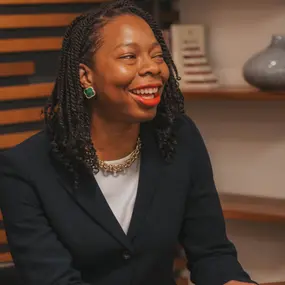
Behavioral Economist & CEO, Decision Alpha
What if the price you're charging has less to do with economics and more to do with what you believe you're worth?
Etinosa Agbonlahor has spent more than a decade studying a question that sits quietly underneath some of the biggest decisions founders make: why do intelligent people make irrational choices when money is involved?
Etinosa is a behavioral economist and CEO of Decision Alpha, where she helps companies understand what customers truly value and translate those insights into stronger pricing, positioning, and growth. Her career has taken her across the U.S., Australia, Africa, and the U.K., including work with Fidelity Investments and Commonwealth Bank of Australia. Her insights have been featured by MarketWatch, Morningstar, and other leading platforms.
But what makes her work particularly fascinating for founders is that pricing isn't really just about numbers.
It's about psychology.
Fear. Identity. Confidence. Value. The uncomfortable moment when you have to decide whether to charge what the market expects or what the outcome you've created may actually be worth.
Etinosa is also the author of How to Talk to Your Parents About Money, exploring another place where logic and emotion collide in surprisingly powerful ways.
Her work challenges founders to examine not only what customers are thinking when they see a price, but what the founder themselves may be thinking when they set it.


