


Founder Casey Woo: Are You Hiring Specialists When You Need Scalers? (#589)
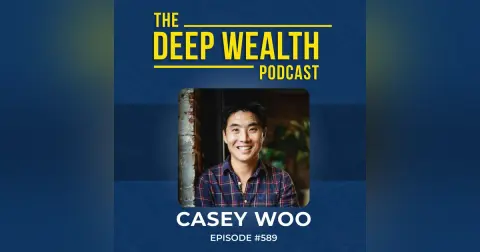
Send us Fan Mail “Make space and pause to improve life significantly.” -Casey Woo Exclusive Insights from This Week's Episodes Your hiring process may reward specialists while filtering out the operators your next stage of growth requires. Founder Casey Woo reveals why scalers thrive across functions when the playbook breaks. Episode Highlights [00:13:02] Why Casey says leaving Wall Street was not courage but an "allergic reaction" to the wrong work [00:15:54] The traits that reveal whether s...
 Apple Podcasts Apple Podcasts
 Spotify Spotify
 RSS Feed RSS Feed
 Amazon Music Amazon Music
 Podcast Addict Podcast Addict
 iHeartRadio iHeartRadio
 Castro Castro
 PlayerFM PlayerFM
 Podchaser Podchaser
 Overcast Overcast
 RadioPublic RadioPublic
 PocketCasts PocketCasts
 Audible Audible
 Pandora Pandora
 YouTube YouTube
“Make space and pause to improve life significantly.” -Casey Woo
Exclusive Insights from This Week's Episodes
Your hiring process may reward specialists while filtering out the operators your next stage of growth requires. Founder Casey Woo reveals why scalers thrive across functions when the playbook breaks.
Episode Highlights
[00:13:02] Why Casey says leaving Wall Street was not courage but an "allergic reaction" to the wrong work
[00:15:54] The traits that reveal whether someone is a scaler hiding inside a conventional job title
[00:17:25] Why scalers resist specialization and become "specialists at being generalists"
[00:20:28] How Operators Guild scaled from nine people to 1,200 without sacrificing intimacy
[00:24:05] Why cross-functional operators may learn more from each other than from function-specific groups
[00:28:30] The leadership value of finding people who understand your problems without explanation or judgment
[00:36:46] The familiar "jack of all trades" belief that may be causing founders to undervalue generalists
Full show notes, transcript, and resources for this episode:
https://podcast.deepwealth.com/589
The Deep Wealth Podcast
Most entrepreneurs do not fail.
They just carry too much for too long.
The business grows. Pressure grows faster. Profits get harder to predict. Decisions cost more energy. Over time, focus slips and health takes the hit.
The Deep Wealth Podcast and Deep Wealth Mastery are built from real experience. We're the only system based on a 9-figure exit. This system exists because guessing gets expensive.
🧠 Deep Wealth Mastery
This is for you if you want to:
• Grow a profitable business without becoming the bottleneck
• Build real value so selling is optional, not forced
• Optimize your health before it limits your business and life
One proven roadmap for real decisions.
⭐ Explore Deep Wealth Mastery
https://iapdw.com/idm
🎧 Subscribe
https://iapdw.com/podcast
📘 Free eBook
https://iapdw.com/ebook
💬 Have a question you keep circling back to?
Leave a short voicemail
https://podcast.deepwealth.com/voicemail/
Built by entrepreneurs. For entrepreneurs.
Loved this Deep Wealth Podcast episode?
You built your business from nothing.
Now make it pay off big.
📱 Subscribe Now
As a bootstrapper, every move counts. Subscribe on your favorite platform for Jeffrey Feldberg’s 9-figure exit strategies. From your morning grind to late-night planning, get insights from founders who did it without investors. These tips could change your future.
Drop a Quick Review
Got 30 seconds? Leave a 5-star review. It helps us make better episodes and reach entrepreneurs like you, hustling without a safety net.
Don’t Lose Your Exit (And Your Financial Freedom)
You’ve poured everything into your business. A bad exit could cost you millions. Most deals fail, and even “successful” ones lose half their value. The 90-day Deep Wealth Mastery program teaches you to make your business run without you and boost profits so you capture the best deal instead of any deal.
What Others Say
“Deep Wealth Mastery is pure gold. I wish I’d had it before my exit,” says Stacey C. “The value I’ve gained dwarfs the investment,” adds Sanjay S. “It makes my business great to own and sell,” shares William S.
📘 Grab Free Tools
Check out client success stories for proof. Master the Deep Wealth Strategy Map to plan your exit. Or snag the eBook, From 7 to 9 Figures: The Exit Playbook, for a clear guide.
Click here to start your legacy-defining exit today.
589 Casey Woo
Jeffrey Feldberg: [00:00:00] What happens when you achieve the career you were told you're supposed to want, only to realize that you're bored? Casey Woo knows that feeling. After studying economics at Harvard, Casey followed the prestigious path into Wall Street, working on investment banking at Morgan Stanley, and later in the hedge fund world.
The money was good, the career looked impressive, but something was missing. Casey didn't just want to analyze companies, he wanted to build them.
So he took a significant pay cut, moved to Silicon Alley, and stepped into the chaos of startups. What followed was a remarkable career spanning CFO, COO, strategic finance, and operating leadership roles at companies including Pantheon, WeWork, and Landing. Along the way, Casey noticed something most companies underestimate.
Some of the people creating the most value inside a business don't fit neatly into one box. They're the people crossing finance, [00:01:00] operations, strategy, talent, and execution, solving whatever problem stands between the company and its next stage of growth. That insight helped inspire Operators Guild, which grew from nine operators gathering for lunch into a global community of more than a thousand operating leaders.
Casey's story raises a fascinating question for every founder.
Are we hiring people to fill functions, or are we building a team capable of solving what happens when the playbook stops working?
And before we start this episode, a quick word from our sponsor, Deep Wealth and the 90 Day Deep Wealth Mastery Program. Here's Jane, a graduate who says, and I quote, the Deep Wealth Mastery Program prevented me from making what would have been one of the biggest mistakes of my career. I almost signed on the dotted line with an unsolicited offer that I now realized would have shortchanged my hard work and my future had I accepted that offer. Deep Wealth Mastery has tilted the playing field to [00:02:00] my advantage.
Or how about Lyn? Wow, he gets right to the point, and I quote, Deep Wealth Mastery is one of the best investments ever made because you'll get an ROI of a hundred times that. Anyone who doesn't go through this will lose millions.
And as you're listening to these testimonials, are you wondering if you have the time? Are you even thinking that you've got this covered, you have the advisors or people in your network? Well, I got to tell you, these myths, they're often behind the 90 percent failure rate for liquidity events. Think about it. You have one chance to get it right for your financial freedom. You really want to make it count.
And when it comes to time, let's hear what William has to say. We just got in this testimonial, William says, and I quote, I didn't have the time for Deep Wealth Mastery. But I made the time and I'm glad I did. What I learned goes far beyond any other executive program or coach I've experienced.
So what do you think?
As I hear that, that's exactly what gets me out of bed every day. That's my mission. That's the team's mission here at Deep Wealth to literally change the social fabric of society. [00:03:00] One business owner at a time, one liquidity event at a time, and my Deep Wealth Nation, what I want you to know, the Deep Wealth Mastery Program, it isn't theory.
It's from the trenches. It's the only one based on a nine figure deal. And that deal, that was my deal. You know my story. I said no to a seven figure offer. I created the system that later on, myself and my business partners, we said yes to a different buyer, a different offer, a nine figure deal. That's what we now call the Deep Wealth Mastery Program or the Scale For Ultimate Sales system.
It's built by business owners, for business owners, so if you're interested in growing your profits for preparing for a future liquidity event, and that may be two years away, it could be 22 years away, whatever the time may be, you want to do this now, and you want to optimize your post exit life, Deep Wealth Mastery is for you.
To get started, email success at deepwealth. com. Again, that's success. S U C C E S S at DeepWealth. com. You'll receive all the information about the [00:04:00] Deep Wealth Mastery Program or better yet, why not hop on a complimentary strategy call.
We'll go through exactly where your business is today and what's standing between you and your financial independence and your dreams. So that's where you want to be. You want to be with other successful business owners, entrepreneurs, and founders, just like you they're looking to grow their businesses, create markets.
Market disruptions and unlock their financial freedom to get what they deserve. And whether you've been in business for three years, 40 years, you're a startup, you're manufacturing you're in high tech, low tech, whatever the case may be, coming in and network with other business owners, it's a safe space.
It's a confidential space with business owners, with businesses just like you, because they all wanna lock in their financial freedom and enjoy both success and fulfillment. So again, the 90 Day Deep Wealth Mastery Program, it has your name on it. All you need to do is take the next step. Please send an email to success at deepwealth. com.
Deep Wealth Nation, welcome to another episode of the Deep Wealth Podcast. Deep Wealth Nation, let me ask you this: Is your [00:05:00] company growing quickly? Are you out there and you're helping to lead the charge in terms of the operations, or maybe on the back end in terms of financials? But as the saying goes, it's lonely at the top.
There's a reason that saying has stuck around for eons. Well, Who could you meet? Who could help you? Where do you begin? What do you do? We have a very special guest in the House of Deep Wealth. Wow, he is a mover and shaker. You heard the official introduction. He's got quite the story behind the story, but I'm gonna let him tell him itself, the whole story.
So Casey, welcome to the Deep Wealth Podcast. I love where you've been and where you're going. I love your story, but why don't you take Deep Wealth Nation behind the scenes. What's the story behind the story? What got you from where you were to where you are today?
Casey Woo: Thanks, Jeff. I was born and raised in LA, Chinese immigrant family. So about 20 years in, Los Angeles, and I went to West Point, so the first small part of my career was the military. From there, I finished off my college at Harvard studying economics, and that [00:06:00] catapulted me into a place called Manhattan, where as an economics major you're told there's two steps to Nirvana.
Step 1 is get an investment banking job at Goldman Sachs or Morgan Stanley. Did that, went to Morgan Stanley. Great time, hard work, amazing friends. And then the second and last step is get a hedge fund job or a private equity job and retire So I'm 24, I'm in Manhattan, feeling great. I'm like, "Wow, this is it.
I'm at the pinnacle. I just need to do this for 10 years and retire." I had friends calling me, " Hey, how do I do this? How do I get into Wall Street?" I'm like, it's a whole rigged system, right? You gotta go through certain schools," blah, blah, blah. And, I felt like I was a finance bro.
I was in the club. I- Was enjoying life in Manhattan. And fast-forward about five, six years, went to a hedge fund, a pretty well-known one. Had a corner office overlooking Central Park. It was bigger than my shoebox apartment, getting overpaid, and I wasn't happy. I was like- Is this unhappiness? Is this... I don't understand, because I have nothing to [00:07:00] complain about.
I don't think I can do this for 10 years. And it's pretty scary as a 24-year-old who's worked so hard to get to this air quote Wall Street, and then all of a sudden not want it. Because you're told, " what's there other than this?" Everything is downhill. You're at the top of the mountain Fast-forward through some soul-searching, started moonlighting with a family office looking at startups, and something drew me to early-stage companies. I eventually left Wall Street altogether, which is a big move. Most people don't do it. Once you leave, you're never asked back. It's like a frat where you're out, goodbye and you give up that whole track. Took a huge pay cut, joined a 10-person startup in Silicon Alley, New York, and loved it.
I felt alive. I was activated, energized. I just knew I was in the right place. That said, it was brutal. We'll save that for another thing but the point is I realized I'm a builder I was told, I don't know what a real tech company's like, 'cause I was in New York in 2010. Saw this [00:08:00] thing called San Francisco. I was like, "All right, I gotta go there." Came out here to play up, as I call it. So if you're gonna do film, you should go to LA. If you're gonna cook, you should go to France. If you wanna do asset management, you should go to New York.
If you wanna do startups, you gotta go to the Bay Area. Came out here And I was... I got a big reality check. My resume could do just fine in New York. I came over, it was a little company called Stripe, about 60 people at the time. I walked in, I said, " I need to work here. I'm a recovering Wall Street guy." I was told I don't know what a tech company's like. You guys have tech to the core, which what they mean by what a tech company's like, it means they're founded by engineers.
the core first-class citizens at the company are engineers. It's not the reverse. And it is a very big difference, like a Facebook Meta and a Google is a tech company, from their founders down, down, right? Versus East Coast more typical type businesses I'm trying to write a book about this, and one of the chapters of the book is called, is what is the first words out of the recruiter's mouth? They looked [00:09:00] at my resume and they looked at me and said, " Do you code or do you sell?" I was like, "I don't know if that's a trick question, but I can try to do those things, but I'm a finance ops, biz ops. I clean toilets. Do whatever you need to get done, and I will work for free." So where do I begin? And, or when do I start?
They said, "You don't even have a CPA. The only people in finance at Stripe have a CPA." So the answer is you're not gonna start here I'm paraphrasing a bunch of it, but the point is I left, tail between my legs. I can't get a job for free That led me to get pretty lonely. I tried to join a bunch of communities and groups, 'cause I'm like, "Wait, this is the land of tech startups. There's gotta be a operator group." Turns out there's not really. It's engineers, salespeople, and venture capitalists and founders is who runs that world. But the ex-Goldman, ex-McKinsey, the finance guy, gal are nobody.
You might as well be [00:10:00] HR IT. You're just like, doing expense reports I couldn't find... I joined a CFO group. It was mostly accounting, so they were mostly accounting based, and I felt like that's not my group. I can't explain it, not me. But I still carried a s- a VP finance CFO title Nine people and I were invited to a lunch, VP finance biz ops, and I immediately said, "Oh my God, you're my people.
Where have you been? I have an idea. Can we just meet every month? There's a few rules." I've been trying to join these communities. I didn't like this about that community. I didn't like this about that community, so I created my own. We can go into that later, but the point is, now I'll fast-forward that was 11 years ago.
Since then, I've done six startups, CFO, COO, biz ops, interim founder, recovery founder, janitor, been fired, been rehired, I did layoffs. I've seen some of the biggest companies in the world, and that nine-person group along the way is the only paid community that I'm aware of that's 100Xed organically. It is now 1,200.
I run it full time because it got too [00:11:00] big, so I left the more corporate operating role And here I am today. Off of, it's called Operators Guild, and off of Operators Guild, we started to invest together about six years ago, and we are now the top operator investing group called FOG Ventures. FOG stands For Operators Guild.
I know that was a long background, but I think the context is important of what I stand for and how I fight for all the operators. And now today I build with operators, invest with operators, and we get together for over 120 events across 20 chapters
Jeffrey Feldberg: It's an amazing story, and we're gonna talk about the Operators Guild. But before we go there, let's talk about the early days, I mean, the pedigree. Firstly, thank you for your services when you're in the services at West Point doing what you did so we can do what we do. Then you went to these small little places, never heard of them nudge, nudge wink, wink, Harvard, Wall Street.
Could you pick bigger and better places, Casey, that we actually heard of? I love that in terms of where you are, and you said it in your own story, "I could have just..." Not coasted. I was [00:12:00] working my tail off, but for the next 10 years I had made it into the club, and that was it, and put my 10 years in and I'm done.
But you didn't, and it speaks a lot to your character. You did what was right for you, and it wasn't easy. And so I'm thinking of someone in Deep Wealth Nation, now, they may not be and probably aren't at Harvard or Wall Street. They're going at it in perhaps one of their startups or a company. They have a big decision to make.
Whatever that decision is, it's a tough one. So looking back at that infamous day, which back in the day maybe you would have said that fatal day, now you're probably looking back saying that was the best decision I ever made." Looking back now when you made the decision, "I'm out, I'm done, I'm out of here.
Thank you very much. I wish everyone only success and good things. Not for me." What gave you... I could use lots of words and euphemisms on that one. But what gave you the courage to say, [00:13:00] "Okay, not for me. I'm out of here"?
Casey Woo: I love this question because I was on a podcast before where they said, "Wow, you're so courageous." And here's my answer is, "No, I'm not." The reason why I'm not courageous, and it's, it's part of the book I'm writing, is I strongly believe, and this is one message if you had to take away to as many people as I can shout it out to, I strongly believe we are all born with a certain DNA gives us a proclivity to be better or worse at certain jobs in life. Just like, you know, what makes a German Shepherd a, a better watchdog than a poodle, except it's harder to see amongst humans. What I mean by this is my breed, which is, I, what I call a scaler, is allergic, highly allergic to things we don't like Whereas other breeds can tolerate. So what I mean by that, if I'm doing something I'm not interested in or it's not energizing me, it really drives me crazy.
So it wasn't like I even had a choice to continue. I was just like, "I can't do this." I can't do it versus [00:14:00] I don't want to do it. Now, of course, if my life depended on it, of course, right? But I'm just saying, I call it an allergic reaction It's a good/bad thing. Scalers is very common. You'll see us allergically react to things and move away from them.
Our LinkedIn profiles are everywhere. They're literally as zigzag as you can imagine. I can go into more of why, but the point is I just couldn't do it anymore. It was, like, draining my soul, not in a ethical, moral way, but just draining energy from me, and so then I looked elsewhere. that is the honest truth of why I made the move times in my career. I've made three career changes, all allergic reactions
Jeffrey Feldberg: Okay. And as you're saying that, what I really respect about that is you're recognizing who you are, and a lot of us do. Some of us don't have, perhaps I'll go back to a word that you used, the courage to recognize this is who I am, but I'm not gonna follow it because this is the outside world looking in.
This is the easier path for me," or, "This is just where I am, so why buck the trend?" Or, "This is what's expected. [00:15:00] Eden do that." And even on your website, when I was preparing for today, when I was just looking at, I'll use a fancy word, the gestalt of your website, right on the main webpage, it's Deep Wealth Nation, you gotta imagine, picture these old clockwork wheels that you'll see where they have these tongue and grooves, and one goes into the other, and the wheels are moving each other, and what you're calling scalers or operators that, "Okay, yeah, I get what Casey means about that."
So Casey, I wanna talk now to someone in Deep Wealth Nation who is a scaler, but they don't know that they're a scaler,
And that the Operators Guild is their home that's been waiting for them all this time, where they can let their hair down, just feel at home, talk amongst their own, be understood, but they don't just know that's where they should be.
So what would you say to that founder in Deep Wealth Nation who doesn't yet know they're a scaler?
Casey Woo: Absolutely. It's the whole core of my book, which is Scalers, so there's a few... I can take it a few different ways. [00:16:00] One is common traits of a scaler I'll be mixing kind of personality with behavioral and things like that. But basically, number one is impatient Number two is a very high degree of value placed on ownership and impact. For example, there are people that could be at very big corporations where there might be air quote, "cog in the wheel" and don't care.
They don't actually care if they are. Scalers are the opposite. If they're not feeling ownership, value, impact, they get bored pretty easily. There's a very high degree or over-indexing of neurodivergence, ADHD, autism, et cetera, in scalers. So you might be one of them. I definitely have forms of that. I'm not a doctor, so I'll talk in generalities, but essentially the dopamine hit.
So what I understand is I have a baseline of dopamine that's under the neurotypical person, which means for me to feel baseline, [00:17:00] I'm generally drawn to more high stimulus things. So there's a misconception that ADHD and all that is people that are overstimulated. From what I understand, it's understimulated, seeking stimulus to be baseline.
So that's why we get bored quickly. The biggest one is we don't do the same thing twice. This is a big one. I did a series A VP of Finance. Once I've done it once, I don't want to go to another se- even though that's what they want me to do. You did that, do it again, professions like lawyer, doctor, engineer, continued depth and repeat is the thing. You just keep doing the same thing more and more deeper. Hence, if you're following me, scalers do horizontal. The last thing we're gonna do is go deep We love a calendar of all sorts of stuff. We love multiple hats. How dare you put us into, "I'm a salesperson," or, "I'm a finance person." We don't do that.
Now, some people don't even know they don't do that. They just get allergic to doing the [00:18:00] same thing over and over. So then when you look at companies, why is it so many of us are not at corporate? The larger a company is, the more you specialize as a human. I'm gonna make it up, but I think IBM probably has 10,000 people who just do payroll.
That's like their only job is to run payroll for the entire global division, right? Or, because they're huge. The army is so big that they have tank specialists You know what we are? We're like Navy SEALs. We're the opposite We are specialists at being generalists. I'll say it again. We are specialists at being generalists.
Now, generalism is a bad term, right? Mediocre. all our lives we've been told s- specializing is it, right? Are you the s- are you the blacksmith? Are you the doctor in the village? What are you doing for the community? Who are you? Are you a teacher? Humans like labels. We've had a really hard time, and by the way, if this is resonating as an audience, then you might be a scaler, is you're going around saying, "I'm not any of those, but I guess I need to say something." But you've always been [00:19:00] drawn to diversity, difference, a little bit of risk, and this, combined with ownership, you get early stage. Early stage companies have very few people, but the same amount of another business needs. So five people have the job of three each There's more risk to it, but there's a lot more impact to everyone, right?
You own an invention, and so anyways, scalers or this type of persona are drawn to early stage, you can say entrepreneurship, hyper-growth, not having one job or one role, continually growing and changing, highly impatient, dopamine-seeking. There's a few others, but if any of this has resonated with you and you're not title-based, you're I-get-it-done based, then you're probably a scaler
Jeffrey Feldberg: Okay. And so you've spoken to the Scalers, the other Deep Wealth Nation. You're now gonna raise your hand and we'll talk as we go along about the Operators Guild and something to think about for you, even becoming a member with them. When you started Operators Guild though, Kasey, I want to take you back to your different [00:20:00] experiences because all these different startups, you've been on both sides of the table from Wall Street where you're doing the deals to now you're in startups where you're in some ways receiving the deals.
What were, looking back, some of the takeaways that you learned, "Hey, I want to do more of that. Maybe I want to do less of that," when it comes to the Operators Guild that you deliberately either started or stopped based on what you learned along the way?
Casey Woo: I accidentally became a community leader. I just started a nine-person thing and now it's 1,200. Turns out there's a few short lists of communities out there. You've he- YPO, you've heard of them.
They're hard to build. That's another discussion. But if you've ever built one, it's extremely difficult because it's a living, breathing organization of humans, right? It's not software. A community is literally a, a bunch of people now. A 10-person community its functions and needs are completely different than a [00:21:00] 25-person community, which is completely different than a 50-person, which is completely different than 100.
So if you follow me here, just think about a, a company, right? A two-person company, 10-person company, things start to change. So to answer your question, along the way, the Operators Guild has had to evolve itself seven times a year. The framework is always how do we best serve the members but r- keep intimacy at scale? When things get bigger, all else equal, it gets less intimate, which means more faceless, less curated, right? And then vice versa. If there's two people, it's highly intimate, it's highly curated. So the answer is you have to balance it. as the community grows, you have a lot more brainpower, you have more network effects, so you start leaning on that, leaning on chapter leads, and it cannot just be me all the time.
So it's more about friendships, small cohorts, flywheel of that, rather than we all get together in a park and help each other. Anyways, I can keep going on, but every step of the way I ask what is most helpful. I will say there's one [00:22:00] thing that has always been the most helpful, or there's two. One is it's always the caliber of the people. It could be on a vacation or a conference or community, it's always about the people. So how high caliber, do you respect them? Do they teach you something? Are they kind-hearted? Low ego is another big one. That's number one always. Where- whatever you do, wherever you are, it's about caliber of people. So never letting that bar down of who you let in.
The second is in-person events, especially with AI. Getting together, that coffee, that dinner, that happy hour. And nowadays if you look at concerts and stuff, they're just all selling out. Post-COVID plus AI, you have a lot of loneliness, you have a lot of commoditization of everything. What is very hard to replicate is deep relationships, going through stuff together, adventuring together, a dinner together.
So those are the two things that will always remain for a very long time. It's caliber of people and getting together
Jeffrey Feldberg: Yeah, absolutely love that. And so we're gonna tune now into the world's favorite radio station, [00:23:00] WII.FM, the what's in it for me from the perspective of Deep Wealth Nation. Perhaps they're part of the C-suite, or perhaps they're a founder in the company, wherever they may be. When they're coming into Operators Guild, Casey, if we're honest about it, there are no shortage of communities.
You mentioned YPO. We've got Vistage, EO. It's endless in terms of others that you and I can keep on naming. And so the first question someone who's thinking about okay, yeah, maybe I'm someone who should be in the Operators Guild," or, "Yeah, I am a scaler, but I'm already part of this group. How many groups can I belong to?"
So you've begun to share what's different about the Operators Guild, and I like your DNA in terms of who you're for, what you're about, and you make no apologies for that. When I become part of this new community and I'm now immersing myself, I get it. What I put into it is what I'm gonna get out of it.
If I'm a scaler specifically, where is it really gonna resonate in terms of some of the events [00:24:00] that you're doing or who I'm meeting or what I'm learning along the way or the joy, the fulfillment, all those good things?
Casey Woo: If you look across communities that are, substantial big, almost all of them serve the CEO. Numero uno, the number one. Nike and Tom Brady. They don't care about the offensive line. They don't care. N- they don't care. Just I'm being facetious, but founders and CEOs, I'm now one, have more things and more events you can shake a stick at.
VCs want you. You have the ticket power. You probably have more windfall money, all of it. So number one is there's so many, Hampton, all of them. They're great. Okay? EO, YPO, all for the founders. All of them. Notice the similarity? I finally built something for the rest of us The most elite senior builders.
So behind Elon Musk, there's a lot of top talent building SpaceX. You know who you are. You're the builders. Now, what's very cool is builders are also founders. But our group is [00:25:00] ex- really focused on you are just a life builder. So a lot of senior execs, CROs, CMOs, CFO, COO. There's a whole bunch of us, by the way, that don't have a place to go.
And by the way, going to a COO group, a CRO group is not the answer No, real diversity and learning is cross-functional. And at our stage, we've already built a lot. We're not looking for how to do this, how to do that. That's fine. That's ChatGPT. We're looking for super interesting people that grow us, which is incremental, like a general counsel CRO.
And by the way, some of us are founders too. So you have a mix of founders, CFO, COO, CRO, CMOs, general counsels, heads of product, CTO. It's basically a C-suite of some of the most hardcore DNA-built, you know it when you know it, everyone knows each other, we build. This group is very unique for that, and it's at a very elite level of speed and complexity.
A lot of it's tech 'cause of the nature of it. And then the other unique thing is we [00:26:00] invest together. Because of who we are, the deals we get, the value we bring, we have some of the top percentile of private deals in the world of tech. You've probably heard of them. And so it all just makes sense. We're geeks about it.
We build these companies. We're valuable to them. We invest in them. We get others into it. We get jobs there. We make a lot of money doing that, and just keep circulating. And oh, by the way, we get together for dinner and have a good time
Jeffrey Feldberg: Yeah. And Casey, as you're talking about that, actually, you remind me of my grandfather, may he rest in peace. He always said, "Jeffrey, it's not who you are, it's who you know." And so as you're sharing this, we're this terrific community. Oh, by the way, we happen to be part of these incredible companies. Oh, by the way, some of them are founders or they're right in there where the deals are happening, they're raising the capital.
And oh, by the way, if you want to invest in them, we've got direct access. And so it leads to my next question, because it's more than just, "Okay, I'm gonna go, I'm gonna learn, I'm gonna meet other people." To your point, [00:27:00] and you know better than most, we are, through technology, the most connected we have ever been, yet we're the loneliest, the saddest, if I can use such a word, the sickest in terms of mental health and not feeling well and feeling disconnected.
Not to put words in your mouth, when I'm coming home to the Operators Guild as a scaler, as an operator, like we say at the Deep Wealth Podcast, the tagline is helping you extract your deep wealth for business and life. I can have it on the one side, hey, maybe I'm hitting it out of the park on the business side, but man, oh man, am I feeling lonely on the personal side.
Is this what life is all about? Is this as good as it gets? And it sounds like with the Operators Guild, I'm coming home to people who will fascinate me, who will challenge me, who will help me get to the next level, and I can bring some joy back into my life through the different events that I'm doing and [00:28:00] meeting and locations, everything else.
Talk to us about that in terms of what's going on. It's a very unique DNA that you've put together that people are experiencing firsthand that it's hard to describe, I suspect, until you've been there. But to the best that you can, what's that like?
Casey Woo: And what it's like is I found my people. One of the things I hear the most is, "I feel so seen."
This is like a silly analogy, and I am a father of three, but I'll just use, you know, a mom's group as an example. If you've never had kids versus having kids, you know, I would imagine in a mom's group, they all have kids. They all just know. When you go in, it's like that's why they get along.
That's why they... same thing with, whatever, dads. So my point is, if this is for you, if everything I said resonates with you, the minute you step in, there's not a lot of explaining to do. Versus other people, you know you're not in the right group if they just don't get you, how your day's going.
there's a saying here where it's like oh, you got fired? I got fired too. Do you wanna go start something?" Whereas other groups, there could be shame or judgment or why do you get fired? Are you bad at your job? Do you know what we do? Do you know [00:29:00] how it works here? It's like, see, by the way, there's two audience members listening to this right now.
One don't get it, and then I get it. Okay? If you get it, welcome home. another analogy I use will be one, I don't know, like Navy SEALs and they're all in a room. They don't need to explain to each other The pros and cons of their lifestyle, of going on deployments, of why they do it, of what the dopamine rush is.
All that stuff. and they just move it over to startups. And so we immediately get into problems, how's your day going. We immediately get into it. And you can see, "Oh, that happened to me. Let me help you." So one is no judgment, low ego, so they're gonna feel very welcomed.
Cause think about it, a lot of what we do, we're executives, we have to put on somewhat of a we know everything, we're the leader, right?
That's the called, classic lonely, YPO thing. It's no different, is you can finally put your guard down and say, "You know what? I don't know everything,
And my founder is crazy. I don't know what to do." And then we go, "Oh yeah, been there. Have you tried this? Have..." You know, And we immediately just get into it.
The other part is understanding why we do it.
It is way harder, not [00:30:00] glamorous, but we do it because we love it. So I call it the love of the game. So for any new person they're just like, "I'm with my people," because we both and all get geek out. As hard as it is, as hard as I'm complaining about this and that, why am I still doing it?
We all know why. So anyhow, it's just belonging
Jeffrey Feldberg: You know what's interesting is you take me back to a point in your life, and it was also a point in my life post-exit for me, for you when you're at what some would say would be the peak of your career. It wasn't, but from the outside world looking in, they say, "Ah, he's at the peak. He's near the pinnacle."
Casey, you had success from the outside world looking in. You likely had the financial success, all the accolades, the zeros in the bank, I suspect. You weren't fulfilled, though. And as I like to say here at Deep Wealth, Success without fulfillment is failure. And so you didn't know it at the time, and it took some of your dealings getting out there, having your butt handed back to you, you're walking [00:31:00] away with your tail between your legs, as you shared.
But then to say, "Okay there's gotta be more to it. Let me create it. If I'm not gonna be part of it with their rules, let me make it my rules for people who are like me." And that's where the whole genesis became for the Operators Guild of, hey, yeah, you can have your success, but if you're missing that fulfillment, come on over.
We're your people. We're your community that you never knew you had. How am I doing with that? On base, off base?
Casey Woo: That's exactly right. everyone has a different cup to fill, and our fulfillment is to build. So just doing it together. But absolutely, once you find out what breed you are, then you know what fulfills you, then just go after it. But yes I think fulfillment's the right word because all the people in Bay Area, if you see them, they're all ambitious, have zeros in their bank account, but guess what?
They're still at it. So you know why they're still at it. It's not for the money.
And it's painful, so it's not because they like pain So yes, but they're getting fulfilled by building something
Jeffrey Feldberg: And Casey, I'll share something with you I haven't really talked [00:32:00] about on the podcast before. I'm very fortunate through the podcast, just through other connections, I get to shake hands and meet big successful people. And again, from the outside world looking in, they've got it all. They've got the zeros, they've got the private jet, they've got the multiple homes, and I'm speaking with them, and I'm so fortunate to be able to speak with them.
I'm hearing the story, "Yeah, Jeffrey, I'm going after the next billion." Meanwhile, it's marriage number five. They don't know the kids. They're at it all day, all night, and I walk away saying, "Man, I thought I had some challenges." Am I feeling really good? No judgment with them, but it feels like they're in their own jail because they don't have that fulfillment, and the game for them became chasing the money, and at least in my own experience, y- that hole, that gap can never be filled because it comes from happiness is an inside job.
Money only goes so far
Casey Woo: Yeah, and I'm, for what it's worth I don't think this is universal, but I think for a [00:33:00] lot of people I've learned helping others Whether it's your children, whether it's a fellow operator, I do think can provide a lot of fulfillment. And of course, being good enough, right? We know a lot of people here, including myself, that it wasn't good enough, so it's a lot of self-worth.
You should keep proving to yourself, and it's like the next mountain, the next summit is not good enough. You do it, and there's another one, another. And then you realize, "Oh, is this ambition? Or is this an insecurity, a need for validation?" E- either way, once you find out what it is, that's the beginnings of probably, a, a happier life.
But yeah, I think at the end of the day, there's always more money to be made, another thing to build. But I know as I've gotten older, what's priceless and that AI cannot buy or money cannot buy is 20-year friendships,
That journey alongside your comrade at some company that you'll always remember. It, those are, get so rich, it's like, you know, wine.
It just ages. I know we're all of that age now where we have those relationships where we just sit there and we know. We're grabbing that drink with the person, and we know, and that is priceless
Jeffrey Feldberg: [00:34:00] Couldn't agree more. And speaking of priceless, it sounds like you're putting all this together in your book. Tell us about your book. What's going on with that?
Casey Woo: Yeah, it's a labor of love. Obviously, I'm juggling three kids and three businesses. But the book is to get this message out. It's about scalers. And essentially it talks about how scalers came to be, like why the business evolution led to a very fertile ground called tech startups that exposed the DNA and breed of this individual that can actually go do it and is valued and is compensated.
From there, the personality traits, the skillsets, common career paths that I would like them to read it and say, "Oh my God, this is me. Someone understands me." Or give it to a spouse or a partner or your grandma who's like, "Why do you do this crazy thing you do?" Please read this book.
Ah. And then for the third type is the people that wanna hire scalers, need them, be with them, that are not per se that.
It's really giving a category and explanation, 'cause it's a horizontal description, which is [00:35:00] very difficult. Describing a lawyer or doctor is easy.
Describing a I get it done horizontal generalist person, no one likes to hear that. What are you? Are you a lawyer? Are you the CFO, finance? What are you? Give me something.
That's just not us, though. So anyways, that's what the book is about. In the meanwhile, before it goes out, it's sharing it with audiences like yours, doing it every day as I meet people, and running FOG and OG. And I hope anyone that hears this message that is a scaler, please join us.
Jeffrey Feldberg: Absolutely, and when the book comes out, we'd love to have you back and share with Deep Wealth Nation.
And before we go into wrap up mode, one thing that you said that resonated with me, social programming society. Look at the saying, because it deliberately excludes the scalers who are going horizontal. If you're a jack of all trades, you're master of none. It's like an insult if you don't fit into this. If you're not a specialist, you're nobody.
Casey Woo: [00:36:00] Did you know that quote you just said
Is only the first half of the quote?
So "Jack and Jill of all trades, master of none," is the most commonly understood quote. I later discovered it's the first half of the full sentence. It fully reads, " Jack and Jill of all trades, master of none," comma, "oftentimes better than master of one."
Jeffrey Feldberg: Interesting
Casey Woo: Now, maybe that's a wives' tale, I don't know, but someone was like, when you flush it out," it made everyone think for the longest time you had to be one thing. But yes, you got it. We were shunned. the working title of my book is Black Sheep
Jeffrey Feldberg: Okay. Love that. I've always been the black sheep in the family. I
can relate to that. And it's amazing though, even that saying, how it got cut
short at the comma. That says it all. So that said, Casey, we're gonna go into wrap-up mode. It's our tradition here on the Deep Wealth Podcast. It's my privilege, my honor, every [00:37:00] guest I ask the same question.
It's a fun one. Let me set it up. When you think of the movie Back to the Future, you have that magical DeLorean car that will take you to any point in time. So the fun part is, imagine it's tomorrow morning. You look outside your window, the DeLorean car is curbside. You hop on in, you're now gonna go to any point in your life, Casey, as a young child, a teenager.
Whatever point in time it would be, what would you tell your younger self in terms of life lessons or life wisdom, or, "Hey, Casey, do this, but don't do that"? What would it sound like?
Casey Woo: Oh, Make space. I've always been impatient, I skip steps, I talk too fast. It's always been a part of me to where just pausing a little in everything, not being in a rush Putting space. commonly, you know, we will have calendars that have no space. I'm still very bad at it, but you learn if you just imp- just put a little bit of space, whether it's talking, whether it's calendar, before answering a question, it improves life significantly.
That's it. Just peel it back two [00:38:00] notches, and the rest, keep going. Be you. '
Jeffrey Feldberg: Love it. Chill a little. Yeah.
Make space, pause, improve life significantly. And for someone in Deep Wealth Nation, they've heard the talk, "Hey, I never knew it. I've been a scaler this whole time." Where's the best place online to reach out, become part of Operators Guild, have that conversation and learn more? Where can they do it?
Casey Woo: Yeah, absolutely, operators-guild.com. Also you can reach me, via LinkedIn. I'm happy to... I always, check all my messages and respond personally. If you wanna invest, Fogg Ventures, fogg.ventures. So that is the investing arm of All The Operators, so if you're maybe out of the seed or don't need that community but you love investing and getting new operators, it's, been one of the most enjoyable things that we've ever done, especially in this AI era.
So yeah, easiest, reach out. Reach out to another Operators Guild member. It's easy to find us, and once you find us, and if you are one of us, welcome home
Jeffrey Feldberg: In Deep Wealth Nation, the great news is it doesn't get any easier. Go to the show notes. It's point and click. It's all there for you. [00:39:00] Casey, it's official. This is a wrap. Congratulations. As we love to say here at Deep Wealth, may you continue to thrive and prosper while you remain healthy and safe.
Thank you so much
Casey Woo: Thank you for having me
Jeffrey Feldberg: So there you have it, Deep Wealth Nation.
What did you think?
So with all that said and as we wrap it up, I have another question for you.
Actually, it's more of a personal favor.
Did you find this episode helpful?
Have you found other episodes of the Deep Wealth Podcast empowering and a game changer for your journey?
And if you said yes, and I really hope you did, I have a small but really meaningful way that you can actually help us out and keep these episodes coming to you.
Are you ready for it?
The dramatic pause. I'll just wait a moment. Drumroll, please. Subscribe. Please subscribe to the Deep Wealth podcast on your favorite podcast channel. When you subscribe to the Deep Wealth Podcast, you're saving yourself time. Every episode automatically comes to you, and I want you to know that we meticulously craft Every one of our episodes to have impactful strategies, stories, expert insights that are designed to help you grow your profits, increase [00:40:00] the value of your business, and yes, even optimize your post exit life and your life right now, whatever you want that to look like.
And every time you subscribe and a fellow entrepreneur subscribe, it's a testament to how together, Yes, we are. We are changing the social fabric of society. One business owner at a time, one liquidity event at a time. So don't let the momentum stop here. Subscribe now on your favorite podcast channel.
You'll never miss an episode. You'll be the first to hear from the top industry leaders, the innovators, the disruptors that are really changing and shaping the business world, and maybe you're commuting, maybe you're at the gym, maybe you're taking a well deserved break that we spoke all about on this episode.
The Deep Wealth Podcast, it's your reliable source for the next big idea that could literally revolutionize your business. So once again, please hit that subscribe button, stay connected, inspired, and ahead of the curve. And again, your next big breakthrough moment, it might just be one episode away. Maybe it was even this episode.
So all that said. Thank you so much for listening. And remember your wealth [00:41:00] isn't just about the money in the bank. It's about the depth of your journey and the impact that you're creating. So let's continue this journey together. And from the bottom of my heart, thank you so much for listening to this episode.
And as we love to say here at Deep Wealth, may you continue to thrive and prosper while you remain healthy and safe.
Thank you so much.
God bless.

CFO | Co-Founder | Founding Partner | Author (upcoming book: The Scaler)
What happens when you achieve the career you were told you were supposed to want, only to realize you are bored?
Casey Woo knows that feeling.
After studying economics at Harvard, Casey followed the prestigious path into Wall Street, working in investment banking at Morgan Stanley and later in the hedge fund world. The money was good. The career looked impressive.
But something was missing.
Casey didn't just want to analyze companies. He wanted to build them.
So he took a significant pay cut, moved to Silicon Alley, and stepped into the chaos of startups. What followed was a remarkable career spanning CFO, COO, strategic finance, and operating leadership roles at companies including Pantheon, ZOZI, WeWork, and Landing.
Along the way, Casey noticed something most companies underestimate.
Some of the people creating the most value inside a business don't fit neatly into one box. They're the people crossing finance, operations, strategy, talent, and execution, solving whatever problem stands between the company and its next stage of growth.
That insight helped inspire Operators Guild, which grew from nine operators gathering for lunch into a global community of more than 1,000 operating leaders.
Casey's story raises a fascinating question for every founder:
Are we hiring people to fill functions, or are we building a team capable of solving what happens when the playbook stops working?


