


Serial Entrepreneur Chris Duffin: Are You Strong Enough To Build It But Too Depleted To Lead It? (#570)
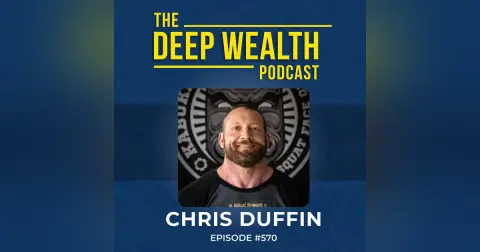
Send us Fan Mail “Enjoy the journey knowing that you have the resilience already within you.” -Chris Duffin Exclusive Insights from This Week's Episodes You built the company by pushing harder. What happens when that same pattern starts weakening your leadership? Serial Entrepreneur Chris Duffin reveals the founder depletion trap and why leading yourself comes before leading your team. Episode Highlights [00:08] Chris reveals how extreme drive helped create success while hiding its deeper cos...
 Apple Podcasts Apple Podcasts
  Spotify Spotify
  RSS Feed RSS Feed
  Amazon Music Amazon Music
  Podcast Addict Podcast Addict
  iHeartRadio iHeartRadio
  Castro Castro
  PlayerFM PlayerFM
  Podchaser Podchaser
  Overcast Overcast
  RadioPublic RadioPublic
  PocketCasts PocketCasts
  Audible Audible
  Pandora Pandora
  YouTube YouTube
 “Enjoy the journey knowing that you have the resilience already within you.” -Chris Duffin
Exclusive Insights from This Week's Episodes
You built the company by pushing harder. What happens when that same pattern starts weakening your leadership? Serial Entrepreneur Chris Duffin reveals the founder depletion trap and why leading yourself comes before leading your team.
Episode Highlights
[00:08] Chris reveals how extreme drive helped create success while hiding its deeper cost
[00:15] The moment peak performance became brain fog, energy crashes, and declining health
[00:24] Why founder health problems can begin years before the symptoms become impossible to ignore
[00:38] The dangerous difference between productive stress and chronic overload
[00:39] Chris reveals the 6 Ps framework for navigating adversity without becoming trapped by it
[00:47] Why daily movement and strength training became Chris's first practical priority
[00:49] The boardroom athlete problem: when energy loss starts weakening conversations and leadership
Full show notes, transcript, and resources for this episode:
https://podcast.deepwealth.com/570
The Deep Wealth Podcast
Most entrepreneurs do not fail.
They just carry too much for too long.
The business grows. Pressure grows faster. Profits get harder to predict. Decisions cost more energy. Over time, focus slips and health takes the hit.
The Deep Wealth Podcast and Deep Wealth Mastery are built from real experience. We're the only system based on a 9-figure exit. This system exists because guessing gets expensive.
🧠 Deep Wealth Mastery
This is for you if you want to:
• Grow a profitable business without becoming the bottleneck
• Build real value so selling is optional, not forced
• Optimize your health before it limits your business and life
One proven roadmap for real decisions.
⭐ Explore Deep Wealth Mastery
https://iapdw.com/idm
🎧 Subscribe
https://iapdw.com/podcast
📘 Free eBook
https://iapdw.com/ebook
💬 Have a question you keep circling back to?
Leave a short voicemail
https://podcast.deepwealth.com/voicemail/
Built by entrepreneurs. For entrepreneurs.
Loved this Deep Wealth Podcast episode?
You built your business from nothing.
Now make it pay off big.
📱 Subscribe Now
As a bootstrapper, every move counts. Subscribe on your favorite platform for Jeffrey Feldberg’s 9-figure exit strategies. From your morning grind to late-night planning, get insights from founders who did it without investors. These tips could change your future.
Drop a Quick Review
Got 30 seconds? Leave a 5-star review. It helps us make better episodes and reach entrepreneurs like you, hustling without a safety net.
Don’t Lose Your Exit (And Your Financial Freedom)
You’ve poured everything into your business. A bad exit could cost you millions. Most deals fail, and even “successful” ones lose half their value. The 90-day Deep Wealth Mastery program teaches you to make your business run without you and boost profits so you capture the best deal instead of any deal.
What Others Say
“Deep Wealth Mastery is pure gold. I wish I’d had it before my exit,” says Stacey C. “The value I’ve gained dwarfs the investment,” adds Sanjay S. “It makes my business great to own and sell,” shares William S.
📘 Grab Free Tools
Check out client success stories for proof. Master the Deep Wealth Strategy Map to plan your exit. Or snag the eBook, From 7 to 9 Figures: The Exit Playbook, for a clear guide.
Click here to start your legacy-defining exit today.
570 Chris Duffin
[00:00:00]
Meet Chris Duffin
Jeffrey Feldberg: Chris Duffin is one of those rare people whose life almost sounds impossible until you realize every chapter is connected by one theme, reinvention under pressure and resilience. The world may know him as the "mad scientist of strength," a world record-holding strength athlete, serial entrepreneur, inventor, executive mentor, and author of the best-selling autobiography, The Eagle and the Dragon.
But the deeper story is far more compelling than the records, the companies, or the reputation. Chris came from a childhood marked by poverty, violence, homelessness, and survival in the Pacific Northwest wilderness, then rebuilt himself into one of the strongest pound-for-pound humans in history. Today, through Enhance Executive, Chris works with high-performing leaders on human performance, metabolic health optimization, recovery, resilience, and what he calls Executive Evolution.
His [00:01:00] work blends engineering, biomechanics, elite athletics, executive leadership, and lived transformation into a practical operating system for leaders who refuse to live below their potential. What makes Chris fascinating is not just that he became physically strong, it's that he turned pain into precision, chaos into systems, and survival into service.
This is a conversation about strength, yes, but not the kind most people think they understand.
And before we start the episode, a quick word from our sponsor, Deep Wealth and the Deep Wealth Mastery Program. Here's Sanjay, a graduate of Deep Wealth Mastery, and he says, the investment I made in the Deep Wealth Mastery Program, it's a rounding error compared to the value created today and the future value I'll receive.
Or how about William, who says, and I love this, A company that's attractive to sell is also a great one to own. The Deep Wealth Mastery Program gives me the best of both worlds.
Now speaking of growth and adding [00:02:00] value, check out what Leon says. He says that the Deep Wealth Mastery Program changed how and who we hire. We've now begun to hire talent today that we never would have hired if it weren't for the program. The talent we're hiring today is helping both increase our growth and profits and our future enterprise value.
Man, I love that kind of feedback because it's that kind of feedback that's what gets me out of bed every day.
Deep Wealth Mastery System, it's the only system based on a nine figure deal. That was my deal. And as you know, I said, no to a seven figure offer, created a system that we now call Deep Wealth Mastery, and that's what helped myself and my business partners all welcome from a different buyer, a different offer, a nine figure deal.
So if you're interested in growing your profits, preparing for a future liquidity event, whether that's two years away or 22 years away, and if you want to optimize your post exit life, Deep Wealth Mastery is for you. Please email success at deepwealth. com. Again, that's success, S U C C E S S at deepwealth. com. We'll send you all the information about Deep Wealth [00:03:00] Mastery, otherwise known as the Scale for Ultimate Sales System.
That's where you want to be. You want to be with other successful business owners, entrepreneurs, and founders, just like you, who are looking to create market disruptions. Whether you're a startup, whether you've been in business for three or four decades, whether you're manufacturing, whether you're high tech, SaaS, low tech, whatever the case may Come in and network with other business owners, with other businesses, just like you, because they all want to lock in their financial freedom and enjoy both success and fulfillment.
Again, that's the 90 day Deep Wealth Mastery program. It has your name on it. All you need to do is take the next step. Please send an email to success at deepwealth. com.
Podcast Welcome
Jeffrey Feldberg: Deep Wealth Nation, welcome to another episode of the Deep Wealth Podcast. Deep Wealth Nation, you know us here at Deep Wealth, we say that your health is your first wealth. Forget the best idea or the best strategy. If you don't have the energy, the focus, or the physical wherewithal, guess what? Your business, your team, your personal life is gonna suffer.
So Deep Wealth [00:04:00] Nation, be honest with me, how's your health? How are you doing? Are you walking with a spring in your step, or are you saying, "Yeah, I had better days behind me"? What if you could get those days back? You're saying, "Yeah, Jeff, for sure. Show me where or what. What do I do? Where do I begin? What do I be looking at?"
Hold all those questions. You've come to the right place. We have a very special guest in the house of Deep Wealth. We have a fellow founder and author, someone who is knocking out these incredible records, you're gonna learn all about that, and an all-around terrific individual. So Chris, welcome to Deep Wealth Podcast.
An absolute pleasure to have you with us. There is always a story behind the story, and wow, you have quite the story. So what's your story? What got you from where you were to where you are today?
Chris Duffin: That is a long story.
Wilderness Childhood
Chris Duffin: I'll try to do the little bit of abbreviated version here, but my story dates back to my childhood. And I think for many people it, it often does, right? Where are your values from? What are the things that are really driving you as an individual? And resilience is the driver for me.
And why is that so passionate? I grew up with nothing. And by [00:05:00] nothing I mean We're talking homeless in the wilderness, six years old, living in some beams, strapped up in the trees, being taught how to capture and handle live rattlesnakes to keep my younger three-year-old brother safe because there was rattlesnake dens all over the place.
There was no road. This wasn't some campground that you pay a fee to get into. This is remote wilderness. My mom was pregnant at the time, and she ended up having to hike out several miles to get to the gravel road and hitchhike down the mountain to get into town to birth my sister.
It was a pretty wild upbringing. And there's a lot of negativity, I guess, that would come with a story like that. I experienced nearly... yeah, I aced the ACE test you're familiar with that. So we're talking during the course of that I dealt with murderers. I dealt with human traffic, that directly affected the family, a serial killer that tracked my mother.
There's, it [00:06:00] is police corruption. And if you think, "Wow, this guy's really reaching out there"- One of the areas that we lived for years in that remote wilderness was 50 miles more remote and more deep than this place called Murder Mountain, that there is an entire Netflix documentary. So when I mention these things, just go watch that documentary and you'll be like, "Oh.
Oh, okay." There's no over speaking. But one of the things I was gifted there is just a natural connection to the environment. Running around the forest with no shoes, and getting sunlight and, act just... That was the world that I lived in. And fast-forward, we got taken by the state, which is a whole story of police corruption and human trafficking.
I d- really don't like getting into it, 'cause I get a little emotional. It's hard to talk about, even though it's in my book. Parents got us back and ended up in Oregon, and they quickly... we were in the drug trade, by the way. That's why we were living in the Northern California wilderness and this area.
Parents got out of that because of losing us, but quickly, [00:07:00] my mom didn't wanna be any part of society. We quickly fell back into the same thing, living in the Eastern Oregon wilderness and, I'm in the back of a pickup truck with a foot of snow on the ground trying to go to school. That was my life.
Scholarship and Responsibility
Chris Duffin: And I found out I was a little bit of the gel that kinda held the family together when I went off to college. Which I was able to pull off, because I was pretty good at school in athletics. I was very good at that. Got a full-ride scholarship and ended up going to school for a dual engineering degree, and I end up...
things fell apart at home. My sisters ended up being homeless, but it was something. And I end up taking custody of my three younger sisters and raising all of them while I was going to school, working full time as a manager, and working on my engineering degrees, and then finally working on my master's in business while I was chasing this career.
So I did a really interesting kinda scope of life.
Executive Turnaround Years
Chris Duffin: And so I ended up being this kid literally from the sticks, when I say that, To next [00:08:00] thing you know, I'm, a sought-after corporate executive doing turnarounds in the automotive and aerospace manufacturing world. H- heavy industrial, taking companies and divisions from, a regional presence to a national to international.
Fixing companies to stay alive, walking through this whole sale process with private equity. And yeah, it was like, why? W- wow, I'm here. And at the same time, I was chasing athletic endeavors. Like I mentioned, I was pretty good at sports in high school. And honestly, in reflection, I'm...
I'll just throw this caveat in here, like I was hyper successful in a lot of areas, and I think that really came from my insecurities, honestly, at the end of the day, from being, growing up and being considered less than human and being bought and sold at some level, right? That it... I can't say as I'm turning 50 here that didn't have some impact on me.
And so there I was doing this, at the same [00:09:00] time owning a gym and trying to be the best athlete in the world And then I started having kids. Had the house with a white picket fence.
Hot Tub Wake Up
Chris Duffin: You know, I'm running an aerospace company at the time, and I'm just sitting there one day in the hot tub with my kids, and I'm look at them.
The oldest, you know, is five, six years old, around the time that some of... And it, what that's doing is bringing back memories for me, and I'm just like, all of a sudden it's hitting me. Holy cow, wait a minute. That life I just didn't really think much about. I'm like, that was strange.
That was messed up. I've been through a few things. And what am I really doing? Where am I going in this world? And I realized I was doing much of everything to prove to the world that I could do the things. I could be successful. I could go to school.
I could do the things. And I was like, but this isn't what I really want to do. I like it. I love coaching people. That's what I loved about my work. by this time I had employees following me 10, 15 years as I changed companies because they were [00:10:00] like, I'd brought change to their lives.
I'd challenged them. I'd done things that had delivered in those organizations and built trust and then, it's like that's what I loved. And I owned this gym on the side, and I'm, like, trying to be the best athlete in the world, a strength athlete, but I actually loved coaching the people even more.
And I was on this route. this is a little... we're gonna get somewhere. We're gonna get to what I'm doing today.
Injuries and Biomechanics
Chris Duffin: But I started experiencing injuries, and I'm like something's wrong here. Something's not right with this string of surgeries and back problems and all this stuff.
And what am I do? My nature is to just go deep. So I own this gym, and I start connecting with a bunch of doctors, and these are, like, really... 'Cause I'd done my research, and I'm reaching, and I'm going. It, basically I started doing clinical continuing education at this point in time. I was taking courses alongside doctors.
And next thing you know, I'm speaking and lecturing at these things because I was using my engineering lens and my athletic lens [00:11:00] to look at this in a different way. at the end of it, I spent 10 years doing clinical continuing ed and speaking on stage amongst some of the number one spine biomechanist in the world, the person that brought this methodology called dynamic neuromuscular stabilization from the Prague School of Medicine.
He brought it to the US. I know all the instructors. these are all personal friends. And out of this I started seeing things a little differently and approaching those differently and putting out content. And like I said, I loved coaching people. I loved helping people- At the end of the day, who am I?
I love helping people achieve more than they think is possible in life. To getting them to open their eyes to realize the potential if they find the right tools, the approach, the methodology, the resilience, which is massive, to put that into place. And I'm like I ended up leaving everything in my life, essentially, at this point in time.
I had a marriage that was comfortable, with a friend. It was not a partner, like, a lover, it was... [00:12:00] I had a job that was great by all standards. And I walked away from everything, literally, except for my kids over the course of a couple years.
Garage Startup Breakthrough
Chris Duffin: So I ended up starting my own business in this realm.
So I started designing equipment that actually accommodated to allow people to have the tools that met with the philosophy that allowed you to develop strength without destroying your body, to have the right inputs, the right loading to the individuality of the human. And this company started in my garage.
At this point, my ex-wife's garage. All of a sudden, I'm like I'm working with all these sports teams, and then we're expanding. we're everywhere. I ended up penetrating sports performance faster than any other company in history with these tools. I work with every single Major League Baseball team, 80% of the NBA, 70% of the NFL.
My products were in the White House, at every branch of the military a thousand colleges. You got somebody that you watch as [00:13:00] an athlete or whatever, they use a product that I designed and manufactured. And that's where I went.
Records and Consequences
Chris Duffin: But I was still driven to be this best athlete in the world, this best strength athlete.
So I went down the rabbit hole of, yes, anabolic use, and I destroyed my body, and I destroyed my mind to some level. I pushed that hard, and I achieved what I set out to achieve. I did some things. There's a Guinness World Record behind me that Jeff can see. There's a bunch of stuff that I did.
And at the end of it, i'm running this company that was a globally recognized brand at this point. and It had grown to a point that I'd also lost my connection. We had an education division that built this educational system around human movement, to get out of pain, to be able to realize your full potential.
And I'm running this company, but I'd lost the connection to the individual myself, and I had the team around me, and I had myself that was starting to fall [00:14:00] apart But I knew the tools. I'd done the research.
Peptides and Recovery Pivot
Chris Duffin: And in fact, long before all this my whole thought process around developing the tools was around this signaling, th- this neurological and cellular signaling.
'Cause actually in the early 2000s, I'd gotten involved with peptides. 2000, 2001 was my first experience with that. Well Before they're popular now. People probably listening to this podcast know what I'm talking about on some level, heard something. But I was using them in 2001, and it set the frame for my whole thought process, which actually influenced and set the signal for building all this.
And I actually was one of the people that created a lot of the protocols that are floating around today. Around 2010 through 2012, 'cause I was actually mentoring a lot of... Like I said, I was in the clinical space. People knew about peptides. They didn't know how to use them. So I'm mentoring a lot of doctors, a lot of elite athletes just on the sly we'll say, right?
Because those were not considered. They were considered in the same realm as these anabolics, right? And then we get further along and I'm like, [00:15:00] "Okay, I've gotta res- use, I gotta restore myself. I'm done." I did my last Feat of Strength in 2020, and immediately switched. I was 285 pounds. I'm not a giant, tall guy.
I was a, 5'10", 5'11". I like to stretch it, So the first thing I did, at that time I was pre-diabetic. My lipids were out of control. I had brain fog, energy crashes, you name it. I was in just... I'm an executive that's just beat to trash like I'm, like, 70 years old essentially, right?
And I'm like I gotta fix this." And so I start using the tools to fix it immediately. 12 weeks I'm no longer... I was on the verge of diabet- Completely clean. I've dropped 50 pounds. I'm... Everything's clearing up. And I'm like, this is the fundamental cellular...
you need to physically train in this world. W- working against load is number one biohack in the world. And I developed a system that is essentially all over the training world now. most anything, if you walk into an experienced move- like a chiro, physical therapist, [00:16:00] high-level coach, they're gonna be parroting language that I developed 10 years around these principles.
And I know that sounds a little egotistical, but anybody in this field knows that. They know my name. They know the methodology. but I couldn't talk about this whole other piece because I had an advisory board. I had you know, of investors. I had three billionaires as investors in my company. I had people that like, They were very particular around the messaging.
I'd put something up on social media, I'd hear about it. And I'm like, I felt locked in a cage again. Like when I started the company, I was living that life to prove everybody wrong. I'm sitting here locked in a cage again. I'm like, "I can't talk about this stuff. I can't move anywhere." And there was some things going on.
It wasn't exactly great for me. like I said, I'd had to disconnect. There's a lot of, global change as well as far as economics.
Hostile Takeover Reset
Chris Duffin: I was running a steel manufacturing company in Portland, Oregon, and steel coming out of the Midwest, coming here, and then shipping back out to the East Coast.
I'm running the highest labor and tax rate around. Things had to change. And anyway, [00:17:00] of the three investors one of those was one of my competitors. He's the largest fitness brand and manufacturer in the USA. Another one wanted to be in that market, and he was a predatory lender, and he ended up calling covenants of the loan that I had with him for a few million dollars, and there was a hostile takeover of the business.
Whole story in itself, because it literally happened the day after my mother died in my arms, and it was just brutal. They hired me for a while to rebuild that brand and then decided, "God, we just need a whole new marketing direction." They like out with the old, in with the new and they let me go.
And after that They ran the company into the ground within six months. But the day after I was let go from what was my old company, I was actually excited Like removing the fear blinders of all the things. I'm like, I know exactly what my next step is, where I'm going. And there's a whole process to that.
I was prepared for that because these, as a practice I go through in life, 'cause there's a whole subset of mental resilience components that [00:18:00] we may not get into here, but I actually teach a course on this at UC Berkeley. I've done PTSD lecturing for the January 6th people at the, the Capitol.
That's all based off of my first book. So anyway, fast-forward, I'm super excited, and that's where I'm at today.
Executive Health Coaching
Chris Duffin: So I now help people like myself, like executives or people that are highly driven individuals that have pushed themselves so really hard. You may not have used the anabolic, probably not, but you may have lived a similar life of, client dinners late, not sleeping, some drinking, still training, but pushing f- too hard.
You're high stress levels for 10 years, starting, founding a bu- Like, there's stuff that happens on a cellular level, and there's stuff That, that's what I do. So I also lecture, like ad- some of the top stem cell clinics in the world, a number of clinicians around peptide therapies. But we go in and fix these health issues and change people's lives as [00:19:00] it relates to that with with supplementation, with lifestyle changes, with peptides, as well as training.
So we manage that whole scope. But we also manage the mind because You end up with lot of times three different avatars. You end up with this Dave Asprey biohacker that's afraid of exercise, right? And they wanna fix everything. And it's okay, we can keep fixing that shoulder over and over again by injecting stuff in it, but fundamentally we gotta deal with these issues. But you may end up with another person that is very anti all that stuff, and they're like, "I'm just gonna train my way through. It's all about working hard. The problem to my running slowing down is running more."
And it's like, you have some base-level cellular or hormonal issues. Like, We need to deal with that. And, I'm involved with some of the most advanced diagnostics in the world like protein to, proteomics, the protein level testing of the organs. Things that basically no doctors even have access to at this point that we work with our clients to be able to see what's going on in the body and put interventions in place that deliver.[00:20:00]
But you also end up with some people like, "Hey, we can do all that stuff." But at the end of the day, what's holding you back? Like, why can't you realize it? the potential that you have. That's a deeper look inside of ourselves. And- Or why are you where you're at now? Because we keep... You've probably been through this cycle several times, and you're keep- you're back here again and again.
So we focus our coaching o- on that entirety of that. Wow, I sound like I'm selling a coaching pitch, but that's what I do. It's definitely not for everyone, and I I put out a ton of free resources because it is... Like, i've got a free community, tons of art. Like, My whole movement system's on there, articles, all that.
I try to put as much out there so that you don't need me if you don't need... i'm here and available if you need me, but if you don't need me and you wanna do the legwork and do all the stuff yourself, I'm all for it. I'm a guide, and I'm there as a resource. But that sounds like a lot of stuff that I handle, but I've had a really strange set of...
who has that level of 25 years of [00:21:00] executive turnarounds experience, but massive amount of clinical background, as well as just the strange upbringing that had me look, deeper with introspection through my whole life to better understand this unique path that I've been down.
my life's not harder than anyone else's or wasn't. We're all just different. Every set of circumstances that come across is, it's the same thing. If a 250-pound squat is your max, that feels like the 1,000 pound feels like for me. I did some deep things. E- it's all perspective.
It's all different. Yeah. Oh, man, I've
Jeffrey Feldberg: my goodness. Yeah, my goodness.
Chris Duffin: going, I've been going.
Jeffrey Feldberg: Chris, my goodness, we could spend the entire not just episode, we could have a series of what you just shared with us. So much there, such a rich ground and story. Firstly, I want to thank you for being open and vulnerable. To this day, people still think if you're vulnerable, you're weak.
It actually takes a very strong person to say, "Hey, this is what happened to me, and I was doing this or that," and you put all that out there. I don't think you left anything on the table. I thank you for [00:22:00] that. And Deep Wealth Nation, before we get going, please go to the show notes. In the show notes, you're gonna have links.
For starters, subscribe to Chris's podcast, The Architect of Resilience, and then while you're at it, pick up his book, The Eagle and the Dragon: A Story of Strength and Reinvention. And while we're at it, Deep Wealth Nation, anything that we're talking about today, Chris, myself, it's like two buddies around a fireside chat.
It's our opinions only. This is not medical advice. Before you do anything, please check with your doctor or a medical professional. And so, my goodness, Chris, I'm not quite sure where to start, but one thing I do want to circle back to, you mentioned something that a lot of people overlook. You mentioned the ACE test, and again, Deep Wealth Nation, put it into your favorite browser, search it up.
It's 10 questions. It's free. Take a look at that. See where you land on that, because so many of us have gone through these traumas that we don't realize, "Hey, why can't I gain muscle?" Or, "Why am I always feeling down?" Or, "Why can't I lose [00:23:00] that weight? I'm doing everything right." It's the emotional side.
We don't realize that, and that test can really help bring that to light. But all of that said, from a, a Guinness record of 1,000 pounds that you're lifting to running all these companies, and you're this turnaround expert. Now your own company, you're doing all these things. Let's go back to basics.
I'm gonna ask some, from the outside looking in, some newbie questions, but it really is for the benefit of Deep Wealth Nation who are saying, "Hey, yeah, that sounds good. I just want to make a lot of money and have a healthy life and a great legacy," and, "Where do I start? Where do I begin? I want something simple."
So from that start, we're both gonna acknowledge, hey, there is no silver bullet. There's no one pill that you can take that's gonna do it. You need to invest in yourself and put the time in and understand that and get that out there. But talk to us about the importance at the cellular level, which is really where health starts and it stops, that most of us have no idea that it's even there.
What are we facing? Just going about our lives, looking to build, founder to founder, you and I in Deep Wealth Nation, we're just looking to build [00:24:00] our business, help enough people, make an honest dollar. No idea what's going on at the cellular level that may be impacting us, not necessarily today, because these things can take years or decades to show up.
But what are we up against? Let's start with some awareness, some education, and then we can dive into your systems and what you're doing and how you can help us with that.
Cellular Health Basics
Chris Duffin: And first off I want to be clear, at the end of the day, most of the solutions are absolutely free. There's a lot of people and a lot of companies out there trying to pitch you, all these services and products, and guess what? I'm one of them. But at the same time, it's free. I use them as interventions when we want to speed up that process or deal with significant issues.
But what I'm gonna talk about is influenced by these key factors. What is the quality of your sleep, how well is your circadian rhythm aligned? That's affected by the sunlight that you get. May sound silly and m- may sound woo-woo, but it is not. We are just like a plant. If you put us in a closet and [00:25:00] we don't get natural sunlight we wither up and die.
That is the reality of these things. Touching the ground, having regular a whole foods diet that's in season. During the winter, getting some exposure to cold. And I'm not talking about investing in a cold plunge or doing cold pl- I'm just talking about seasonal exposure to food changes and to weather changes.
These drive underlying cellular systems in your, body. Being able to push against load, having resilience and challenging yourself physically. Like, all of this is free Now, it is hard sometimes in this electronic world and high-stress world that we live in to make all of that happen, and many entrepreneurs or executives and so on have lived a very high-stress life.
And what does that do at a cellular level? There is, and you've all heard this, oh, the powerhouse of the cell, the mitochondria. It is, but it does so much more. And the [00:26:00] impact what is the propagation of basically all types of disease? There's three things. There's three drivers. That's it, right?
So if we simplify that down, it helps us understand the impact of all these things.
Inflammation and Mitochondria
Chris Duffin: But we've got chronic level inflammation, we've got cellular metabolic disease, and we've got breakdown in ATP production in that mitochondria. So there's five stages in it. I probably won't dive into the nuance of what those are.
But we start looking at all these things, and that is the driver of whether it's cardiovascular disease, cancer. You keep going. It's all in there. And those are all influenced by some of these factors that we're talking about, So if you start getting excessive inflammation, and this could be poor diet, alcohol consumption, mold exposure, high levels of stress, it's all gonna affect the gut.
Now you start having a breakdown [00:27:00] in the cross-linking of the gut. We've got some particulate matter and some toxins leaking through that barrier. What happens? the immune system starts responding to that. Now we've got inflammation. Now we've got, maybe propagation to some autoimmune type disease that's coming up.
Look at anybody... i've got Hashimoto's disease. Most people with Hashimoto's disease have a gut barrier problem. That was probably the driver that kicked that off. over and over. We don't know necessarily what that primary driver was. I mentioned multiple things that could have driven that.
Now, what does that inflammation do? That inflammation is a problem. Like I said, it can lead to, enhanced disease issues itself. But that inflammation starts interfering with that electron transport chains. It's creating excessive oxidative stress. And then what do we have?
We start getting a breakdown in essentially this engine that creates this ATP that powers everything. If you're 45 and you're, like, hitting brain fog and energy dips you shouldn't. Peak cognitive health is I think at 55 to [00:28:00] 57. So if you're experiencing that, there's something that's probably happening, and that's called this, phospholipid.
It's a unique one to the mitochondria called cardiolipin. It holds the structure of that cell together. And as it breaks down, you start getting leakage. So electrons are leaking out of that instead of moving through. One, you've got a loss in energy, which you may not feel yet, but that leakage is now creating and leaking out of the system, creating more oxidative demand on the system.
You start these other cycles. They start cascading and building upon them themselves. And this leads neurodegenerative d- diseases, like I mentioned, like the brain fog piece. There's a peptide that's specifically designed the opposite electrostatic charge to the cardiolipin, attaches directly to it, repairs it.
Just got approved for the first neurodegenerative disease in September by the FDA. There's testing for many more right now. But what is... Like, it's literally a cellular metabolic disease of the brain that is [00:29:00] leading to a number of these cases of dementia, Alzheimer's, so on. Is it the only one?
No, but it's actually a big driver. It's already been approved and in testing for multiple other right now, literally just starving the brain of ATP. Yeah, down the road, that leads to neurodegenerative diseases, right? And if you're feeling these things you're in that pathway. I was in that pathway.
What does that do? It leads to full-on metabolic issues like I was experiencing, and this is something we get people out of that. I've had, people with A1C of 11, 12, boom, down into the fives in 12 weeks, eight weeks, by putting some of these things in place. It is really crazy what you can do to manage that.
But that is, when you're thinking about cellular health, you're thinking about those three things, to simplify it down: inflammation, metabolic issues at the cell, and then breakdown in ATP production. And all those are influenced by those factors that I talked about.
Jeffrey Feldberg: And so Deep Wealth Nation, as Chris is [00:30:00] talking about, here's what I want you to think about. Name your ailment. Name your disease. And some of them we probably can't even pronounce, all these fancy medical terms. They come down to the three factors that Chris was talking about. Is it that simple? I'm gonna say yes, it's that simple, and the science is showing that.
Chris, particularly inflammation, maybe you can share with Deep Wealth Nation how inflammation is like rusting from the inside out, literally. So if we took a nail, an iron nail, we left it outside, come back at one point, it's all rusting. That's our bodies when certain issues, or we're not taking care of it, or we're not doing some things, or we're doing some things, that is what's leading to a lot of these diseases, as I can use that term.
What's going on with that Deep Wealth Nation can really understand how important it is to get a very high-level view of, okay, these are potentially the root causes. Now at least I know I'm not gonna have that fear factor, and I can begin to actually take health back into my own hands, not outsource it, and do some things with it.
So what's going on with that?
Chris Duffin: So first, yeah, from a principle-based [00:31:00] system, that's how I operate, that's, like, where my movement systems came from as well. But let's look at the root drivers and address those versus taking a more clinical-based approach. And I work with I've got clinical partners, by the way, to do prescriptions and all the other side of that.
But fundamentally there's a lot broken where people are chasing these 10,000 different pathways and what's the particular drug or intervention for these million unique things, instead of okay, let's draw this down to basic fundamentals and let's see what's broken in the terrain, the environment.
Fix that, and you're gonna cascade that into so many other things.
Client Comeback Stories
Chris Duffin: I was just on a call a couple days ago with one of my clients. He's a lawyer that owns his own law firm, and he was training he's been a, a CrossFit guy, pushing hard all these years, running his own business, stretched thin. Kids are getting close to graduating high school, moving into college. Tons of stressors. He's training with his wife, has a heart attack. She calls the ambulance, goes in. Couple [00:32:00] weeks later, another one, boom.
Cognitive destruction. Mentally, he doesn't have the capacity he used to. He can barely move. He can't get through a workday. He's had these promises to his kids to pay for college and support moving. He's breaking down emotionally. He can't, be intimate with his wife.
it's just... He's suicidal. He reaches out to me, and that may seem unusual, like, why are you reaching to a health coach on some of that stuff? But If you've read my background and book and stuff, you'll understand little bit better. I'm a mentor, and so we're talking through that.
But we start putting these cellular things in place. We're managing the training within the capacity that he has. We start building on that. We're working through this process. But he's broken across the board. And I said literal cognitive damage, cardiovascular damage, can't... that was a year ago. I'm on the phone with him a few days ago, and he's just vibrant and alive, and he's "Just... I just moved." So one kid was in college. He's I was just over at the college moving and helping him move from one apartment to the other. My other one is [00:33:00] last two weeks of getting prepped for uh, graduation."
And I mean, it's just so much. and I'm commenting on that to him and- I hear a voice in the background going, "Hey is that your coach?" He's like, "Yeah, yeah, it's Chris." His wife comes running over and she's just This is the man from 20 years ago. he couldn't finish a work he couldn't support his family.
He was turning away clients. He was like, he was suicidal from the level that he was at to fully restored training, like the hard way that he wants, like pushing all those things. Although, maybe we've put some parameters in place so he doesn't push too far anymore and build some of those tools so we don't overload.
But that is the change that we're talking about.
Actor Case Study
Chris Duffin: I had another client, he's one of the top actors in the world actually. Not from the USA, just doesn't... But he got referred from a leading stem cell clinic 'cause he was going to them trying to... They canceled his movie. He's 39, 40 years old. He's filming a movie, and [00:34:00] he's an action movie star.
And in India, that's where he's from, the, you know, action movie stars also do all their own stunts. It's a very physical thing. And he's been on anabolics since he started his career in his early 20s. They canceled the movie 'cause he looked so bad, and they're like, "You need to go fix it."
' Cause he wasn't responding to this, to the anabolics anymore, and he was actually... filming didn't know, but every two couple weeks he was in the hospital with a triggered autoimmune response to those. He had a staph infection that wasn't healing. His back was destroyed.
He couldn't lift. And so he was consulted to me because I do have a background in, in anabolics, and the goal was hopefully improve his health enough and give him the things that he can take to get his last movie of his career filmed, right? That's the goal and objective, so they can right off into the wind and work on his health.
Health Transformation Story
Chris Duffin: And so I dug in, and this individual has full, you know, the, the financial capability to, to put [00:35:00] all the things in place that I wanted. And I installed a coach locally to support, a little down the road, not right away, because we had some very big health issues. That was about a year ago.
So within six months, they had finished that movie, started another movie, had a third one in works, and were planning on a full f- fitness release across the magazines they were gonna launch fitness-based products, which they have, in India because he looked so good.
He was in the best shape of his life. By the way, he's also now squatting and deadlifting more than he's ever done in his life. Autoimmune, it's obviously in complete remission. Staph infection is healed. He's not only oh, last movie of my career. Completely gone. He's like, "I don't know where the end of my career is.
It's like 10 years out at least." Like, he's in the best shape of his life, and we're not using anabolics at all.
Jeffrey Feldberg: Oh, amazing.
Chris Duffin: Like, for the first time in 20 years. like, both these things, complete life-changing situations
Jeffrey Feldberg: Mm-hmm.
Chris Duffin: you know, [00:36:00] executing and delivering on all those fronts
Jeffrey Feldberg: Amazing.
Modern World Against Health
Jeffrey Feldberg: And so Chris, that is one of many that you're coming in and sure, some of this it's gonna be some dollars, some time. I don't know how we can put a price on health though when it comes to that because it's the gift that keeps on giving. But it sounds like in that case, we'll start to talk about this now, you're helping him undo either what he knew or didn't necessarily know, I'll call them bad habits.
And I'm gonna say today, and you can say, "Jeffrey, on base, off base," today more than ever we can have the best of intentions. The system is set up against us. Our air, our water, our food, very difficult to have all that clean and give the body what it needs because some people say, "Jeffrey, if you give the body what it needs, it will do the rest.
It has an innate intelligence. It knows how to heal. It doesn't need your do this, do that. Just give it what it needs and it'll do it, it'll do the rest." But it's hard to do that just going with the flow [00:37:00] or the societal rules that are there, or at least here in North America, just walking into the grocery store or into the convenience store.
It's not such a good thing in terms of what's going on
Chris Duffin: Yep. Yeah, the environment, I mean, it, it's just the reality. There's microplastics in everything. There's EMF exposure. There's lots of things. And just, like most of the people that we're talking to, having the time in your life to, like, all right, I wake up and I'm blessed to be able to walk my daughter to school with- in the morning sunlight.
That may not be... Like, that may not work for you. it's hard to do that. But at the same time trying to get down to some of these fundamental things as best you can is gonna be a big win. And our response, so I'm gonna diverge for a second. I really want to leave people with some takeaways instead of a, oh, here's some great stories.
What is some usable stuff that I can use?
Inflammation And Adaptation
Chris Duffin: So we mentioned inflammation. is good. Chronic inflammation is bad. Inflammation is the driver of change that [00:38:00] drives adaptation. So we do have to have, physiologically, an imposed demand, right? This often gets broken in the hustle porn, entrepreneur world of grind, more grind is your fixed.
In my lawyer example, same thing. He was doing that, but doing in the physical realm. So right stimulus and response. We talked about the ACE score. So if you think of everything from the specific adaptation to imposed demand, this is a base principle of physiology. It's like a square root symbol.
All right?
You've got a little bit of a flat, and then there's this ledge, and it drops down. And the reality of this, it's It's not a peak at the bottom. You might be at the bottom for a while, and then you start a long climb up, and you're back to... And then you're above where you were. You've got a higher peak and a little flat.
That is the reality. You've got a stimulus that makes you drop. And it might be physically. Here's the inflammation. But it's managing this process. Now, we don't want to go too deep, too far. Experiencing trauma is a stress that's further than it needs to be to get adaptation.
You can [00:39:00] still come back stronger than you were before, but you might have endured and gotten a little more broken than you needed to in the process, right?
Six Ps Life Cycle
Chris Duffin: So I call this in the mental realm, and maybe this is the only takeaway I'll leave here, but is the, I call it the six Ps.
It's the precipice, the plunge, the pit, the pull, the peak, and the plateau. And just knowing where you're at in life can be so powerful
Because it helps you define what the next... 'Cause everything that you need to do in each one of those steps is different, and this is the cycle of all life at the end of the day, right?
Without something to drive and push against, there's no adaptation, which means there's no literal life, And so that precipice moment, like that is, that's that choice of me sitting there in the hot tub with my kids of "All right. I'm walking away from this career. I'm gonna go launch my own business in the unknown and see what happens."
It's going back to school. It's making a career [00:40:00] change. It's talking to that hot number over at the table over the way when you're in your 20s, and then taking the step to propose. And oh, the big step to every one of those, there's this mixture of anxiety and fear and excitement, and that's a big message to you.
So that's... the precipice is all about me- being able to sense the message. It's not taking on every single thing that comes your way, unlike what a lot of people... Hardship, it like, it's being specific in choosing the ones, and micro ones, that are aligned. I wanna start my own business, but I'm afraid to have a conversation with my coworker or my boss.
You need to do some more of those first, right? Do the micro ones. So it's just like training. Micro cycles, macro cycles. You do the micro, and they help build the macro. But then you take the step. You're in the plunge. Oh my God, what have I done? Where am I going? The whirlwind of emotions The practice there is to turn into yourself, to meditate into it, and I don't care whether it's shame or fear [00:41:00] or sadness or whatever it is.
Don't turn away from it like they say. Don't do the no fear and try to blunt it. It's a big window into yourself to understand your values, your North Star, the deeper reasons. So peel back the layers. Use the five why. Whatever works for you. Meditate on it. Get into it, because you're in that free fall, and it's opening experiences to you, and then you hit the bottom.
That's the pit. I'm gonna speed through this, Jeff. I know we're short on time. The pit. This is important. The pit is... That may be that ACE score thing. W- who knows how low it is? But recognizing and realizing it sucks, but this isn't life. Life doesn't suck. This period right now, I am in the pit.
Just acknowledging. That's step one. Acknowledge. Acknowledge. Step 2. Celebrate it
This is the... Walk into any... We're on the Deep Wealth your listeners have a business book that they've read or [00:42:00] wherever. Every sing- You've walked into a company before. They all tell you about the glory days. It's in the business books, the glory days.
I'm here in Portland. It's gonna be Phil Knight's ShoeDogg. If you cycle back to that time, it was the pit. Life was gonna be better. It was gonna be... Celebrate the fact you're in that storybook moment right now. You're gonna be telling everybody about it. You're gonna be, even if you're not telling them, you're gonna be so proud of yourself when you get to the other side of this, when you persevere.
And then once you realize that's what you use to leverage, to deliver your best, to get it, 'cause we do wanna shorten our time in there and get to this poll.
Comfort Crisis And Intent
Jeffrey Feldberg: One of my big takeaways from this, and we'll go into some deliverables that Deep Wealth Nation can do with your system and some insights, but one of my takeaways that I'm hearing from you is as a society, it feels as though things are just too easy, that we've taken away that uncomfortable factor.
And if we go back, I'm not talking a gazillion years ago living in caves and all of the other kinds of things. Even a few [00:43:00] generations back, it was a lot harder. We didn't drive everywhere. We were outside more. We weren't inside more. I just heard a stat that for most people in North America, and I'll put myself into this category as well, it's 91% of our day is spent indoors.
Think about that. To your point earlier, we're not outside. We're not grounding with the earth. We're not getting our circadian rhythm with the sun. Life is too comfortable. I can stay inside my cushy house and enjoy the heat when it's minus gazillion outside, but my body, unbeknownst to me, craves that. It wants that.
It wants that difference today from tomorrow of not the same old, take the day
Chris Duffin: And it's oh, we're bundling up and moving from our nice warm house to our nice warm car, and I'm getting some light through the window. Well, It has a low E coating that literally filters out the light that you need. And that cold exposure is actually a signal during winter for our bones to emit light because we need that light so much that's why I said whole foods in season.
Because seasonal foods and [00:44:00] that bit of cold, taking a walk with a something light on these are signals to the body for the cells to start creating your own light. And this starts breaking down. If you have the genetic halotype that doesn't respond to some of those things, which there's...
I won't get too deep into, but those populations that live in Chicago or Northern New York have proven massive rates of cardiovascular disease diabetes, cancer. It's through the roof, and that halotype is passed by on, your mother's side based on whether from the equator or not because of the adaptations that have happened through the centuries.
Anyway, you're 100% right. It's too easy, and so we have to choose. We have to choose these steps. We have to be purposeful. That's why it's in... You need to take those steps with intent. That's what the precipice about. Recognizing in taking that step that others don't. I mentioned steps that are driven by a biology.
Most people when they get to past that point in life, moving out from your [00:45:00] parents, taking authority for yourself, engaging in a relationship, childhood parenthood. Most people, what happens after that? They're still in the same spot on their deathbed missing the regrets of life.
What have they done? They haven't had those action book stories to make life because it took intent from then on. It takes intent to step into a workout. It takes intent to take a walk and get some morning light with maybe something light on, to get some exposure. Like, These things take intent, and they're not comfortable.
You need to make those steps
Jeffrey Feldberg: Yeah, so much. And it's just like for yourself or really anyone, if I want to build muscle I need to do some kind of exercise, not necessarily in the gym. I could go to the gym and lift some weights, or I can go outside, pick up some heavy rocks, or I can do some pull-ups or chin-ups. And like you're saying, it's immediately afterwards I may have that inflammation in a good way, the muscle's breaking down in a good way, but it's gonna build back up.
It's a signal to the body, "Hey, that wasn't so easy. I really wasn't prepared. [00:46:00] If I'm gonna survive, I better step things up here, build some muscle so I can do it better the next time around." I know I'm way oversimplifying things, but it's that discomfort, being uncomfortable that helps get us there.
Movement As Low Hanging Fruit
Jeffrey Feldberg: So as someone is listening in Deep Wealth Nation to us, Chris, and they're saying, "Yeah, guys, okay, that sounds all good, and the science, I hear you on that.
Yeah, I believe you. Give me something. Give me something I can do." So what would be like a low-hanging fruit, pun intended, that someone could do that would make a fairly immediate effect on their health?
Chris Duffin: This may be counter to what a lot of people hear. Y- sleep is incredibly important. Diet's incredibly important. But moving your body is the number one. It will trump all of that if you move your body. So do 10 minutes of exercise each day. Do some strength training, 30 to 40 minutes three times a week.
These should be non-negotiables. There is so much power with that, and that doesn't mean you have to have a, like you said, gym. [00:47:00] some of my favorite exercise in the world, I'm digging a swimming pool for my family right now. Before that, I had to take down a few trees and I was splitting wood for a week.
I love doing that stuff. It is so, so powerful and fun. It doesn't need to be much. Most of my training these days is body weight stuff. Pushups and pull-ups and, reverse dips with my body weight. That's what I do. You need to make time for that. And I'm not saying those other factors aren't important.
You need to do that too. But understand the priorities there. That will trump everything
Jeffrey Feldberg: Yeah, so important getting that movement in there. And by the way, Deep Wealth Nation, why not take a phone call while you walk? And if it's not such a great day, it's rainy or it's too cold, walk around the building, go up and down some stairs, or if you're at home, walk around your house, or maybe you have a treadmill.
You can go on a treadmill, get that movement in there. Can you walk 15, 20 minutes after each meal? Of course you can. "Oh, Jeffrey, I'm so slammed." Build it into your schedule. Makes a [00:48:00] difference. It's the gift that keeps on giving in terms of the health. And so Chris, I know we're way over time, but let's keep on going for a little bit more if you have some time with this.
Founder Health System Overview
Jeffrey Feldberg: Imagine now I'm showing up. Okay, Chris, yeah, you're a founder. I'm a founder. You know the grind. You know what it's like. But here I am. I'm your typical founder, probably out of shape, not doing so great on the health side, have the usual whatever it's, gonna be of what's out there. So what's your system like?
What are we gonna be doing? How long is this taking? What am I gonna be seeing? And let's use good old Pareto's law, the 80/20 principle of, yeah, you know what, Jeffrey? 80% of the founders that I work with, it's the same 20% of these issues that are creating the challenges, I call them opportunities for them, or you know what?
It's not even 80/20. It's 90/10 or 95/5. So for a typical founder, what's your system like when we're working together?
Chris Duffin: Yeah. I see a lot of the same similar sets of issues with this type of population, right? So typically, it's somebody 40 to 50 years old, [00:49:00] high-driven professional. They've hit a wall for some reason. They're achy. They're not responding to exercise anymore, or maybe they've already got kicked there because they've got, maybe, some health issues that are populating.
Energy's down. You're not able to perform as the board- I call it the boardroom athlete. Because you don't have the energy, the vitality. Your emotional resilience is beat down so that you're, it's hard to have the hard conversation or another one af- Like, so what does that look like, right? It, we're gonna run full panel of blood work.
We're gonna look at that, as well as all of these subjective indicators that are big drivers, and we're gonna, one, make sure that we've got a training program that's acclimated to the amount of load that you can withstand. Training is a signal, so all this stuff is signals into the body, and it's understanding that.
So there's not some optimal peptide protocol that is the winner. We have to actually be able to send the signal. If you've got tons of interference that is being caused from massive amount of inflammation, not having the right nutrients in the system, like we've gotta [00:50:00] deal with that because if I've got a broken-down house and I'm sending a text message to the foreman that's on site,
And there's a ton of interference, he's not getting the message. The tower's down. there's been an emergency. A tornado hit the town. Everybody wants their house repaired. That text message isn't getting through. We gotta clean up that signaling network. That's gonna be looking at supplementation, cleaning up the diet, and maybe tiering the peptides so that we're dealing with some of these fundamental issues to improve that signaling terrain first.
So yeah we put together the protocol. It changes basically every three months. So every three months, we're looking at that additional blood work, seeing what's happening with those pathways in the organs, and driving that, so at the next level. So first level may be cleaning up those cellular signaling.
Then it's coming in and doing some repair mechanisms. Then it's actually supercharging that maybe in the next phase, where we're coming in and actually employing cognitive supercharging. And at this point definitely 90 days in, you feel the difference. That brain fog has cleared.
Your [00:51:00] energy's up, your resilience across the board. Your sleep is usually improved in the first 30 days, where you're well-rested. You're recovering from exercise. So that's what that's like.
Three Year Leadership Mentorship
Chris Duffin: We also enroll you in the mentorship program, so that program is looking at, base level, like this value-setting exercise.
Then it's nonlinear, so it depends on where you're at in life. But it's a three-year process at the end of the day, where the first year is leading yourself. second year is leading through others, and the third year is leading through execution. if we go into year two you start working on, communicating for performance, You can't do that if you can't control your own physiology.
we've got some instability, some neurological control of yourself, again, these resilience and you're wearing that stuff on your sleeve, you're putting a face on, you're not really putting a face on. That's wearing into every communication and every team meeting that you have, every one-on-one.
We need to be able to do that. So we may be starting with, that [00:52:00] year one curriculum where it's okay, here's the tools that we're gonna put in place that may be some simple as some breathing strategies like before or after, like a hard conversation or stepping into a big meeting to help set that state along with, again, what are some of the bigger level things that we're doing with the framework of your day, your week to align that.
So it's pretty comprehensive program that works through this, but it's literally understanding yourself, being able to control yourself and your physiology. That's the first year. It's every quarter. It's, again, individually tailored. Second year, leading through others. So this is How do you build trust and credibility?
How do you have effective communicating? How do you have performance communication? It's working through that whole process. And the last year is more of the strategic deployment. That's actually what I did for 20 years, was this based out of some Japanese philosophy around policy deployment called Hoshin Kanri.
But that's essentially what I did. But you can't execute [00:53:00] these strategic plans and these beautiful business things if you can't lead people. So this is a horizontal, like it's onions, and we have to, be able to go through it. If we're having an execution failure,
what's the failure in the interaction with leading through people?
And if there's a failure there, what's the failure within yourself? Being able to drive that all the way through. So that's one of the frustrations I have with so many business books and stuff out there is like Traction is a great book on policy deployment if anybody's read that mirrors the system that I use.
But you can't do it if you don't know how to lead people, and you can't lead people if you can't manage and lead yourself, and you know where you're coming from and your values and your reasons. So anyway and then we deliver, like I said, the custom-tailored training program in the midst of that. hopefully that describes what it looks like.
Jeffrey Feldberg: Yeah, and you know, Deep Wealth Nation, what's key here, and it's so easy to overlook, is if you heard what Chris said in the beginning, "Hey, Jeffrey, I don't know [00:54:00] what you're all about physically." Yeah, maybe I got to know you. Let's take some blood. Let's run some panels. Let's see what's going on. Because Deep Wealth Nation, what science is continually showing is what works for Chris may not necessarily work for me.
I mean, Heck, what's working for me now won't necessarily work for me tomorrow or the next day. So just because you see your favorite influencer or the greatest craze is taking place right now, it could be the worst thing for you, so you're customizing it for what's gonna work for me, a data point of one.
AI And Personalization
Jeffrey Feldberg: And quickly, Chris, before we start going into wrap-up mode, artificial intelligence, AI, how's that playing a role for yourself, your systems, particularly on the health side? What's going on there?
Chris Duffin: I have mixed views. We use AI a lot, but have to be very careful with its application. It's very good at doing rep- like creating reports and putting things together and analyzing data. But you've got to actually understand the methodology and build the algorithms.
Like, Looking at the blood work and looking at all [00:55:00] those markers and the pathways that is a flowchart that maps this, the whole wall behind me, like that we have built going, all right, this factor, just like you mentioned, the individuality. We've got your current genes.
You could be a hyper-responder to caffeine from a genetics, but you've been pounding 1,000-plus milligrams of caffeine for the last 10 years, so what's the current expression? Can we see that pathway actually being activated? That's the stuff that we have mapped out, and it is very individual.
So anybody that's like telling you, "Here's the perfect plan," or, "You need to be, you know, everybody needs to be on TRT," or all these different approaches, just don't follow it. It does not work that way
Jeffrey Feldberg: Yeah. There is so much to do that, my, my goodness, that could be an entire series in and of itself in terms of what Sarah and what you're doing. But here's the thing, Deep Wealth Nation, to know. When you have someone like Chris, as the saying goes, he's been there, he's done that. He's a fellow founder.
He's set all kinds of records on the health side. He knows exactly what's going on. He's done this so you don't have to. He'll put together [00:56:00] a, really a data point of one for you, for your health of what's gonna work, so you can focus on your family, focus on your business, focus on the priorities that are important.
And behind the scenes, he's already done the research. He's continuing to do the research. He's figuring these things out for you so that you don't have to. The experimentation on your part, it's over with. It's done. You can have that peace of mind, "Hey, Chris has got my back
Delivery App And Supplements
Chris Duffin: and we try to deliver this as cleanly as possible to the client, so in two ways. One is your whole plan is delivered in an app with a schedule that says, "Hey, I need to do this at this time, this..." So at the same time, you've got a, a 20-page document typically that's detailing an executive summary of w- the clinical picture that we're seeing, the reasoning behind that what we're looking at spelled out for this cycle, but for the next year, all right?
Conceptually, this is where we're gonna go. We're gonna see where you're gonna progress. You're not gonna see that from anyone in this health industry actually detailing that out. If you go to your doctor, it's "Here, take this, and this." Why? What does it do? What's the next phase?
Where are we going? Because there's not, [00:57:00] "Here's the plan." Like, where are we at now? We're gonna get better, and then we're gonna get better, and then we're gonna get better, and we keep driving that. But you also have real life that comes into play. We've got... I can't spell that out, and then all of a sudden boom, you jump into something that happens in life that drives a high level of stress.
We've got an injury. We've got these things that happen. That is the reality of life, right? And so we need to be able to be flexible and also see how you individually respond so that we can tailor that going forward. Everybody's response to exercise is different. That's why I spent 10 years mapping with the last company, is like looking at what a person's actually responding to or not responding to, and fine-tuning through statistical models, which AI can now help a lot better we- we've built that, what those exercises are and what the loading is so that we're continually adapting and getting better to you.
So you're gonna get that, and then I'm working, trying to make it easy for the executive. we're integrating the app [00:58:00] now with the store and have all the supplements so that you can hit go. Plan looks good, Everything shows up at your door.
You've got the, an app that manages all of it, and that, I should have explained that in what-does-it-look-like phase, but that's what it looks like.
Jeffrey Feldberg: It's all done for you, not that you're some number in some big system and you're a small widget in a big wheel. It's customized for you and behind the scenes where possible. What's nice about this, Chris, is maybe you've created the machinery or the supplements, certainly the protocols and all the other things that go along with that.
I'm dealing directly with the source, and I can ask you the questions, you can give me the answers. I'm not worried about, oh, it's from some warehouse that's been sitting over in Asia for 12 months before it gets here, and it's all rancid and not so healthy and all those other kinds of things
Chris Duffin: there's no money in reselling supplements, by the way. But we do it because of that reason. Chain of custody. Don't get me into the whole Amazon fulfilled by th- [00:59:00] issue and the rancidity. Like, So I have key suppliers that ha- do high-level testing, and we buy directly from the manufacturer, and we ship, so it's chain of custody controlled from there.
But that's why we do it. So one, you don't have to order from 15 different places. Chain of custody's controlled. These are important issues. Whole conversation's on their own, so I'm not gonna go there, but very important. I'm glad you know this
Jeffrey Feldberg: Absolutely.
Back To The Future Wisdom
Jeffrey Feldberg: And so that said, Chris, we're gonna go into wrap-up mode. It's a tradition here on the Deep Wealth Podcast. It's my privilege and my honor. I ask every guest the same question. It's a fun question. Let me set this up for you. When you think of the movie Back to the Future, you have that magical DeLorean car that will take you to any point in time.
So Chris, imagine now it's tomorrow morning. This is the fun part. You look outside your window. Not only is the DeLorean car curbside, the door is open, it's waiting for you to hop on in, which you do. You're now gonna go to any point in your life, Chris, as a young child, a teenager, whatever point in time it would be.
What are you telling your younger self in terms of [01:00:00] life lessons or life wisdom, or, "Hey, Chris, do this, but don't do that"? What does this sound like?
Chris Duffin: I hate to cop out on that, but man, there's always the... I love where I'm at in life, and there's so much hardship and so many lessons that I wouldn't put the life that I lived on my kids at all by any means, but I would never want to change the path that I have been on that helped me arrive here.
that is such a hard question to answer for that reason. Do you want to
if you love the moment so much what, you can't, you
Jeffrey Feldberg: Krista you gave the answer. You gave the answer in that you're saying, "Hey, Jeffrey, yeah, I wouldn't wish this even upon my children, but I wouldn't change it for myself." And that's the number one response from most of our guests. If there was ever a theme to that one question, it's, "Jeffrey, I wouldn't be who I am today.
I don't really wanna change a thing." And it's a fair response. The one thing, we talked a little bit about this offline, and for the benefit of Deep Wealth Nation, the word resilience. It's your resilience when you look back [01:01:00] at everything that you've done. So it's, hey, enjoy the journey. You're gonna go through some dark nights of the soul.
What I'm hearing you say is, "Hey, have the faith in yourself. You have that resilience. You'll get through it, and you'll be the better for it." You'll look back, "Yeah, I hated it when it
Chris Duffin: Even the mistakes that I love it now." y- you no regrets about it. That's all part of the path
Jeffrey Feldberg: Yeah. So enjoy the journey. Know that you've got the resilience, you've got this covered.
It's a great message.
How To Reach Chris
Jeffrey Feldberg: And let me ask you this, someone in Deep Wealth Nation, Chris, they wanna speak to you, they wanna begin to work with you, they wanna ask some questions, where's the best place online to reach you?
Chris Duffin: Yeah. Go to enhancedexecutive.com. Or if you can't remember that, it's chrisduffin.com will redirect you to Enhanced Executive. On the top there will be coaching and community. Coaching, you can set up a call consult, see if that fits right. Or if you just wanna join the community I drop in there several times a week and answer questions, and I've got tons of free content there.
It's absolutely free. Click community. It'll take you there. So however you wanna [01:02:00] approach that, that's the easy. Enhanced Executive or chrisduffin.com if you can't remember. It'll redirect you
Jeffrey Feldberg: And Deep Wealth Nation, the great news, go to the show notes. It is all there. It's a point and click. Take Chris up on his offer. Have that call. See where it goes. You'll come out a whole lot better than when you came in. And that said, Chris, congratulations. It's official. This is a wrap. As we love to say here at Deep Wealth, may you continue to thrive and prosper while you remain healthy and safe.
Thank you so much
Final Subscribe And Closing
Jeffrey Feldberg: So there you have it, Deep Wealth Nation.
What did you think?
So with all that said and as we wrap it up, I have another question for you.
Actually, it's more of a personal favor.
Did you find this episode helpful?
Have you found other episodes of the Deep Wealth Podcast empowering and a game changer for your journey?
And if you said yes, and I really hope you did, I have a small but really meaningful way that you can actually help us out and keep these episodes coming to you.
Are you ready for it?
The dramatic pause. I'll just wait a moment. Drumroll, please. Subscribe. Please subscribe to the Deep Wealth podcast on your favorite podcast channel. [01:03:00] When you subscribe to the Deep Wealth Podcast, you're saving yourself time. Every episode automatically comes to you, and I want you to know that we meticulously craft Every one of our episodes to have impactful strategies, stories, expert insights that are designed to help you grow your profits, increase the value of your business, and yes, even optimize your post exit life and your life right now, whatever you want that to look like.
And every time you subscribe and a fellow entrepreneur subscribe, it's a testament to how together, Yes, we are. We are changing the social fabric of society. One business owner at a time, one liquidity event at a time. So don't let the momentum stop here. Subscribe now on your favorite podcast channel.
You'll never miss an episode. You'll be the first to hear from the top industry leaders, the innovators, the disruptors that are really changing and shaping the business world, and maybe you're commuting, maybe you're at the gym, maybe you're taking a well deserved break that we spoke all about on this episode.
The Deep Wealth Podcast, it's your reliable source for the next big idea that could literally [01:04:00] revolutionize your business. So once again, please hit that subscribe button, stay connected, inspired, and ahead of the curve. And again, your next big breakthrough moment, it might just be one episode away. Maybe it was even this episode.
So all that said. Thank you so much for listening. And remember your wealth isn't just about the money in the bank. It's about the depth of your journey and the impact that you're creating. So let's continue this journey together. And from the bottom of my heart, thank you so much for listening to this episode.
And as we love to say here at Deep Wealth, may you continue to thrive and prosper while you remain healthy and safe.
Thank you so much.
God bless.
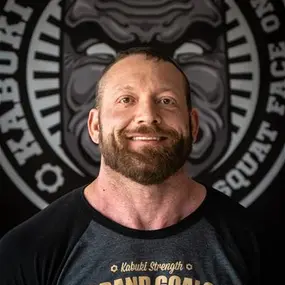
WORLD-RECORD HOLDER | RESILIENCE COACH | REGENERATIVE HEALTH EXPERT AWARD-WINNING INNOVATOR | INSPIRING KEYNOTE SPEAKER
Chris Duffin is one of those rare people whose life almost sounds impossible until you realize every chapter is connected by one theme: reinvention under pressure.
The world may know him as the “Mad Scientist of Strength,” a world-record-holding strength athlete, serial entrepreneur, inventor, executive mentor, and author of the bestselling autobiography The Eagle and The Dragon. But the deeper story is far more compelling than the records, the companies, or the reputation. Chris came from a childhood marked by poverty, violence, homelessness, and survival in the Pacific Northwest wilderness, then rebuilt himself into one of the strongest pound-for-pound humans in history.
Today, through Enhanced Executive, Chris works with high-performing leaders on human performance, metabolic health optimization, recovery, resilience, and what he calls executive evolution. His work blends engineering, biomechanics, elite athletics, executive leadership, and lived transformation into a practical operating system for leaders who refuse to live below their potential.
What makes Chris fascinating is not just that he became physically strong. It is that he turned pain into precision, chaos into systems, and survival into service. This is a conversation about strength, yes, but not the kind most people think they understand.


