

Talent Expert James Terry Reveals The Workforce Risk Blind Spot Robbing You Of Profits (#574)
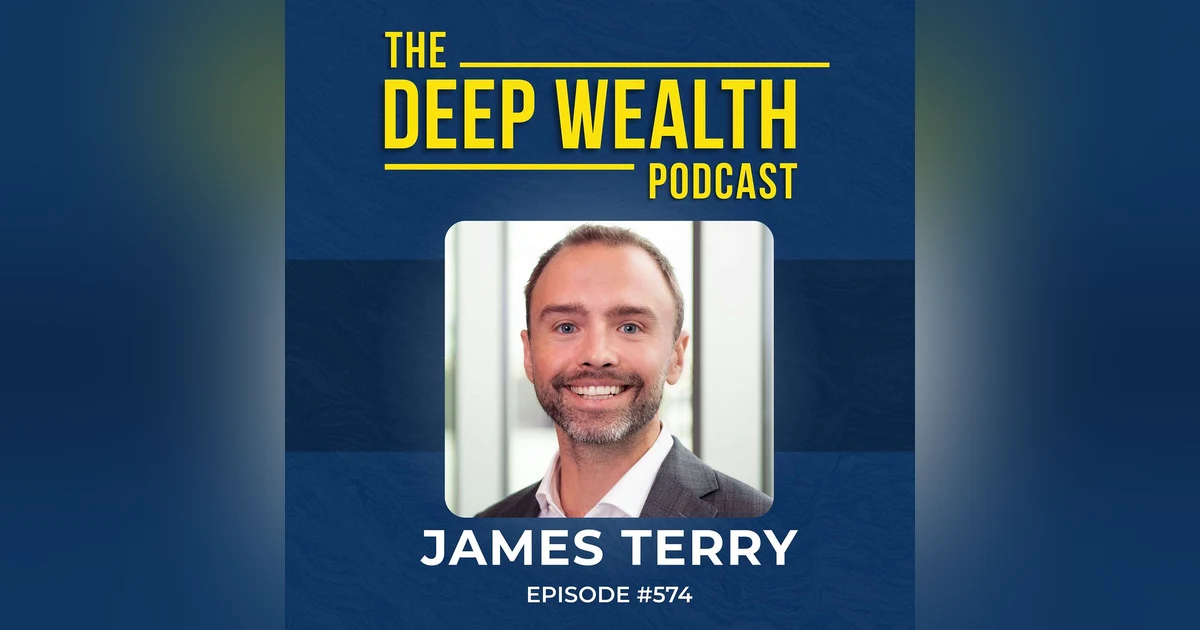
Send us Fan Mail “ Life is all about the right choices.” -James Terry Exclusive Insights from This Week's Episodes Your staffing problem may be quietly robbing profits long before it looks serious. Talent Expert James Terry reveals how workforce flexibility, data, and better talent decisions can turn hidden labor risk into an advantage. Episode Highlights [00:08:50] Why changing worker expectations can quietly make yesterday’s hiring strategy obsolete [00:13:30] AI can improve hiring while ma...
 Apple Podcasts Apple Podcasts
  Spotify Spotify
  RSS Feed RSS Feed
  Amazon Music Amazon Music
  Podcast Addict Podcast Addict
  iHeartRadio iHeartRadio
  Castro Castro
  PlayerFM PlayerFM
  Podchaser Podchaser
  Overcast Overcast
  RadioPublic RadioPublic
  PocketCasts PocketCasts
  Audible Audible
  Pandora Pandora
  YouTube YouTube
 “ Life is all about the right choices.” -James Terry
Exclusive Insights from This Week's Episodes
Your staffing problem may be quietly robbing profits long before it looks serious. Talent Expert James Terry reveals how workforce flexibility, data, and better talent decisions can turn hidden labor risk into an advantage.
Episode Highlights
[00:08:50] Why changing worker expectations can quietly make yesterday’s hiring strategy obsolete
[00:13:30] AI can improve hiring while making it easier for weak candidates to fake competence
[00:17:29] How verified worker performance could make resumes and traditional interviews less important
[00:22:33] Why consumer expectations for speed and choice are reshaping what employees expect from work
[00:28:38] The hiring question founders should ask before deciding they simply need better people
[00:39:49] How sending employees home to save labor cost can trigger turnover and cost more later
[00:45:08] Why smart outsourcing should produce better results, not merely replace internal work
Full show notes, transcript, and resources for this episode:
https://podcast.deepwealth.com/574
The Deep Wealth Podcast
Most entrepreneurs do not fail.
They just carry too much for too long.
The business grows. Pressure grows faster. Profits get harder to predict. Decisions cost more energy. Over time, focus slips and health takes the hit.
The Deep Wealth Podcast and Deep Wealth Mastery are built from real experience. We're the only system based on a 9-figure exit. This system exists because guessing gets expensive.
🧠 Deep Wealth Mastery
This is for you if you want to:
• Grow a profitable business without becoming the bottleneck
• Build real value so selling is optional, not forced
• Optimize your health before it limits your business and life
One proven roadmap for real decisions.
⭐ Explore Deep Wealth Mastery
https://iapdw.com/idm
🎧 Subscribe
https://iapdw.com/podcast
📘 Free eBook
https://iapdw.com/ebook
💬 Have a question you keep circling back to?
Leave a short voicemail
https://podcast.deepwealth.com/voicemail/
Built by entrepreneurs. For entrepreneurs.
Loved this Deep Wealth Podcast episode?
You built your business from nothing.
Now make it pay off big.
📱 Subscribe Now
As a bootstrapper, every move counts. Subscribe on your favorite platform for Jeffrey Feldberg’s 9-figure exit strategies. From your morning grind to late-night planning, get insights from founders who did it without investors. These tips could change your future.
Drop a Quick Review
Got 30 seconds? Leave a 5-star review. It helps us make better episodes and reach entrepreneurs like you, hustling without a safety net.
Don’t Lose Your Exit (And Your Financial Freedom)
You’ve poured everything into your business. A bad exit could cost you millions. Most deals fail, and even “successful” ones lose half their value. The 90-day Deep Wealth Mastery program teaches you to make your business run without you and boost profits so you capture the best deal instead of any deal.
What Others Say
“Deep Wealth Mastery is pure gold. I wish I’d had it before my exit,” says Stacey C. “The value I’ve gained dwarfs the investment,” adds Sanjay S. “It makes my business great to own and sell,” shares William S.
📘 Grab Free Tools
Check out client success stories for proof. Master the Deep Wealth Strategy Map to plan your exit. Or snag the eBook, From 7 to 9 Figures: The Exit Playbook, for a clear guide.
Click here to start your legacy-defining exit today.
574 James Terry
[00:00:00]
Intro
Jeffrey Feldberg: Most founders think their staffing problem is a hiring problem. James Terry sees something deeper. As head of US revenue at Indeed Flex, James helps companies solve one of the most expensive problems hiding in plain sight: labor unpredictability. When the right people are not in the right place at the right time, the damage rarely stays inside HR. It leaks into margins, customer experience, leadership bandwidth, culture, and eventually the value of your business, enterprise value.
Indeed Flex is built around technology-enabled staffing, giving you as the employer access to flexible workforce solutions while giving your team members more control over when and where they work.
James has spent more than fifteen years in HR, staffing, and workforce technology, including leadership roles at ADP before joining Indeed Flex in 2020.
His work now focuses on helping companies use data, automation, AI, and [00:01:00] marketplace technology to fill roles faster and build more agile workforces. But this conversation is not only about staffing. It's about the hidden costs of labor volatility, the leadership blind spots behind constant hiring fire drills, and why workforce risk quietly shows up when buyers, investors, or lenders start asking harder questions.
As a founder, this may be one of the most overlooked value levers in your business because as we say here at Deep Wealth, show us your team and we'll tell you your future.
And before we start the episode, a quick word from our sponsor, Deep Wealth and the Deep Wealth Mastery Program. Here's Sanjay, a graduate of Deep Wealth Mastery, and he says, the investment I made in the Deep Wealth Mastery Program, it's a rounding error compared to the value created today and the future value I'll receive.
Or how about William, who says, and I love this, A company that's attractive to sell is also a great one to own. The Deep Wealth Mastery Program gives me the best [00:02:00] of both worlds.
Now speaking of growth and adding value, check out what Leon says. He says that the Deep Wealth Mastery Program changed how and who we hire. We've now begun to hire talent today that we never would have hired if it weren't for the program. The talent we're hiring today is helping both increase our growth and profits and our future enterprise value.
Man, I love that kind of feedback because it's that kind of feedback that's what gets me out of bed every day.
Deep Wealth Mastery System, it's the only system based on a nine figure deal. That was my deal. And as you know, I said, no to a seven figure offer, created a system that we now call Deep Wealth Mastery, and that's what helped myself and my business partners all welcome from a different buyer, a different offer, a nine figure deal.
So if you're interested in growing your profits, preparing for a future liquidity event, whether that's two years away or 22 years away, and if you want to optimize your post exit life, Deep Wealth Mastery is for you. Please email success at deepwealth. com. Again, that's success, S U C C E S S at [00:03:00] deepwealth. com. We'll send you all the information about Deep Wealth Mastery, otherwise known as the Scale for Ultimate Sales System.
That's where you want to be. You want to be with other successful business owners, entrepreneurs, and founders, just like you, who are looking to create market disruptions. Whether you're a startup, whether you've been in business for three or four decades, whether you're manufacturing, whether you're high tech, SaaS, low tech, whatever the case may Come in and network with other business owners, with other businesses, just like you, because they all want to lock in their financial freedom and enjoy both success and fulfillment.
Again, that's the 90 day Deep Wealth Mastery program. It has your name on it. All you need to do is take the next step. Please send an email to success at deepwealth. com.
Deep Wealth Nation, welcome to another episode of the Deep Wealth Podcast. Deep Wealth Nation, we have a saying: show us your team and we'll tell you your future. So how's your team? Are they helping you to go from here to there? Are you reaching your goals or are you constantly behind or not having the best [00:04:00] talent?
And you may be saying, "Well, Jeffrey, yeah, sure, but where do I start? What do I do?" You've come to the right place. We have a terrific guest in the House of Deep Wealth, someone who's making a really big change out there who's gonna help you. So you're gonna come out of this conversation a whole lot better.
But that said, James, welcome to Deep Wealth Podcast. An absolute pleasure to have you with us. There is always a story behind the story. What's your story? What got you from where you were to where you are today?
James Terry: Well, thanks so much for having me, Jeffrey. I appreciate it. I'm excited to have this conversation. What got me from where I am, where I started to where I am today? That's a, great question. So I'll tell you, I graduated college and had these ideas. I said, "I'm gonna go change the world."
And the way I wanted to go change the world, I said, "I'm gonna go work in the nonprofit sector." And so I started out there, and you're kind of wondering, "Well, where is this going?" I lived in Washington, DC for a while, and realized very quickly, it's actually quite hard in Washington, DC to make any change, any measurable change.
And so then I realized, you know what? Actually, the way that you can deliver value to people is by helping them make their [00:05:00] businesses run more effectively, more smoothly, helping them leverage technology and leverage solutions to be able to build more value. and so what I did is I got into sales.
Started out in sales in Southern California, selling for a large Fortune 500 company. Ended up being given the opportunity to go and lead some teams, and then from there, moved overseas. And so I was able to spend about five or six years in Europe working there and then moved back to the US and have been working with Indeed and Indeed Flex for about six years now.
Started out in London, England, and then moved over here. And I mention all of that because I think that it's important to understand that the journey that you take in your career is never gonna be linear, right? And it's important to always be thinking about the next step, but know that the experiences that you gain now and today, and the experiences you have from yesterday are really gonna help set you up for the future, as long as you're able to take the insights and the learnings you've had and then be able to apply them to be a more competitive entrepreneur or competitive [00:06:00] revenue or wealth generator in the economy.
And so there's so many different aspects that can make up your success, and understanding that the experiences that you have are so unique, and how can you take those and leverage those to be able to create differentiation in the marketplace, I think, is really important.
Jeffrey Feldberg: Yeah, my goodness. You're absolutely right with that. And before we start talking about what you're doing and where things are at, and you identified a whole number of problems, let me ask you this, because oftentimes when we hear a not-for-profit, we have our eyes gloss over, don't pay much attention to that.
But I'm wondering, with your experience doing that, coming into the for-profit world, any lessons learned that you brought in that are actually helping you?
James Terry: Y-yes. I would say the main lesson that I learned in nonprofit is, so, so I started out doing grant writing, and grant writing is essentially you're writing to other nonprofit and trust organizations and saying, "Hey, here's why you should give money to us to be able to drive some type of vision or program," or whatever it might be.
And so what I realized there is the importance of [00:07:00] making sure you're able to effectively articulate your value proposition in a succinct manner. It's so often, you get so passionate about this problem that you're trying to solve and this area of the economy or business or whatever it might be that you're trying to affect, and you get really into the detail.
Well, that's important, but at the end of the day, what an investor, what a nonprofit organization wants to understand if they're gonna give you money, whether as an investment or whether that is y- as a donation, they want to understand like, what... ultimately, what's the problem you're gonna solve, and what's your USP?
What is unique about you, and how are you gonna do things differently? And so sometimes it's not about getting too far into the details. You need to be able to speak to that, right? That's almost what you call that's the appendix of the slide deck. But you'd only go to the appendix if there's a question that's relevant to that.
In reality, what you need to do is you need to be able to speak really high level and articulately about what is the problem and how are we gonna solve it in a way that's unique. And I think that's really important in kind of the nonprofit and the grant [00:08:00] writing world and helped me out in business because I realized that, you can know everything about the industry, you can know everything about the product, but if you can't actually explain it effectively, it doesn't really matter.
You can have the best product in the world. You can have the most differentiated, most evolutionary product in the world, but if you're not able to actually help people understand the problem that you're trying to solve it really doesn't matter
Jeffrey Feldberg: Absolutely right with that. And who would've thought? But it makes perfect sense when you're in a for-profit, you're doing all kinds of grants and proposals, and you're now taking that onto the business side. Okay, so we got that there. Love hearing that. So as we sit here today recording this interview, my goodness, when it comes to finding talent, so many things have changed.
What would you want Deep Wealth Nation to know things that are going on right now that may not even be on the radar, but it's impacting them whether they realize it or not?
James Terry: Ye-yes we're obviously in a very interesting time right now. you've got AI, and that's obviously the flavor of the week and what everyone is talking [00:09:00] about. You also are-- We're coming off the back of COVID, I'd say still, even though it's been a few years out. But I mention that because I think the job market changed a lot and the types of jobs, the types of roles that people are looking for and their expectations have changed.
And also, you've got a little bit of a generational shift. Baby boomers are beginning to retire. Millennials are starting to move into more senior leadership roles. Gen Z is entering the workforce now. And so you've got all these changes that are happening, and I think it's really important to understand that the way that things were when it comes to the job market, when it comes to attracting talent, when it comes to being talent in a marketplace a lot of things have shifted.
People have demands that have really changed quite a bit. And because of that, if you can understand what are the things that people now want, what are the desires that they have in their work life, then you can actually position yourself as an employer of choice, an employer that's actually gonna be able [00:10:00] to outpace other competitors of yours.
And that's really important because y-you know, your talent, your labor force, your employees, that's probably one of the most important and expensive assets of your business. And so how can you take that resource that you have, the labor resource you have, and maximize the output of that? Well, that's by driving AI and efficiency and making, being able to get more out of each person.
But also from an attraction standpoint, how can you attract more people? I if you think about the efficiency the efficiency is output divided by the cost that you have, right? And that's, essentially how you're thinking about, like what's my revenue per labor hour that I have and labor dollar that I'm spending.
And it's really important because the more you spend on your labor the more cost that is for you and the more that impacts your bottom line. And so especially after COVID, what was happening is, I'm sure a lot of your listeners remember twenty-twenty two, twenty-twenty three, like the Great Resignation.
It was really hard to be able to find talent. [00:11:00] Everyone is moving around. It was very difficult. And so wages started to increase quite a bit. That's a little bit of where we got the inflationary pressure that everyone's been talking about. But one of the things that a lot of really innovative employers said was, "Hey, you know what?
we've maybe increased wages marginally, and we know that overall you pay more money, you're gonna get more people, you're probably gonna get better quality. But what are some other things that we can do?" That is also going to drive the same outcome of attracting talent and retaining talent.
What are some other outside-the-box ideas that we can employ, not just the old raise wages, but what are other things we can do around understanding some of those things I was talking about, the changes that are happening in the workforce to be able to attract a talent and a labor pool that either wouldn't have previously been attracted to a job like this, or maybe wasn't even in the addressable market of job seekers that I might have been looking for?
How can I bring more people into the fold? If I can bring more people into the fold that are interested in these types of roles that I'm hiring [00:12:00] for, then I can be a little bit more selective, and I can bring on the best people that then are going to be able to drive the best outcome. And by the way, if I can give them fringe or different types of benefits, and those benefits don't have to be extra insurance or pet insurance or whatever it might be.
Those can be other things. And if you can give them some of those other areas that are really gonna be valuable to them, the flexibility in their scheduling and whatnot, and the ability to move in and move out you're able, as I mentioned, to attract a different type of workforce and potentially outpace your competitors because of that.
Jeffrey Feldberg: Yeah, so interesting in terms of what you're doing, which we're gonna get to in just a moment. And by the way, Deep Wealth Nation, everything that we're talking about, go to the show notes. It's all point and click. We'll have all the links. And so James, we're gonna talk about Indeed Flex and Deep Wealth Nation, that is the company.
You can go check out the site and what they're doing. Before we get into that though, just as a backdrop, so artificial intelligence, AI, my goodness, changing life as we know it and business as we know it by the day. So behind the scenes, [00:13:00] what's going on with AI? Because I'm hearing these horror stories.
"Yeah, Jeffrey, we hired somebody. It wasn't even that person. AI wrote the profile of the person, the resume, everything else, and it was really fraud-like or a complete fraud, and we're dealing with someone else." But then you have all the positives. "I'm speaking to fellow founders. Yeah, Jeffrey through AI, we really cut through the noise, and we're now able to find the right kind of people."
So from your worldview with AI, what you and the team are seeing, James, what do you want us to know when it comes to AI and talent?
James Terry: It's really interesting, Jeffrey, because it's actually, it's almost a double-edged sword. You want people-- we actually have an AI usage assessment when we hire people now because we are so passionate about using AI and in the workplace. And by the way everyone is still figuring out what AI is and how to use it and how to use it in a productive manner.
And so I think before I kind of get into our rationale and the way that we think about [00:14:00] it, I mean, the one thing I'll tell you is that no one has fully figured it out. You go onto LinkedIn, and you see everyone is posting these things about, "Well, here's how I use Claude, and here's how I do this, and here's how I do that."
But like, you can kind of figure that out in the course of a handful of hours or a handful of days. There's no one, maybe a couple of people but for the most part, everyone is pretty much on an equal playing field. And AI is undoubtedly, if you use it and you've seen a lot of the value, you've kind of had that light bulb moment.
I think that with AI, everyone kind of has that light bulb moment where you say, "Oh my gosh, I get it now. I understand how this is gonna have a business impact." And then you just dive right in. But until then everyone has an opportunity to use it and you have an opportunity to really start to leapfrog your competition.
It's not too late. But in 18 months, your competitors, someone, one of your competitors will have figured it out. If it's not you, they're gonna do it, and the types of efficiency gains that you can get from it, it's gonna be really hard to catch up to that. Now, I mention that because I think one of the things that's really important for [00:15:00] us, and as I mentioned, it's a double-edged sword here, is that we do these AI assessments in interviews, but at the same time, and so you want people to use and embrace and know AI.
Well, it becomes that much more important, in my opinion, in the interview process to be able to really cut through a lot of the noise. It becomes really easy to be able to go to AI and say, "Hey, you know, I'm interviewing for this type of role, and I want you to, you know, pretend you're a world-class XYZ," whatever it might be.
"Here's a prompt that I may have gotten for an interview presentation that I have. Build a presentation," right? And it will build a presentation, and it will be pretty darn strong But then the thing is, you need to now get on the call, you need to get on the interview, you need to show up in person and be able to actually deliver and articulate that well.
And so I think what's important from a hiring process now is that criticality of thinking and asking the right questions. Like, Becoming an effective interviewer is even more important now than it was before because it's easier to, I hate to say, but kind of fake the interview if [00:16:00] you're able to use AI.
And so being able to ask those more behavioral-based questions, I think is really critical and really key. So, on one side we say we want people to use AI. I want them to use AI to prep for the interview. But you know what? You also need to have that information in your head. You need to be able to speak to it.
You need to be able to explain your past experiences and how those past experiences are gonna help drive the business in the future. And so I think it can be difficult looking at both sides of it but I'd say that almost every company I talk to, if they are not using AI, they're trying to figure out how to use it, or if they're using it, I mean, they're starting to really accelerate.
But it's almost this slow roll. Like, it takes time, it takes time, It takes time, and then you can really accelerate with it. But you need to start somewhere and there's no better time than today to do that
Jeffrey Feldberg: And what I love with what you're doing with AI behind the scenes as well as everything else, James, you've really created an end-to-end marketplace. So on the one hand, you're speaking with the talent and you're speaking with the employer, but it's [00:17:00] more than that because you've put together some interesting things from different kinds of, I'll call it benefits to payroll to everything else in between.
It makes it a, a one-stop shop for all involved. So what's behind that? Let us know if I know nothing about this. Yeah, James, we're here on the Deep Wealth Podcast and Indeed Flex. Tell us a little bit about your secret sauce. What does it look like from when I come to you saying, "Okay, we haven't worked together, but let's begin to work together"?
What's the timeline for that? What am I doing on my end? When do I start seeing some incredible talent?
James Terry: So the nice thing, Indeed Flex's uh, motto is we help people get jobs instantly. We are trying to remove the friction in getting jobs and allowing people to find work by using technology to make it a seamless process to go essentially from couch to job. And that's really important for us because if you're able to make it easier and remove a lot of the friction in being able to find a role and find work, then you're more likely than not gonna be able to find the best talent.
I'm sure how many times, you know, you [00:18:00] go onto all these different ATS systems, you're looking on LinkedIn, you're applying for jobs, and every single time you have to go through and fill out the old application every single time, and do the new cover letter, and upload the resume, and all of those different things.
And by the way, you need to then customize the resume for the role you're applying for. That's all friction. It should be easier than that. It should be more efficient than that. And so what we're doing at Indeed Flex is saying, how can we make it as seamless as possible for people to get work? If you had asked how quickly can I find talent?
If it's 7:30 in the morning where I am right now. If you posted a role on Indeed Flex in a market that we're active in, you could have someone potentially by noon or even sooner if they're available, and that's the beauty of it. And by the way, these people are verified, vetted, rated by your competitors, and so it removes a lot of the uncertainty.
So picture a world where you can go and you can say, "You know what? I realized I had a bunch of people at my warehouse that called out sick for the afternoon shift that starts at 1:00 PM. I need people to be able to come in." I can post that role on [00:19:00] Indeed Flex, and I can actually go in and I can see, hey, what is the star rating of these people, right?
Five stars, four stars, whatever it might be. What other organizations have they already worked for? So I can see that, hey, this person was worked at, another warehouse that's down the street. Oh, this person worked at a direct competitor of mine, and they were a five-star worker, and they had a three-month assignment.
I should be able to hire them potentially without an interview. And so you actually play this out, Jeffrey, and, I was mentioning about uploading your resume or your CV into a job application. Picture a world in a few years, where resumes don't exist anymore. I mean, if you really think about it, a resume is a piece of paper that people, you can write whatever you want on there.
A lot of HR companies have done surveys, and 70-some odd percent of candidates lie on their resume. So we're hiring, as I mentioned earlier, one of the most expensive costs of our business, one of the most critical assets of our business, and we're doing it a lot of [00:20:00] the times based on a couple of 30-minute interviews and a resume where, more often than not, someone may have been a little bit dishonest on it.
And so how can you remove the resume? How... I mean, think about it, Jeffrey, like you can go online and say, "Hey, I want to find a really good Italian restaurant within five minutes from me, or 10 minutes from me," and you can go onto a number of different websites today, and you can see what's the star rating, and you can see all this different types of feedback from people.
But you don't have that for job seekers. You don't have that for candidates, and you have that with Glassdoor on the employer side, but you don't really have that on the candidate side, and that's really what we're building at Indeed Flex, is a world where you can go in and see, oh, these candidates have worked.
So this is a 4.8-star candidate, and they've worked at all these different places. I don't need to see their resume because their resume actually is, I've got something better. I've got validated, verified feedback from the people that are my competitors, or the people that do similar jobs down the street.
And so I can hire them. By the way, I don't need a resume. I don't even [00:21:00] need to interview them, Because like, they just did a working interview for for my competitor down the street for two or three months, and so I can just be able to bring these people on full time and hire them directly.
And that's one of the beautiful things about it, right? So you start to think about how you can start using technology, because five, six, seven, 10, 12 years ago, y- you couldn't do that, right? You didn't have the technology that enabled that frictionless access, and now you do. And so it's really important to start thinking about how can we double down on these types of opportunities to be able to attract the best candidates?
Jeffrey Feldberg: Now, what's interesting with what you're doing with the marketplace that you've created, just like when it came to buying things online, when you had customer reviews, that was a game changer. You read a terrific product description, yet you look at the reviews and it broke within the first day or returned it within the first 10 days, and many people saying that or it has a low rating and maybe one star out of five stars.
We've never really had that up until now when it comes to talent. You're absolutely right. The resume says one thing, but what are they actually doing when they're in the [00:22:00] workplace? And Deeple Nation, I want you to think of this. Although Indeed Flex, they are focused on specific industries, probably some of the industries you're in right now, but even if it isn't, it's still relevant to you in terms of some of the insights that we're getting.
So James, let's now talk about the team members, as we call them here at Deep Wealth, what other people call employees. What's going on with team members generally speaking? And in some ways, well, Jeffrey, it depends on the industry or the business or what's going on, but very high level, what are some of the patterns that you're seeing in terms of expectations?
James Terry: Yeah. I'm actually gonna pull a little bit, Jeffrey, on the thread that you had just mentioned around online reviews and access to digital marketplaces where you can get pretty much any product delivered to you, right? Just like I can post a role and have someone, in, in a handful of hours.
If you think about it, you can also go online. You can go on your phone and order just about any product that exists in the world, and it'll be in your house in two hours. Like, how much of a change is that fundamentally? But the [00:23:00] thing that I think that employers are really starting finally to wrap their heads around is that those people that are your consumers that are buying those products are also your employees And what I mean by that is that their expectations for speed, for consistency, for choice, of being able to choose between a litany of different products that are out there and have them have instant access to them, those are also the people that are coming to work for you every day.
And so the value that you've created in the economy is also something that you need to deal with on your workforce. What I mean by that is that people also are starting to have these expectations of more flexibility, of being empowered, and gone uh, to a large extent are the days of you have to be in the office five days a week, and you have to work this really consistent schedule, and, the employer sets the rule, and the worker just has to deal with it.
Because the worker has access to so much more information and so many more opportunities, you're being forced as an employer to [00:24:00] be able to think about different ways that you can attract candidates. And so those job seekers are also your consumers, and those consumers are having the same demands as a job seeker that they also have as a consumer.
And so we're noticing that a lot of people are actually desiring to be able to set their own schedule to a certain extent. "Hey, you know what? I found a job that I really like. I really wanna do it, but you know what? Every Wednesday at 3:00 PM, I have to take Grandma to the doctor. And so that means that based on this offer that you're giving to me, I can't take it because I have to work Monday through Friday, 9 to 5."
Well, that doesn't mean because this person needs to take Grandma to the doctor doesn't mean that they're a bad employee a- at all. And so the question is: How can you actually start to build opportunities and offers for workers that match their schedule, match their desires, and match their needs? Because if you can do that, first of all, you're going to be able to attract a talent base that other people aren't because your competitors also probably have very rigid shift patterns [00:25:00] and schedules and are not willing to have that type of flexibility. And so you're bringing a new type of candidate into the labor market, which is really important.
But the reason that wasn't possible a handful of years ago is because, well, I get it. Okay I really like this person. I know they need to take Grandma to the doctor. I wanna h- be able to help them out, but well, how am I gonna fill this gap on Wednesday afternoons? Is the juice worth the squeeze, right?
Is the juice of being able to allow this person to have that flexibility because they are a good candidate, is that worth the effort and the work that it takes to be able to fill that other Wednesday gap that I now have? But the beautiful part about it is that now technology can enable that.
Now technology can say, "Oh, you've got a vacancy here on Wednesday. We can offer this out to these other candidates that are also good, that are also high quality, that also maybe don't want that consistent nine to five, Monday through Friday shift pattern." And we can allow them to pick up these ad hoc shifts to be able to go and fill that for you with a quality candidate who you like, while still maintaining that other person that just [00:26:00] can't work that one shift on Wednesday, right?
And so what's happening is that this technology from a consumer standpoint is driving the desire for choice, and that desire for choice is happening on the job seeker side. And employers now have the ability to leverage this technology also to be able to give these workers what they want.
And giving these workers what they want is actually a really good thing for you because it's gonna drive better retention, it's gonna drive better quality. That person that can't work on Wednesday, they were not in your addressable market of job seekers, and now they are. And you should be really leaning into that and taking advantage of that, because those are the things that you're gonna be able to attract this person that an increased pay rate won't be able to attract them, right?
These are fringe benefits, flexibility benefits that people weren't having before, that now they are and can help set you apart as an employer
Jeffrey Feldberg: It's interesting as you're talking about that you referenced Glassdoor a little earlier. We talk all about them in the Deep Wealth Mastery program. [00:27:00] Hey, Deep Wealth Nation, go to Glassdoor. This is a site where current employees, former employees, or team members talk about your company. It's a terrific place to work at.
It's a terrible place to work at. You better wa- know what they're saying about you, and if you're not on there, you do wanna be on there. And so as you're talking about that, what's interesting is from a founder side of things, my ability now to be, "Okay, hey, yeah, Jeffrey, you have these specific needs? Not a problem.
We can accommodate that." You're right because Glassdoor, we talk about this as mentioned, Deep Wealth Mastery, they did a survey of why are you in your current role or why did you recently leave your role and you're now in a new role? And off, right off the bat, you think, well, obviously it's money.
Actually, money was at the bottom of the list. At the top of the list, it was, okay, what's the leadership like? What's the company culture like? And it started going down that particular path, and money can do a lot of things. It can't do everything. And so that flexibility that you're talking about is [00:28:00] absolutely crucial.
So in the Deep Wealth 9-step Roadmap, step number two, X-Factors. James, this is where as a company I have at least three to five X-Factors that differentiate me from the competition. I'm world-class in this. It's hard to replicate, if at all. And I know the team is one of the X-Factors that's in there. It's foundational in terms of what we're doing.
So from a founder perspective, let's change things up a little bit because often founders and the leadership team is saying, "Okay, well, we need better people." That's probably not the best statement or the best question to be asking. What do you think the best question is that could be asked instead?
James Terry: maybe they do need better people, but to your point, that's not actually the problem statement, right? The problem statement is, what are the reasons that we're not attracting the right candidates? And then from there, how... what can we do to change that, and what can we do to make improvements?
What are the things that we can offer that other people can't? And then also [00:29:00] what is the world that we can build to be able to attract these better candidates? It's not always an interview problem. It's not always an onboarding problem. It's not always a, maybe you could have great Glassdoor reviews, but you're still not able to attract the right candidates.
It's really important to think about what are the actual qualities that you're looking for in someone. And I think that one of the really important components that we've found is that it's not always and I don't wanna paint with too much of a broad brush here, but it's not always about finding the person that just has the most experience and can do all of these SQL queries or whatever that might be, right?
In a very analytical role. Sometimes what's most important is finding someone who wants to learn, someone who has that passion, someone who is willing to be able to say, "Hey, you know what? I'm a ball of clay, and I want you to mold me and help me become what I know I can." I mean, Jeffrey, y- the person you are today is not the person you were 5 or 10 or 20 years ago, and it's because of the experiences that you've [00:30:00] had, and so you need to be able to get these experiences.
And so sometimes finding those people that are saying, "Hey, maybe I'm not here yet, but I want to get there," is really important. And actually, in our platform, what we allow clients to do is you can bring someone in and they have a certain skill set, and then you can actually verify them for additional skills, additional skill sets.
As you train them, you're able to, you know, as an example, in the hospitality industry, they start out as a banquet server, and then you put them into a bartender role, and then from a bartender role, they go into VIP service, and then from VIP service, they go into craft bartending. And all of a sudden, you're able to verify and validate this person with these extra skill sets.
And what that does is that person now is worth more. They have more value on the marketplace. And you're helping to build them up. And so sometimes it's about those soft skills, not necessarily the hard skills that someone has experience in, but their desire to learn, their willingness to be able to get better and put the effort in and kind of be that, perpetual learner I think can be really important
Jeffrey Feldberg: Yeah, there is so much to what you're saying, my goodness. So let's begin to unpack [00:31:00] that, and don't be shy with my next question. Put it all out there. So from the Deep Wealth Nation perspective, they could say, "Well, James, yeah, this sounds great. I can do many of the same things. Sure, we can put AI into the mix here, and we can start finding our own people and doing this and doing that."
What I love about what you're doing though, you and the team, James, is you're taking out the friction when it comes to getting the right team members and monitoring, and when it comes to different kinds of benefits or payments. You're making it effortlessness and being of ease so that I can focus on what I want to be focusing on.
So for someone in Deep Wealth Nation, they don't know IndeedFlex. This is the first time they're hearing about this. What are you doing that they're probably not gonna be doing on their own side that's gonna help them? We're gonna be selfish. Tune into the world's favorite radio station, WII.FM, the what's in it for me radio station, but not from me and you.
Instead, it's from the listener's perspective, Deep Wealth Nation's perspective. So what are you doing that they're probably not gonna be able to do? Or if they attempted to do it, it would just take too much time and money. [00:32:00] It's really, hey, why bother doing it? IndeedFlex is already doing that. What does that look like?
James Terry: I'm gonna be a little bit controversial here,
Jeffrey Feldberg: Yeah
James Terry: So, so Jeffrey too often if you think about who's paying the bills in staffing or in the staffing industry, it's the client, right? It's the person that is consuming the labor. Where we found success actually is saying those aren't the most important people to us.
The most important people to us are the job seekers. If you can make the job seeker experience seamless and quick and frictionless, and what that, that means, and give them the types of employ- employment that they're looking for, then what that means is you're gonna attract more, better, faster, quicker job seekers.
And so on one side, on the job seeker side, we make it very easy for people to download our app, apply for the job. About 90% of the interviews that we do actually are AI interviews, and we can customize those interviews based on the specific roles that a client might have. So you're able... [00:33:00] We're... our system actually will ask the questions.
The client a lot of the times can go in and actually see the answers that have been given. We still, because as I had mentioned before, AI is still a little bit in its infancy stages, we still have every single one of the interviews reviewed by a human. But what this means is that the human now, is that recruiter's able to actually drill into the most important parts of those questions and be able to see those answers more quickly so they can really get to the crux of, the quality of this candidate.
So you're able to allow a job seeker to go through the interview process quickly. Now you say, "Okay, AI interview. Well, that's great. Okay, well, why is that better?" Well, first of all, we find that candidates actually like AI. They actually don't mind having an interview with AI. They can a lot of the times be more honest, more upfront.
And then the other big part about it is that, you don't usually have recruiters working at 7:00 at night. Well, when you're applying for jobs, it's usually at 7:00 at night, right? You're usually not doing it in the middle of the day. So you can go and apply for a job and immediately do your interview right then on the [00:34:00] spot
And then what happens is you then take that forward, then from a an employer standpoint, you're able to not look at the 200 resumes of people that applied, but hey, these are the ones that have been ranked the best. These are the best quality candidates based on all the information we have, whether it's just the interview, or it's the interview as well as their other skill sets that they might have and the experience they have within our system to be able to access more quickly the best talent.
We actually stack the deck in our favor every single time that a client posts a role. What we do is we actually use our algorithm to be able to prioritize which workers are, have worked for us the longest, that have the best ratings, that are the most consistent, that don't have no shows, that don't cancel their shifts late if it's more of an ad hoc assignment, right?
And we actually give those workers the first offers. And so the people that have historically done the best have the first right of refusal for this work, right? So It becomes very clear what the benefit is from a, client or a business side. Then if you look more specifically at their interaction with our [00:35:00] technology and our system, one of the things that's really important that we've noticed is that, staffing labor management is complex, right?
You're dealing with lots of different locations, lots of different departments, and divisions, and schedules, and shift patterns, and the list really goes on and on. Requirements of, hey, this person is a more entry-level role. This one is medium skilled. This one is high skilled. All of a sudden, you put this all together, and this amalgamation becomes a big bowl of spaghetti, and you can't really figure out a way to get through it.
Well, our system will take all this contextual data and knowledge and information from your past experiences such that you can just go on and say into our AI system and say, " I need 10 picker packers in this particular location starting on Monday." Well, we already know that every time you hire picker packers, you put them onto this shift, and this is the requirements you have, and this is the background check and the drug test requirements that you have.
And so we can automatically take that information. We also know, by the way, which of these different staffing agencies, whether Indeed Flex or the litany of other agencies [00:36:00] that are within our network, is actually gonna be able to deliver the best for you. And so you write in one sentence now- And you press enter, and we take all the knowledge and all the information, and we will automatically cascade that out and ensure that you're gonna get not just fulfillment, but fulfillment of those top-quality candidates.
And that's really important because not only does it simplify it on the client side and make it easier because previously I'd have to email this staffing agency, then email that staffing agency. Oh, this one isn't able to do as much as they thought, so I have to remember that, okay. And then I have to go and give those other requisitions back to the other staffing agency, right?
It becomes this big bowl of spaghetti. Now you can type one sentence in, press enter, and not only are you gonna get the fulfillment, but you're also gonna get the quality of the candidates because our system can then help ensure that not only from our own direct supply of labor, but also the a-- the staffing agencies that we partner with, that we work with, we're then able to hold them accountability on the success criteria and the metrics that are important to the client, so that if one doesn't do well at, this time, we're gonna [00:37:00] make sure that next time we're gonna prioritize a different agency so we can get better results for the client, right?
And so you start thinking about all of these within an ecosystem of, wow, we're making it almost crazy easy for someone to get a job and then prioritize the best candidates to be able to get the best job offers. And then we make it very seamless and easy for a client to be able to interact with our system.
And then in addition to that, we're able to then prioritize how they're accessing the labor and the quality of the candidates to get them the best candidate access. You start looking at, well, you've got speed, you've got quality, and you've got the consistency of the labor force, and those are all things you really couldn't do six, seven, eight years ago.
But now because we have this technology we're able to leverage, you're able to get much better results.
Jeffrey Feldberg: And Deep Wealth Nation, as James is talking about that, let me ask you this, because it doesn't matter if you want to keep your company forever or proverbially you want to sell it tomorrow. The one thing that you want that you may or may not [00:38:00] be doing, you're probably not doing, you want the company to run without you.
Because when it does, you choose how you're going to invest your time. Maybe it's only five hours a week in the business and you're doing other things outside the business, or maybe it's gonna be more than that. It doesn't really matter. You've systematized finding talent. And James, what I love about this is it's behind the scenes, your algorithms, your technology.
Okay, Jeffrey is looking for someone who five days a week is great, but to your earlier example, I'm just making this up, Tuesday starting at around 11:00 AM for this one particular candidate, they can't do this anymore. They got other responsibilities. You can bring those kinds of people on that you could never do before, and finding those quote-unquote odd fits, it's now just every day that you're doing that.
You're systematizing it. You're removing the friction. It's allowing you to grow faster. It's more dependable, and best of all, it's automated. As we like to say at Deep Wealth, either delegate, automate, or [00:39:00] eliminate, and you're allowing us to do all those other kinds of things that otherwise wouldn't be possible.
So let me ask you this, James. It's a tough question for Deep Wealth Nation to really look themselves in the mirror and answer. Oftentimes as founders, it's just the human condition when we're having issues on the team side. Maybe there's labor shortages or other things that are going on. "Oh yeah, it's a market problem.
It's not us, it's them. It's a market problem. Other things are going on there." Where do you see from the leadership side of things that as a founder or the leadership team, we're blaming externally when it's probably internally what's going on? What would be some telltale signs of issues that we're seeing that's probably not external?
It's something with our company culture or our policies, whatever the case would be when it comes to talent
James Terry: Yeah. Well, so I will tell you that maybe my view is a little bit biased because I work in the recruitment industry. But I would say that for a very long [00:40:00] time HR and talent acquisition has been largely marginalized by organizations. I think that HR, to a large extent as technology over the last twenty years in SaaS became more prevalent the requirements of HR teams became more heavy on administrative tasks, setting up benefits, setting up integrations, making sure that deductions were happening making sure that payroll is processed smoothly, so on and so forth.
And so they became largely more admin-heavy and less strategic partners within a business. And what happened in that vacuum, in that absence, was a lot of the times the operational teams, the finance teams would start to take more of control of the business processes. And that was done, I think, not fully, but to a large extent in the absence of recognition or or understanding of kind of the needs of job seekers and really the labor market.
And what we're noticing right [00:41:00] now is that the most innovative companies, what they're doing is they're actually taking HR and moving it into a profit center as opposed to a cost center. So rather than HR taking orders and just, just doing the administrative part of it, what we're finding is that as you're taking HR and moving it into this profit center, you're giving them data and insights that allow them to go back to the operational teams, allow them to go back to the finance teams and explain why, right?
You said the what's in it for me, it's actually what's in it for you. "Hey, as an operational team, I know that you've been doing things in this certain way." We've talked a lot about flexibility of shift patterns. I know that because the orders come in at a certain time, and the orders have to leave at a certain time, the trucks arrive and go, and right, whatever that might be.
I understand that the way that you've set things up works the best for you. But in reality, if you look at the data and the insights around what is happening within the labor market and the employees that we have, actually, we are losing people at a [00:42:00] faster rate than our competitors because of X, Y, and Z different reasons.
Because we are doing mandatory overtime, or if the orders don't come in, we're sending people home early. And so what ends up happening is now before what would happen, I'll give you an example of time off, right? If you think about a warehouse and order demand goes down, and so you send people home, right?
That makes sense. We don't want to have that cost of the labor just sitting there and not fully maximized or utilized. But if you think about it, Jeffrey, what ends up happening is when I have to send people home- They're more likely to turn, churn, leave, go find another job. And so yes, while you might be saving money in the very short term from the standpoint of a labor cost for that particular day, if you notice that within the next week you have a twenty percent higher bump in turnover when you have to do that, all of a sudden you have to start thinking to yourself, is it actually worth keeping labor that potentially might be [00:43:00] underutilized on a given day to be able to ensure that I'm able to retain that labor then longer term?
And previously what was happening was operations would just say as an example, "Hey, send the people home," and that's fine. And then three days later they'd send an order to the HR team and say, "We need to hire a bunch more people because we had turnover." Now, the HR team has this data and is able to use machine learning and LLMs to be able to understand correlation and causation, then go back to the warehouse team and say, "Look, you need to be able to think about things a little bit differently.
You might need to have a different approach to this." So that's a long way of answering your question, but at the end of the day, I think that a really important part is like strategizing with HR more effectively, because that is like your look into the marketplace. HR teams are the ones that are actually help you understand what are candidates saying, feeling, thinking on the macro and the micro level.
And I think that as we started to use AI to be able to make a lot of those administrative processes more automated, that's freeing up resources for HR to be able to go and [00:44:00] focus on more strategic areas and more strategic things.
Jeffrey Feldberg: Yeah. My goodness, Deep Wealth Nation, HR is a profit center. Almost seems mutually exclusive, HR profit, but here we are, James. I love how you're sharing. Yeah, it doesn't have to be a cost center. It can be a profit center, and I'll take it to the next level going back to the Deep Wealth 9-step roadmap. Not only is it an X-Factor when you do it well, we call it the hidden Rembrandt in the attic.
In other words, what are we doing so unique, it is so different, but it makes all the difference for us? It helps us keep business, get new business, help create market disruptions. It's now our ability to attract the right talent, keep the right talent. We're taking that hidden Rembrandt in the attic, and we're putting it out for public display for our existing customers, for our stakeholders, for our upcoming customers.
They don't know it yet, but they're gonna become a customer for them to see. I love how you're doing that. We're not in wrap-up mode just yet. So with this question, before we do go into wrap-up mode, is there a question, James, an [00:45:00] important question we haven't yet covered or a topic, a message, or a theme that you want to get out to Deep Wealth Nation?
James Terry: I think that the most important area that I'm noticing right now is that as businesses are trying to become more efficient, more effective, as we've had you know, inflation and some pressures on costs a lot of organizations are looking at what they can do to cut costs, and I think that's important to do.
But I think you also need to say, how can you maximize the output of the people that you currently have? And I think that there are things that are really important to think about in a business and say, "What are the things that we do really well? What are the things in our mission statement?" And then everything else, do I really need to do it myself? Should I be outsourcing a lot of that? I think that's the one thing that we're noticing a lot of organizations are looking at right now is as they are trying to become more efficient and more lean, they're being forced to really think outside the box about how they can take some of these, different business areas and start to outsource them.
But the question is, how can you outsource them in a way that is actually gonna [00:46:00] drive better outputs than when you had it in-house? And then we're noticing that's happening quite a lot in staffing. The staffing industry for a number of years was shrinking quite a bit, and we're actually noticing going through quite a bit of growth right now.
And a lot of the reason for that is that businesses are saying, "Well, the economy is relatively stable. There are some risks, there are some questions," but ultimately we're realizing that, hey, you know what? It's actually not worth us having a huge recruitment team and managing thirty-five different agencies across the board in all these different locations.
We can have someone else who can do it better and actually help us to lower costs and drive better efficiencies and better outcomes, better fulfillment rate, better quality, all those different types of things. And as long as we're able to hold those vendors accountable, we're able to actually do better than we were doing it on our own.
So that's one of the things that's really important is thinking about, okay, as we become more lean, how can we actually potentially outsource to the right vendors that is actually gonna help us do better? it shouldn't be parity, right? If you're gonna outsource, you're outsourcing to someone who's a specialist.
So your expectation should be that what they're delivering now is gonna be better than when you were [00:47:00] doing it on your own.
Jeffrey Feldberg: And James, as you're talking about that, Deep Wealth Nation, I want you to imagine for just a moment you're doing this from an app on your phone. You're having a conversation. You and the team, you come up with, "Hey, that would be a great innovation, but we don't have the talent." So imagine now you and the team, you go into the app and, okay, this is what we need and this is where it's gonna be, and boom, Indeed Flex within moments has candidates that you're choosing from, and you go from idea to execution in literally the blink of an eye.
Because again, the best strategy means nothing if you're not putting some action behind that, you're not executing on that. It's just incredible, James, what you and the team at Indeed Flex are doing to make it available to us founders to grow the company, remove that friction, increase our profit, and the list goes on and on.
And so that said, we're at the point now where we're going into wrap-up mode, and it's a tradition here on the Deep Wealth Podcast. It's both my privilege and honor, every guest I ask the same question. And James, it's a really fun question. Let me set this up for you. When you think [00:48:00] of the movie Back to the Future, you have that incredible DeLorean car that will take you to any point in time.
So James, it's tomorrow morning, you look outside the window, this is the fun part. Not only is the DeLorean car curbside, the door is open, it's waiting for you to hop on in, which you do, and you're now gonna go to any point in your life. James, as a young child, a teenager, whatever point in time it would be, what are you telling your younger self in terms of life lessons or life wisdom or, "Hey, James, do this, but don't do that," what would it sound like?
James Terry: Ooh, that's a great one. I would say I would probably go back to myself in high school or college.
And I would tell myself something that I think has like, really resonated with me in the recent past, which is life is all about choices. A lot of the times people focus on a decision, What's the decision that you're gonna make? But in reality, the only way you actually are able to make a decision is by having choice, and the way that [00:49:00] you create choice is in the lead-up to that. And so what are you doing? What's the work you're putting in, the effort you're doing to be able to create choices for yourself?
How can you, in your life, not have someone tell you what you have to do or not have the decisions or the framework dictate what's gonna happen, but how can you live in a world where you have... you're able to maximize your opportunity to have choice and be able to make decisions for yourself? I think that's a really important piece of advice that I would hope that your listeners take away is, every time you're doing something, it's not about making the right or wrong decision.
It's about giving yourself the opportunity to even make the decision
Jeffrey Feldberg: I absolutely love that. Life is all about choices. I'm gonna add the word even the right choices, and one of my sayings, James, is one choice, that's not a choice. Two choices, that's a dilemma. It's only when you have three or more choices, now we're talking. That's where [00:50:00] opportunities open up, and you're absolutely right.
That's when we can choose, okay, yes, this direction, not because I have to, but because I want to, and what a game changer that is. And so James, for the Deep Wealth Nation, if they have a question, better yet, they wanna start working with you and the team, where's the best place to find you online?
James Terry: Yep. So you can go to uh, indeedflex.com, click on the employers tab, and my advice would be we, actually have an AI labor management audit right now. your listeners can actually go online, and they can do an audit that tells them where they are and are not using AI efficiently in their labor management process, and then we can actually consult you on how you might be able to drive better efficiencies within your business through AI
Jeffrey Feldberg: And Deep Wealth Nation, the great news is it doesn't get any easier. Go to the show notes. It's an all point-and-click. Everything is there. Well, James, it's official. Congratulations. This is a wrap. And as we love to say here at Deep Wealth, may you continue to thrive and prosper while you remain healthy and safe.
Thank you so much
James Terry: Back at you, Jeffrey. Thank you
Jeffrey Feldberg: So there you have it, Deep Wealth [00:51:00] Nation.
What did you think?
So with all that said and as we wrap it up, I have another question for you.
Actually, it's more of a personal favor.
Did you find this episode helpful?
Have you found other episodes of the Deep Wealth Podcast empowering and a game changer for your journey?
And if you said yes, and I really hope you did, I have a small but really meaningful way that you can actually help us out and keep these episodes coming to you.
Are you ready for it?
The dramatic pause. I'll just wait a moment. Drumroll, please. Subscribe. Please subscribe to the Deep Wealth podcast on your favorite podcast channel. When you subscribe to the Deep Wealth Podcast, you're saving yourself time. Every episode automatically comes to you, and I want you to know that we meticulously craft Every one of our episodes to have impactful strategies, stories, expert insights that are designed to help you grow your profits, increase the value of your business, and yes, even optimize your post exit life and your life right now, whatever you want that to look like.
And every time you subscribe and a fellow entrepreneur subscribe, it's a testament to how together, [00:52:00] Yes, we are. We are changing the social fabric of society. One business owner at a time, one liquidity event at a time. So don't let the momentum stop here. Subscribe now on your favorite podcast channel.
You'll never miss an episode. You'll be the first to hear from the top industry leaders, the innovators, the disruptors that are really changing and shaping the business world, and maybe you're commuting, maybe you're at the gym, maybe you're taking a well deserved break that we spoke all about on this episode.
The Deep Wealth Podcast, it's your reliable source for the next big idea that could literally revolutionize your business. So once again, please hit that subscribe button, stay connected, inspired, and ahead of the curve. And again, your next big breakthrough moment, it might just be one episode away. Maybe it was even this episode.
So all that said. Thank you so much for listening. And remember your wealth isn't just about the money in the bank. It's about the depth of your journey and the impact that you're creating. So let's continue this journey together. And from the bottom of my heart, thank you so much for listening to this episode.
And as we love to say here at Deep Wealth, may you [00:53:00] continue to thrive and prosper while you remain healthy and safe.
Thank you so much.
God bless.

Most founders think their staffing problem is a hiring problem. James Terry sees something deeper. As head of US revenue at Indeed Flex, James helps companies solve one of the most expensive problems hiding in plain sight: labor unpredictability. When the right people are not in the right place at the right time, the damage rarely stays inside HR. It leaks into margins, customer experience, leadership bandwidth, culture, and eventually the value of your business, enterprise value.
Indeed Flex is built around technology-enabled staffing, giving you as the employer access to flexible workforce solutions while giving your team members more control over when and where they work.
James has spent more than fifteen years in HR, staffing, and workforce technology, including leadership roles at ADP before joining Indeed Flex in 2020.
His work now focuses on helping companies use data, automation, AI, and marketplace technology to fill roles faster and build more agile workforces. But this conversation is not only about staffing. It's about the hidden costs of labor volatility, the leadership blind spots behind constant hiring fire drills, and why workforce risk quietly shows up when buyers, investors, or lenders start asking harder questions.
As a founder, this may be one of the most overlooked value levers in your business.


