


Sleep Expert Devin Burke: How Tired Founders Win Their Edge Back With Sleep (#541)


Send us Fan Mail “Trust yourself, everything will be OK.”-Devin Burke Exclusive Insights from This Week's Episodes Tired founders normalize exhaustion until it shows up in judgment, mood, leadership, and enterprise value. Sleep Expert Devin Burke reveals why sleep is not a luxury, but leverage. Episode Highlights [00:06:00] Devin saw high performing founders eating well, exercising, and still not sleeping [00:09:00] Sleep medication may create sedation, but Devin warns that sedation is not th...
 Apple Podcasts Apple Podcasts
  Spotify Spotify
  RSS Feed RSS Feed
  Amazon Music Amazon Music
  Podcast Addict Podcast Addict
  iHeartRadio iHeartRadio
  Castro Castro
  PlayerFM PlayerFM
  Podchaser Podchaser
  Overcast Overcast
  RadioPublic RadioPublic
  PocketCasts PocketCasts
  Audible Audible
  Pandora Pandora
  YouTube YouTube
 “Trust yourself, everything will be OK.”-Devin Burke
Exclusive Insights from This Week's Episodes
Tired founders normalize exhaustion until it shows up in judgment, mood, leadership, and enterprise value. Sleep Expert Devin Burke reveals why sleep is not a luxury, but leverage.
Episode Highlights
[00:06:00] Devin saw high performing founders eating well, exercising, and still not sleeping
[00:09:00] Sleep medication may create sedation, but Devin warns that sedation is not the same as sleep
[00:11:00] Poor sleep becomes an engine check light that something deeper is off
[00:15:00] Sleep deprived founders may make risky decisions while believing they are thinking clearly
[00:30:00] The cost of back to back meetings is not just fatigue, it is a nervous system that never comes down
[00:48:00] The hidden unlock is often intangible, not another supplement, test, or physiological chase
[01:03:00] Devin reframes sleep as the source of energy, ideas, presence, and the life founders are building
Full show notes, transcript, and resources for this episode:
https://podcast.deepwealth.com/541
The Deep Wealth Podcast
Most entrepreneurs do not fail.
They just carry too much for too long.
The business grows. Pressure grows faster. Profits get harder to predict. Decisions cost more energy. Over time, focus slips and health takes the hit.
The Deep Wealth Podcast and Deep Wealth Mastery are built from real experience. We're the only system based on a 9-figure exit. This system exists because guessing gets expensive.
🧠 Deep Wealth Mastery
This is for you if you want to:
• Grow a profitable business without becoming the bottleneck
• Build real value so selling is optional, not forced
• Optimize your health before it limits your business and life
One proven roadmap for real decisions.
⭐ Explore Deep Wealth Mastery
https://iapdw.com/idm
🎧 Subscribe
https://iapdw.com/podcast
📘 Free eBook
https://iapdw.com/ebook
💬 Have a question you keep circling back to?
Leave a short voicemail
https://podcast.deepwealth.com/voicemail/
Built by entrepreneurs. For entrepreneurs.
Loved this Deep Wealth Podcast episode?
You built your business from nothing.
Now make it pay off big.
📱 Subscribe Now
As a bootstrapper, every move counts. Subscribe on your favorite platform for Jeffrey Feldberg’s 9-figure exit strategies. From your morning grind to late-night planning, get insights from founders who did it without investors. These tips could change your future.
Drop a Quick Review
Got 30 seconds? Leave a 5-star review. It helps us make better episodes and reach entrepreneurs like you, hustling without a safety net.
Don’t Lose Your Exit (And Your Financial Freedom)
You’ve poured everything into your business. A bad exit could cost you millions. Most deals fail, and even “successful” ones lose half their value. The 90-day Deep Wealth Mastery program teaches you to make your business run without you and boost profits so you capture the best deal instead of any deal.
What Others Say
“Deep Wealth Mastery is pure gold. I wish I’d had it before my exit,” says Stacey C. “The value I’ve gained dwarfs the investment,” adds Sanjay S. “It makes my business great to own and sell,” shares William S.
📘 Grab Free Tools
Check out client success stories for proof. Master the Deep Wealth Strategy Map to plan your exit. Or snag the eBook, From 7 to 9 Figures: The Exit Playbook, for a clear guide.
Click here to start your legacy-defining exit today.
541 Devin Burke
Jeffrey Feldberg: [00:00:00] What happens when the thing high performers sacrifice first turns out to be the very thing costing them everything?
Devin Burke has built his life's work around a problem. Millions of people quietly normalize exhaustion, not the kind. You post about the kind that reshapes your mood, your decisions, your ambition, and eventually your identity.
As the founder of Sleep Science Academy, Devin has become one of the most trusted voices helping exhausted insomniacs, entrepreneurs, and high achievers restore their natural ability to sleep through a science-backed, medication-free holistic approach. He's a bestselling author, TEDx speaker, and was named one of the Top 25 Health Coaches in America.
His book, The Sleep Advantage has helped bring the conversation around sleep, out of the wellness fringe and into the center of performance, leadership and everyday life.
What makes [00:01:00] Devin so compelling is that he doesn't talk about sleep like a luxury. He talks about it like leverage. Like the hidden force behind energy focus, emotional steadiness, relationships, and the quality of the life you're building.
In a world addicted to pushing through, he asks a more uncomfortable question.
What if the life you want doesn't require more effort, but instead deeper recovery? And before we start the episode, a quick word from our sponsor, Deep Wealth and the Deep Wealth Mastery Program. Here's Sanjay, a graduate of Deep Wealth Mastery, and he says, the investment I made in the Deep Wealth Mastery Program, it's a rounding error compared to the value created today and the future value I'll receive.
Or how about William, who says, and I love this, A company that's attractive to sell is also a great one to own. The Deep Wealth Mastery Program gives me the best of both worlds.
Now speaking of growth and adding value, check out what Leon says. He says that the Deep Wealth Mastery Program changed how [00:02:00] and who we hire. We've now begun to hire talent today that we never would have hired if it weren't for the program. The talent we're hiring today is helping both increase our growth and profits and our future enterprise value.
Man, I love that kind of feedback because it's that kind of feedback that's what gets me out of bed every day.
Deep Wealth Mastery System, it's the only system based on a nine figure deal. That was my deal. And as you know, I said, no to a seven figure offer, created a system that we now call Deep Wealth Mastery, and that's what helped myself and my business partners all welcome from a different buyer, a different offer, a nine figure deal.
So if you're interested in growing your profits, preparing for a future liquidity event, whether that's two years away or 22 years away, and if you want to optimize your post exit life, Deep Wealth Mastery is for you. Please email success at deepwealth. com. Again, that's success, S U C C E S S at deepwealth. com. We'll send you all the information about Deep Wealth Mastery, otherwise known as the Scale for Ultimate Sales System.
That's where you want to be. You want to be with other [00:03:00] successful business owners, entrepreneurs, and founders, just like you, who are looking to create market disruptions. Whether you're a startup, whether you've been in business for three or four decades, whether you're manufacturing, whether you're high tech, SaaS, low tech, whatever the case may Come in and network with other business owners, with other businesses, just like you, because they all want to lock in their financial freedom and enjoy both success and fulfillment.
Again, that's the 90 day Deep Wealth Mastery program. It has your name on it. All you need to do is take the next step. Please send an email to success at deepwealth. com.
Deep Wealth Nation, welcome to another episode of the Deep Wealth Podcast. Well, Deep Wealth Nation, let me ask you a question.
How was your sleep really?
How was it?
And chances are you can fill in the Explicitives Jeffrey. It was fill in the blank. Probably not great. And I'm being polite. Well, I feel like so many founders, you're probably burning the can at both ends, and you may not realize you're doing more damage not only to your health, but to your profits and to your business.
So what do you do? What does it look like? [00:04:00] Where can you turn? Stop your search. You've come to the right place. You heard the official introduction. We have a fellow founder in the House of Deep Wealth and not only is on the Deep Wealth Podcast, you've probably heard 'em on Fox News, all the major networks.
He is doing some incredible things out there when it comes to sleep and sleep health. So Devin, welcome to Deep podcast. There is always a story behind the story and you've got quite the story. What's your story, my friend? What got you from where you were to where you are today?
Devin Burke: Jeffrey, well, first and foremost, thanks for having me. I'm, I'm really looking forward to having this conversation and I'm gonna give you the, quick version of a, very long story. I'm sure you probably heard that many times from your guests, but I'm gonna start in college.
I actually thought I was gonna be a doctor, physical therapy, and I took a two and a half month backpack trip through Europe, really thinking about my life, what I wanted, why I was here. had the space to finally really sit down and ask some deeper questions and realized that I didn't wanna be a doctor of physical therapy.
So I was sitting there on the beach praying to God, what do I do? I got accepted to Nova [00:05:00] Southeastern's university's PT program. Worked so hard all my life. This is what I was set on doing, and then I just had this revelation that I was being called to do something different. So I didn't know what that was.
Shorter version of a much longer story. I found someone who's doing health coaching. This was just, this was about 20 years ago actually. And they started to share with me what they were learning, how they were helping people. And I said, wow, this is, you can make money teaching people about their health, about their nutrition, about their lifestyle, about, it wasn't so much about sleep at this point.
And so went to back to school, got a certification in health coaching. It was, almost a two year program that I went back to school for and I started my business. I really didn't know what I was doing at all besides having a big dream to help as many people as possible. And as I started to coach people, I started to attract a lot of high performing business owners, entrepreneurs, people that were running companies, [00:06:00] founders for whatever reason, I was helping them with their health and lifestyle.
And then that became my practice. And what I realized is that most of these founders and entrepreneurs, they were eating right. They were exercising, they were taking really good care of themselves and they weren't sleeping. And it was one particular client that was really struggling. He didn't wanna be on the sleeping pills.
He's like, Devin, help me. What can I do? I don't wanna be on sleeping pills. Is there something that I'm missing? And at that point, honestly, I took sleep for granted. I didn't really realize that it's the foundation of health. And so I said, well, let me look into this. Looked into it and realized, wow, there's not a lot of good solutions for people.
There's, sleep apnea, sleep tests. There's CBTI, which I saw the value in some of that methodology, but I also saw a lot of holes that needed to be filled to really help people and sleeping medication. So started to get intrigued, started to read all the books, got a couple certifications in sleep, started to experiment with what [00:07:00] I was learning, and started to get some results.
And then the more results I got, the more clients I got asking me, Hey, help me with my sleep. And then finally, I developed a system around it. This took about two years of trying different techniques, different tools, different frameworks, different mindsets. And that turned into Sleep Science Academy.
And at this point we've helped over 2000 people across the country from ages 14 to 92, reestablish healthy natural sleep without medication. in eight weeks or less. that's kind of what leads me up to, today what we're doing at Sleep Science Academy and, being on the call with you.
Jeffrey Feldberg: Dear Both Nation a few things. Devin is so modest. He's been named one of the top 25 health coaches in America. He has this incredible book. Please go to the show notes and pick it up. The Sleep Advantage optimize Your Night to Win Your Day and all the resources that we're talking about today. We will be in the show notes.
So Devin, let's take a step back before we talk about what you're doing in the Sleep Science Academy. These incredible results. [00:08:00] Most founders go to their doctor. Yeah, doc. Not the best sleep. I'm feeling off past little while. What should I do? And it's getting better I suspect, but for a lot of doctors, okay, yeah.
Here's a script. Go take this pill. Life is great, but is it? So what's going on behind the prescriptions and the medications? Why is that a no-fly zone?
Devin Burke: Yeah, it's a huge no-fly zone. I mean, First and foremost, I'm not into medication, and this isn't medical advice, but if you look at the inserts of any of the medications that your doctor prescribes to you, if you go and share with them that you're, really struggling with your sleep.
They're meant to be taken for a couple of weeks, and most people stay on them for a couple of years, in some cases, decades. They have very strong side effects, very strong. They're linked to cancer, increase in risk of dementia, Alzheimer's. It's, they're scary when you really look at the inserts and see the science around being on these medications long term, but [00:09:00] above all, they're band-aids.
They're not actually addressing why you're not sleeping. they're addressing the symptom of not being able to sleep. And here's a really important thing for people to realize. There's a difference between sedation and sleep. And I like to give the example, if you were walking down the road and somebody knocked you over the head and you were knocked out and then somebody, then they picked you up and they put you in your bed, they covered you up and somebody else walked in and might, they might think that you were peacefully asleep, but you're not asleep, you're knocked out.
And that's what these medications do. They knock you out. You're not actually getting into the deeper stages of REM sleep, of deep sleep where your body's mind is restoring itself. And that's why a lot of times, even when you're taking a sleeping medication and you're getting enough sleep, you don't feel refreshed.
You don't feel focused and then there comes a time where people become addictive. To these medications, they're highly addictive. Not only physiologically, but psychologically because you're putting your trust in something outside [00:10:00] of your body's natural ability to do this thing called sleep, something we're born knowing how to do.
And so it's a billion dollar industry. Multi-billion dollar industry. It's, and unfortunately more people are taking these medications because they don't know where to turn. And when you are not sleeping and you're not sleeping well, and that's, been going on for a couple of weeks, months or years, really.
You'll do just about anything to get a resemblance of a little bit of sleep. that's where people turn is they turn to their doctor and the doctors are trained to, to write scripts.
Jeffrey Feldberg: Duplication. This is not medical advice. If you have questions, if you're on these prescription meds for sleep, please speak with some medical authority who can help you. This is Devin and I having some fireside chats and just talking to friends amongst each other. So Devin, what's interesting, what I'm hearing you say is when it comes to sleep medication, and we're speaking generally here, it's.
The quantity of sleep. So yeah, you can take a sleep med and you get knocked out for 10 hours. I'm just making that up. So [00:11:00] what, what I'm hearing you say is it's the quality of sleep and the quality isn't there and it actually gets to what you speak about in your book again, di Both Nation, pick up the book, the Sleep Advantage.
Optimize your Night to Win your Day and not to confuse simple with simplicity. I love how you broke it down in the book. It's really three pillars, sleep, the missing link, mastering sleep, and supporting sleep. So sleep the missing link. Let's begin with the foundation. What would you want us to know about something that's free?
Everyone is born knowing how to sleep so well and somehow along the way we really bungled it up and that's a whole other story. But what's going on? What's the missing link with sleep?
Devin Burke: Yeah, so sleep first and foremost, the way that I look at sleep is it's like if your sleep is off, all it is is it's an engine check light. It's your body and mind saying, Hey, pay attention. Something is off. And most people get very confused around what is off? Is it my nutrition?
Is it my stress levels? Is it my [00:12:00] poor sleep hygiene? Is it, what is it? You get really confused. And that makes a lot of sense, right? Because again, we're born knowing how to do this thing and if all of a sudden we're having a hard time doing it, it becomes very confusing for most people. And where we start at Sleep Science Academy is there's really three impact areas.
It's your mind, it's your body, and it's your environment. All three areas we need to address and look at to really discover, well, what has this thing called sleep that is so important for us? In decision making, in discipline and motivation, in burning fat, in repair and recovery, all these amazing benefits that we get when we are sleeping well, not happening. And so how I look at is, I like to really break things down very simply. What's the most important area that needs to be addressed? Where do we look first? We look first in the mind. And what that means is how are you thinking about sleep? How are you managing stress? How are you [00:13:00] managing your emotions?
And not just at night, but in your life. 'cause often we take our days into our nights and we're going from one thing to the next thing. There's no time to decompress or let the pressure valve off. And then wonder why at night we're waking up in the middle of the night.
Our mind's racing our heart's racing. And we're confused as to what, what's going on? Why aren't we sleeping? It's 'cause we haven't took the foot off the gas. All day long, and now the body and mine are just responding to that decision. Then we look at the body. What are we doing from a physical standpoint?
Are we taking care of our body? Are we getting enough sunlight? Are we moving enough? Are we eating the right foods at the right times? Are we supporting our body in a way that allows sleep to happen? And then we look at the environment. What does your, home environment look like? What does your bedroom environment look like? areas need to be cleaned up or improved in your environment to reduce stress and increase [00:14:00] rest? And that's kind of the framework where when we're working with a client we kind of go through each of these three areas very systematically to Then on the other side of that, not only know, okay, which areas need the most attention, but what to do about.
What comes up when we go through these impact areas?
Jeffrey Feldberg: And so before we start diving into Sleep Science Academy, I wanna go back to a few things that you said, because for some people it is not so obvious. And we're speaking founder to founder now because let's face it, as founders, it's not that we're better, it's not that we're worse. We have different kinds of lives.
We live it day in, day out, you and I and everyone who's listening in Deep Wealth Nation. And so Devin, in what you're sharing on the missing link on the foundation of Sleep, I was hearing you say things like losing weight or having that mental clarity or that focus. And so I don't wanna put words in your mouth, but my takeaway is for someone who perhaps is.
Maybe they're gaining weight or perhaps the business is suffering, or they're just [00:15:00] not feeling so great, even though they're working out, they're taking all the right supplements, they're eating all the right foods. If the sleep's not there, then this may be some of the side effects. Talk to us about that because this is huge.
Devin Burke: 10. Yeah. One of the areas that we see are impacted the most, especially with founders that we work with, is decision fatigue. So not making good decisions. there's a lot of studies that actually show this, that it's similar to being intoxicated when you're not getting enough sleep or enough quality sleep.
what's a little bit tricky here is that if you've ever been to a party and you see somebody that's clearly drunk and you're trying to, guide them to make a good decision, and they're, oh, no, I'm fine, I'm fine. I'm making good decisions, but yet they're trying to get in their car and clearly they're stumbling.
And this is where founders can find themselves in this situation where they're not even aware. That they're making bad decisions because they're not sleeping well. They're sacrificing sleep. They're not prioritizing it. They're not protecting it, and they start to really [00:16:00] make some very financially risky decisions and they think that they're making good decisions.
it's a tricky thing. But that's really as far as from a cognitive standpoint, we sleep, that's when the mind shuttles short-term memory to long-term storage. So when we're not getting into these deeper stages, specifically REM sleep, which happens mostly at the last two cycles, if we're getting four cycles of 90 minutes sleep, most founders they're book ending their sleep they're up late working.
They're not drawing boundaries. They're thinking about problem solving, and they're cutting into their, the first two cycles of sleep where we get most of our deep sleep, and then they're waking up really early to do it all again, and they're cutting into the last two cycles, which is where we're getting most of our REM sleep.
And that's the rem sleep is really important for cognitive functioning, making good decisions. The deep sleep is really important for physical restoration. So if you're finding yourself craving sugar and fat, if you're finding yourself not able to lose weight or carrying weight around your [00:17:00] midsection, probably you're not getting enough deep sleep.
If you find yourself a little foggy, not as sharp, probably you're not getting enough REM sleep or you're, cutting into those important stages cycles of sleep. So everybody's a little bit different. But what I'm looking for, Jeffrey, is I'm always looking for patterns. What are the patterns that I see most often?
And these are just some of them we're talking specifically about founders.
Jeffrey Feldberg: Got it. Okay. And when we're going into your methodology, which we'll talk about in just a moment, but again, along with foundations, you created your own proprietary system, DSR, dynamic Sleep recalibrating. So we're gonna talk all about that. But again, let's fill in very high level. So you came up with this system that.
Does wonders. It doesn't mean that we're broken and it can't be fixed. Just most people, what I'm hearing you say is don't know what to do and they go down the wrong path and it complicates things and makes it perhaps a little bit more challenging to get back to baseline of where we are, where it's healthy.
So you came along and you came up with a system. [00:18:00] Talk to us about the early days and where you are now of, okay, I got this idea. I am one of these top coaches in America and a lot of my clients are sleep deprived. Let me see if I can help them on the sleep side. And like you said, that led to the Sleep Science Academy and you now have done remarkable things with it.
So let's roll back the curtain. So what's going on with the Sleep Science Academy, with the system that you put together and your proprietary DSR and the technology? And I know offline you were sharing about AI and these incredible things that you've been doing behind the scenes. So what's going on there?
Devin Burke: Yeah. So Bruce Lee has this amazing quote. He says, take what you find and take it from anywhere, as it's, that's paraphrasing a little bit, but it's, that's pretty much was my thought in putting together what we call dynamic sleeper calibrating. 'cause often, specifically in psychology, it's, this is how you do it.
It's like, this is the box and you gotta stay in this box. So we gotta do sleep restriction and sleep hygiene. If we're talking like [00:19:00] CBTI, what I found is that if you break free from the box and you start to experiment with different methodologies, different strategies at different times for me I felt so blessed for people to trust me enough to be willing to experiment.
With some of the stuff that I was in the early days experimenting with, it was really throwing things up against the wall and saying, Hey, is this gonna work if we look at it this way, if we do this at this stage with what's coming up for this person? Is it helpful? Is it not helpful? So there was a lot of honestly throwing things up against the wall that made sense to me after studying this stuff and seeing, hey, what was the impact of that?
And then once seeing repeated progress or understanding, then saying, okay, well let's add that to the system. And we continually refine and every year we're looking at our program and our process and our methodology and really at this point, really trying and distill it down, make it even more simple because it's quite comprehensive [00:20:00] at this point after doing this for a decade.
But that's how dynamic Sleeper calibrating came to be, was really saying, Hey, there's, everyone is unique. This challenge is not unique. And so let's try different things at different times and see what the impact is. And this is very strategic. Then we start to go into, well, why is this working?
Why does, when we look at this before that, or we implement this tool or strategy, or somebody understands this, why does that work? And that's kinda where we are now. We have a really good understanding of why the tools, the strategies, the insights, the frameworks work. Whereas before, honestly, when I was just starting I was just throwing stuff up against the wall and seeing what would stick and what would be helpful for people.
Jeffrey Feldberg: Absolutely. And as founders, we can relate. We get into something, oh, okay, sleep is my hidden superpower. I'm all in. And we go out there and we get the wearable tech and we're doing everything. And yet at the same time, I now have more questions and answers. And I know for so many founders, we have the [00:21:00] same wearable, I'm not gonna name names, we all know who they are and they may change over time, but I know as an example, okay, I have this wearable and I can see the sleep metrics, but what does it really mean?
And more importantly, what do I do? And there's a gap, and I know that's where you come in. And so for the Sleep Science Academy, and you can say Jeffrey OnBase or off base, you're coming to the marketplace saying, okay, Jeffrey, you are unique as an individual. Yes, we have some best practices, but let's get a baseline of where you are.
And if things aren't great, not to worry. We're gonna figure this out. We're gonna have some one-on-one coaching, but we have our system that we've worked with a gazillion other people. We know what works, what doesn't work. It's gonna be medication free. This is gonna be customized to you. We're gonna reset your body's sleep system, get it back to the basics here, so you're no longer having that psychological, oh my gosh, it's bedtime.
What am I gonna do now? And that stress that comes up and working with you, the team, with the technology behind the scenes, you're gonna help me in the [00:22:00] shortest time possible without prescriptions, get that relishing recharging, wonderful night of sleep again, one way or another of figuring out the root cause.
How am I doing with that?
Devin Burke: Man you're hired, Jeffrey. You're hired, you know, if you've got some space, you know you're hired. That's fantastic. couldn't have said it better myself. that is what we do. I'm glad you brought up the sleep tracking.
'cause here's the thing. we can master what we measure. And just like you, measure your bank account, anything that's important to you really does, can be improved if you measure it. And I don't like, just to guess, I wanna know, right? And yes, these devices are not a hundred percent accurate, but what they do is they give us a, map.
They're pretty precise. So even if they're consistently off, they're telling a story. And so we can take that story and we can look at it and say, here's a pattern. And that's really one of the big things that we do is look at. Pattern recognition in somebody's sleep architecture, in, in somebody's HRV, which is a measurement of [00:23:00] stress.
Hey, what's going on for this person? their recovery score is not good. What's going on? They need better ways of dealing with the tension, the pressure, the stress. We are actually just working with a founder. She's big company, lots of money, and she's losing her business because of the tariffs.
And she's got a lot of investors, big numbers, a lot of pressure. She's not sleeping and it's common right now because of what's going on in the world there's a lot more stress, a lot more pressure. what she realized is really how much of what she does during the day impacts her night.
So many people just wanna focus on your night. But if you're not focusing on your day and all the little things that add up to you, being wide awake at night, hyper aroused, stressed, cortisol being released, no pill, no supplement, no routine is gonna override your body's survival system.
Jeffrey Feldberg: Yeah, so let's talk about that. [00:24:00] Let's dispel a myth right now because the myth is, okay, I'm going a gazillion miles an hour, and it's now late at night, and I've been up early in the morning and there's stress, there's pressure, and I'm dealing with things, and now family sleeping. It's. Emails, his phone calls getting ready for the next day.
And now I get to bed, whatever time that is. And there's this expectation, okay, I'm in bed, everything's great, now I'm gonna fall asleep. Wow. That couldn't be further from the truth. So what's wrong with that picture? What are we missing? 'cause I love what you're saying. Hey, our upcoming night of sleep begins the moment we open our eyes.
Devin Burke: That is so true, and that is such an oversight for most people to be honest. It really is. So how you start your day dictates that level of stress I mean, Most people start their day with, a pipe and hot cup of coffee, and so cortisol's highest in the morning. Now we're, drinking caffeine, which is like an accelerator of our cortisol.
Now we're, [00:25:00] heightened stress already. And now we're going through our day. We're taking care of the fires, we're putting the fires out, we're dealing with the family, we're doing all the things we do in the day, and there's a certain level of pressure and tension that takes place in the mind and body.
And if that level of tension and pressure isn't released. Throughout the day, there's no chance that at night whatever you decide you think is gonna relax you enough to have sleep happen. It's, you got no shot. Really. It's, you have to understand that every little thing you do throughout the days is kind of either contributing to this tension and pressure, or it's reducing it.
And it's like we want tension and pressure. That's life and that's how we get things done. But how can we understand our mind, body system in a way where it's not affecting our sleep? 'cause stress is a part of life. We're not getting rid of stress, but we can learn how to not let the stress impact our sleep.
it takes a willingness to change how you think, what you [00:26:00] do, even your beliefs, what you believe about stress and about whatever it is that is coming up in your life.
Jeffrey Feldberg: Yeah. Okay. So while you're talking about then, let's take it back for just a moment. Let's speak about Devin, the founder. Before you knew what you knew now with the Sleep Science Academy what changed for you life as a founder? If you look back to the earlier Devin and now to Devin, present Day as a founder, living your life, growing your business, dealing with a day in, day out, what started, what stopped, perhaps what's changed the same?
Walk us through some of that and the impact that it's made.
Devin Burke: one of the biggest things that has helped me is I used to feel like I would kind of beat myself up for not getting enough done. that was a really hard thing. I feel like this is a common pattern I see with other founders. It's no matter how much you do during the day, it just never feels like it's enough because we have these big goals.
I had these big goals and until I reach those goals, it's not enough. And I realized [00:27:00] that way of thinking and being was not serving me whatsoever. again, I see this a lot with people we work with. It's this never giving yourself permission to rest and rest leads to sleep. And so that was a big revelation that I had. That, again, a pattern that I see in a lot of our clients and still in myself, I work through this 'cause we could always do a little bit more. How much is enough? It's like, ooh, it's a hard question to answer. And again, I think there's a time and a place for that depending on what you're working on and where you are in life.
But it's not sustainable if you want to be in it for the long haul. And it leads to burnout. And it leads to a lack of energy and a lack of perspective, which then shows up in other areas.
Jeffrey Feldberg: And so as you're talking about this, it really goes back to one of the pillars or the principles of what you and the team are doing at Sleep Science Academy, because what I'm hearing you say is, Hey Jeffrey, the mind and the body can't be treated separately. So in other [00:28:00] words, I will just trash the body or the mind, or I'll trash the mind and all the stress and oh, the body's gonna be fine.
It's not gonna be affected. I'm gonna go to bed at night and have a great night's sleep. What I'm hearing you say is, Hey, as a founder. Your thought process, your mindset, how you were approaching the day, the night, it sounds like all that had to change for you. And before we start going into the specifics of Sleep Science Academy, if there was one, call it a sleep strategy or maybe it's a daytime strategy that leads to a better sleep strategy.
If there's one action that a listener in Deep Wealth Nation could do coming outta this episode that would help them begin to recover their sleep for recovering their health and then their life and the business, all those other things, if there's one low hanging fruit, what could that be?
Devin Burke: I would say it's prioritizing rest. because rest leads to sleep and sleep is a form of rest. But there's many types of rest. And I think a lot of founders, specifically people that have big ideas, that are drivers, that are doing big things in the world that have high stakes. [00:29:00] Mental rest is probably the area that I see most people deficient in and that I was most deficient in before I realized that it's mental rest.
Like how do you take mental vacations in your day so that you're not constantly in problem solving mode?
Jeffrey Feldberg: Yeah,
Devin Burke: it's such a simple thing, but it really makes a difference for people. And we see it every day in people's sleep.
Jeffrey Feldberg: so let's talk about that for a moment because it's important and I'll share something in my early founder days, and as I'm sharing this with you, I. Feel a little embarrassed sharing it, but I'll put it out there anyways, I just didn't know what I didn't know, and it was an old thing. You hear founders say that they'll sleep when they're dead.
In other words, around the clock or when people are talking about rest or taking it easy. I know for myself, I think, yeah, they're weak. They just don't get it. And so what the science is showing and what you'll tell us is actually, it's the opposite. So when it comes to rest and the importance of that.
[00:30:00] Okay. Conceptually, I hear what you're saying. Practically speaking though, what would that look like for a founder during a typical workday?
Devin Burke: Yeah. Yeah. Everyone's situation is a little bit different, right? So what that could look like is I'm not sure who I heard this from, I heard this from someone, he called it nesting. Going from the next thing to the next thing. So that could look like not having back to back meetings, or if you do back to back meetings that like you only do one back to back meeting, and then you get 10 minutes on your calendar and that 10 minutes isn't spent scrolling on your phone or answering emails or doing anything.
It literally is doing nothing. Breathing literally just focusing on your breath or taking a walk without technology and, just noticing the clouds and the trees and anything that's going to get you out of the mindset of doing and gets you into the mindset of being present it could be as simple as that.
Like literally taking 10 minutes between tasks [00:31:00] to decompress. In a real decompressed way not a cheap decompress way where you're hopping on social media or trying to get one email in before the next meeting, which we all, we were all guilty of that, right? We're all guilty of it.
It's easy when you have the momentum and you have a little space and time to fill that time with things that feel productive, but there's a cost to that. And so that's what it could look like. We teach a lot of techniques of breath and somatic techniques at Sleep Science Academy that are really effective for helping people get into a parasympathetic state quick, because most of the time we're in sympathetic, which just means that we're in fight or flight to some degree throughout most of our day.
And that's a lot of the tools that we teach is, really just anchoring people into their bodies and into their breath. And so for some people that's, that works amazing for other people. It could be meditation, it could be some movement. It's really finding, hey what works for you?
And, And also being open to experimenting with what that could be for you.
Jeffrey Feldberg: [00:32:00] Okay, so you've put some of the foundational things out there in Deep, both Nation. The takeaway of what we've spoken about so far is so more to come. But the takeaway here is if we're not getting sleep right, everything in our life suffers from our health to our relations with family, to our physical appearance, to the business itself.
And life, which should be grand, may not be grand because it all goes back to sleep. So in other words, like we spoke about earlier, Devin. We can be doing all the right things of working out of eating, supplementation, all those things. If the sleep's not there, we may not get the full benefits of that.
Which brings me to the question of, okay, I know everyone is different and we're all on our own journey, but generally speaking, and maybe from the lens of a founder, so I'm coming to Sleep Science Academy. Okay. Yeah. Devin, who's you on the Deep podcast? Sign me up. I wanna go through the Sleep Science Academy.
Big picture wise, can you walk us through what does that really mean in terms of, okay, how much time is this gonna take? And depending on where I'm at, and let's [00:33:00] take typical founder life, probably not the best sleep, a lot of bad habits along the way that I don't even realize what I'm doing. I don't know what I don't know.
Ignorance is not bliss. What's going on behind the scenes of what you're gonna be doing with us through the Sleep Science Academy and the coaching and the systems, and how long is it gonna take and where are we gonna get to with that?
Devin Burke: Yeah. Great question. Yeah, I mean, the beautiful thing about what we do is it doesn't take a lot of time. About 90 minutes a week, that looks like 10 to 20 minutes a day going through the training. And the training is really to give you the information. Information alone isn't useful unless you apply it, and that's where the coaching comes in.
'cause we all need coaches. And Jeffrey, I know you know that being a coach yourself, I know it 'cause I have a, coach. It's, we need the accountability. We need the support. We need somebody to help us gain perspective when we lose it. And so that looks like, again, getting the information and the information is pretty.
like I said in the beginning there's a system that we understand unrest in the day becomes [00:34:00] unrest at night. Well, how do I change, how do I start to prioritize rest? What does that look like for me personally? where am I starting from as far as how much sleep or what medications I'm taking?
What does my life look like? So it really, a big part of, the first part of what we do is we create awareness. Around what actually is going on in someone's life. And how we do that is through inquiry, is through asking questions, is through intake forms, is through measuring data. So we gather all the information around someone's life and lifestyle, and then we're like a mirror and we show it back to them.
You realize that you're doing this do you see how this is impacting the level of stress, how you're thinking about this thing. Once a client has awareness around what needs to change or could change, then we get to strategy. Because we can't change, obviously, what we're not aware of.
So a lot of times people wanna jump right into strategy, like, Hey, just tell me what to do. And strategy is so surface level. We [00:35:00] go like three or four, sometimes five levels below the surface as to what is the thoughts, the beliefs that are driving the behaviors, and what is the current strategy or lack of strategy.
So that's where we start and that we call that our mind phase. So that's looking at stress, that's looking at nervous system stimulation, that's looking at lifestyle, that's looking at really creating all this awareness. Then we get into, okay, now what do we do about it? What techniques, what tools, what strategies are we gonna implement just week by week? What's most important this week? for you, it might be something different than another client. So that's where the coaching comes in, is really to know, okay, this is the most important thing for this person this week because this is what's coming up for them. And so there it gets a little bit hard to say it's these things because it depends on the person, it depends on the week, depends on what's coming up for them. But that's the first phase. So we bucket that [00:36:00] into the mind phase. Does that make sense?
Jeffrey Feldberg: It does. So what I'm hearing you say, and I love what I'm hearing, okay? No person is the same. So let's take a look at just like we would in business, okay, what are the KPIs of the business? Where's it at? Where is this not? But you have your own systematic way that I'm providing all the information. You're assembling all that information.
Okay, Jeffrey? Here's exactly where you are. Here's some gaps. So you're really getting to know where is Jeffrey as of today, lifestyle wise, stress wise, rest wise, sleep wise, all those other kinds of things. I, I got that. Okay. So phase one, you now have that information and you have a very clear picture of what's going on, what happens from there.
Devin Burke: Yeah. Now this is when we get into the tools.
And those tools. So then we would call this the body phase. So it's looking at how do we realign your system, or we like to use the word recalibrate your physical sleep system through using different tools. And those tools could be [00:37:00] mindfulness, they could be breath practices, they could be really understanding the psychology around what's a story and what's a fact.
So this is a really powerful exercise that we train our clients on, is to have, most of the time we confuse facts for stories and stories for facts. So we have a whole training on how to get real with what's real, so for instance, I'll give you an, an example of somebody cut you off in traffic.
That's a fact. And then we make a story. This person was trying to kill me. They're an a-hole. We put all this meaning and story around the facts. We're doing that all day long unconsciously, and we're confusing our facts for our stories, and there's an impact for that. So this is an example of one of the exercises or the trainings that we would take somebody through to understand what the sympathetic impact of confusing facts and stories is.
Does that make sense?
Jeffrey Feldberg: It does. And so while you're talking about that, the term has come up a few times, [00:38:00] sympathetic, parasympathetic, someone in Deep Wealth Nation who's probably heard of that, but they may not know exactly what that means. So generally speaking, sympathetic, parasympathetic, what is that? Why is that important?
Devin Burke: sympathetic is you can just say your stress response. Parasympathetic is your rest response. So most of us, most of the time are in a slightly stressed activation, hyper arousal, whether we're aware of it or not. There's a little bit of adrenaline, there's a little bit of cortisol, just looking at emails, answering texts, driving to work, working through a problem solving a problem in our business.
This puts us in a sympathetic state, and that means physiologically that our bodies are releasing certain hormones. Cortisol, adrenaline, noradrenaline that keep us awake, keep us alert, help us solve challenges. Not a bad thing. It becomes bad when we stay there. That's when people start to not sleep. So we wanna l relearn how to get into the parasympathetic, which is the opposite.
[00:39:00] That is where we are relaxed, where we're breathing from our diaphragm. That's when we don't have this sense of we need to rush or running out of time. A lot of people have this sense that they don't have enough time. They need to rush throughout their day. it's like this unspoken operating system.
There's an impact to that, so being able to step out of time, even for a minute and understanding, well, what does that mean? Or how do I do that? To get back into a state where your body can actually recover.
so you can think of, the last vacation that you were on, and I know, Jeffrey, you were on an amazing vacation recently.
And just maybe the, like a moment where you were just so immersed and so present to the experience with your family and with the meal and with the environment most likely in that, moment you're in deep parasympathetic deep rest. And then we get back into flying, packing the suitcases and plan, making sure we're there on time so we don't miss the flight.
[00:40:00] Now we're a little bit in a sympathetic state,
Jeffrey Feldberg: Sure. Sometimes, yeah, sometimes not so little
Devin Burke: Sometimes not. So, especially if we're running late and the, the, you know a hundred percent. A lot of people are very disconnected from their body. especially founders, because we live, we're problem solving all day long.
So we live most of our life in our head. So how do we get back into our body and actually have, pay attention to like, oh, I'm actually feeling a little tightness in my chest, or a little tension in my stomach, or it's having this awareness around, oh yeah, there's this sense of I need to rush or hurry up, or something's gonna go wrong.
I don't feel safe. That's a big one for a lot of people,
Jeffrey Feldberg: Yeah.
Devin Burke: especially entrepreneurs. We don't feel safe until we have a hundred million in the bank and until we have a hundred million in the bank, we're not safe. And that feeling not safe puts us in a sympathetic state. That sympathetic state leads us to not be able to fall back to sleep So this is an example.
Jeffrey Feldberg: Yeah. No e. Exactly. And De Nation, we're speaking of travel, we're speaking of the body, the mind, the environment. Deport nation. If you are flying out, I don't know if you're like me. [00:41:00] If I'm flying out, I know that the night before, it's not gonna be the best sleep, even though I've been doing this for far too long.
Because okay, I need to wake up in time and I'm an early riser, that's not an issue, but I gotta really make sure I'm waking up on time and I'm traveling and it's gonna be a different environment. And so it's the body, it's the mind all rolling into one. And so that's where the sympathetic, the parasympathetic, what I'm hearing you say is, okay, hey, life happens.
It's not gonna be. All of one or all the other, that's not real, and our bodies weren't designed for that. And so let's zoom out for a second before we continue with what you're doing with your methodology. And so what I'm hearing you say is, okay, Jeffrey, we're gonna do some questions all about you, and we're gonna learn what's going on, what's really going on, not what you think is going on, what really is going on.
We're then gonna take that and develop some kind of a profile for you, Jeffrey, and now apply that with our systems, with our ai, with the gazillions of other people that we worked with. We're gonna see where you fit into our system and the gaps and everything else. Now we're gonna educate you [00:42:00] of what you need to know and from one educator to another, we're both founders, but we're also educators as well, you and I.
Devin, I know that the education part is so important because if I can understand the why, maybe it's placebo effect. I'll take it either way, but if I understand the why, usually the impact is so much more. Powerful. And so you're sharing, okay, it's maybe 10, 20 minutes a day that you're walking us through of this education and getting all that done.
And once you have that done, is it then walking us through whatever happens to be coming up with me through your systems, through your strategies. Okay, Jeffrey, let's align the body, the mind, the environment. We're all gonna get them into sync so they're working together and not against each other. How am I doing with that?
Devin Burke: you're hired,
Jeffrey Feldberg: Hey.
Devin Burke: you are hired you're nailing it. I so appreciate you. You're so skillful at just pulling out the essence of what's being shared here. Yeah. you nailed it. to sum it up. To put a bow on it. It's recognizing it's recharging and it's resting and it's [00:43:00] creating awareness around what's important in the moment so that you can continue to move through your day so that your nights are not impacted by your days and vice versa.
Jeffrey Feldberg: Okay, and so that said, Devin, let's put me under the microscope an example for Deep Wealth Nation. Let's talk about today as an example. So behind the scenes, I've been doing a detox, actually a peptide detox, and what can happen, which doesn't always happen, but this time it happened.
I will feel some symptoms, some side effects, which in this case it's been a runny nose the past few days. Achy backs. I know something's going on. I'm not worried. My body's doing exactly what it should be, whatever's there, it's being taken care of. I have this amazing immune system. Terrific. At the same time though, today I was on another podcast.
I know you and I were on this podcast right now, and heading into that I was feeling low energy. Not so great. And the earlier version of Jeffrey, in the early days, I would've powered through that. Okay. I'll [00:44:00] have not so much a, coffee guy, but I'm a tea guy, so I'll have some tea with caffeine or I'll have something else just to get me through it.
Fortunately along the way though, I've picked up meditation and so today I, I did what I usually do each day. It's, I'm gonna round it up. It's not quite 30 minutes, but it's 30 minutes roughly, let's call it that. I had my 20 minute meditation, and then I did around seven, eight minutes of my HeartMath breathing.
So in less than 30 minutes, I then walked into the interview where I'm being the guest on someone else's podcast. I felt great. I felt recharged. It was as though I had just woken up from a full night of sleep. So what was going on with that? Because I can tell you heading into that, I wasn't feeling so great.
I was low energy, a little bit of brain fog and just don't feel myself.
Devin Burke: First and foremost, you had the awareness of what doesn't work and then you made a conscious choice to use a strategy to shift, to actually do something that would be restful and supportive. that's literally what we teach at Sleep Science Academy So that would be an [00:45:00] example of a reset or a recharge. Now, the thing is, you have the awareness to slow down and to actually make that decision and choice because you know what a difference it makes for you. A lot of people do not have that as a understanding yet where they're just gonna gimme another cup of coffee, gimme an espresso.
I want a quick fix. I don't have time to do the meditation to get a little oxygen to my brain to move my circulation to get grounded and centered. They're just bulldozing through. And you can get away with that for a little bit, but eventually it catches up with you because the way I look at the body and mind if the body is a container, like it's a glass.
We're filling up that glass all day long. Waters the stress. Eventually, if we don't, empty a little bit of that water, it's gonna overflow. And now we're experiencing insomnia, anxiety, depression, health issues. And so that would be an example of really, consciously pouring a little bit of the water out so that your stress bucket, doesn't fill up [00:46:00] to then make you sick or make you anxious or have something impact, even your health at a deeper level.
Like people have cancer and heart attacks and all these things, not just because of stress, but it's, it's a buildup over time of not being moving too fast, not resetting, not recharging.
Jeffrey Feldberg: And so going back to that resetting, that recharging, and let's go back to the Sleep Science Academy in terms of what you're doing. So when you really get to know me and now you've educated me, you know where the gaps are, you know what's working, you know it isn't working, you're telling me to either start or stop or keep on doing that.
It sounds like what's now happening is you're customizing an approach that works for me. Because I imagine some people Deep Wealth Nation saying, Hey Jeffrey, it's great that you can meditate. Not happening for me. Tried it, been there, done that. Okay, so here, Devin and team, if it's not meditation, you're gonna find something else that perhaps can help and get me going in that way.
And I don't want to confuse simple with simplicity and I don't want to take the position that everyone is in the same bucket because we're not. [00:47:00] That said, there are patterns. Good old Frito's law, the 80 20 principle, is it that 20% of these same, some people call them issues or challenges you and I'll call them opportunities.
That keep on coming up for most founders that yeah, these 20% of these issues right here, Jeffrey, is 80% of the challenges for most of the founders that we're working with and that I'm speaking with. What would that be? What, are there some patterns that you can share with us?
Devin Burke: Absolutely. I mean, One of the patterns is looking at this purely from a physiological perspective. Most people think when they're not sleeping, that it's something just purely physiological has the mind, the emotions have no impact, so they're looking, oh, I must be deficient in amino acid, or My hormones must be off or right.
It's the tangible and what I find so frequently, it's really the key that unlocks the door is the intangible. And so that's a huge blind spot that we see for so many of our [00:48:00] clients. Specifically the high performing ones, the ones that are singing at the Grammys, and we work with some really cool people that are high performers.
It's that it's really, they're so focused on finding, they're looking for evidence that they're physically broken when really they need to be looking for evidence that they're not, and going into the intangible realm first.
Jeffrey Feldberg: Okay. I really like what I'm hearing, so as founders, I know myself included, I'll just find another supplement. Let me do a deep dive on some research. I'm feeling this. Okay. What's associated with this? And it goes back to, hey, it may not be physiological, it's showing up that way, but the root cause. And so I love what I'm hearing you say is you're getting to the root causes and oftentimes it's actually less work.
It's with more effortlessness and ease that we can welcome some restorative health. Back into our lives by doing less, taking less, as opposed to, okay, yeah, here's a whole other routine I need to add to my life Now. [00:49:00] Another bottle of vitamins I'm gonna stack onto the gazillion others that I'm taking, or this other exercise that I'm already stacking onto my three hour long exercise.
I'm just making this up here as we go along, but people nation, were getting the point here. Okay, so, wow, such a subtle thing. It's so easy and innocent to overlook yet to play such an important role and impact. And we're gonna go and wrap up in just a moment here. But Devin, I really wanna bring this home from a health perspective because the science is now showing and actually debunking some of the lies and myths that were told to us because we were told, oh, Jeffrey, don't worry.
When you get older you're gonna sleep less and that's normal, and dementia and Parkinson's, and you know this or that. It's all normal. Actually it isn't, it's not normal as we get older to be sleeping less and dementia, Parkinson's, Alzheimer's, that also is not normal, but is now being tied directly to sleep or lack of it.
So what's going [00:50:00] on with that very big picture wise, and not to scare people, to educate of how important sleep is, what's happening.
Devin Burke: the reality is our sleep architecture does change as we move through life. So for instance, a toddler needs more sleep than an adult. And you're a hundred percent on point that now the science does show that, as we go through age this common misconception of, oh, we need less sleep and it's not important to sleep is totally bs.
It really is. and the reason that people tell themselves that story and make it okay is, well, as we move through life, a lot of times life gets more complicated, more loss, more stress more life in us. And again, life shows up in our sleep. Often has less sleep. And so that's when people make oh, well, we need, again, depending on the amount of stress, the amount of physical activity, if you're a male, if you're a female the other aspects of your biology that all impacts your sleep architecture and how much or how little sleep you need.
Eight hours is [00:51:00] actually a myth. Not everyone needs eight hours. Most people need between seven, I would say, and eight and a half, depending on where they are in life, their biology, their genetics. And so, and some people can get away with even less. And when I say get away with it, there is a very small population percentage, I think it maybe less than 1% that have a genetic. Abnormality where they can actually sleep less and they don't have any negative impacts, meaning they can sleep, between five and six hours. Everyone wishes they had this. So maybe in the future we can hack it with a peptide. I don't know. But that's the reality is that's less than 1% of the population.
yeah, so really understanding that, to get back to your point, our sleep architecture does change as we go up throughout life. It's important if you're noticing a difference in your sleep quality or your sleep duration. Again that's the engine. Check light. Pay attention what in life needs attention.
don't just tell yourself, oh, I'm getting older and I need less sleep. Or, [00:52:00] waking up to use the restroom. That's fine. But are you able to fall back to sleep after you wake up? 'cause if you're not, that's not fine.
Jeffrey Feldberg: Yeah.
Devin Burke: so you gotta really be careful with the stories you tell yourself and the information that you get.
'cause a lot of the information we receive isn't always the most accurate.
Jeffrey Feldberg: And as we've been going through the system today, Devin, I have to share with you. The journey from my own sleep and learning what a superpower it is, what to do, what not to do. Had I known about you and had the system way back in the early days, it would've saved me countless hours and dollars and time and effort because part of the challenge, and you can share Jeffrey OnBase or off base, it's the pressure, even myself, the pressure I would put on myself, oh well Jeffrey, this didn't happen so clearly something must be wrong and I was buying into a myth.
Whereas with your coaching, with the system, with what you're doing now with AI and refining it even more, Hey Jeffrey, we've got you covered. Ask me any question you want. Yeah, here's what's going on. But lemme tell you what's really going on that [00:53:00] you probably don't realize and de Nation, what's that worth to you?
To having that peace of mind where Devin and team and the systems behind the scenes are there to guide you along the way. And before we do go into rapid mode, Devin, when it comes to myths. Is there one myth that we haven't debunked yet, or even a question I haven't yet asked you? That's an important one that you wanna get out there for Deep Wealth Nation that okay, hey, I know maybe you heard this, but here's what's really going on, or, yeah, Jeffrey, we didn't speak about this.
It's important though. Let's quickly talk about that. Anything that comes to mind.
Devin Burke: You cannot force and control sleep. So many people find themselves in this position of problem solving and saying, okay, I'm gonna, take this and then I'm gonna sleep.
And that creates more focus on sleep, which creates less sleep. just realizing that and realizing the ways in which you try to control sleep or force sleep, if you're not getting it, is a massive step in the right direction. Massive. And that is something [00:54:00] that's, it's a small thing. It's a little hinge that swings a massive door towards sleep.
So anything that you're doing to improve your sleep, It becomes tricky because people put sleep on a pedestal and it deserves to be on a pedestal. But what that does is once you realize it deserves to be on a pedestal, it creates more focus on sleep and more pressure to sleep, which then leads people to try to control sleep. And sleep is not something you force is something that happens. And if you're trying to force sleep, it's not gonna happen. So I really so appreciate you rounding the conversation out to allow people to understand that because that is a huge thing we see that keeps people stuck in some cases for decades.
Decades. I'm talking decades. Yeah.
Jeffrey Feldberg: So as an example, somebody gets up to use the washer at night and then they're going back to bed and in their mind they're saying, okay, I want to sleep now. I should be sleeping now. And they're in bed and five minutes goes by and 25 minutes, 95 minutes, [00:55:00] an hour, and five minutes goes by and they're not sleeping.
What I'm hearing you say is it's because we're looking to force it and sleep cannot be forced as opposed to just getting back to bed and to what you said earlier, I'm gonna rest. I'm gonna relax. I'm not paying attention. Next thing we know, we wake back up and it's several hours or the rest of the night later, whatever the case may be.
Hey, that was a great night's sleep. Yeah, I got up, did my business in the washroom, but then I got a great night of sleep. Is that the difference? A subtle difference.
Devin Burke: It's so subtle and you nailed it. And then the second thing I'll say that just, I just realized that we didn't touch on is most people spend too much time in bed, not asleep. So often people that are not sleeping well or not sleeping enough and then they decide, oh, I need to take care of this 'cause it's impacting me.
Now they end up spending too much time in bed awake. And that is a huge mistake if you don't wanna be awake in bed. if you find yourself awake and your mind's going, you don't wanna look at the clock. 'cause that, sets an internal clock in your mind [00:56:00] and body. You just wanna feel into what maybe 20, 30 minutes is, and then just, I actually did this last night.
My son, this might be too much TMI here, but he had a, I have a young son. He had a blowout and his for all the parents, young parents out there. You know what that is. You probably think back to the time your son or daughter had one of those in the middle of the night. Well, that was my night last night.
And so we cleaned them. get back in bed and my head starts to go. I'm thinking about this podcast. I'm thinking about all the consults I have today. I feel it's 20 minutes. Okay. I'm outta bed, got outta bed, went to the couch, not so that I could get back to sleep, but just to remove myself from the bed and bedroom.
And I just was with my thoughts, kinda watching 'em come, watching 'em go just resting and then sleep happened. And today, here I am. I feel, not a hundred percent where I would've been, but I'm, pretty good because I, was able to fall back to sleep. Now, most people, what they would do without this information is they would stay in bed, and they would just be kind of tossing and turning all night long.
And then they'd be frustrated 'cause they're tossing and turning and then they might get angry. [00:57:00] And now the adrenaline's coming up. And now, it finally, it's. 4 35 in the morning, ah, screw it. I'm getting up. I'm gonna start work and I'm gonna down a cup of coffee because I need some sense of alertness and brain fog.
I need cleared. And then that becomes a pattern.
Jeffrey Feldberg: Yeah, it is interesting, and I take it when you got outta bed, you're not turning on the overhead lights or if there are lights, you have a red light and there's no blue light in it. So you're supporting that. You're getting outta the bed and however much time outta the bed just to. Do whatever, get it outta your system, clear the thoughts, then you're going back into bed as you're talking about that.
It's interesting, there's been some nights where I get up and it's close enough to the waking time. I wanna get some more sleep, but it's also close enough. I'm having some difficulties getting back to sleep. I just get up, I start going through the early part of my very morning routine, and then five, seven minutes of that and I'm all in dark and I got the red lights on.
Geez. I feel tired. I think we're gonna go back to bed and I go back to bed and [00:58:00] I fall back asleep for another hour or so and
Devin Burke: It's great.
Jeffrey Feldberg: seven minutes. 10 minutes before that though. Oh geez. I don't think I can sleep. I've been up for a little while. And quickly before we do go into wrap up mode, so we're talking about that.
Where do naps play a role in not play a role? So we haven't had the best night of sleep, or maybe we had the best night of sleep. How does a nap fit into this?
Devin Burke: Yeah. Wow. So, so this is an important thing to really, for people to hear. So if you don't have insomnia, meaning if you don't have a hard time falling asleep or staying asleep, that's not a pattern for you and you're getting between, six and a half to eight hours of sleep somewhere in that range.
Napping is a superpower cognitively. They've actually, there was some pretty cool science. They measured the impact on a nap versus a cup of coffee and what that, like, how they compare. Napping, blew the cup of coffee out of the water as far as cognitive refresh physical restoration, which obviously, we can get into the science around that, but I know we're kinda landing the plane [00:59:00] here.
It's a huge superpower to be able to nap. Not everybody can nap, so, and this is a sign if you are somebody listening to this and you're like, oh yeah, I get like, pretty good sleep. But I just can't, I'm not a napper, I can't nap. That's probably a sign. you're kind more sympathetic and you could use some parasympathetic rest during your day.
to be honest, that's a sign of, okay, you're probably a little revved and you might not realize it. So if you have insomnia, do not nap. The reason why you don't wanna nap is 'cause it reduces sleep pressure. Sleep pressure is a fancy word for. this chemical in our body called adenosine that builds up and caffeine blocks adenosine.
So that's why we don't wanna have caffeine too late in the day because it blocks the receptor that builds sleep pressure. how you know sleep pressure is building is you feel sleepy. Okay? So if we nap, what it's doing is it's actually releasing some of the adenosine from the receptors 'cause we're getting into some sleep architecture And then we might have a hard time falling asleep at night if you're somebody who has insomnia. So [01:00:00] if you don't have insomnia and your high performer napping is a superpower. If you do have insomnia, do not nap. It's gonna reduce sleep pressure, which is gonna make you even harder time sleeping at night.
Jeffrey Feldberg: And would you say Devin, 20, no more than 30 minutes would be the optimal time for the length of a nap, and not more than that.
Devin Burke: Yeah, so I, I recommend setting your alarm for 25 minutes. That gives you about five to 10 minutes to fall into sleep. And then you don't really want to get into the deeper cycles of sleep because I, Jeffrey, maybe you had this experience, I know I have many times if we don't set an alarm and we fall asleep, you kind of wake up in a deeper sleep cycle.
You feel more tired, more foggy, and that's because your body dropped into REM or deep sleep. And we really don't want, during a nap, the body to get into the deeper stages of those sleep cycles unless we complete the cycle. So if you complete the 90 minute cycle, so it's either like 20 minutes or 90 minutes.
Most people don't have 90 minutes in their day to sleep. So 20 minutes generally is the the kind of [01:01:00] the sweet spot.
Jeffrey Feldberg: And so Devin, there's a lot of moving parts here. My big takeaway and Deep Wealth Nation, I want you to think about this. Sleep. It's an entire system is not just the one thing. And if you think it's the one thing, it likely isn't and it's putting down the wrong path. When I can go to Sleep Science Academy with you, the team, it can save me.
I heard you say decades. It could save me decades if not years of doing the wrong thing and in a very quick period of time with the best signs, the best technology also you've taken from ancient traditions. You've put all that into this one incredible system, and I'm having the help in the assistance needed.
You're setting me up for a lifetime of healthy sleep on a go forward basis in a relatively proven short period of time with a wonderful system, science backed centuries of ancient technologies back in the day that are all into this. It's everything. It's the old, this is a new all in one. That's the main advantage.
And I have that peace of mind knowing, Hey, someone's got my [01:02:00] back.
Devin Burke: We actually have a guarantee. We're so confident in our system and we've we've taken so many people through this process that we guarantee better sleep and we do honor our guarantee. So if you follow our system, you show up for the coaching, you do all those things and we do not put you back to sleep.
And I don't care if you're on five sleeping medications right now, and you haven't slept in three decades. we know our system works. you know, it is an investment of time and energy, but when you realize. How important sleep is, which hopefully everyone, understands that having listened to this and with other amazing sleep experts out there sharing the science around how important it is, it's so worth it.
'cause it really does impact every area of your life. And it's not really about sleep, it's about living life. It's about having the energy to be with your kids, to have that breakthrough idea to, have the energy to enjoy your workouts versus just slog through 'em. To have your best body and your best mind.
That's the result of sleep, it's not something that's just something we, we do passively every night. It's, it really is powerful and it unlocks [01:03:00] the important areas of our life.
Jeffrey Feldberg: Deep Wealth Nation, we are gonna go into rapid mode, but Devin, I'm gonna share this with you. I know we keep saying rapid mode very quickly. This is for me how I look to sleep. If you look to mother nature, mother nature never does anything unnecessarily. In other words, there's no waste. And so for us, if a third of her life is for sleep, it is absolutely not only important, it's essential.
And so with that in mind, what I've changed in my life, Devin, is I work my life around sleep, not the other way around. And sometimes that's tough decisions because like you said earlier. My goal in life, I wanna be there for God willing, my daughters, my grandchildren, hopefully my great-grandchildren. I don't just want to be there, I wanna be there.
I wanna have my mental faculties. I wanna be able to move around and walk around and be mobile and be able to pick them up and run with them, and all those other kinds of things. And I know that sleep [01:04:00] goes a long way to do that. And so the old Jeffrey, I would do anything and everything. Oh, I'll make an exception tonight.
Or I'll take that late flight. Not a problem. Well, I'd rather stay over in a city. And catch a flight the next day then take a late flight that recently happened. The flight got canceled. Okay, we can put you on the flight is leaving eight o'clock at night. I'm like, no way. Just put me on for tomorrow. I'll stay another night.
Not a big deal. I protect my sleep. Or I'll say no to social activities. And for some that may be offensive, but for me it's okay. I'm protecting my health and this just doesn't work for me. And people, if they really love me, if they know me, they'll be supportive of that. And I explain to my daughters, when you start to make exceptions, when does it end?
Devin Burke: Yep.
Jeffrey Feldberg: Of course, there's always exceptions. There'll be some nights where, okay, I'm gonna go beyond my usual bedtime. By and large. though, I can count on my firsthand when that happens. And I know what they are, so I ritualize them. And so for me, deportation wants you to think about this. Sleep is not just a nice to have.
Let it become a must have and let sleep help [01:05:00] ritualize and really predict what you're doing and what you're not doing in terms of the activities for your life. Before we go into wrap up mode dev and thoughts about that.
Devin Burke: No, I think it's great. you know, the only thing I would, be careful with is some people, and this isn't you, but some people they stop living their life because they're not sleeping and their whole life becomes around sleep. I'm talking people that really are struggling with sleep and again then, trying to control it and force it and, the purpose of sleep is so that we can live long life and protecting it is a hundred percent essential and important. And I think we prioritize and protect what's important. And the thing is that most people don't understand yet, or are understanding now how important sleep is. And I love that you, have boundaries and you have priorities, and you can communicate those to the people that care about you.
Because a lot of times people don't and they want to, they don't want to go to the cocktail party because, they know they're gonna be tired and maybe have a drink and it's gonna impact their sleep, but they do it anyway. And [01:06:00] so, again, that's part of the coaching process is like, okay, well if you're doing something you don't wanna do, what's going on there?
Are you doing it to please someone else? Jeffrey, you're like what I consider an advanced soul. Somebody who's done a lot of work on themselves and has really high self-awareness. that's really, part of the work that I. Do and our team does at Sleep Science AC Academy is help people have this level of awareness about themselves and about their patterns and sometimes it's interesting.
It's not really about sleep. It's like about like boundaries or saying no to things or like, people pleasing and that then has you exhausted. And so it's, all these upstream things that then lead to downstream results that are uh, impacting people's sleep.
Yeah.
Jeffrey Feldberg: my goodness, that could be a whole other, not episode, but series of, okay, well it's impacting your sleep. Why is this behavior happening in the first place? To your point, you're saying yes to these cocktail parties and you're having some alcohol, even though you don't want to, you don't want to be there.
You don't wanna drink, but you're still doing it anyways. Your people [01:07:00] pleasing and now you're sleep suffers and it's like a domino
Devin Burke: yes.
Jeffrey Feldberg: Interesting and so deep, both nation, maybe your sleep will be fine. It's no boundaries around that. And that's some questions to be asking. And Devin can be the ones to lead you through that.
My goodness. Wow, Devin. So much more to think about. So all that said, we're way over time. It's been time well spent. Let's quickly go into wrap up mode where it's a tradition here on the Deep podcast. My privilege, my honor, every guest I ask the same question. So here we go. It's a fun one. Lemme set this up for you.
When you think of the movie Back to the Future, you have that magical DeLorean car that will take you to any point in time. So Devin, it's tomorrow morning. This is the fun part. You look how such your window, not only is the DeLorean car curbside the doors open, it's waiting for you to hop on in what you do.
You're now gonna go to any point in your life, whether it is Devin as a young child, a teenager, whatever point in time it would be. What would you tell your younger self in terms of life lessons or life wisdom or, Hey Devin, do this but don't do that. What would it sound like?
Devin Burke: [01:08:00] Oh, that's really simple. Trust yourself. it's so simple. in the past, when I haven't trust myself. And what that means is, if something feels like it's out of alignment, don't do it.
The cost is not worth the juice is not worth the squeeze, so, yeah, trust yourself. 'cause I really do believe that we all have the answers that we're seeking. It we just often ignore the signals
Jeffrey Feldberg: I love them. yeah.
Devin Burke: yeah. So that's something I'm constantly working on.
How do I make the signal stronger and continue just to trust that everything's gonna be okay.
Jeffrey Feldberg: Trust yourself. Everything's gonna be okay. It's a terrific takeaway. Deep Wealth Nation and Devin, someone Deep Wealth Nation, they have a question or they wanna work with you and the team. Where would be the best place online to reach out and have the conversation?
Devin Burke: Yeah. So you can go to sleep science academy.com. That's probably the best. And my email Devin [at] sleepsicenceacadem [dot] com Happy to help anybody or anyone has questions about what we do. we've covered a lot and this is, honestly, we're just scratching the [01:09:00] surface.
We would be here for eight weeks if we really went into it. Which we don't have that time here. But Yeah. Thank you so much for having me for the work that you do. And, I'll just give you a shout out to Deep Wealth. what you put together it's funny 'cause how you put Deep Wealth together The intention, the systems, the processes, the support. It's very similar to what we do at Sleep Science Academy and as far as from a framework standpoint. And it was so powerful to go through your, system and to learn from you and have you be my coach. So anyone that's listening to this, if you haven't already had a conversation with Jeffrey about his program, it's well worth it.
The time, the energy it's really amazing. not only it'll save you money it'll make you a lot of money because there's a lot of nuggets and things that I just, were not in my awareness 'cause I haven't had the experience or the education that I got. So, just throwing that out there as well.
Jeffrey Feldberg: Devin, you're making me blush. Thank you. In Deep Wealth Nation, full disclosure, Devin had gone through the Deep Wealth Mastery Program. That's what he's talking about, and I appreciate that and I, [01:10:00] but I really appreciate, Devin, how you're making a difference out there and sharing with us. You're paying it forward of how to have health as a first Wealth with sleep leading the way for that.
And all of that said, congratulations, my friend. It's official. This is a wrap. And as we left to say here at Deep Wealth, may you continue to thrive and prosper while you remain healthy and safe. Thank you so much.
Devin Burke: Yeah. Thank you so much.
Jeffrey Feldberg: So there you have it, Deep Wealth Nation.
What did you think?
So with all that said and as we wrap it up, I have another question for you.
Actually, it's more of a personal favor.
Did you find this episode helpful?
Have you found other episodes of the Deep Wealth Podcast empowering and a game changer for your journey?
And if you said yes, and I really hope you did, I have a small but really meaningful way that you can actually help us out and keep these episodes coming to you.
Are you ready for it?
The dramatic pause. I'll just wait a moment. Drumroll, please. Subscribe. Please subscribe to the Deep Wealth podcast on your favorite podcast channel. When you subscribe to the Deep Wealth Podcast, you're saving yourself time. Every episode [01:11:00] automatically comes to you, and I want you to know that we meticulously craft Every one of our episodes to have impactful strategies, stories, expert insights that are designed to help you grow your profits, increase the value of your business, and yes, even optimize your post exit life and your life right now, whatever you want that to look like.
And every time you subscribe and a fellow entrepreneur subscribe, it's a testament to how together, Yes, we are. We are changing the social fabric of society. One business owner at a time, one liquidity event at a time. So don't let the momentum stop here. Subscribe now on your favorite podcast channel.
You'll never miss an episode. You'll be the first to hear from the top industry leaders, the innovators, the disruptors that are really changing and shaping the business world, and maybe you're commuting, maybe you're at the gym, maybe you're taking a well deserved break that we spoke all about on this episode.
The Deep Wealth Podcast, it's your reliable source for the next big idea that could literally revolutionize your business. So once again, please hit that subscribe button, stay [01:12:00] connected, inspired, and ahead of the curve. And again, your next big breakthrough moment, it might just be one episode away. Maybe it was even this episode.
So all that said. Thank you so much for listening. And remember your wealth isn't just about the money in the bank. It's about the depth of your journey and the impact that you're creating. So let's continue this journey together. And from the bottom of my heart, thank you so much for listening to this episode.
And as we love to say here at Deep Wealth, may you continue to thrive and prosper while you remain healthy and safe.
Thank you so much.
God bless.
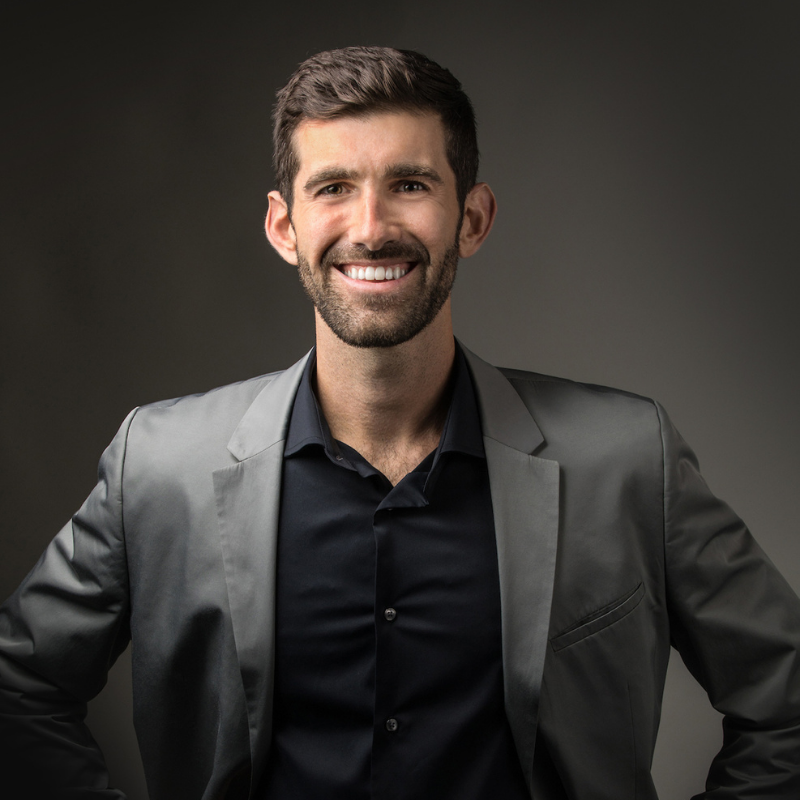
Chief Energy Officer
What happens when the thing high performers sacrifice first turns out to be the very thing costing them everything?
Devin Burke has built his life’s work around a problem millions of people quietly normalize: exhaustion. Not the kind you post about. The kind that reshapes your mood, your decisions, your ambition, and eventually, your identity. As the founder of Sleep Science Academy, Devin has become one of the most trusted voices helping exhausted insomniacs, entrepreneurs, and high achievers restore their natural ability to sleep through a science-based, medication-free, holistic approach. He is a bestselling author, TEDx speaker, and was named one of the Top 25 Health Coaches in America. His book, The Sleep Advantage, has helped bring the conversation around sleep out of the wellness fringe and into the center of performance, leadership, and everyday life.
What makes Devin so compelling is that he does not talk about sleep like a luxury. He talks about it like leverage. Like the hidden force behind energy, focus, emotional steadiness, relationships, and the quality of the life you’re building. In a world addicted to pushing through, he asks a more uncomfortable question: what if the life you want does not require more effort, but deeper recovery?


