

Dr. Jeff Gross Exposes The Hidden Founder Risk Stealing Your Focus, Energy, And Success (#545)
Send us Fan Mail “Look outside the box to be different and disrupt.”-Jeff Gross Exclusive Insights from This Week's Episodes Founder fatigue, brain fog, pain, and inflammation are not harmless. Dr. Jeff Gross reveals why healthspan is leadership capacity, and why ignoring your body quietly weakens focus, energy, and growth. EPISODE HIGHLIGHTS [00:04:00] Dr. Jeff Gross reveals why sick care leaves founders reacting instead of rebuilding health. [00:08:00] The Ferrari founder warning, why high ...
 Apple Podcasts Apple Podcasts
  Spotify Spotify
  RSS Feed RSS Feed
  Amazon Music Amazon Music
  Podcast Addict Podcast Addict
  iHeartRadio iHeartRadio
  Castro Castro
  PlayerFM PlayerFM
  Podchaser Podchaser
  Overcast Overcast
  RadioPublic RadioPublic
  PocketCasts PocketCasts
  Audible Audible
  Pandora Pandora
  YouTube YouTube
 “Look outside the box to be different and disrupt.”-Jeff Gross
Exclusive Insights from This Week's Episodes
Founder fatigue, brain fog, pain, and inflammation are not harmless. Dr. Jeff Gross reveals why healthspan is leadership capacity, and why ignoring your body quietly weakens focus, energy, and growth.
EPISODE HIGHLIGHTS
[00:04:00] Dr. Jeff Gross reveals why sick care leaves founders reacting instead of rebuilding health.
[00:08:00] The Ferrari founder warning, why high performance requires tuning the engine.
[00:12:00] Exercise becomes the 80/20 move for brain value, adaptability, and longevity.
[00:14:00] Healthspan versus lifespan, and why more years mean little without independence.
[00:23:00] Why traditional medicine moves slowly, and how founders must question old assumptions.
[00:30:00] Chronic inflammation becomes the hidden aging force draining performance.
[00:47:00] Dr. Gross shares the advice he would give his younger self about thinking beyond the system.
Full show notes, transcript, and resources for this episode:
https://podcast.deepwealth.com/545
The Deep Wealth Podcast
Most entrepreneurs do not fail.
They just carry too much for too long.
The business grows. Pressure grows faster. Profits get harder to predict. Decisions cost more energy. Over time, focus slips and health takes the hit.
The Deep Wealth Podcast and Deep Wealth Mastery are built from real experience. We're the only system based on a 9-figure exit. This system exists because guessing gets expensive.
🧠 Deep Wealth Mastery
This is for you if you want to:
• Grow a profitable business without becoming the bottleneck
• Build real value so selling is optional, not forced
• Optimize your health before it limits your business and life
One proven roadmap for real decisions.
⭐ Explore Deep Wealth Mastery
https://iapdw.com/idm
🎧 Subscribe
https://iapdw.com/podcast
📘 Free eBook
https://iapdw.com/ebook
💬 Have a question you keep circling back to?
Leave a short voicemail
https://podcast.deepwealth.com/voicemail/
Built by entrepreneurs. For entrepreneurs.
Loved this Deep Wealth Podcast episode?
You built your business from nothing.
Now make it pay off big.
📱 Subscribe Now
As a bootstrapper, every move counts. Subscribe on your favorite platform for Jeffrey Feldberg’s 9-figure exit strategies. From your morning grind to late-night planning, get insights from founders who did it without investors. These tips could change your future.
Drop a Quick Review
Got 30 seconds? Leave a 5-star review. It helps us make better episodes and reach entrepreneurs like you, hustling without a safety net.
Don’t Lose Your Exit (And Your Financial Freedom)
You’ve poured everything into your business. A bad exit could cost you millions. Most deals fail, and even “successful” ones lose half their value. The 90-day Deep Wealth Mastery program teaches you to make your business run without you and boost profits so you capture the best deal instead of any deal.
What Others Say
“Deep Wealth Mastery is pure gold. I wish I’d had it before my exit,” says Stacey C. “The value I’ve gained dwarfs the investment,” adds Sanjay S. “It makes my business great to own and sell,” shares William S.
📘 Grab Free Tools
Check out client success stories for proof. Master the Deep Wealth Strategy Map to plan your exit. Or snag the eBook, From 7 to 9 Figures: The Exit Playbook, for a clear guide.
Click here to start your legacy-defining exit today.
545 Dr. Jeff Gross
[00:00:00]
Meet Dr Jeff Gross
Jeffrey Feldberg: What happens when a surgeon who spent decades inside some of medicine's highest stakes moments begins asking a different question?
Not how do we cut better, but how do we help the body heal smarter?
Dr. Jeff Gross has built his career at that edge. He's a spine fellowship trained neurological surgeon, founder of ReCELLebrate And a physician scientist working at the intersection of regenerative medicine, longevity and performance. His path began with biochemistry at UC Berkeley continued through medical training at George Washington University and evolved into research and clinical work that's been cited thousands of times.
Along the way he moved from traditional surgery toward a more provocative idea that the future of medicine may be less about intervention and more about activating the body's own intelligence. What makes Jeff compelling is not just the credentials, it's the deeper tension underneath them. Here's someone trained in precision structure and certainty who chose to step into a field [00:01:00] still full of questions, controversy, and possibility.
He's become known for helping people think differently about pain, aging recovery and what it really means to extend healthspan and not just lifespan. And in a world obsessed with quick fixes. Jeff's work forces a bigger conversation about biology, belief, risk, and the future of human potential.
And before we start the episode, a quick word from our sponsor, Deep Wealth and the Deep Wealth Mastery Program. Here's Sanjay, a graduate of Deep Wealth Mastery, and he says, the investment I made in the Deep Wealth Mastery Program, it's a rounding error compared to the value created today and the future value I'll receive.
Or how about William, who says, and I love this, A company that's attractive to sell is also a great one to own. The Deep Wealth Mastery Program gives me the best of both worlds.
Now speaking of growth and adding value, check out what Leon says. He says that the Deep Wealth Mastery Program changed how and who we hire. We've now begun to [00:02:00] hire talent today that we never would have hired if it weren't for the program. The talent we're hiring today is helping both increase our growth and profits and our future enterprise value.
Man, I love that kind of feedback because it's that kind of feedback that's what gets me out of bed every day.
Deep Wealth Mastery System, it's the only system based on a nine figure deal. That was my deal. And as you know, I said, no to a seven figure offer, created a system that we now call Deep Wealth Mastery, and that's what helped myself and my business partners all welcome from a different buyer, a different offer, a nine figure deal.
So if you're interested in growing your profits, preparing for a future liquidity event, whether that's two years away or 22 years away, and if you want to optimize your post exit life, Deep Wealth Mastery is for you. Please email success at deepwealth. com. Again, that's success, S U C C E S S at deepwealth. com. We'll send you all the information about Deep Wealth Mastery, otherwise known as the Scale for Ultimate Sales System.
That's where you want to be. You want to be with other successful business owners, entrepreneurs, and [00:03:00] founders, just like you, who are looking to create market disruptions. Whether you're a startup, whether you've been in business for three or four decades, whether you're manufacturing, whether you're high tech, SaaS, low tech, whatever the case may Come in and network with other business owners, with other businesses, just like you, because they all want to lock in their financial freedom and enjoy both success and fulfillment.
Again, that's the 90 day Deep Wealth Mastery program. It has your name on it. All you need to do is take the next step. Please send an email to success at deepwealth. com.
Podcast Kickoff Health First
Jeffrey Feldberg: Deep Wealth Nation welcome to another episode of The Deep Wealth podcast, well Deep Wealth Nation. When you woke up this morning and your eyes opened, how did you feel? Did you have brain fog? Some aches, some pains? Oh, it hurts to get outta bed. How am I gonna get through the day? Or were you bouncing outta bed?
I can't wait for the day to start. Sadly, I suspect is probably the former more than the latter. And you're asking, okay, if health is my first wealth, what do I do? Where do I go? Where do I begin? Because we're not in a. Healthcare system. Sadly, we're in a sick [00:04:00] care system. Stop your search. We've got the incredible guest.
We have a doctor in the house of Deep Wealth. You heard the official introduction that said, Jeff, welcome to the Deep Wealth Podcast. An absolute pleasure to have you with us. There's always a story behind the story and founded a founder and someone who's a medical founder, a doctor founder. This is absolutely incredible.
So, Jeff, what's your story? What got you from where you were to where you are today?
From Spine Surgery to Regen
Dr. Jeff Gross: Thank you for having me from one Jeff to another. Appreciate that and it's great to be here. It's an honor. Actually, I'm here to share my story because I think it'll resonate with many because I was practicing in the traditional. System of healthcare, which we sometimes call sick care because we're reacting to health problems, even though there's a move for preventative care, it's really just scratching the surface.
And my patients came to me, I'm a neurosurgeon spine surgeon. I was taking care of neck and back pain and disc problems and pinch nerves and all that kind of thing. And, my patients came to me and said, Hey doc, I tried everything. You prescribed. I tried the physical therapy, I [00:05:00] tried the injections, I tried the rest I tried the yoga and the medications, the everything and I still have back trouble.
I still have this. I saw that. Okay. Well, I guess the next thing on the menu to talk about is surgery. Now. Hold on, doc. I'm not quite that bad. I'm not ready for that. I said, great, because I didn't wanna offer it to you. And then they, fold their arm and say what else you got? And I said, well. don't have a whole lot else to fill that gap. I wish I did. There are so many ideas in there, and they would say, how about this? How about that? How about stem cells? How about stem cells? You hear stem cells enough time. You get bonked on the head with a rubber mallet enough, time you're gonna act.
So instead of going to the annual spine surgery bow Tie, wearing nerd fest, I started going to stem cell conferences and said, you know what? I have some undergraduate training from a million years ago in molecular biology, which is the field of stem cells. I wonder what's happened in all these decades.
And a lot has happened, and most of that Jeff happened in Europe and in Asia. And that's why you heard [00:06:00] stories of professional athletes going to Europe to get stem cells, in the 1990s and the two thousands and what have you, and why weren't they getting them here? There are a lot of myths, and those myths are promulgated by big pharma, big implant government, about the legality and things like that.
And those myths are now busted, and I'm happy to do that with you today if need be. But we can do lot of things here. There are advanced ways of helping people heal themselves. Your body actually does the work. With what we call regenerative medicine to regenerate, and that comes from the stem cell field.
It's not all stem cells anymore, but it's stem cells signaling, which is called extracellular vesicles, or exosomes and peptides these are cells signals to wake up your cells, turn them back into a youthful. Mode for a while so they can do the job we are calling upon them to do, for us to heal and restore.
So I wanted to add that as a tool to my practice to fill that gap for people. And guess what? It's all I do [00:07:00] now.
Regenerative Tools Overview
Dr. Jeff Gross: my niche is really. Joints and spine and helping people avoid surgeries and, helping people avoid joint replacements by using a simple single injection of regenerative biologics.
The other things we do are intravenous. We do that for inflamed issues. People with autoimmune, maybe people who just wanna slow inflammation or they've been exposed to a bunch of bad stuff in the environment. Food, water, air, microplastics and people who want to, you know, you improve performance, which can overlap with your audience because part of your performance is your brain and your capacity and your ability to be resilient and adapt physically.
To extra hours and stress in building a business, we do a lot of that and we do it, we have all kinds of now specific offerings and advanced offerings here based in my Las Vegas, Nevada area office. Although most of my patients aren't from Las Vegas, We start out remotely. We can order [00:08:00] labs, we can help with body composition changes.
You know, We gotta keep you healthy. if you're an entrepreneur, if you're a startup, if you're growing a company. You're a Ferrari and you've gotta tune that engine. You've gotta keep the engine well lubricated and you've gotta keep it humming along at the high RPMs. It's humming without damaging, so you've gotta stay on top of that.
So health is part of that, and that includes the brain, the body, the soul, everything.
Jeffrey Feldberg: Wow, my goodness so much too. Peel back on and talk about, but before we do that Deep Wealth Nation, this is not medical advice, anything that we're talking about. And you have these two guys named Jeff and our parents, Jeff, amazing. They had great choice and first names, but Deep Wealth Nation consult with a medical professional before you do anything, these are two, Jeffs having a fireside chat, just sharing some personal notes and some observations.
Whats Broken in Sick Care
Jeffrey Feldberg: So Jeff, what's interesting is you started the conventional route and. No finger pointing, no deference to your traditional doctor. They're doing the best that they can with what they have. You're [00:09:00] now on the other side, and so as you look to both sides of the table, if you will, what's the biggest difference when you look at the traditional Western medical system where I go to my doctor, if I'm lucky, I get seven minutes of the doctor's time for my yearly physical and out the door I go.
What's the biggest issue? And I know it's a loaded question because that could be an episode in and of itself, and I'm asking that as one question of many questions today. But looking back, your own Cliff notes version, what's the biggest challenge from most traditional doctors today? In light of I'm a founder, I don't have a lot of time.
I'm going to the doctor. I'm taking what my doctor is saying as the gospel. This is just the way that it is. What should I know? Founder to founder.
Dr. Jeff Gross: You should now question your doctor. You should bring in your Google or your AI chat, EPT perplexity printout of questions. We need to unravel that, that's part of informed consent. We need you to be an advised. Consumer, an educated consumer, and hopefully today we are [00:10:00] educating out there.
The problem here is the tail wags the dog, the payer system. Since the mid eighties, the health insurance or sick care insurance payer system is controlling the delivery of care. There's plenty of money in the system. It's just being sucked out by the health insurance companies. For example, UnitedHealthcare.
Takes in more money in a day than they pay out in a year. Think about that. They have a 365 plus X return on their premium dollar. Why? Because in the eighties, that was health insurance was deregulated and it should be more like a public utility. Okay? You can make a 10% margin or something like that, but.
No, they're making a, 365 plus percent margin. That is the problem and that's why I visit, it's 12 minutes. Because for doctors to survive, when rent is going up and insurance is going up and cost of employees is going up they have to see 12, you know, six uh, seven, five [00:11:00] patients an hour, whatever it is, just to pay the bills.
Plus they have to hire two more people, one, to fight with the insurance company to get approvals and one to fight the denials. So it is a, um, a rationing by hassle system. And that's the problem
Jeffrey Feldberg: Wow. So a lot going on there. And again, that could be an entire, not episode, but series in and of itself. My takeaway though is, hey, as the patient, be informed, be educated, come with questions, and I'm really shaking the tree. Social programming is whoever's in that white coat, respect what they say.
Do what they say. They know what's best for you. And a lot has changed. And today it sounds like, and you're confirming this is, hey, not so quick. Sure. Be respectful. Of course. Ask the questions. Don't take it as this is the only way that it is. And so again, another unfair question, I'll rely on AL'S law, the 80 20 principle because everyone is different.
We are all unique. And that said though, when you look [00:12:00] at your patient base, your clients that are coming to you. Are you seeing some patterns? Yeah. Jeffrey, you know what? 80% of my clients, it's the same 20% of these issues. I call them opportunities, but the same 20% of these issues are coming up again and again.
What kind of patterns are you seeing?
80 20 Health Habits
Dr. Jeff Gross: Yeah, absolutely. There are a few things you can tweak and get a lot of value. So a few 20% tweaks can get you 80% of your return and that would be simple and it would be first and foremost exercise. So I know you're all busy out there. I'm busy too. Fine. 30 minute minutes to exercise and we can talk about, tweaks and hacks on how to do that more effectively. But exercise, it will get you more value out of your brain, out of your body, out of your life because it's the single best thing you can do for cellular and body Adaptability. And adaptability fosters longevity. The better your body and cells can adapt to a changing environment.
The longer it will last. So you'll live to be a hundred or [00:13:00] plus if you exercise in your sixties, seventies, eighties, and more. So exercise and exercise hard. It can be brief, high intensity heavy lifting or resistance. You don't have to hurt yourself. You can do it. Strategically, it can be elastic bands at home, but you gotta do it, you gotta strain those muscles a bit.
And you have to do it because those muscles release these small proteins and peptides when they call for help. and it causes them to build. And muscle mass, of course, is associated with longevity and it stimulates bone density. And there are other components that support that, that would be part of that 80 20 analysis.
Simple things you can do like hormone optimization. I know you've, you've talked before to others about that you have to maintain a youthful hormone profile and then there are tweaks and hacks with. Types of things we do. Regenerative medicine, peptides diet management, sleep, you're not sleeping 'cause you're a busy entrepreneur.
Yeah. You know extra and more restorative sleep can actually get you more out of what [00:14:00] you're doing during the day.
Jeffrey Feldberg: Absolutely love was there in Deep Old Nation. You heard the doctor say, okay, exercise, watch what you eat, sleep well. It's all mainly free. Very accessible. It's nothing fancy. It's not time consuming. You're doing it anyways. But I wanna circle back to something that it's easy to miss. It's so important though.
Healthspan vs Lifespan
Jeffrey Feldberg: You talked about health span versus lifespan. So for Deep both Nation, can you explain the difference to them?
Dr. Jeff Gross: Sure. Absolutely. So your grandmother might live to be 102. God bless her. That was amazing. She lived a great old life, but the last 20 years she was in a nursing home. That's no fun. That's longevity. How long you live on the calendar. Health span is filling those years with a healthy, independent life, quality of life, quality of life.
So health span means you are independent and functional and enjoying yourself and your family and your friends and whatever you enjoy in those years. So it's a healthy longevity. It's a, It's a measurable type of longevity.
Jeffrey Feldberg: Deep Wealth Nation, if you want to think about it. We all know [00:15:00] what the bell curve looks like. Unfortunately, that's most people's lives. We have that steep curve up. And you're at the top for a very short bit. And then boom, it's a big decline down. We don't want that. We want, we wanna round out, we wanna square out the curve.
So it's almost like a big rectangle. You're going up and then you're at the top, you're cruising along. And for me, we're old, we're gray. Uh, well Lived life, we. Go to sleep. We don't wake up at a rip old age of whatever that is with a terrific quality of life. So I absolutely love that.
Stem Cells Myths and Costs
Jeffrey Feldberg: So let's talk now about your secret sauce in terms of what you're doing.
Most people have heard of stem cells. I suspect though that for most deputation Yeah, I've heard of stem cells. I've seen it in the headlines, in the newspapers. Wow. Does it sound complicated? Does it sound expensive? I don't know if that's gonna be for me. What would you want us to know?
Dr. Jeff Gross: Great. So this is where we can dispel some of the myths. Thank you for that opening. So first and foremost, you don't have to leave the country to get stem cells or stem cell related biologic. Medicine [00:16:00] and it's here in the us. Why don't you hear much about it? Because we are not authorized or approved to advertise it.
You cannot advertise online. You cannot advertise on Facebook on Instagram. You get shot down, so you cannot advertise. And we certainly can't make any claims that we're curing or treating a disease or condition, even if we are doing that. Why? Because the phrase FDA approved, which is a vague and misused phrase.
Only applies to marketing claims. It does not apply in any form to what a physician or clinician can or can't do, or what a patient can or can't have. People don't understand that, and most of what we do as doctors, it is not FDA approved for marketing. For example, if you're dehydrated and you come into the hospital dehydrated, they're gonna give you IV fluids that's not approved by the FDA.
If you're low on vitamin D and we give you vitamin D replacement. In a capsule every day that's not FDA a approved, but you don't hear about that stuff. All you hear about is the things that big pharma wants to [00:17:00] suppress because they can't monetize it. So be a suspicious consumer. Bring questions to your doctor let's say you have a bad knee, and that's gonna be, you know, our great example here, you have degeneration of the knee, what's called osteoarthritis, or some doctors dummy it down to the word arthritis.
Or some even call it when you lose enough cartilage, they call it bone on bone. It's all the same process. It's an early sign of inflammation in the body, and when you have that and your orthopedist takes an x-ray and says well, your bone on bone, we better replace that knee. That's an option for you, but there are other options.
A single injection. And this is well demonstrated in European literature. And that's what we do here. We do a lot of joints and spine. We can help people with that. So that's another thing. The cost of that is actually not bad. Why? Because we are now using, not the stem cells, we're using stem cell signaling.
So stem cells, it turns out Jeff don't do the work. They deliver the work. They are the delivery mechanism for small vesicles and proteins. And these small vesicles are called [00:18:00] exosomes, if you've heard that word. If you haven't, now you have, and these deliver a message to our cells. Our cells take it in.
They get reinvigorated in a youthful way. So if you're 12 and you tweak your knee and you tear your cartilage. You're probably gonna heal it. You're gonna be fine in a few weeks, Mom may not even take you to the doctor, but when you're 62 and you tweak your knee, you go in, oh, you gotta tear, we need to do surgery.
You may not need to. And that's where I come in. I want to give up people a second opinion, alternative opinion on how we look at that. 'cause there are options to try short of surgery because surgery is many thousands of dollars and these injections are, within 10 or $12,000 to, you know, depending on how many doses, it could go more, but it's, no downtime.
You can go right back to the gym the next day. There's no recovery, there's no physical therapy you need to do. You can, so in the long run, there's no missed work and all that. The overall cost is much less than if you needed a surgery, particularly a surgical replacement or reconstruction, which is a big deal with risks [00:19:00] and pain and missed work and all that. That's where we are fitting in now, and that's most of what we're doing is helping people with those issues who want to avoid surgery.
Jeffrey Feldberg: Nation again, as we're talking about this, I want you to think about this because Dr. Jeff is coming from not just some guy off the street. We're talking about formal education here, uc, Berkeley, and then the medical training at George Washington University. Two small institutions you've probably never heard of, but some huge institutions out there, very well respected, went the traditional route and now is looking at the stem cells, the exosomes, the regenerative medicine.
By the way, I love what you've done in terms of your company name, re celebrate, R-E-C-E-L-L, Ebra. A nice play on words there.
How Exosomes Heal Joints
Jeffrey Feldberg: So talk to us about some of the science behind it in a way that we can understand. So we're being. Instead of going under the knife, we have perhaps an injection or an IV or some other kinds of things going on.
What's really going [00:20:00] on at the biological level, at the body level?
Dr. Jeff Gross: Let's stay with the joint the joint pain, the joint degeneration example. 'cause it's ubiquitous. Many, Many people have this, at some point. So the science. Is, in France university of Paris East, there is a well-known orthopedic surgeon by the name of Vivi, Peru.
And when I was getting into this field to add it for my patients before I knew it would take over my practice I looked for the best practices and protocols and he had published in 20 21, 15 year follow-up data. So that means they were doing this in 2006. Okay. That's how behind we are. in their 15 year follow-up data they did a really neat study.
They took patients who had both knees were really bad. these were patients who were recommended knee replacements on both sides. They were that bad and they said. Folks I know you need a knee replacement, but would you like to join our stem cell study? And of course, they found a number of patients, I think it was just under a hundred patients that said, [00:21:00] yes, of course, in France they say we they had all these people join their study and in one knee they injected stem cells into the cartilage layer called the meniscus, and then the other knee, they injected them into the bone edge. And this will become clear why in a minute. And they track these every five years and reported on them early. They all did well and were able to avoid the surgery. But as time progressed over those 15 years, it was clear that the bone injected group over 82% were still doing great. Functional no.
Or very little pain and able to avoid the surgery that they were once offered 15 years earlier. But the cartilage injected group, the joint injected group, only 20 some percent lasted. they proved that the cartilage factory is in the bone, and we know that the cartilage making cells that made that joint when you were a baby or you were a fetus, live in the bone edge in what we call the growth plate.
And they get inflamed early. And we get exposed to so many things that inflame [00:22:00] us. And, aging is this accumulation of inflammation. So the edges of joints are sort of like the fingertips. They get it first, they get the least blood flow. And They get cranky first, and that's why those cells aren't working well if you inject them with regenerative biologics.
And then we're using a few improvement enhancement tweaks on the, French paper we use the exosomes and there's some advantages there, both in cost and in how they distribute without taking away from the result. And we target based on a very specific type of MRI. That we have to order because it's off the secret menu.
We are having at least as good results. I haven't been doing it 15 years yet, but in the short run single injection, you go to the gym the next day we're getting busier and busier with this and their, our results are at least mimicking their, results at year six, year seven.
Why Medicine Moves Slowly
Jeffrey Feldberg: While you're talking about that, again, I wanna circle back for the benefit of Depo Nation. Okay, sure. Jeff Squared. Both of you sound like great guys and some [00:23:00] great stories here. I don't really hear a. Lot of this, or my doctor isn't talking about this. If it's that good, why aren't I hearing about that? And again, not to go down the conspiracy rabbit hole and big pharma and everything else, but practically speaking, what you've seen on both sides, I mean, what's really going on with big pharma that we don't see as a typical consumer at the front end that the medical establishment is seeing and behind the scenes?
What would you want us to know to really open our eyes?
Dr. Jeff Gross: It's a great question and I look back at my own training and practice. So, you know, I, did medical school in the nineties and I did my training in the nineties. And when I came outta training in 1999 and I started my spine practice, my neurosurgical spine practice, I did for many years what I learned to do in the nineties.
And what I learned to do in the nineties from my professors who learned it in the seventies and the sixties, and I look back even to, the last time I went to a spine meeting a couple years ago they had no education on [00:24:00] regenerative or stem cell medicine. Nothing has changed in the spine world.
Nothing has changed. Yes, there's a new widget, there's a new thing to put in a new metallic implant, but it's the same thing, right? We're still doing either an opening. Or a fusion of the spine. It is the two same things. There's nothing new happening for decades. Medicine is actually progressing very slowly on purpose, and it's this apprentice based training.
Even though we go and do continuing education hours these new biologic, cutting edge health and wellness options aren't there. Why? They're not monetizable by insurance companies, by big pharma, by big implant companies and these companies they're great companies. They do good things, but they also hold back medicine.
And that's why you go see your orthopedic doctor and you say. Hey, what about stem cell options? Doc, you have a duty to tell me all the options for my knee, right? You can do surgery, you could do a replacement, you could do a cleanup surgery. You can do a cortisone injection, you can do some lubricant [00:25:00] injection.
I could do physical therapy. I can take pain pills. What about stem cells doc? And if they say, oh, that's a great thing. I've got some options for you. Or, Hey, I don't do it, but my colleague does, that's reasonable. But if they say, oh, it's illegal or not proven yet, they're talking as if they were trained years ago by people who were trained years prior to that.
The blinders are on, the Kool-Aid is thick and they can't put it down. Thank goodness I was able to put it down.
Jeffrey Feldberg: Out so much going on behind the scenes. It truly is instead of buyer beware, patient beware in terms of what you're seeing and what's going on out there. And as I like to say, one is never a choice, two is a dilemma. It's only when you have three or more choices that's truly having some options out there, particularly to our sovereign Wealth.
It's a sovereign health and people nation. You heard it from the doctor himself. Beware. Ask the questions. Look around. Do your own research. Don't outsource your health to strangers who have 12 minutes of the time to give to you. It'd be like going to some business [00:26:00] advisor, okay, here's my business. Gimme 12 minutes of your time.
Tell me how I did and what I should be doing for an even better year. Not gonna happen that way. And so let me ask you this.
Patient Intake Blueprint
Jeffrey Feldberg: When I come to you as a prospective patient, I have. Maybe it's the need to use your example or some other kind of thing. Walk me through your system. What's typically going on? How long will this take? Generally speaking, what does it look like?
Dr. Jeff Gross: No, it's a great question actually. ' I can talk about the overview, how we do it. So we meet with people, we get to know their life, their health. What's your health background, what have you done? What medical issues, what surgeries have you had, what have you tried? If you have a knee issue, for example.
Tell me about your sleep, your exercise, your diet, your nutrition, your supplements, your stress, because we need to mitigate all those things first because you'll get a way better outcome if we can get you your body, get the fertilizer in the soil, and get you ready for this. So we wanna, go over that lifestyle and we want to talk health span and longevity and body composition change and [00:27:00] hormones and peptides, and a lot of these things can be done so that if we end up needing to do.
An exosome injection in your knee, your body is tuned up and ready to rock.
Jeffrey Feldberg: Wow. Okay. And so love how you're, okay, Jeffrey, tell me about your life. What's your lifestyle like? What's going on there?
Founder Health Pitfalls
Jeffrey Feldberg: And by the way, while we're talking about that founder to founder and speaking to Deep Wealth Nation, we're probably not helping ourselves, not probably, I know as founders who don't help ourselves, particularly on the health side, we've.
Drunk too much of the founder Kool-Aid. Like I'll wear that badge of pride of, Hey, who in the room got the least amount of sleep? Let's talk about that and all kinds of bad habits going on there, but from what you're seeing in your medical practice, what would be the top one or two things as founders that it's hurting us, not helping us, that you'd want us to know about?
Dr. Jeff Gross: I think diet, we are just not eating and I see a move afoot to remove some of the poisons out of our food chain and improve that. And I was just in Europe recently and they eat so differently there and everything is fresh. [00:28:00] They don't have a lot of preservatives why people have to walk.
you only buy enough groceries. So what you can carry back to your place. You have a small refrigerator. it's very fresh and natural and we need to go back to that. There was a time. There was a depression here almost a hundred years ago where, we couldn't feed people.
So I understand the motivation of the time was to create a sustainable food source that would last. And this is gonna cause things to be more expensive, right? Kellogg's is gonna have to take out their preservatives, which means they're that, box of cornflakes sitting on the shelf at the grocery stores, not can't sit there for two years.
The expiration date's gonna be six months. So it's gonna change things for us, we're still looking at what electromagnetic fields do to us. We're surrounded right now. You and I are surrounded by, lights and screens and cameras and technology and microphones.
So who knows what we're getting and we're learning more about that. And I think we need to get back to nature, getting our bare feet on the ground and grounding and. with [00:29:00] stress and with a lot of the acids in the diet and the food, we, our pH goes down, which means we're more acidic and that fosters more inflammatory damage.
And reactive oxygen species, if you've heard that phrase, and cell damage, cell inflammation and ages us faster. You want to age slower? You gotta get back to nature. You gotta, respect your sunlight and moonlight and eat when it's light out. Don't eat when it's dark.
Don't have screens late at night. Get your bare feet on the ground and get those extra electrons outta your body just like you would ground a lightning rod. To the ground. So, We're learning a lot about these very simple things, and a lot of them are tying us back to ancient medicine, Ayurvedic medicine, and eastern medicine.
And now we've got some better understanding of how those things might work, which means we can draw back into them. So we're seeing a, a, a resurgence of that.
Inflammation Drives Aging
Jeffrey Feldberg: And you said something that, again, it's very easy to miss. It's subtle, but it's [00:30:00] everything you said. Hey, Jeffrey. Inflammation is what causes aging. And let's now dispel Mor myth out for pulpation. So what exactly do you mean inflammation is What causes aging? You mean what it's old age that doesn't cause aging is what's, going on here?
What is inflammation? Why is it calling aging? And I wanna circle back then to stem cells and exosomes. But let's start with inflammation first. So what's going on there?
Dr. Jeff Gross: Listen, our cells age, and as they age, we age. Now, the calendar is what it is. when you turn 70. However, you can look at two 70 year olds and they look very different. One is active and has good skin, fewer wrinkles, more muscle, and one looks like, they just need to sit in a rocking chair and rock.
That's all they can do. They look older and those two 70 year olds have accumulated some different amounts of cellular junk that we call chronic inflammation. Now, inflammation has a role. If you injure [00:31:00] yourself, you do want an acute inflammatory response. That's how your immune system works.
But you wanna turn it on, then turn it off. And when it doesn't turn off over time, that system gets leaky. And that leaky chronic inflammation is what causes us to age. And people age at different rates physiologically or biologically, and we have tests for that now. Not just looking at someone or measuring their grip strength or how long they can hang from a pull up bar, which are some measures of that.
But we can look at their muscle mass, their bone density, we can look at. Changes at the cellular level, changes in the bloodstream. There are markers and there are tests you can do. Your regular doctor's not gonna order this for you. You have to be a smart consumer, and that is the measure of how much inflammation you have accumulated, and we have things we can do for that.
Now with regenerative medicine, that's where intravenous stem cells or intravenous exosomes and peptides can help reverse and slow or slow, and then reverse some of those chronic inflammatory damages and stresses and get your cells [00:32:00] aging slower.
Jeffrey Feldberg: Okay, so Deep Wealth Nation, a lot to think about there. And then let's go back again.
Exosomes Explained Simply
Jeffrey Feldberg: We're busting all of these myths. I don't wanna put words in your mouth. It's not the stem cells themselves that are doing the quote-unquote healing. It's the stem cells releasing the exosomes.
And it's almost as though, from what I know about exosomes and having other expert guests on the podcast, it's like the exosomes are the universal language for the body. The body gets these exosomes and it can then have the exosomes when they're in the right area. To go on and do some of the healing or the fixing that's needed.
So what's really going on about this? We're now getting past the headlines of stem cells and stem cells are dangerous, or stem cells are everything. And the miracle, what's really going on with the science behind that?
Dr. Jeff Gross: Molecular biology 1 0 1 is the cells communicate with their neighbors. And that communication is key. 'cause it influence, it's like a neighborhood watch influences what's going on. Hey, we've got an intruder, lock your doors, everybody. Or hey there's a bake sale, everyone please show up at the bake sale, whatever it is.
So it's [00:33:00] a cell. All cells make these smaller vesicles. They are measured in nanometers. Some people call them nanoparticles or nanomedicine. And then these vesicles are, listen, a little out bubbling of the cell and they contain messages. Those messages are microRNAs and peptides and proteins from that cell.
Another cell takes in that bubble. It dos the bubble. It delivers the contents at high delivery, at high availability, and that new cell is getting a message from the neighbor. And that message might be, Hey, wake up. Go back to your original job. Stop goofing around, stop being inflamed, and work at the optimal mode.
So anti inflamed mode. You flip the cellular machinery you change what genes are being called upon. You're not changing the genes, you're just reading the ones we need to read now, and making the proteins in the machinery to go from defense mode and inflammation. Two peace time mode. So stop making, worships, we're gonna make refrigerators and those [00:34:00] cells now can behave better.
And when we give someone a youthful stem cell or exosome treatment, we are helping to re-sign their cells back into a restorative, youthful mode. That's, and our cells do the work. If I gave you stem cells. If you came to my clinic here and I gave you stem cells in your vein, they'd be gone in a couple days, but the benefits would outlast that by weeks and months, some even permanent, why your cells are doing the work.
They just needed to be nudged and reminded.
Results Timeline and Downtime
Jeffrey Feldberg: And so that was actually one of my questions. So when receiving treatment and we're going down this particular path, obviously no guarantee for anybody, every case, it's gonna be on a person by person basis. But generally speaking, how long does it typically last? And you mention, Hey, you can come to my office today and tomorrow you're back to your life and there's no real downtime.
So walk us through that. What's going on there? Yeah.
Dr. Jeff Gross: If we do a, a joint injection procedure as I was like the French do in the bone and we do sedate people for that little twilight it does take a [00:35:00] good six to 12 months to get the type of regenerative benefit. And we do have MRIs a year later showing thickening of the cartilage. So if your orthopedic surgeon says you cannot regenerate cartilage, that's you know, a 20, 30, 40-year-old.
Idea. And it's just time for you to find someone who has new options for you. That's all. no hard feelings. And that was me 10 years ago. I was thinking old school. I needed that wake up. So it's okay if your doctor hasn't done any. It's, It's kind of the way medicine works and you gotta find someone on the newer end of it.
So if you have an iv, you might feel great the next day and that could last three six. 12 months, depending on how much inflammation you have, how your personal response is. I do an IV for myself every quarter because I have access to it, and I do it more preventative. Now I do it more to support longevity.
I've got these great ideas. I want to help a lot of people. I gotta stick around a while, right?
Real World Case Stories
Jeffrey Feldberg: And so talk to us about this really as a data point of one. So you're now following, [00:36:00] you're eating what you're baking effectively. And so from your perspective, and again, this is not medical advice, it's simply us sharing some observations here. What have you seen for yourself? What's been going on?
You take this intravenous, you're getting some stem cells, some exosomes, and what's that been like that for you?
Dr. Jeff Gross: I get a boost of energy, a couple little aches and pains tend to disappear. I can work out, I can sleep well. I recover well. you know, I wasn't suffering too much. I do have an old low back injury that acts up if I stand too long. And that's more mechanical.
But the most things I feel great you know, I'm 60 and I wanna feel great when I am 80, so I gotta keep doing this. And my mother and father 82 and 86 they come in town and they do it every six months, It's a little harder.
They fly in and they do it and they feel great, they have energy. They're still independent. And I have other people you know, I have some sweet octogenarians that come in. They have aches and pains. They do it once a year, and it, it kind of knocks down all their [00:37:00] little chronic inflammatory joint issues.
They're not bad enough to need a knee replacement or what have you, where I might do a bone injection in the knee, but they need a little boost everywhere we've done this. I have a, a person who has Parkinson's and he has very, shuffling gait. He's very slow to move. He comes in, we actually do a nasal spray, which is a great way to deliver exosomes to the brain.
And he leaves here a completely different person he can. Walk with speed, he doesn't shuffle and we watch him change right in front of us. So this is it's been amazing. We do some cosmetic things. we've done breathing treatments for people that have been become oxygen dependent.
We've helped people avoid dialysis with the IV because it helps the organs. And mostly people with inflammatory issues. So we have. A lot of different data points to draw from. You're right, not everyone gets the same result. And we have to use different doses on different people and we try different things.
And again, we wanna make sure they're all ready to go on all the other areas of their health first. So if they're gonna [00:38:00] invest in themselves this way, if they're gonna invest in their own Wealth, 'cause this is an investment that they get the most out of, they get the return on that investment.
Jeffrey Feldberg: In other words, it's not like I can go to the gym, I can put in the workouts of workouts and I go home and I have donuts and ice cream, and. French fries all day long. It's gotta be an entire system. I'm looking after my sleep, I'm exercising, I'm eating properly, and then you can come in and doing what you're doing.
And really, it all sounds very noninvasive from an intravenous to perhaps a nasal spray to perhaps some injections. And then we're really getting to the root cause of some things that, okay, maybe my body, for any number of reasons on this journey called life isn't on its own able to heal like it used to.
Maybe it's missing some of the. Key ingredients, if I can use layman's terms on that. But with some of these treatments, it can kickstart things again and give my body the building materials that it needs for that joint or that ache or that pain. Yeah, it's been there for decades. Wow, look at this. [00:39:00] It's feeling so much better.
Or, Hey, it's no longer even there. How am I doing with that?
Dr. Jeff Gross: That's exactly right. It's the whole package. It's everything we do. And there are so many. Different approaches that are way less invasive than an open surgery. And I used to do those open surgeries and I still do consult second opinions on people with neck and back and spine problems, but I'm looking for ways to not do surgery on them.
I've always been like that, but now I'm even more so.
Disrupting Sick Care
Jeffrey Feldberg: and so let me ask you this, because founder to founder, you're in a multi gazillion dollar industry. There's public companies, there's investors, all kinds of stakeholders. You're going against the green. Of profit and growth and all those other things that we do look for in business. So what's that been like for you?
How have you felt that kind of pressure or what are you seeing out there? What's been going on behind the scenes?
Dr. Jeff Gross: I have the personality that I like being the disruptor, being the contrarian. So that actually fits, I think. But the irony here is the people [00:40:00] that run these multi-billion dollar companies that are sucking the life out of, and health out of the sick care system are the ones. That have the money and wherewithal and desire to seek these cutting edge treatments.
So they're they, eat at the best restaurant and have the worst food for their guests. It's one of those things. Buyer beware, as you said, patient beware.
Jeffrey Feldberg: Yeah, so interesting out there.
Safety and Cancer Caveats
Jeffrey Feldberg: And Jeff, is there a question, an important question that you and I haven't gone over yet that you want to? Put out there for Deep Wealth Nation that you'd want them to know about this, or if it's not a question, maybe an insight or some kind of a theme or a personal observation.
Dr. Jeff Gross: We should mention, a safety profile here. We have not had issues with rejection of stem cells or exosomes. we have not had any type of problems. We do not use regular stem cells or exosomes in anyone with an active cancer. And for those people, we have very specific type of.
biologics and where this is headed, Jeff is biologics are becoming [00:41:00] more tissue specific. So we have what are called natural killer cell exosomes, which enhance the immune system to help fight diseases and cancer. So we have options for people. I do some cutting edge cancer work with people who are trying to either add to a regular treatment Or replace a regular treatment. So they don't want radiation, they don't want chemotherapy, they don't want a bad quality of life, but they want to do something. So we do have some options that we try for people. And some of those have worked and some of them we're still trying to get better at. And I'm always looking to add to that regimen for my cancer patients because you know that you get down to the Hippocratic Oath, you wanna help people.
And really people with different cancer diagnosis that's really where the rubber meets the road, and we have to find solutions there.
Jeffrey Feldberg: And what's interesting as you're talking about this, so what I'm hearing, Deep Wealth Nation, sadly, if you're finding yourself that you are a loved one, have cancer on the scene. Okay? Like anything else, some extra caution is needed, and [00:42:00] this may not be applicable. To what's going on there.
Avoiding Exosome Scams
Jeffrey Feldberg: But also it's interesting, I have a friend who's into health, but not quite into health as perhaps yourself or myself.
He said, Jeffrey, have you heard about these scam things called these exosomes? And I thought, okay, wow. If my friend is hearing about this, there must really be a big smear campaign out there with exosomes that he's asking me about this. What's been going on out there with the bad publicity?
Dr. Jeff Gross: There is a lot of scam out there. Exosomes have to meet a certain quality, so we get them from. Tissue donor services from mothers having a C-section birth. The mothers have to be healthy. They have to be not drinking, not smoking, not using drugs. They're only allowed one romantic partner and they cannot.
Have had the COVID vaccine. They donate their amniotic fluid at the time of a healthy baby C-section delivery. That fluid is then put on ice and sent to an FDA registered lab that has to meet all kinds of criteria and paperwork for the FDA and audits. [00:43:00] And, they come and look at the lab and the lab then tests it for every known virus.
And for endotoxin, they quarantine it for two weeks. And only those that meet a certain quality for both the count of exosomes and the protein content for the growth factors in there are allowed to be sold. And those are the ones we purchase. And they come to us on dry ice. I have a minus 30 centigrade freezer here in the office and we store them.
And I know there are people that don't. see this show as a video that listen, but I'm wearing my scrubs today 'cause we're doing procedures later. So I'm in my pajamas for this purpose. So we pull 'em outta the freezer and we use them. So they're basically go from the womb to ice TU right?
And there are scams where, you know, a typical dose and I might use two or three doses up to five doses on a knee, each dose. Is about 520 billion exosomes. There are people out there doing 25 or 50 billion that's not gonna do anything. In fact, there was a, a study published once saying, oh, these exosomes aren't doing anything.
First of all, they [00:44:00] injected the cartilage, not the bone. They did not pay attention to the world literature, and they were only doing like 25 or 50 billion. That's a fraction of what we use. So the scam is usually a bad source, a bad number, just so they can use the word exosome. Those are the scams out there.
Jeffrey Feldberg: It's like anything else to both nation do your due diligence. You're gonna sell a company, buy a company, you're going behind the scenes, you're asking the questions, and what we're hearing is, hey, an exosome is not. Just an exosome, it's how many are in there and where did it come from? What's the quality, the purity of what's going on and where there's money to be made.
Of course, there's gonna be some actors in there with not the best intentions, and they just want to get the money, the highest profit, and it's not your health that's coming first. So again, patient beware your due diligence and look into things. It's some great insights there.
Future of Regenerative Biologics
Jeffrey Feldberg: But on the positive side is the glass.
Always have. Full. There's a lot going on here. There's a lot to be hopeful for. And with that in mind, as we look [00:45:00] out three years, five years, 10 years from now, because this whole area is still relatively new, what would you either expect to see or hope to see down the road with this in terms of human health and not just longevity, but health span and how it can benefit us?
Dr. Jeff Gross: Well I think I can tell you what we are seeing ' because I am sticking my claws into things coming that might be available elsewhere, so I can get it here first for my patients. So we're looking at tissue specific exosomes, those that help grow hair better. Those that you know are better for us, joint issues.
Because they come from musculoskeletal stem cells or neurological stem cells for the brain. So even they have a better cargo designed for that tissue. We're looking at muse stem cells, a specific subset of stem cells that are difficult to get. We're looking at more options on the cancer side for the natural killer cell system.
Some of those immunotherapies for cancer are very lab intensive, and some of them are right off the shelf, so we're trying to make that. Simple and we're looking to [00:46:00] source some very difficult to get peptides, and we add all these together and we're finding the right recipe for things.
That's what I'm seeing. I think that's gonna continue to develop. It's gonna support our ability to help fight disease. And as you help fight disease, you live longer, so it's supporting health span.
Jeffrey Feldberg: Yeah, so truly getting into your company name to re celebrate life and health, and doing it in ways that are, it's either minimally evasive or not evasive, and we're getting back to our life the next day. And having the potential of some remarkable things, getting us back to the health the way we always wanted it to be, the way that we were.
So I love what's going on there.
Back to the Future Advice
Jeffrey Feldberg: And with that said, it's actually a perfect segue to begin to wrap things up here. It's a tradition here on the Deep Wealth Podcast. It's my privilege and honor every guest I ask the same question. It's a fun question. Let me set this up for you. When you think of the movie Back to the Future, you have that magical DeLorean car that will take you to any point in time.
So imagine now, Jeff, it's tomorrow morning. You look outside your window. Not only [00:47:00] is DeLorean car curbside, this is the fun part. It's open the door and you're gonna hop on in. You're gonna go to any point in your life. Perhaps it's Jeff as a young child, a teenager, whatever point in time it would be what would you tell your younger self in terms of life wisdom or life lessons, or, hey Jeff, do this, but don't do that.
What would it sound like?
Dr. Jeff Gross: Look outside the box, further outside the box. Look internationally what are people doing that are disrupting? Because I wasn't a disruptor. I was trying to practice at the highest level within my training in my field, and I was doing so, but I wasn't innovating or I wasn't tapping into innovation and innovating upon that.
I should have been. I wish I were. whatever you're doing now. Other people are doing or are going to do. So continue to morph and develop new ideas. Look at what's out there, improve upon them, and don't rest on your heels.
Jeffrey Feldberg: Spoken like a true founder. Hey, look outside the box, be different. Disrupt and [00:48:00] absolutely love that. Isn't that what we do as entrepreneurs and founders? That's how we change the world. That makes the world go round.
Where to Find ReCelebrate
Jeffrey Feldberg: And Jeff, someone in Deep Wealth Nation, they have a question for you. Maybe they even think, yeah, you know what?
I wanna re celebrate my life. And there's some issues here that Dr. Jeff and team can help me with. Where would be the best place online to find you?
Dr. Jeff Gross: As you were kind enough to mention, our brand name is re celebrate because we are celebrating the renewal of yourselves through these. New ways, and that's spelled R-E-C-E-L-L-E-B-R-A-T-E. And we coined the word so we pretty much own it on the internet. So if you type in the word re celebrate in your search browser, you will find our website re celebrate.com.
You'll find our social media, our LinkedIn, our Facebook, our Pinterest, whatever. That's us. Reach out. There are ways you can reach out and just follow us. There are ways if you want to talk to me, I like to meet new people. So there's an opt-in uh, form you can fill out and say, Hey, I've got shoulder pain.
I want to talk to the doc, whatever it is. We'll get you set up and we'd be [00:49:00] happy to meet anyone who's heard us here on the Deep Wealth Podcast.
Jeffrey Feldberg: And deportation. It does not get any easier. Go to the show notes. It's all there. It's a point and click. That said, it's official. Congratulations. This is a wrap, and as we love to say here at Deep Wealth, may you continue to thrive and prosper while you remain healthy and safe. Thank you so much.
Dr. Jeff Gross: Thank you.
Final Wrap and Subscribe
Jeffrey Feldberg: So there you have it, Deep Wealth Nation.
What did you think?
So with all that said and as we wrap it up, I have another question for you.
Actually, it's more of a personal favor.
Did you find this episode helpful?
Have you found other episodes of the Deep Wealth Podcast empowering and a game changer for your journey?
And if you said yes, and I really hope you did, I have a small but really meaningful way that you can actually help us out and keep these episodes coming to you.
Are you ready for it?
The dramatic pause. I'll just wait a moment. Drumroll, please. Subscribe. Please subscribe to the Deep Wealth podcast on your favorite podcast channel. When you subscribe to the Deep Wealth Podcast, you're saving yourself time. Every episode automatically comes to you, and I want you to know [00:50:00] that we meticulously craft Every one of our episodes to have impactful strategies, stories, expert insights that are designed to help you grow your profits, increase the value of your business, and yes, even optimize your post exit life and your life right now, whatever you want that to look like.
And every time you subscribe and a fellow entrepreneur subscribe, it's a testament to how together, Yes, we are. We are changing the social fabric of society. One business owner at a time, one liquidity event at a time. So don't let the momentum stop here. Subscribe now on your favorite podcast channel.
You'll never miss an episode. You'll be the first to hear from the top industry leaders, the innovators, the disruptors that are really changing and shaping the business world, and maybe you're commuting, maybe you're at the gym, maybe you're taking a well deserved break that we spoke all about on this episode.
The Deep Wealth Podcast, it's your reliable source for the next big idea that could literally revolutionize your business. So once again, please hit that subscribe button, stay connected, inspired, and ahead of the curve. [00:51:00] And again, your next big breakthrough moment, it might just be one episode away. Maybe it was even this episode.
So all that said. Thank you so much for listening. And remember your wealth isn't just about the money in the bank. It's about the depth of your journey and the impact that you're creating. So let's continue this journey together. And from the bottom of my heart, thank you so much for listening to this episode.
And as we love to say here at Deep Wealth, may you continue to thrive and prosper while you remain healthy and safe.
Thank you so much.
God bless.
Doctor/Founder
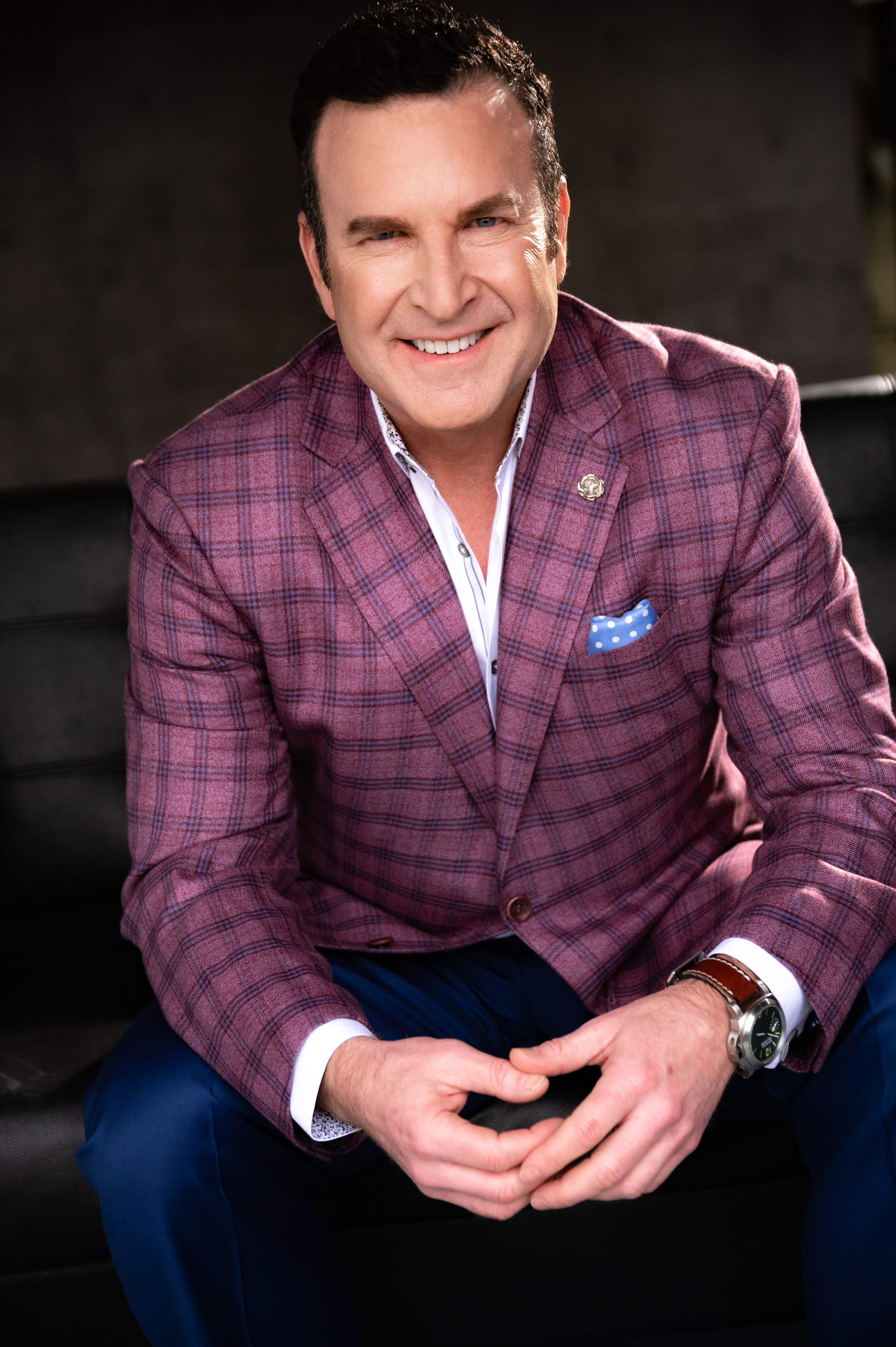
What happens when a surgeon who spent decades inside some of medicine’s highest-stakes moments begins asking a different question, not how do we cut better, but how do we help the body heal smarter?
Dr. Jeff Gross has built his career at that edge. He is a spine fellowship-trained neurological surgeon, founder of ReCELLebrate, and a physician-scientist working at the intersection of regenerative medicine, longevity, and performance. His path began with biochemistry at UC Berkeley, continued through medical training at George Washington University, and evolved into research and clinical work that has been cited thousands of times. Along the way, he moved from traditional surgery toward a more provocative idea: that the future of medicine may be less about intervention and more about activating the body’s own intelligence.
What makes Jeff compelling is not just the credentials. It is the deeper tension underneath them. Here is someone trained in precision, structure, and certainty who chose to step into a field still full of questions, controversy, and possibility. He has become known for helping people think differently about pain, aging, recovery, and what it really means to extend healthspan, not just lifespan. And in a world obsessed with quick fixes, Jeff’s work forces a bigger conversation about biology, belief, risk, and the future of human potential.


