

From MLM to 7-Figure Exit at 29: Randy Vlasic on the Massive Post-Exit Mistakes Most Founders Make (#560)


Send us Fan Mail “Welcome success faster by leaning into relationships knowing you’re not alone.”-Randy Vlasic Exclusive Insights from This Week's Episodes A successful exit can leave a founder with cash, no identity, and no plan for what comes next. Founder and CEO Randy Vlasic reveals the post-exit mistakes that damaged his direction, confidence, and family life. Episode Highlights [00:04] From MLM and mortgage sales to building a logistics company [00:07] The rushed acquisition decision Ra...
 Apple Podcasts Apple Podcasts
  Spotify Spotify
  RSS Feed RSS Feed
  Amazon Music Amazon Music
  Podcast Addict Podcast Addict
  iHeartRadio iHeartRadio
  Castro Castro
  PlayerFM PlayerFM
  Podchaser Podchaser
  Overcast Overcast
  RadioPublic RadioPublic
  PocketCasts PocketCasts
  Audible Audible
  Pandora Pandora
  YouTube YouTube
 “Welcome success faster by leaning into relationships knowing you’re not alone.”-Randy Vlasic
Exclusive Insights from This Week's Episodes
A successful exit can leave a founder with cash, no identity, and no plan for what comes next. Founder and CEO Randy Vlasic reveals the post-exit mistakes that damaged his direction, confidence, and family life.
Episode Highlights
[00:04] From MLM and mortgage sales to building a logistics company
[00:07] The rushed acquisition decision Randy would handle differently today
[00:09] Why every founder needs a clear post-exit plan before signing
[00:14] Losing the business, identity, motivation, and direction after the earnout
[00:25] How hiring experienced leaders removed the founder bottleneck
[00:41] The AI investment mistake that forced a return to simple automation
[00:45] Why relationships, mentors, and outside guidance accelerate success
Full show notes, transcript, and resources for this episode:
https://podcast.deepwealth.com/560
The Deep Wealth Podcast
Most entrepreneurs do not fail.
They just carry too much for too long.
The business grows. Pressure grows faster. Profits get harder to predict. Decisions cost more energy. Over time, focus slips and health takes the hit.
The Deep Wealth Podcast and Deep Wealth Mastery are built from real experience. We're the only system based on a 9-figure exit. This system exists because guessing gets expensive.
🧠 Deep Wealth Mastery
This is for you if you want to:
• Grow a profitable business without becoming the bottleneck
• Build real value so selling is optional, not forced
• Optimize your health before it limits your business and life
One proven roadmap for real decisions.
⭐ Explore Deep Wealth Mastery
https://iapdw.com/idm
🎧 Subscribe
https://iapdw.com/podcast
📘 Free eBook
https://iapdw.com/ebook
💬 Have a question you keep circling back to?
Leave a short voicemail
https://podcast.deepwealth.com/voicemail/
Built by entrepreneurs. For entrepreneurs.
Loved this Deep Wealth Podcast episode?
You built your business from nothing.
Now make it pay off big.
📱 Subscribe Now
As a bootstrapper, every move counts. Subscribe on your favorite platform for Jeffrey Feldberg’s 9-figure exit strategies. From your morning grind to late-night planning, get insights from founders who did it without investors. These tips could change your future.
Drop a Quick Review
Got 30 seconds? Leave a 5-star review. It helps us make better episodes and reach entrepreneurs like you, hustling without a safety net.
Don’t Lose Your Exit (And Your Financial Freedom)
You’ve poured everything into your business. A bad exit could cost you millions. Most deals fail, and even “successful” ones lose half their value. The 90-day Deep Wealth Mastery program teaches you to make your business run without you and boost profits so you capture the best deal instead of any deal.
What Others Say
“Deep Wealth Mastery is pure gold. I wish I’d had it before my exit,” says Stacey C. “The value I’ve gained dwarfs the investment,” adds Sanjay S. “It makes my business great to own and sell,” shares William S.
📘 Grab Free Tools
Check out client success stories for proof. Master the Deep Wealth Strategy Map to plan your exit. Or snag the eBook, From 7 to 9 Figures: The Exit Playbook, for a clear guide.
Click here to start your legacy-defining exit today.
560 Randy Vlasic
[00:00:00]
Founder Life Philosophy
Jeffrey Feldberg: Most founders talk about building a company. Randy Vlasic talks about building a life and then letting the company become a reflection of that life. Randy is the founder, president, and CEO of LIWMI Logistics, a full-service third-party logistics company built around fast, flexible transportation, operational excellence, and customer success.
But what makes Randy's story different is not logistics. It's the philosophy behind the name, Life is What We Make It. For Randy, business is not just about freight moving across the world. It's about identity, discipline, people, mastery, and momentum. He's a husband, father, entrepreneur, podcast host, and the founder of a movement built on the belief that the only things we truly control are our mindset and our daily actions.
Logistics, Randy sold his first logistics company in a multiple [00:01:00] seven-figure acquisition at age twenty-nine. A milestone that forced him to think deeply about success, purpose, and what comes after the win. What makes this conversation powerful is that Randy sees logistics differently, not as a back-office cost center, but as a hidden driver of customer experience, growth, and competitive advantage.
This is a conversation about entrepreneurship, faith, discipline, family, identity, and what happens when a founder decides that business should move more than goods.
It should move people forward.
And before we hop into the podcast, a quick word from our sponsor, Deep Wealth and the Deep Wealth Mastery Program. We have William, a graduate of Deep Both Mastery, and he says, I didn't have the time for Deep Both Mastery, but I made the time and I'm glad I did.
What I learned goes far beyond any other executive program or coach I've ever experienced. Or how about Bruce? Bruce says, before Deep Wealth Mastery, the challenge I had with most business programs, coaches, or blogs was that they were one dimensional. [00:02:00] Through Deep Wealth Mastery, I'm part of a richer community of other successful business owners.
The idea shared forever changed the trajectory of the business and best of all, the experience was fun. And we'll round things out with Stacey.
Stacey said, I wish I had access to the Deep Wealth Mastery before my liquidity event, as it would have been extremely helpful. Deep Wealth Mastery exceeded my expectations in terms of content and quality.
And you know what, my Deep Wealth Nation, why they're saying this is because Deep Wealth Mastery, it's the only system based on a nine figure deal. That was my deal. And as you know, I said no to a seven figure offer, and I created a system that we now call Deep Wealth Mastery that helped myself and my business partners, welcome from a different buyer, a different offer, a nine figure exit.
So if you're interested in growing your profits, preparing for a future liquidity event, if that's two years away or 20 years away, and you want to optimize your post exit life, Deep Wealth Mastery is for you. Please email success at deepwealth. com. Again, that's success, S U C C [00:03:00] E S S, at deepwealth. com. We'll send you all the information about Deep Wealth Mastery, otherwise known as Scale for Ultimate Sale. That's where you want to be. You want to be with other successful business owners, entrepreneurs, and founders just like you who are looking to create market disruptions.
And they want to lock in their financial freedom and have success and fulfillment.
That's the 90 day Deep Wealth Mastery Program. It has your name on it. All you need to do is take the next step. Send an email to success at deepwealth. com.
Meet Randy Vlasic
Jeffrey Feldberg: Deep Wealth Nation, welcome to another episode of the Deep Wealth Podcast. Deep Wealth Nation, we have a very special guest in the House of Deep Wealth. We have a fellow founder and post-exit entrepreneur, someone who is making a difference of where he's at now, but also where he's been and where he's going.
So if you have questions about what to do, what not to do, success in business and life, you've come to the right place. Stop your search. We've got it all right here. Randy, I'm gonna put a plug in it right there. Welcome to the Deep Wealth Podcast. An absolute pleasure to have you with us. There's always a story behind the story, and man, wow, you got quite the story.
[00:04:00] So share with Deep Wealth Nation, what's your story? What got you from where you were to where you are today?
Randy Vlasic: Yeah, Jeff, thank you so much for having me on this show. I'm so excited to be here. I've been a listener for a long time and appreciate everything you're doing. So blessed to be here. Thank you very much.
From Childhood to Logistics
Randy Vlasic: you know, the story behind everything that I've done so far, it all starts from where where I was in childhood.
We didn't have much growing up and, when I was younger I always had this dream, you know, like every other kid does, right? You look around, you see fast cars and big houses and boats and all that kind of stuff, and everything for me was, about chasing money.
And as I was, you know, going through school and things like that, like I wasn't always a great student, I just lived in the moment and I had a lot of fun, and I didn't really take school very seriously. But as I got older, got to a point in my life where I needed to start to really create an income, and I was looking for opportunities to do that.
Since I didn't really have much of an education after high school I had to get creative, and so I was constantly looking for opportunities and it led me eventually into multi-level marketing, and that's kind of where I got started in my business journey. You know, It was um, 1099, [00:05:00] I was selling insurance, mortgages and investments.
I was 21 years old at the time and just trying to figure things out and then I had a... my first child at a young age. I was 22 at the time and and I needed something that was more steady. 2008, the market crashed. Mortgages was predominantly my business. I got out of mortgages and I got into logistics and, the rest is history.
In 2008 started in logistics. I started out as a salesperson for a privately held company and worked through, with them for a couple years and eventually launched my first business as a freight brokerage. My first model was a franchise. I needed something that was startup turnkey.
I didn't know what the heck I was doing. I needed some backend support and I needed a system that I could follow and just execute and that led to a seven-figure exit when I was 29.
Jeffrey Feldberg: Wow. Congratulations. What a young, tender age to start at, and no one gave you anything on the proverbial silver spoon as we're talking about. Let me ask you this, though.
Skipping School Finding Path
Jeffrey Feldberg: Today, it's a lot more accepted, if I can use that word and even more popular [00:06:00] for not necessarily completing school of, "Hey, you know what?
I know where I wanna go in life," or, "School just doesn't make sense. I don't wanna have this huge debt, and it doesn't have me any better off." When you did it, it wasn't so popular, it wasn't so accepted. How was that for you in terms of your journey? Did it make a difference, not make a difference, and even to this day, what does that mean for you?
Randy Vlasic: Gosh, I got, I kicked out of school twice when I was in high school, and I went to college for a little bit and and I ended up dropping. I just couldn't afford it, just couldn't afford it, and it's challenging. You know, you, you look around, you see all your friends that are going to colleges or they're going off to colleges, and I went to go visit them and do all that kind of stuff, and I didn't really have the means to do that.
So, you know, it stinks when you're that young. You're you're trying to, find a path. You feel like everybody's got something that, you can't have, so that was challenging for me, that's when I started to see everybody kind of building their careers. I had to figure out where I was going.
The benefit that I had though was that I had a jumpstart on everybody else. While everybody was getting an education, I was trying to figure out how to build a business , the ability to go out and make income immediately, and and so I did. I looked for those [00:07:00] opportunities.
Jeffrey Feldberg: Love that. So you're really making lemonade out of lemons, as the saying goes.
First Exit Lessons
Jeffrey Feldberg: Now, you've had some exits along the way, and you had referenced one. Looking back from one post-exit entrepreneur to another, when you look at what happened or what didn't happen, and as I'm asking this next question, I'm thinking someone very specifically in Deep Wealth Nation who's saying, "Maybe not today.
Maybe it's down the road. There is gonna be an exit at one point, though." But you've been there. You've done that, as the saying goes. What would you share with us in terms of lessons learned, either in, "Yeah, Jeffrey, doing it again, I would do this all day long," or, "Wow, having been there and done that, I would avoid this like the plague.
I would not recommend it or not do that." Anything that comes to mind that you can share?
Randy Vlasic: Oh my gosh. so many things about that whole transaction and everything that I look back on every single day and I think about it. you know, At the time I was 29 years old. was the first business I ever started, so I never knew how to build a business. I had this business. I had somebody who wanted to buy my business, [00:08:00] and I didn't even know what M&A even was at the time, you know?
I mean, I remember buying this M&A book. It was so thick I had an offer on the table. I had everything on the table, and I'm thinking to myself, I'm like, "I need to read this book. Maybe this is gonna give me the answers on how to handle this situation." I had no idea, you and, when that came I was excited about it obviously.
I was looking for, the time I wanted something bigger. I wanted to be a part of something bigger, and I felt that- Selling my business brought me together with that corporation and I can make a bigger impact, so that was exciting to me. Secondly, the transaction happened so quickly there wasn't any time to really breathe or think through some of that stuff.
And I think that was, mainly on me, At the time I had a partnership. It was a challenging partnership at times, and so I was looking for maybe an out, and so it was really appealing and I wanted to move forward with that, but I rushed into it a little bit.
And if going back and looking at it again, what would I have done? I would've reached out and found some outside help, somebody who's been there, done that, been through the space, not try to [00:09:00] read a book a 90-day opportunity. I would've went and found somebody who knew exactly how to handle it because I think I did...
Maybe I did leave something on the table, but at the same time I have no regrets either. The acquisition that I made, the person that I did it with, I absolutely love them, have tremendous respect for them. I understand it from their angle today more than ever than I did n- at the beginning. And it was literally a building block in my career to launch the company I have today, I think if I would've done it again, I would absolutely do an acquisition again. I would just take my time a little bit. I would understand exactly what I wanted from that, and I might be a little bit more a little more cautious going into it and lay out exactly what I absolutely wanted from that acquisition before I actually started it.
The second thing would be, what do I do after this, I think for me, when I sold the company, I had a three-year earn-out and everything was great, but I didn't really know what my long-term plan was at the time. I didn't know what was gonna happen after the earn-out. And I [00:10:00] remember I had this conversation with someone.
I was like, it's like a a sports athlete. you have a three-year contract, that's how my earn-out was, and you're gonna perform at whatever level that you perform at. And then after that contract's over you're gonna renegotiate that contract, and they're gonna present you an offer based on what your worth is and that's kind of what happened. And I didn't know where I was gonna go from there, so when 2020 came got laid off. We laid off 150 people at the company. I was running regional offices and, you know, I ended up with no business, no platform, nothing.
I had cash and that was it, so that was a dark moment for me.
Jeffrey Feldberg: Oh my goodness. And as founders, we can certainly relate. We have those dark moments in all of our journeys.
Partnership Guardrails
Jeffrey Feldberg: You had mentioned something in terms of, and I don't wanna put words in your mouth, my takeaway is, hey, Jeff, I had this partnership, this business partnership, it wasn't necessarily the best. What would you share with Deep Wealth Nation if they're either looking to bring on a partner or they're starting a new venture and considering a [00:11:00] business partner, what would you share with Deep Wealth Nation from your lessons learned?
Randy Vlasic: From the partnership standpoint I think partnerships are really hard, just like marriage. Marriage is hard, for me, looking back on that, I think one of the most important things about the partnership and one of the most challenging things about our partnership was how do we define what your role is and what my role is, and then what are the boundaries or the guardrails that we're gonna have to say that if I'm not happy with something that you're doing, how can I come to you and tell you that?
And what is my responsibility in the business regarding that aspect? So if I use myself as an example, my focus tend to lead more towards business development. My partner was typically more the integrator operator. And there would be times where we would both have opinions on either side of the business, right?
Even though it wasn't necessarily our responsibility.
Sometimes those other sides of the business were performing at good levels, but we still had opinions, and we [00:12:00] wanted to drive those opinions sometimes, and we weren't happy with maybe some of the decisions. And, looking back, if this is going well, right?
If we've set this clear expectation, this clear guideline, this clear boundary on what you're supposed to do and what I'm supposed to do, if you hit those expectations and all those things are being met, then who am I to tell you to do it any different? And the same thing on my side, the second thing is with partnerships, there has to be, in my opinion, a third party to help manage through some of the, challenges that are gonna come up because you're not always gonna see eye to eye together, right?
And sometimes we didn't. So the way that we managed through that was through a CEO coach. actually at some point, we actually had a marriage counselor
That we were working with.
Jeffrey Feldberg: Interesting. So a marriage counselor on the business side. Absolutely love that. You're right though, Randy, because what most founders may overlook, and it's an easy one, is Who we choose as a business partner, if we decide to have a business partner, between the business partner and our team, we're [00:13:00] likely spending more time with them than we are our family.
And so who we choose is everything in terms of the business succeeding or not succeeding. And Deep Wealth Nation, I'm gonna give a shameless plug here for our Deep Wealth Mastery series of Deep Wealth Mastery Growth and Deep Wealth Mastery Exit. I love what you said, "Hey, Jeffrey, looking back, lessons learned.
If I could have spoken to someone who's been there and done that with growing and selling a business would have made a huge difference." And that's what we're all about here, of making sure that founders don't have to have those doubts or those sleepless nights in terms of how do I grow my profits?
Maybe no plans to sell, or I grow my profits and I do want to have an exit. And that said, though, at 29, it's so young and you had this exit. I know for myself, Randy, my biggest mistakes came not before the exit, but after the exit. I just did dumb things. Too much time on my hands, too many zeros in the bank, and took me a while to clean up those mistakes.
Post Exit Identity Crash
Jeffrey Feldberg: How did your exit before you got going with where you are [00:14:00] now, we're gonna talk about that momentarily, but at the tender age of 29, you've got this exit, some money, some liquidity. How did it play into your life or did it play into your life in any way for better or for worse?
Randy Vlasic: Yeah, I, like I said, it was a pretty dark place for me. my entire career up to that point was my identity had been built around my business, and so I was my business. If every single conversation, relationship, everything I had was built around that. So when it was gone, I had nothing. And, I started out in a really dark place.
I took some time off. It was also during the time COVID was happening, so I was like, "Hey, you know what? What a better time to take time off than now?" I bought a camper. I did a little bit of traveling. was in a dark place. I didn't know where I was gonna go or what I was gonna do.
I didn't have fucking money. Like I was out, I still needed to figure something out. And so that was a really dark place for me. One of the bad things that I did was I, started to look for opportunities to make money quickly and, and spend some time, and one of those things was uh, Bitcoin.
at one [00:15:00] point I was like, "Hey, you know what? I'm just gonna be a day trader and trade Bitcoin." And I was doing great at it for a really long time until I wasn't, and I ended up losing, I wanna say somewhere between the almost $20,000 in Bitcoin day trading. And that was a lesson for me.
I was like, "You know what? This isn't it," gotta really put my feet to the ground and get some things going and... so that's when I started Lumi Logistics and the Life Is What We Make It movement. But, you know, through that time the exit, had a big impact also on my relationship with my wife because the person that I was up until that point was not the same person after that exit,
didn't have the same drive. I didn't have the same motivation. I was depressed. I was not showing up as a, real leader in the home or a father. I was trying to build things that weren't moving the needle, but they were taking time, and I was pretending like it was, where I was supposed to be spending and it wasn't, it took me probably all of a year to, to figure that out and come out of that space and really get grounded again and really focus in on what I [00:16:00] needed to accomplish.
Jeffrey Feldberg: And whether it's the post-exit blues, Randy, I've been there, I've done that, and I was a company, the company was me. What's my purpose? You got this thing called a non-compete in my case, and my friends, a lot of which were in the business, even in the company, had to stop that and couldn't even associate with some of them.
I didn't want to get them into challenges. No one feels sorry, though, for some guy who's got some zeros in the bank and a lot of time on his hands sitting at home in his pajamas. Hey, no one wants to come out and play because they're busy leading their lives. What got you out of that into a better place?
And I'm asking that not for someone who's having an exit or about to have an exit, but we're all there as founders where, hey, not such a, an interesting time or not such a great time here. What was that one thing that really made a difference for you that you can pay it forward and share with Deep Wealth Nation?
Faith Identity Rebuild
Randy Vlasic: I would say there's two things. Number one was my wife got to a point where she's like, "Man, if you don't figure yourself out, like this isn't gonna work."
And so that was a wake-up call for me. I was like, man I really do need to, get it together, and it took me a long time to [00:17:00] build out of that.
We got a m- a marriage counselor and all that stuff and worked through some of those challenges. And for me, marriage was something that was like I'm never quitting. That's just how I was raised. That's one of the things that's really important to me. So that was the first wake-up call. The second one was, as I was starting to build my new company and putting all that together, I was looking for relationships in my life that could help me overcome some of those challenges.
So I reached out to my old CEO coach. I really need some support. Can you help me put some things together?" He went out of his way to to give me a promotional you know, coaching program to help me get started, and along the way, my identity piece got figured out through a friend that I met through that coach in a random introduction.
I got on a coaching call one day, and he was like, "Hey, you know, Randy, I I want you to meet this guy Martin." Martin's in supply chain, and Martin focused on SAP consulting, and it was way different than what I was doing in logistics, but, we could definitely relate on a lot of things.
And I ended up meeting Martin for lunch one day, and Martin told me about this book called Living Fearless by Jamie Winship, and it brought me to God.
And it's about- Having a conversation with God and asking him what your [00:18:00] identity truly is in life and what he has called you here to do.
And so I read through that book and I, I went through a couple months where I tried to really work on that and I identifying what my identity is and what I wanted to accomplish in life. And through that I found my identity and that brought me out of that. And then I realized that this whole thing that I've been building and what I want to build, it's not about just the business, it's about my identity,
Which is I am a believer of God, I'm a father and a husband, but I'm a builder.
the reason I'm here is to help people, to inspire people to build and to use my business as a vehicle to help the people around me succeed in life. It's not just about dollars and cents at the end of the day.
Jeffrey Feldberg: Okay. Wow, a lot there. We're gonna circle back to that because I know faith in God's a big part of what you do.
Reinventing Logistics Service
Jeffrey Feldberg: Before we get there, though, let's talk about where you're at right now, because for most people, when they hear logistics, okay, yeah, I know what logistics is, and seems kind of boring. Maybe it's the old [00:19:00] school way of doing things, not a lot in there.
But what I really enjoyed when I began to learn about your story is you've done it in a different way. In a very short period of time, you've gone from zero to hero. You're successful. You've scaled incredibly quickly, and success is not an accident. And I know for myself, when it comes to success, knowing what not to do is as much as knowing what to do.
And sometimes what not to do can be even more important, more insightful, because we're learning from failures, things that didn't work, as painful as that may be. But when it comes to what you're doing on logistics and logistics as a service, which probably for Deep Wealth Nation, maybe they've heard of that, they probably haven't.
So what's going on in the logistics space? Because from my point of view, and Jeffrey, on base or off base, society has changed post-COVID a lot, and now we're doing more online shopping and things coming to our door, and society is changing because of that. So [00:20:00] what's your role in all of that as a founder in a very established space?
You said, "Hey, I'm gonna do things differently here. I found a problem. I'm gonna be world-class in solving that step one big picture." You found an inflection point in our 9-step Deep Wealth roadmap. So what is it that you said, "I'm gonna do this better than anyone else"? Maybe they're not even doing it.
What had you hang your shingle out the door saying, "Okay, here we go. It's gonna be logistics. Let's do it"?
Randy Vlasic: Yeah. been doing logistics for so long. I've seen so many different aspects of it. It can get very complex and we make it very simple. when you talk about society and how things have changed, Jeff, If you look at Amazon and the effect that Amazon has had on us as people I can sit here and when I scroll through a product and I'm looking and I find a product, if I don't get a tomorrow option, I'm not happy, you know, for delivery.
Sometimes I'm looking for a 5:00 AM option or I'm looking for an overnight. And so it's caused us to really have this demand to receive our products in a way that's very quick, on time, and it's a [00:21:00] good experience. You know, When you have a package that's late from Amazon that's not normal, and that's upsetting. And that's the same thing for transportation. I think as, as business owners, even today still we see a lot of business owners or businesses that logistics is just an operating expense on the P&L, and it's all about saving money and doing it as cheap as possible, not understanding the value that, service of delivering quickly or on time or and a great experience has on the business and understanding what value that really drives to the relationship we have with our clients and what, that can really do for us to, increase revenue and to be a value proposition to the market. And we try to help businesses really understand that. So, what do I hang my hat on in transportation is there's really a few different businesses from one side of the spectrum to the other in our space, right? We have tons and tons of brokers, and I would say a majority of them, a lot of them are working in a very similar way.
Similar tools, similar resources, operating in a very common operating procedure. On the other side of things, you have these behemoth massive [00:22:00] brokerage companies that are spending a ton of money on technology. They're doing real things to create economies of scale and, reduce their workforce.
And then in the middle you have this middle market. And in that space what I've found is that companies really aren't getting this level of service that they need to really manage the transportation. On the large broker side, focused on the massive accounts. They don't wanna roll out a red carpet for somebody who has $5 million in freight spend.
They wanna focus on the large opportunities that are out there. So I said, "Hey, in this middle market area, I wanna focus here. I wanna create technology that enables our clients to manage their transportation in a way that they've never been able to manage their transportation before. And then I wanna use our team as a resource for them to be an extension of their company and manage this."
And so we'll collect the sample invoices, and we'll be able to build a full picture of the transportation from start to finish and every single thing in in between. And we're able to use artificial intelligence to do a lot of analytics on this and give us insight into this that a lot of companies have never even thought of.[00:23:00]
And so we focused on a few things. Number one is how do we manage the cost and mitigate things that are happening in the market today, like fuel cost increases and capacity tightening? We focused on cost. The second one is how do we enable visibility for the company and for the customer, so they can see exactly where it is, when it happens, when something goes, goes off track?
And then the third thing is how do we turn this into a value proposition for our business development team to go to the market and say, "Hey, this is something that we use and that we do differently in order to drive more revenue into the business"?
Jeffrey Feldberg: Okay, love that. So you're tuning into the world's favorite radio station, WII.FM, the What's In It For Me, but not your radio station, Randy, for your customers of taking a look at where they're at, where they're not, and how you can fill those gaps in for them. And when you look at your success to date, again, you're a newcomer in highly competitive industry.
It's very well-established. You, compared to some of the [00:24:00] others, it's a rounding error in terms of what you have in your bank account relative to these very large companies.
Scaling Strategy Hiring Experts
Jeffrey Feldberg: Was there a particular strategy that you can share with Deep Wealth Nation? I'm gonna get to your five pillars of identity in just a moment here, but was there a particular strategy that's worked well for you when you started the company that you can share with Deep Wealth Nation of, hey, you know what?
This re- worked really well for me. It may do the same for you.
Randy Vlasic: Externally going to market it's all about the people that we work with. We typically find that the warehouse managers or transportation managers are typically just focused on cost. They're not necessarily the strategic drivers of the business.
And so we wanted to have conversations with real strategic decision-makers in the business to help understand how we use this to, to make an advantage for them.
So that was our go-to-market strategy, at least for who we wanted to target. VP of operations, the COOs, even CTOs, from a technology aspect because we can integrate and do a lot of things there.
Internally you know, I did this once before and I sold them once before, so I've learned a little bit along the way.
And, [00:25:00] one of the thing, the strategies that I had building this business was I was an individual operator at first, right? I managed everything all by myself, wore every single hat. I was IT, I was marketing, I was sales, I was accounting all in the same day. And I did that as long as I could until I couldn't, and then I realized what that bottleneck is, and then I had to figure that out. And so I think one of the strategies that I took at the beginning that I'm really proud of was I went out and I, I hired people that knew the business at the beginning, not people that I could teach to run those departments or teach to run those tasks, but people that actually understood the business function, whether it be operations or account management.
Brought people in that understood it so that they could run those departments and I could delegate all of that very quickly with little to no training and not have to be responsible for that anymore, and I still have that same strategy today. We can easily become the bottleneck in our business, and I find that happens sometimes if they're always coming to me for a quote or they're always coming to me for an invoice or a accounting issue.
A lot of times we become this person that has all these things, and it slows everything [00:26:00] down, and it happens so fast. And so I've just realized now very quickly when that happens and then how to delegate that and bring somebody in to manage that. Now we're at a kind of a space where it's not just me, it's happening in other areas of the business, right?
So I'm seeing bottlenecks pop up in operations or in account management and so now we're working through those same challenges there too.
Jeffrey Feldberg: So interesting as you're talking about that, you're taking me to Step 2 X-Factors in the 9-step roadmap, where one of the X-Factors that differentiates one business from the others, particularly the competitors, it's our team and the quality of our team. And Randy, lessons learned as you're sharing this because previously you were the business was you.
You're looking for people that are better than you. Essentially, you're firing yourself that the business can run without you. I'm gonna do it though through team members that can make a difference.
Faith Conversation Setup
Jeffrey Feldberg: And wow, having been around the horn a few times, what a difference that can make in terms of what you're doing So let's circle back now, [00:27:00] and again, Deep Wealth Nation, with what we're about to talk about next, if this is not you, that's okay.
Don't hang up, as they say. Keep on listening. Some people call it God or faith or the Creator or the universe or the quantum physics or whatever the case is gonna be, the field. For you, it's God. For me, it's God. You mentioned that earlier. That was really one of the turning points for you.
Faith Driven Leadership
Jeffrey Feldberg: So I'm curious, founder to founder, Randy, how has God in business, because you don't hear that really spoken about a lot, how has that as a founder and now a man of God, how have you infused that not only for yourself and for your family, also into business and presumably your team members, all your stakeholders, your clients, your suppliers, everyone else?
What does that look like? What can you share with us?
Randy Vlasic: Wow. M- my relationship with God I grew up Catholic. As I got a little bit older I moved towards just normal Christian church. I liked the environment. But my relationship with him has gotten much closer over the last two years, pretty much since, [00:28:00] the identity crisis that I had at the beginning.
Working through my relationship with him and my identity I use that relationship every single day on every single thing that I do.
Two Way Prayer Practice
Randy Vlasic: It always starts with a conversation with him in the morning. And if you get really deep into your identity with God, one of the key things about that is the relationship that we have with him.
We always come to him and we say, "Hey, you know, God I really wish I had this. can you give me this? Can you give me this? ne- I'm in need." And we don't really have two-way conversations with him and try to understand what we're really supposed to do. And so in finding you identity in the eyes of God, my relationship with him is more now of, " Hey, I'm in this scenario.
What do you want me to know about this scenario? What do you want me to do in this scenario?" And listening, and sometimes he talks to me, and sometimes he doesn't. And sometimes it'll be very clear it'll, the answer will come pop right into my head right away and I'll implement that. it's done a lot for my business.
I realize that all the challenges, the ups and downs, the rollercoaster that we have as entrepreneurs is gonna happen, but the anxiety, the stress, the fear, all that stuff, I don't need to have [00:29:00] all of that if I just believe and I have faith and I just focus on that relationship and following the path that he's directing me to go down, jesus had a relationship where he talked to God and God explained to him what he needed to do, and he went and did it, and, I try to have that same relationship.
Bringing Belief To Team
Randy Vlasic: Now, in my business, my team is very much aware of my relationship with God and h- how much of a believer I am in faith, and they actually were part of this identity journey that I had in, in reading this book and finding my own identity.
And there were days where I would jump on a call, Jeff, and I would be so excited, smiling ear to ear, when I finally figured this thing out and I had this just enlightened feeling. And everybody's like, "What is wrong with you?" I came to him one day and I was like, "I know this is gonna sound absolutely wild to you."
Maybe it doesn't but I finally figured it out. I finally had the conversation and I explained that to them. A- and it's amazing because I think some people are-- they're not... Maybe they are believers, but, don't practice a lot or they're not really deep into it. It's [00:30:00] funny how you see some of that stuff kinda just enlighten them, and you see people just brighten up and it inspires them to do the same thing.
And so having those conversations and sharing that story with them, I think it inspired a lot of them to do that same-- to have that same journey and figure out their own identities and really get closer in their relationship with God, and we talk about that a lot of times. And there's challenges that one-- that we run into together as a team, and sometimes it's not me, sometimes it's somebody else, and God's plan.
You know? It's all gonna work out the way that it's supposed to, and we just need to know that there's a plan for us and it's not about getting so caught in the moment and stressing out and... ' Cause it's all gonna work out the way it's supposed to. At the end of the day tomorrow with no business, any of that kind of stuff, if everything fell apart, like I still have that.
I still have that relationship. I still have my identity. I'm still a builder. I can go do something different. I can build something new, make an impact in the world, and it's not all about just dollars and cents.
Jeffrey Feldberg: So interesting as you're talking about that.
God Centered Culture
Jeffrey Feldberg: What's interesting about this as you're walking us through what's been going on, so firstly, as a [00:31:00] founder You had the courage to bring this to the team and to the company. And I would suspect you're being open about this, that team members, either existing ones or potentially new ones, they're gonna self-select themselves in or out.
And what's nice about that, though, is you're transparent. You're not forcing anyone to, "Hey, if you're not a person of God, you gotta be a person of God," and this and that. It's everyone, you can make your own decision here. This is what the company's about. This is our culture, another Step 2 X-Factor that differentiates us from the others.
And Randy, I've shared this story on the podcast before. I'm gonna share it again. Incredibly successful founder, billionaire, all the accolades of success, happens to be in development, and I remember him sharing this story. He said, "Before I put God at the center of my life, I'd be like so many people when I ran into a problem, 'God, you gotta help me,' or I'm building this shopping center, 'Please bless it.
Make sure that it's gonna be a success.'" And now he's at the point, [00:32:00] "God, is that where you want me? Do you even want me to build this shopping center?" And he would go on and share things that happened. Now, you could call it lucky or coincidence or serendipity. I think none of that's the case. These things that he shared, at least for me, data point of one was that's absolutely incredible.
It was not a coincidence. And Deep Wealth Nation, this may or may not work for you, but you're hearing from Randy what a difference that's made for him. And my takeaway is having God at the center of your life, personally and in business, it's taking some of that weight off your shoulders. It's not just you.
God's got your back and the company and the team, and you're talking about that openly. It's helped accelerate and scale and tackle the daily problems that are coming at all of you and dealing with that.
Five Pillars Framework
Jeffrey Feldberg: It's actually a great segue because in preparing for today, you have the five pillars of identity and vision, people, mastery, momentum.
So when you're looking at those pillars, how did you get to that? And if I can ask an unfair question, if you had to choose [00:33:00] one, it's like saying, "Hey, which of your children is your favorite?" Do you have a favorite of the five? So what's the story behind the story on the five pillars, and which one, perhaps, at least today, you can change tomorrow, are you finding yourself leaning on more than the others?
Randy Vlasic: Yeah, you know, in my entrepreneurial journey I've worked in a couple different systems. You EOS is, one that I focused on through, you know, I learned through entrepreneurs and all that kind of stuff. And different CEO coaches that I've had all have a different version of some sort of version, and this is kind of my, version of the pillars I think that were important to me and the things that I focused on.
I think if you were to ask me what's my favorite one, I think it all starts with the identity. it has to. Nothing else really is-- Nothing else really works without having identity because you don't know who you are and
Jeffrey Feldberg: [00:34:00] Sure.
Randy Vlasic: identity is like, " I'm a CEO," "i'm a father." Yes, we are those things, right? But identity doesn't define who we are today.
And for me identity is the very first pillar and the very most important because that's how we can build the rest of those things off of. That's the most important foundational pillar.
Jeffrey Feldberg: Yeah, so much there, and I really appreciate you being open with that. And Deep Wealth Nation, again, this may not be you or your style, but could it be? Is there something there? Why not try and experiment for yourself and see what works for you and go down that path? Try it for 14 days, 30 days. See if that's making a difference for you.
Maybe it is. I suspect it will. Maybe it isn't. And I'll share with you, Randy, in my own experience, again, for so many guests, Jeffrey, it's not just about the money. Because once you get to a certain point, you can add a gazillion zeros, but substantively, it's not going to change your life a whole lot. So what is there beyond the money?
And I know some of you in Deep Wealth Nation, "Jeffrey, I'd love to have that [00:35:00] problem. I'd love to have that problem where adding a gazillion more dollars isn't going to move the dial for me in my life." When you're there, though, it does make a difference of, okay, what's the bigger picture of this? And I loved what you're saying, and let's circle back on that for just a moment.
Beyond Money Impact
Jeffrey Feldberg: The business is not just about the business. It's not just about the profits. It's something bigger than that. So talk to us about that, because I suspect, going back to your culture, Step 2 X-Factors, that this is yet another factor here that's helped your business grow and scale and become as successful as it has in an incredibly competitive space.
Randy Vlasic: you said something really important there and it's and it's not just about the dollars and zeros, but I know a lot of people think, "Well, man, I could make such an impact if I had all of this money." You can make an impact with money. It's a tool, it's a vehicle for us to do that, but we can make such an impact at every stage that we're in.
Everybody has a story, a challenge that they've overcome, and we can share that with the world every single day. For me, the journey, the movement is life is what we make it. It's all about the [00:36:00] we, it's not about the you. Not a single one of us is strong enough to accomplish what we're talking about without support from somebody else, right?
Simon Sinek said a talk one day. He's, you know, he was like, "You know, the reason you jump out of a perfectly good airplane is because of the parachute on your back. It gives you the confidence to take the leap of faith."
And that's what we can do for each other. We can be that parachute, and it starts with being open with each other and talking about the challenges and things that we're struggling with, and finding somebody that can help you.
Because when we're open and honest, the good, the bad, it builds trust. And then when we can build that trust, we c- we'll find people that can support us in those challenges that we have. And so life is what we make it. It's built to inspire people to take ownership of their lives and do something special with their life, and not just- For themselves, but to build something greater than that and share it with somebody else.
And so I'm in this journey of building this movement and everything around it and just trying to make an impact. And that's one of the things I think is really important, and I have that same culture with my [00:37:00] team, It's about us. It's about what can I do to be supportive in their lives as well.
Because in our business, we care so much for the business as an entrepreneur. The people that are showing up for us it's a job for them sometimes. They're never gonna care as much as we do as the business owner. And so for me to really get X-Factors in, an economies of scale and how much we can handle and finding people that can run through walls for us, that's done by building relationships and understanding where they wanna go and what's important to them,
What do they do outside of work? What do they want to accomplish in their life? You know, And so if I can understand that and I can help push them in that direction or help them achieve some things that maybe they wouldn't ever thought possible, then, that'll give me a ten X-Factor in the output that they give to us because they really care.
Jeffrey Feldberg: And it's interesting because unfortunately today, and I'm not gonna get into politics, this is not a political podcast, it's become very unpopular to be, in your case, a man of faith or a woman of faith. But if you look at the core tenets of [00:38:00] Christianity, and even most religions for the most part, or not religion so much, but being someone of faith, someone spiritual, it's love your neighbor, which in this case could just as easily be your team member.
Serve before being served. Be honest, tell the truth. Be humble, practice humility. Forgive, be smart about it, but forgive. And as you're going through all of that and you're instilling that with the team members. I know founder to founder, one of my struggles has always been I don't want my employees, and I call them team members, let's call them employees for just a moment.
I don't want my employees clocking in and clocking out and thinking like an employee. I want them to think like an owner. Better decisions are made. It's a better business. We're gonna scale quicker. We're gonna have better profits. We're taking care of our customers better And that's exactly what you're doing by infusing your personal beliefs through Christianity into the team, into the business, and making quite a difference out there.
So I love the, call it an experiment, for lack of a better word, I love the [00:39:00] experiment that you've been doing and how that has just propelled the business in, again, a competitive industry. You're standing out, you're making a difference. When you do look at the business, it could be something to start or something to stop in terms of actions or activities.
What would be a business strategy, a low-hanging fruit that you can share with Deep Wealth Nation? "Hey, Deep Wealth Nation, I've either started doing this or I've stopped doing this. It worked really well for me. I saw the results early on. Why don't you consider it?" What do you think that would be?
Randy Vlasic: Okay, yeah.
Ownership And Delegation
Randy Vlasic: I think one of the things that, has worked really well, when you talked about you, you don't want people just clocking in and clocking out. You want them to really come in and lead as a business owner.
I am not a micromanager. I do not wanna be a micromanager. And I've realized there's things that I love doing and things that I hate doing and, and I'm a little bit selfish in the fact that I don't wanna do the things that I don't wanna do, and so I'll find somebody else where that's their superpower. So I think that's worked really well in delegating those things. The second thing is when I talk [00:40:00] about in the life is what we make it movement, the world of inspiring people to take ownership of their lives, that's not just in building companies.
That's not just for entrepreneurs. That's for employees too, right? If I'm an employee and my dream is to travel all over the world, as a business owner, I wanna help you achieve that goal. The way that we achieve that goal is for you to own what you're doing to act as a business owner, take ownership of that role and that responsibility, and build within the, in the company so that it provides additional success for you and additional resources for you to be able to do those things.
If you're focused as an operator in your whatever business function that you're in sales or operations, whatever that may be, if you can become a builder inside of that space as a business owner, and I'm gonna give you more and more resources to continue to build, then you're gonna be able to do things that you never thought of.
So instead of just punching in, punch out, know what your vision is, and then go and achieve that inside of the company. So that is for the owners too.
AI Automation Playbook
Randy Vlasic: The third thing, what I've start and stopped doing a lot, and I think a lot of people are talking about this today, is artificial [00:41:00] intelligence.
I have this, vision of being able to automate 90% of what we do in logistics space, 'cause we don't have any trucks or assets. It's all technology. And I'm pretty darn close to being able to automate most of what we do from quote to invoice. And when I say automate them, it's not replacing people, but it's creating a force multiplier with artificial intelligence.
Using it to make somebody so resourceful and, they can do two, three, four, five times of work with- Do the same or even less effort than they did previously, and they enjoy their job a lot more because a lot of the tasks that we're replacing with AI the things that they don't want to do in their lives, right?
What I started doing with AI at the beginning was I went so deep down the rabbit hole and I wanted to build all these complex things, and we started spending money investing in things that I had no idea what were even capable. What the capabilities were. I didn't understand the maturity of artificial intelligence.
And so I had to stop for a second. I was like, "Wait a second. I'm going way overboard here. I need to take a step back and really [00:42:00] understand this." And so I invested a little bit in some education. I looked for people and experience that in artificial intelligence to really understand what the maturity level of is AI, what AI is. then I had to take a very hard look at the business to understand, are we gonna be able to automate this eventually? 100% we will. But there are things that can't be automated yet, and what are the areas of the business that are gonna move the needle the most? They're the most low-hanging fruit that we can easily automate a simple task, versus trying to automate this big complex scenario and build this very complex agents and all this kind of stuff, and just make it very simple.
Something like document retrieval, when I need to go get a credit application for a customer, where do I go? Before that was SharePoint, now that's artificial intelligence. Or, "Hey, I need a new job description for the role that I'm starting." Well, let's... AI can take all of the job descriptions that we have and create a job description for your new role that's very much aligned with every other description we have in the company.
And so a lot of those simple tasks create a force multiplier for our team to be able to do a lot more in their day-to-day [00:43:00] tasks
Jeffrey Feldberg: Some great insights, particularly around AI, which was on one of the questions for me to ask you. Cover that. What I hear, and I'm really liking what I'm hearing, and actually, Randy, what you're sharing is what the studies are saying. This is the best way to use AI, where it's a combination. It's not AI on its own.
It's not ignoring AI and we're gonna continue doing it on our own. Number one, let's do an experiment Low-cost experiment. It's not a whole bet the farm experiment. We're gonna try it. If it doesn't work, that's okay. And why don't we pick areas that you probably shouldn't be doing anyways? It's probably boring you out of your mind, and we're not gonna send you out the door and you've lost your job.
You're gonna do this. You're gonna oversee it. It's gonna allow you to climb the ladder and do even more important things that are important to you. And that's the other part. I love how you're asking your team members, "Hey, what's really important to you? What's your life goal? What's your vision for your life, and how can I be of service for you?
Yeah, technically I'm your boss. I'm the founder, owner of the company. How can I have you reach your goals and get you there?" [00:44:00] Talk about having committed team members. Some terrific insights and lessons there.
Back To Future Advice
Jeffrey Feldberg: And speaking of the lessons, we're now gonna go into wrap-up mode. It's our tradition here on The Deep Wealth Podcast.
It's really my privilege, my honor, Randy, I ask the same question to every guest. Let me set this question up for you. It's a fun one. When you think of the movie "Back to the Future," you have that magical DeLorean car that will take you to any point in time. So Randy, this is the fun part. You look outside, it's tomorrow morning.
Not only is the DeLorean car curbside, the door is open. It's waiting for you to hop on in, which you do. You're now gonna go to any point in your life. Randy, as a young child, a teenager, whatever point in time it would be, what would you tell your younger self in terms of life lessons or life wisdom or, "Hey, Randy, do this, but don't do that"?
What would it sound like?
Randy Vlasic: I would definitely go back to my high school years and I would start there and I would say, "Listen, these decisions that you're about to make, you just can't make these decisions. Like some of these things are just stupid." I would start there.
We-- Let's just get rid of the stupid decisions that we made that we just [00:45:00] absolutely should have never made. But I think the second thing is I didn't realize until later in life that you don't have to figure it all out by yourself, I tried to figure out everything by myself and it made it so much harder than it, it had to be.
I never really leaned into relationships when I was younger. I I wasn't open and transparent and honest with other people or myself I think sometimes. And I would tell myself, I'd say, "Listen, I know you wanna go build an income and you wanna do something great, but you really need to understand first who are you and what do you really wanna be to this world, number one."
The second thing is You need to go find people that can support you and help you and be your mentor and share some of their knowledge with you in order to help you do those things. You can't do it by yourself. I mean, You can, but having those relationships and people that have done it or a coach, mentor, like it speeds things up so much more, so much faster. And, it's like artificial intelligence. We're leaning into artificial intelligence so hard today because we want an answer fast. We want [00:46:00] something that's reliable, that's gonna help us overcome a challenge, and we lean into AI for that. Before artificial intelligence, that is, that was relationships, that was coaches, that was mentors, people you can reach out to.
I never really understood that until later in life met somebody else who understood that and had a CEO coach, and then I leaned in. So I think I would have been able and done-- I, I don't regret anything in my life. I think every single thing has led me to be the person I am today, and I'm very happy with the person I am sitting here at this, at the table.
But there's definitely a lot of things that I could have used relationships for, and I would have looked at relationships differently a-as I grew my business and the way I managed my business and the way I managed my life. And so I think that's really important.
Jeffrey Feldberg: Some terrific insights. Deep Wealth Nation, check that out. You're saying, "Hey, you can welcome success faster. You'll get there quicker and with better peace of mind when you lean into your relationships knowing that you're not alone." So welcome success faster, lean into your relationships, you're not alone.[00:47:00]
It's some great insights, some great wisdom, and isn't that the truth? It's so ironic that today we have more technology than ever before, yet we feel more lonely than ever before. We feel more isolated, and we've shifted away from, "I have other people," or, "I choose to have other people in my life that can be there for me.
Where To Connect Online
Jeffrey Feldberg: I can be there for them, they can be there for me, and we're gonna help each other and help us together get to where we wanna get to." Some terrific insights, especially today more so than ever. And Randy, for someone in Deep Wealth Nation, they're hearing us talk, and they're thinking, "Yeah. Wow, I would love to have Randy and his team help me with my company.
If he cares that much about his people, his company, he's gonna care about my company, and I need the logistics, and I could really use that help. Wanna have a different perspective. This is the way we've always been doing it. Maybe we can be doing it better, faster, more profitably." Where would be the best place to speak to you about business or maybe even just about life?
"Randy, you know what? I've turned away from this or that. You've turned that on. You've opened the door. Talk to me founder to founder. What should I know that I'm missing [00:48:00] here? I wanna hear that." And I'm wondering where can people online reach you to have those conversations?
Randy Vlasic: The... if someone's interested in working with me on transportation, logistics my company's Liwmi Logistics. You can go to liwmilogistics.com. Liwmi is spelled L-I-W-M-I. It's an acronym for Life Is What We Make It. So you can go to liwmilogistics.com if you wanna talk about logistics, or you can find me on any of the social media platforms.
If you're interested in following the journey of Life Is What We Make It or connecting with me personally is, in any way randyvlasic.com is a very easy way. If you go to randyvlasic.com, you can... It links to all of my social profiles. It links to the journey of what I'm building. It links to my podcast, and it links to Liwmi Logistics, so it's a good hub for everything that I'm doing.
I would invite you to reach out. I love meeting new people. I think that relationships, to me, is one of the strongest things that, that we can have in our lives. So I'm happy to be a resource if I can be.
Jeffrey Feldberg: And Deep Wealth Nation, it doesn't get any better, doesn't get any easier. It's all a point and click. Go to the show notes, check it out, click on the links. You'll [00:49:00] all get there. Life is what we make it. Speak to the man himself behind that vision. And I know on your website, Randy, you have all these incredible resources and the podcast and what you're doing and what's there.
So there you have it, Deep Wealth Nation. Go to the show notes, and Randy, from our side, it's official. This is a wrap, and as we love to say here at Deep Wealth, congratulations, and may you continue to thrive and prosper while you remain healthy and safe. Thank you so much.
Randy Vlasic: Thanks for having me, Jeff.
Jeffrey Feldberg: So there you have it, Deep Wealth Nation.
What did you think?
Subscribe And Final Blessing
Jeffrey Feldberg: So with all that said and as we wrap it up, I have another question for you.
Actually, it's more of a personal favor.
Did you find this episode helpful?
Have you found other episodes of the Deep Wealth Podcast empowering and a game changer for your journey?
And if you said yes, and I really hope you did, I have a small but really meaningful way that you can actually help us out and keep these episodes coming to you.
Are you ready for it?
The dramatic pause. I'll just wait a moment. Drumroll, please. Subscribe. Please subscribe to the Deep Wealth podcast on your [00:50:00] favorite podcast channel. When you subscribe to the Deep Wealth Podcast, you're saving yourself time. Every episode automatically comes to you, and I want you to know that we meticulously craft Every one of our episodes to have impactful strategies, stories, expert insights that are designed to help you grow your profits, increase the value of your business, and yes, even optimize your post exit life and your life right now, whatever you want that to look like.
And every time you subscribe and a fellow entrepreneur subscribe, it's a testament to how together, Yes, we are. We are changing the social fabric of society. One business owner at a time, one liquidity event at a time. So don't let the momentum stop here. Subscribe now on your favorite podcast channel.
You'll never miss an episode. You'll be the first to hear from the top industry leaders, the innovators, the disruptors that are really changing and shaping the business world, and maybe you're commuting, maybe you're at the gym, maybe you're taking a well deserved break that we spoke all about on this episode.
The Deep Wealth Podcast, it's your reliable source for the next big idea [00:51:00] that could literally revolutionize your business. So once again, please hit that subscribe button, stay connected, inspired, and ahead of the curve. And again, your next big breakthrough moment, it might just be one episode away. Maybe it was even this episode.
So all that said. Thank you so much for listening. And remember your wealth isn't just about the money in the bank. It's about the depth of your journey and the impact that you're creating. So let's continue this journey together. And from the bottom of my heart, thank you so much for listening to this episode.
And as we love to say here at Deep Wealth, may you continue to thrive and prosper while you remain healthy and safe.
Thank you so much.
God bless.
CEO
Most founders talk about building a company. Randy Vlasic talks about building a life, and then letting the company become a reflection of that life.
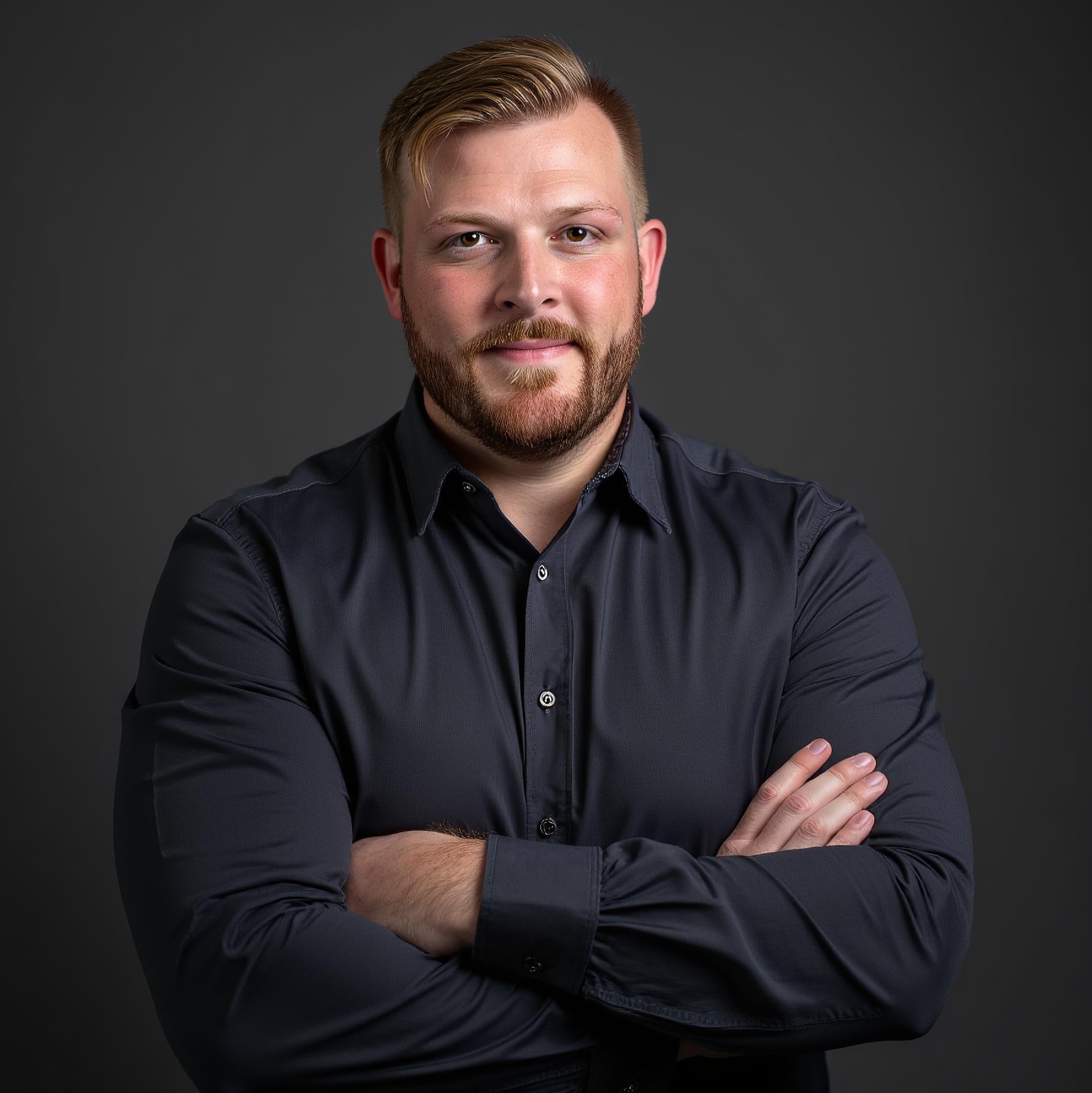
Randy is the Founder, President, and CEO of LIWMI Logistics, a full-service third-party logistics company built around fast, flexible transportation, operational excellence, and customer success. But what makes Randy’s story different is not simply logistics. It is the philosophy behind the name: Life Is What We Make It. For Randy, business is not just about freight moving across the world. It is about identity, discipline, people, mastery, and momentum.
He is a husband, father, entrepreneur, podcast host, and the founder of a movement built on the belief that the only things we truly control are our mindset and our daily actions. Before founding LIWMI Logistics, Randy sold his first logistics company in a multiple seven-figure acquisition at age 29, a milestone that forced him to think deeply about success, purpose, and what comes after the win.
What makes this conversation powerful is that Randy sees logistics differently. Not as a back-office cost center, but as a hidden driver of customer experience, growth, and competitive advantage.
This is a conversation about entrepreneurship, faith, discipline, family, identity, and what happens when a founder decides that business should move more than goods. It should move people forward.


