


Dr. Kyle Hulsebus: What If Your Best Years Begin After 40? (#585)
Send us Fan Mail “There are no mistakes, keep doing it.” -Kyle Hulsebus Exclusive Insights from This Week's Episodes Your 40s can expose years of ignored health patterns or become the start of your strongest chapter. Dr. Kyle Hulsebus reveals why founders must track the health behind their performance. Episode Highlights [00:17:28] The founder health patterns that appear when business pressure becomes physical [00:21:20] Why recurring symptoms become dangerous when founders accept them as nor...
 Apple Podcasts Apple Podcasts
  Spotify Spotify
  RSS Feed RSS Feed
  Amazon Music Amazon Music
  Podcast Addict Podcast Addict
  iHeartRadio iHeartRadio
  Castro Castro
  PlayerFM PlayerFM
  Podchaser Podchaser
  Overcast Overcast
  RadioPublic RadioPublic
  PocketCasts PocketCasts
  Audible Audible
  Pandora Pandora
  YouTube YouTube
 “There are no mistakes, keep doing it.” -Kyle Hulsebus
Exclusive Insights from This Week's Episodes
Your 40s can expose years of ignored health patterns or become the start of your strongest chapter. Dr. Kyle Hulsebus reveals why founders must track the health behind their performance.
Episode Highlights
[00:17:28] The founder health patterns that appear when business pressure becomes physical
[00:21:20] Why recurring symptoms become dangerous when founders accept them as normal
[00:24:01] The health KPIs that go far beyond sleep, exercise, and physical fitness
[00:29:30] Why your 40s may be the beginning of your strongest and most productive years
[00:35:41] How small daily choices can quietly compound into larger health consequences
[00:38:39] Two simple practices to reset before high-pressure decisions and improve recovery
[00:45:15] Why health means wholeness across your body, business, finances, and relationships
Full show notes, transcript, and resources for this episode:
https://podcast.deepwealth.com/585
The Deep Wealth Podcast
Most entrepreneurs do not fail.
They just carry too much for too long.
The business grows. Pressure grows faster. Profits get harder to predict. Decisions cost more energy. Over time, focus slips and health takes the hit.
The Deep Wealth Podcast and Deep Wealth Mastery are built from real experience. We're the only system based on a 9-figure exit. This system exists because guessing gets expensive.
🧠 Deep Wealth Mastery
This is for you if you want to:
• Grow a profitable business without becoming the bottleneck
• Build real value so selling is optional, not forced
• Optimize your health before it limits your business and life
One proven roadmap for real decisions.
⭐ Explore Deep Wealth Mastery
https://iapdw.com/idm
🎧 Subscribe
https://iapdw.com/podcast
📘 Free eBook
https://iapdw.com/ebook
💬 Have a question you keep circling back to?
Leave a short voicemail
https://podcast.deepwealth.com/voicemail/
Built by entrepreneurs. For entrepreneurs.
Loved this Deep Wealth Podcast episode?
You built your business from nothing.
Now make it pay off big.
📱 Subscribe Now
As a bootstrapper, every move counts. Subscribe on your favorite platform for Jeffrey Feldberg’s 9-figure exit strategies. From your morning grind to late-night planning, get insights from founders who did it without investors. These tips could change your future.
Drop a Quick Review
Got 30 seconds? Leave a 5-star review. It helps us make better episodes and reach entrepreneurs like you, hustling without a safety net.
Don’t Lose Your Exit (And Your Financial Freedom)
You’ve poured everything into your business. A bad exit could cost you millions. Most deals fail, and even “successful” ones lose half their value. The 90-day Deep Wealth Mastery program teaches you to make your business run without you and boost profits so you capture the best deal instead of any deal.
What Others Say
“Deep Wealth Mastery is pure gold. I wish I’d had it before my exit,” says Stacey C. “The value I’ve gained dwarfs the investment,” adds Sanjay S. “It makes my business great to own and sell,” shares William S.
📘 Grab Free Tools
Check out client success stories for proof. Master the Deep Wealth Strategy Map to plan your exit. Or snag the eBook, From 7 to 9 Figures: The Exit Playbook, for a clear guide.
Click here to start your legacy-defining exit today.
585 Kyle Hulsebus
[00:00:00]
Health Beyond Fixing
Jeffrey Feldberg: Most people think health is something you deal with after it breaks. Dr. Kyle Hulsebus sees it differently. Dr. Kyle is an author, speaker, educator, health and human potential specialist, and a third-generation chiropractor active in his family's practice in Northern Illinois. His work lives at the intersection of the body, the mind, leadership, and organizational alignment.
He helps individuals and people-driven organizations solve chronic underlying issues, so they can move towards what he calls a state of wholeness beyond simple physical health. What makes Dr. Kyle's work compelling is that he's not only talking about posture, pain, or productivity. He's asking a deeper question.
What happens when the person leading the company is physically misaligned, mentally overloaded, emotionally [00:01:00] reactive or disconnected from the people around them?
Dr. Kyle's background is unusual. He spent his life around philosophy of health and wellbeing, studied across many disciplines, and brings together chiropractic care, storytelling, consulting, speaking, aikido, tai chi, and ballroom dance into a very human conversation about performance and alignment.
For founders, that matters because a company can only scale as far as a leader's body, mind, relationships, and nervous systems can sustain.
And before we start this episode, a quick word from our sponsor, Deep Wealth and the 90 Day Deep Wealth Mastery Program. Here's Jane, a graduate who says, and I quote, the Deep Wealth Mastery Program prevented me from making what would have been one of the biggest mistakes of my career. I almost signed on the dotted line with an unsolicited offer that I now realized would have shortchanged my hard work and my future had I accepted that offer. Deep [00:02:00] Wealth Mastery has tilted the playing field to my advantage.
Or how about Lyn? Wow, he gets right to the point, and I quote, Deep Wealth Mastery is one of the best investments ever made because you'll get an ROI of a hundred times that. Anyone who doesn't go through this will lose millions.
And as you're listening to these testimonials, are you wondering if you have the time? Are you even thinking that you've got this covered, you have the advisors or people in your network? Well, I got to tell you, these myths, they're often behind the 90 percent failure rate for liquidity events. Think about it. You have one chance to get it right for your financial freedom. You really want to make it count.
And when it comes to time, let's hear what William has to say. We just got in this testimonial, William says, and I quote, I didn't have the time for Deep Wealth Mastery. But I made the time and I'm glad I did. What I learned goes far beyond any other executive program or coach I've experienced.
So what do you think?
As I hear that, that's exactly what gets me out of bed every day. That's my mission. That's the team's mission here at Deep Wealth to literally [00:03:00] change the social fabric of society. One business owner at a time, one liquidity event at a time, and my Deep Wealth Nation, what I want you to know, the Deep Wealth Mastery Program, it isn't theory.
It's from the trenches. It's the only one based on a nine figure deal. And that deal, that was my deal. You know my story. I said no to a seven figure offer. I created the system that later on, myself and my business partners, we said yes to a different buyer, a different offer, a nine figure deal. That's what we now call the Deep Wealth Mastery Program or the Scale For Ultimate Sales system.
It's built by business owners, for business owners, so if you're interested in growing your profits for preparing for a future liquidity event, and that may be two years away, it could be 22 years away, whatever the time may be, you want to do this now, and you want to optimize your post exit life, Deep Wealth Mastery is for you.
To get started, email success at deepwealth. com. Again, that's success. S U C C E S S at DeepWealth. [00:04:00] com. You'll receive all the information about the Deep Wealth Mastery Program or better yet, why not hop on a complimentary strategy call.
We'll go through exactly where your business is today and what's standing between you and your financial independence and your dreams. So that's where you want to be. You want to be with other successful business owners, entrepreneurs, and founders, just like you they're looking to grow their businesses, create markets.
Market disruptions and unlock their financial freedom to get what they deserve. And whether you've been in business for three years, 40 years, you're a startup, you're manufacturing you're in high tech, low tech, whatever the case may be, coming in and network with other business owners, it's a safe space.
It's a confidential space with business owners, with businesses just like you, because they all wanna lock in their financial freedom and enjoy both success and fulfillment. So again, the 90 Day Deep Wealth Mastery Program, it has your name on it. All you need to do is take the next step. Please send an email to success at deepwealth. com.
Welcome and Big Question
Jeffrey Feldberg: Deep Wealth Nation, welcome to another episode of the Deep Wealth [00:05:00] Podcast. Deep Wealth Nation, here's an honest question for you. When you woke up today, how did you feel? And if you're saying "Well, Jeffrey, oh, not so great," or, "I lost that spring in my step," sadly, you're not alone. So many of us feel that.
What do you do? Where do you turn? Where do you start? We have a very special guest in the House of Deep Wealth. You heard the official introduction. And so I'm honored to have Dr. Kyle with us, who is an author, third generation doing what he's doing, a thought leader. He's out there making a real difference and change.
So Dr. Kyle, welcome to Deep Wealth Podcast. An absolute pleasure to have you with us.
Kyle Scenic Route Story
Jeffrey Feldberg: You know, There's always a story behind the story. You have quite the story. So why don't you share with us the story behind the story of what got you from where you were to where you are today?
Dr. Kyle Hulsebus: All right, that's lovely introductions. Thanks very much, Jeff. And this opportunity to share. The story behind the story is people ask me, they go, "How'd you get into..." currently a practicing chiropractor. I'm third generation, as you hear. And meaning my dad was, my [00:06:00] grandfather was.
I practice with my wife, my brothers, my dad, my uncles, my cousins, you know, big family. And been very influential. But everybody goes "Well, then you must have just wanted to do that your whole life." I go "No, I was a teenager, like most of us who are smarter than our parents, right?
And so I used to be the kid that said, "I'm never gonna do what Dad does, because I got my own thing." I got my undergrad degree in theater. I have a degree in English literature, a minor in Buddhist philosophy, and, I've been a freelance writer, a world traveler, a travel writer, a bartender.
I've run a shoe company. I just... All sorts of stuff. So as people say, "How'd you get to where you are?" I said, "I took the scenic route. I took the scenic route." I think a lot of entrepreneurs that I've met and I've interacted with, I know you've interacted with a lot, they seem to be scenic route people too.
there's not many that, just said, "Yes, I know exactly what I'm going to do. When I'm 18, I will drop out of school and start a business in my garage." And but, many people ended up going down that route. So I was one [00:07:00] of the ones that tried to make it doing freelance writing.
I was doing, marketing. I did copywriting. I've studied a lot of copywriting. And ended up in a place in Chicago where, I was living off my savings. I wasn't doing any regular work. I was getting frustrated with trying to make it in the freelance world, even though I'm at heart a, a story writer, a storyteller more than anything.
And I hit this point where I was asking my dad for all this help in trying to market healthcare products, believe it or not. And my dad goes, "Do you know why you have such a problem doing this?" I said, "Why?" He said because you grew up with me, and philosophy, and first principles and everything, and this is clashing with everything you know to be true.
So would you please just go get the degree?" and get doctor in front of your name and have some authority and actually be able to help people with this. Because at the time I was sending people two hours to do me to go see my dad for help in chiropractic and their health problems and everything.
And, just the, the way that I got to see that reflect in all their lives and their business and their marriage [00:08:00] and their relationships with their kids and even their physical health on top of that was pretty phenomenal. And I finally looked around at my life and I go, "Okay." and I think I, same thing with a lot of entrepreneurs or people that jump in, they just go, "All right," and then tomorrow they started.
And so the next day I got a plane ticket and I went to California and started my journey into, to getting school and then after that met my wife. We've been married. We've been into practice now for 15 years, 16 years, somewhere in there, and just started to branch out. I missed my storytelling. I missed my sort of performing that I used to do and my writing.
I've gotten back into it. You know, voice acting I'm doing a little of and then I've created stuff where now I'm speaking and working to bring these ideas and these first principles of health to, to more individuals.
Jeffrey Feldberg: I absolutely love that you're out there and came back to first principles, came back to the family tradition with that.
What Chiropractors Do
Jeffrey Feldberg: I'm gonna ask what may sound like a dumb question, but I was always raised, Jeffrey, the only dumb question is the one that never gets asked. And I'm [00:09:00] sure people have heard of chiropractors and maybe some good connotations, maybe some not good connotations.
Let's set the record straight for someone who's, "Yeah, I kinda heard of it, but not quite sure. Is it the real thing? Is it not?" So what's a chiropractor? Why don't you set the record straight for Deep Wealth Nation of what it is that a chiropractor really does, the fact from the fiction?
Dr. Kyle Hulsebus: I think that's a fair question 'cause gets asked a lot. I'll start with, I'll start with basics, okay? The word chiropractic came from the Greek. You'll hear me a lot now. I'm gonna talk about words. And cheiros, cheirós meaning hand, and then praxis. If you ever listen to, to Bob Proctor, he loves praxis.
meaning doing, and so it meant done by hand, meaning we're doing this skill by hand. Not that the, the ideas of chiropractic were necessarily new in 1895, but the way we started to practice under Dr. D.D. Palmer was. So what a chiropractor does is we're doctors of the spine and nervous system, essentially.
And so your brain being the [00:10:00] main aspect organ of your body that's main job is to harness all these trillions of cells we have in these organ systems into coordinated harmony in order for us to express life, to express health. And about the only way that we view that you can interfere with the communication system is where the nerves, which are like the superhighway of your nervous system, the nerves can be impinged if we get misalignments in our spinal bones.
So when chiropractors get this sort of reputation as back doctors, we're not really taking care of your back so much as we X-ray your spine, we look for specific areas of specific misalignments where you can have interference there, and then we're going to very specifically adjust them typically over the course of time on a plan in order to get the body to heal to the point where you don't need us doing that all the time.
Our objective is to remove interference to expression of health so that the body can function at 100%, and it's [00:11:00] going to be a self-adapting, self-healing organism. That's not to say that y- you don't need interventions from other healthcare practitioners, which we all work with. But the main thing we're doing is people say, "Oh you go for neck pain, you go for headaches, you go for back pain."
I go, "Great, we can help with that." But I don't really cure that. I don't really heal that. I take care of the spine. That's where you hear that, "Oh, they helped me with my digestive problem," or, "They helped me with my earache," or, "They helped me with my knee pain." That's because we're taking care of the nerve connection from the brain to those parts and allowing the body to go through self-healing, self-restoring.
myself and our office, we see roughly on average somewhere from two to three hundred conditions on a regular basis that people are coming in for, but we all treat them from that landmark of how do we get the spine, the nervous system, the main function of the body back?
Jeffrey Feldberg: And when I share with you, and thank you for putting that out there, my goodness, there's a lot to unpack there. What really [00:12:00] stands out for me are a few things I really appreciate. You're talking about the body as a whole body. At least here in the West, we've been conditioned that, okay, a certain body part is hurting or not functioning properly, I will see a specialist in that area, but everything is in silos and no one's talking to the other.
And I'm hearing you say "Well, actually no, Jeffrey, the body, it's a whole entity." And then the other thing I'm hearing you say, and Jeffrey, on base or off base, I'm looking at the whole body and can I give the body what it needs to naturally heal on its own as opposed to Jeffrey here, take this pill and off you go and best of success to you.
And there's no deference, by the way, to Western medicine. Western medicine for me can do some amazing things, especially in emergencies.
Dr. Kyle Hulsebus: Absolutely
Jeffrey Feldberg: Outside of that though, that's a whole other story. And by the way, Deep Wealth Nation, this is not medical advice. Dr. Kyle and I, we're two friends sitting around a fireside chat.
[00:13:00] We are sharing stories with one another. Always seek the proper medical expert or medical advice before you do anything. And it's just, again, Dr. Kyle and myself who are sharing some of our own data points of one and some interesting stories back and forth with one another. And so really what I'm hearing you say is, "Jeffrey, can I get to the root cause?"
Which I don't really hear a lot in Western medicine. "Oh, Jeffrey, you've got a headache, so take this pill, the headache will go away." No one's asking why do you have the headache? Where's the headache coming from?" And I'm hearing you say that, so would love some more of your thoughts on that to, to share with Deep Wealth Nation.
Wholeness and Root Cause
Dr. Kyle Hulsebus: Yeah, as you brought up you said I'm looking at it holistically. And that's why we're called holistic healthcare providers and holistic doctors because we see the body as a whole, and we focus on the spinal column and many other things. But let me give you the root of another word.
So I talk mainly i- in tell-- I say I tell stories about health and human potential. The [00:14:00] word health means a state of or a condition of wholeness and "heil" in, in Old English and Anglo-Saxon was whole. and if we find the old Merriam-Webster dictionary and you go look up one from the '60s, you'll see that the definition of health actually is a state of wholeness in which all the organs of the body function together at 100%, 100% of the time.
So there's nothing to do with sickness or dis-ease within any of those. I- order to have health, you only need two things. In chiropractic, we'll say you need 100% of the parts, and then you need 100% of the intelligence or function or communication to those parts and between those parts. As you said, they're not isolated.
They're all talking to each other, and the brain's the coordinating master system of all that. So we look at it holistically, and then we work with what I would call and not in a condescending way, I would say parts people, which are medical doctors, are masters at looking at the parts, and then we work in tandem with each [00:15:00] other to help people express that health.
But you're right, the main objective of Dr. D.D. Palmer in 1895 with the different stuff he was studying, it was a time of invention. It was a time-- It's funny, if you look at the confluence of events in the 1890s, within a month of chiropractic being discovered and beginning, X-ray was also first discovered by Dr.
Röntgen in Germany. those two professions or disciplines have actually grown together, which is real interesting when you look. But you had Edison at work then. You had quantum physicists starting to do quantum stuff back then, and all these things we sort of understand today, more or less, really were getting their origin.
So what Dr. Palmer was trying to find was he was frustrated with healthcare, and he said, "I wanna find the root cause of all dis-ease in the human body." And he believed he found it there with what he calls a subluxation of the human spine, subluxation being defined as [00:16:00] a misalignment of the bones, not a dislocation of the bones, 'cause it's sub.
It's less than a full dislocation, where there is impingement on the nerves, and it's interfering with the brain's ability to communicate with the part and the part's ability to communicate with the brain
Jeffrey Feldberg: Yeah, so interesting.
Founder Health Patterns
Jeffrey Feldberg: And at the risk of oversimplifying, let me put this out there in, in terms of a, a question with the full understanding that if you said, "Hey, Jeffrey, every person is different," I would agree with you. That said, though, let's focus in on founders, entrepreneurs, business owners, generally speaking.
And one of my favorite questions in this kind of scenario is two fancy words, Pareto's law, most commonly known as the 80/20 principle, where as an example, 20% of this subset of we'll call them conditions or problems are affecting 80% of founders out there, or it could be 90/10 or 95/5 or 75/25. It's not exactly [00:17:00] 80/20, but it's close enough.
Let's keep it to 80/20 for the sake of this conversation. So generally speaking, are there certain health patterns, especially for founders, that in your practice you're saying, "Yeah, you know what, Jeffrey, 80% of the founders that I am seeing as patients, part of my practice, the same 20% of these issues keep on cropping up," or, "Here is this one pattern that's affecting 80% of them."
What would that pattern be? What would that issue be?
Dr. Kyle Hulsebus: we can pinpoint, we can get some sort of generalizations there, but yeah, I see a lot of business owners. We see a lot of... We're a huge blue-collar town where I'm at, so we got big businesses, small businesses, entrepreneurs. The probably some of the more common things that I see in there, and what, especially when I get the guys where I go we really it'd be wise for you to be doing better than this," same reason I'd ask a high-end athlete to come in regularly. I see a lot of individuals maybe everybody listening is familiar with this. We'll start doing stuff, [00:18:00] and 28 hours later we look and we go, "When did the sun go down and come back up?"
And you're going, and then you have people that have to say hey, you gotta eat.
You gotta eat, you're gonna run out of fuel." I see people not... I wouldn't call it burnout, because burnout means you're no longer inspired by what you're doing.
I'd call it more that your body, you're pushing your body to such limits, and you're not keeping it fueled, you're not keeping it to the level it can.
And then you start to worry about stuff, especially if you're trying to do it 100% on your own. That's where Pareto's principle is important. You focus on that 20% that gets you the 80%. But a lot of entrepreneurs, a lot of individuals, especially when you're throwing debt out there, start off on their own, and you find you're even taking out the trash, and you're worried about keeping up with whatever's going on.
And suddenly, the next day it's, okay, now you're getting chronic gut problems. Digestive issues are some of the biggest ones I think I see. Low back issues, like very deep low back issues. not sciatica, but that'll crop up. But just, man, [00:19:00] I can't sit up straight. It just... Because i- almost in a, literal sense sometimes, you're carrying the weight of your business, you're carrying the weight of your company on your back or your family.
You're going in some people jump in entrepreneurship. I've had some individuals that do it, and they go, "Yep, I'm quitting my job. I'm gonna start doing this. My wife said it's okay. We'll figure out. We have enough savings for six months type of thing." Man, if you're not making it, suddenly all these health conditions show up to stop you.
I don't see headaches quite as much. Still you'll see that pop up, but dizziness, when it feels like everything's spinning around you as fast as possible. So it's kinda like vertigo, low back pain, gut issues. I've got so much to churn and stomach beats you up, and that's, sort of the average that I'll see come in.
And especially when you're going through major challenges either in growth to the next level or, you've probably seen it too, Jeffrey, when you got people that are thinking about exiting and they're going, "Is that the right decision?"
Jeffrey Feldberg: Absolutely. And what's interesting, [00:20:00] I've been even myself, to put myself under the microscope, not pointing at anyone other than me, at different parts of my journey in a room full of founders, and it's a competition. "Okay, who got the least number of hours of sleep? Who's worked the most? Of how many hours a day?"
Like a, a badge. I'm proud of this. It's a badge of, "Yeah, look at me, I got the least number of hours of sleep," and this and that. It- we're comparing the wrong things. And to your point, the body is always speaking to us. Really, for me, the question is, are we listening?
Dr. Kyle Hulsebus: Exactly.
Body Warning Signals
Jeffrey Feldberg: And so I'm hearing you share of, okay are you listening?
Maybe it starts off with digestion problems or other kinds of signs. What would be some telltale signs from the body of discomfort, or I like to say dis-ease, and I separate the two very deliberately, of, yeah, you know what? This feels different. I don't always remember feeling like this. But it's that frog in boiling water.
It's just so [00:21:00] slow over time that we take it as a new normal. We almost forget what it was like to feel vibrant and healthy. So what would be some of the telltale signs of, hey, something's going on here. You may wanna look into what you're doing more than you have, or maybe start or stop doing certain things?
Dr. Kyle Hulsebus: your first feedback will always come from your body and it'll be in little things. And what you wanna observe is not, okay maybe I had bad tacos for lunch yesterday. Pretty simple. And especially when you're doing the fast food diet to get things going and you're burning the midnight oil.
It's not so much that. Like I know people that they sleep three hours a night, and they're never tired, and they rest, and there's different things. So don't look at it that way. Rather, look at the patterns that show up. It's always in patterns. Your body will get into a pattern where now it's yeah, I had the low back pain, I was able to stretch it away.
Often when they come to me, by the time they come to me, it's, "You say you've been [00:22:00] dealing with this for five years. What changed?" They go, "It just won't go away anymore." The pattern's been showing you signs, and then it finally hit a point where you're going, "Oh, it took two weeks this time.
I had to take some time off," or, "I couldn't go on vacation," or, "I missed something." Like your body's going, "Hey we're keeping up with you, but we need some keeping up too." Maybe the advantage that, like pro athletes have is they know they're gonna run their body into the ground.
They're already prepared to build it back up on the side. because even then, pro athletes, it's the same type of stuff they're putting themselves under as far as challenging themselves. But maybe because you're always looking at it physically they already have the built-in now we need to do rest and recovery.
Now you need to make sure you got the nutrition. as an entrepreneur, as a business owner you don't consider it that way. You go, "I gotta get the business running. I gotta get the next quarter report. got new clients. I gotta get them taken care of type of thing.
I gotta get my systems up or whatever it's going to be." And so you'll, have these little patterns of feedback, and they'll grow and grow until you [00:23:00] can't ignore it anymore, and then it floors you for six weeks
Health KPIs for Leaders
Jeffrey Feldberg: So it's interesting because on the business side, not all businesses, but a successful business will have key performance indicators, KPIs, of they're looking for certain things. Some of them are daily, some of them are weekly, monthly, quarterly, yearly. And so offline we're sharing how health is our first wealth.
It's really our only wealth because what's all the success, the accolades, the zeros in the bank if we can't get out of bed or if we can't live a life that's without pain? So from a health perspective, not too little, not too much. It's that Goldilocks principle. What would be some basic health KPIs that I should be at least considering, that I want to be considering of, okay, am I in the right zone or not health-wise?
What would you put out there that would be some catch-alls for everyone?[00:24:00]
Dr. Kyle Hulsebus: I'm gonna go beyond the physical then, especially dealing with entrepreneurs, is I go through seven areas of life, seven areas of health Meaning we have spiritual health and wellbeing, we have our learning, our mental health and wellbeing. Th- then different than psychological, 'cause I put that in the physical.
Certainly have your physical health and wellbeing. You have your financial, you have your business, your vocational, your service health. You have your relationship, family health, and you have your social leadership health out in the world. So health to me then, when we're going to be whole, it's not just our body's working.
My marriage fell apart, my business collapsed, but boy, I can bench so well." And y- you- 'cause there's those little things. And each one will always trickle in. We always say, "Leave your personal stuff at the door when you come into the business." This is true, and you want to, but don't really care who you are, the if you're having issues back here, they'll trickle in the same as if we do try to mask, just mask our [00:25:00] symptoms rather than actually address them. So KPIs, number one, like I said are not so much are you getting enough sleep, but are you getting quality sleep? Do you wake up rested? Do you wake up... H- here's one of the best things for your health and your business and your life. Do you wake up going, "Ooh, today's another day.
Let's go get it"? Not jumping out, big Wheaties guy going, "Wow, we're gonna go take on the world today." More like, "All right, I'm ready to go." 'Cause if you wake up in the morning and you go, "Gosh, I just feel groggy, I feel awful. And oh, I gotta go back in there again,"
That's a key performance indicator right away saying, hey, buddy, either A, you're letting your body go, or B, you are no longer aligning your life with what your service is.
The other big one in all that, I, when I speak around the holidays, I tell people, I say, "The two biggest stresses in our lives are family and finances in that order." And you, y- you- it's that same thing where if I'm finding [00:26:00] that I don't remember my kids' names, your son's asking if you're ever going to have time to go over, we see the commercials for that type of stuff to go over, my homework or something and do that.
I would call that a KPI saying, not necessarily that I need to quit what I'm doing and go extreme over here. It's just that, hey you're doing this, and we know you're doing it, but don't forget this is part of your overall life, health, and wellbeing too. And so look at that in your relationships with your kids, with your partner.
Business partner is another big one in all that. I think business partnerships fall apart. That's just as much as a divorce when you do that. And have that and it was that old adage, my grandmother was always big at saying it. She goes, "Remember, God gave us two ears and one mouth, so we'd listen twice as much as we speak."
And, make sure you're listening. Make sure you don't have people come and talking to you and you're going yeah. Oh, great, yeah." Because eventually you know what they're going to do, they're either going to go silent completely and you're gonna go, "What happened?"
Or they're gonna sit you down, they're gonna slap you and go, "Listen."
The same as your body [00:27:00] is. And then y- business KPIs are part of your health KPIs because y- we're all running businesses, we are looking at that. And did you know that a corporation comes from the Latin corpor, body, and so it's a state or a condition of being a body?
So you've actually created a non-physical entity. That's why legally it's an entity. And you're going to be able to see the health of that body based on those numbers. Your own self, your bank account your relationships, your physical wellbeing, those things are gonna be indicators. And we're all gonna be a little bit different, but when you go, "You know what?
I'm constantly having blood pressure issues," or, "I'm constantly sick." If you... that's one of the biggest ones 'cause your immune system will get run down if you do that. And, or, "I'm fighting a lot more, with my partner," or, any number of things, or, "I just can't focus on learning anymore."
That'd be a big one for me. If I can't read a book from cover to cover in about eight hours, there's something wrong with me
Jeffrey Feldberg: And what's interesting, Dr. Carla, as you're going through this, for so long it's been [00:28:00] overlooked. It's finally starting to get the attention that it deserves. It's mental health as much as physical health, and the two are really intertwined. It-- one without the other.
Sleep And Mental Health
Jeffrey Feldberg: To your point Jeffrey, it's great that you're working out each day, you're eating right, you're taking the right number of steps, you're getting out and movement, but I hear your sleep isn't so great."
And so it doesn't really matter what you're doing on that, that side. You can take all the supplements you want or eat all the right foods, but if you're not sleeping right there's gonna be issues there. "Oh, you're not sleeping because what's worrying you? Looks like something on the mental health side."
And it's going back to where there's one big intricate system. It's not so easy as just do this over here or do that over there." We're looking again holistically at the whole picture, and I'm hearing from you that mental health is something so overlooked but absolutely essential in terms of our overall wellbeing.
Thoughts about that?
Mind Matter Connection
Dr. Kyle Hulsebus: Yeah Dr. Palmer actually had a great line he used to say about that. He said he [00:29:00] had the psychiatrist on the one side, and he said, "The problem with them is they're all mind, never matter." And then he'd look at the MDs and he'd go, "And they're all matter, never mind." And he'd say, "You need mind and matter together to create the whole being connected through the spinal cord to express that health overall throughout the physical body, mentally and physically
Jeffrey Feldberg: It's interesting with that. You're doing something interesting with the 40 over 40. So what's going on there?
Why Life Begins At 40
Dr. Kyle Hulsebus: That was an interesting... it was actually a little play on, Forbes 30 Under 30. And we started to look, so because They're absolutely fun to read. I love reading about the 30 Under 30, whether they're authors, entrepreneurs, business owners.
Just, it's great to see. But honestly, they're outliers when we go back and look at the overall stats. And we said, where... my friend and I were, just sort of brainstorming one day, and he says, " What's the average age of the individuals that come into your office that aren't just looking to get a quick fix?
They really wanna go in and change how their body functions. They wanna change how they interact with the world. They really wanna go in and see how healthy, [00:30:00] how expressive of life they can, and go beyond just get me out of pain to how can I, live my best life type of thing, health and longevity."
And we kinda grabbed all the patient files and looked just age-wise, and I go, if we were really gonna average it out, it's somewhere from early to mid-40s to early to mid-50s." And I go, "Why is that?" That's real interesting, 'cause you'd think, the most ideal time to see me would be when you're, like, 15 and get that spine healthy, and then we just figure out how to keep you that way for 100 years
you know, and then you're, course because you're 15, you're going to listen to everything an adult says, and you're gonna do everything perfectly all the time and never have an accident, but life is life.
I, I said, "Wait, you know, that's real interesting." I came across a quote by Dr. Carl Jung that was attributed to Carl Jung. I found out he didn't actually say it but it's a nice summary of his thoughts. And it said that life really does begin at 40. Everything leading up to that is research.
And I said, "Ah, that's a fascinating thing." So then I started to look at individuals, and I started to realize that, wow, all this, people I [00:31:00] admire They started, but they didn't really get known. They didn't really take off. They didn't really hit their stride and start doing the things we know them for until they were in their 40s.
That's even that's the great authors, that's the actors, that's business owners. I believe the creator of Zoom was 41 when they created this thing. Looking at all that, and I go, "Why is that?" And I go, 'cause often it seems like by the time we get to our 40s, that's where we've got a little bit more stability in some parts of these lives.
We tend not to be living paycheck to paycheck. We tend to kinda know where we're going to be. I've met people that they're comfortable in their job. Maybe they're good management. Maybe they're at a good place. Or they're saying, "I finally know enough. I finally have the resources. I finally have the backing.
I am gonna start my entrepreneurial journey." And there's many that are doing that. The creator of Adobe did that 'cause they said the company they worked for just wouldn't listen to him.
He went out and said we're just gonna start our own. We're gonna get seed capital, and we're gonna do it."
You tend to be a little more stable in your relationships. You kinda know what what life partner you may or [00:32:00] may not be with. Or if you're looking to change, it tends to be around that age. If you started in your 20s, your kids may be leaving in your 40s, so now it's time to focus more on you instead of them.
If you're like my youngest brother, you started that journey at 40, and he now has a one-year-old at 41. He's in for a whole different adventure in his life. You tend to know where you wanna be spiritually. You've maybe explored faith. by the time you're 40, you kinda go, this is the path that, that works best for me."
You've had a-- And as, as Jung said, we've got all this research. You're learning. You-- We don't even realize if you weren't book-smart That's fair, but think of all the things you've learned, all the friends you've chatted with, all the things you've taken in, the skills you've learned, even if you've gone from job to job.
That's the beauty of entrepreneurship. You can go, "I don't have to do it this way. I know eight different ways I can do this. Let's find the one that works best and will not bankrupt me." So just getting into those different things.
Midlife Momentum Tools
Dr. Kyle Hulsebus: And of course, physically, we've either kept it going, but that's that midlife where we go, "Huh, I'm starting to feel like I slowed down.
I [00:33:00] wanna do something. I'm not resting as well." So it was real interesting when I looked and I go, "What is the difference between the ones that just keep going through their lives, maybe have the midlife crisis, maybe not, but they just kinda accept the world the way it is, and they know they're gonna retire and do that?
Or what's the difference between the guys that say, 'You know what? I'm ready to finally go'? And I started to explore all the different areas of life on what can I add to that to make it simpler, to give tools, to give little keys for people to say, "Try this. See if you can break your brain free of habit.
See if you can break your relationships free of habit. See if you can get out of the pattern that your body, your life is trying to show you and say, 'Now we can go down the path that maybe we dreamed of at 20 and we're finally ready to achieve.'"
Chronic Disease Adds Up
Jeffrey Feldberg: And it's interesting, Dr. Kyle, because as you're talking about that, when I look back at not just myself, but at other data points out there, sometimes data points of one, sometimes different studies, to me it seems that when a person [00:34:00] reaches-- a typical person, obviously there's always gonna be outliers and everything else, but the typical person when they start to get to 40 and beyond, the body has changed.
And what we were like as a teenager of I can have sleepless nights and wee hours in the morning, I can party all night and I have next morning like nothing ever happened that only lasts for a certain period of time. But the other thing that, that's been going on, and I've shared this with family members, imagine I have a pool, beautiful pool to swim in, and each day I take one drop of purple ink and I put one drop into the pool.
Now let's just imagine for the sake of this conversation that the water isn't going anywhere, it's just staying there. One drop of purple ink in a beautiful crystal clear pool of water, you're not gonna see anything. The next day, two drops, you're not gonna see anything. The next month of 30 drops, you're not likely gonna see anything.
[00:35:00] But at one point in time, that pool goes from crystal clear to purple because it's been day over day each day. And the ink in this analogy, this is a very simple analogy, it's the food that we're eating, it's the exercise we're not doing. It's the water perhaps that's not as great that we're drinking.
It's all the things in our environment that aren't so great that not over days or weeks or months, over years it takes time to show up. They're now starting to show up after decades of this happening. Would love your thoughts on that.
Dr. Kyle Hulsebus: It's, that's it. It's what's the biggest sort of physical health problems we see today? They're chronic degenerative diseases, whether they're neurological, physical, arthritic, degenerative, these different things. And yeah, there are studies now where they go, they think Alzheimer's starts in like your teens and 20s
With the stuff you're doing.
It just takes 60 years for it to have enough impact on there. And the, that's a great way to say it [00:36:00] because as I tell people, I go, "Remember, gravity is the greatest stress you're ever going to have in your physical being throughout life." and lack of gravity has its own damage, but you're always going to be under it, and the whole point is to continuously adapt to it.
That's easy up until you're about 18 to 25. But as you pointed out, if I stay up past midnight anymore I get up the next day and I feel like I'm, I went on a bender.
Jeffrey Feldberg: Yeah.
Dr. Kyle Hulsebus: I don't even drink. So my body just says, "No, we're not gonna do that anymore." And you're right it's these little things that add up.
So when I, like I x-ray people, and I can look and I can go... If I look at a 25-year-old or a 30-year-old and I see a whole bunch of degeneration, first thing I do is I look at them, I go, "How many car accidents?" Because you can't-- there's certain things that probably won't show up either. Either it's gotta be genetic or you have to have done a lot of trauma to yourself.
But the average 40 to 50-year-old, I might look and I go, "Yeah, you got the average amount of degeneration, arthritic change in your spine that I would expect to see after 40 to 50 years without knowing [00:37:00] how to really take care of that." And maybe there's different infections that you've had in your life, maybe there's been foods, maybe different things.
But I, like I just had a conversation with a guy and I go, you wanna keep your gallbladder, you're going to listen to what it's telling you, and you're gonna start looking up in nutrition stuff and how you're going to change. Or they can take your gallbladder. You can keep going."
Jeffrey Feldberg: Yeah. Yeah. There, there is
Dr. Kyle Hulsebus: it... But you're right, it's the little things. It is. It's-- and on top of that, it's the thoughts.
Jeffrey Feldberg: Yeah
Dr. Kyle Hulsebus: Ford said it right. He said, "Whether you think you can or think you can't, you're right." And so we talk about wellness and wellbeing, and we talk about eating right and moving and thinking well, and then of course in chiropractor, keeping your spine healthy and your nervous system and communication system functioning at 100% in order to be well, in order to be at a high level of physical health and expression
Jeffrey Feldberg: Absolutely.
Breath And Brain Reset
Jeffrey Feldberg: Unfair question, I'm gonna ask it anyways, I'm gonna put it out there. Again, acknowledging that for each person it is an individual journey. That's why we're individuals. That [00:38:00] said, though, for a founder who's listening right now, okay guys, yeah, big picture-wise, I hear you. But give me something tangible that before I go into my next meeting or phone call or event after this podcast, what's one thing someone in Deep Wealth Nation could do, pun intended, a low-hanging fruit that over time it can really move the dial for them that perhaps most founders tend to overlook or take for granted or simply aren't doing, or, hey, stop doing this, start doing that, and wow, it can be a world of difference for you.
What would come to mind?
Dr. Kyle Hulsebus: I'm gonna give you a couple, okay? Number one of my 40 is breathe and my joke is that, I've never met a healthy person that didn't breathe, okay? But I'm not talking about, I know we're all breathing, I know we're all alive, but I'm talking about actually focusing and paying attention to your breath and taking in deep abdominal breaths.
You know, Something, you know, boys you know, let the low-hanging fruit, let your gut hang out.
Let your lungs expand, oxygenate them. Do that, they call it a grounding exercise. Ground yourself. [00:39:00] Do it three times. Take deep all the way in, and deep all the way out. And, as I say, you can deep dive into that type of thing as much as you want.
The reason I say that is if you just... You know, it's a check-in with your body. It's a reset of your nervous system. Every founder in here knows that when you're stuck on something, if you go walk away from it, you go sleep on it, you go get a cup of coffee or something, you come back, suddenly your brain in the background has been doing that.
This is part of that. Breathe. Breathe for me, and do that and give it that reset and first get in touch with your body.
Write It Out To Sleep
Dr. Kyle Hulsebus: Number two, and I think this is one of the more overlooked ones. We talked about not getting good sleep
And I know a lot of founders in that. And you're not gonna do it, you're not gonna walk right out into your thing.
You can do this before bed like I recommend, but you can do it before a board meeting or even a, a funders meeting or something like that. You go and you write out every single thing that's bothering you, that's weighing on you. And I don't care, please don't make it just business.
Don't just say, [00:40:00] "I'm worried the meeting won't go well." Great, that's a good one to put on there. "I'm worried what I'm gonna have to tell my kids. I'm worried what I'm gonna have to tell my wife. I'm worried what I'm going to have to... I'm worried that I haven't eaten in three days. I'm worried that..." Just these things that are preying on you or, or, you know, that " SOB cut me off in traffic on the way here, and I'm so angry about it."
Write that down. Do it before you go into those important things. Get... unload your mind.
and now this is not talk to somebody. This is not say it to yourself silently. Get a notebook, get your hand, make it a mechanical thing. I don't even care if you have good handwriting.
You're not gonna read it, and neither is anybody else. Write it out, and then please rip it out, take it out, and throw it away. What you've done is you've downloaded the crap out of your mind. It's not like it's gone. I understand that. You've taken it out of the surface of your mind so you can just as Pareto said, you're now going to go put in the effort, the priority where you are.
I consider that one of the most important things you can do if you're not getting good sleep. You're not unloading, you're [00:41:00] not downloading this stuff out of your brain before you go to sleep. If you do this, you'll probably end up with more solutions to problems than stress and anxiety about problems because instead of getting stuck, as, as Einstein said, "We can't solve a problem at the same level at which we created the problem."
This is one of those ways, simple ways, it's not foolproof, but it'll help take some of the pieces out, that you're going to be able to step above that problem in your sleep and let your subconscious, unconscious mind work on it without having to worry about the surface crap that's in the way
Jeffrey Feldberg: It's interesting as you talk about that, you're reminding me of a story. I don't know if it's true or not or if it's folklore, but Abraham Lincoln, one of our greatest presidents, and it is said that they found in his archive these letters that he wrote out of the most scathing things that he had to say, probably about the political opposition or others in his life.
He never sent the letter. He just filed it [00:42:00] away. But to your point, it was his way, and here's a man who was way ahead of the trend at the time. Mental health didn't exist back in the day, but it was him, okay, writing whatever he was saying, probably not the nicest of things, got it out of his system, filed the letter away, never sent it, no harm, no foul.
The other person, the recipient, never got it, doesn't know that it exists, but he got it out of the system. He cleared his system so that he could move on, and it reminds me of another topic of forgiveness, that forgiveness is looked at weakness. But when I forgive someone, I'm not forgiving them per se, I'm forgiving myself and letting it go for myself.
When I don't forgive, when I quote-unquote hate, as the saying goes, it's like drinking poison myself and expecting it to harm the other person when it's only harming myself. So I really love that of, "Hey, Jeffrey, take some really big breaths in, big breaths out," and I heard the perfect breath cadence is about five and a half seconds in, [00:43:00] five and a half seconds out.
But then get everything off your mind, whether it be business or personal, whatever's bothering you, just get that out even before bed, even better. And then you said there may have been another one or two things that you'd add to that list. Anything else coming to mind?
Play To Beat Burnout
Dr. Kyle Hulsebus: Yeah, you know what? Play games. It's one of my favorites. I got that from Walt Disney. You to paraphrase Walt Disney, he said, "You know, the biggest problem we have is we don't remember what it's like to be 12 years old." Guys, you're founders, you're entrepreneurs. One of the greatest lines, this is from a mentor of mine that, told me that too, because I'm a third generation.
I'm not a founder per se, but we're all first generation in what we're creating. But, when I was feeling a little frustrated, a little angry at where I was at, going, "Eh," he looked me right in the eye and he goes, "Remember why you were called. Remember what made it fun for you.
Remember what brought you that sort of inspiration to service in the first place where you said, 'This is why I'm going down this path.'" And playing games and remembering what it's like to be 12 years old and [00:44:00] remembering what it's like to be you when you came up with the idea. If you've been 20 years in you wanna reverse burnout, there it is
Jeffrey Feldberg: Yeah. And what I love about this, number one, it is free, and number two, it is so simple to do. And Deep Wealth Nation, if you're saying, "I don't have the time," why don't you look at what you're saying and why you're saying it? That's a whole issue in and of itself if you can't find the time for some of this.
But you're right, Dr. Carl. As I look back, some of my biggest breakthroughs came when it wasn't even business at all. I was having some fun or I was laughing, something on the personal side, and then poof, the idea just comes into mind. Wow, that'll be amazing on the business side, but I was not in business mode, so to speak.
I was giving the subconscious a, chance to really process and think through and get some things through there. So let me ask you this as we're going through this.
Health And Wealth Defined
Jeffrey Feldberg: Before we do go into wrap up mode, not quite wrap up yet, is there an important question that you and I [00:45:00] haven't yet addressed or even a theme or a topic for Deep Wealth Nation that you want to get out there before we do go into wrap up mode?
Dr. Kyle Hulsebus: I wouldn't say that. I, honestly, if I was gonna do anything, Jeffrey, I just want to reiterate that point I was trying to make of health being a state of wholeness, and it's not just your body, it's your life as a whole. cause in every way you interact, your physical being falls apart, you're gonna interact with everybody differently, and that's going to have ripple effects through every single thing you do.
But if your, financial bottom line is not healthy, that's gonna ripple through everything you do. So y- understand that. And to add to it, wealth, since You are Deep Wealth. Wealth is also Old English and does mean a state of well-being. Didn't have anything to do with money until about the 15th century
Jeffrey Feldberg: That's interesting. My goodness, that is not just an episode of words and meanings, and especially I love these old English words, simple to say and with some of the things you were doing on the marketing before you got into being a chiropractor, [00:46:00] if you look at classic marketing, it's old English words.
We don't need to interpret it. We understand immediately what it is, and if you look at the classic of classic marketing campaigns, chances are it's all old English words. Very simple to understand, usually one syllable. We get it, and it makes sense for us. It just cuts right through all, all the noise with that, so I love what you're saying with that.
And so that said, we're gonna go into wrap up mode where it's our tradition here on the Deep Wealth Podcast, really it's my privilege and honor, Dr. Kyle, I ask the same question to every guest. It's a really fun question. Let me set this up for you. When you think of the movie Back to the Future, you have that magical DeLorean car that will take you to any point in time.
So imagine now it's tomorrow morning. You look outside your window. This is the fun part. Not only is the DeLorean car curbside, the door's open. It's waiting for you to hop on in, which you do. You're now gonna go to any point in your past. Perhaps it's [00:47:00] you as a child, a teenager, whatever point in time it would be.
What would you tell yourself in terms of life lessons or life wisdom or, "Hey, do this, but don't do that"? What would it sound like?
No Mistakes Life Lessons
Dr. Kyle Hulsebus: I would go back to my high school teenage self,
Jeffrey Feldberg: Okay
Dr. Kyle Hulsebus: and I would, you know, especially where-- 'cause I was a good student up until I started getting bored in school, and then I was a bad student, and I just wanted to be in the theater all the time. And I would just in passing, if I could convince myself that I was me,
I would tell me, " There's no mistakes.
Keep doing it."
Jeffrey Feldberg: I love that. There's no mistakes. Keep doing it. And for Deep Wealth Nation, as you're sharing that there's no mistakes, keep doing it, I mean, my goodness, we can take that a whole number of ways. What does that really mean for you when you say there's no mistakes? And anything goes here, so don't hold back on us
Dr. Kyle Hulsebus: I can look back at anything I did that we could label as a mistake, that we could label as an error, that we could label as a failure, and I can look and I go, "Yeah, but I wouldn't be who [00:48:00] I am today or be able to serve the people I serve unless I'd gone through that." There's no way. And I have actually done exercises, mental exercises, to go through and look at that where, did you do drugs?
Yeah. That was awful. Yeah, but if I hadn't done that, I wouldn't have had this realization. I'm not saying that's for everybody, but, for me, that's how I got here. So would I do it over again? Sure. Would I do it today? Probably not. But, or where I chose to go to school differently or just kinda walk away from my degree or instead of going into chiropractic.
one of the questions I've been asked is, " Don't you wish you would've just gone right into chiropractic instead of wasting your time doing theater and English and all that travel and stuff, and 10 years of your life before you went into chiropractic school?" And I go, "My God, no." I said, "How could you waste a single day of your life?
It's impossible." Every single thing I've ever learned, I use today to contribute. There's not a single theater class, there's not a single English class, there's not a single experience I've had that I can't utilize today. I might, you might say they're mistakes, [00:49:00] but that's your life, not mine.
My life, I didn't make any mistakes. I went down adventures I didn't realize I was having at the time.
But the quote written, that I can look at from my microphone here as I'm talking, that I have painted onto my wall says, "Life is experience."
Jeffrey Feldberg: Yeah, my goodness. And Dr. Carla, as you're sharing that with us, if there's one theme to this question, it's that question, "Jeffrey, I wouldn't change a thing." Because if I did, I wouldn't be where I am today, and I love where I am today. Now perhaps there's a multi-universe out there, who's to say, where you're loving something entirely different.
That said though, it's the dark night of the soul that someone went through. That's exactly what was needed, to your point, that was exactly what was needed at that point in time to get them to where they're going, and what they thought at the time was the worst thing was the best thing. So absolutely love where you're going with that and [00:50:00] what that means.
Where To Find Dr Kyle
Jeffrey Feldberg: Dr. Carla, someone in Deep Wealth Nation, they're hearing us talk, they want to speak with you. They have some questions. They want to work with you, have you even come and speak to their company, give them some insights, work with the team. Where's the best place online to reach you?
Dr. Kyle Hulsebus: If you really want to get me in there to speak and you really want me to work with the team or even with your entrepreneurial group, my speaking website is drkylespeaks.com.
And then to find my 40 Over 40, if you'd like to purchase the entire program, the entire series, that's 40over40.com, and you can get on there
Jeffrey Feldberg: Absolutely love that. Deep Wealth Nation, the great news, this is all in the show notes, so go there. It's a point and click. It doesn't get any easier. Dr. Kyle, it's official. Congratulations. It's a wrap, and as we love to say here at Deep Wealth, may you continue to thrive and prosper while you remain healthy and safe.
Thank you so much
Subscribe And Final Thanks
Jeffrey Feldberg: So there you have it, Deep Wealth Nation.
What did you think?
So with all that said and as we wrap it up, I have another question for you.
Actually, it's more of a personal favor.
[00:51:00] Did you find this episode helpful?
Have you found other episodes of the Deep Wealth Podcast empowering and a game changer for your journey?
And if you said yes, and I really hope you did, I have a small but really meaningful way that you can actually help us out and keep these episodes coming to you.
Are you ready for it?
The dramatic pause. I'll just wait a moment. Drumroll, please. Subscribe. Please subscribe to the Deep Wealth podcast on your favorite podcast channel. When you subscribe to the Deep Wealth Podcast, you're saving yourself time. Every episode automatically comes to you, and I want you to know that we meticulously craft Every one of our episodes to have impactful strategies, stories, expert insights that are designed to help you grow your profits, increase the value of your business, and yes, even optimize your post exit life and your life right now, whatever you want that to look like.
And every time you subscribe and a fellow entrepreneur subscribe, it's a testament to how together, Yes, we are. We are changing the social fabric of society. One business owner at a time, one liquidity event at a [00:52:00] time. So don't let the momentum stop here. Subscribe now on your favorite podcast channel.
You'll never miss an episode. You'll be the first to hear from the top industry leaders, the innovators, the disruptors that are really changing and shaping the business world, and maybe you're commuting, maybe you're at the gym, maybe you're taking a well deserved break that we spoke all about on this episode.
The Deep Wealth Podcast, it's your reliable source for the next big idea that could literally revolutionize your business. So once again, please hit that subscribe button, stay connected, inspired, and ahead of the curve. And again, your next big breakthrough moment, it might just be one episode away. Maybe it was even this episode.
So all that said. Thank you so much for listening. And remember your wealth isn't just about the money in the bank. It's about the depth of your journey and the impact that you're creating. So let's continue this journey together. And from the bottom of my heart, thank you so much for listening to this episode.
And as we love to say here at Deep Wealth, may you continue to thrive and prosper while you remain healthy and safe.
Thank you so much.
God bless.
Speaker, Chiropractor & Human Potential Specialist
Most people think health is something you deal with after it breaks.
Dr. Kyle Hulsebus sees it differently.
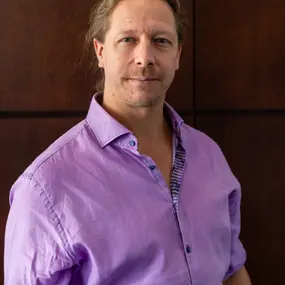
Dr. Kyle is an author, speaker, educator, health and human potential specialist, and a third-generation chiropractor active in his family’s practice in Northern Illinois. His work lives at the intersection of the body, the mind, leadership, and organizational alignment. He helps individuals and people-driven organizations solve chronic underlying issues so they can move toward what he calls a state of wholeness, beyond simply physical health.
What makes Kyle’s work compelling is that he is not only talking about posture, pain, or productivity. He is asking a deeper question: what happens when the person leading the company is physically misaligned, mentally overloaded, emotionally reactive, or disconnected from the people around them?
Dr. Kyle’s background is unusual. He has spent his life around the philosophy of health and well-being, studied across many disciplines, and brings together chiropractic care, storytelling, consulting, speaking, aikido, tai chi, and ballroom dance into a very human conversation about performance and alignment.
For founders, that matters. Because a company can only scale as far as the leader’s body, mind, relationships, and nervous system can sustain.


