


M&A Expert Saul Cohen: Your Numbers Are Lying To You. This Is The Real Driver Of Business Value (#597)
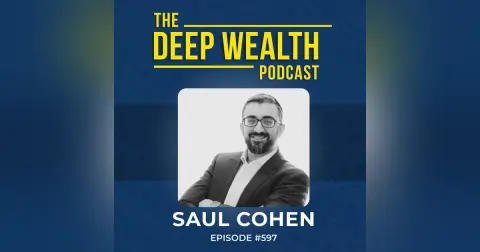
Send us Fan Mail “Be very confident.” -Saul Cohen Exclusive Insights from This Week's Episodes Your numbers may look strong while hidden risk quietly destroys enterprise value. M&A expert Saul Cohen reveals why transferable assets, lower risk, systems, and founder independence drive what buyers really pay Episode Highlights [00:05:51] Why a better business idea still lost to a competitor that executed better [00:10:50] What PwC taught Saul about systems, culture, and scaling beyond the founde...
 Apple Podcasts Apple Podcasts
 Spotify Spotify
 RSS Feed RSS Feed
 Amazon Music Amazon Music
 Podcast Addict Podcast Addict
 iHeartRadio iHeartRadio
 Castro Castro
 PlayerFM PlayerFM
 Podchaser Podchaser
 Overcast Overcast
 RadioPublic RadioPublic
 PocketCasts PocketCasts
 Audible Audible
 Pandora Pandora
 YouTube YouTube
“Be very confident.” -Saul Cohen
Exclusive Insights from This Week's Episodes
Your numbers may look strong while hidden risk quietly destroys enterprise value. M&A expert Saul Cohen reveals why transferable assets, lower risk, systems, and founder independence drive what buyers really pay
Episode Highlights
[00:05:51] Why a better business idea still lost to a competitor that executed better
[00:10:50] What PwC taught Saul about systems, culture, and scaling beyond the founder
[00:21:16] Why valuation is really the intersection of cash generation and risk
[00:24:39] The SCORE framework exposing the assets and risks buyers actually evaluate
[00:28:23] What Saul learned advising on more than 150 acquisitions
[00:31:49] The CEO Day that forces founders to see their business like an investor
[00:39:02] Why repeatable customer demand may be your most important business asset
Full show notes, transcript, and resources for this episode:
https://podcast.deepwealth.com/597
The Deep Wealth Podcast
Most entrepreneurs do not fail.
They just carry too much for too long.
The business grows. Pressure grows faster. Profits get harder to predict. Decisions cost more energy. Over time, focus slips and health takes the hit.
The Deep Wealth Podcast and Deep Wealth Mastery are built from real experience. We're the only system based on a 9-figure exit. This system exists because guessing gets expensive.
🧠 Deep Wealth Mastery
This is for you if you want to:
• Grow a profitable business without becoming the bottleneck
• Build real value so selling is optional, not forced
• Optimize your health before it limits your business and life
One proven roadmap for real decisions.
⭐ Explore Deep Wealth Mastery
https://iapdw.com/idm
🎧 Subscribe
https://iapdw.com/podcast
📘 Free eBook
https://iapdw.com/ebook
💬 Have a question you keep circling back to?
Leave a short voicemail
https://podcast.deepwealth.com/voicemail/
Built by entrepreneurs. For entrepreneurs.
Loved this Deep Wealth Podcast episode?
You built your business from nothing.
Now make it pay off big.
📱 Subscribe Now
As a bootstrapper, every move counts. Subscribe on your favorite platform for Jeffrey Feldberg’s 9-figure exit strategies. From your morning grind to late-night planning, get insights from founders who did it without investors. These tips could change your future.
Drop a Quick Review
Got 30 seconds? Leave a 5-star review. It helps us make better episodes and reach entrepreneurs like you, hustling without a safety net.
Don’t Lose Your Exit (And Your Financial Freedom)
You’ve poured everything into your business. A bad exit could cost you millions. Most deals fail, and even “successful” ones lose half their value. The 90-day Deep Wealth Mastery program teaches you to make your business run without you and boost profits so you capture the best deal instead of any deal.
What Others Say
“Deep Wealth Mastery is pure gold. I wish I’d had it before my exit,” says Stacey C. “The value I’ve gained dwarfs the investment,” adds Sanjay S. “It makes my business great to own and sell,” shares William S.
📘 Grab Free Tools
Check out client success stories for proof. Master the Deep Wealth Strategy Map to plan your exit. Or snag the eBook, From 7 to 9 Figures: The Exit Playbook, for a clear guide.
Click here to start your legacy-defining exit today.
597 Saul Cohen
[00:00:00]
Numbers Lie
Jeffrey Feldberg: What if the numbers in your business are telling you far less than you think?
Saul Cohen has spent his career looking beyond the spreadsheet to understand the decisions, people, and hidden risks that actually determine whether a company grows, stalls, or becomes exceptionally valuable. His perspective comes from both sides of the table.
Saul sold his first business, then entered the world of Big Four accounting at PwC, working across assurance and risk management. But rather remain inside the traditional accounting world, he saw a gap. Successful entrepreneurs were getting plenty of historical reporting, yet often lacked the strategic financial insight needed to make better decisions about growth, acquisitions, and eventually their exit
Today, as partner at The Expert Eye, Saul helps SME founders turn financial [00:01:00] information into a strategic asset with particular expertise in acquisitions, valuations, profitability, and helping owners think more like investors. His philosophy challenges a dangerous assumption that a deal which makes sense on paper will necessarily work in the real world.
People, culture, cash flow, emotion, and founder psychology can change everything. Behind Saul's work is a bigger question for every successful entrepreneur.
Are you building a business that owns you or an asset that eventually creates freedom for you?
And before we start this episode, a quick word from our sponsor, Deep Wealth and the 90 Day Deep Wealth Mastery Program. Here's Jane, a graduate who says, and I quote, the Deep Wealth Mastery Program prevented me from making what would have been one of the biggest mistakes of my career. I almost signed on the dotted line with an unsolicited offer that I now realized would have [00:02:00] shortchanged my hard work and my future had I accepted that offer. Deep Wealth Mastery has tilted the playing field to my advantage.
Or how about Lyn? Wow, he gets right to the point, and I quote, Deep Wealth Mastery is one of the best investments ever made because you'll get an ROI of a hundred times that. Anyone who doesn't go through this will lose millions.
And as you're listening to these testimonials, are you wondering if you have the time? Are you even thinking that you've got this covered, you have the advisors or people in your network? Well, I got to tell you, these myths, they're often behind the 90 percent failure rate for liquidity events. Think about it. You have one chance to get it right for your financial freedom. You really want to make it count.
And when it comes to time, let's hear what William has to say. We just got in this testimonial, William says, and I quote, I didn't have the time for Deep Wealth Mastery. But I made the time and I'm glad I did. What I learned goes far beyond any other executive program or coach I've experienced.
So what do you think?
As I hear that, that's exactly what gets me out of bed every day. [00:03:00] That's my mission. That's the team's mission here at Deep Wealth to literally change the social fabric of society. One business owner at a time, one liquidity event at a time, and my Deep Wealth Nation, what I want you to know, the Deep Wealth Mastery Program, it isn't theory.
It's from the trenches. It's the only one based on a nine figure deal. And that deal, that was my deal. You know my story. I said no to a seven figure offer. I created the system that later on, myself and my business partners, we said yes to a different buyer, a different offer, a nine figure deal. That's what we now call the Deep Wealth Mastery Program or the Scale For Ultimate Sales system.
It's built by business owners, for business owners, so if you're interested in growing your profits for preparing for a future liquidity event, and that may be two years away, it could be 22 years away, whatever the time may be, you want to do this now, and you want to optimize your post exit life, Deep Wealth Mastery is for you.
To get started, email success at deepwealth. com. Again, that's [00:04:00] success. S U C C E S S at DeepWealth. com. You'll receive all the information about the Deep Wealth Mastery Program or better yet, why not hop on a complimentary strategy call.
We'll go through exactly where your business is today and what's standing between you and your financial independence and your dreams. So that's where you want to be. You want to be with other successful business owners, entrepreneurs, and founders, just like you they're looking to grow their businesses, create markets.
Market disruptions and unlock their financial freedom to get what they deserve. And whether you've been in business for three years, 40 years, you're a startup, you're manufacturing you're in high tech, low tech, whatever the case may be, coming in and network with other business owners, it's a safe space.
It's a confidential space with business owners, with businesses just like you, because they all wanna lock in their financial freedom and enjoy both success and fulfillment. So again, the 90 Day Deep Wealth Mastery Program, it has your name on it. All you need to do is take the next step. Please send an email to success at [00:05:00] deepwealth. com.
Welcome And Guest Intro
Jeffrey Feldberg: Deep Wealth Nation, welcome to another episode of the Deep Wealth Podcast. Deep Wealth Nation, let me ask you this: I know you have your financial numbers. I, I hope you have your financial numbers, but do you really know what they mean? Can you turn that into, pun intended, gold, or are you letting opportunities slip by and you're saying, "Jeffrey, I'm just too busy.
I don't know what, I don't know where." Great news. We have a very special guest in the House of Deep Wealth. You heard the official introduction. We have a fellow visionary, someone who's a thought leader, upcoming author, and someone who is working with founders and business owners across the globe to make a difference.
Sol, welcome to Deep Wealth Podcast. An absolute pleasure to have you with us. There's a story behind the story. You've got quite the story. What's your story? What got you from where you were to where you are today?
Saul Origin Story
Saul Cohen: Thank you so much for having me on. I think I've always been an entrepreneur at heart. I've always loved business. Isn't it such an exciting [00:06:00] part of the world and the economy? I studied economics at uni. And when I was there I was literally, I was itching to get out into the world.
And I started a business when I was there. And just a small business at the time, just something to tide me through. I started tutoring kids, and then I just thought, "You know what? If I can get work tutoring kids, I'm sure I can get work for other people to tutor kids, and then I don't have to tutor kids," that old story of, You find something to do, and then you find a way to leverage it. And that was what we did. And then we thought, "Wouldn't this be cool if we could take this online and take it worldwide and make it global?" And we started messing around with that.
We were really... I mean, it was me and another partner. we were young, we were immature, and we didn't really know how to execute on that.
Execution Beats Ideas
Saul Cohen: And actually it was r- a really interesting story. of my, journey, I think, was understanding that the value of an idea is not the idea, but it's in the execution.
And I think I [00:07:00] realized that because at the time that I set up this business, we set up along... There was another competing business that was set up by a business owner who had run his own business, sold that business, and was now starting something new. And our business was better. Our idea was slightly better.
Our website was better. But he ended up selling for £14 million seven or eight years later, and we sold for nothing. Not nothing, but compared to 14 million, we sold for nothing. And when I realized that, appreciate it was in hindsight looking back, that was my first indication that, yeah, fine, I'm a visionary, I come up with ideas, but the value of those ideas is in the execution.
And yeah. It's really interesting about one, one of my business coaches, mentors he, always says that luck is actually an acronym for labor under correct knowledge. and I think that's a, the perfect sort of thing for me in just in that's the value in the execution.
It's the [00:08:00] labor under the correct knowledge, and to bring that execution to life. I went to PwC, became an accountant, loved the work I was doing but I'd started to feel like I missed the entrepreneurial world. And just at that time, my dad also was selling his business. And he sold his business, and it...
I remember being really frustrated. He was sort of forced into sale because he got ill and couldn't operate at the same level that he was before. And I remember being just... I found it really annoying, frustrating that he's an entrepreneur, he worked really hard all his life, he's done okay for himself.
It's just that there's a difference between where he's got to and where he could have got to had he had better advice. And I think that for me, that was another trigger. It was like you've got something to give to the world. Go out there and give it. And so I left to start my own firm, which I have been running pretty much ever since.
I took a interim position for a while, but yeah, been running my firm. And now that's... This is what we do. We specialize in [00:09:00] businesses who are making and making acquisitions and looking towards an exit. We are a normal UK accounting firm, so we also represent our clients in the UK on sort of general accounts.
But our real specialism and niche is in tax planning in the UK, but then also acquisitions and exit planning.
Jeffrey Feldberg: My goodness, there is a treasure trove of things. Elton, Deep Wealth Nation, at the risk of dating myself here with what Saul was sharing, you know, Saul, I remember back in the day, you had these things called video recorders and these video tapes. My goodness, today, what are those things with the younger generation?
They see this big, clunky black thing. What, you actually recorded things on that? But back in the day, you had Beta and VHS, and Beta was far superior compared to VHS, but VHS won the day. Better marketing, better alliances. So you remind us, hey, you could have the better idea. You can even have the better [00:10:00] company.
To your point, execution is everything that's with that. But what I, I really valued about your story, you've been on both sides of the table. You've been a founder, an entrepreneur, a business owner, then you went to work for a big corporate. Doesn't get much bigger than PwC, and on the accounting side.
PwC Lessons For Founders
Jeffrey Feldberg: So let me ask you this before we speak about some of the wonderful things that you're doing.
When you were at PwC, did you take away some strategies or insights or lessons when you then started The Expert Eye, which we're gonna talk all about. But what, as founders, might we be missing that the big corporations, they are maximizing, taking advantage of, that we may not be aware of, or we think, "Hey, I'm too small.
I can't do that." But uh, actually, yeah, Jeffrey, you can and you want to
Saul Cohen: Yeah, so it's an interesting question 'cause there's a treasure trove of stuff just in there. I think there's a few things that stick out to me. The first was is that when I [00:11:00] started my business, I almost took for granted the amount, the level to which PwC had just systemized everything in that business.
And when I say systemized, what I mean is they'd systemized creating a culture. they systemized the process of taking, reasonably intelligent people from university and coaching them and conditioning them to not think a certain way, be a certain way, as in create robots, but they had this idea called the PwC Professional when I was there.
I don't know what it's called now, might be different. But when I was there, it was, PwC Professional. And what was really clever about that is everyone knew what the PwC Professional stood for. There was a framework and, we wrote a certain way, and so reports that came out from PwC, despite the fact that they were written by many thousands of people across the world, were always written in a similar [00:12:00] style we approached problems a certain way.
We approached training a certain way, and I really took that for granted when I moved into my own firm. I didn't realize just how incredible an environment that they'd built and I was like, "Yeah PwC taught me how to coach staff. I'm sure I'll be able to coach staff as well." And obviously, I didn't have that huge infrastructure behind me, and therefore found it really difficult to train others and coach them and find the time to give them the amount of attention that they need and realize just how much goes into coaching and creating a culture.
And it's almost taken me and others six or seven years to, build that back up and, reverse engineer what was it that they did so well that I need to copy. I think the other thing that really stood out to me is... There's two other things. One was that obviously I started my career in audit accounting.
It's a far cry from mergers and [00:13:00] acquisitions on the surface. But I remember when I was... i'd just qualified and I was talking to one of the partners, and he told me, "What you need to understand is that," he's like, "ultimately audit is audit." And what he meant by that was he, went on to explain that risk, the idea of understanding what is a risk and how am I trying to gain assurance and mitigate that risk, is the same way of thinking regardless of what that risk is.
that was really interesting for me. I'm very lucky that I, basically pushed myself out of audit and into risk quite early on in my career and was able to practice that. And then the third thing, and this one is I think, probably the most valuable to your listeners, and that is it's incredibly rare to find successful businesses It's rarer still to find successful businesses that are at 100 million.
Jeffrey Feldberg: Sure
Saul Cohen: and what I found since when coming into the SME [00:14:00] world is that actually what happens is a family-run business, by and large, okay, there are maybe a 0.1% where the family-run business can go on and become a multi-billion pound company. I've seen them, I know they exist, but they are literally, they're stardust.
But by and large, successful businesses anyway are like the top 1%. Of those successful businesses, they would generally get to about anywhere between, I would say, $100,000 to $1 million EBITDA. It's very rare for them to hit anything above $1 million EBITDA. And then at that point, normally if they're gonna grow, they're growing in one of two ways, acquisitions, investment, or both.
Scaling With Systems
Jeffrey Feldberg: And so with that, with the stardust that you're talking about or these very gifted special companies, what would be one thing that they're doing that most companies aren't and one thing that they're not doing [00:15:00] that most companies are?
Saul Cohen: I think actually it comes down to process and focus.
I think most acquisition-- m- most entrepreneurs, I speak for myself as well when I say this, we're ideas people. Very good at coming up with ideas, generally quite creative and want to get out there and bring our new ideas into existence.
And I think that's really valuable up until a certain point. But beyond that point, actually what takes a business from, 5 million to 50 million in revenue or even and beyond, is the ability to scale as cheaply and efficiently as possible, and that can only be done with leverage, and that leverage is extrapolated by very simple, clear, and efficient systems
Jeffrey Feldberg: Okay. So systems, and we're gonna talk about what you're doing with systems in just a moment, but what kind of systems would that be?
Saul Cohen: I mean, Look, it goes across the business. what I've found is [00:16:00] that every business in each different industry has its own constraints. Most commonly, the most common constraint to most businesses, I would say, in today's world, is the ability to recruit, train, and, focus on talent.
I think particularly in today's world but, you know, in the last sort of 50 years, that's been the biggest constraint to growth. And the businesses that have done really well have been able to create systems, not just to create and win work and sales and marketing, but they also have systemized their sales and marketing to bring in new talent and bring in, acquire, and nurture talent within their business
Jeffrey Feldberg: Okay. So let's keep that in mind.
What Expert Eye Does
Jeffrey Feldberg: And for the foundation, why don't you share with Deep Wealth Nation in terms of the basic building blocks? So the expert eye. From starting your company to going to PwC, you saw some gaps in the marketplace. You're a numbers guy, a smart guy, the expert eye. What is [00:17:00] going on there?
What would you want Deep Wealth Nation to know?
Saul Cohen: I think the thing I always want to tell people is that I'm on the same journey as all of you guys. And I think we always forget this as accountants, but I am. I've probably... I've made a lot of the mistakes that I talk about and learnt from those mistakes.
When I came to scale my business, I think, I went through what a lot of people go through where, you know, it's all well and good when it's you on your own and maybe one other person who's supporting you. But when you go from that to maybe a team of five there's a pain point there because suddenly there are other people who are delivering the product under your name and under your brand, and, quality control and efficient quality control to maintaining profitability is...
it can be difficult, and finding the right people can be hard and training them I've definitely felt those pains and, you know, gone through that journey as well. So I think that's the biggest thing that I always tell people is that, we're all on the same journey together.
And I think it's okay to ask for help
Jeffrey Feldberg: Yeah. And [00:18:00] so when it comes for asking for help, what would be some of the areas with the expert eye that you're gonna help me in? Okay, so heard you on Deep Wealth Podcast, love what you and the team are doing. Here we are, here's the company. Why don't you give us a, a help? And I know it's a unfair question in so many ways because you're doing a whole number of things, but big picture-wise, what's going on there?
Saul Cohen: we've sort of got two sides or three sides to the business. There's the day-to-day UK operations where, accounts and tax planning for our UK-based clients. Now we don't do that for anyone internationally. It's a specialist area, so we always tell people, you know, you want, domestic tax planning specialists in each area.
Smarter Due Diligence
Saul Cohen: But where we can, what we found is that internationally a couple of things don't really change, and that is the acquisition space. So how value is created in a business, so how to look to prepare for an exit. We do help clients across the world in that. And also what you're looking for when you're buying a [00:19:00] business and, how to conduct a sensible level of diligence.
'Cause due diligence can be many thousands or pounds or dollars. And you know, what you wanna do, particularly if you're making an SME acquisition, is a sensible level of that diligence, right? But both from a operational point of view to the company and also from a, just y- your own efficiency point of view in terms of how much you wanna spend.
I remember when we first did the first one or two due diligences we did, Remember, I came from PwC I prepared a, initial request list with about 160 items, I think it was on there. There was 160 items and questions that I actually didn't think was that big. I sent that to the seller of the business, and they nearly had a heart attack.
They're like thinking, "How are we gonna get all of this information over to you?" You know, "We've got to complete it in three months, not three years." And I realized that there's... I suppose you realize this anyway, but there is a difference to what's feasible when you've got a [00:20:00] full team of maybe 30 people and when you've got just a finance team of maybe 45 people.
And so yeah, I think that's where we can really help. If you're making an acquisition or you're looking for an exit, we've got such a tremendous amount of expertise in that area. We can really add a huge amount of value there.
Jeffrey Feldberg: And so let's talk about those in Deep Wealth Nation that are looking to make an exit or even getting a partial exit, bringing some investors in. Again, my favorite question in this kind of situation, Saul, it's two fancy words, Pareto's law, otherwise known as the 80/20 rule, which goes something along the lines of, at a very simple level, not to confuse simple with simplicity, hey, 20% of my activities are probably generating 80% of my results.
Hopefully not in selling my company I have 20% of my customers generating 80% of my profits. That would not be a great thing, called customer concentration. But generally speaking, that's how the law works. It doesn't have to be 80/20. It could be 90/10, 95/5. [00:21:00] So we're gonna do glass half full instead of the glass half empty, and then we'll flip it.
Premium Valuation Drivers
Jeffrey Feldberg: The companies that are selling for a premium that you're helping, what are they doing really well where most companies aren't?
Saul Cohen: Okay, so let's think about premium and what it is really quickly. Valuation. So I always say that valuation is the intersection of risk and your cash generation potential, right? So how much cash can you generate, and what's the risk to the generation of that cash? And I think people always get this mixed up when they're hearing about multiples, but really simply, the less risky that you make your business, the higher your multiple you're gonna get, and the multiplier...
the... what will be mult- multiplied is the amount of cash your business can throw off, okay? Now, there are-- everything that we do in the, world of valuations is all just an assessment of those two things. So sometimes people will say, [00:22:00] "Oh if a business is over a certain size, the multiple increases."
That's because larger businesses are inherently less risky, and therefore, because they're less risky, the multiple goes up. Not necessarily because the profit itself has gone up, just because the risk to that profit or that cash generation has gone down, and therefore the multiplier goes up. I think what it is, is that really good businesses understand this intuitively, and they look at their business and they're always thinking, "How can I reduce the risk in my business?
What can I do to further reduce the risk in my business?"
That's the first thing, because everything that you can do to reduce the risk will increase your multiplier.
And the second thing is they understand the basic principle that money flows to assets, and they are intentional about creating assets in their business, not expenses. And I think lots of business [00:23:00] owners will accumulate lots of expenses that they think may one day create an asset. Will hire a salesperson.
And it's done without intention, and therefore it never really creates an asset, and it very often doesn't pay off. But actually, scaling and growing a business can charge can cost quite a lot, and so cash flow and profitability is important then therefore intention is really important and understanding what assets you are building, why and when is so fundamentally important, and the ones who do it really intuitively get this
Jeffrey Feldberg: Okay. And so that's something that we want to keep in mind. What about on the flip side now? The glass half empty. Companies that aren't getting valued properly or there's a penalty assigned to it, or people are just walking away from the deal table. Because Deep Wealth Nation, as you pick up on what Saul was saying a little bit earlier, as you lower the risk, not for you per [00:24:00] se, but for the investor or the buyer, as risk goes down, it's correlated.
The value of your company goes up. Think about it. If you are buying a stock, you have two stocks. One's incredibly risky. It's going to likely give some problems down the road. It's probably not gonna be priced as high. Maybe there's a high return, but maybe not. But if you have a tried and true stock, the perceived risk is much less.
You're probably gonna pay more for it. It's a quality stock. Same thing when it comes to our company. So on the flip side, what would you want us to know? What are most just either not doing or don't see or not even aware of?
SCORE Framework Risks
Saul Cohen: in my upcoming book I talk about this, this SCORE framework, which we were gonna discuss anyway. But the SCORE framework basically, it's the five areas that I think everyone needs to be creating assets in. So systems, which is the S. Clients is the C, or customers.
[00:25:00] O is your organization, so your people, your team. R is regulatory environment, so the contracts that you have with your customers the contracts that protect you as a business. And E is any exposure, so that's to you or your industry. AI is a big one right now. It's a, both a, it's a potential exposure to many industries and also a potential opportunity.
Now those five areas, generally in most small businesses, the founder of that business will intuitively look after all of them, right? They intuitively go out and have client rela- really good client relationships and, they build the team around them, and the team probably report into them, and that's a massive risk when I come to buy this business because while you might have bought lots of assets, you are the linchpin to all of those assets, and you are leaving the business.
And that is by far and [00:26:00] away the biggest mistake that lots of business owners make, is that they leave it too late to sell their business. They've tried to sell their business when they are already tired, fed up and just ready to retire. And by that time, it's too late for them to pull themselves, extract themselves out the business.
And now they're not set, they're not gonna get the full premium of the assets that they've built because of the fact that there's a glaring risk, being the fact that the owner is walking away
Jeffrey Feldberg: Sure.
Exit Timing And Leverage
Jeffrey Feldberg: And it reminds me of a saying that we have at Deep Wealth, who's the one that wins the negotiation? To be blunt, the one that cares the least. And if my business is prepared, I know I can operate it forever or I can sell it tomorrow. Hey, it's throwing off great profits, I don't have to sell it today.
I can go back later today and resume a great business. So yeah, no, i'm gonna walk away. I don't need to do this.
Fall Back In Love
Jeffrey Feldberg: I have a great business. I'll go back whenever I choose to or want to.
So to your [00:27:00] point, absolutely hear you loud and clear. And you're right, one of the things I love with Deep Wealth Mastery, a bit of a shameless plug here, when our graduates come through the program, Saul, when they're all said and done, wow, I'm in love with my business again. I'm looking at it through completely different lenses.
I don't have to sell. I can go into board of directors mode. I can put in an hour a month if I wanted or 20 hours a month or something in between or something more because I choose to, not because I have to. So it's some great points there, and what I love what you and the team are doing, you're seeing through numbers what most founders, or at least myself, I was never the number guy.
I was more marketing, operations. That, numbers was just not my strong suit, if you will. And you're putting together the below the sur- "Well, Jeffrey, here's the gold. Here's what you're not seeing," or, "Hey, here's the risk. Here's a skeleton in the closet." And there is a method to my madness.
Finding Gold Book
Jeffrey Feldberg: I know I'm all [00:28:00] over the map here with the questions, but very directly related, I know as we record this podcast, you are getting ready with your book.
Tell us about your book. What's going on with that? Title, if you have one yet. What are you focusing on? Some of the takeaways.
Saul Cohen: the book's called Finding Gold. it's about buying a business. It's written as a coaching guide for people looking to buy a business.
Jeffrey Feldberg: Aha
Saul Cohen: And it explains how the SCORE framework that we use can be used to identify the assets within the business that you're looking to buy.
Now I will at some point write it from the other side, so for exiting business owners. But Finding Gold is about buying businesses and buying really good businesses. I'm lucky enough that I've been a consultant in over 150 acquisitions now, which is a mind-boggling number.
Jeffrey Feldberg: incredible. Yeah
Saul Cohen: and one of the things that I've noticed throughout them is that how many of them fail for similar reasons. [00:29:00] They may... A- and it's because of the fact that they've not been intentional about why they're buying a business. buyers of businesses are not intentional around what assets am I looking for in that business, and I think that's a shame.
And the reason why I wrote Bo- the uh, to acquirers of business first is because I think that actually we have a generation of retiring business owners who I, do really want to protect. But more important is it's really important that those businesses are run successfully. Those acquisitions need to be successful because otherwise the Western world's gonna have a massive employment problem because we're now compounding AI and the biggest employer in the Western world, which is SME businesses, are all those businesses retire.
If they go bust, then, we lose a ton of jobs as well. And so actually the acquirers need to be more informed so that they can run, bo- while buying those businesses, identify [00:30:00] those assets, but then more importantly, run it successfully in the periods following the acquisition.
Jeffrey Feldberg: Oh my goodness, that is not just an episode, that's an entire series in terms of what's there. And so if we now combine both what you're doing in terms of the expert eye, your upcoming book, there's some themes there because if I'm a business owner, if I'm selling a business, okay, the opposite's gonna be true if I'm buying a business, but we can take a look from both sides of the table, and you've been in the deal room on both sides of the table in terms of what's there.
I know one of the common things for Deep Wealth Nation when I have discussions with them or we have our masterminds, the one theme is, "Jeffrey, time is not my own." Now, it's the wrong answer, Sol. I'll give you that because the business should run without them, and time should be, "Yeah, I c- I can do the time.
I have the time." That isn't the [00:31:00] case right now, and it needs to be a response of, "I don't have the time, I will find the time, I will make the time to do what's there." So that's a whole other thing of why there's a bottleneck and how the business is not running without them.
CEO Days Reflection
Jeffrey Feldberg: But in terms of choosing one strategy, so a typical business owner of Deep Wealth Nation, they can do one thing from what you've seen, and it could be stop doing this or start doing that or something in between.
Bit of an unfair question. What would that be though if you can only choose one thing? It's almost like asking you to choose if you have multiple children, what's your favorite child? I get it. But if I can only take one action as a Deep Wealth Nation member that's gonna really move the dial in my business, what is it?
Saul Cohen: okay, I know the answer to this because I've thought about it a lot. Because someone said to me once, he was like, "You need to make sure that when you get further down your [00:32:00] career, you've got 20 years of experience and not the same year 20 times."
Jeffrey Feldberg: I love that. Absolutely love that
Saul Cohen: And it's one of those where the more you think about it, the more that really hits you hard and you're like, "Oh my gosh, I really don't want to be in that position."
Like, you What can I do to do that? there's a few things that you can do. You're always pushing yourself outside your comfort zone or whatever. But the only way that I have found to consistently make sure that you are moving forward, you might not always feel that forward, but moving forward with intention and going further along your journey, is to take time out
To stop, reflect, understand what have you like, you know, to make an assessment of how have I performed in the past week, the past month.
What went well? What didn't go so well? What do I need to work on? What am I-- what goals am I working on? How am I measuring up against my current goals? And what steps do I need to take going forward to keep pushing myself out of my comfort zone, to [00:33:00] keep growing my business and keep working closer, to bring me closer towards my goals?
and so that is what I would say my business coach calls it the CEO days. So, you know, Like taking a day out a month to spend that time in like somewhere special and make that assessment of your business and yourself and say, "How am I doing? Where am I at? And how does this take me on the next...
How do I use this information to propel me in the next month and make sure that next month is better than the month that was before?" I honestly, I think that is, it's really powerful. Everyone I know who's done it has seen instant results. And I think if nothing else, being out of your business for one day a month to reflect on your business when you're not in your office, just from another point of view and thinking, putting yourself in the headspace of an investor is almost maybe it should be called investor days, right?
You put yourself in the headspace of investors and you think, how would someone, if someone were to buy my business, if [00:34:00] I were to buy my business and it wasn't my business, how would I assess it? What would I be concerned about? What am I happy about? What do I love about it? What do I not like about it?
Because I think we speak, we do that a lot with emotion, and we need to try and detach yourself. And so you need to stop, take time out, away from the business. That's my one thing.
Jeffrey Feldberg: Yeah, some terrific insights there, and it's taking some time out thinking about it. I'm not caught up in everything, which is why to oversimplify things, not to confuse again simple with simplicity, you hear these stories, "Yeah, I was in the shower, wasn't even thinking much about anything, and wham, I got this incredible insight.
It transformed my business." The mind, our body, our emotions all need a break from what we're doing. It's when we're not doing the business activities that we often get some of the biggest inspiration. So I'm right with you there in terms of doing that. It's a great insight.
Working With Expert Eye
Jeffrey Feldberg: And so [00:35:00] back to some of the magic that you and the team are working, your secret sauce.
So with the expert eye, and I know you're in different areas, but that said, when I begin to work with you and the team, what does that look like? How much time does it take to get me ramped up? And what am I doing in that process? When do I start seeing some results?
Saul Cohen: So it really depends on the journey that you're on. the first step that I'm always... you've probably picked up that I'm all about intention. I always say that a good advisor, a good business advisor is like the wind in your sails, right? and that's great if you're a ship with the sails, if you've got a direction and you know where you're going, 'cause you've now got wind behind you and someone's propelling you forward.
But if you're a leaf in the wind, you could just end up anywhere and that might be further away from where you actually wanted to be. So the first stage is always about making sure that you're clear on what you want.
'Cause actually business owners aren't always clear and sometimes it takes some time for them to realize what is it you want?
What do you want to achieve? and then we can work out how we help you do that. And then we start going through that. Normally if we're working on someone for-- to build an [00:36:00] exit, it's about understanding, their business through the SCORE framework. We've got like a scoring system that we go through and we say for each of the areas how are we scoring the business?
Where is the biggest weak points in your assets how can we build up your assets to increase the valuation in your business? one of the interesting things in the business is that when you reduce the risk to the business the consequence is that you buy yourself back a lot of time.
And so you can do that. But it's also about understanding the journey you wanna be on. 'Cause some people they don't wanna build, you know, really large scalable businesses, performance businesses that, go on and scale to hundreds of millions. They just want a lifestyle business that's gonna fund their lifestyle which is absolutely fine and that's their journey.
So then we just help them map out where's their retirement, where's their future gonna come from because their business will have some value on exit but it probably won't be a massive huge... And it definitely shouldn't be life changing. If they've been running their business for twenty years they should have their retirement lifestyle completely [00:37:00] taken care of and the sale of their business is probably just a bonus.
So those are the sort of journeys that we go on. It's really just for me about understanding what does my client want to achieve and then supporting them achieve that through supporting their business.
Jeffrey Feldberg: Okay. So some great insights there. Hey, Deep Wealth Nation, do you know what you want? Do you really know what you want? I know you probably knew what you wanted when you started the business. Do you know what you want now that your business has grown, you've gone in different directions, probably time is not your own, you may be all over the map?
Let's go back to basics. First principles. What do I want? And then begin to rework what that looks like. And it's interesting, as you talk about that, one of the things that we do in the 90-Day Deep Wealth Mastery is we actually come back to that. Okay, it's the day after you sold your company. Now, that could be a year from now, it could be 30 years from now.
But what are you doing? What does that look [00:38:00] like? I don't know." Okay. Well, What do you think you might want to be doing? And then with that in mind, we can build everything else around that soul in terms of you know what you want after the fact, so let's now reposition the business that you don't have to wait 20 years or 30 years or after the rush of a deal to get that done.
That's where my biggest mistakes came in terms of doing that. So with that said, let's continue down the path of you saw deals come and go. You saw ones that did really well, a premium was paid. You saw ones that didn't do so well, ones that, hey, let's run, but in the opposite direction as far as we can.
What other insights can you share with us that you took away from that you've put into the expert eye in terms of your services, you know, helping your clients with that, that you'd want Deep Wealth Nation to know about? "Yeah, you know what, Deep Wealth Nation, if you're only gonna focus on a few things, don't focus on this, focus on that," or, "Start doing [00:39:00] this, stop doing that."
What would come to mind?
Demand First Growth
Saul Cohen: I think in most small businesses, the most important v- asset in their business, or small and medium-sized business, the most important asset in their business is their ability to generate clients, customers on a regular basis. And they've got a really great offer that really converts with their client base.
Now that, to me everything is downwind of demand, right? So d- it's always demand first. I think one of the most interesting things about business owners is that every business owner in their second business will always focus on making sure that they've got enough demand before they launch the business.
Whereas every business owner in their first business will normally s- start with, "Okay, what product do I wanna deliver? How am I gonna deliver it?" And then they'll go out and try and market it. it's really interesting. And so I think that would be the thing that I would focus on first.
Make sure that you have clear, regular, [00:40:00] repeatable demand coming into your business. Because if you have an ability to sell to customers on a regular basis, everything, every other problem in your business can be fixed because you have a way to generate cash
Jeffrey Feldberg: Interesting. As you're talking about that actually reminds me of so many of the journey for Deep Wealth Nation. It's the story. It's the story that we tell ourselves, the narratives, the ones that we're not telling ourselves.
Ego And Blind Spots
Jeffrey Feldberg: And so I'm wondering, because business, it's personal. Whoever said business is not personal, Saul, has never been in business or owned a business or been in business transactions.
And I'm wondering, you meet a successful founder, and what are they emotionally unwilling to see in themselves or in the business that is what at Deep Wealth w- we call a skeleton in the closet, other people call a blind spot, [00:41:00] that left unchecked could be problematic?
Saul Cohen: Oh, wow. That's a great question. I think I wanna say ego is probably the biggest thing. I know for me, that was it. That was, I had this ego coming into running my business. I thought I was, really good. Was at PWC, did well academically, I'm gonna fly. And then, the problem with an ego is that you can't see that it sort of hides your blind spots personally.
And I needed to remove my ego over a period of months and working on it so that I could see, okay where am I actually struggling? And I think that's what it is for most people. We've all got a bit of an ego. If we didn't, we wouldn't have, tried to build something crazy and do the crazy, half the crazy things that we do.
it's about trying to silence that ego so that we can see what it is in ourselves that we need to work on. And I think that we always know that for ourselves, it is different for everyone, but you, need to find a way to silence the ego first
Jeffrey Feldberg: [00:42:00] Yeah, such a great thing with the ego. It's a tough thing to do of, okay, yeah, this is an ego thing. I'm gonna need to recognize that and be vulnerable with that and just be open to that.
Scaling With Leverage
Jeffrey Feldberg: And before we start going into wrap-up mode, I'm curious, rounding out a few things here, because I know at The Expert Eye, one of your specialties is scaling,
Saul Cohen: Yeah
Jeffrey Feldberg: you have a lot of expertise in that.
And whether it's scaling my profits or the business or, hey, I'm gonna scale, but I'm going to sell my business or buy some businesses, if it's scaling, it's got your name written all over it, you and the team's also. What would you want us to know about scaling of what you're doing for other founders that they typically can't do for themselves?
Saul Cohen: Look, I think scaling's all about leverage and cash flow. those are the two like, words that you wanna keep in your head. Scaling takes a lot of cash and so which is why lots of businesses will go for investment when they're trying to scale. so the key [00:43:00] things I always say to people is you want to check about your money model. So where are you generating what does your customer journey look like? Where are you generating the most amount of profits? How can you double down 80/20 rule? How can you double down on the products that generate the highest value profits?
Because, again, You need cash flow, and so you need to be able to generate cash flow as efficiently as possible. the best way to do that is your most profitable products. How can you generate more profit out of the products that you're already selling? And then it's about acquisition.
Acquisition's a really big part of that leverage because, particularly when people are looking for, maybe a geography play, or they're looking to just move into a new market, or they're looking to get exposure with a new client base, actually acquiring that client base, that market, that footprint, whatever it may be, is often cheaper easier and faster than setting it up yourself.
And actually one of the really interesting things is, I think you see this quite a lot with people who really achieve a high level of success. [00:44:00] They don't start from scratch. They very rarely start from scratch. They will normally just buy a platform. They'll look for someone who's done what they wanna do, and then they'll buy it, and then they'll take it from there and grow it from there.
And I think you've got to try and get yourself into that head space if you really wanna go on the scale journey.
Jeffrey Feldberg: Yeah. He, it's such great insights in terms of, again, we're talking about what to do, what not to do, what to be wary of.
Back To Future Advice
Jeffrey Feldberg: And with that, it's actually a great segue to go into wrap up mode. All too soon, all too quick, my goodness. But that said, it's a tradition, Saul, here in the Deep Wealth Podcast. It's really my privilege and honor where I ask each of our guests the same question, it's a fun question.
Let me set this up for you. So when you think of the movie Back to the Future, you have that magical DeLorean car that will take you to any point in time. So imagine now, Saul, it's tomorrow morning. This is the fun part. You look outside your window. Not only is the DeLorean car curbside, the [00:45:00] door is open, it's waiting for you to hop on in, which you do.
You're now gonna go to any point in your life, Saul, as a young child, a teenager, whatever point in time it would be. Saul, what are you telling your younger self in terms of life lessons or life wisdom? Or, "Saul, hey, do this, but don't do that." What would it sound like?
Saul Cohen: Other than buy Bitcoin.
Jeffrey Feldberg: Other, yes, other than buy Bitcoin
Saul Cohen: yeah. I think I would tell my younger self to be very confident. Just be happy with who you are. 'Cause I think o- one of the things when we're young, it's really difficult for us to be proud and, of ourselves and who we are. And so I would definitely have told myself, be proud of who you are, work on your strengths, look out for your downsides, and constantly put yourself in...
Seek discomfort. Look for environments that are gonna push you out of your comfort zone because that's where the growth is
Jeffrey Feldberg: Okay. Absolutely value that in terms of, hey, firstly believe in [00:46:00] yourself, and now that you believe in yourself, go outside of your comfort zone. That's where the growth happens. That's where the magic happens.
Connect On LinkedIn
Jeffrey Feldberg: And so let me ask you this, someone in Deep Wealth Nation, they have a question for you. Better yet, they wanna begin to work with you and the team.
Where's the best place online to reach you?
Saul Cohen: So my LinkedIn, I can give you the handle for that. I'm often posting on there, and I'm active, so there's loads of insights as well. And if you've got anything out of the podcast, you wanna just say, thanks or whatever, I'd love to know what it was that, triggered something for you.
I always love hearing what people say. So just drop me a DM on there. So LinkedIn's definitely the best place
Jeffrey Feldberg: And great news, Deep Wealth Nation, hey, go to the show notes. It's a point and click. It doesn't get any easier. It's all there for you. So that said, so congratulations, it's official. This is a wrap. As we love to say here at Deep Wealth, may you continue to thrive and prosper while you remain healthy and safe.
Thank you so [00:47:00] much
Saul Cohen: Thank you, and wish you the same
Subscribe And Closing
Jeffrey Feldberg: So there you have it, Deep Wealth Nation.
What did you think?
So with all that said and as we wrap it up, I have another question for you.
Actually, it's more of a personal favor.
Did you find this episode helpful?
Have you found other episodes of the Deep Wealth Podcast empowering and a game changer for your journey?
And if you said yes, and I really hope you did, I have a small but really meaningful way that you can actually help us out and keep these episodes coming to you.
Are you ready for it?
The dramatic pause. I'll just wait a moment. Drumroll, please. Subscribe. Please subscribe to the Deep Wealth podcast on your favorite podcast channel. When you subscribe to the Deep Wealth Podcast, you're saving yourself time. Every episode automatically comes to you, and I want you to know that we meticulously craft Every one of our episodes to have impactful strategies, stories, expert insights that are designed to help you grow your profits, increase the value of your business, and yes, even optimize your post exit life and your life right now, whatever you want that to look like.
And every time you subscribe [00:48:00] and a fellow entrepreneur subscribe, it's a testament to how together, Yes, we are. We are changing the social fabric of society. One business owner at a time, one liquidity event at a time. So don't let the momentum stop here. Subscribe now on your favorite podcast channel.
You'll never miss an episode. You'll be the first to hear from the top industry leaders, the innovators, the disruptors that are really changing and shaping the business world, and maybe you're commuting, maybe you're at the gym, maybe you're taking a well deserved break that we spoke all about on this episode.
The Deep Wealth Podcast, it's your reliable source for the next big idea that could literally revolutionize your business. So once again, please hit that subscribe button, stay connected, inspired, and ahead of the curve. And again, your next big breakthrough moment, it might just be one episode away. Maybe it was even this episode.
So all that said. Thank you so much for listening. And remember your wealth isn't just about the money in the bank. It's about the depth of your journey and the impact that you're creating. So let's continue this journey together. And from the bottom of my heart, thank you [00:49:00] so much for listening to this episode.
And as we love to say here at Deep Wealth, may you continue to thrive and prosper while you remain healthy and safe.
Thank you so much.
God bless.

CEO/Accountant / Acquisitions Advisor
What if the numbers in your business are telling you far less than you think?
Saul Cohen has spent his career looking beyond the spreadsheet to understand the decisions, people, and hidden risks that actually determine whether a company grows, stalls, or becomes exceptionally valuable.
His perspective comes from both sides of the table. Saul sold his first business, then entered the world of Big Four accounting at PwC, working across assurance and risk management. But rather than remain inside the traditional accounting world, he saw a gap: successful entrepreneurs were getting plenty of historical reporting, yet often lacked the strategic financial insight needed to make better decisions about growth, acquisitions, and eventually their exit.
Today, as a partner at The Expert Eye, Saul helps SME founders turn financial information into a strategic asset, with particular expertise in acquisitions, valuation, profitability, and helping owners think more like investors. His philosophy challenges a dangerous assumption: that a deal which makes sense on paper will necessarily work in the real world. People, culture, cash flow, emotion, and founder psychology can change everything.
Behind Saul's work is a bigger question for every successful entrepreneur: Are you building a business that owns you, or an asset that eventually creates freedom for you?


