


Curtis McCullom, Mindset Expert: The Belief Pattern Quietly Costing You Millions (#547)

Send us Fan Mail “Life is all about learning, no matter what you’re going through.”-Curtis McCullom Exclusive Insights from This Week's Episodes The belief costing founders millions rarely announces itself. Mindset Expert Curtis McCullom reveals how subconscious patterns sabotage growth, confidence, and leadership before strategy ever gets a chance. Episode Highlights [00:05:00] Jeffrey opens the founder question of whether unseen subconscious patterns are robbing success [00:06:00] Curtis re...
 Apple Podcasts Apple Podcasts
  Spotify Spotify
  RSS Feed RSS Feed
  Amazon Music Amazon Music
  Podcast Addict Podcast Addict
  iHeartRadio iHeartRadio
  Castro Castro
  PlayerFM PlayerFM
  Podchaser Podchaser
  Overcast Overcast
  RadioPublic RadioPublic
  PocketCasts PocketCasts
  Audible Audible
  Pandora Pandora
  YouTube YouTube
 “Life is all about learning, no matter what you’re going through.”-Curtis McCullom
Exclusive Insights from This Week's Episodes
The belief costing founders millions rarely announces itself. Mindset Expert Curtis McCullom reveals how subconscious patterns sabotage growth, confidence, and leadership before strategy ever gets a chance.
Episode Highlights
[00:05:00] Jeffrey opens the founder question of whether unseen subconscious patterns are robbing success
[00:06:00] Curtis reveals how early success turned into self sabotage when old baggage was still running
[00:11:00] The greater problem behind procrastination, self sabotage, and founder resistance
[00:14:00] Curtis exposes his own belief that success is hard and difficult
[00:23:00] Why setting goals on top of baggage creates a greater propensity to fail
[00:34:00] Curtis shares how founders can feel emotion without becoming the label
[00:54:00] A practical strategy founders can use when fear, sadness, anger, or doubt shows up
Full show notes, transcript, and resources for this episode:
https://podcast.deepwealth.com/547
The Deep Wealth Podcast
Most entrepreneurs do not fail.
They just carry too much for too long.
The business grows. Pressure grows faster. Profits get harder to predict. Decisions cost more energy. Over time, focus slips and health takes the hit.
The Deep Wealth Podcast and Deep Wealth Mastery are built from real experience. We're the only system based on a 9-figure exit. This system exists because guessing gets expensive.
🧠 Deep Wealth Mastery
This is for you if you want to:
• Grow a profitable business without becoming the bottleneck
• Build real value so selling is optional, not forced
• Optimize your health before it limits your business and life
One proven roadmap for real decisions.
⭐ Explore Deep Wealth Mastery
https://iapdw.com/idm
🎧 Subscribe
https://iapdw.com/podcast
📘 Free eBook
https://iapdw.com/ebook
💬 Have a question you keep circling back to?
Leave a short voicemail
https://podcast.deepwealth.com/voicemail/
Built by entrepreneurs. For entrepreneurs.
Loved this Deep Wealth Podcast episode?
You built your business from nothing.
Now make it pay off big.
📱 Subscribe Now
As a bootstrapper, every move counts. Subscribe on your favorite platform for Jeffrey Feldberg’s 9-figure exit strategies. From your morning grind to late-night planning, get insights from founders who did it without investors. These tips could change your future.
Drop a Quick Review
Got 30 seconds? Leave a 5-star review. It helps us make better episodes and reach entrepreneurs like you, hustling without a safety net.
Don’t Lose Your Exit (And Your Financial Freedom)
You’ve poured everything into your business. A bad exit could cost you millions. Most deals fail, and even “successful” ones lose half their value. The 90-day Deep Wealth Mastery program teaches you to make your business run without you and boost profits so you capture the best deal instead of any deal.
What Others Say
“Deep Wealth Mastery is pure gold. I wish I’d had it before my exit,” says Stacey C. “The value I’ve gained dwarfs the investment,” adds Sanjay S. “It makes my business great to own and sell,” shares William S.
📘 Grab Free Tools
Check out client success stories for proof. Master the Deep Wealth Strategy Map to plan your exit. Or snag the eBook, From 7 to 9 Figures: The Exit Playbook, for a clear guide.
Click here to start your legacy-defining exit today.
547 Curtis McCullom
[00:00:00]
Meet Curtis McCollum
Jeffrey Feldberg: What happens when someone spends decades around performance, pressure, money, and leadership, and then realizes that the bottleneck is not strategy, but the subconscious patterns quietly shaping every decision. Curtis McCollum has built his work around that very question. With nearly four decades of experience across sales, leadership and personal development. Curtis is the founder of Bespoke Human Potential Coaching, where he works with high achievers, founders and leaders to identify the hidden internal friction that keeps them stuck even when they look successful from the outside. His work blends human potential coaching with modalities such as NLP and hypnotherapy all anchored in his proprietary LGET mindset framework, learning, growing, expanding, and transforming.
For Curtis transformation is not a willpower problem, but [00:01:00] its one of neurological and biological alignment. What makes Curtis compelling is that he doesn't speak only to performance. He speaks to the cost of misalignment, the quiet burnout, the ceiling that appears when ambition, outruns identity, the unseen beliefs that shape income, confidence, visibility, and leadership long before results show up on paper.
His work is built for people who know how to push harder, but are finally asking whether harder is a real answer.
And before we start this episode, a quick word from our sponsor, Deep Wealth and the 90 Day Deep Wealth Mastery Program. Here's Jane, a graduate who says, and I quote, the Deep Wealth Mastery Program prevented me from making what would have been one of the biggest mistakes of my career. I almost signed on the dotted line with an unsolicited offer that I now realized would have shortchanged my hard work and my future had I accepted that offer. Deep Wealth Mastery has tilted the playing field to my advantage.[00:02:00]
Or how about Lyn? Wow, he gets right to the point, and I quote, Deep Wealth Mastery is one of the best investments ever made because you'll get an ROI of a hundred times that. Anyone who doesn't go through this will lose millions.
And as you're listening to these testimonials, are you wondering if you have the time? Are you even thinking that you've got this covered, you have the advisors or people in your network? Well, I got to tell you, these myths, they're often behind the 90 percent failure rate for liquidity events. Think about it. You have one chance to get it right for your financial freedom. You really want to make it count.
And when it comes to time, let's hear what William has to say. We just got in this testimonial, William says, and I quote, I didn't have the time for Deep Wealth Mastery. But I made the time and I'm glad I did. What I learned goes far beyond any other executive program or coach I've experienced.
So what do you think?
As I hear that, that's exactly what gets me out of bed every day. That's my mission. That's the team's mission here at Deep Wealth to literally change the social fabric of society. One business owner at a [00:03:00] time, one liquidity event at a time, and my Deep Wealth Nation, what I want you to know, the Deep Wealth Mastery Program, it isn't theory.
It's from the trenches. It's the only one based on a nine figure deal. And that deal, that was my deal. You know my story. I said no to a seven figure offer. I created the system that later on, myself and my business partners, we said yes to a different buyer, a different offer, a nine figure deal. That's what we now call the Deep Wealth Mastery Program or the Scale For Ultimate Sales system.
It's built by business owners, for business owners, so if you're interested in growing your profits for preparing for a future liquidity event, and that may be two years away, it could be 22 years away, whatever the time may be, you want to do this now, and you want to optimize your post exit life, Deep Wealth Mastery is for you.
To get started, email success at deepwealth. com. Again, that's success. S U C C E S S at DeepWealth. com. You'll receive all the information about the Deep Wealth Mastery Program or [00:04:00] better yet, why not hop on a complimentary strategy call.
We'll go through exactly where your business is today and what's standing between you and your financial independence and your dreams. So that's where you want to be. You want to be with other successful business owners, entrepreneurs, and founders, just like you they're looking to grow their businesses, create markets.
Market disruptions and unlock their financial freedom to get what they deserve. And whether you've been in business for three years, 40 years, you're a startup, you're manufacturing you're in high tech, low tech, whatever the case may be, coming in and network with other business owners, it's a safe space.
It's a confidential space with business owners, with businesses just like you, because they all wanna lock in their financial freedom and enjoy both success and fulfillment. So again, the 90 Day Deep Wealth Mastery Program, it has your name on it. All you need to do is take the next step. Please send an email to success at deepwealth. com.
Podcast Kickoff Questions
Jeffrey Feldberg: Deep Wealth Nation welcome to another episode of the Deep Wealth Podcast. Well, Deep Wealth Nation, let me ask you this. When it comes to your [00:05:00] success, when it comes to joy and fulfillment, how are you doing on a scale of one to 100, where are you rating? And I know if you're like most in Deep Wealth Nation, yeah, Jeffrey, it could be higher.
Well, Deep Wealth Nation, here's a rhetorical question for you. What if I told you that behind the scenes, perhaps even at your subconscious level, there's things going on you're not aware of that may be robbing you of your success? And you're probably saying, Jeffrey, not a chance. Impossible. Well, impossible is I'm possible.
He came to the right place. I'm gonna put a plug in it right there. We have a very special guest in the House of Deep Wealth. You heard the official introduction. Curtis, welcome. It is such a pleasure to have you. There is always a story behind the story. Curtis, what's your story? What got you from where you were to where you are today?
Curtis Origin Story
Curtis McCullom: And Jeffrey number one, thank you for allowing me to be on your show today. This, my journey actually started at about almost 35, 40 years ago. I wanted to be a motivational speaker or a sales trainer. At that time, they didn't have coaches and, you know, so I studied all the greats, from Tony Robbins to Les Brown, to Jim Rome, to [00:06:00] Zig Ziglar, all of the greats.
'cause I wanted to be a sales trainer. And I, became a part of this company and within less than 18 months, I was the number one sales agent in the company. And I broke all the records. And just like most entrepreneurs, if they have baggage when it hit a goal, if they have baggage, then they sabotage.
And that's what I did. so fast forward, now I'm 35 years later I was in a position to retire from financial services. I became a certified financial planner and A-C-H-A-C, but that was not what my love was. My passion was actually helping people, figuring out who they are and what makes them successful, but more importantly, what is stopping them becoming the best version of themselves.
And so I did a deep dive and became a certified clinical hypnotherapist and a master practitioner in neurolinguistic programming and another science so called a mental and emotional release. and I took those modalities and [00:07:00] made what we call today, the LGET mindset. So five years ago when I started on this journey, it was like, okay, how can I help individuals move their lives forward faster than 35 years of traveling on my journey?
I think we can do a lot faster. And we have had some tremendous results by doing what we do.
Jeffrey Feldberg: Wow.
NLP Explained
Jeffrey Feldberg: Oh my goodness, so much there In Deep Wealth Nation, you're probably saying what neurolinguistic what NLP, what's going on there? So Curtis, before we start diving into this incredible system that you've created and your success stories, there's a lot of acronyms that you threw out there and a lot of letters after your name.
So start with some of that. So neurolinguistic programming, NLP for short. What the heck is that? Is that the A science, is that make belief, someone who's never heard of it, what would you want them to know? Why is it important?
Curtis McCullom: Basically, the reason neurolinguistic programming is important is basically it helps us to identify the program that we're all running. We all run programs, we [00:08:00] all subconsciously run programs. So think about neuro is the mind linguistics is the language programming is the actual app that actually runs behind the scene.
And so through neurolinguistic programming we can pinpoint the areas where you are need to be debugged and un bug you quickly and not five or 10 years of talk therapy of anything like that. We can actually get in, get out and get you back started quickly, easily, effortlessly. So it's a powerful modality that I combined with hypnotherapy, and I'm also certified as a clinical hypnotherapist.
So we use that along with hypnotherapy,
Jeffrey Feldberg: Okay.
Hypnotherapy Basics
Jeffrey Feldberg: And so with hypnotherapy, again, for someone who's, okay, well, I heard of hypnosis, but hypnotherapy, what's the heck? Is that, so what would you want us to know about hypnotherapy?
Curtis McCullom: Which on high level, right? Number one, everyone goes into what we call trance. Almost every 90 seconds or every minute of every day, right? [00:09:00] Every 90 seconds or every, we all going to trance. What a trance is. A trance is a moment in time, sometimes in flow state, when you know everything is just clicking and every call you make and every decision you make is just like flowing.
You're in this flow state where basically usually you are in like this trend state where your critical mind has relaxed and your selective thinking is now enforced. Now you, instead of looking at the 11 million bits of information coming to you at one time every second, you are now focusing on the 50 bits of information that our conscious mind can actually concentrate on.
So through hypnotherapy what we do is we do it on purpose and with purpose, meaning that just like you're driving and you like, you kind of space out a little bit, but you make it to your destination safely. What we do, we take your that trans like feeling. We actually go in and help you relax your mind so that [00:10:00] now we can talk to your critical mind.
Your critical mind or your critical faculty is relaxed. And now we're talking directly to the subconscious mind, which is about 95% of our behavior. So through hypnotherapy. Think about it, instead of you trying to force feed your mind to change, we do it quickly, easily, and effortlessly because of the fact that part of your mind says I'm not good enough.
I'm not worthy. What are you doing? I'm talking about a seven-figure income or nine figure income. can't. So basically we shut that down so that now we can implant. You are worthy of a seven-figure. You're worthy of nine figures.
Jeffrey Feldberg: Okay, now you're talking my language. When you say wow, with effortlessness, with ease and more success, and really it sounds like, and I may not be using the right wording or terminology here, when we begin to use, it's really technologies and they've been around, they're not new to. Technologies,
Curtis McCullom: No, may
Jeffrey Feldberg: for eons, ancient civilizations have known about this.
We're just rediscovering this. But it sounds like when you've mastered this, like you have Curtis, you [00:11:00] can work with a founder to figure out what the blocks are and help take them to the next level. Before we do jump into your system, I just wanna get the foundation out there for Deep Wealth Nation, and it's a bit of an unfair question.
It's one of my favorite questions though, because every founder is individual and on his or her own journey, and they're unique. I get that.
Common Founder Blocks
Jeffrey Feldberg: But that said, when it comes to the subconscious, when it comes to the founders, the clients that you're working with, is it Frito's Law? That's a fancy words for what some people call the 80 20 principle.
Yeah. Jeffrey, you know what? 80% of the founders that I work with are having the same 20% of the issues over here that are holding them up. Are there some common patterns that you're seeing in your world that you can share with us?
Curtis McCullom: Yes, for the most part, when a client comes to me, Jeffrey, what I'm looking for is what we call the greater problem. They're gonna come up to me with issues like, oh, I'm procrastinating. I'm doing this, or I'm always putting things off. I'm self-sabotage. Those are issues. [00:12:00] What we're looking for is the greater problem.
What is it that's driving that behavior? Think about a string of pearls, right? And every pearl they come to me with is a emotional, significant event. and it's like a string of pearl so that there's a string that holding all of these things together. What is the first event?
What is the root cause of that string? So if we pull that string, all the rest of the problems fall apart. So that's kind of what we look for, is that, that one thing, that greater problem. So when a founder comes to me saying they have a problem usually, and that's not a hundred percent, but 80 20 using your 80 20 rule, that is usually, I'm not worthy, I'm not good enough, I'm not lovable.
Jeffrey Feldberg: Yeah.
Curtis McCullom: Usually I'm not worthy is the big one for most people,
Jeffrey Feldberg: Curtis, I'll let you know a little secret. Even to this day with all the wins that I've been able to chalk up and say, yeah, that's a win in my corner there. There are mornings I wake up and am I [00:13:00] really worthy today? And so I imagine if it's happening to me, is happening to most people. Why do you think that is?
No matter what level of success? And I've had incredibly successful founders and people from all walks of life on the show and offline, were just talking and it also comes up. Yeah, Jeffrey. Sometimes I just don't feel so worthy. Where is that coming from?
Root Cause Story
Curtis McCullom: and that's a great question. Usually it's from the printing age of between zero and seven.
Usually there is an offhand remark or something that someone said or did, or a parent said or did not, because they did it because they didn't love you. They were acting out of the best resources that they had at the time.
Lemme give you, lemme share a story with you. Even for me, you know, I do this every day and I was getting all these breakthroughs for all of these founders and owners and entrepreneurs, and I'm like, what the heck, Curtis? What's going on with you? What program is still running in the back of your head?
And it was, this is the program that was running for me, [00:14:00] success is hard and difficult. Success is hard and difficult. So what was happening for me and Jeffrey on a personal level, every time I would hit a new plateau, I would sabotage like, and I hit it again. And I mean, I've had some big mess ups because of that.
I told you earlier that I was number one in the world, but what I didn't tell you was that the day that I was being celebrated, I got up on stage and quit. Boom. Drop the mic. Why? Because of this program that's working. Success is hard and difficult following me here. Now I did mental and emotional release on myself.
I had a partner come in and do it with me. I'm a, it's like a heart surgeon. You can't work on yourself. You need someone else to look at it objectively. And I told him what the problem was. Success is hard and difficult. We did mental and emotional release and doing that process. What we do is we find out what the root cause is.
The first event that had happened. Now consciously, I didn't know when it happened, [00:15:00] on a subconscious level, my subconscious told me that it happened at around age two. So we float above my timeline, go back to age two, look down on the event, we reframe the event. Now I'm saying I'm powerful and I'm confident,
that's the new learning. So we flow back to now and given that learning all the way through all the things that ever happened to me all the way through. Now this is the point I call my mom. I said, mom. What was happening with me around age two. She says oh babies, we're from Mississippi. She says, oh, babe, I remember, I remember what was happening.
You were around 18 months old. Your sister was being born, and I didn't want two babies in diaper at the same time, so I kind of forced you to be potty trained a boy at 18 months. And then she said, what? She said, this is the exact words she told me. I didn't tell her what I did.
I just asked her what the question was. She says, oh, sweetie, it was hard and difficult for you to be potty [00:16:00] trained. So that belief that I had accepted and decided at 18 months had been trailing, had been programmed, had been running it in my background since, now I'm 61 years old. This is the thing, have I had successes?
Absolutely. Have I been just off the charts in some area? Absolutely. It does not prevent you from being successful, but it does prevent you from being the total best version of yourself. And once I got rid of that, my coaching business took off to another level because now I'm unencumbered with that feeling of success is hard and difficult.
Jeffrey Feldberg: Amazing. So like a sponge. All of us, when we're young, we're absorbing our environment around us. We don't even realize it. And then even the words that we use, the story that we're telling, which we may not even remember or realize, but is running probably 24 7 in the
Curtis McCullom: Yes.
Jeffrey Feldberg: And it's like a filter. I suppose from what I'm hearing you say, Curtis, hey, I had this filter.
My mom was [00:17:00] potty training me when I was 18 months old. And difficult and not easy was what the story that I must have heard from her and that kept with me even as a grown man all these decades later. And wow, once I realized that I took that off and boom, my success just went to the next level. As successful as I was, I was even more successful.
Curtis McCullom: yes. Yeah. And that's the whole idea you said before like some mornings we wake up hey, I'm not feeling and I always want to tell the audience this is that. Be sure not to identify with the feeling or belief that you are actually expressing is good to express it. 'cause as humans, we all get afraid sometimes.
That's okay. And I tell people all the time, Jefferies, this, it's okay not to be okay. But it is not okay to pretend that you're okay and you're not
LGET Framework Overview
Jeffrey Feldberg: What's interesting, Curtis, as we're going through this, you've done the heavy lifting. You took your success. [00:18:00] Despite your success, you saw, hey, well as great as this was, maybe there's some things holding you back. And you put together the system, you began to help some others with that. And I know you have this acronym, for Learn, Grow, Expand, Transform, and you have this incredible systems.
Let's begin to talk about that. So you took what you've learned, you took all that education that you've mastered from these ancient technologies to the latest technology, and you rolled it all into this one incredible system that you've been breaking through the doors for anyone that's working with you and taking their success to the next level.
In a sentence or two, why do you think the system's working as well as it is what's going on behind the scenes?
Curtis McCullom: Well, the first thing that goes on behind the scenes is that I have belief that it is work, that it does work. It starts with me when I see a client for the first time, I see them as being whole, regardless of what they're coming to me. So my mindset is that it's going to work.
I know it's gonna work. I have no doubt in [00:19:00] my mind it's gonna work.
The question is, is that now how can I transfer that feeling and emotion to you? So you know that and you have that feeling that it's going to work. So that's the first thing, is that I know based on my track record, based on what I've experienced, based on what I've seen, it works.
So that's part of it bit.
Pygmalion Effect Mindset
Jeffrey Feldberg: and if I can use a fancy word here, it's what some call in psychology, the Pygmalion effect and deportation back in the day. A study was done. An experiment was done where a school board, and I may not get this a hundred percent but it's gonna be close enough, a school board brought some teachers in and they said to the teachers, Hey teachers, we've identified the absolute best students in the district and we're giving them to you.
They're the smartest, they're the brightest, they're the best. We wanna see what you can do with them. And sure enough, at the end of the year. They saw the report cards and the students that were in these classes excelled. They got the best marks of the best marks. And [00:20:00] the teacher saying, yeah, of course they're the best students.
And then they let the big secret out. They said to the teachers, oh, we wanna be honest with you. We randomly picked students. Some of them maybe were her smart, some of them were average. Some of them really weren't the best, but we told you that they were the absolute best and smartest to see what happened.
And they called it the Pygmalion effect. So in other words, what we expect, the narrative that we're telling ourselves oftentimes will ensure that we do whatever it takes to get those results. And for the teachers, well, yeah, Jeffrey's a smart student, so of course he's gotta succeed. I'm gonna do whatever it takes to make sure that he excels.
And so Curtis, is part of the secret to your success, this fancy word, this Pygmalion effect, is that going on behind the scenes with you and
your clients?
Curtis McCullom: And absolutely. And that's what people need to understand too. With that effect is that, especially as a sidebar, that's why we have to be very careful to protect our minds because of the fact that, think about it. I mean, this is a, thought for your listeners, what would pharmaceuticals spend?
Billions. Billions with the [00:21:00] B. They spend more money on advertising and on CEOs than they do for research. Why would they spend billions of dollars on advertising a drug that you cannot go out and buy?
Jeffrey Feldberg: Answer.
Curtis McCullom: The answer is they are conditioning us to let us to feel like that sickness is normalized.
Jeffrey Feldberg: yeah.
Curtis McCullom: Everybody is sick, so you need to take something and you need to be taking something all the time. So my point is they have that mindset that putting it on you, that everybody is sick. Well, everybody's not sick.
I'm 61 years old. I'm fortunate. I, I don't take any medications. I work out three days a week. I do the things that are necessary. I eat 80% good so that I can stay healthy. I think you mentioned earlier to me, health is extremely important because I can't get up, I cannot be there for my clients if I'm sluggish, if I'm tired, if I'm aching, if I'm having a lot of pain.
So if's important to me. That's just a sidebar.
Jeffrey Feldberg: No, absolutely love that. And so my takeaway, Curtis, is [00:22:00] what I'm hearing you say and, and I would agree with you, is, hey, the pharmaceutical industry, and don't get me on my soapbox, and we can talk about what they're doing, not with healthcare, but with sick care. But they're utilizing these same principles, these same insights, to sell a gazillion dollars of drugs.
Curtis McCullom: Yes.
Jeffrey Feldberg: If you look at it, I mean, what are they doing? They have these commercials and they have these really relatable actors, or these good looking actors, and they've got this message. And usually it's late at night when we're tired and our mind, our guard isn't up. And so now they're screaming directly into our subconscious and they're taking over from that.
So it's interesting that they're doing that hey, we can take that same technology
And put it for ourselves. So let's talk about now what you're doing.
Inside The LGET Process
Jeffrey Feldberg: Let's just imagine, hey, yeah, Curtis, I heard you on the Deep Wealth Podcast. Let's work together. Here I am. So Curtis, what would that look like in terms of what are you having me do and timing wise, how long has it taken?
What would I begin to expect?
Curtis McCullom: Okay, so basically we're starting back with the LGET mindset. LGET is [00:23:00] the LGET learning, growing, expanding, and transforming. The first thing we're doing at L is actually understanding our subconscious mind. Learning all the old behaviors and patterns is actually stopping us becoming the best version of ourselves.
If they come to me, we do what we call a one day mindset reset. So basically that's eight hours over two days, four hours one day, and about four hours the second day where we first figure out what the greater problem is. We learn what the greater problem is, we figure it out, and then on the second day we kind of start to grow from that because now we release all the negative emotions and beliefs that they've ever that's linked to that challenge that they came to me with.
So over the first day. They have what we call a clean slate. The reason that's important is because in most coaches or most therapists, they start setting goals before we get rid of baggage. What if I set a goal and I have a lot of baggage? That means I have a goal set on top of [00:24:00] baggage. That means I have a greater propensity to actually fail because the baggage is not gone.
What we do first, and the first part of it is we get rid of all the baggage and through MER and through NOP and with through hypnotherapy. We can do it quick. I mean, like some beliefs that people, last week we did a breakthrough and the young lady had anger that she has been carrying for years and in 10 minutes, 20, at the longest it was gone. So now she has a clean slate from that feeling of anger. Now she still has recognized the memory, but the negative energy around that feeling is now is gone. That's the first part of the LGET mindset is learning the principles of the subconscious, how it actually works, and uncovering all the limiting beliefs and negative beliefs that's actually stopping you from becoming the best version of yourself.
Then we are gonna grow from that by getting rid of it through mental and emotional release. Then we're gonna [00:25:00] expand by now because we can set a clear vision for you based on the new version of you. Then the transformation basically is when we now integrating all the things that we've learned, I create what I consider is a bespoke daily mental supplement.
What that is a recording. Specifically designed for you as a daily meditation that you actually now play to condition the new behavior that you've now experienced during the first day,
Jeffrey Feldberg: Okay. My goodness. So it sounds as though you've taken all this, you've got it down, you've got the strategies, and now you're using your in the trenches experiences to customize it on a client by client basis.
Skepticism And Readiness
Jeffrey Feldberg: I've gotta ask you, Curtis, because as great as any strategy is, it's the placebo effect. Because the placebo effect, it can work both ways.
Maybe placebo effect isn't necessarily the best word, [00:26:00] but Curtis, if I'm coming in and I'm saying Yeah, sure. I'm sure Curtis is a great guy and the system is good, but I am not so sure. It sounds a little bit mumble jumbo. I don't think it's gonna work for me. Things don't usually work out for me, and this will probably be no difference.
I'm already coming in. Negative and offline. We're talking a little bit about mindset, so my mindset is terrible. My mindset's terrible. Coming in to work with you. How does that play into when you have a situation like that? Yeah. Okay. I'm working with this founder and Jeffrey's mindset. Wow. On a scale of one to 10, it's a two not so great here.
Curtis McCullom: first of all, we talked a little bit about that. So just like you use the, I think you use from one to a hundred, where are you on your journey? Everybody's on a journey. If they come to me, Jeffrey, and we're doing a pre-talk and they said, I'm a two
And I'm gonna say, I appreciate you being a two, and when you become a six or seven or eight or nine, come back to see me.
See, because of the fact that I think if in the book thinking grow rich, you have to have an ordinary desire to [00:27:00] change now. And if you're not ready and everybody's not, and that's okay. If that's where you are in your journey, I can appreciate that. But my job is when they come to me, you come because you're ready to change.
Now you know you're sick and tired of being sick and tired, and that's where I want you to be because now we can have some real change. But if you come to me and says, I sorta kinda want to, but maybe I'm not really quite ready. I said, I can appreciate that. And when you have enough pain when you're not getting what you truly want and it's causing you enough pain to change, come back and let's do some work.
Jeffrey Feldberg: And so if we circle back, Curtis, you said something interesting that in this one case, this one individual, a woman had gone into the system and in 20 minutes you were able to remove a lifetime issue for her.
Curtis McCullom: Yes.
Jeffrey Feldberg: Someone listening in Deep Wealth Nation saying, okay, Curtis, up to this point, sure, great guy, wonderful story, In 20 minutes you could do Curtis, what the medical [00:28:00] professionals were not able to do. Come on, are you for real?
Curtis McCullom: Yes. I'm for real. Yeah.
Fast Results MER Method
Curtis McCullom: I mean, the whole idea is, and they can go back and now and do the research for themselves. Go and Google Mental and Emotional Release by Dr. Matt James utilizing a modality it's timeline therapy.
Dr. Tad James, he formulated this many years ago, and his son King went back and got a doctorate degree in it. And in his book, mental and Emotional Release, they had some tremendous results of. It's incredible. It really is. I use a lot of modalities, but one of the most powerful modalities that I use in my practice is mental and emotional release.
Because it works so fast and it's so efficient and it's very effective. Now, granted, if they come to me with that issue is the issue gun? Yes. And because we are human, things will still come back. meaning like best, because we got rid of anger, that doesn't mean you're gonna never get angry again.
Now I'm gonna give you tools on how to [00:29:00] now overcome that quickly, easily, with a lot of effort. That's where the work comes in at. Getting rid of the anger is the easy part. Now, conditioning your new behavior, it becomes an ongoing process, just like anything else.
Mental Fitness Maintenance
Curtis McCullom: I mean, think about it like this, Jeffrey, is that if you decided this morning that you go to the dentist, you get your teeth clean and everything's sparking clean and you don't brush your teeth for another year, you're gonna have some challenges. same thing with your mental health.
People don't look at it like that. It's an ongoing process. like I told you before, I get up at least four days a week. I get up three days a week and do some heavy lifting about an hour. Then one day a week I do some yoga stuff. So four days a week I'm still conditioning my body. Why do I do that, Curtis?
Because of the fact that I want stay healthy. And so we have to start looking at our mental health the same way, and then it doesn't take a lot. This is the thing, when I create a bespoke daily mental supplement, it's about five to seven minutes [00:30:00] long. So as an entrepreneur who wants to really take their lives to another level.
Can you invest at least five to seven minutes a day for yourself? And that's what we're talking about. And so now you have the conditioning and I'm giving you tools, and I'm teaching you ways and means, and now to overcome things quickly so that when things do happen, you're not sidetracked.
You're not laid out for days or weeks. It's moments because now you have to choose to overcome it.
Tools Beyond Coaching
Jeffrey Feldberg: And Curtis my take on this and you can share with me, Hey Jeffrey, you're on base or off base working with you. This wouldn't replace a standard coach or an advisor that I'm working with. Whatever I'm doing, I would keep that in place because when I'm working with you is actually as though I'm going behind the scenes, you're helping to tune up my mindset.
So as an example, if I have a business coach or an advisor, whoever I'm working with, I'm now gonna get more out of what they're [00:31:00] suggesting that I do or the strategies that they're asking me to think about because it's like you're giving my mind, my body, my soul and oil change, a tuneup, and now I'm coming back.
I've got the revved up version. We put that microchip in the engine here, and the engine's got more horsepower and we can go faster and better and claim more success. Very big picture wise, how am I doing with that?
Curtis McCullom: I think you're pretty on. I mean because I am certified as a clinical medical support hemotherapy, I don't heal anybody. Number one, let's get things that straight. I don't. Number one, you come to me and I believe that you have all the resources within yourself to get what you want, and I just help you find those resources.
That's what I do. And so that's number one. if you're working with a business strategist now when you go to your business strategist, now you have a total different mindset and on the things that they've actually seen to you because now you can see clearly. you're not bogged down with, I'm not good enough, I'm not worthy.
That [00:32:00] kind of stuff. So we've gotten rid of all that stuff, so I would agree with you, yes.
Jeffrey Feldberg: And so we've talked about NLP from a very high level, the hypnotherapy from a very high level and some of the other tool sets. That you're approaching this with and when it comes to success and everyone in deep Deep Wealth Nation when they're coming to the podcast, success is certainly right up there. Yes, Jeffrey?
I want more success. Once we've laid the foundation and we've begun to get the things like worthiness outta the way from unworthy to, yes, I am worthy, and some of the other things that are going on there. When it does come to success, either in business or in life, when some of those other foundational things are taken outta the way, what's left over that we may not even be aware of that.
As good as it is, yes, I am worthy. There may still be a few other things holding me back. What have you come across?
Curtis McCullom: Well, I think the whole idea is, as I said before, it's an the ongoing process is now understanding how your mind works. Most of us have never stopped to say, how do this thing [00:33:00] actually work? And so we normally force feed it by willpower to try to get it to change. And it makes it a little bit more difficult.
Will it change? Yeah, you can do it that way. But the whole ideal is now that now I have these tools because my job too is not for you to come to and stay with me for years and years.
No, that's not my objective now. People do start sometimes stay. Because they're like tuneups, right?
But that's not my objective. My objective is to, if we doing a three month transformation or three month coaching program, after three months, you'll have enough tos to laugh your lifetime. And then if something comes up that's kind of outside of yourself, then you might wanna come back to me for something else.
So the whole idea is to give you tools, Jeffrey, so that when things do come up, you are now mentally stronger than you've ever been before, and now you know how to go through it easily without a lot of effort to through it. I mean, because [00:34:00] that's life. We are human.
Grief Labels And Identity
Curtis McCullom: I mean, for me, I think one of the biggest things I had to experience in my life is that we lost our son five years ago.
Jeffrey Feldberg: Oh my goodness.
Curtis McCullom: three or four weeks ago during that month, I was feeling, listen to my term a lot, feeling sadness. I was not sad. And that's one of the things we talked a little bit about is that we have to be very careful about the labels that people put on us because then we become that label.
You're not sad, you're feeling sadness. You're not an angry person. I'm feeling anger at the time.
Grief Can Coexist
Curtis McCullom: And so it's always feeling it outside of you not becoming the label that you are. And so when I'm feeling the sadness, right? So when I'm feeling sad, that's a normal emotion because I lost my son.
So my wife called it the two hands. On one hand, we have the gratitude for him being in our lives for 33 years. And on the other side that we are [00:35:00] saddened or we feeling sadness because he's not here. So both of them can coexist at the same time. And I tell my clients all the time and emotion or a feeling is just an emotion that wants to communicate with us and leave.
Acknowledge Breathe Ask
Curtis McCullom: And so the whole idea is that when we do have these feelings, stop, and this is the three, a really quick strategy anyone can do. They can stop. Number one, acknowledge it. Tell yourself, okay, yeah, I'm feeling sadness right now, or I'm feeling fear right now. And then take some deep breathing.
What the deep breathing does, it puts your body back into Your parasympathetic nervous system is now activated. And so now you feel safe and you're okay. Now, once you get into that safe by doing some deep breathing, then you can ask yourself the questions, what is it I need right now in order for this to pass?
what can I do? This is, I always warn people, do not ask yourself why questions. Why questions will take you [00:36:00] deep into your subconscious, and then we'll find everything that's wrong. Why is happening? You don't want, why You wanna know what and how. Questions, how can I move forward? What do I need right now to move forward?
And they can do that on all the things that's happening every day. So that makes it very easy for 'em to kinda move through it, but allow yourself to feel it. It's okay guys, especially for I'm men. Sometimes we feel like we can't feel, like I told you before, it's okay not to be okay. But it's not okay to pretend that you're okay and you're not.
So if you're not okay, if you're not feeling that. If you're feeling like today I'm feeling like I'm unworthy, what is it trying to communicate with me? What is it? And so ask yourself the question your how yourself knows exactly what the answer is, and then take some inspired action. Take that action the next step to move forward and it'll move.
It just kind of, it comes and it goes, oh, okay, it got what I needed. And that's kind of what I do. I help people get the learnings from the behavior. The [00:37:00] behavior will release the energy once sometimes when you get the learning. What is it that you need to learn from this? I learned that I was strong, persistent, and strong.
So it that and advantages.
Jeffrey Feldberg: Yeah. Firstly, Curtis, my sincere condolences on the loss of your son, and thank you for being so open and vulnerable. Takes a very strong person to be able to do that. And what I'm also hearing you say is. Your approach in so many ways reminds me of what we do here at Deep Wealth. We don't want people to be dependent on us.
As the saying goes, I want to teach the Fisher person how to fish that they don't need me, that they can go learn the system, do it on his or her own. Be the benefactor of that. And I'm hearing you say exactly that. Hey Jeffrey, I don't wanna be in your life forever. I don't want to have my hand on your checkbook forever.
It is a relatively short period of time. I will give you the strategies, I will give you the tools. Curtis, from a very high level, let me ask you this. When a founder, as an example, you [00:38:00] work with them. You're coaching them, you're teaching them your system, they now master your system. Does their definition of success now change?
Once they're able to attain that and get to the other side of whatever was holding them back and say, Hey, I wanted this, but now I'm here. Maybe it's different.
Curtis McCullom: Oh yeah. Oh yeah. Yeah.
Values Shift After Cleanup
Curtis McCullom: Usually that's the interesting point is, is that the first thing we do in the first day we elicit their values in the area of career, right? And so everybody has these values, this program and this high level thing. And values is our deepest level program that most of us have never stopped and said, what's really important to me when it comes to career and what I'm doing?
Right? And so we do these values and my first value is love, meaning connecting from the heart and then helping others. And then one is making money, but making money to me is transference of energy, meaning that, so I can have a lifestyle benevolence and do the things I love doing and helping other people.
So, but then we have these values that we have, right? And so when, we do the values before we do [00:39:00] cleanup, then we do values after we do cleanup. And usually most of them change.
which was important to me is no longer important to me. This is what's truly important to me. So yes, some people come to me with this idea who they think they are, because the who they think they are now is laced with baggage.
We carrying this big old bag of stuff that we've been carrying so long, we don't even know realize who we are. Once we let go of that bag and drop it and let it go, then we says, oh, what's really important to me is this
Jeffrey Feldberg: Yeah, it's interesting as you're talking about that you're actually taking me back to my own journey, and it's the human condition. I had set a goal of what I thought was success as I'm approaching that goal. Oh, did I say it was this, I actually meant it would be that, and it became a moving target. In other words, happiness is an inside job.
Whether I attained the goal or I didn't attain the goal, really didn't matter. At some level, there was a part of me that I didn't understand [00:40:00] at the time that was void. It was empty, and there's nothing from the external world that could have filled it up. Reason I'm sharing that with you is I wanna circle back to something that you said.
It was very subtle but important and you use the word love. And for someone who's listening in Deep Wealth Nation, they're saying, okay, Curtis. Jeffrey, look, I am successful. I've been in business for quite some time. Last time I checked in a spreadsheet or a complicated formula, love doesn't show up. What does love have to do with anything of anything when it comes to business?
And I'd probably say everything, but what would you tell the deep Deep Wealth Nation? Why did you share that? What's so important about love and really taking success and life and our approach from that perspective?
Love As Business Energy
Curtis McCullom: when I look at love, I think I was telling you one of my, highest value is love. And then, but this is the thing about it, Jeffrey. This is what I want people to understand too. Love for me is a label and everybody has their label. We might be saying the same word love, [00:41:00] but what we mean by that is could be totally different for the individual and for me, it is transference of energy that connects from the heart.
Why is that important? Because right now I have a spiritual connection with you in this room,
feels wonderful. It feels great because I'm giving you this energy that is going back out. So how did that work in business? Why is that important? It's because of the fact that I'm present.
I'm here.
Presence In Silence
Jeffrey Feldberg: So talk to us about that, of being in the moment, and as we talk about this today, I suspect it's only getting worse with our technology, with social media, with the distractions around us. And we have these gadgets, which today are smartphones. Down the road will be who knows what, and they have these algorithms that are trying to grab our attention and take us off our game or through social media.
We're looking at these perfect lives that people have and we're saying, geez, everyone has this perfect life. And look at my life. It's [00:42:00] anything but that, and it takes us down all these paths. But being present, being in the moment is something that is becoming rarer and rarer. So how do we get there in terms of going back to where we've always belonged of being in the present moment at the right level.
I'm not gonna say perfect because perfect
Curtis McCullom: No. No. Basically, like you said before, I love what you said before. It's always a moving target, right? the whole idea of being present is and it took me a while to get here, because I'm always out there, right? And so now it is, I'm slowing everything down and just being in the room, and I think Jim Rome said it best.
He says, wherever you are,
Be there.
So just stop, put the phone down. And that's one of the biggest challenges that most of us have.
It's silence.
Jeffrey Feldberg: Why is that?
Curtis McCullom: Why is it? Because that means you have to think, you have to be with yourself. You have to deal with the issues that are actually you need to be dealing with, and then in the [00:43:00] silence.
But this is the beauty part about it, is that in the silence, Jeffrey, that's where all the learnings come in at. If we can stop and just be in the silence, best be in the moment. there is a story in the Bible where, Elijah was looking, and he had been running from Jezebel and he'd been running, running and running, and he found himself under a broom tree.
He was depressed, and then God came to him. He says, why are you here? He's like, oh, you know, because, because, because just like us, we always running, running, running, and then all of a sudden he finally stopped. And then he was looking for God, his maker in the storm, in the fire, in the earthquake.
But then what happened was where he found him was in the silence. And what I'm saying is, guys, when we ever just stop, what I do as a clinical hypnotherapist is I help you find that silence. I help you find that moment where you can finally [00:44:00] be with your higher self and get answers that you never thought was ever there, because that's where it's found.
And it's the most powerful place that we can all be. And every day, I take at least a couple of minutes and just go to silence.
Jeffrey Feldberg: Yeah, it sounds like your own form of meditation and meditation. All the studies show how incredibly powerful. And you know what's interesting about this, Curtis, is as we're talking about this, firstly I love how you named your company Bespoke Human Potential Coaching. Now, bespoke is a fancy word, but when I saw that I said, okay, bespoke.
So obviously Curtis is doing something that's incredibly customized. This is not a cookie cutter approach. Yes, he has a system, but he's gonna be applying it on an individual by individual basis. But when I was preparing for today, you used the term that I absolutely loved, and again, some more fancy words here, but you used two words.
You talked about the root gestalt, the anchor, and so [00:45:00] deportation St. Jeffrey, you're throwing all these acronyms at me, all these fancy words, and now it's root gestalt. It's not even an English word Gestalt. What the heck is that? So what is the root gestalt? Why is that important that it's removed? Because I suspect what you're gonna share with us when we can get that outta the way, we can go into the flow, into the silence.
Myself being a man of God, I would say I'm in one now with communication with God, and there's nothing getting in the way of that for all the greatness and the favor and the wisdom to be put upon me. So the Ru Gestalt, talk to us about that.
Root Gestalt Explained
Curtis McCullom: Basically, you think about a gestalt gestalt is, let's use anger, right? as an example. So in this gestalt of anger, when you first experienced that emotional feeling of anger, you probably had no idea what that label was. It was just something that happened. Maybe your mom was about to give you the her the bottle, and she didn't give it to you fast enough, but you had this feeling in emotion, but you didn't know what it was, but it was just that feeling of, ah, and then life kept going down the [00:46:00] road, and all of a sudden you were on the playground and the teacher says, You should stop being so angry. Boom. That anger now has a label in the gestalt. The beginning of that was not the time that she told you you were angry. It's now is a form, is the root of that was the time. The first time your mom didn't give you the bottle. That was the first. So that now we have a series of feelings or emotions that are linked together
In this form.
This what kind of we, we do it in NOP. So now what we do is we are looking for the root cause of the anger. And most coaches, in most therapists, what they do, they go for the significant emotional event.
What am I gonna give you an example of that? You come to them and said, Hey, when I was in work the other day, I got extremely angry at my employee.
Because they didn't do what they said they were gonna do. Now this is the thing. Anger is a normal [00:47:00] reaction and response, but it's not normal. When you get so angry that you throw your stapler at your employee and you just really go off and you call 'em every word the, in the book.
That means that anger is, laced with baggage. so as a coach, if I said, okay, then let's reframe that anger that you had with your employee, right? We could and we will. But then you have not gotten rid of the anger, you haven't gotten rid of the root of that anger. What I do differently is okay, that's a significant emotional event.
What was another time you had a significant emotional event? Oh yeah, when my girlfriend quit me. Oh. What was another time? Can you ever remember a time when you were two or three, four that you had Oh yeah, I remember that. now we have all of these similar experiences because always remember the subconscious mind is lazy.
It is going to, it put things together in a series of similar experiences that form this au. what we do differently is that we go to the root. The first time you've ever experienced that anger, I know for some of your listeners they might like, oh my God, Curtis, now [00:48:00] you're really gone off.
And sometimes the first time a person experienced anger is when they're in the womb because their mom was angry and their father was angry, and the mom transferred the anger over to them.
And so what we do, we go back and says, when was the first time you experienced that? And when we're talking to the subconscious mind, it will reveal things that sometimes come out of a person mouth they never thought would come out.
And they might say in the womb, I says, okay, when in a womb, okay, in the six month. Great. We use that. Is it right? Is it wrong? I don't know. Only thing I know I'm looking for change.
And we use that. So that's the first. So we, now we know what the root cause of that anger is in the womb. Now we get a learning from that, from a higher perspective.
Looking down on it now with your current resources, what can you learn from that anger? Oh, I need to be patient. I can be whatever you need to do. And so now we give that anger, the learning of all of those [00:49:00] significant emotional events all the way through. Your life getting kind of lighting up that gestalt all the way back to now and that's how we do it so quickly.
Childhood Trance Imprints
Jeffrey Feldberg: And Curtis, as you're talking about this, what I'm thinking is, let's go back almost to the very beginning of this conversation where you talked about being in trance and for these studies that have been done, and again, science is just learning about this now as children are in trance most of the
Curtis McCullom: they are
Jeffrey Feldberg: And it's only until you mentioned the first seven years of life. It's only until around that time, maybe a little bit later, that we start getting quote-unquote normalized and no judgment there. Maybe it's a great thing, maybe it's not, but we start getting outta that trance. So nation, where I'm going with this, if you're saying, well, come on guys, what is something that I am an infant or I'm just a few years old, how in the world could that ever affect me today?
Well, when you think about it, just very big picture. If I'm in trance, if I am [00:50:00] open in a way that I've never been open like that before, where I'm just taking these things in, they're imprinting on me. It's making an impression on me. It only makes sense that if I'm in trance most of my life up until the age of seven, that the issues and we assign labels to it good or bad, those are labels.
Those words doesn't necessarily mean it was good or bad, but it just makes sense that our early years, this is why they have such an impact on our later years. Thoughts about
Curtis McCullom: absolutely. And that's, I love how you put it. I mean, they can read the book, biology of Beliefs by Dr. Bruce Lipton. Beautiful book, I think in chapter four, five, or six or seven. In that book, he talks about the fact that in some cultures. before a person actually decide to have a baby.
They go off on their own. They make sure they're cleansed, they make sure they're they're not transferring any negative emotions or feelings toward the baby. So it's so important because we are open, we talked about the critical faculty to your critical faculty in that [00:51:00] age is not formulated, so it's wide open.
You remember we talked about the fact that what I do in hypnotherapy is we do it on purpose. With purpose. Why? What we wanna do, we wanna open up the critical faculty so that it can go in. The right stuff to go in to change what we want to change. That's what pharmaceutical companies do to us.
They play all this fancy music dancing around and while you, while you like dancing and laughing, they say, boom, here you go. You're gonna be sick, you're gonna be sick, you're gonna be sick. Real sick. All these things, So that's the same thing. So yes, in that period of time, we are sponge some of the things that we learned.
Then we have no idea that program is still running and it's been running and it's been running and it is been strengthened over time until we get to a point in our lives when we say something is not quite right. I've been successful in my life, but still [00:52:00] something is blocking me from becoming the best version of myself.
And that's kinda where we find ourselves.
Jeffrey Feldberg: And deportation, if this sounds somewhat off to you, as a saying, goes, follow the money and if we follow the money. Some of the most powerful companies on the planet, as in the pharmaceutical companies are using this now, how these technologies are being used. That's a whole other, not just an episode, it could be an entire series.
We're gonna put that off to the side of how they're being used, but the fact is it works and that's why they're using it. And so, Curtis, I'm wondering, we've been talking about a lot of the strategies and I have an observation and then I have a question. Lemme show the observation first.
Curtis McCullom: Okay. There's so much going on here that for me to attempt to try and save some money or time and do this on my own, well maybe I could,
Jeffrey Feldberg: I'm probably not gonna get it right.
It's gonna take me a long time and I'll likely get subpar results. Or I can go to someone like yourself, you've been doing this now for decades. You're the master at it. [00:53:00] And in a few short sessions, you can do for me what I likely wouldn't be able to do and others around me wouldn't be able to do. And that's what I love about that duplication.
As I've said before in this podcast, when it comes to your taxes. Are you gonna learn the tax code or are you gonna go to a chartered accountant and have them do it? And so invest in yourself. Take the time, the money, and Curtis, Hey, here's what's going on. Can you help? And here what Curtis has to say, but I'm wondering if someone in nation were to use one low hanging fruit, one strategy, one of the things that we've talked about, maybe it's even a strategy we haven't discussed yet.
What would be one low hanging fruit that someone in Deep Wealth Nation, a founder, a typical founder, if they did this one thing, it could really make a big difference for 'em. Anything come to mind?
One Simple Daily Practice
Curtis McCullom: Yes, what we talked about earlier. Basically there's a simple strategy. Number one, acknowledge that you're feeling something. The pure acknowledgement of it on its own really start to release the energy around it. So if I'm feeling [00:54:00] sadness, if I'm feeling anger, if I'm feeling like a failure today, I'm feeling that.
And that's just other thing about it, is that sometimes we're afraid to actually acknowledge it because we like, oh my God, if I acknowledge it. But back in the day when I first got into motivation, that's what we used to say. It's like it was raining outside. We used to say, no it's, Think of sunshine.
Well, heck, it's raining. It's okay to acknowledge that it is raining. So it's, or acknowledge it. there is a Bible passage in, in the book of James. He says, confess your false one to another that you may be healed. So the whole idea of confessing is acknowledging to yourself so that you can be healed.
So number one, they can acknowledge it. And number two is don't identify with it. Meaning I'm not angry, I'm feeling anger,
I'm feeling sadness. So don't identify with it. Use it as an opportunity to identify what it is. I'm feeling fearful today and it's okay Now take some deep breathing. The deep breathing.
[00:55:00] Basically you igniting the parasympathetic nervous system. That's the part of your brain. You're in fight or flight when you're feeling something, you're fighting. You want to flight, you want to run. So you need to take your body and put it into a position where it feels safe, deep breathing, always bring you back to homeostasis of safety.
Do the deep breathing and once you finish the deep breathing, stop. When you finish the deep breathing. And then just ask yourself how yourself, what is it I need right now
To feel more confident? And something will come up. It might say, Hey, make that call. It might say, Hey, pick up a book. It might say whatever it might tell you to do.
This is so important though. Whatever it tells you to do it. Because that's inspired action. Your how yourself is telling you this is what you need in order to get over that feeling or that negative emotion. Do it. And that's one of the simplest things that a person can do. number one, they can acknowledge it.
Number two, identify [00:56:00] with, I'm feeling not I am, but I'm feeling. Number three, take some deep breathing. Put themselves in parasympathetic nervous system. Number four is now ask their higher self. If it's God for you, if it's the Holy Spirit, if it's just your higher self, whatever it is, whatever label you call that is okay.
And ask yourself, what is it that I need right now? What is it? Can I what can I do right now? What is it? What questions And some powerful things could come up. And I'm telling you guys, just by the mere fact that you're now willing to acknowledge it, it's powerful within itself.
Emotions And Dis Ease
Jeffrey Feldberg: And as you're talking through that, what's really interesting about that is it's almost as though we approach these emotions as clouds. I'm acknowledging it, it's gonna pass right through me. And if I try and hold a cloud, it's just not gonna work out very well. It's gonna pass through me anyways. But what I'm hearing you say is that if I approach an emotion and identify with it of, okay, I [00:57:00] am that emotion as opposed to, okay, I'm not that emotion I can be feeling that, but I am not that, let it just pass through me.
I'm gonna observe it, it's gonna pass through me, it gets me to a better place.
Curtis McCullom: Oh, absolutely. This is the thing. It just wants to communicate with you and leave. What happens is that we hold onto it. We hold onto the anger, we hold onto these fears. Then it goes into the body. My head hurts. My stomach hurts. And that's what happens. It's been scientifically proven. Now, 80% of most illnesses is, psychological.
It's something that we are fearing, something that we are feeling. So the body is going to get your attention one way or the other. It's gonna get your attention. It's gonna like, Hey, I'm here. I'm telling you, I'm feeling sadness. You says no, no, no, no. I'm a CEO. I don't feel sadness. No, I feel sadness. Talk to me.
Let deal with it. Acknowledge me. Get the learning from it. And once you do, it says, [00:58:00] oh, okay, well finally, I can leave now. But we hold onto it for years and then it holds onto our bodies. That's why we have so many dis diseases because of the fact that we need to let this stuff go.
Jeffrey Feldberg: Interesting. So as you just said, and I like to say it's not disease for me it's dis-ease.
Curtis McCullom: This ease?
Jeffrey Feldberg: But we're creating the dis-ease because it's like there's a misfire in the communications. Our body is speaking to us, we're not doing what ought to be done, and instead we're doing something of hanging onto it or identifying far too long and then it's festering.
And just even saying the word festering, it's a whole other energy that comes up
Curtis McCullom: Yeah.
Jeffrey Feldberg: And that's part of the problem what's going on. Fascinating. So Deep Wealth Nation, you got a terrific strategy in terms of what you can do and what that looks like. So Curtis, with all that I said, my goodness, this could go on.
I've barely scratched the surface with the questions that I have.
Back To The Future Wisdom
Jeffrey Feldberg: I've gotten so much out of this, sadly, and I [00:59:00] do mean sadly, it is time to go into wrap up mode, and it's a tradition here on the Deepal podcast. It's both my privilege and my honor where I ask the same question to every guest. Let me set this up for you.
When you think of the movie Back to the Future, you have that magical DeLorean car that will take you to any point in time. So Curtis, imagine now, it's tomorrow morning. This is the fun part. You look outside your window. Not only is the DeLorean car curbside, the door is open, it is waiting for you to hop on in what you do, and you're now gonna go to any point in your life, Curtis, as a young child, a teenager, whatever point in time it would be.
What are you telling your younger self in terms of life lessons or life wisdom, or, Hey Curtis, do this, but don't do that. What would it sound like?
Curtis McCullom: it would sound like the fact that this is what I was searching, and that's a great question. I was searching for years. I was asking, God, that's what I call my source God. I was asking God, what is this thing all about? What is this life all about? And what came to me through a very, [01:00:00] probably unorthodox, I can't even say it right now, but what came to me was this.
Is that this life is all about learning. And if we can approach life with the fact that we know what we're going through, whatever setback, heartbreak, or failure that we're going through, it's all for us to learn something from that we can grow, that we can expand and we can transform. And I think if the younger me when I got up on stage and dropped the mic and quit, if I could tell myself then is that courage, what you're experiencing right before then is just a learning experience.
It's gonna pass. You're gonna grow from it, you're gonna expend from it. You're going to be transformed. So that's what I would tell my younger self, that what this life is all about learning. And some people believe that even after life, that's what it's all about, is about learning. So that's what I would tell my younger self, whatever I'm going through, it's just an opportunity for me to learn, grow, expand, and transform.
Jeffrey Feldberg: Absolutely appreciate that and love that. Life is all about learning. No matter what you're going through, not putting any labels [01:01:00] on it, learn from it. It's hard today. Learn from it. You look back, wow, so glad that happened because of that. This is what happened next, would never have gotten there. It's a terrific insight.
How To Reach Curtis
Jeffrey Feldberg: And Curtis, someone in Deep Wealth Nation, they have a question for you. They wanna speak to you. They even wanna begin to work with you and get the benefit of your system. Where would be the best place online to reach you?
Curtis McCullom: The best place to reach me is on my website either curtis mccullum.com or bespoke human potential coaching.com. And then if you look on my website, a lot of stuff is on my website. There's a couple of things that you can do to kind of find out what your own learning is, and then there is a little box on the corner up there that says, book a 15 minute clarity call.
A personal call. That's what I would suggest that we start, I mean. Number one is no selling. 'cause I'm not gonna sell you, I'm not gonna force you to do anything. I'm there to help and support you. So it's like you have to be ready for me, for me to take you on as a client and just let's have a [01:02:00] conversation and see where it goes.
So that would be the first place. And there's a lot of information on my site where they can look at the science that we talked about, some of the science that we talked about today. they can look at a, a sample of a bespoke daily mental supplement on the website. So all those things.
So start there. And then I'm on YouTube, LinkedIn, on all the social media places. I have content there too. So any of those places is good. But the best place to probably thought would be on the website.
Jeffrey Feldberg: Deep Wealth Nation. The great news is it doesn't get any easier. I'm gonna use one of your words, Curtis. It's effortlessness because go to the show notes. It's all there is a point and click. And Curtis that said, congratulations, it's official. This is a wrap. And as we love to say here at Deep Wealth, may you continue to thrive and prosper while you remain healthy and safe.
Thank you so much.
Curtis McCullom: Thank you for having me.
Subscribe And Final Thanks
Jeffrey Feldberg: So there you have it, Deep Wealth Nation.
What did you think?
So with all that said and as we wrap it up, I have another question for you.
Actually, it's more of a personal favor.
Did you find this episode helpful?
Have you found other [01:03:00] episodes of the Deep Wealth Podcast empowering and a game changer for your journey?
And if you said yes, and I really hope you did, I have a small but really meaningful way that you can actually help us out and keep these episodes coming to you.
Are you ready for it?
The dramatic pause. I'll just wait a moment. Drumroll, please. Subscribe. Please subscribe to the Deep Wealth podcast on your favorite podcast channel. When you subscribe to the Deep Wealth Podcast, you're saving yourself time. Every episode automatically comes to you, and I want you to know that we meticulously craft Every one of our episodes to have impactful strategies, stories, expert insights that are designed to help you grow your profits, increase the value of your business, and yes, even optimize your post exit life and your life right now, whatever you want that to look like.
And every time you subscribe and a fellow entrepreneur subscribe, it's a testament to how together, Yes, we are. We are changing the social fabric of society. One business owner at a time, one liquidity event at a time. So don't let the momentum stop here. [01:04:00] Subscribe now on your favorite podcast channel.
You'll never miss an episode. You'll be the first to hear from the top industry leaders, the innovators, the disruptors that are really changing and shaping the business world, and maybe you're commuting, maybe you're at the gym, maybe you're taking a well deserved break that we spoke all about on this episode.
The Deep Wealth Podcast, it's your reliable source for the next big idea that could literally revolutionize your business. So once again, please hit that subscribe button, stay connected, inspired, and ahead of the curve. And again, your next big breakthrough moment, it might just be one episode away. Maybe it was even this episode.
So all that said. Thank you so much for listening. And remember your wealth isn't just about the money in the bank. It's about the depth of your journey and the impact that you're creating. So let's continue this journey together. And from the bottom of my heart, thank you so much for listening to this episode.
And as we love to say here at Deep Wealth, may you continue to thrive and prosper while you remain healthy and safe.
Thank you so much.
God bless.
CEO
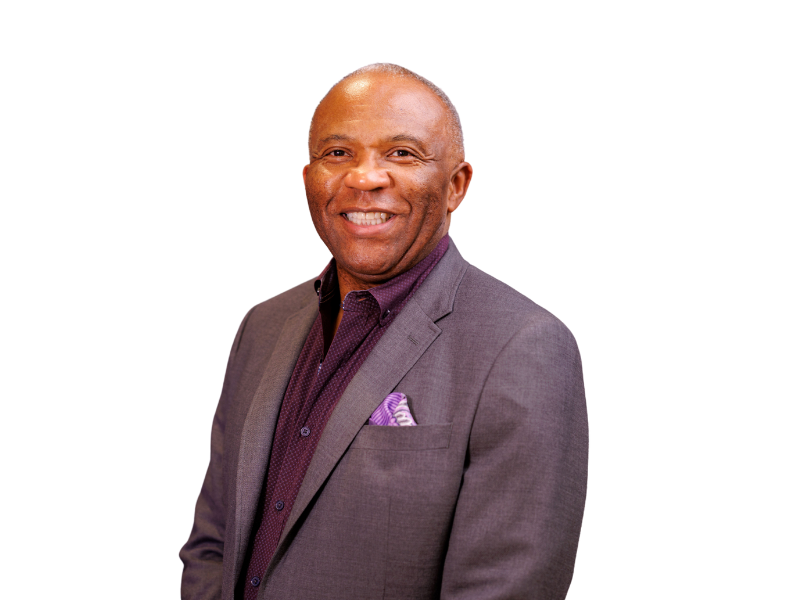
What happens when someone spends decades around performance, pressure, money, and leadership, then realizes the real bottleneck is not strategy at all, but the subconscious patterns quietly shaping every decision?
Curtis McCullom has built his work around that question.
With more than 35 years of experience across sales, leadership, and personal development, Curtis is the founder of Bespoke Human Potential Coaching, where he works with high achievers, founders, and leaders to identify the hidden internal friction that keeps them stuck, even when they look successful from the outside. His work blends human potential coaching with modalities such as NLP and hypnotherapy, all anchored in his proprietary L.G.E.T. Mindset framework: Learning, Growing, Expanding, and Transforming. On his platform, he describes transformation not as a willpower problem, but as one of neurological and biological alignment.
What makes Curtis compelling is that he does not speak only to performance. He speaks to the cost of misalignment. The quiet burnout. The ceiling that appears when ambition outruns identity. The unseen beliefs that shape income, confidence, visibility, and leadership long before results show up on paper. His work is built for people who know how to push harder, but are finally asking whether harder is the real answer.

Founder / CEO
What if the biggest competitive advantage in business isn’t having more data, but finally knowing how to listen to what your customers are really saying, especially when they never say it directly?
Rajiv Lamba has spent years living inside that question. As the founder and CEO of SurveySensum, and also founder of NeuroSensum, he has built his career at the intersection of customer behavior, AI, market research, and the uncomfortable gap between what companies think customers feel and what customers actually experience. He founded SurveySensum in 2019 to make real-time customer feedback faster, more accessible, and more actionable for businesses that could not afford the slow, expensive consulting model of traditional research. Today, the platform serves companies across dozens of countries, helping them measure and act on customer experience with far more speed and precision.
What makes Rajiv interesting is not just the business he built, but the pattern behind it. He noticed that in many markets, customers do not always tell brands the truth directly. That insight led him deeper into neuroscience, AI, and the hidden psychology of decision-making. Named among the “Top 30 Entrepreneurs of 2019,” Rajiv brings the rare perspective of someone who is not just building software, but rethinking how companies earn loyalty, reduce churn, and make better decisions in a world drowning in noisy feedback.


