

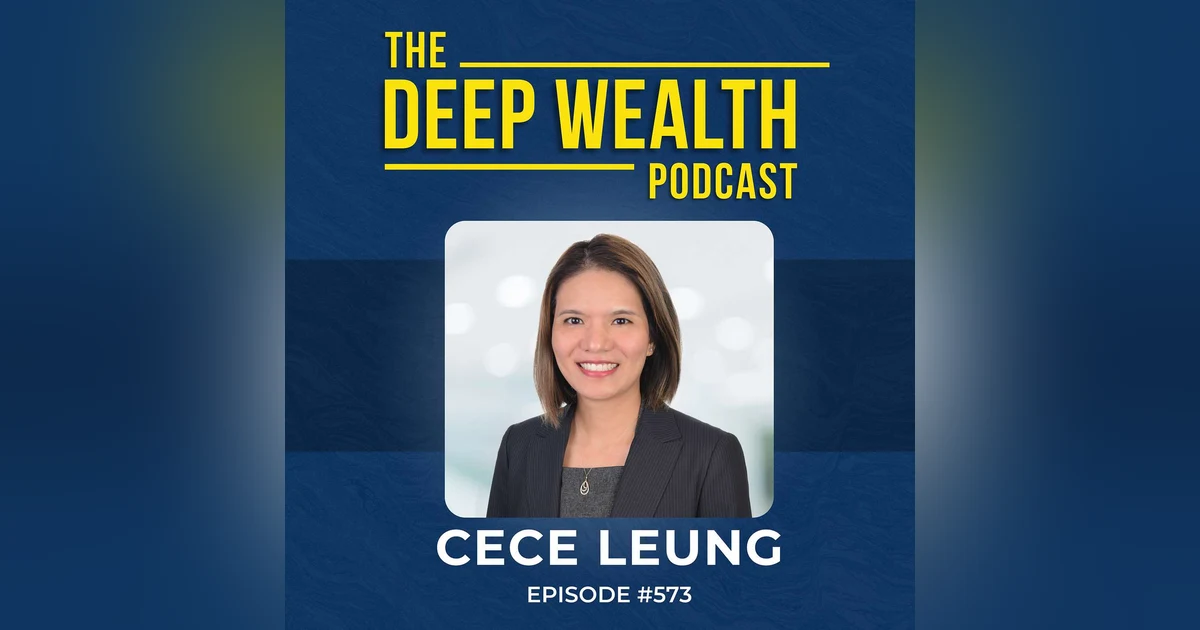
Former Wall Street Exec Cece Leung: Your Business Is Successful. Why Are You Falling Apart? (#573)

Send us Fan Mail “ You’re not only enough, but you’re also extraordinary, exactly as who you are right now.” -Cece Leung Exclusive Insights from This Week's Episodes Your company is winning. So why are you falling apart? Former Wall Street exec Cece Leung reveals the hidden cost of success after the check. Episode Highlights [00:08:00] Cece discovers that surviving pressure became a strength she no longer knew how to switch off [00:16:00] Why founders sacrifice sleep and health believing they...
 Apple Podcasts Apple Podcasts
  Spotify Spotify
  RSS Feed RSS Feed
  Amazon Music Amazon Music
  Podcast Addict Podcast Addict
  iHeartRadio iHeartRadio
  Castro Castro
  PlayerFM PlayerFM
  Podchaser Podchaser
  Overcast Overcast
  RadioPublic RadioPublic
  PocketCasts PocketCasts
  Audible Audible
  Pandora Pandora
  YouTube YouTube
 “ You’re not only enough, but you’re also extraordinary, exactly as who you are right now.” -Cece Leung
Exclusive Insights from This Week's Episodes
Your company is winning. So why are you falling apart? Former Wall Street exec Cece Leung reveals the hidden cost of success after the check.
Episode Highlights
[00:08:00] Cece discovers that surviving pressure became a strength she no longer knew how to switch off
[00:16:00] Why founders sacrifice sleep and health believing they can repair the damage after they win
[00:21:00] The person running everything is often the person founders neglect most
[00:27:00] Why a great deal on paper can become daily stress, ego battles, and post-close regret
[00:31:00] Cece reveals the seven-figure company hiding wrong people, wrong clients, and crushing exhaustion
[00:36:00] Why being unable to leave your company for two weeks exposes a deeper founder dependency problem
[00:37:00] The one question Cece believes founders should ask before building another level of success
Full show notes, transcript, and resources for this episode:
https://podcast.deepwealth.com/573
https://richandsassy.com/china/
The Deep Wealth Podcast
Most entrepreneurs do not fail.
They just carry too much for too long.
The business grows. Pressure grows faster. Profits get harder to predict. Decisions cost more energy. Over time, focus slips and health takes the hit.
The Deep Wealth Podcast and Deep Wealth Mastery are built from real experience. We're the only system based on a 9-figure exit. This system exists because guessing gets expensive.
🧠 Deep Wealth Mastery
This is for you if you want to:
• Grow a profitable business without becoming the bottleneck
• Build real value so selling is optional, not forced
• Optimize your health before it limits your business and life
One proven roadmap for real decisions.
⭐ Explore Deep Wealth Mastery
https://iapdw.com/idm
🎧 Subscribe
https://iapdw.com/podcast
📘 Free eBook
https://iapdw.com/ebook
💬 Have a question you keep circling back to?
Leave a short voicemail
https://podcast.deepwealth.com/voicemail/
Built by entrepreneurs. For entrepreneurs.
Loved this Deep Wealth Podcast episode?
You built your business from nothing.
Now make it pay off big.
📱 Subscribe Now
As a bootstrapper, every move counts. Subscribe on your favorite platform for Jeffrey Feldberg’s 9-figure exit strategies. From your morning grind to late-night planning, get insights from founders who did it without investors. These tips could change your future.
Drop a Quick Review
Got 30 seconds? Leave a 5-star review. It helps us make better episodes and reach entrepreneurs like you, hustling without a safety net.
Don’t Lose Your Exit (And Your Financial Freedom)
You’ve poured everything into your business. A bad exit could cost you millions. Most deals fail, and even “successful” ones lose half their value. The 90-day Deep Wealth Mastery program teaches you to make your business run without you and boost profits so you capture the best deal instead of any deal.
What Others Say
“Deep Wealth Mastery is pure gold. I wish I’d had it before my exit,” says Stacey C. “The value I’ve gained dwarfs the investment,” adds Sanjay S. “It makes my business great to own and sell,” shares William S.
📘 Grab Free Tools
Check out client success stories for proof. Master the Deep Wealth Strategy Map to plan your exit. Or snag the eBook, From 7 to 9 Figures: The Exit Playbook, for a clear guide.
Click here to start your legacy-defining exit today.
573 Cece Leung
[00:00:00]
Meet Cece Leung
Jeffrey Feldberg: Most founders think the hardest part of suCeceess is getting there. Cece Leung has seen what happens after they arrive. Born in Hong Kong, shaped across Canada, Wall Street, global finance, Big Four aCeceounting, investment banking, CFO seats, IPOs, capital raises, exits, and founder transitions, Cece has spent more than two decades inside the rooms where high-stakes decisions are made.
She's advised companies through growth, funding, M&A, and liquidity events. But what makes her work different is that she doesn't stop at the spreadsheet. She looks at the human being behind the numbers. As the founder of Rich and Sassy Wealth Strategies, Cece helps founders, executives, and owners navigate the moments where wealth, tax, structure, identity, family, and long-term freedom all collide. Her work asks a question many high achievers avoid: What's the point of winning financially if the cost is your [00:01:00] health, relationships, clarity, or self-respect?
Cece's an author, keynote speaker, and two-time Top 50 Women in Accounting Award winner. But beneath the credentials is a more personal story. Immigrant daughter, corporate perfectionist, founder, burnout survivor, and advisor to people who want to build wealth without losing themselves in the process. This is a conversation about money, identity, pressure, and the decisions that quietly shape the rest of a founder's life.
And before we hop into the podcast, a quick word from our sponsor, Deep Wealth and the Deep Wealth Mastery Program. We have William, a graduate of Deep Both Mastery, and he says, I didn't have the time for Deep Both Mastery, but I made the time and I'm glad I did.
What I learned goes far beyond any other executive program or coach I've ever experienced. Or how about Bruce? Bruce says, before Deep Wealth Mastery, the challenge I had with most business programs, coaches, or blogs was that they were one dimensional. Through Deep Wealth Mastery, [00:02:00] I'm part of a richer community of other successful business owners.
The idea shared forever changed the trajectory of the business and best of all, the experience was fun. And we'll round things out with Stacey.
Stacey said, I wish I had access to the Deep Wealth Mastery before my liquidity event, as it would have been extremely helpful. Deep Wealth Mastery exceeded my expectations in terms of content and quality.
And you know what, my Deep Wealth Nation, why they're saying this is because Deep Wealth Mastery, it's the only system based on a nine figure deal. That was my deal. And as you know, I said no to a seven figure offer, and I created a system that we now call Deep Wealth Mastery that helped myself and my business partners, welcome from a different buyer, a different offer, a nine figure exit.
So if you're interested in growing your profits, preparing for a future liquidity event, if that's two years away or 20 years away, and you want to optimize your post exit life, Deep Wealth Mastery is for you. Please email success at deepwealth. com. Again, that's success, S U C C E S S, [00:03:00] at deepwealth. com. We'll send you all the information about Deep Wealth Mastery, otherwise known as Scale for Ultimate Sale. That's where you want to be. You want to be with other successful business owners, entrepreneurs, and founders just like you who are looking to create market disruptions.
And they want to lock in their financial freedom and have success and fulfillment.
That's the 90 day Deep Wealth Mastery Program. It has your name on it. All you need to do is take the next step. Send an email to success at deepwealth. com.
Why Are You In Business
Jeffrey Feldberg: Deep Wealth Nation, welcome to another episode of the Deep Wealth Podcast. Deep Wealth Nation, let me ask you a question, and I want you to be honest with yourself.
Why are you in business?
What are you doing it for?
And if you tell me it's just about the money, answer again, because it's not just about the money.
There's so much more than that. And when you come up with, "Why am I doing what I'm doing?" do you still want to be doing it? I know, Jeffrey, such big questions. We haven't even begun the episode, but that's what it's all about today. We have a very special guest in the House of Deep Wealth. This individual has been at all the logos on the financial side, on the Wall Street side, [00:04:00] and has also turned to ancient Chinese philosophy to ask the question every founder should ask, but probably isn't.
So that said, Cece, I'm gonna put a plug in it right there. Welcome to the Deep Wealth Podcast. An absolute pleasure to have you with us. There is always a story behind the story. What's your story, Cece? What got you from where you were to where you are today?
Cece Leung: Thank you so much, Jeffrey, for such a kind intro. Such an honor to be on your show. Thank you again. Yeah, wow, it's incredible to just think about what a journey it has been. I feel like I'm just getting started.
Cece Origins And Drive
Cece Leung: So I was originally born and raised in Hong Kong in the '80s, and so my family originally came from Mainland China.
Like a lot of Chinese families, there was a lot of history around war and stability, survival, rebuilding at the time. And my parents' generation, went through a lot, and sure, people talk about it here and there, but without them saying anything, we felt that survival [00:05:00] mentality definitely passed on to how our parents raised us.
Hong Kong at the time was a British colony, so everybody knew about 1997 was coming, so which was the year to hand over back to China. So there was always this background pressure about the future around security, around making it before the clock ran out. everything was very intense.
Parents wanted to get us prepared, get educated, get a degree, get out to maybe Canada, Australia, to the US, wherever, safer, you know, the top-tier countries so we can have a better future. So we already knew what was coming, achievement was everywhere. We just have to work really hard because, again, our parents just really want us to have options that they never had.
So they want us out, eventually out somewhere stable before everything would change. So despite of that, I had an amazing memories in my childhood before the first grade. [00:06:00] I still remember that. I was actually very good, very creative, very out of the box in how I thought. I was just so happy, so alive, so up for the challenge for everything, so really loving and living my best life.
But then everything changed when I went into the first grade. So my parents pull all their strings, 'cause we're just middle class, but they try to get me into one of the top Catholic school in Hong Kong. So from a really young age, I was surrounded by extremely high-achieving people and all the rich kids who has everything.
And even though I was pretty good, I was, like, representing the school and competing a lot I never realized any of that was unusual because everything around me was just exceptional. I genuinely thought well, everybody was like that. They were so good and because- no one really acknowledged or validate me in a way growing up, so I never thought I was that good, I thought I was just decent and there are better people. So I thought, okay, [00:07:00] maybe I'm not that naturally gifted but I can absolutely work really hard, harder than everyone else, and earned my place. So I felt like that was huge in my life, and that became a huge pattern in my life, and I never really felt like I fit in also because of how I looked.
And as we know, kids can be brutal, especially girls sometimes, but my mom would just basically tell me "Well, focus on the practical things, you know, work hard, earn your place. Nobody can take that away from you." So all right, so as a kid, I did that.
Survival Mode To Burnout
Cece Leung: So later on when I was 16 years old I moved to Canada And my dad had a heart attack shortly after that.
And so I basically went into nonstop survival mode because I felt, my parents did a lot, and the generations before us did so much for everything. So I felt like I need to honor their sacrifice. So yeah, nonstop survival mode from there. You know, I [00:08:00] got into top school, top firms all these, you know, amazingly CFO across three continents, IPOs.
So I basically become very extremely competent, and I felt like, you know, I could outwork anybody in the room. But here's the problem, Even when you pass survival mode, I felt like I just didn't know how to stop. Sure, I could do a lot of things, I could achieve. I know how to function.
I know perform under pressure. And for the longest time, to me, that was strength. And was so proud of myself. But I just didn't know who I was outside of all that. And the biggest thing is honestly, I didn't realize it at the time because, stability was all we were striving for all my life.
so to almost think about, oh, like I don't have a lot of joy, it's almost like I felt guilty to say that. But later on when I looked at my life, I realized for a very long time I had so little joy. [00:09:00] All I was doing was just achieving, you know? and I was extremely exhausted. And like I said I just didn't feel I have the right to feel that way because like I said, like we kept on just thinking about parents' sacrifices, like the generations and all that.
But the same thing is, like the thing is later on I've worked with a lot of founders going through exits and liquidity events, right? I realized I actually I wasn't the only thing. I wasn't the only one in that feeling, right? Lots of people had that, and they didn't even know it.
Meaning And Philosophy Shift
Cece Leung: So eventually I feel like I hit a point where I start asking myself much bigger question: What am I really living for? I feel like, life has gotta be bigger than just paying bills, owning things, be responsible all the time. And so what does success even mean if you don't feel alive when you're building it?
And honestly, I've tried so many things over the years to try to understand about myself. Ultimately, in recent years I've [00:10:00] finally may have done a lot of therapy. but recently I think what helped me the most is philosophical counseling. Really changed my life. It's a rather new concept. So therapy helps me understand part of my past, but philosophical counseling really brought me back to a much bigger question around meaning, identity, values, and how I actually wanted to live.
So as philosophers question everything. Sometimes it's almost like, annoying, right? How much can you talk about life? But I think that became the foundation for rebuilding my company, Rich and Sassy, completely different now. So I feel like today I still do a lot of strategic work, exit, grow, finance which is, has been my bread and butter.
But I also integrated deeper work that genuinely helped me build my own life. So now we also expand to do philosophical counseling, leadership retreats in China with my brother to bring a lot of Chinese philosophy elements to conversations around [00:11:00] burnout, identity, purpose, and how to build success without completely abandoning yourself in the process.
And so I feel like very few people a lot of high achiever know how to make money, but very few know how to build and live a full life. And I feel like once I know how to do it, I feel like I'm just getting started.
Jeffrey Feldberg: My goodness, Cis, so much there to unpack, and thank you for putting it all out there. As you're going through your story, you remind me of a saying that we have here at Deep Wealth, and I-- sadly, for better or for worse, a little bit of both, I've lived it: success without fulfillment is failure. So all the zeros in the bank, all the success, all the accolades, if the fulfillment isn't there, then what's it all for?
It's not really where we wanna be with that. Before we get into some of the business, it's interesting because you've been a part of a few different worlds, first from Hong Kong and then with China entering into the picture, and then Canada, then the US. So for [00:12:00] someone who's in Deep Wealth Nation and primarily in the US, we hear a lot about China these days, not necessarily the best things, and the competition with AI between the two countries and everything else that's going on.
What was it like with that immigrant mentality? And I'm an immigrant, from one immigrant to another. What was that like for you once you're now out of Hong Kong, away from China, in the US, you're starting to begin your career, the values, the stories, the background. What was different? How did that help you?
What would you want us to know?
East Meets West Wisdom
Cece Leung: you know, so I moved to Canada when I was 16 years old, so I spent the foundational years in Hong Kong. And Hong Kong at the time was a British colony, so it was very Westernized. But at home we were heavily instilled in Chinese culture. But of course, you know, growing up Chinese, philosophy wasn't something separate from life.
It was built into [00:13:00] everyday thing, even though no one formally explained it to us. So the way you eat, the way you rest, the way you think about balance the idea that emotions affect the body, the idea that stress eventually shows up physically, like, all that was just normal to us.
And at the time like, sometimes, you know, it's kind of like these days we hear about these philosophical concept like let things flow. We learn about all that in school or how people talk, right? But at the time we were in such heavy survival mode, I just felt like, all right, everything is beautiful, poetic.
Like, how do you really let it flow? We need to get things done We need to like, get things moving and all that. So I feel like right now there's still a lot of things that I think that I continue to go back to. And I realize it helps me a lot to bring myself back to reconnect to myself.
Like, Obviously I think in the Western world there's a lot of amazing things about how to [00:14:00] optimize everything, how to be productive. But ultimately, I think the inner architecture, the inner foundation of the person who's doing everything is the most important. Because without the person, nothing really matters.
And, you know, when we talked about wealth, your podcast, Deep Wealth, it's not just money. It's more than money, it's our health, it's our happiness it's a lot of things. So I feel like a lot of these ancient wisdom tell us how to live a full life. I feel like a lot of us just stretching service.
But of course it's hard to teach these things. You really have to experience life to come to that realization, then go back to it and it makes all makes sense.
Jeffrey Feldberg: That's so interesting, and I know in the book, Dear Accountant: Stories, Advice and Explorations, I love the subtitle for your chapter, Defy the Stereotypes and Create My Own Myth. And so it, it sounds like you took your historical beginnings, your [00:15:00] roots, also looking forward of, hey, just because it was done this way doesn't have to mean that I have to do it this way, and what am I all about and how am I gonna do that?
And so it sounds like that experience as you then went into the business world and we'll start talking about liquidity events and what you've been seeing with other founders that you've been working with, it sounds like that really helped your trajectory in terms of how you look at the world, how you do things, and perhaps it's not the way that it should be this way or that way.
I'm gonna do it my own way. What was it like? Because oftentimes as a founder, there's that pressure of hey, I wanna have success. Do I get that success at the sacrifice of my soul? In other words, do I give up who I am just to become successful, or how do I keep to who I am, do it in my own way, but I can still welcome success?
So what have you seen both for yourself as well as in your own journey of helping others on the business path? What would you say to that?
Founder Sacrifice Trap
Cece Leung: Yeah, I think it's interesting that you mention that because like, I was gonna say, especially for first time founder, a lot of us are [00:16:00] so willing to sacrifice everything to get to our goal, right? It's not that we intentionally do it, I think it's just something that we really wanted to get to the goal, and we're so willing to sacrifice our sleep, our health, because you feel like once we get to the goal, and then we can relax a little bit, and then we can fix all these things.
But it doesn't, just doesn't quite work that way. So usually, I think it applies to myself as well, usually the second time what I call the second time founder usually run companies and runs everything so much better. Because now that they have learned it, they've experienced it. I also think that it's important to really experience it.
Because I felt like a lot of the concepts that I've heard from other people I was thinking to myself oh, that would never happen to us. I knew better. But I think while you're doing it, because there's so many things going on at the same time, it's really hard. I mean, Of course that's why probably it's very important to have community, have coaches, and facilitator that we need, [00:17:00] like someone that we trust to help us, hold up a mirror to reflect back to us what we're doing and to take it from there. But I feel like, like the pattern is everywhere, how a lot of people build companies is the same way they build their lives.
they're not separated. But I feel like once we have a good thing going on with our life, everything will follow
Rich And Sassy Framework
Jeffrey Feldberg: Okay, and so you have that, and now your company, love the name, Rich&Sassy, Wealth Without Losing Yourself. And so when you're working with founders, whether it's for an IPO or some kind of liquidity event, or it's with the private retreats in China, talk to us about what is this Rich&Sassy? "Hey, Cece, I heard you on The Deep Wealth Podcast.
Sounds like you're doing some interesting things. Let's figure out how we can work together." What does that look like? What's your process? What are you gonna be walking me through? Where can it lead to?
Cece Leung: Yeah, so our company is rooted in the Chinese philosophy. it's a framework that I often think about [00:18:00] is, you know, we founded with foundation and growth and build your legacy outward. Actually, I think I'm missing one. I do a lot of strategic work with founders.
So often everybody is so well-versed in numbers, very technical. I feel like overachievers are just like so good at these like technical stuff. Like I said I think it gets you so far but once you get to a certain point, it's really important to really question the things that you want.
Because sometimes the thing that you want when you're younger, it change, your life change. So I think it's important to constantly go back to yourself, reconnect to yourself and ask the question, like what do you really want? It sounds like a simple question, but it's not. And so I think it's important to do that.
and also I think it's important to take time to... I kept saying reconnect to yourself. I feel like a lot of people have like meditation practice, which is amazing. But sometimes I feel like day to day there's just so much demand. When [00:19:00] you're in it, it's hard to get out of all these noises around you.
So that's why we wanted to bring people to China I mean, there's a couple folds to it, right? Because I did it myself many times. Because sometimes if you're in the US, and let's say if you go couple hours away, you're still here. So it's almost like you cannot detach from all these things that's happening, and but when you go to China or the other side of the world, all of a sudden it's almost like you can separate a little bit.
I think maybe it's mental. And the thing, what we liked about bringing people to China is that there's a lot of Chinese philosophy that is rooted in China. Like the practitioner that we work with the thing that we wanted to bring with people as tools.
So I think that's just the best place there to explore. So that's basically what we're doing now.
Jeffrey Feldberg: Okay, so interesting.
Burnout Lessons For Founders
Jeffrey Feldberg: So philosophy, particularly Chinese [00:20:00] philosophy that you're putting into the business world, but it, it does bring up some interesting questions because when it comes to founders and high achievers, you've been there, you've gone through your own burnout. So what did burnout teach you that success never could?
What would you want Deep Wealth Nation to know?
Cece Leung: Get some time and space to think and breathe or reconnect to themself.
I keep on using that word because I think it's important. I felt like when I was running businesses and, it doesn't matter it's myself or seeing different founders we're just... our head is just so on what we need to do. And we forgot ourself, and we're so willing to sacrifice ourself, and then, so I feel like it's not just about setting aside time it's about making it a practice. Doesn't matter that you're doing it as like, kind of like therapy using someone, a facilitator, to help you. Not necessarily therapy, but philosophical counseling. Or, actually take some time to do a [00:21:00] retreat.
Again, we call it a retreat, but it's really just away from where your current environment just you can focus on yourself. Because like I said so many times, the person who's running everything is the most important person, which we sometimes forgot.
Jeffrey Feldberg: You're really going back to a more fundamental question of why? What's it all about? So now that you achieve this, okay, so what?
Post Exit Reality Check
Jeffrey Feldberg: And Cece, as you're talking about that I, I can share with you that before my liquidity event and after my liquidity event, I'm still the same person. And I remember clear as day when the transaction closed and I woke up. First I pinched myself. Was this a dream? Is it real? And okay, yeah, it was real. After that settled in, though, we're now talking a few minutes later, and this is the first day of the post-exit, I'm still the same Jeffrey.
I still have the same hopes, the same fears, the same dreams. Sure, there are more zeros in the bank, but it fundamentally didn't change who I was and what it's all about, and that's where some of [00:22:00] the biggest mistakes that I made, the stupidest things that I could have done came post-exit, not pre-exit, where I had too much time and too many zeros on my hand.
It was not a good combination, at least for me. Maybe other people are fine. For me, it wasn't. That's where I made the bigger mistakes because I, wasn't grounded, if you will, into, okay, what do I really want beyond the business side of things? So when you're working with founders of, okay, sure, it's great you have a successful company.
Maybe you're gonna go public, maybe you're not. But let's talk about life. Let's talk about where you wanna be. What does that look like when I'm working with you and the team?
Cece Leung: Yeah, thank you for sharing. I think sometimes it's so interesting, right? I kept on bringing, want people to bring back themself to themself, meaning that the self, right? Because nowaday everybody wants to change the world, but then if your inner structure, inner foundation is not strong, I mean, sure, you can.
You can still build company. But I just think only to a certain level. It's just not sustainable. So [00:23:00] often I feel like I wanted to bring back people to focus on themself. especially when you think about doesn't matter it's IPO or M&A, it's a long journey, 18 to 24 months. Of course, it's almost like when you think about the analogy of climbing a mountain.
We're so prepared to climb up, but you never think about when you come back down. It's actually just as important, the post part of it. So sometimes, you know, kind of like what you said, if you don't think about that, if your inner foundation is not strong, if you're not grounded, all of the sudden it feel a little bit lost.
And that's why it's almost so ironic to say, right? People will think now that you have all the money in the world, why would you be lost, right? You should be, like, even more grounded. But that's not true. So I think the work while we're doing all these big transactions and all that, I feel like I kept saying the same thing it's important to continue to work on ourself.
Doesn't matter it's a retreat or the [00:24:00] philosophical counseling, to just keep asking ourself what is it that we really want, and then, things might change.
Patterns And The 80 20
Jeffrey Feldberg: And Cece, as you're talking about that, I know in the book, Dear Accountants: Stories, Advice, and Exploration, this is where there are different stories that are being shared from people from all different walks of life. When you look at those stories, when you look at the people that you've worked with, where they've been, what's worked for them, what hasn't worked for them, it's one of my favorite questions in this kind of situation.
Is it the good old Pareto's law, two fancy words? Is it the 80/20 principle? Yeah, Jeffrey, you know what? Of all the people that I spoke with or that are in the book or shared with me their life story, 80% of their troubles or 80% of their biggest fulfillment or their joy came from this 20%, or it could be 90/10 or 95/5.
But are there patterns that you've seen along the way that you can share with us that are helpful of how we navigate not just business, but our life?
Cece Leung: Yeah, I think the pattern has been like, especially for overachiever, [00:25:00] like I mentioned before it just feels like we're so willing to sacrifice a lot to get to the finish line. And the way we run our company is the same way we run our lives. It's, I feel like We talked about the word balance, kind of balance work and life.
But, doesn't matter what word we use, it's integrate both, because your work and life shouldn't be separated. But unfortunately, I feel like a lot of people when we're chasing something or trying to achieve something, we're willing to be like yeah, we're gonna do that.
Balance And Hidden Costs
Cece Leung: We're gonna take care of all these problems later."
But then there's really no we're just postponing it. So I feel like it's important to just often l- look at our lives and make sure that when we say the word balance, like every day is not just gonna be like, an hour this, an hour that, right?
But I think every day we make choices to make everything work for ourself and our loved ones to make it worth it
Jeffrey Feldberg: And I know one of the [00:26:00] things when our teams were speaking with one another about this podcast and in my own preparation for today, y- you brought forward something interesting because you're coming forward and you're saying, with every decision that we make, especially as a founder, there's always a hidden cost.
There's two sides to a coin. So as great as one side may be, there's also another side that you have to consider. when it comes to your words, high-stake inflection points of how we can protect our own personal deep wealth after a win. So from your view of the world, CC, for someone in Deep Wealth Nation, maybe they're looking at getting an investor in their company, they're gonna take some chips off the table.
Maybe they're gonna go public. Perhaps they're gonna have a full exit. They're gonna sell all of the company. What would be some of those blind spots, those inflection points that they may not be thinking about that, yeah, on paper it sounds great. I'm gonna sell the company. I'm gonna be rich. I'm gonna be successful.
I'm gonna have all the time back in my hands. I can do what I [00:27:00] wanna do. And you're there saying yes, that's true." That said, have you thought about this? What's this that a founder should be thinking about that they're probably not?
Deal Blind Spots After Exit
Cece Leung: I really want founders to think about the after, because we so often think so much up till the point you get your check, right? And then you feel like the money will just solve everything. But what I've seen over and over again, funny enough, ex- for give you an example of a founder going through a merger, right?
Some other companies want to buy a big piece of them. And they were just so excited, because everything, of course, you know, when someone's interested in buying your company everything, what they presented to you is amazing. But at the same time, let's be real, and I don't know if people talk enough about that.
Usually, for example let's say if a private equity company wants to buy a big stake in the company ultimately I think within a year or so they will want to buy your remaining [00:28:00] stakes again. And sometimes people just don't think about it. And also, even backtrack a little bit, when people are trying to close the deals, even though the founders may feel that they might not be able to work with the other company, but they're still trying to in their head would be like it's okay.
We can make it work." So it's almost like everyone is so ready to make everything work. It's almost like entering into a marriage thinking that I might not like this person so much, but it's okay, we're gonna make it work." So if you like, usually after you close the company and all this issue come up, and there just become so much drama, ego, power play, and it's just energy drain all over.
And sure we feel like now that you have money and solve all that, but then you're going to deal with this thing every day, just so unfulfilling and so unhappy, so it's just not worth it. so sometimes I feel like, okay well, so how come during the process no one ever mention it?
There's legal advisor, there's all sorts of so many [00:29:00] advisors, right? I feel like it's just because there's so many things happening during the process. It's either you don't pay enough attention about it, or you think about it, you'll be like We'll make it happen.
We'll make it work when the time comes." But when the time come, it's just energy drain. It's just a lot of stress. So I really advise people to really think about the after. Of course, nothing is ever perfect, but at least really what do you really wanted to do after the deal close? What do you really want?
Jeffrey Feldberg: And Deep Wealth Nation, as CC talks about that, here's what I want you to think about. These are not shallow words. This is not theory. CC has been at, you name it, PwC, EY, JPMorgan. She's been in a number of CFO roles, gone through a number of IPOs. You've been at the deal table time and time again, and it's interesting because in preparing for today, CC, one of the things that stood out for me, these are your words: "I started Rich and Sassy because I was tired of watching brilliant founders become ghosts of themselves after winning," air quotes around winning.
[00:30:00] "Now I help the rest of us build wealth that doesn't cost us our lives." So what does that practically mean to build wealth that doesn't cost our lives? Because I'm sure there's many in Deep Wealth Nation that are saying, "Hey, just give me the money, and I will figure out the rest afterwards." And so how do we build wealth?
How do we get that success, but it's not costing us our lives? What does that look like?
Wealth Without Losing Yourself
Cece Leung: Yeah, I think it's important to know who you are and what your values are. I know we talk about a lot of things, but like, I also talk about my own upbringing. Sometimes without really doing the work of really looking at ourself, it's hard to know. Because when I first left the corporate world and built my first company, I was still operating on the same script, even though if someone pointed out to me, I'll be like, "Yeah, that's ridiculous. I have nothing to prove, I'm already really good. I'm not a people pleaser." I'm like, but in reality, I'm all [00:31:00] that. I'm still doing so much. I'm still surrounding myself with the wrong people, wrong clients, and all that.
But I would never know, because on paper, everything is amazing. It's a seven-figure company. I have everything to prove that we're very successful. But every day, I was really... I was just exhausted. And then of course, if I tell my friends and family, first of all, I feel guilty.
Why, what am I even complaining, like, all these amazing opportunities that I had. And second also, I feel like people would be like all this stress and everything is just part of success. It's really just part of it. There's no way around it, almost." So I think for the longest time, so finally I think everything will eventually fall apart.
I was working with the wrong people, wrong client, like I said and at one p- I was exhausted every day. I was, because I didn't have the right people to support me, so I was carrying a lot without [00:32:00] even know what to do. So ultimately, everything had to fall apart, and I have to purge everything to start over again.
So it really took me a while to really look at myself, like I said, with all these different tools, retreats, space time to really think about, questioning everything to really know what I really want, who am I. And then I think once you have the strong inner foundation, then everything is much stronger from then on.
Doesn't matter what you want to build your life like business or your life, like everything was just much stronger, better.
Jeffrey Feldberg: And so C.C., it sounds like what's going on here, you have a very strong background on the financial side with the numbers. You've been there, done that, as the saying goes. And so it gives you a unique opportunity, because from your own personal experience, you've had the challenging times, you've had the burnout times.
You understand the balance sheets, the profit and loss statements, what it is to do an IPO. You get the numbers probably better than most founders do for [00:33:00] their own company. You're then taking that and in a very unique way, I don't know if I've spoken with anyone else that quite does it this way, you combine the modern-day numbers and success and business with ancient Chinese philosophy and how to look at the world and what does it really mean and who do you want to be when you grow up?
Sure, you're gonna have this multi-gazillion dollar exit, but so what? Big deal. Jeffrey, what does that really mean? Is that really what you want? Is that your dream? Is that someone else's dream? So it sounds like you're putting all that together, and that's fairly unique out there. So when you're working with me, "Okay, C.C.,
I heard you on the Deep Wealth Podcast. Yeah, planning to have an exit or planning to raise some investment capital." What's your process like in terms of working with myself and the team? What's some of your secret ingredients and what are we doing? How long does it take? Where does it take us?
Advisory Process And Retreats
Cece Leung: I serve as an advisor on a lot of the projects. Doesn't matter, we do IPO, M&A, and all that. [00:34:00] So that's just very structured process, usually 18 to 24 months. But I would usually add on to the component with our clients to consider adding into the philosophical counseling piece in there.
I feel like, as an advisor and, even as a CPA advisor, a CFO advisor all these years, sometimes when you talk to a client, you're not really just talking to a client about just numbers. Like, A numbers really shows a lot of things, their entire life, how they spend their money, what do they care for, what their value is.
So I work with a philosophical counselor, Dr. David Kay. So he's part of the team, and he just work with our clients, depends on what the client needs. It's not formally session, like once a week, twice a week. I feel like a lot of times when people are going through a lot they just want to have someone there as a sounding board sometimes, to save them a lot of spiraling.
Because I feel as you can imagine, like high achiever, like thinks about things, like, all the time, you know. Like, sometimes in the middle of the night kind of thing. So I [00:35:00] think sometimes they just really want someone to just maybe ask them a question to open up their mind, to expand their thoughts.
So philosophical counseling is definitely one of the biggest piece in our lives. Again, not really just questions about all these existential question, but sometimes even business question. Like, why do you not trust that person? Why you not trust that thing, right? And then the more questions you ask, the better.
The answers all, as most people say, is already within us. And so that's a big piece of that. And we also advise founders to really take some time out of their work. Again, like it's not a vacation. But really, as we said all the time, if a business has to be heavily depend on the founder, then it's not really a sustainable business.
So because sometimes, like at the beginning we advise founders to t- take two weeks. So our retreat is 14 days. And s- many instantly would be like I can't leave my company." So then we're like maybe this would be a good [00:36:00] chance for you to really see how it goes, maybe learn to delegate and do more."
But once people will be able to detach, not so much detach, but really learn to delegate and really, utilize all the resources that they have and really for them to go back to themself, to reconnect to themself, to work on themself in all the different aspects of we- health, right?
Like health and- different elements, I feel like they usually come back so much better and stronger for their own life and for their business
One Question To Change Life
Jeffrey Feldberg: And so with that said, CC, there's a saying that if you want to change your life, if you want to change the quality of your life, ask different questions, ask better questions. And as we say here at Deep Wealth, we have our own saying, "You have the answers as a founder. You're not asking the questions because you don't know what questions to ask."
So with that in mind, CC, if a listener in Deep Wealth Nation, if they were to ask themselves one question that could [00:37:00] meaningfully change their life, but they're probably not asking that question. They don't even know where to begin or where to start or what to ask. But if they could only ask one question, what would that question be?
Cece Leung: I think the most important question is what is the life that you're actually building? What are you Living for. If I wanted to expand a little bit, I feel like what makes you feel fully alive. Because sometimes of course we can live our life, we can just get by every day. It's every day you ask people, "How are you doing?"
People will be like, "It's okay," right? Which is the most devastating answer ever. But I would love to hear people say, "Oh, I'm incredible," you know, "I'm fully alive," that kind of thing. It's not just words, right? You can see when people are fully lit up of what they're doing.
so that I think, back to the question would be, like, what is the kind of life that you actually want and actually building for yourself?
Jeffrey Feldberg: [00:38:00] Wow. Yeah, talk about a question. That's one heck of a question. What do you want? What kind of life do you want to live? And it's so interesting, as founders, we're so busy chasing that goal or that dream. It may not even be our goal or our dream. You're asking us, "Hey, just stop. Take a moment. What kind of life do you want to live?"
And I know it's gonna vary from one founder to another founder. We're all different. We all have different dreams and aspirations. But again, the Pareto's principle, the 80/20 law, are you seeing common themes when you ask that questions of your clients and founders? And what would be some patterns or themes that you see?
Living The Full Spectrum
Cece Leung: Oh, this is so interesting. Yeah, so usually people tell you like, they really want to feel alive. They really want to live a full life. But most of them, when they talk about it, they really want the good stuff. They don't want the bad things, right? It's not necessarily bad, but life is not just one smooth ride.
But sometimes I feel like, also I feel like our life is just a lot of [00:39:00] framing and different perspective, a lot of challenges, a lot of difficulties at the times. Many of us can see it as a blessing in disguise. And also, I feel like it's really, like, how we frame a certain things.
So really what we say, even in many philosophical teaching, is that when you live a full life, it's just to embrace all of it, the good and the bad. And really then we're living a full life, not just to the extreme "Oh, I just want all the good things," or it's "Oh, life is all suffering."
But no, life is everything, the full spectrum of it. yeah, so I feel like people really need to experience all that to know what does that mean to live a full life, not just a good thing, not just a comfortable, it's everything.
Jeffrey Feldberg: And so from the philosophers that you've studied, the ones that you integrated into your work, whose work has stood the test of time, we're not talking a day, a month, a year, we're talking thousands of years.
What would they say if we [00:40:00] could ask them, you wave a magic wand, poof, they're magically here.
What's the good life for them? Because I suspect what they would say would transcend time. It doesn't matter that it was from thousands of years ago, it would stand the test of time. What did the good life mean for the philosophers?
Cece Leung: Yeah, I think so. I work with Dr. David Kay a lot, and he's a Nietzsche scholar. Of course he'll quote him all day long, and without quoting the specific quote, it's exactly what I just said, live the full life, the whole spectrum of it, like good or bad, like everything. that's a good life.
That's a full life, not just one aspect of it
No Regrets Looking Back
Jeffrey Feldberg: And when you look at that, Sisi, and you look at where you've been, so you graduated, you then went to the big logos, the big firms doing all that analysis, all the crazy schedules and everything else. When you look at the two different worlds, what do you say about the now hindsight gives us the benefit of 2020?
What's obvious right now may not have been so obvious back in the [00:41:00] day. So when you look back at your journey of, wow, you're chasing the numbers, some big dreams, some big deals that are on the table, people's lives financially changing, their personal life maybe for the better, maybe for the worse, that's for them to determine based on what you've written about, I suspect it wasn't always for the best though.
So when you look back on your journey, what comes to mind for you?
Cece Leung: I feel like, of course there would be a lot of things that I would wish I would do differently, or I would tell myself all that. But I think at least right now in hindsight, I felt like I had no regrets of my entire journey. Sure, we can say all that, do things differently or tell the person, or tell the younger self what to do.
But I felt like I really, or every person really have to go through the journey in order to... you really have to experience it to, to know. Because otherwise it's almost there's a [00:42:00] Chinese saying you can talk strategies all day long, but let's say for example, playing tennis, right?
We can talk amazing competitive strategy on tennis all day long, right? And it would sound perfect, but until you actually go out to play, then you're like, "Oh my God, I need to change this. I have improve this. I have to do all that," right? So the practicality, the execution, the really living and experiencing life is really, living life and life lessons.
I almost feel like it's so crazy because while I was going through all that stuff, it was so hard. It was really hard. But right this second as I looking back, I really felt like I needed to go through all that to get to where I needed to be. And going forward, I feel what I said at the beginning, I feel like once you know that, once you learn all that, once you have a clear idea and perspective how to live life, I feel like I'm just getting started.
And so I'm 45 years old. I hope, seems like all the Asian women in [00:43:00] my life my grandmother, they lived to like, 90s. So I feel like I still have another 40-something years to go. Yeah, still a long life. But I feel like if I can really have a good perspective in everything, oh, I'm just getting started.
So excited.
Jeffrey Feldberg: Wow, I love that outlook. Hey, I come from a lineage where there's a long life and I got a long way to go. I'm at about the halfway point. I'm just warming up. I'm just beginning, and you're looking back at where you've been, but I love the excitement that you have ahead for yourself. And again, Deep Wealth Nation, as we're talking about this isn't just theory, it's not just philosophy, because Cece's been in the boardrooms.
She's sat at the table. She's been in the big companies, and in a very unique way, it's combining all of that.
Back To The Future Advice
Jeffrey Feldberg: And so as we look back, Cece, we're gonna now look forward because it's the perfect segue for us to go into our wrap-up mode. It's our tradition here on the Deep Wealth Podcast. I have the privilege and honor to ask every guest the same question, and [00:44:00] it's a fun question.
Let me set this up
for you. When you think of the movie Back to the Future, you have that magical DeLorean car that will take you to any point in time. So Cece, it's tomorrow morning. You look outside your window. Not only is the DeLorean car curbside, the door is open, it's waiting for you to hop on in, which you do.
You're now gonna go back to any point in your life. Cece, as a young child, a teenager, whatever point in time it would be, what would you tell your younger self in terms of life lessons or life wisdom, or, "Hey, Cece, do this, but don't do that"? What would it sound like?
Cece Leung: Wow, that's so cool. when you ask this question my first instinct is always, you know, to go back to Wall Street, my first job, first boardroom, to tell that young lady, hey, you know, here's something about business and money or how the game actually works to prepare her, right?
But I feel like when I think a little bit more, I realize, actually by the time I got to Wall Street, like that pattern was [00:45:00] already fully formed. The never feeling good enough and all that. So if I would take the dealer in all the way, I would take it back to first grade. That little girl in Hong Kong just getting started, who was so energized, full of hopes and dreams, who loved life, who in this Catholic school uniform that she was so proud of, I wanted to tell her... Oh my God, that's gonna get me a little bit emotional. I wanted to tell her that even though she was growing up in that competitive environment, that she didn't feel that she was enough, but she was not only enough, but she was extraordinary right here, right now, exactly who she was.
Not the version that eventually got her to Wall Street, not the version that eventually closed big deals and all that. And [00:46:00] hopefully she knows that deep in her heart, and she doesn't have to spend the next 40 years trying to prove what's already true at that moment.
Jeffrey Feldberg: Wow, that's so powerful. Hey, you're not only good enough, you're extraordinary exactly as who you are right now. Everything that you have, everything that you want, everything that you think you want, you already have that within you right now. It's already there. Just look within. It's powerful advice as you're looking back and sharing that.
And Deep Wealth Nation, my goodness, wow, that is from the heart from Cece, and thank you for being so open and vulnerable as you share that.
Where To Find CC
Jeffrey Feldberg: And Cece, from that terrific advice, for someone in Deep Wealth Nation who would like to work with you to figure out just beyond the numbers, beyond the financial success, what life is really about, and that I suspect will help them think about the next step, maybe it's not what they thought it would be, where would be the best place online to begin that conversation to speak with you, the team?
Cece Leung: Yeah. I'm active on LinkedIn, so feel free [00:47:00] to reach out to me on LinkedIn, and also check out our website richandsassy.com. And yeah, feel free to contact me from there
Jeffrey Feldberg: And deportation doesn't get any easier or any better. Go to the show notes. It's all there. It's a point and click. And that said, CC, congratulations. It's official. This is a wrap. As we love to say here at Deep Wealth, may you continue to thrive and prosper while you remain healthy and safe. Thank you so much
Cece Leung: Thank you so much, Jeff
Subscribe And Final Thanks
Jeffrey Feldberg: So there you have it, Deep Wealth Nation.
What did you think?
So with all that said and as we wrap it up, I have another question for you.
Actually, it's more of a personal favor.
Did you find this episode helpful?
Have you found other episodes of the Deep Wealth Podcast empowering and a game changer for your journey?
And if you said yes, and I really hope you did, I have a small but really meaningful way that you can actually help us out and keep these episodes coming to you.
Are you ready for it?
The dramatic pause. I'll just wait a moment. Drumroll, please. Subscribe. Please subscribe to the Deep Wealth podcast on your favorite podcast channel. When you [00:48:00] subscribe to the Deep Wealth Podcast, you're saving yourself time. Every episode automatically comes to you, and I want you to know that we meticulously craft Every one of our episodes to have impactful strategies, stories, expert insights that are designed to help you grow your profits, increase the value of your business, and yes, even optimize your post exit life and your life right now, whatever you want that to look like.
And every time you subscribe and a fellow entrepreneur subscribe, it's a testament to how together, Yes, we are. We are changing the social fabric of society. One business owner at a time, one liquidity event at a time. So don't let the momentum stop here. Subscribe now on your favorite podcast channel.
You'll never miss an episode. You'll be the first to hear from the top industry leaders, the innovators, the disruptors that are really changing and shaping the business world, and maybe you're commuting, maybe you're at the gym, maybe you're taking a well deserved break that we spoke all about on this episode.
The Deep Wealth Podcast, it's your reliable source for the next big idea that could literally [00:49:00] revolutionize your business. So once again, please hit that subscribe button, stay connected, inspired, and ahead of the curve. And again, your next big breakthrough moment, it might just be one episode away. Maybe it was even this episode.
So all that said. Thank you so much for listening. And remember your wealth isn't just about the money in the bank. It's about the depth of your journey and the impact that you're creating. So let's continue this journey together. And from the bottom of my heart, thank you so much for listening to this episode.
And as we love to say here at Deep Wealth, may you continue to thrive and prosper while you remain healthy and safe.
Thank you so much.
God bless.

Co-Founder
Most founders think the hardest part of success is getting there. Cece Leung has seen what happens after they arrive.
Born in Hong Kong, shaped across Canada, Wall Street, global finance, Big Four accounting, investment banking, CFO seats, IPOs, capital raises, exits, and founder transitions, Cece has spent more than 20 years inside the rooms where high-stakes decisions are made. She has advised companies through growth, funding, M&A, and liquidity events, but what makes her work different is that she does not stop at the spreadsheet. She looks at the human being behind the numbers.
As the founder of Rich & Sassy Wealth Strategies, Cece helps founders, executives, and owners navigate the moments where wealth, tax, structure, identity, family, and long-term freedom all collide. Her work asks a question many high achievers avoid: what is the point of winning financially if the cost is your health, relationships, clarity, or self-respect?
Cece is also a best-selling author, keynote speaker, podcast host, and two-time Top 50 Women in Accounting award winner. But beneath the credentials is a more personal story: immigrant daughter, corporate perfectionist, founder, burnout survivor, and advisor to people who want to build wealth without losing themselves in the process.
This is a conversation about money, identity, pressure, and the decisions that quietly shape the rest of a founder’s life.


