


3X Tech Founder Jeff Macpherson: You’re Doing AI Wrong. Do This Instead. (#575)
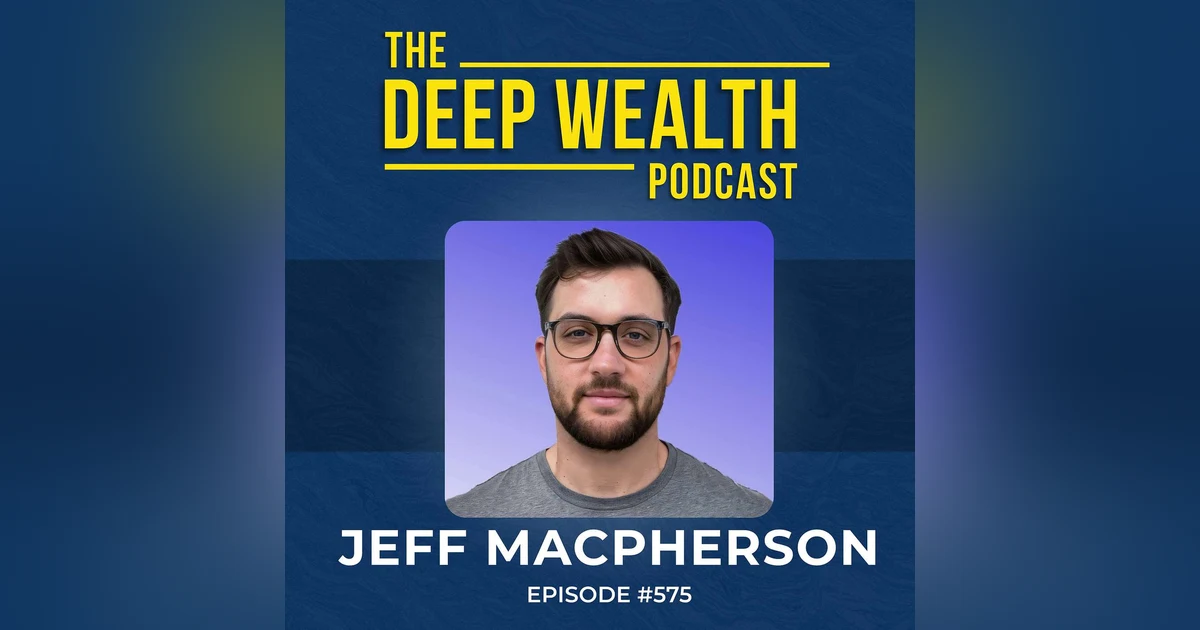

Send us Fan Mail “Follow what you believe and enjoy the journey.” -Jeff Macpherson Exclusive Insights from This Week's Episodes Buying more AI tools can scale the wrong things faster. 3X Tech Founder Jeff Macpherson reveals how founders turn existing knowledge, processes, and A-players into scalable revenue and stronger enterprise value. Episode Highlights [00:13:12] Why losing a business to platform dependency changed how Jeff builds companies today [00:17:11] The shiny AI tool trap that sta...
 Apple Podcasts Apple Podcasts
  Spotify Spotify
  RSS Feed RSS Feed
  Amazon Music Amazon Music
  Podcast Addict Podcast Addict
  iHeartRadio iHeartRadio
  Castro Castro
  PlayerFM PlayerFM
  Podchaser Podchaser
  Overcast Overcast
  RadioPublic RadioPublic
  PocketCasts PocketCasts
  Audible Audible
  Pandora Pandora
  YouTube YouTube
 “Follow what you believe and enjoy the journey.” -Jeff Macpherson
Exclusive Insights from This Week's Episodes
Buying more AI tools can scale the wrong things faster. 3X Tech Founder Jeff Macpherson reveals how founders turn existing knowledge, processes, and A-players into scalable revenue and stronger enterprise value.
Episode Highlights
[00:13:12] Why losing a business to platform dependency changed how Jeff builds companies today
[00:17:11] The shiny AI tool trap that starts with the founder and quietly creates more complexity
[00:19:30] Why AI works best as an amplifier of what your business already does well
[00:25:05] The onboarding breakdown Jeff sees repeatedly inside growing companies
[00:29:00] Why mapping your business before adding technology creates the foundation for scale
[00:31:33] How better systems can turn client service into a growth by acquisition engine
[00:52:01] The founder message Jeff wants remembered: your future business is already within you
Full show notes, transcript, and resources for this episode:
https://podcast.deepwealth.com/575
The Deep Wealth Podcast
Most entrepreneurs do not fail.
They just carry too much for too long.
The business grows. Pressure grows faster. Profits get harder to predict. Decisions cost more energy. Over time, focus slips and health takes the hit.
The Deep Wealth Podcast and Deep Wealth Mastery are built from real experience. We're the only system based on a 9-figure exit. This system exists because guessing gets expensive.
🧠 Deep Wealth Mastery
This is for you if you want to:
• Grow a profitable business without becoming the bottleneck
• Build real value so selling is optional, not forced
• Optimize your health before it limits your business and life
One proven roadmap for real decisions.
⭐ Explore Deep Wealth Mastery
https://iapdw.com/idm
🎧 Subscribe
https://iapdw.com/podcast
📘 Free eBook
https://iapdw.com/ebook
💬 Have a question you keep circling back to?
Leave a short voicemail
https://podcast.deepwealth.com/voicemail/
Built by entrepreneurs. For entrepreneurs.
Loved this Deep Wealth Podcast episode?
You built your business from nothing.
Now make it pay off big.
📱 Subscribe Now
As a bootstrapper, every move counts. Subscribe on your favorite platform for Jeffrey Feldberg’s 9-figure exit strategies. From your morning grind to late-night planning, get insights from founders who did it without investors. These tips could change your future.
Drop a Quick Review
Got 30 seconds? Leave a 5-star review. It helps us make better episodes and reach entrepreneurs like you, hustling without a safety net.
Don’t Lose Your Exit (And Your Financial Freedom)
You’ve poured everything into your business. A bad exit could cost you millions. Most deals fail, and even “successful” ones lose half their value. The 90-day Deep Wealth Mastery program teaches you to make your business run without you and boost profits so you capture the best deal instead of any deal.
What Others Say
“Deep Wealth Mastery is pure gold. I wish I’d had it before my exit,” says Stacey C. “The value I’ve gained dwarfs the investment,” adds Sanjay S. “It makes my business great to own and sell,” shares William S.
📘 Grab Free Tools
Check out client success stories for proof. Master the Deep Wealth Strategy Map to plan your exit. Or snag the eBook, From 7 to 9 Figures: The Exit Playbook, for a clear guide.
Click here to start your legacy-defining exit today.
575 Jeff Macpherson
[00:00:00]
AI Leverage Mindset
Jeffrey Feldberg: Most founders are asking the wrong question about artificial intelligence. They're asking, "Which tool should we buy?"
Jeff McPherson believes the better question is, what already works inside this business, and how can AI multiply it?
Jeff is a three-time technology founder and the CEO of Cloud37, a company helping experts and professional service businesses transform their knowledge into intelligent systems, scalable client experiences, and recurring revenue without automatically adding more people.
His philosophy is refreshingly grounded. AI is not a shortcut around unclear thinking, broken processes, or weak leadership. It amplifies the foundation already there. That perspective was earned in the trenches.
Jeff built early automation technology for Instagram direct messaging, helped create a $2.5M NFT launch without paid advertising, battled [00:01:00] platform disruption, built international teams, and spent years studying why some companies turn technology into leverage while others lose time, money, and trust chasing the latest shiny object.
Behind the AI conversation is a deeper founder story. It's about resilience, vulnerability, reinvention, and what happens when technology changes faster than the identity of the person leading the company.
Jeff is not simply asking what AI can do. He's asking how founders can use AI to create more leverage, more trust, and more value without losing the judgment, relationships, and humanity that made the business work in the first place
And before we start the episode, a quick word from our sponsor, Deep Wealth and the Deep Wealth Mastery Program. Here's Bill, a graduate, who says, the Deep Wealth Mastery Program has transformed the KPIs we're using to accelerate growth and profits.
Or how about Emry, who says, and I love this, and I [00:02:00] quote, the Deep Wealth Mastery Program helped me create the right mindset for both growing my business and later my future exit. I now know what questions to ask, what to do and what not to do, which is priceless. The team and I have found dangerous skeletons and gaps that we're now addressing due to the Deep Wealth program. Today, our actions have a massive ROI.
Absolutely love that.
And now, speaking of growth and adding value, check out what Bruce says, and I quote, As a business owner, I'm always looking for new programs, systems, CEO peer groups, and strategies to improve my business. Hands down, the Deep Wealth Mastery program is the absolute best. I'm both growing my business and preparing for a future exit at the same time. It doesn't get any better.
And I gotta tell you, as I hear these testimonials, this is exactly why I do what I do. My mission, the team's mission here at Deep Wealth, is to literally change the social fabric of society, one business owner at a time and [00:03:00] one liquidity event at a time.
The Deep Wealth Mastery program, it's the only one based on a nine figure deal. And that deal, that was my deal. You know my story. I said no to a seven figure offer. I created a system that we now call Deep Wealth Mastery and that's exactly what helped myself and my business partners welcome from a different buyer, a different offer, a nine figure deal.
So if you're interested in growing your profits, preparing for a future liquidity event, Whether that's three years away or 33 years away, and if you want to optimize your post exit life, Deep Wealth Mastery is for you.
Please email success at deepwealth. com. Again, that's success, S U C C E S S at deepwealth. com.
We'll send you all the information about the Deep Wealth Mastery Program, otherwise known as the Scale for Ultimate Sales System. Better yet, why not hop on a complimentary strategy call? We'll see where you are at your business and what's standing between you and your financial independence and your dreams.
So that's where you want to be. You want to be with other successful business owners, [00:04:00] entrepreneurs, and founders, just like you, who are looking to create market disruptions, whether you're a startup, whether you've been in business for three or four decades, whether you're manufacturing, whether you're a high tech, SaaS, low tech, whatever the case may be.
Come on in and network with other business owners, with other businesses, just like you, because they all want to lock in their financial freedom and enjoy both success and fulfillment. Again, the 90 day Deep Wealth Mastery Program, it has your name on it. All you need to do is take the next step. Please send an email to success at deepwealth. com.
Welcome And AI Reality Check
Jeffrey Feldberg: Deep Wealth Nation, welcome to another episode of the Deep Wealth Podcast. Deep Wealth Nation, when it comes to your business and when it comes to artificial intelligence, AKA AI, where are you? Are you burying your head in the sand like it's 1999 all over again and you got this thing called the World Wide Web?
Or have you jumped in with both feet? Or even worse, have you tried it, maybe you've been scammed and it hasn't worked out, and oh yeah, this whole AI thing's a fraud. And you may be asking, "Well, how do we get from here to there? What does [00:05:00] it look like? Where do we begin? What do we do?" So stop your search.
You've come to the right place. You heard the official introduction. We have an incredible founder in the House of Deep Wealth, not just with AI, but with his journey in general. So I'm gonna put a plug in it. Jeff, welcome to the Deep Wealth Podcast. By the way, absolutely love your name. You also spell it right with the full pronunciation, the J-E-F-F-R-E-Y.
Uh, Both our parents knew what they were doing. So Jeff, there's always a story behind the story, and wow, you have quite the story. What's your story? What got you from where you were to where you are today?
Jeff Origin Story
Jeff Macpherson: Well first of all, thanks for having me. It's always good to support fellow Jeffs out there. For me, my journey started at a pretty young age, I wanna say. I grew up playing competitive hockey. I was quite fortunate that I was able to move away from home at a very young age, which put me in a professional state.
And looking back now, my hockey career essentially taught me business at an early on. There's the politics there, there's the competition, there's the late nights, early mornings. There's all of that stuff that we do in [00:06:00] our business that at the age of 14 I was thrown into. I was, again, like I was mentioning, I was fortunate enough to play four years of junior.
I went to varsity at university in Canada here, and I played as well. So again really competitive. Played against some amazing athletes. But it got to the point where I wasn't making it to the NHL, and I think it comes to everybody's point where you need to make a decision what am I gonna do next?
But also in school as a typical entrepreneur in a visionary mindset, school wasn't for me. So I was just speaking at a recent event, and I was joking around with them that I ended up getting two and a half credits in one full year of university, which is extremely difficult to get. So at that point I knew school definitely wasn't gonna be for me, and I went and started my first business.
So I took all my schooling money, I took my credit card, and I started my first e-com product. I've always been in technology, and I was always buying new phones every single year. So I went and found manufacturers in China. This is like [00:07:00] pre-Amazon days. This is pre-influencer marketing, and I didn't really know about drop shipping at the time either, so I got 10,000 phone cases custom made with molds and all that fun stuff, dealing with manufacturing, and I brought the products in to my parents' basement.
It was sitting there, and it was like, "I don't know how to market these things." Classic. It's really easy to build a product sometimes. It's getting easier and easier to build products nowadays, especially with AI. But marketing is where obviously everything comes in. So I started trading product for shout-outs on Instagram, so I was doing a lot of influencer marketing, and it ended up taking off for me.
I was quite fortunate that in a very short period of time, I've got some good traction, and then I ended up selling that business off to somebody locally here. That being said, this really accelerated into the next phase of my story, which is the most interesting part.
Instagram Automation Rise
Jeff Macpherson: In that first business, I was getting a lot of direct messaging from some from people. When's the new phone case, new colors, all this fun stuff, and I couldn't keep up with the demand of the direct messages coming through. [00:08:00] So when you sell that busin- business off, as an entrepreneur, there's gotta be a better way, So as a arrogant 25-year-old, I was like, "Well, I can build a tech company on my own."
So I went up into U- Upwork, and I hired my first engineer, not knowing a lick of development, not knowing what type of developer I needed, not knowing everything that I know now. We started developing a tool just like email marketing, where back in the day, it's like the seven touchpoints and how you need to continue to follow up with people.
So when somebody followed you on Instagram, it would follow up with them for seven days. But then you we were running into limits. You could only send so many messages on Instagram, and especially if they weren't following you. So what we ended up luckily falling on is when somebody messaged us on Instagram- First, we had no limits to the amount of messages that we could send.
Complete unlock. So this is where we doubled down to is say a lot of people may see this on Instagram nowadays, "Comment X to [00:09:00] receive Y. Direct message me X to receive Y." So I was the first person to ever build that technology on Instagram through Instagram Direct. We sent over a billion messages on the platform, over 500 million accumulated followers on the platform at the time, and good old Meta Facebook showed up and we ended up getting shut down.
Justified, we were running third party, and I was hoping to be able to get that partnership with them at the time. But the model was proven and just showed that I'm really good at building products and really good at building things in the blue ocean and thinking in a way that the next wave of consumers are gonna think.
Shutdown And Rock Bottom
Jeff Macpherson: After losing that business, you run a dev shop, you kinda do everything you can because I was in a pretty dark hole at the time because I put everything in one basket and I believed in this business more than everything. I ended up admitting failure to a point where I moved back in with my parents to basically start fresh, which was a real eye-opening experience because nobody actually cared that I moved back home with my parents.
[00:10:00] So really having that ego check was a really good thing for me, and I think a lot of people need to understand that rock bottom can be a really good place if you've got the mind to be able to come out of that other side. And just because you believe that it's a failure or people are gonna look at you a different way, you'd be surprised how many people don't care because they got too much stuff going on in their own life anyways
Jeffrey Feldberg: Yeah. Wow. O- okay, so before you go on, my goodness, there, there's a lot to unpack there.
Sports Lessons Applied
Jeffrey Feldberg: But Jeff, let's go back to the beginning. You're athletic. You had some success in the sports arena. In this case, it happened to be hockey. What were some lessons learned? You alluded to it, but what were some lessons learned that you took from the sports arena into the business arena?
Jeff Macpherson: Sales aspect was one. You're selling yourself every single day to be able to make it on the ice. I wasn't the Sidney Crosby, the Wayne Gretzky of the world. I was a decent hockey player for sure, but I wasn't, I definitely wasn't the number one. So every single week, every single day, you're selling yourself on why you deserve to be on the ice before, [00:11:00] before the person beside you.
As much as you're a team, you're still competing for your marketing aspect of getting seen. Because at that age, the goal is to get to that next level, and if you're not being seen, well, then you're not marketing yourself. So there was an early age of that, the business profession mindset of moving away from home and being an adult really quickly at 14, where you've gotta make decisions on your own.
You've gotta figure it out. Those sorts of things were at a really young age I was put into
Jeffrey Feldberg: Yeah, it's interesting because today it's a very different narrative, but from the sports arena, it sounds like a number of things. You fall down, you pick yourself back up, and hey, I'm responsible. I can play the victim card, oh, woe is me, or hey, I'm gonna take responsibility, tomorrow's a new day or today's a new day, let's go out there and get that done.
And you also have that work ethic that's going along with it that you've certainly brought in onto the business side. And then so on the business side, you achieved really way ahead of everyone else. You saw something, you leveraged it. Now, I'm sure some of the people who are getting your messages may [00:12:00] not appreciate you all that much, but I appreciate your story of what you're able to do.
And now you've come up against big business, the suits, the lawyers. "Hey, you can't be doing what you're doing." And this is the one thing that most founders, I think, don't appreciate about social media. It's not our kingdom. If they wanna take away the keys, lock us out of our own account, they can do that, and it sounds like, bam, that's exactly what happened to you.
You weren't playing by their rules, or maybe you're too good at what you're doing. They're like, "Hey, who's this guy? He's taking our future revenue stream. Why don't we just put him out? We'll throw the keys away, and we'll do this for ourselves." So what was that whole experience like where you've got the suits, you've got these lawyers, you've got all this legal stuff coming your way?
Probably more money on their side, time and lawyers, than on your side. It was hands down something you're likely not gonna win. Walk us through just the mindset before we now move into what you're doing with Cloud47 and how you're making a difference out there, because it's that mindset. It's what you saw that [00:13:00] others didn't see at the time that's fascinating.
Facing Meta Legal Storm
Jeff Macpherson: It's an interesting part of my life 'cause one, I was 27, so I was quite young. Not too many people go head-to-head with one of the biggest companies, organizations in the world. They basically just buried us in legal. That's essentially what we did. The fear behind it was something like no other because you just never know what's gonna happen.
You really don't. also the fear of letting all of the people on the platform down was a tough one, too. Then the fear of letting all of my team down because I wasn't gonna be able to pay their salaries anymore. The fear of what's next. It's like, well, maybe I'm not cut out for this. Like, all of those fears really started to amplify themselves in a short period of time In that processing, as much as it was a back and forth and quite a bit of money and time and exhaustion, it was the best thing that happened to me because it taught me, one, your [00:14:00] foundation is your most important piece.
It really is. Two, there's always somebody bigger out there. And putting all of your eggs into one basket can be extremely dangerous for your business, and it's set my mindset for how we help businesses nowadays, especially in this fast-moving AI world
Jeffrey Feldberg: Okay. So you've got the backdrop, you went up against some of the biggest names that you can possibly go up against, and really you beat them at their own game, possibly saw some things well before they even saw it. So you proved your stuff. They just had the suits, the lawyers, the money to be able to take it into a different direction.
But now comes along AI, where it just opens everything up, and I suppose that's the opportunity, that's the challenge. You can do so much, but where do you begin? What do you start? What do you do?
What Cloud37 Does
Jeffrey Feldberg: So now it's Cloud37. And by the way, Deep Wealth Nation, go to the show notes. Everything we're talking about is in the show notes.
It's all linked out there as a point and click for you. So [00:15:00] Cloud37, Jeff, what is Cloud37? What are you doing? And as a founder, why would I want to know about this?
Jeff Macpherson: So what we've done over the last handful of years is help businesses unlock their preexisting processes that they've already been building. Like all of our businesses we've had success, we've built team, we've built processes. And what we've seen over doing this for such an a period of time, it's those processes is if you know how to train AI on them, you can not only become more efficient internally, you can also create products that other people can license from you as well.
So what Cloud 37 does is it takes your, processes it takes your SOPs, it takes your teams, it takes everything that you've already built and unlocks it so you can scale more efficiently, and you can scale it in a way which drives more revenue, which is the really sexy piece for businesses 'cause everybody wants more revenue.
But we've built a system that allows you to [00:16:00] unlock your system, and that's where we really wanna position ourselves in the market
Jeffrey Feldberg: Okay, so speak to us about that because every day we turn, there's a headline about AI, and you're in an interesting space because I know one of the biggest frustrations for founders, actually it's twofold. Number one, I'm the best-kept secret. How do I get it out there that the world can know about me? But then right on the heels of that, "Jeffrey, I've tried this agency," or, "I've tried this marketing solution."
I'm using air quotes. "And I've got nothing to show for it but lost money, and that's my hard-earned money that I could have gone to a vacation, had a whole lot more fun than what I did seeing no results." Or, "Yeah, we got a little bit of growth, but I probably could have done the same job, maybe even a better job."
So what's different now of how you're combining the marketing, the agency, the AI side from what, as a founder, either I may not be expecting or is gonna be different than what I've already come to expect?
Stop Buying Shiny Tools
Jeff Macpherson: [00:17:00] one of the biggest issues in the market we've seen is it starts typically with the CEO because they're visionaries and they're just like, "I want new things." They don't really understand how processes work in their business. Some do, some have that ability too, but operators understand the processes that already in there.
All the shiny objects on the market, all of the tools on the market that have been released, this is not including just the LLMs, like you still need the LLMs, but all the shiny object tools on the market, they are just prompted in a way to sell you convenience, period. So it's like I joke around with all the businesses that we work with and all the people within the businesses, you're the tool.
You just need to know how to unlock your process. So stop buying all the shiny objects on the market. Let's just take what you do every single day and let's turn it into a system that you can use and give to somebody else so they can use as well. Because we're our own tools, but we keep looking at the shortcut because it's quick, fast and easy when that's not actually the case, 'cause people don't know how AI works.
And this is where it comes down to the foundational aspect
Jeffrey Feldberg: And so [00:18:00] talk to us about that because you've obviously been into technology. Today it's AI, tomorrow it'll be something else. But what you've shown with your track record is you get the technology. Maybe you didn't start out that way. Y- you've proven that, yeah, I can understand it, I can get it, I can do the whole programming.
So maybe I'm not even doing the programming, but big picture-wise, I know what I wanna do, I know where I wanna be, and I'll surround myself with the people to get that done. And for so many founders, either they're afraid of AI or, to your point, they're using AI, but AI, at least today as we record this, a lot of strengths to it, but it can take me down the wrong path and spend countless loops on meaningless things, or it's hallucinating and it's just wrong with that.
So what are you doing practically speaking? For me as a founder, I've got this service or I've got this product, we're really good at it. How do I get this to the world? So how are you combining a great strategy with a great messaging and outreach and [00:19:00] AI that likely as a founder, either A, I'll never be able to do it because I'm too busy or distracted, so what you're saying, or B, I'm not gonna understand AI to the extent that I should, or a mixture of probably both A and B that, hey, we've done that, we've been there.
Let us come in and come up with a custom solution for you.
Jeff Macpherson: Yeah.
Productizing Expertise With AI
Jeff Macpherson: for me, a lot of the conversations that I have, and I try and limit it as much as possible, I don't use the word AI or agents a lot. I do my best because with it, it's bec- it- everybody's got their own definition of all of it. But what we do know is we do- if you know your business and you know your customers, you can build with AI.
It's just an amplification tool. That's all it is. So to give you an example of kind of how it worked, we worked with a client over a year ago, and they, had a, a coaching program where they were teaching people how to write best-selling books. that was what their coaching program was.
But then they had to teach people how to go on and hire ghostwriters, and then they had to do all of the things that came with it. As AI continued to progress, the [00:20:00] knowledge of how to write books is what they were teaching people, and then the writer was w- who they needed to hire. So what we did is we built a whole system around how they taught about all of their knowledge and everything they did in their program, and then built an AI system that replaced the writers.
They don't need to hire ghostwriters anymore. None of that. Because what AI is the best at is you take your knowledge, you take your A players, and you train AI around them. This is where you get, you remove hallucination.
And then you provide it to B-level people so they can execute at A-level tasks.
In that launch is alone, they did two and a half million dollars in 10 days launching a product around the exact service they were already providing to people because they productized their service around the same knowledge, the same processes, and the same expertise that their A players were already teaching.
And it's the same thing internally
Jeffrey Feldberg: Okay, so I may be off base with this. Jeffrey, you're on base or off base. What I'm hearing you say is every business is unique and different. You're finding [00:21:00] out what that business, whether it be a product or a service, what they're actually providing to the marketplace, and then you're looking at how can we get rid of, it's not a great model of I'm trading time for dollars.
We're going to remove that so that we can infinitely scale it in a way that it's maybe not 100% like you, but maybe it's 85%, 90%, 95% like you. And oh, by the way, because we're systematizing everything and we're putting in all the backend strategies and the tools, you can have people who are running it that don't necessarily have to be as smart or as good or as high level of you because the tools are already doing that.
They're there to make sure the system's running properly and perhaps providing some course corrections as needed as things move along, but the system's really doing most of the backend things on its own.
Jeff Macpherson: 100%, and it's the human in the loop. AI, to me, is not 100% autonomous. If it is, why does it need us? So it's like you [00:22:00] take your A players in your organization, and to your point, yes, you train the system on it. And then you get it to that 80, 90%. So then the person who's doing the execution now is working at that A-level execution because they don't have to learn it.
The system's already learned it. That, so you're uplifting people, whether it's you're selling a product or you're in teaching your team internally. it's a transfer of knowledge, and you're looking to transform the way people do work and how they actually digest that knowledge.
And when people can really understand that's all AI is at scale, the overwhelm completely is removed
Jeffrey Feldberg: Got it. Okay. And so from that perspective, and again, Jeffrey, you're way off base or yeah, there's something to what you're saying. It sounds as though from what you're doing, there's business strategy, there's going to be potentially marketing, there's going to be some sales, and I know you don't like using the word agents or AI, but I'll put some systems intelligence as not using those words, that you're really combining all of [00:23:00] that.
So practically speaking, someone in Deep Wealth Nation who's saying, "Okay, I've got a product I sell to the C-level suite," or maybe, "I have a service I'm selling to the C-level suite," or, "I'm doing business to consumer." How does Cloud 37 fit into that? What would that look like?
System Architects Customer Journey
Jeff Macpherson: Yeah, so I mean, we're, essentially system architects. So it's like understanding your system so that AI can essentially plug into them. So across the... We look at it like a customer journey. So from the time that you have marketing to the time that you fulfill and then repeat, what does that customer journey look like?
Where's the biggest lever that AI can help amplify? Where are the team members that we can amplify first? And then you you can't do the whole business at once. It's impossible. It just is. So we help identify, it's like, where is the biggest uplift, and how can we turn it into a revenue driver?
And then with that revenue driver, how can we also create massive efficiencies within your already preexisting business and processes?
Jeffrey Feldberg: Okay. And when I was preparing for today, I came across something [00:24:00] that you said and it really resonated with me because you're out there, and to me, you're spot on with this message, and you're saying something along the lines of, AI can make good systems better, but it can also make bad systems worse. And so as a founder, if I'm building a house on sand, not gonna be a good outcome for me versus building a house on bedrock. So let's, again, we're gonna take AI out of it, we're taking the technology out of it.
When you're working with founders, is it the good old Pareto's law, the 80/20 principle? Yeah, Jeffrey, 80% of the time when I'm speaking with a founder, it's these one or two patterns that I'm seeing here. It's across the board. Doesn't matter what business they're in or what they're doing, and maybe it's more than one or two patterns, or maybe it's only one pattern.
Are there patterns that you're seeing that as founders we're just, it's a blind spot, it's an inflection point, we're not seeing it, and it's absolutely getting in the way of our success?
Common Bottlenecks Onboarding Strategy
Jeff Macpherson: I've said this for over a year now, that the onboarding process to our businesses is what makes us fall [00:25:00] short. like every single business that I've ever worked with, it's the onboarding process. Because sales close, and salespeople, they've collected their check now, it's now onto fulfillment.
Like it really is. And the information isn't collected at the highest level, or it's siloed. We got a transcription here, we've got Google Drive over here, we got Notion here, we've got all this fun stuff. So it's harder for fulfillment to actually do the work. It really is. So the onboarding process is one of the biggest disconnects I've seen in terms of building a system that scales.
That's where I've really seen. The other pattern that I've seen is in strategies. Because strategists in the businesses that we work with, they're typically the logic behind the fulfillment.
So it's like when you're writing copy or you're doing design or even like, financial strategy.
Like I have to compile all of this stuff so then the person can do the function. Without that information, it's useless. But that is where you need, where we as humans can reason with a million different things at one time, but if you don't standardize it [00:26:00] so the technologies can go through and pass it to the actual doer, it will never get it right.
the two that falls short. So the onboarding piece, I need to collect all the information so the strategist can do the work at the highest level, and then getting the strategist's brain into an, a system takes time. It takes logic, it takes tweaking. But once it gets there, the refreshing side of finally seeing a strategist get their life back is amazing
Cloud37 Category And Process
Jeffrey Feldberg: And so Jeff, as you're talking about that and as I was preparing for today, when in my mind I zoomed out big picture-wise and I said, "Okay, where can I put Cloud 37, Jeff and team? Where do they fit in?" And I was struggling, which is a good thing. It rarely happens because if I go to our 9-step roadmap, in Step 2: X-Factors, where are we world-class?
And every business is world-class in three areas, possibly five areas, sometimes a little bit more, but usually three to five areas. And the challenge is, as founders, [00:27:00] it's a blind spot to us. We don't realize it. Everyone's like that. We're all doing the same... Actually, no, they're not like that. You're very different.
And Jeff, what I found myself struggling with, in a good way, you've created your own category because you're not purely strategists, you're not purely marketing, you're not purely an agency. You're really a combination of things that's very difficult to put into one, but you've done that. So how would you describe yourself?
The good old elevator pitch. I bump into you into an elevator, you got the 20 seconds or 30 seconds. "Hey, Jeff, what do you do? What's Cloud 37?" How are you describing yourself out there for someone in Deep Wealth Nation, they're hearing us talk for the first time, they haven't heard about Cloud 37, what would you want them to take away or understand of why Cloud 37 or how we're different?
Jeff Macpherson: It's a great question 'cause it's been very tough Cause what I'm saying now is what markets are preaching now is what I've been preaching three years ago. It's just like people are starting to catch up. You don't need all the tools on the market, none of this stuff.[00:28:00]
Where I'm trying to get people to understand at Cloud37 and what we're doing, it's the business that you want is already within you. You just need to know how to unlock it, and that's what Cloud37 allows you to do
Jeffrey Feldberg: So talk to us about that. Let's talk a little bit about your secret sauce without you giving away all your secrets. We're gonna roll back the curtain. So yeah, hey Jeff, heard about you on the Deep Wealth Podcast. Let's have our companies work together. Jeff, what does your process look like? regardless of whether I'm a product or service, I'm B2C or B2B, doesn't really make a difference.
Big picture-wise, what are we doing and how long does it take and what outcomes should I expect?
Jeff Macpherson: When we go through a, an architecture phase of it where we map out kind of your customer journey. You gotta map that out because once we start laying it out, m- majority of us are quite visual. So once you start seeing... we use the Henry Ford analogy quite a bit. He re- reinvented the way that cars were made.
It was like an fortunately, [00:29:00] unfortunately, the businesses who are willing to reinvent the way that their businesses run will win. They will. because we have to create an assembly line for this, the technologies to be able to bounce from one to another, and I believe that's majority of the time why we hit ceilings in our business.
So we map that whole thing out, and in that aspect, I'm able to identify, just based on doing it a zillion times, I love creating products for people. So I can see where in your business you could drive more revenue in places that you've probably never been able to see before. that's part of just who I am.
I built a business that allows me to help other people build products from their already preexisting processes, which is really cool. As we continue to work together, it's okay, how do we make your sales department more efficient? How do we make your marketing department more efficient?
How do we make your HR department more efficient? And each department has their own assembly line, but nobody's willing to put a process in place to be able to map out what that looks like. 'Cause once you have it mapped [00:30:00] out, then the technologies can do the work for you, but nobody's willing to take a step back to, take two, three, four, five, 10 steps forward.
They really aren't
Jeffrey Feldberg: and so Jeff, if we put a pause in it for just a moment, because what you're saying, Deep Wealth Nation, is so important. Again, I'm going back to the 9-step roadmap, and whether you plan to keep your company forever or maybe you're looking to bring in an investor, take some chips off the table, or maybe you're looking to have a full exit, you've gotta have a business in the first place.
Not just a business, but you have to have a thriving business. And in Step 2 X-Factors, once again, it's documentation, it's standard operating procedures. Is everything in the founder's head or is everything in an FAQ that the entire team can do?
Founder Proof Systems
Jeffrey Feldberg: Does the business revolve around the founder or the team can run the business?
In other words, can the founder go away on a year of vacation and come back and the business is even bigger and stronger and better? So what I'm hearing you say is, first things first, let's understand the systems, the processes. You're [00:31:00] probably documenting some things as we go along, and then, hey, in this system over here's a few gaps that we have.
I'm being polite. Hey, this really sucks over here, or it's not working, or we're just not doing it, or we're losing customers. Let's tighten this up. And so you're really bolting everything down to get the systems operating as they should be. So now that you've done that, what happens next?
Jeff Macpherson: I just depending on the size of the business, you just keep expanding, you keep expanding.
From Clients To Acquisitions
Jeff Macpherson: So now we've built such a great system for ourselves to help people unlock their own systems. Where my head's going and where the, I believe ultimate growth comes in, let's say it's B2B, you've got clients, just like we do, where it's like I don't wanna work with clients forever.
I started building this business because I wanted my own ecosystem. I didn't wanna have to deal with clients. I didn't wanna have to deal with any of that sort of noise. Back to I lost everything to Facebook, I'm gonna build my own ecosystem where I don't have to worry about that stuff.
So I'm building a flywheel as we continue to build this business where [00:32:00] if I have a perfect system, I have marketing, I have sales, I have onboarding, I have all the systems, and AI and the technologies are helping me run it tremendously because it's going to amplify, it's gonna expose where there, where things are broken.
I no longer need clients. I can go and buy businesses, plug in my system 'cause I know they're gonna grow
now you're doing the growth by acquisition because that's mostly what VCs, what these investors, and... 'Cause I was watching Shark Tank years ago, and I was like, "I'm watching it from the wrong perspective."
These guys have systems, they throw a business in, and they know it's gonna scale. But if you can build those systems where you no longer need clients, you now look for acquisition and growth, you will be able to move faster, too, because you're not just acquiring book of business, you're not just acquiring team, you're not just acquiring strategy.
You're training your systems become smarter, too, which gives you true enterprise value
Jeffrey Feldberg: Okay. And so as you're talking about that, let's again, let's roll back to something that you said that was interesting, and I'm also gonna share what I hear a lot of [00:33:00] in the Deep Wealth Nation. So I get it that from a systems standpoint of where you're going, I can lock it down, I can do a growth by acquisition, and hey Jeffrey, I'm gonna reverse engineer the Deep Wealth 9-step roadmap, and when I'm buying companies, I now know what to look for.
Terrific conversations.
Scaling Client Acquisition
Jeffrey Feldberg: Let's address for so many founders what their challenge is. I imagine they would say, "Okay, Jeff squared, Jeff and Jeff I hear what you're saying, and yeah, I can see where the right kind of approach using AI, using systems, we can find the gaps. We can make our onboarding better. We can make our client retention even better.
I get all that. Help me get more clients. Help me scale the revenue. That's my biggest challenge today because the landscape has changed. There's geopolitical situations going on. There's more noise going on. It's more expensive than ever looking to acquire new clients. Advertising's become out of reach."
So when it comes to actually growing the business before we start buying other businesses, how does Cloud 37 [00:34:00] help with the client acquisition side in terms of I'm thinking more of the smaller business side, not the conglomerates, not the ones with the big budgets and they already got the gazillion dollars, but the ones that have the potential that haven't yet been able to really dig into that potential and catapult it to the next level?
Jeff Macpherson: So we've built a really unique system that allows... Because what happens, to your point, like marketing and everything is becoming extremely tough depending on the price points of your business model. But the amount of people who do not have access to the two of us, to the people who are listening to it, but do have, do want the ability to attain that value.
So to the point of, let's say there was a system that was trained on your nine steps, correct? That's what you said, there was nine steps of yours. But like, people don't want another course. People don't want courses. People want output. They need guidance. They wanna be walked through these things.
To the point of imagine being able to not just give it to the people who could afford it, but giving it to people [00:35:00] who used to not be able to afford it either. Because AI, whether it's 1 person or 10,000 people, it's still trained on your processes. Because what happens, and Taki Moore talks about this all the time, he's based out of Australia, is people are paying for speed of implementation and proximity.
So as people walk up the tiers to be able to work with us directly, they're paying for speed and proximity. That's what they're paying for. But the actual processes are the exact same. So you can start scaling your business, acquiring people outside of your ICP, your typical ICP, because it's you're creating a accelerator and amplifier to your already preexisting processes
Jeffrey Feldberg: Okay. So you're- I hear what you're saying. Hey, through the systems, we're now going to take it to areas maybe you couldn't have done that before. And by the way, for someone who has heard ICP or ideal customer profile, it's stands on its own, ideal customer profile.
Rethinking Ideal Customer
Jeffrey Feldberg: But ICP to you in Jeff's world, in Cloud 37's world, [00:36:00] what does ICP really mean big picture-wise?
Jeff Macpherson: So it's funny because I actually don't believe majority of people actually know who their true ICP is. "Oh, I work with 1 to $10 million businesses that do this." but there's levels to it. if you can set your systems up properly, I think ICPs can also change dynamically.
So for me, it's who's your ideal buyer right now? And as people continue to buy and use your systems, how can you track somebody who you may not have known? Because this is where it gets like super technical, but AI runs on tokens or credits. It's like a gas that has to be paid to these systems.
If you, Jeffrey, and me, Jeffrey, if we're the same client based on basic ICP, but you're using more credits than me, well, why are you using more credits? Are you actually a better fit because of things that we never even d- seen before? So you can start using the data within your own ecosystem to be able to find more people who want to [00:37:00] buy your product.
So you start creating like a data flywheel within your systems too
Jeffrey Feldberg: Okay. So what I'm hearing you say is when, as a founder or as a business or as a team, when I understand who my customer is, what's my ideal customer profile? What does that look like? I've really nailed it down. I can begin to, instead of excluding, well, it's only... I'm making this up. It's only a company that, that has 500 employees and, a gazillion dollars of re- Well, you know what?
I'm gonna take it to startups. Maybe they can't afford me right now, but I'm gonna have them learn my systems, my methodology, so that when they, quote-unquote, grow up and now they have the revenue, they already know me. They've been using my systems, but now they can actually come to me, the real deal, and I can help take them to the next level, perhaps where they couldn't do it on their own.
How am I doing with that?
Jeff Macpherson: Y- yes, exactly.
Productized Service Example
Jeff Macpherson: So I'll give you a really good example. So we work with a marketing agency that charges anywhere from 10 to $20,000 per month.
Jeffrey Feldberg: Okay.
Jeff Macpherson: That's what they charge. So a typical person wouldn't [00:38:00] be able to afford that, a startup maybe not be able to afford that, 'cause that's not including ad spend.
So what we've done is we've taken their whole process on how they launch, how they do the work for clients, and we've built a system like an assembly line for their processes. We've built it in a way where now they can sell it to mom-and-pop shops, they can sell it to other people, where they're only gonna be selling it for 1,000, $2,000 a month, but it's done with you.
So it's more of a coaching program with execution. Because what people need to acquire right now, to back to your point before, is marketing's becoming tough, distributing's becoming tough. If you don't build authority and you don't build a community over the next three to five years, you're gonna be obsolete.
You have to have that. So it's like what we're trying to teach people as well is, yes, you've got a business, but can you take that business and build authority, trust, and community around the same processes as well, and sell it to people outside of your typical ideal buyer to somebody who does need it but can't afford your done-for-you [00:39:00] services?
Jeffrey Feldberg: Okay. So what I'm hearing you say is through the use of automation, through the use of technology, maybe it's
AI today, it's something that's not around right now, but tomorrow it'll be whatever that happens to be tomorrow, you're making it accessible, and it's the new client. Sure, they're spending more of their time, more of their effort doing it, but they're also not paying the full amount that they're paying, so now it's a win-win-win.
I'm getting more clients, I'm spending less time, but I'm also getting more customers, so maybe now, I'm just throwing numbers at us, I can get 10X or 100X more customers at a fraction of the time, and I now have bigger revenue and I have more market share. I have a larger community which gives me more opportunity.
Jeff Macpherson: And it's trained around the exact same processes that you do internally. So it makes you more efficient internally too for your done for you
Jeffrey Feldberg: Okay. So as a company then, again, thinking like a founder, 'cause I, see where you're going with this, and what's nice about this, let's go back to your Henry Ford example. [00:40:00] We take this for granted today, but back in the day before Henry Ford, sure, you can get an automobile, but it was really for the wealthy only.
It was a lot of money. It was few and far between. It was handcrafted, and for most people, it was out of reach. Henry Ford came along and said, "Hey, here you go. It's the Model T, and for the color, you can choose between black, or black. Pick whatever color you want, and off we go.
Avoiding Tier Cannibalization
Jeffrey Feldberg: There's your car." But for someone who's listening saying, "Well, Jeff, that sounds great, but I'm gonna cannibalize or I'm gonna eat into my own marketplace."
So my customers who are paying me the full price of admission aren't then gonna wanna go to the lower tier model. So instead of paying to your marketing example, instead of paying $20,000 a month, they, "Hey, I only wanna pay you $2,000 a month." How do we address that? What does that look like?
Jeff Macpherson: The iceberg theory is a really good example of this, where it's like the above, the 80/20 rule. AI can't do everything, and like I mentioned, the Takemura is like proximity and speed. I will always be able to do it better and faster [00:41:00] than you because I do this every single day of my life.
It's like somebody who is using my systems, in the case of what we're talking about here, cannot keep up with it. They're not gonna be able to. We're giving them that information. But they still have to put in their team, their time, all of those additional things. What isn't, where I always say is like in that bottom 80%, there's always something intangible that becomes tangible.
And what I mean by that, 'cause all of us have had a client who has said, "You know what? I'm just gonna go and do this on Claude Code myself," or, "I'm going to go and use this AI tool because I don't need you anymore." And we know in our minds that's not how it works. So when you can look at what are the intangibles in your business that become extremely tangible in this new business model, that's where you have the stickiness, and the business models have changed.
So for example, is it your network? Is it for people who are doing let's say a marketing agency. AI's not running paid advertising. it's not doing it right now. [00:42:00] So what are these additional things in your business, in your ecosystem, that now you add on top because you're saving money in the actual functions itself?
And when you can add those things in there, you start creating a really tight ecosystem that's bigger than what they believe.
Jeffrey Feldberg: And so as the expression goes, to address the elephant in the room, you can go to both ends of the market. You can go to your full-paying clients. By the way, we're taking this to market. You may see some press releases or you may hear about this. It's a tenth of what you're paying. But let me share with you what you're not getting and how, yes, you're paying more, but you're actually getting 100X more than what you would be saving on this side.
Or I can flip that and go to the people that are paying a tenth. By the way, you're paying a tenth, and actually for where you are today, this is perfect. But I want you to get here because when you can begin to pay the full price of admission, we're going to 100X where you are. Look at our [00:43:00] one client over here.
We can't do this today. As great as this technology is, it just simply can't do this. You need that human touch, and we're always evolving. We're at least a year ahead of where the systems are, and you get that benefit. So we can really put that out there. We're not hiding anything from everyone. And to me, it sounds like now we can get the best of both worlds with the right narrative.
To the entire marketplace, to all of our stakeholders, you're over here, I want you to get over here. Or by the way, you're over here, I want you to stay here. But if you want to go down, that's fine. You want to pay less, that's fine. I'll do it for you, but you're gonna get less results. I just wanted you to be aware of that.
What do you want to do? And at least I'm being open and honest about it.
Jeff Macpherson: 100%. And that's the market's at a point where everybody believes they can do it themselves, which when we sit in our own expertise, we know that somebody can't do what we do. We just can't. But, and even if somebody says to me, it's like, "Oh, well, Jeff, I'm just gonna go and build this system myself," I know that they can't.
But if I said that to them, so part of like my sales process if somebody says that to [00:44:00] me, it's like, "Okay, well tell me what your service is," and I already know what it is. If I said that to you, what would you think? Could I do your service? And if you flip it on them, we know in our own internal that somebody can't replace who I am.
Jeffrey Feldberg: And you know what, Jeff, if they're saying, "Whatever, I'm gonna do it anyways," they probably would've left us anyways, probably not for us to begin with.
Fixing Sales Conversion
Jeffrey Feldberg: So all of that said, we've been very high level. For the company that's been having challenges on the sales side now, so you know, the brass tacks, we hit the road, is I want to generate more revenue.
I'm just not doing that. Can the system help with that in terms of getting more sales?
Jeff Macpherson: At the end of the day, the system can amplify anything.
Jeffrey Feldberg: Okay
Jeff Macpherson: It comes down to the foundation. I can't amplify a bad product or service, period. So it's like, if it is, what part of it is not selling properly? Is it the way that you're competing against the markets? Is it the way that you're positioning?
what is it? That is where it comes in. So yes, the system can [00:45:00] help with sales. It's just a matter of which part of sales is not converting. 'Cause like are you converting? Do we need to convert more? Do we have a whole bunch of leads into the system, but we need to start building systems around how we're going through the scripts and how we're training our salespeople?
What is the part of sales that we're trying to amplify?
Jeffrey Feldberg: And so Deep Wealth Nation, as Jeff and I are talking, you've been listening to a fireside chat. It's really been more of a very interesting strategy call that we've been talking about. Because Jeff, what you've really done, you've combined so many different facets. You've taken a traditional digital agency or marketing agency, a strategist, a management consultant, a systems and process kind of person, and you've rolled that all into one.
You've taken what I would view as potentially a danger of, well, it's all in your head, you're the one guy who's putting it together. If you get abducted by aliens and you're actually saying, "Well, actually, no, not really, because I've systematized all this." And yeah, sure, I'm talking with you right now, and it's me talking about Cloud [00:46:00] 37, but behind myself there's a team, and behind the team, this has all been systematized, and the system's only getting better and stronger by the day, so tomorrow will be better than yesterday and two days from now better than what we were a month ago, a week ago.
And so you've really been removing all of those weaknesses. And so instead of having to go to four, five, six different advisors or outside people, Cloud 37 is now tying it all together for me. How am I doing with that?
Jeff Macpherson: Correct.
Unifying Siloed Knowledge
Jeff Macpherson: And one of the big thing that we help with is siloed information.
Google Drive here, Notion here, ClickUp here, all of these tools that we use, to me, they're used in a way to be able to allow humans to pull the next piece of information. But I do believe in time, if you build your foundation, you build your system correctly, you won't need as many of these tools on the outside.
I'm not saying they're gonna be replaced completely because there's a difference between an AI [00:47:00] system and a regular database like a Google Drive, but it allows everything to be in one spot everything can continue to learn, and so can your team
Jeffrey Feldberg: Okay.
30 Day Sprint Onboarding
Jeffrey Feldberg: And Jeff, I know it's gonna be a bit of a tough question. It's not fair because every company's different and every company's in their own unique situation. Generally speaking, though, we begin to work together. How long does the beginning part take of understanding the systems, finding the gaps, systematizing it, automating it before we can begin to scale and get it out to market and build the communities and start getting new customers?
Jeff Macpherson: Well, fortunately, we've built good systems to be able to get these things done relatively quickly. We're confident within a first onboarding call, we have the first systems built within 30 days,
Jeffrey Feldberg: Okay?
Jeff Macpherson: relatively quickly. Then over that, we just continue to stack. So it's like we look at monthly sprints for everything, what we're trying to do.
Sometimes we move quicker, sometimes we move slower, but typically we're on 30-day cycles
Jeffrey Feldberg: Okay. So you're doing these [00:48:00] monthly sprints, and within the first 30 days, every company's gonna be different. You're not making any promises here, but generally speaking, in around 30 days, the first systems are in place, and then it only builds upon that, and sounds like compound interest. It's the eighth wonder of the world, Warren Buffett, of, hey, okay, we got this system.
Okay, we're gonna build this system on top of that. Now one plus one equals not two, not four, not 10, but 400, and we're gonna add another system, and off you go with that.
Jeff Macpherson: 100%.
Jeffrey Feldberg: a difficult question to ask.
Future Proof Tech Stack
Jeffrey Feldberg: I'm gonna phrase it just as technology, because what's here today may not be here tomorrow. The tough question is, no one really knows this, as you look out six months, 12 months, maybe even 24 months, what do you see?
What's gonna be different? So if we were to fast-forward and we're now sitting down, you and I again, and it's 12 months later, 24 months later, where do you envision the technology going that today, yeah, we couldn't do it back in the day, but now it's [00:49:00] so easy to do, it's remarkable?
Jeff Macpherson: So technologies will change, but the foundations of our businesses will stay true. there will be slight change, but the foundation of our business won't change as fast as the technology. So if you can build the foundation solid at the core of what you're trying to actually build, it doesn't matter how the technologies can change 'cause you can adapt with them.
Like for us, like I, I don't care OpenAI releases a new model, Anthropic releases a new model. It doesn't matter to me at all because we built it in a way where it, we can change it overnight. Like it's relatively... we make your systems platform and tool agnostic
Jeffrey Feldberg: Okay. So what's important about that, and Deep Wealth Nation, listen up to this, because it doesn't matter if one of the AI companies, maybe it's even a new upstart who comes into the market, and everyone else is looking not so great compared to them. Jeff, because you're agnostic, it doesn't really make a difference.
You can go to one, you can go to the other, or one changes their pricing model. It's incredibly expensive now, which has happened. I'm not gonna name [00:50:00] names. We all know who we're talking about. Okay, not a big deal. We're switching at the back, and you're not gonna notice. It's because it's our intellectual property.
It's what we've done at Cloud 37 that's sitting on top of everything. That's all you need to really care about. Everything else behind the scenes, we're taking care of for you, that it's gonna be uninterrupted. How am I doing with that?
Jeff Macpherson: Back to the point of you put all your eggs in one basket and you lose your business to to Meta, AKA Facebook. It's like, how do I put, build a foundation for myself and for other people so they don't have to run into that horrible experience that I went through?
Jeffrey Feldberg: Yeah. Lessons well learned. Actually, as you talk about that, Jeff, you remind me of my e-learning company back in the day, Embanet, where e-learning was still in the early days. We didn't manufacture or code or produce the learning management systems. We were actually the Switzerland out there, and we're using all of them, and that was our promise.
That was our brand guarantee to our customers. It doesn't matter what's here today or tomorrow, we've [00:51:00] got it, and if something becomes obsolete today, we'll put you on whatever's gonna be better tomorrow or you're never gonna be locked in because to your point, I never wanted the business or our customers to be locked into someone else's kingdom, and we wanted something that gave us the full flexibility to do whatever we wanna do.
You've taken a very similar approach, which is the best way to do it. It was hard lessons back in the day. You didn't see it, of how that was gonna be a huge advantage for you today. You paid the price. You went to the school of hard knocks. You got your PhD in that, and now you've learned from that and you're taking that out to the world.
Stop Chasing Shiny Tools
Jeffrey Feldberg: Before we go into wrap-up mode, let me ask you a question within a question. Is there an important question that you and I haven't covered yet, or even a message or a topic or a theme that you want to get out to Deep Wealth Nation before we do go into wrap-up mode?
Jeff Macpherson: My gut always just tells me, and it's not really a question, it's just the future of our business is already within us. It's so stop chasing all the shiny objects in the [00:52:00] market and start with what's already there and just use the technologies to amplify it.
And when you can do that, you'll remove the overwhelm, you'll scale your business. It doesn't move as fast, but it will move forever
Jeffrey Feldberg: Yeah, I absolutely love that because as founders it's just so easy, you know, we're away on a trip or we're on an airplane and it's this shiny object syndrome, I read about this or I read about that. In fact, you reminded me of my solo podcast, The AI Mirage That's Quietly Bleeding Your Profits, because we're going after all the new and shiny things instead of, hey, good is better than perfect.
Just get it out there. Let's use what we already have and we'll improve it. So that's some great advice.
Back To The Future Advice
Jeffrey Feldberg: And speaking of advice, we're gonna go into wrap-up mode here, and it's a tradition here on the Deep Wealth Podcast. It's my privilege and my honor, I ask every guest the same question. It's a fun question.
Let me set this up for you. When you think of the movie Back to the Future, you have that magical DeLorean car that will take you to any point in time. So Jeff, it's tomorrow morning. This is the fun part. You look outside your window. Not only is the DeLorean car [00:53:00] curbside, the door is open, it's waiting for you to hop in, and what you do, you're now gonna go to any point in your life.
Jeff as a young child, a teenager, whatever point in time it would be, what would you tell your younger self in terms of life lessons or life wisdom, or, "Hey Jeff, do this, but don't do that." What would it sound like?
Jeff Macpherson: It's funny you say Back to the Future, 'cause my dad's nickname for me is Biff what would I tell myself, my past self? Well, I get the, I've got the question a handful of times do you regret anything?
Do you regret anything that you've done? And I always say no. Because regardless, good, bad, or indifferent, what I've done has made me who I am today.
So to the question, what would I tell myself, is just to do everything you believe is right at the time, within means, obviously that you believe is right for your journey. Because our stories are being written every single day, and you just never know what's gonna [00:54:00] happen
Jeffrey Feldberg: I love it. So follow what you believe and enjoy the journey along the way
Jeff Macpherson: as tough as it can be to enjoy it sometimes, if you can fall in love with the journey the destination will come eventually
Jeffrey Feldberg: And back in the day, when you're dealing with all the suits and the lawyers from a huge social media company, you weren't enjoying that. Little did you know, fast-forward to today, that's become an important business strategy for you that you've baked into the foundation of Cloud 37. Never again will I have this happen to myself or to my customers.
It puts you in a league of your own.
Where To Find Cloud37
Jeffrey Feldberg: And Jeff, someone in Deep Wealth Nation, they have a question for you, they want to speak with you. Better yet, they want to work with you and the team. Where's the best place online to have that conversation and to find you?
Jeff Macpherson: Well, at cloud37.ai there's a couple different aspects there where if you're a business owner and expert who's looking to get stuff built for their business, you can book a call there. We do look at working with agencies as well, so we do have the ability for agencies to essentially license our [00:55:00] systems to be able to do it for their clients on top of that.
we have two essential ICPs right now which is fun. So Cloud37, book a call happy to chat, or on social media on my Instagram, jeff.mcpherson, and then other platforms, I'm JeffMacAI
Jeffrey Feldberg: Okay, Deep Wealth Nation, good news, great news doesn't get any easier. Go to the show notes. It's a point and click and Jeff, that said, congratulations. It's official. This is a wrap. As we love to say here at Deep Wealth, may you continue to thrive and prosper. Thank you so much
Jeff Macpherson: Appreciate you having me
Final Subscribe And Farewell
Jeffrey Feldberg: So there you have it, Deep Wealth Nation.
What did you think?
So with all that said and as we wrap it up, I have another question for you.
Actually, it's more of a personal favor.
Did you find this episode helpful?
Have you found other episodes of the Deep Wealth Podcast empowering and a game changer for your journey?
And if you said yes, and I really hope you did, I have a small but really meaningful way that you can actually help us out and keep these episodes coming to you.
Are you ready for it?
The dramatic pause. I'll just wait a [00:56:00] moment. Drumroll, please. Subscribe. Please subscribe to the Deep Wealth podcast on your favorite podcast channel. When you subscribe to the Deep Wealth Podcast, you're saving yourself time. Every episode automatically comes to you, and I want you to know that we meticulously craft Every one of our episodes to have impactful strategies, stories, expert insights that are designed to help you grow your profits, increase the value of your business, and yes, even optimize your post exit life and your life right now, whatever you want that to look like.
And every time you subscribe and a fellow entrepreneur subscribe, it's a testament to how together, Yes, we are. We are changing the social fabric of society. One business owner at a time, one liquidity event at a time. So don't let the momentum stop here. Subscribe now on your favorite podcast channel.
You'll never miss an episode. You'll be the first to hear from the top industry leaders, the innovators, the disruptors that are really changing and shaping the business world, and maybe you're commuting, maybe you're at the gym, maybe you're taking a well deserved break that we spoke all [00:57:00] about on this episode.
The Deep Wealth Podcast, it's your reliable source for the next big idea that could literally revolutionize your business. So once again, please hit that subscribe button, stay connected, inspired, and ahead of the curve. And again, your next big breakthrough moment, it might just be one episode away. Maybe it was even this episode.
So all that said. Thank you so much for listening. And remember your wealth isn't just about the money in the bank. It's about the depth of your journey and the impact that you're creating. So let's continue this journey together. And from the bottom of my heart, thank you so much for listening to this episode.
And as we love to say here at Deep Wealth, may you continue to thrive and prosper while you remain healthy and safe.
Thank you so much.
God bless.

CEO
Most founders are asking the wrong question about artificial intelligence.
They are asking, “Which tool should we buy?” Jeff MacPherson believes the better question is, “What already works inside this business, and how can AI multiply it?”
Jeff is a three-time technology founder and the CEO of Cloud37, a company helping experts and professional service businesses transform their knowledge into intelligent systems, scalable client experiences, and recurring revenue without automatically adding more people. His philosophy is refreshingly grounded: AI is not a shortcut around unclear thinking, broken processes, or weak leadership. It amplifies the foundation already there.
That perspective was earned in the trenches. Jeff built what Cloud37 describes as the first Instagram direct-message chatbot, helped create a $2.5 million NFT launch without paid advertising, battled platform disruption, built international teams, and spent years studying why some companies turn technology into leverage while others lose time, money, and trust chasing the latest shiny object.
Behind the AI conversation is a deeper founder story about resilience, vulnerability, reinvention, and what happens when the technology changes faster than the identity of the person leading the company.
Jeff is not simply asking what AI can do.
He is asking what remains uniquely human once AI can do almost everything else.


