


Founder & CFO Matt Putra: The Numbers Are Lying. Here's What To Do Before Cash Breaks (#583)
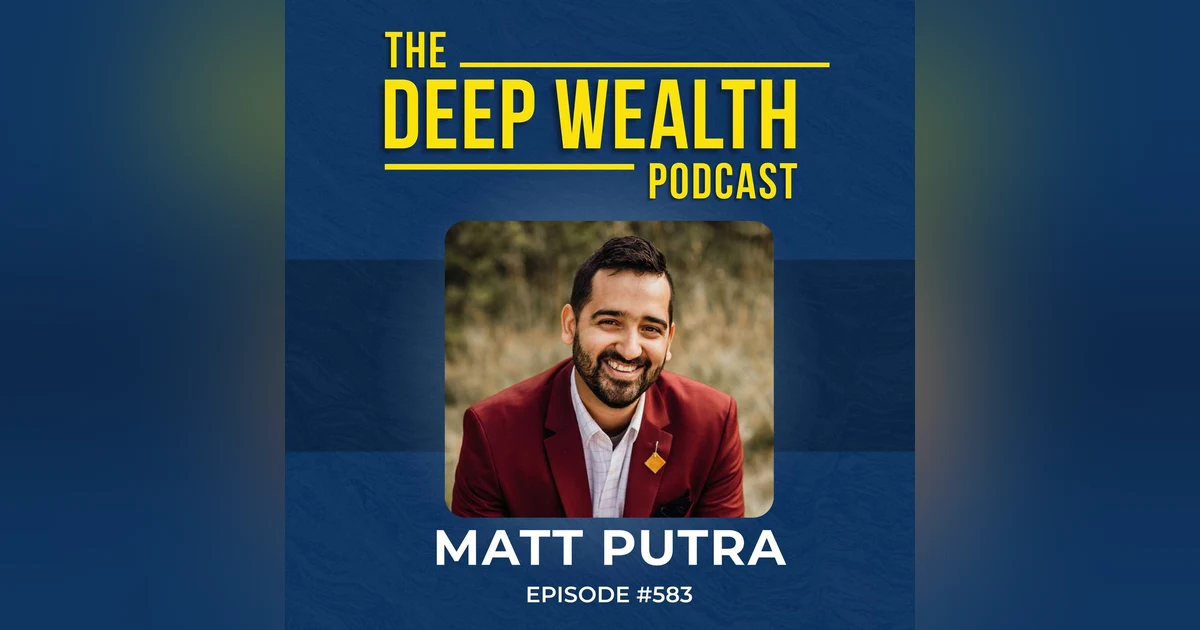

Send us Fan Mail “Believe in yourself and take more risks.” -Matt Putra Exclusive Insights from This Week's Episodes Your numbers can look healthy while cash quietly moves toward trouble. Founder & CFO Matt Putra reveals how one source of truth, better decisions, and team alignment protect cash and enterprise value. Episode Highlights [00:09:37] The value compounding engine: see the truth, decide, then align [00:13:33] How a $700,000 forecast miss turned into a dangerous cash deficit [00:...
 Apple Podcasts Apple Podcasts
  Spotify Spotify
  RSS Feed RSS Feed
  Amazon Music Amazon Music
  Podcast Addict Podcast Addict
  iHeartRadio iHeartRadio
  Castro Castro
  PlayerFM PlayerFM
  Podchaser Podchaser
  Overcast Overcast
  RadioPublic RadioPublic
  PocketCasts PocketCasts
  Audible Audible
  Pandora Pandora
  YouTube YouTube
 “Believe in yourself and take more risks.” -Matt Putra
Exclusive Insights from This Week's Episodes
Your numbers can look healthy while cash quietly moves toward trouble. Founder & CFO Matt Putra reveals how one source of truth, better decisions, and team alignment protect cash and enterprise value.
Episode Highlights
[00:09:37] The value compounding engine: see the truth, decide, then align
[00:13:33] How a $700,000 forecast miss turned into a dangerous cash deficit
[00:17:14] Why competing spreadsheets quietly destroy decision quality and trust
[00:20:45] The first 10 days Matt uses to expose a company's biggest risks and opportunities
[00:31:29] The one constraint that can produce the highest return with the lowest risk
[00:41:06] The one financial discipline Matt would install in almost every company
[00:44:58] How growth, quality, and risk influence what a future buyer may pay
Full show notes, transcript, and resources for this episode:
https://podcast.deepwealth.com/583
https://podcast.deepwealth.com/252
The Deep Wealth Podcast
Most entrepreneurs do not fail.
They just carry too much for too long.
The business grows. Pressure grows faster. Profits get harder to predict. Decisions cost more energy. Over time, focus slips and health takes the hit.
The Deep Wealth Podcast and Deep Wealth Mastery are built from real experience. We're the only system based on a 9-figure exit. This system exists because guessing gets expensive.
🧠 Deep Wealth Mastery
This is for you if you want to:
• Grow a profitable business without becoming the bottleneck
• Build real value so selling is optional, not forced
• Optimize your health before it limits your business and life
One proven roadmap for real decisions.
⭐ Explore Deep Wealth Mastery
https://iapdw.com/idm
🎧 Subscribe
https://iapdw.com/podcast
📘 Free eBook
https://iapdw.com/ebook
💬 Have a question you keep circling back to?
Leave a short voicemail
https://podcast.deepwealth.com/voicemail/
Built by entrepreneurs. For entrepreneurs.
Loved this Deep Wealth Podcast episode?
You built your business from nothing.
Now make it pay off big.
📱 Subscribe Now
As a bootstrapper, every move counts. Subscribe on your favorite platform for Jeffrey Feldberg’s 9-figure exit strategies. From your morning grind to late-night planning, get insights from founders who did it without investors. These tips could change your future.
Drop a Quick Review
Got 30 seconds? Leave a 5-star review. It helps us make better episodes and reach entrepreneurs like you, hustling without a safety net.
Don’t Lose Your Exit (And Your Financial Freedom)
You’ve poured everything into your business. A bad exit could cost you millions. Most deals fail, and even “successful” ones lose half their value. The 90-day Deep Wealth Mastery program teaches you to make your business run without you and boost profits so you capture the best deal instead of any deal.
What Others Say
“Deep Wealth Mastery is pure gold. I wish I’d had it before my exit,” says Stacey C. “The value I’ve gained dwarfs the investment,” adds Sanjay S. “It makes my business great to own and sell,” shares William S.
📘 Grab Free Tools
Check out client success stories for proof. Master the Deep Wealth Strategy Map to plan your exit. Or snag the eBook, From 7 to 9 Figures: The Exit Playbook, for a clear guide.
Click here to start your legacy-defining exit today.
583 Matt Putra
[00:00:00]
Numbers vs Truth
Jeffrey Feldberg: Most founders think their numbers tell them how their business is doing. Matt Putra believes the more interesting question is whether those numbers are telling you the truth soon enough to do something about it. Matt is the founding and managing partner of Eightx, where he helps growing e-commerce, CPG, and SaaS companies turn financial data into better decisions, stronger cash flow, and businesses built to scale.
Before Eightx, Matt was group CFO at a private equity organization where he was part of roughly five hundred million dollars in investment activity. Today, Eightx works across more than thirty-five brands, representing nearly three-quarters of a billion dollars in managed revenue. But what makes Matt's story fascinating isn't simply the money he's managed.
It's the pattern he's seen behind it. Growth can hide problems. Revenue can hide weak economics. Profit can hide a cash [00:01:00] crisis. And sophisticated dashboards can create the illusion of control while teams quietly make decisions from completely different versions of reality. Matt's work challenges founders to stop treating finance as historical reporting and start using it as a leadership system.
Because sometimes the biggest financial problem inside a company isn't the numbers. It's what the founder hasn't yet seen.
And before we start the episode, a quick word from our sponsor, Deep Wealth and the Deep Wealth Mastery Program. Here's Sanjay, a graduate of Deep Wealth Mastery, and he says, the investment I made in the Deep Wealth Mastery Program, it's a rounding error compared to the value created today and the future value I'll receive.
Or how about William, who says, and I love this, A company that's attractive to sell is also a great one to own. The Deep Wealth Mastery Program gives me the best of both worlds.
Now speaking of growth and adding value, check out what Leon says. He says that the Deep Wealth Mastery Program [00:02:00] changed how and who we hire. We've now begun to hire talent today that we never would have hired if it weren't for the program. The talent we're hiring today is helping both increase our growth and profits and our future enterprise value.
Man, I love that kind of feedback because it's that kind of feedback that's what gets me out of bed every day.
Deep Wealth Mastery System, it's the only system based on a nine figure deal. That was my deal. And as you know, I said, no to a seven figure offer, created a system that we now call Deep Wealth Mastery, and that's what helped myself and my business partners all welcome from a different buyer, a different offer, a nine figure deal.
So if you're interested in growing your profits, preparing for a future liquidity event, whether that's two years away or 22 years away, and if you want to optimize your post exit life, Deep Wealth Mastery is for you. Please email success at deepwealth. com. Again, that's success, S U C C E S S at deepwealth. com. We'll send you all the information about Deep Wealth Mastery, otherwise known as the Scale for Ultimate Sales System.
That's where you want to [00:03:00] be. You want to be with other successful business owners, entrepreneurs, and founders, just like you, who are looking to create market disruptions. Whether you're a startup, whether you've been in business for three or four decades, whether you're manufacturing, whether you're high tech, SaaS, low tech, whatever the case may Come in and network with other business owners, with other businesses, just like you, because they all want to lock in their financial freedom and enjoy both success and fulfillment.
Again, that's the 90 day Deep Wealth Mastery program. It has your name on it. All you need to do is take the next step. Please send an email to success at deepwealth. com.
Podcast Welcome
Jeffrey Feldberg: Deep Wealth Nation, welcome to another episode of the Deep Wealth Podcast. Deep Wealth Nation, we have an alumnus of the Deep Wealth Podcast. He is back, but before we get there, Deep Wealth Nation, let me ask you this. When it comes to your business, do you understand it? Do you really understand it?
Are you getting lost in the numbers, or I don't know what to do or where it's at, or it's all confusing to me? And no excuses if you're a founder. [00:04:00] Absolutely no excuses. So where do you begin, and what do you do? Great news. We have a very special guest in the house of Deep Wealth who's gonna tell us all about what he's doing and where he's been since we last spoke to him, but I'm gonna put a plug in it right there.
So Matt, welcome back to the Deep Wealth Podcast. We have grown so much. Your company has grown so much. Why don't you bring us up to speed? What's the story behind the story from where you were to where you are today, and particularly since we last spoke? And by the way, Deep Wealth Nation, I'll put episode 252, the link for that, in the show notes.
But Matt, what's going on? What's the story behind the story? Bring us up to speed
Eightx Growth Update
Matt Putra: it's been an interesting ride for us since you and I spoke a while ago. I think we had some pretty tough times, and now we're having some really great times. I think one of the big things for me was focusing on my number one problem opportunity in my business. So I think, say, 2025, I spent most of the year, I spent 100 grand or more [00:05:00] working on my thing, which was at the time lead gen.
And I think December 2025, I remember that very well because I was like, "I don't know if we're gonna make it." But I had been spending this money and trying to figure out lead gen and what are we gonna do, and then I, in December we, cracked it. And now, this year, 2026, of the eight months of our accounting periods, seven of those have been best revenue months ever for us and, and they, it keeps happening.
So we're in a really different spot than we were when we talked to you last time.
Jeffrey Feldberg: And my goodness. Okay, so a few things I wanna get into, I wanna unpack with that. But let's go back to basics.
What Eightx Does
Jeffrey Feldberg: Someone in Deep Wealth Nation, they are new, and this is the first time they're hearing about you and Eightx. So in your own words, words of the founder what are you doing? What is Eightx? What should I know?
Why should I care? What's going on with that? Let's bring them up to speed.
Matt Putra: Sure. So at Eightx, we want to help people create enterprise value. So what that means is you have a business, if you wanna sell the business, we [00:06:00] want people to be fighting to buy it from you. If you want an IPO, we want investor bankers to be fighting to get that deal. If you wanna raise a series A, B, C, we want you to be oversubscribed, and if you wanna hold it forever, we want it to feel like you're holding a cash machine.
And the way we do that, we work predominantly on the finance side, and we then help integrate finances and operating systems into your business as well, just to make sure that everybody stays on track. We are cash positive, we're growing, cash is predictable. That's our goal for you
Jeffrey Feldberg: Okay. So we were helping with enterprise value, the value of the business, and we'll get into that. And then on the business side, founder to founder, I'm curious, what have you been doing that's been working for you? Because I know so much has changed really by the day in artificial intelligence, even from when we last spoke until now.
Wow, it's a new game out there. What's been working for you to get some market traction?
Lead Gen With Ads
Matt Putra: Yeah. So what's been working we do meta ads and we do [00:07:00] GEO. So not SEO, but GEO. We tried ads, we tried cold email, we tried partnerships, we tried everything. We spent so much money, wasted a lot of time. at the end of the day, we found if we do ads in a way that teaches something and helps people figure something out, it creates trust, and then eventually people will come to us when they want help.
We don't get direct response like, "Hey, you struggling with this? Call us now." We don't do that, those kind of ads. We just try to create trust in the market. So that's working awesome. On the other side of that, we have GEO, which is where our website is optimized, so ChatGPT, Claude, those ones can find what they wanna find about us.
So when people say, "Hey, who should I call to be a CFO?" Claude recommends us because we've built our site in a way that Claude can understand and demonstrated our capability. And we also just have referrals from Perplexity and Reddit and all these different kind of things as well
Jeffrey Feldberg: Okay. A whole new world out there when it comes to getting the word out and with AI, and perhaps we'll circle back to that.
See Decide Align
Jeffrey Feldberg: [00:08:00] Let's go back to basics again. And now, in particular, I'm thinking about a founder in Deep Wealth Nation. They are busy, the company is growing, they are scaling it. And whether it's, yeah, I want to bring some investors in, or I want to have some kind of liquidity event, maybe a full exit or partial exit, take some chips off the table, the numbers, the KPIs.
I'm going to go to one of my favorite questions in this kind of situation, use a really fancy term, Pareto's law, what people call the 80/20 rule, which as you know, Matty's nodding his head, Deep Wealth Nation, you can't see him, but I can. The 80/20 principle, it works as follows: 20% of my activities are likely generating 80% of my results.
Now, it may not be 80/20. It might be 5% of my activities are generating 95, but let's just stick with 80/20. And so on your side, when you're brought into a company who's quote-unquote [00:09:00] "here" and they want to get to "there," and I know each company's different, they have their own journey. That said, though, are there common patterns that you're seeing?
Yes, Jeffrey, it's these three patterns or these five patterns or this one pattern that keeps on coming up, what some people call a problem, we call it an opportunity. We're helping the founder and the company work through that because on the other side of that, that's higher enterprise value. That's where the success is.
That's where-- They just didn't know how to do it, but that's where myself and the team is really helping to make a difference for them.
Matt Putra: Yeah, I think there's exactly three things that we want people to be looping through all the time, and we call this here sort of value compounding engine. Underneath very valuable brands, and what I mean by that is take a public company that has profits, and there's two companies, same industry, same profit.
One could be worth more. Why are they worth more? We've figured that out, so we call it value compounding engine. The way that it works is [00:10:00] this. It's called see, S-E-E, decide, and align. You need to see the data, see the truth. So at any stage, especially if you're sort of 10 million and plus, you're gonna have a spreadsheet from your marketing agency, spreadsheet from someone on your team.
You're gonna make one with ChatGPT. You're going to get one from your accountant, and you're like which of these is true? Which one do I base my decisions on?" The first thing you have to do is establish What is the truth? What is the metrics you're gonna use to make decisions?
And make sure the whole company is aligned around those things. So when you see your data, and you can align on what's true, you then can make decisions, and the problem as your business grows is that you allow other people to make decisions on your behalf, and many times they destroy value rather than create value.
Why? They're well-meaning and they're smart, but they still can destroy value. What we wanna do is help a founder distill their decision-making framework into something that other people can use, and then we test it with capital allocation framework, like what's gonna give you the highest ROI for the [00:11:00] lowest risk?
And if you can make good decisions based on true data, great. Then you have to align your teams around the decisions. Set goals teach them to problem solve, teach them to communicate. And then if you do this over and over again, you catch problems, you spot problems, you solve problems, you find ways to grow, you break through your constraints, break your ceilings, but you have to keep doing this thing, and that is the way to create enterprise value
Jeffrey Feldberg: Okay, so see, decide, align. On the see side, okay, what's the data or my KPIs or the metrics? We're gonna decide what we're going to align on, what's gonna be our North Star, what's gonna be our source of truth, and then align as a team. Let's align on the goals and what we're gonna be problem-solving and what we're communicating both internally, but as well as to our stakeholders.
How am I doing with that?
Matt Putra: That's great. Yeah. And then we looked at c- public companies where again, same industry, same profit, and one [00:12:00] is worth 5X more enterprise value predominantly because they're proving to the outside world that they see what's going on, make good decisions, and take action, and continue to do that, and then prove it, right?
Jeffrey Feldberg: As we're talking about this and Deep Wealth Nation, I want you to think back and Steve Jobs, icon sadly he's no longer with us, but he wasn't the first to create a music player, otherwise known as the iPod back in the day. But he was the first to make it understandable, hey, 1,000 songs in your pocket
And putting it together.
So I get exactly what you're saying, two companies doing the same thing, but one can be significantly more valuable than the other, to your point, because perhaps they're better at communicating what they're doing or they have a better way of getting to the market and really this is the problem, we're the answer and here's why, versus a company that, "Oh yeah, we got this music player back in the day," and I'm making this [00:13:00] up.
It's got a gigabit of memory, it's got this ABC processor, and it's running at this gigahertz, and it's doing this and that, and we have this LCD screen." And you're like, "What? What are you talking about? I get the thousand songs in the pocket. I don't understand what this other gobbledygook is." So makes absolute sense in, in terms of what's there.
Trust With Lenders
Jeffrey Feldberg: Matt, as we talk about that, is there a success story that perhaps comes to mind that you can share with Deep Wealth Nation? Hey, we walked in with this one client, they approached us, started working with them, they were here, th- we got them to there, here's what happened?
Matt Putra: Yeah. So there was actually just this summer there was a company, and this is a, it's both a bad and good, but this company has had a lender that's been a great partner. We have to give them forecasts every year. Over the summer, we end up missing forecasts by 700 grand, right? And they are doing roughly...
They'll do probably eight, nine million this year, so missing by 700 grand is a big number.
Jeffrey Feldberg: Sure
Matt Putra: Because we missed the forecast, we now have a [00:14:00] cash deficit and we have to go, we need more money, so we have to go back to this lender and ask for more money. Imagine asking a lender for more money when you've already missed the forecast you've given them and the budget.
So they gave us more money, though. Well, You asked the question well, you didn't ask the question, but you should ask the question why would they be willing to do that? It's because we showed them we missed the forecast. We decomposed into all the reasons why we missed the forecast. What are the drivers?
We showed that we understood them. We made a plan to get back on track and what the cash was for, and we showed them what we are going to do. And what that did was it create a high degree of trust. So they still trust us to deliver and pay back the loan even though we had this problem. The reason they do that is because we could demonstrate we understand the data and we know how to make decisions, right?
So that's one small point rather. There was a bigger one a couple years back where we worked with someone that was nine-figure business. The bank was going to close down the line of credit and put them into a liquidity crisis. [00:15:00] And when we joined, it took us about four months to get back on side, but the business hadn't fundamentally changed.
We had just fixed the audit that was ongoing. We helped fix their NetSuite implementation. We got the data organized. We got the plan organized. We made a budget, made a forecast, and it all made sense, and the bank renewed the line. But again, the business hadn't fundamentally changed. What changed was how the bank felt about our capability and our understanding of the business
Jeffrey Feldberg: And Matt, as you're talking about that I, I love what you're talking about because Deep Wealth Nation, as we've spoken about on the podcast and Matt is so eloquently sharing with us, the currency, not just in mergers and acquisitions, but in business and also in life, it's trust.
Matt Putra: Trust.
Jeffrey Feldberg: Can I trust you? So Matt, if we're open about it, both situations, let me just be plain about it, the company screwed up.
They really
Matt Putra: Yeah. Oh, yeah
Jeffrey Feldberg: They missed it, but y- you came back, you and the team, [00:16:00] and hey, we own it. Here's what happened, here's why it happened, and here's what we're doing going forward to make sure that it doesn't happen again. And so Deep Wealth Nation, with what Matt is sharing, let me ask you this: Do you have an advisor or an advisory team around you?
And you don't have to be in market to have the right advisory team. Do you have someone like a Matt, and if you do, why not, who is, "Okay, yeah, we missed it, but here's how we're gonna fix it," that you can explain that, that someone says, "Okay, you know what? I trust you.
Matt Putra: Yes.
Jeffrey Feldberg: give you the benefit of the doubt.
Don't prove me wrong on this one, but go ahead. I'm going to let you continue, and I'll fund you some more money. Go work your magic, and then tell me all about it afterwards," because of that trust in terms of what's there and what you and the team were able to do by working with the founder.
Source Of Truth
Jeffrey Feldberg: But let me ask you this: Without you and the team in the seat at that point, what had gone [00:17:00] wrong that the company just missed that you were able to pick up the pieces and get it going for them?
What was part of your secret sauce, in, in other words, that you helped identify it and then, okay let's make sure we don't mess up on this again?
Matt Putra: So one of the core pieces in both cases was creating a source of truth that the management teams in both companies could rely upon to make decisions, and that the lenders could also look at as well. both cases, again, like I mentioned before they had sheets from marketing and an agency and um, their CMO and the COO and everyone had different ideas about what things meant and what the data meant.
One of the big things we did was get everyone on the same page. Here's the data, here's the 15 to 20 things that are the most important things for us to be thinking about week on week. And then working through the team to make sure they all agreed. When they all agree then the decision becomes clear.
We set a target, and if you're below target you can all agree you're off target, right? So that was one. The [00:18:00] other one, I would say, was taking the performance and looking upstream of financial performance to what drives prance performance. Meaning, what are the leading in...
so revenue is, if you show revenue's over. It's done. It's in the past. But if you look at, let's say if you're a service business, you look and look at inbound leads how many calls are you making, how many outbound calls, emails, whatever, and you can correlate that to sales downstream.
If you're a consumer goods company, you might look at media spend and click-through rates. And if you're a whatever, I mean, there's all kinds of ways to look at this. And so what we did in both cases was also decompose financial performance into drivers to demonstrate to the lenders in both cases that we understand what makes the business tick.
And because we understand what makes the business tick, we understand what we have to do different so that this doesn't happen again. And the, like you said, they believed that what we said was true. [00:19:00] They trusted us
Jeffrey Feldberg: Okay.
90 Day Onboarding
Jeffrey Feldberg: And so Matt, let me ask you this, because when you first came on the podcast, as crazy as it sounds, it has not been a lot of time since we spoke. People know what a chief financial officer is, a CFO. A fractional CFO or a virtual CFO back in the day, people may have heard of it, but maybe not. Today, they probably have.
Yeah, sure, fractional CFO, I got that. But again, a, a lot has changed with that. And I know so many people, as founders and entrepreneurs, we tend to think, "I can't afford a CFO. I may not even be able to afford a fractional CFO." So for someone who is thinking, "Yeah, it's out of my budget, out of my reach," let's shed some light on that.
So I'm coming to you and the team, and you're a very modest guy. It's probably gonna be uncomfortable for you. Don't be shy in sharing with me where you're coming on as maybe down the road it's as a full-time [00:20:00] CFO, but maybe for now, let's keep it simple. You're gonna be doing y- and the team as a fractional CFO for me, a virtual CFO.
You're helping me. So what does it look like in terms of, okay, yeah, I heard you, Matt, on the Deep Wealth Podcast. We need some guidance with our numbers and where we're at. We don't have that skill in-house, can't afford a full-time CFO. What does it look like in terms of onboarding, and then how long it takes for you to become acquainted with the company, and then once everything's in place, we're really getting things going?
Talk, talk us through some of your secret sauce here of how long it takes and, and w- what's going on. Again don't be shy. don't be the modest Matt
That I know you are, and it's, hard for you because you're doing some incredible things out there. So share that with Deep Wealth Nation.
Matt Putra: Okay. Yeah, you know, we are doing really great work right now. I'm very proud of the team. I would say, if you were to sign with us today, we would have a kickoff call tomorrow. We would get access to all your data tomorrow. [00:21:00] The second, so day three, we would already have live a couple of trackers daily profit marketing efficiency, maybe even your sort of sales funnel.
We would decompose and have those live within about three days. and then we start our audit process. So our audit process is designed to figure out what are the top three opportunities and what are the top three risks for you, and we deliver that to you in 10 days. And the question is knowing that, what do we do about it?
Is it inventory's the problem? Is it demand? Is it efficiency? What's really hurting you right now, and what do we do? And what's an opportunity and what do we do? So from there, we then make a plan. So that takes about a week. There's another 11 weeks left in our first 90 days.
In those 11 weeks, we need to build a financial plan to get you from where you are today to where you wanna go. The financial plan is revenue, cost of service, cost of goods, all the way to profit, but then cashflow, debt repayments, shareholder distributions, and then all the way onto your ba- balance [00:22:00] sheet.
What's your financial health look like? Beyond that, we are decomposing all those items into their drivers. So what are the leading indicators of stock and cogs and landed costs and marketing and sales efficiency and hiring? How do we understand all these and how they might change before they all change, right?
So we make a plan. Typically, we look three to five years away. Now that we have a financial plan and we know what cash it's gonna take to grow the business from here to there, then we gotta figure out do we want debt, do we want equity, do we, can we bootstrap to do what you wanna do? What do our profit targets look like?
How do we achieve them? And this part of the 90 days is creating an operating system. So a financial model in and of itself, you and I both know any one model's meaningless. But if you can create an operating system that connects the financial plan to non-financial teams in your business, your controller understands it, so what?
Your marketing coordinator needs to know what they have to do. Your supply chain [00:23:00] coordinator has to know what they have to do. Your customer success person has to know what retention should look like. Your purchasing manager needs to know what POs to be sending and how much we can afford and what the budget is for cash out and deposits and things every quarter.
And so we have to turn this model and look upstream to these various departments and translate it for them, and then make them scorecards of non-financial things that we know predict the financial outcomes. And if we do that successfully, which we do, not just you as the founder and your controller have clarity, but everyone can have clarity into what their daily, weekly behaviors will do to drive the success of the business to where you wanna go
Jeffrey Feldberg: And I'm gonna make a guess here. I don't think I'm off base, but you can tell me, Jeffrey, on base or off base. With what you're doing, one, you've already done this countless times. You've got the system. You've got the methodology. I would suspect that most founders, if they're not there yet, and let's face it, I know [00:24:00] myself looking back on my own entrepreneurial journey out of my parents' attic, I didn't have that discipline.
I didn't have that knowledge. There's no way that I'd be able to do that on my own, and I'm just focusing on other areas. You don't know what you don't know.
I suspect they're either not doing it at all, or if they're attempting to do it, it's taking a huge amount of time and effort, and it may not even be on target.
It's probably off target. How am I doing with that?
Matt Putra: Yeah, that's pretty much true. And I would say that, everybody who's listening to this that has a business should pat themselves on the back. This is not an easy journey. And what you've done with creativity with work, with effort, with hours, with ChatGPT, with Claude, has got you to where you are today.
And but if you're one of those people that wants to grow a lot or have a big impact on the world, you wanna up-level your systems, right? We will help you figure out which ones to do and in what order. We can't do all of it at once. It'd be overwhelming. But we wanna do what makes sense and [00:25:00] in what order.
So again, brute force will get you far, pretty far these days, especially with AI. But there comes a point at which you need some support and we wanna be there for that when you're ready
Jeffrey Feldberg: Okay.
AI For Constraints
Jeffrey Feldberg: And so let's talk about artificial intelligence, although offline, Matt, I was saying as of today I've been put on notice, Jeffrey, it's no longer AI, it's smart intelligence . So artificial intelligence, smart intelligence, we'll swap them in and out interchangeably. We'll see where this goes down the road in terms of what we call it.
How is that playing a role more so today than when we spoke in episode 252? What's taken place with the smart intelligence since then?
Matt Putra: So my journey probably mirrors a lot of people who are listening, which is I was absolutely freaked out about losing my business to AI. And so I spent hours and hours with Claude, ChatGPT, Gemini, all the ones, trying to figure out how I, [00:26:00] how ... what I can do to survive, and making apps and doing this and doing that, and all this stuff.
Now, where I'm at today is I use AI a fraction of what I was using AI six months ago,
Jeffrey Feldberg: Okay
Matt Putra: but I'm applying it as heavily as I can against my current constraint and my number one, top two goals. where people go awry a little bit with AI is they try to do a, a whole bunch of different stuff. What you should do is identify what's holding you back.
What's your ceiling? What's your constraint? We know manufacturing, right? a manufacturing plant only runs as fast as the slowest machine, right? But what we don't realize is that every business is like that. Service businesses, consumer businesses, all these different things. We just identify what your constraint is.
If you apply AI to your constraint and/or your top three goals and stop messing around with it, you will go very far. So today I spend... I'm using AI all the time. I'm not staying up till 1:00 or 2:00 AM in the morning anymore building apps that I'm not gonna use, but I'm [00:27:00] applying it against the core drivers of what is gonna take me from here to my next level, which for me today, very frankly, is h- making sure that someone who wants support, like a lead, will have a good journey throughout communication with us.
That's one. Making sure my salesperson can be effective, that's one. And then helping me figure out content. Those are the only things I use AI for right now. We're making an app for ourselves too, but I'm not doing that. My ... I have an engineer that's working on that. And so I would say lot of people, AI has not made them more money is the big problem.
It's made me an astronomical amount of money this year because I've been very focused with it
Jeffrey Feldberg: Okay. Interesting. And I don't want to put words in your mouth. It's interesting though how AI, smart intelligence, it's new for everyone, and back in the day, "Oh my goodness, am I gonna lose my business?" Then it's going from the shock to, "Okay, let me figure this out, and I'm on this thing eight hours a day."
But now it sounds like it's become [00:28:00] regular workflow for you.
AI As A Collaborator
Jeffrey Feldberg: It's a tool, like most other tools, and sure, it's terrific. On its own, probably not happening, but on its own combined with the human insight of it, hey, this is not putting me out of business. Not gonna happen. It's actually giving me a better opportunity to have a better business because it's collaborative.
It's doing some of the heavy lifting. I'm directing it. I'm
Matt Putra: 100%.
Jeffrey Feldberg: making sure it's not hallucinating. I'm not falling for, "Oh, Matt, you're so terrific. You're so smart." "Stop that AI. I just want the straight goods. You're not right with that." "Oh, okay. Yeah, you're right. I made a mistake in my thinking. Let me recalculate that for you."
That you've built that into your systems and process now, like so many other things, we take it for granted today. I'm gonna do a document. I'm gonna bring up a word processor and go into that. It's no longer a new thing. It sounds like it's at that level for you now. How am I doing with that?
Matt Putra: Yeah, perfect.
Five X Productivity Gains
Matt Putra: my output is, I have probably five X'd my output, again, because I've been [00:29:00] focused. I'm not just messing around. I know what I need to get done. I'm focused with it. I don't do build things I don't think I'll need. I review its output. Like you say, I quality check it. Not, I don't do...
I still do a lot of writing personally when it's in personal channels like Slack or text. I don't write a lot of emails anymore. I review them all, It's been awesome. It's been a hard journey though. I had to go through that panic to kinda get to where I am today.
Utopian Tech Mindset
Matt Putra: one thing I learned was that there is, I think, roughly 3,000 gigawatts of energy in the whole world.
Not enough right now to create a fully artificial intelligence, like AG artificial general. There's not enough power even. They may solve that in the future, and I don't know. But part of my mindset is that I have chosen to believe in a future that's utopian, not dystopian.
You can go either way as a person. For my own mental health, I've just chosen, rightly or wrongly, people, to just believe that everything will be okay,
It allows me to not play the game freaked out all the [00:30:00] time
Jeffrey Feldberg: Okay. Love what I'm hearing with that, and I'm with you. So much doomsday out there, and I'm not buying that. Follow the money, as they say, and when you follow the money, there are some definite agendas. We're not gonna get into that on... This is not a political podcast. We're not getting into that. Under the right context, so with the human input, if you will, with what's already there, there's some wonderful things that's going on there.
So let me ask you this. It's a bit of an unfair question. I'm gonna ask it anyways. So it's a Deep Wealth Podcast after all, and we talk about the value of the business, having some kind of liquidity event, whether you're going public or you're bringing on an investor or you're having a full exit or maybe you're even h- gonna hand off the business to the next generation.
You gotta be in business to be able to do that, and you want the business to be in the best possible form or shape that it possibly can. And so [00:31:00] unfair question, I'll throw it at you anyways.
Finding The Constraint
Jeffrey Feldberg: When you're looking at a business from the numbers, from either that CFO or the virtual CFO with your own proprietary systems, you and the team, what's the biggest thing that is holding back most companies when it comes to their profits or their growth that they don't even realize?
It's robbing them. It's right there plain to see, but it's invisible for most founders and companies.
Matt Putra: Good question Interesting. If I may answer it this way, and I learned this if... we've... A lot of people have learned this who are listening to this probably have heard of Alex Hormozi, and I went to one of his conferences in 2022, and he taught me this constraint framework, and what they taught us was that you have one thing you can work on that will give you the highest return back with the lowest risk, basically.
And I think that if everyone could find that and could find the discipline to apply themselves against the one thing without [00:32:00] getting distracted, would grow their businesses much faster. And it changes over time, of course, but if you can apply yourself, let's say 80% against this thing, time, effort, mind share, you'd figure it out and you would grow.
And I... That is very hard to do over a sustained period of time 'cause it's just boring. I had to work on lead gen for 15 months, and it was a grind, and I kept putting money on it, and I kept trying, and it, I almost didn't, it almost didn't work. Let me be clear. But we did it and now we're at a new level, and then this year it's been lead to close, and I've hired and fired seven salespeople this year.
The money and time I've spent trying to hire a salesperson, and I finally have a guy who's awesome, and now I'm going to have another step change in growth because I've figured out my next thing. My next constraint is probably supply at this point, but I can figure that out next. So I think that is not necessarily not financial, but that's the big thing everyone [00:33:00] would fix.
Protecting Gross Margins
Matt Putra: If I go strictly financial, honestly, I would say gross margin or margin after cost of service delivery because if the margin after your cost or your service delivery is tight, everything's gonna feel tight forever. And so pick a market where you can charge a margin that makes sense.
And if you're in a market where it's just gonna be your price compressed, Find a way to add value to your product or to add the perceived value or reduce costs and try to have strong margins after your delivery 'cause if you do everything else downstream of that, it becomes easier. Marketing, hiring, affording stuff, everything. Yeah
Jeffrey Feldberg: And Samat, let's go back to something, and I appreciate you being so open and vulnerable with Deep Wealth Nation. I can certainly relate. Some of my biggest failures have been on building out a sales team, and absolutely to do with Eightx on the one hand in terms [00:34:00] of your virtual services, but everything to do with business.
And I know for myself, the biggest challenge has been oftentimes when interviewing for that sales position, the best sales job is done in the interview itself, and then after that it's all downhill.
Matt Putra: Oh, yes
Jeffrey Feldberg: been going on from your perspective that you can share that, hey, Deep Wealth Nation, if you happen to be hiring, you may want to think about do this or don't do that?
Group Interview Hiring Hack
Matt Putra: Yes, I have the answers now, finally. and I'm the kind of person that will do it my own way a whole bunch of times before I'm like, "F- I should just do it everyone's the right way, everyone already knows." So I'm just, may- maybe some people identify with me here. The thing with hiring a salesperson for me is that I am not, and I would not be, a very good salesperson.
I'm not organized. I actually don't love the routine of it. So I actually can't... My BS meter is really bad on a sales interview, right? I can't tell if they're gonna be good or not. So shout out to [00:35:00] Sammy. I met him. He we hired him to help us do recruitment for a salesperson. He taught me the group interview process.
Life-changing. I will never do it any other way. So I texted him on a Thursday. I had 10 candidates by next Wednesday. I had a group interview scheduled for the Wednesday after that, and I was like, "Oh, Sammy, I don't know how to do this. I'm really freaked out." Sent me a Google Doc. So easy to run.
So here's what you do. And well, call Sammy, but essentially you go in this group interview. It's relatively the same as interview, but you just ask them, "What did you do? What would you handle if this?" And you go, you answer that one, and you just orchestrate them chatting, and you're trying to get...
Sometimes you want the same answer from everyone to hear their things, and sometimes you ask, "Oh, you haven't spoken yet. Could you sort of speak up?" And what happens in a group interview is that invariably there are one or two people who will sort of rise to the top and guide the convo and go, "Oh, hey, what do you think?"
And, you'll just see this group dynamic. And what you're looking for is the one or two people that are the most [00:36:00] charismatic throughout the call, have great answers, whatever. And then at the end of the call, Sammy told me to say, " Each one of you guys, "Imagine I hired you.
Who would you want to bring with you on the team if I just opened up a second role?" And they all pick the best one. And so everybody votes. You don't ask them to vote, but you ask that question, and they all just vote. And then I got the two best people. One of them accepted a different offer, and I got the other guy, and he's awesome.
And he's so motivated, and he's so smart. And for sales, I will always do it this way forever. Probably maybe customer service would be a good one to do this with. I don't know about accounting 'cause you don't need charisma necessarily but there's a bunch of roles this would work for.
And sales is definitely one. And I will... Yeah. Anyway, it was awesome
Jeffrey Feldberg: Wow. It's reminds me part Boiler Room from the movie and part voting people on or off the island
Matt Putra: Yeah. Yep.
Jeffrey Feldberg: all combined into one with this group call. But it's [00:37:00] interesting how you're doing this experiment, and it sounds like it has a huge ROI for you in terms of getting through to the best candidates
Matt Putra: Yeah. I was really freaked out, but Sammy made it easy, so
Jeffrey Feldberg: Best guess, why is that working? What is behind that? What do you think?
Matt Putra: Sammy's like a trained VP of sales and now does consulting he knows what he's doing. I don't. And I think for me what ended up working ... 'cause here's the thing, is like on any one interview
It's probably easier to be charismatic with me and I'm interviewing you. I also can't tell if you're really good or not, 'cause I'm not a good salesperson, so I don't know what to ask and all these different things. Whereas in a group interview, the people who have the real grit and determination, they want to be the best, and so they will then try to be the best in this hour-long group call.
And if they can sustain that sort of charisma with half-decent answers and stuff,
I think that's why it worked. There probably some psychology in this. I don't really know. But again, when I got to the end of the meeting, I had the two guys that [00:38:00] I thought were my favorite, but then everyone else voted the same way.
you're not only interviewing one to one, five, six, six of us picked the top two together. it's pretty hard for six people to go wrong, and these other guys had sales jobs, so they know what they're doing too. But for me, that's how we picked the top guy, and I didn't know it would work, but it did.
And again, if it didn't work, I would still be hiring and firing salespeople you have to do it. To get to where I wanna go, which is multi eight figures, we're not close. You have to have a motion that works, and this is the only path is through, and you have to deal with the pain of hiring and firing and figuring this all out and doing things wrong a whole bunch of times.
And now that we're doing ... Here's another thing.
Paid Trial Projects
Matt Putra: So now that we're doing quite well financially, I need to hire a couple social media roles. So what I've done is I've put them out and like, the top six candidates, I'm paying them, 500 bucks to do a test project. So I get to actually work with them, 'cause now I can afford it thanks to the [00:39:00] year, but I can pay three grand for a bunch of test projects, and then pick who has the best project of the literal work that I want to see.
So sometimes that's the other way to do it too, is paid trial projects
Jeffrey Feldberg: Interesting. Love that. So it's a pay to play in the sense that it's a win-win for everyone. So you're not going through the full onboarding, training, and salary and everything else. There's no work being done for free, so no one's being taken advantage of. And so we're saying how is Jeffrey in the trenches?
How does he compare to his counterparts? And is this something that I can see myself working with Jeffrey? Because one of the things we do in our 90-Day Deep Wealth Mastery Program, really for step six advisory team, I can have the best advisor in the world, pick your area, in any area,
But the chemistry may be such that it's not the advisor for me.
And so I gotta find the best advisor for me. It's just not gonna be Sally over there. Maybe it's [00:40:00] Susie. It's just a better chemistry, and it sounds like you're getting to do that as well. So absolutely love that.
One Move KPI Scorecard
Jeffrey Feldberg: And so from sales or even customer service or doing projects for you, let's now bring that back to Deep Wealth Nation.
And a- again, a bit of an unfair question. I'm throwing all these un- unfair questions. You're doing brilliantly with it. If you could only do one thing for a company, and I said, "Okay, here's the deal, Matt. You can ask as many questions about this company as you want. You'll get to know this company and get all the information that you need, but you can only take one action for this company."
And you may have talked about it with the gross margin before or something else, but if you only could do one thing, and it's an unfair question because every company is different. So one company may be terrible in this one area, and another company in the same area, they're doing brilliantly. But again, the good old Paretos law, generally speaking, and, for Deep Wealth Nation, if they were to have you only do one thing, one strategy that could [00:41:00] really move the dial for them, more times than not, what is that?
Where are we looking? What are we doing?
Matt Putra: That's such a fun question. And what I would do, I know what I would do right away. I would get everybody on the same page on the same numbers and targets. So you pick your 15 to 20 or 10 to 15 metrics. Let's start with the executive team, let's say. I would help them decide on what are the most important things to watch.
I'd help them pick appropriate targets, and I'd tell them to look at those every single week, and if we're off target, someone jumps up and down to fix it, and if we're on target, you leave it alone. I guarantee everybody listening, if you can do that one thing, you will begin to spot and solve problems in ways that you probably didn't think were possible.
'Cause right now, everyone, I guarantee almost everyone's gonna have dashboard here, dashboard there, this sheet, that sheet. Ask ChatGPT, ask your accountant. No, [00:42:00] just boil it down to the top 15 things. And this is in the Traction book from Gino Wickman, too. Boil it down to the top 15 things, put them on the scorecard, look at them every week.
If it's red, someone fix it. If you can do that, you'll almost certainly be fine
Jeffrey Feldberg: And not to put words in your mouth, love what I'm hearing. So really we're going back to how we began. Jeffrey, go back to the see, decide, align methodology. So look at the metrics, the data, pick your KPIs that is gonna be standard across the company. So we're gonna have across the company this one dashboard.
So we see it, we've decided, yes, these are the KPIs, and if it's not 15, maybe it's five or maybe it's 10. Who knows what it is? We see the metrics, the KPIs, we decide what they're going to be, and then we're going to align in terms of, hey, let's add... And this is my favorite part, let's add a green light, an orange or yellow light, and a red light.
So there's no guesswork here. [00:43:00] If a KPI is in this range, it's a green light, thumbs up, we're good to go. Or in this range, it's an orange light, hey, what's going on here? A red light, we have some definite issues here. And then let the team go at it. We have a standard dashboard. We've decided what's important to us.
We've aligned on what it means, what the different values are, and then the team, it's easy, it's not personal, it's, "Hey Jeffrey, what's going on? This KPI went from green to red. What's changed and what are we doing about it?" And we're talking about the issue, not the person.
Matt Putra: 100%, yes. That is the big thing. If you don't do anything else, do that. Yeah
Jeffrey Feldberg: Absolutely love that, Deep Wealth Nation. Are you doing that? Have you put together your K- do you even have KPIs, Deep Wealth Nation? Have you picked your KPIs of this is what moves the dial for our growth, our cash flow, our profits? And Matt and team could do a whole better job than Jeffrey over here. I was never the numbers guy, always more on the marketing side of things, the sales side of things.
But [00:44:00] yeah, Jeffrey, here's the numbers that we need, and here's what really moves the dial here. But are you doing that, Deep Wealth Nation, where everyone in the company has this dashboard? And then Matt, you can agree or disagree. It's one thing to have a dashboard. It's another thing to actually follow the dashboard on a daily, weekly, monthly, quarterly, yearly cadence that we're checking in, we're monitoring it, we're making those changes.
So I absolutely love that strategy and that insight, and it's actually a great segue as we go into wrap-up mode. But before we go into wrap-up mode, let me ask a question with a question. Is there a question, Matt, that you and I haven't yet covered? An important question, even a topic or a theme that you want to get out to Deep Wealth Nation before we go into wrap-up mode?
Valuation Multiple Formula
Matt Putra: We could talk about maybe, like when someone thinking about acquiring your business, what's the formula they're using possibly?
Jeffrey Feldberg: Okay. So what is the formula? What should we be thinking about if we're looking to acquire a business?
Matt Putra: So when we boil it down, [00:45:00] when someone wants to buy your company or invest in it, they look at earnings times the multiple, right? And earnings will be revenue or EBITDA typically, it's one of those two things.
If you're in software, often it's revenue. But let's say it's EBITDA times they apply a multiple to it, and that's what they're gonna pay you to, to be a part of your business or buy it from you. But the multiple is actually... you can create a bracket around it, and multiple is growth plus quality minus risk.
Jeffrey Feldberg: Okay
Matt Putra: growth being are your cash flows, is your revenue growing? Is the business growing? Quality is do you have data? Do you have scorecards? Do you have systems? Can you prove this easily, quickly if we ask you to prove something? Do you have contracts? Do people stay for a long time? What's your LTVs?
And then risk is what does the acquirer perceive to be a risk in your business? Is it messiness? Is it not having a accounting or ERP? is it not having contracts with your employees, or are you the only key man or woman as [00:46:00] a CEO? And so if we look at this formula, we can understand how to build our businesses to maximize the value part of the equation.
So yes, grow your earnings. Yes, everyone does that. But think about the multiple too. how will they discount your earnings? What are they gonna be worried about? And if you work on the equation, it helps you figure out in real life what you should be doing too.
Jeffrey Feldberg: Absolutely love that in terms of what you're doing in Deep Wealth Nation. If that went over your head maybe it's time to have a chat with Matt and team because you know what? What's the best time to sell your company or bring on an investor when you don't want to or you don't need to? That's when you have the highest leverage, and you'll get to where you want to.
Who wins the negotiation? The one who cares the least, typically. I know I'm oversimplifying, but a lot there with that. And as you're talking that through, wouldn't it be great to know? And that's what we're all about in Deep Wealth Mastery. Matt, we don't do what you do. We do behind the scenes, though, of, hey, how do I prepare as a founder and business owner in terms of making sure that my [00:47:00] company, my team, my offering is where it should be with as few skeletons as possible?
We leave all the financial and things like that to you and team and advisory, but behind the scenes, getting all that orchestrated and put together so when I do go to market, I've minimized as much as possible the skeletons. I've brought my X-Factors or those hidden Rembrandts in the attic out for public display to increase that enterprise value.
So we're on the same page there. Absolutely love that.
Back To The Future Advice
Jeffrey Feldberg: And with that said, let's go into wrap-up mode because it's our tradition here, and it's been a while as an alumnus of the Deep Wealth Podcast, but I'll set this up again. It's our fun questions, my privilege and honor. Each guest I ask the same question, and let's see what comes to mind today for you.
So Matt, when you think of the movie Back to the Future, you have that magical DeLorean car that will take you to any point in time. The fun part, Matt, it's tomorrow morning. You look outside your window. not only is the DeLorean car curbside, the door is open, waiting for you to hop on in, which you do.
So Matt, you now go to any point in your life, Matt, [00:48:00] as a young child, a teenager, whatever point in time it would be, what are you telling your younger self in terms of life lessons or life wisdom or, "Hey, Matt, do this, but don't do that"? What does this sound like?
Matt Putra: I am telling myself to... Oh, I know what I'm telling myself. to take more risk. Yeah. To take more risk, to take a risk faster. I think what I've learned over this year as an entrepreneur is I'm a different person than I was two years ago. I'm willing to take more risk and make bigger bets, and if the sooner I had learned that, I would have become this person maybe a bit earlier.
I wouldn't change much else about my life, but I would take more risk and take it earlier
Jeffrey Feldberg: Okay. So believe in yourself and take more risks along the way. Absolutely love that.
Where To Find Matt
Jeffrey Feldberg: And Matt, for someone in Deep Wealth Nation, they're intrigued, they want to speak with you and the team, they even want to work with you on the team, where's the best place online to find you?
Matt Putra: There are two really great ways. One is on the website, E-I-G-H-T-X.C-O. There's [00:49:00] a Talk to a CFO button, you'll connect with any of our CFOs. That's one great place. Instagram is the other good place. Find me, Matt WJ Putra. It's on Instagram. If you DM me there, I'll see it very quickly and we can chat.
Those are the two best ways.
Jeffrey Feldberg: And Deep Wealth Nation, great news. It doesn't get any easier. It's a point and click. Go to the show notes. It is all there. Matt, it's official. Congratulations. This is a wrap, as we love to say here at Deep Wealth. May you continue to thrive and prosper while you remain healthy and safe. Thank you so much
Matt Putra: I like that. Thank you so much. This was awesome
Final Subscribe And Farewell
Jeffrey Feldberg: So there you have it, Deep Wealth Nation.
What did you think?
So with all that said and as we wrap it up, I have another question for you.
Actually, it's more of a personal favor.
Did you find this episode helpful?
Have you found other episodes of the Deep Wealth Podcast empowering and a game changer for your journey?
And if you said yes, and I really hope you did, I have a small but really meaningful way that you can actually help us out and keep these episodes coming to you.
Are you ready for it?
The dramatic pause. I'll just wait a [00:50:00] moment. Drumroll, please. Subscribe. Please subscribe to the Deep Wealth podcast on your favorite podcast channel. When you subscribe to the Deep Wealth Podcast, you're saving yourself time. Every episode automatically comes to you, and I want you to know that we meticulously craft Every one of our episodes to have impactful strategies, stories, expert insights that are designed to help you grow your profits, increase the value of your business, and yes, even optimize your post exit life and your life right now, whatever you want that to look like.
And every time you subscribe and a fellow entrepreneur subscribe, it's a testament to how together, Yes, we are. We are changing the social fabric of society. One business owner at a time, one liquidity event at a time. So don't let the momentum stop here. Subscribe now on your favorite podcast channel.
You'll never miss an episode. You'll be the first to hear from the top industry leaders, the innovators, the disruptors that are really changing and shaping the business world, and maybe you're commuting, maybe you're at the gym, maybe you're taking a well deserved break that we spoke all about [00:51:00] on this episode.
The Deep Wealth Podcast, it's your reliable source for the next big idea that could literally revolutionize your business. So once again, please hit that subscribe button, stay connected, inspired, and ahead of the curve. And again, your next big breakthrough moment, it might just be one episode away. Maybe it was even this episode.
So all that said. Thank you so much for listening. And remember your wealth isn't just about the money in the bank. It's about the depth of your journey and the impact that you're creating. So let's continue this journey together. And from the bottom of my heart, thank you so much for listening to this episode.
And as we love to say here at Deep Wealth, may you continue to thrive and prosper while you remain healthy and safe.
Thank you so much.
God bless.

Chief Financial Officer
Most founders think their numbers tell them how their business is doing. Matt Putra believes the more interesting question is whether those numbers are telling you the truth soon enough to do something about it.
Matt is the founder and Managing Partner of Eightx, where he helps growing eCommerce, CPG, and SaaS companies turn financial data into better decisions, stronger cash flow, and businesses built to scale. Before Eightx, Matt was Group CFO at a private equity organization where he was part of roughly $500 million in investment activity. Today, Eightx works across more than 35 brands representing over $650 million in managed revenue.
But what makes Matt's story fascinating isn't simply the money he's managed. It's the pattern he's seen behind it.
Growth can hide problems. Revenue can hide weak economics. Profit can hide a cash crisis. And sophisticated dashboards can create the illusion of control while teams quietly make decisions from completely different versions of reality.
Matt's work challenges founders to stop treating finance as historical reporting and start using it as a leadership system.
Because sometimes the biggest financial problem inside a company isn't the numbers.
It's what the founder hasn't yet seen.


