


Leadership Expert Michael Fineman: Everyone Says You’re Winning. Why Doesn’t It Feel Like It? (#584)
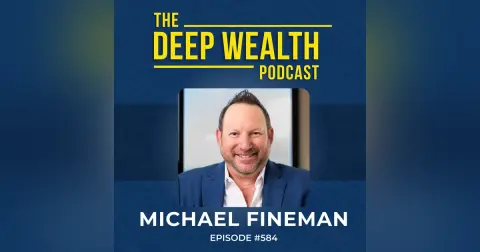
Send us Fan Mail “You are not alone. You are loved as a child of the most high God.” -Michael Fineman Exclusive Insights from This Week's Episodes Everyone says you’re winning, yet something feels off. Leadership Expert Michael N. Fineman reveals how small compromises create Authority Drift, turning founders reactive and pulling success away from what they actually want. Episode Highlights [00:22:33] The post-exit lesson Michael learned after compromises left him unsure who he was [00:28:31] ...
 Apple Podcasts Apple Podcasts
  Spotify Spotify
  RSS Feed RSS Feed
  Amazon Music Amazon Music
  Podcast Addict Podcast Addict
  iHeartRadio iHeartRadio
  Castro Castro
  PlayerFM PlayerFM
  Podchaser Podchaser
  Overcast Overcast
  RadioPublic RadioPublic
  PocketCasts PocketCasts
  Audible Audible
  Pandora Pandora
  YouTube YouTube
 “You are not alone. You are loved as a child of the most high God.” -Michael Fineman
Exclusive Insights from This Week's Episodes
Everyone says you’re winning, yet something feels off. Leadership Expert Michael N. Fineman reveals how small compromises create Authority Drift, turning founders reactive and pulling success away from what they actually want.
Episode Highlights
[00:22:33] The post-exit lesson Michael learned after compromises left him unsure who he was
[00:28:31] Why founders can drift furthest from themselves while the business appears successful
[00:31:33] How to identify the first compromise that quietly moved you away from your original vision
[00:35:21] The question Michael was afraid to ask himself: “What do I want?”
[00:39:30] Why external pressure turns founders reactive and pushes strategy out of the room
[00:44:18] Founder’s disorder: when refusing to delegate makes growth increasingly unsustainable
[00:52:05] Why noticing the drift without condemning yourself may be the most important first move
Full show notes, transcript, and resources for this episode:
https://podcast.deepwealth.com/584
The Deep Wealth Podcast
Most entrepreneurs do not fail.
They just carry too much for too long.
The business grows. Pressure grows faster. Profits get harder to predict. Decisions cost more energy. Over time, focus slips and health takes the hit.
The Deep Wealth Podcast and Deep Wealth Mastery are built from real experience. We're the only system based on a 9-figure exit. This system exists because guessing gets expensive.
🧠 Deep Wealth Mastery
This is for you if you want to:
• Grow a profitable business without becoming the bottleneck
• Build real value so selling is optional, not forced
• Optimize your health before it limits your business and life
One proven roadmap for real decisions.
⭐ Explore Deep Wealth Mastery
https://iapdw.com/idm
🎧 Subscribe
https://iapdw.com/podcast
📘 Free eBook
https://iapdw.com/ebook
💬 Have a question you keep circling back to?
Leave a short voicemail
https://podcast.deepwealth.com/voicemail/
Built by entrepreneurs. For entrepreneurs.
Loved this Deep Wealth Podcast episode?
You built your business from nothing.
Now make it pay off big.
📱 Subscribe Now
As a bootstrapper, every move counts. Subscribe on your favorite platform for Jeffrey Feldberg’s 9-figure exit strategies. From your morning grind to late-night planning, get insights from founders who did it without investors. These tips could change your future.
Drop a Quick Review
Got 30 seconds? Leave a 5-star review. It helps us make better episodes and reach entrepreneurs like you, hustling without a safety net.
Don’t Lose Your Exit (And Your Financial Freedom)
You’ve poured everything into your business. A bad exit could cost you millions. Most deals fail, and even “successful” ones lose half their value. The 90-day Deep Wealth Mastery program teaches you to make your business run without you and boost profits so you capture the best deal instead of any deal.
What Others Say
“Deep Wealth Mastery is pure gold. I wish I’d had it before my exit,” says Stacey C. “The value I’ve gained dwarfs the investment,” adds Sanjay S. “It makes my business great to own and sell,” shares William S.
📘 Grab Free Tools
Check out client success stories for proof. Master the Deep Wealth Strategy Map to plan your exit. Or snag the eBook, From 7 to 9 Figures: The Exit Playbook, for a clear guide.
Click here to start your legacy-defining exit today.
584 Michael Fineman
[00:00:00]
Success and Identity Drift
Jeffrey Feldberg: What happens when you build the business, achieve the success, become the person everyone else admires, and somewhere along the way lose sight of who you actually are? Michael N. Fineman has spent much of his life wrestling with that question. His story began far from the conventional path to leadership. On his own from a very young age, Michael found guidance listening to Les Brown on cassette tapes in an old car.
Years later, he would find himself sitting across the table from Les, ultimately becoming co-founder of the Les Brown Prodigy Program. Along the way, Michael built a career spanning corporate sales and marketing, entrepreneurship, consumer brands, speaking, coaching, and leadership development. Today, he works with high-performing leaders confronting a problem success can actually make harder to see, the slow separation between who you [00:01:00] are and who you believe you have to be.
Michael calls it Authority drift. His latest book, The Authority Drift, explores how achievement, expectations, approval, and seemingly insignificant compromises can quietly pull leaders away from their internal compass. Michael's work asks successful founders a deceptively uncomfortable question: Have you built a business and a life that expresses who you are, or have you become the person your success requires you to perform?
And before we start the episode, a quick word from our sponsor, Deep Wealth and the Deep Wealth Mastery Program. Here's Bill, a graduate, who says, the Deep Wealth Mastery Program has transformed the KPIs we're using to accelerate growth and profits.
Or how about Emry, who says, and I love this, and I quote, the Deep Wealth Mastery Program helped me create the right mindset for both growing my business and later my future exit. I now know what questions to ask, [00:02:00] what to do and what not to do, which is priceless. The team and I have found dangerous skeletons and gaps that we're now addressing due to the Deep Wealth program. Today, our actions have a massive ROI.
Absolutely love that.
And now, speaking of growth and adding value, check out what Bruce says, and I quote, As a business owner, I'm always looking for new programs, systems, CEO peer groups, and strategies to improve my business. Hands down, the Deep Wealth Mastery program is the absolute best. I'm both growing my business and preparing for a future exit at the same time. It doesn't get any better.
And I gotta tell you, as I hear these testimonials, this is exactly why I do what I do. My mission, the team's mission here at Deep Wealth, is to literally change the social fabric of society, one business owner at a time and one liquidity event at a time.
The Deep Wealth Mastery program, it's the only one based on a nine figure deal. And that deal, that was my deal. You know my story. I said no [00:03:00] to a seven figure offer. I created a system that we now call Deep Wealth Mastery and that's exactly what helped myself and my business partners welcome from a different buyer, a different offer, a nine figure deal.
So if you're interested in growing your profits, preparing for a future liquidity event, Whether that's three years away or 33 years away, and if you want to optimize your post exit life, Deep Wealth Mastery is for you.
Please email success at deepwealth. com. Again, that's success, S U C C E S S at deepwealth. com.
We'll send you all the information about the Deep Wealth Mastery Program, otherwise known as the Scale for Ultimate Sales System. Better yet, why not hop on a complimentary strategy call? We'll see where you are at your business and what's standing between you and your financial independence and your dreams.
So that's where you want to be. You want to be with other successful business owners, entrepreneurs, and founders, just like you, who are looking to create market disruptions, whether you're a startup, whether you've been in business for three or four decades, whether you're [00:04:00] manufacturing, whether you're a high tech, SaaS, low tech, whatever the case may be.
Come on in and network with other business owners, with other businesses, just like you, because they all want to lock in their financial freedom and enjoy both success and fulfillment. Again, the 90 day Deep Wealth Mastery Program, it has your name on it. All you need to do is take the next step. Please send an email to success at deepwealth. com.
Welcome and The Drift Question
Jeffrey Feldberg: Deep Wealth Nation, welcome to another episode of the Deep Wealth Podcast. So Deep Wealth Nation, let me ask you this. Wherever you are, whatever you're doing, I want you to think about this question. Where are you in your life? And don't give me the mundane, "Everything's great, Jeffrey," because I know, I'm sure some areas are, but what about some other areas?
Are you feeling a little bit of drift? And we're gonna be using that word a lot today, of, hey, maybe I lost my North Star, or yeah, I'm getting some investment in the company, or I'm gonna sell the company, but what next? That really scares me. Or I've been holding off on doing both of those things because I don't know where things are next.
Me and the [00:05:00] company, they're interchangeable, they're one and the same. What do you do? Where do you begin? Deep Wealth Nation, I have great news. We have a fellow post-exit entrepreneur, a founder, a speaker, an incredible author. Yes, all in one. He's got the entire package. Michael, welcome to the Deep Wealth Podcast.
An absolute pleasure to have you with us. There's always a story behind the story, and wow, you have quite the story. So what's your story? What got you from where you were to where you are today?
Michael N. Fineman: Jeffrey, thank you so much. It's so great to be here with you and, your audience. I love it. And yes, there's always a story behind a story, and mine is very interesting. I think, though, a lot of entrepreneurs that I meet have had some sort of variance in their life that made things a little bit different and it made them think differently, and I think mine is very similar.
Michael Early Life Trauma
Michael N. Fineman: I was raised in my childhood very young. My mother passed away at three years old. My brother was a year and a half. She had a brain tumor for several years, and she told my father, "Hey, [00:06:00] you're released. Go find another wife. And find a mommy for my boys," I think is what she said, my dad told me.
And I thought, "Wow, that's one of the most amazing things I've ever heard." And she was only 29 years old.
Jeffrey Feldberg: Tough. Heartbreaking.
Michael N. Fineman: Yeah, really you think about it, and I never really gave myself the luxury of thinking about it from my father's point of view till I was older, till I was a father. But I can't imagine at 30 years old what he was, with two young boys and you lose your wife w- what do you even do?
And so she told him that. My father, a very practical man. He was accountant slash CPA by nature and by career. And so as he was out working during the day, at night, he would be dating often. So we went a couple years without really the presence of our father either. And we were being raised by a nanny that was from Uruguay, which probably explains why I've always loved Latina women my whole life.
And she didn't speak much English, but she was great. But she was only able to be a [00:07:00] caretaker, right? Really not a caregiver, because she wasn't our mom. And so we went through that. We went through a couple years. And it's interesting, as I told the story, and these were things I used to leave out, but as I started to share more and I realized that people were really touched by this and it really helped them work through some of their issues, I realized I didn't have a mom or a dad for the first, three to five years of my life because my mom was sick.
And I never put that into perspective until later, again, as a father. A lot of things I started to realize. I went into kind of a tizzy when my dad got remarried. I was five, I started to ask questions that a five-year-old would ask, but the way I worded it was hurting my new mommy's feelings.
So I would say, "What was my real mommy's favorite ice cream? What was my real mommy's favorite color? what was her favorite animal?" And so my father decided to put a stop to that. He said, "Listen, you're, we're not focused on your new mommy at all. We're gonna put all of that away for now and we'll get back to it later."
I was very shortly [00:08:00] after labeled emotionally disturbed. I'm sure I was. I probably was. And a lot of acting out, a lot of, poor behavior. Did not really latch on or accept my stepmother. She was frustrated and became very abusive in the background, and this was where I was at seven. So they put me in a, an institution at seven years old.
Jeffrey Feldberg: Oh my goodness
Michael N. Fineman: oh my gosh. Honestly, Jeffrey, y- wanna talk about a fearful place. I was curled up in a ball, almost every night. And, locked doors, buzz door, straightjacket, Thorazine, and there was kids up to 17 in the same unit. So I'm watching all this going, "Oh, my gosh," "Where am I?"
And my parents found... when this school said, "Hey, he's done. Ready to come home," they found another, and then the next time that school said he was ready to come home, they found another, and this went on and on till I was 15. So [00:09:00] at 15 years old a judge, again, we're in his chambers. He looks at the paperwork and he sees the pattern, and he says, "Hey, we're not doing this anymore."
And he says to my father, "It's time to transition this boy back into the home." And yeah, I wasn't big on authority at that point in my life, so I looked at my dad and I said, "You know what? I'm not doing that." And I looked at the judge and I said, "Sir, if you bring me back to that house, I'll go AWOL the day you bring me home.
And if you bring me back, I'll go AWOL that next day." And I already knew, because I'd been in the system, that he couldn't place me and that's what he said to my father. "You realize this young man's been in the system, eight years of his life. He knows I can't place him if he says that." And he said, "So what do you propose we do, young man?"
And I said, "Put me in juvie, and when I'm 18 I'll figure it out." And the judge, I'll never forget, he sat back in his chair, he looked at me, he looked at my dad, and he said, "Your son just chose jail over coming home. We're not doing that. Not doing that.
Choosing Palm Beach Freedom
Michael N. Fineman: We need some other options." So as [00:10:00] a young Jewish boy, I had the ability to go to Israel to live on a kibbutz. That was one offer. The second offer was to go live with my grandmother, who I'd been estranged from, my biological mom's mom, in Palm Beach. I was not dumb, and I went, "Cha-ching, I'm going to Palm Beach, baby." "Get me out of here." So that was the choice I made.
Jeffrey Feldberg: Oh my goodness. Wow. So let me ask you this, and more questions probably than answers than we have time for today. That is rough. So many people could have just put up the white flag and say, "Okay, you know what? I'm playing the victim card here, and look what happened. Woe is me." You didn't. Not by any stretch to say that it wasn't easy.
It certainly wasn't easy. I can't even imagine. No words come to mind what that, that would have been like. So what was it that helped get you through both the early days and then later on when you looked back and you probably understood [00:11:00] more of how crazy a situation that was? If you look at yourself today, you have so much to be proud of, so much that you've done, so much accomplished.
What's going on with that? What got you through all of that? What's the Michael secret sauce behind the scenes that helps you get through that to not only survive, but to truly thrive?
Michael N. Fineman: Yeah, that's a great question.
Self Reliance and Mentors
Michael N. Fineman: I had been raised middle class, and I would say a little bit upper middle class, and so my expectation for success was already at that level at 15. When I moved to Florida, my grandmother had been widowed for 20 years. She was in a one-bedroom apartment and was not a fan of her air conditioning. So it wasn't what I thought, but she was amazing. she mothered me in a way that I had never experienced, and it We had a beautiful relationship, but I was on top of her immediately, in her place. I knew that. So I got my own place that same year. I was in high school, working whatever jobs I could [00:12:00] work.
I went, and I was doing pretty well in school, but my guidance counselor pulled me aside one day and said, "Listen, you're falling asleep at your desk. You're in ninth grade. You're taking 12th-grade English. Why don't you just test out?" You know, Once she learned my circumstances, realizing I'm living on my own, "Why don't you just test out?
Maybe you can get a more meaningful, job." And I said, "You know what? That's a great idea." I went and took the test. I aced it. It was not hard. But I didn't finish the paperwork because I was 15, so I didn't know what I was doing, and I said, "Okay, I'm done." I moved on. And I started trying to get a real job.
I walked into a place. I decided I would be good at sales, but I'd never tried it really. So I walked into a place that sold jets and airplanes, and I tried to get a job being a salesperson, and the guy laughed me all the way out the door, just as I'm leaving, he said, "When your hair gets gray, come back and see me.
I like your, And my hair's still not really gray, so here we are. I guess [00:13:00] that's not gonna happen. But it was really funny. I was very bold. I had a lot of energy, and I just believed in myself, and the reason is because I, had started to get ahold of cassettes from Les Brown, Earl Nightingale, Zig Ziglar, Jim Rohn, that's all I consumed.
It was consistent. And you know, was doing lots of other things. I was a surfer. I was in a speed metal band, you know, riding motorcycles, doing all these fun things in Florida, but I was really focused on growth. And I read a book back then called The Millionaire Next Door. You remember that book?
Jeffrey Feldberg: I do. Wow, you're taking me back a little bit, but yes. yes, I do
Michael N. Fineman: it was amazing. And then The Little Red Book of Selling by Jeffrey Gitomer. I read that too. Well, So I started trying to find a mentor, what I learned was I had the ability to approach anybody. I wasn't afraid of people. And it was probably because of all the different environments I had grown up in, I, looking back, that I had just learned to be outgoing, not inverted.
And I think I'm an [00:14:00] extrovert by nature anyway, but I met all these very successful people, and everyone said no, by the way. Nobody ever took me up on this. But I thought it was the coolest concept ever So I decided what I would do is I would start to serve people around me that I knew were successful, it would give me proximity. I knew that. I knew that I would be able to watch what they did even if they weren't gonna instruct me. And so that's what I started to do, and the way that I did that was I became a connector very early on. And I found myself just introducing people that I thought would be a good friend fit is how it started.
But then as I started to get into sales and get into business and I found myself in construction equipment sales, and I was very good at it, I would remember when somebody said three months ago they were looking for a particular machine and I was taking one on trade, I was remembering that in my head, so my trade-ins never hit the lot.
They were sold before they were, got there. And so my [00:15:00] nickname in the business was F-ing Fineman because they knew they weren't gonna get any of my trades, and if they had one potentially coming in, I already had a buyer in my head for it. So I realized that connecting the dots there really started to be impactful.
Sales Breakthrough Lessons
Michael N. Fineman: And in fact, I had to work out a no-compete at one point, maybe you've been through this, and I ended up selling cars for a year, and I was... I hated it. My brother was in cars. He convinced me, but I went and did it, and it taught me a few things that were unexpected. One, it taught me how to speed up a sale quickly and really get to the answer a lot faster, which was super beneficial for me especially in slow cycle sales that I came from.
But the second thing that the really big impact that it made on me was it made me realize that the bolder I was, the less bold the customer became. So there was always a power struggle in a sales situation, and I [00:16:00] came in as always a friendly servant. "How can I serve you as a customer?
How can I help you better your business?" But I was a little bit aggressive about it in that I was thinking a few moves ahead. I learned how to agitate a customer to get them to move. I learned how to serve a customer in a way that they didn't expect, and that started to really grow, and my sales career just exploded at that point.
And it's because I started to understand people, and I was really interested in what made them tick. Meanwhile, I'm still listening to all these guys on tape telling me I have value, I'm worthy, I can serve the world. The more value I bring, the more value I will receive. The more people I help get what they want, the more I'll get what I want, and this started to grow
Jeffrey Feldberg: Incredible. Incredible. I would be beside myself if I didn't ask and for Deep Wealth Nation, so from the car experience, what is it [00:17:00] that speeds up a normally slow sales process into something that's a little bit quicker? What was that for you?
Michael N. Fineman: It was about being aggressive. I was in a place that trained me very well there, but if I took a deal to the desk for the manager to look at, they just slashed it to nothing and I made no money. So I learned I didn't want to do that anymore. And the aggressiveness was very interesting.
I would take a customer for a test drive, and I would say, "Hey, do you like the car?" "Yeah." "You like the way it drove?" "Yeah." "Great. Okay. Let's write it up." And they'd go, "Hold on, hold on. wait a minute. You like the car, right?" And they're like, "Yeah." And I said, "Do you wanna buy it?" " I don't know." "Why not?" And that, that just took them by surprise.
I would say, "Why not?" And they would say, "I don't know." I'd say, "Great." And I'd turn around and say, "Follow me." That's old school, right? And I would. I'd walk to my desk, and they would follow me to my desk, and I would write it up. And I learned something else in there as well, is how to delegate. There's always a couple older guys in a dealership that just don't wanna [00:18:00] be home.
They're retired. They're there. They don't really even wanna deal with customers some. They're just looking for a place to get away and be around other people. So I would have those guys do my paperwork, and I would pay them 50 bucks out of my deal to do the paperwork, and they were happy to do it.
on a Saturday, I'd sell seven or eight, 10 cars myself because I'd have four deals going with the older guys writing the paperwork up for me. It was great
Jeffrey Feldberg: And people nation, I hope you're listening to this of, hey, you wanna buy? Yeah. Yeah. You like it? Yeah. Okay. Well, Let's go write it up as opposed to we're doing what's politically correct and I should be doing this and doing that and these touchy feely kinda... No, hey, you like it? Great. Why not? What a great question.
Why not? you're cutting through the BS right to the point. Why not? Yes. it doesn't waste your time. It doesn't waste... Well, I don't have the money in the... Okay. Maybe we can talk about financing or I've gotta do this or that, and you're just going through it boom, one by one.
Great way to get things going.
Les Brown Partnership Story
Jeffrey Feldberg: And let's go back for just a moment. [00:19:00] You had mentioned it, but I know it was a big part of your life. So two words in terms of a name, Les Brown. Talk to us about that
Michael N. Fineman: So interesting. Les was probably the first guy that told me I had value in my life, and on a cassette, but I believed it, and I would wear his tapes out. He was really my favorite. Here's what's really cool. At the age of about 42 I was divorced, and I'm gonna back up again, but I'm gonna go to this.
I had my son 50/50. I'm divorced, and I was starting to get interested in actually maybe speaking myself, and through trying to help someone else, I ended up on the phone with Les Brown. And I'm jumping around my living room. My son doesn't know why. I had met many famous people in my life, and I'm, generally don't get starstruck, but gosh, I'd listened to this guy for thousands of hours.
I got him on the phone, and I said, "Look, I'm looking at the John Maxwell program. They have all this training in place, but I don't like the sales process. I don't like the [00:20:00] way they're pitching me. I don't like the way they're, I just don't like it. Do you have something similar?" And he said let me get back to you."
And I said, "Hold on. That means you don't." And I said, "I'm the guy sent by God to build this for you, Les." And he said, "Who are you again?" Long story short, we built the business called the Les Brown Prodigy program. I started the company with him. I was in his home filming and writing with him for, multiple weekends.
Therefore, I got mentored by him right in his house, just one-on-one with him while writing and developing the programs and building it out. And what's funny is, the young man that I had tried to help, who was the back end of the marketing stuff, his name's Jose G. Lopez, smart guy. I met him when he was 17.
So he had met Les, but he couldn't get anyone's attention. He was too young. So we partnered up on this. We brought his booking agent, his son in as a partner, Les as a partner Jose and myself, so there was five of us. [00:21:00] And Jose built the back end pretty much, and then I went online with Les side by side.
This was just before COVID. So we were coaching all through COVID virtually side by side, 20 bucks a month, but we had thousands of people in the program
Jeffrey Feldberg: Love it. And it reminds me of the saying, hey, better to have a smaller piece of the pie, which is a much bigger pie than who needs all those other people? It's just me and less, maybe just me, and y- you really put that to good use.
Post Exit Lessons and Bootstrapping
Jeffrey Feldberg: And then before we get to the authority drift, I want Deep Wealth Nation to really get a sense of flavor.
And after all, this is the Deep Wealth Podcast here. So you're a post-exit entrepreneur, and I know from my own exit, my own liquidity event, whatever fancy words you want to use, as successful as it was, nothing's ever perfect and lots of lessons learned for me. And so when you look back it's a bit of a unfair question because If you had to pick one thing to either stop doing or start doing or do more of or [00:22:00] do less of when you look at that whole side of things, anything come to mind? And I'm really thinking of someone in Deep Wealth Nation who is either already down that path or about to go down that path, and nudge, nudge wink, wink, Deep Wealth Nation, you are reaching out to us for our 90-Day Deep Wealth Mastery Program.
But that aside, that, that said, Michael, anything that you can share from your post-exit experience now and looking back of, yeah, this, I wish I would've known that, or yeah, if I could've done more of that. No regrets, but learning, learning lessons for you.
Michael N. Fineman: Yeah, absolutely. And another great question, thank you. I went into corporate after this car sales thing, and my sales were very different, very high, held super high margins. It really changed the way I worked. But I got to the point in corporate where I was no good for corporate because when the emperor was naked, I was the one that pointed it out in the meeting, and they didn't like that very much
And I just couldn't help myself. Like, It was very difficult for me to watch people trip over [00:23:00] dollars to pick up nickels all day. I was just done with it. So I went into entrepreneurship, and I had a really good friend who was a really high-end scientist in the supplement world and a formulator, and I was blessed that, as a friend, he brought me into a business together with him.
We started building it together, and we ended up launching a couple brands as well. And so two of those businesses are still active. We have one brand, and we have one company where we help other brands launch new products from innovation to shelf. We'll- we can do everything. Usually existing brands or, you know, they want to add a line, or they want to do something exciting or innovative or super clean because we're in a really super clean.
So- One of the companies, though actually all three we bootstrapped, and this is what I learned by bootstrapping. If you wanna figure out how not to sleep at night, bootstrap a business. If you wanna figure out how to never sleep again, bootstrap three at the same time. I'm not a nervous guy. I really am a super [00:24:00] faith-based guy.
I later became a believer from being Jewish. I became a completed Jew in my mind and started to follow Jesus, and in that, I really grabbed this place of faith and the things that are unseen, and I've watched them unfold. all the things I believe are have come true, really so many of them.
But in that timeline it was tough because we just never knew where the next dollar was coming from. Sometimes we had paychecks, sometimes we didn't, and that's what it was like. The exit was not what I hoped it would be. We actually did a restructure. One of the investors decided to just buy the whole thing.
The valuation dropped considerably for that to happen, and we had made some errors on the way kinda there to make that happen. But it was a healthy exit, and it was a good time for me to get out as well because I was doing too many things at once, which I tend to do. So it allowed me to focus on speaking, building out my speaking business, building out a program called the Dot Connector, which is all [00:25:00] about connecting people and helping people see the fragments they missed, customer groups they m- maybe never focused on in sales or opportunities that are right there, low-hanging fruit, but they're so busy chasing the elephants, they don't see it.
I have the innate ability to help people see that. And so I love to get together in small groups, and we kinda mastermind through that, and it's been a lot of fun. But I also found out I love to write, and I had forgotten. So I actually, I sat down to write a book, and I wrote three in a v- not a very long period of time.
I just started writing and was loving it.
Defining Authority Drift
Michael N. Fineman: So I did that, and I did it from a place of understanding where I almost landed, which is I exited that company. I realized, I know I wanna do the speaking. I know I have these programs. I know I can create. But I had no idea who I was in the marketplace I was a little bit lost, and the reason being was [00:26:00] I was making micro compromises to make these businesses work that weren't 100% what I believed, but I had multiple partners, so I didn't have full autonomy to do what I wanted.
But I found myself a little bit off course, and so I worked myself through ... i'm a boat guy, so I love to talk about nautical terms. I worked myself back to where I found my compass heading and understood and learned how to hold it, and it- the captains of the day would say, "Steady as she goes. Steady as she goes," and that would mean hold your mark, hold your compass.
So I learned how to do that, and in the process, I started talking about it with some of my peers who had even bigger exits, who had even bigger companies, and I realized the more successful these men and women had become, the greater this authority drift, I named it, was happening. Because success is the best mask.
Everyone's telling them they're killing it, but inside they're wondering if everyone really knew how they felt, if they would feel the same
Jeffrey Feldberg: [00:27:00] And it's a great segue. Let's talk about the book. Deep Wealth Nation, please go to the show notes. Everything that we're talking about is all in the show notes, and pick up the book, The Authority Drift, a leadership book about alignment, stewardship, and influence. Michael, some people call them chapters, but the way you put this together and what you put into them, they are not just strategies, not just business strategies, whole person strategies, if there's such a word, both for business and for life, because it really comes from the trenches.
This is not theory. This was from the heavy lifting, and from one bootstrap founder to another, I'm completely with you on those sleepless nights and what that means. And so big picture-wise, for Deep Wealth Nation, who will go out, they'll get the book nudge, nudge wink, wink. Do that, Deep Wealth Nation.
But they're gonna be new to the whole idea. So you alluded to authority drift of these small compromises. I don't think we realize, or at least for myself, I'll speak for myself, [00:28:00] founder to founder, I never realized how big it really is. It's one, yeah, it starts off small here, but then you do it a little over there.
I did it there, I did it here. I'll just do it... And next thing the frog in boiling water. Wow, I'm in it all, and who's this guy called Jeffrey? Where did he go? What happened to him? So for Deep Wealth Nation, big picture-wise, if we zoom out for just a moment, authority drift, the whole side of things in terms of what's going on with that, what do you really want them to know?
Michael N. Fineman: What I really want them to know is that the root of all of this is identity, and what happens as business people is we tend to, Let me back up a hair. People talk about life balance. If you're a founder, that's laughable, right? If you wanna build something meaningful, there's no such thing as life balance.
You're either all in 110%, which isn't possible, but we do it, or you're not, [00:29:00] and you really- some things get left behind.
Fatherhood Over Hustle
Michael N. Fineman: Now, I was bent on being a great dad. My goal in life, I was gonna be the best father ever, so I never put 100% into my business. I couldn't. I only could give it what I could give it because my first priority was my son, I just locked in on that early.
But because I was intentional about how I spent time with him, when I was not with him, I was a bananas, thousand-mile-an-hour workaholic, I felt good about it because I knew that I was giving him what he had. I was not married, so I didn't have to split that time with him and a wife, which was a, seemed like a downside at the time.
Looking forward, it was the only way I could have done this That was the thing that really stood out looking back, is that there was no such thing as balance. In order to build this, I had to give it everything I had.
Blending Not Balance
Jeffrey Feldberg: Let's talk about that for a moment because for myself, I don't believe in the word balance. If you want the word balance, go watch a movie, go read a book, a fiction book. [00:30:00] There exists balance, but in life, especially as a founder and, and someone who's bootstrapping it, I tend to call it blending.
And so a- as an example, maybe I'm at a conference and the conference happens to be in a fun city. Okay, why not bring the family along? Okay, family, business hours are business hours from the conference from here to here, I'm there, but afterwards, let's go check out the sights, and let's go be together and do this and do that.
I'll tell you though, my biggest challenge along the way has been when I'm in business mode, I'm thinking of the family. When I'm with the family, I'm back in the business mode, a little bit of FOMO going on there, fear of missing out. And for me, that's often been a struggle, e-even to this day, and I still go through that e-every day.
Finding Your North Star
Jeffrey Feldberg: So with that in mind, from what you've learned and what you talk about in "The Authority Drift," if we go back to basics and going even to your love of boats and some of the terminology, and by the way, that is not my [00:31:00] world, so please pardon me if I'm off base with that. But really finding our North Star. I mean, Even back in the day, before all the fancy GPS and everything, they looked to the stars, the sailors and that would be...
They'd find the North Star or what- whatever that would be, and that would get them from point A to point B. So a founder who's really lost their way, how do they even know what is my North Star today? Forget what it was five years ago or five days ago. What's my North Star? Where would I begin?
Four Steps To Reset
Michael N. Fineman: So the book is designed to be about four segments. By the way, it's a super short read. I made it a short read because I had a branding guy tell me, "Make a great cover. Nobody reads the book." I'm not doing that. But this is four segments, and the beginning is just notice. Don't do anything about it.
I just am encouraging the reader to take inventory, notice where they are. Don't beat yourself up. This is not a time for figuring out how to fix it. This is just a time for you to [00:32:00] notice. Once you've noticed, we then take you into the second part, which is how did this begin? Where did this start? Where was the initial compromise of something that made the company run better or more money or made your shareholders happy or your employees stay longer?
What was the thing that shifted that allowed you to compromise in the first place from that big dream you had? The third thing that we do is teach you, hey, it's okay. We all go through this at some point and at some level. So again, don't beat yourself up, but now you've recognized it. So if this were to come up again, you'll recognize it again.
So let's go to step three, where we find your compass heading again. Now that you've made these changes, now that your business is active, or maybe you've exited and you're looking for a new direction, how do you find center again? How do you find your core beliefs again? I usually tell people to go way back when they were young.
What did you want to do? What was in your heart? What [00:33:00] was your big dream to build this business for? Who were you trying to impact? Who were you trying to change?
Identity And Surrender
Michael N. Fineman: But a bigger question comes up, and that is, what if I never had a center?
And now we're talking about identity. And so it's, for me, everything I do is a covert mission to get to identity because I believe that's where the core of your being really starts to grow.
And so I start to talk to them about faith-based things because I believe a certain way. That is not necessary for them to believe that way, but there is a bigger thing, something bigger than us out there that we are underneath, if we allow ourself to be underneath, that we can be submissive to in a way that doesn't hurt us and helps us.
And for me, it's a level of surrender to understand by me reading scripture who I am, whose I am, and what that means. You can't shake that from me. I know who I am, Jeffrey. It doesn't matter what you say. I know that guy.
Jeffrey Feldberg: Yeah, and we're [00:34:00] gonna get there, but let's warm up to that.
Spotting The Drift Early
Jeffrey Feldberg: And I want to go back to part one, the fog of friction. Absolutely love that, and it goes back to the whole sailing side of things. And really the whole point of it is it's happening so slowly we don't even notice that it's happening. And when I think about the fog of friction, it can be at any chapter in my life, at any point.
It could be after the biggest success or even on a new chapter or, hey, I had a setback, which is really a setup for something even greater. It's so hard, though, with the fog of, friction of I just can't... It's slow motion. I can't see it. So fast-forward to yourself, putting yourself under the microscope.
So Michael, what are you doing today as an example with all that you've done, and you literally wrote the book. You've had quite the upbringing. So for the fog of friction to actually begin to see it where most others would miss it, any [00:35:00] strategies or insights of what you're doing today? Hey, yeah, Michael, pay attention here.
You could miss this, but look at what's going on. Let's catch this early and then figure out the best way that we're going to respond. What does that look like for you?
Michael N. Fineman: Yeah. So you will drift again, but you'll notice it quickly, and then you have the tools to reset very quickly. So the book is The Authority Drift. I call the work the authority reset, you're able to reset super quickly.
What Do You Want
Michael N. Fineman: Here's the biggest thing I, I really recognize about myself, and it is that I wasn't asking myself a question because I didn't think it was okay to ask, and it was, "What do I want?"
I knew what I had built. I knew what I was trying to do. I had a goal in mind. I had a monetary goal in mind. When I hit this number, I'm gonna lay back a little bit. I had all of that in my head, but what I was afraid or didn't feel like I deserved to ask myself was, what do I want? Now, when you're around a lot of [00:36:00] mover-shakers like we are that, work 40 hours a day somehow, you have to ask yourself the question, is it okay to want some downtime?
Is it okay to want to work part of the year and not work part of the year, and so my wife I got married just a year ago, almost next month it'll be our first anniversary. Yes, thank God, what a blessing. She's an angel. we sat and talked about what we want. What do we want out of life?
And I said, " I don't think I can ever stop working. I just... Or serving or ministry or something. I need to be active.
But I wanna set ourselves up to really have a lot of ability to manage family time, so let's work ourselves into a place where we work seven months on, five months off consecutively."
Now, when you say that to a founder, I don't know about you, but my, my stomach dropped. Even when I came up with the idea, I'm like, five months off, I'm gonna lose everything. But truthfully, today, with the vast ability [00:37:00] to get VAs, with AI tools, with bots, with agents, with all the things that we have in place that makes the day-to-day mundane much more efficient, it's quite possible, and we believe we can get to that point in about two years, we think.
So that's what we're shooting for, but we had to make a conscious effort to really decide what we want, or we don't know what true north is anymore
Jeffrey Feldberg: Yeah. And what I love about that, words are critical. You're not asking, "What do I need?" Because people interchange need and want, but there's a big difference. It's no, it's not what I need, it's what do I want? You're cutting through the noise, getting right to the heart of it. What do I want?
Selfish In A Good Way
Jeffrey Feldberg: And this is Jeffrey's data point of one, and you may agree or disagree.
I'll throw another word in there, selfish. Selfish
Michael N. Fineman: how it makes you feel, right?
Jeffrey Feldberg: selfish, i- it's been hijacked by social [00:38:00] programming where I am made to feel bad for being selfish to look after myself. But if you think about it, if I can't look after me first, if I'm so busy looking after everyone else, I'm being selfless I've got no gas in the tank.
How can I possibly do that? Versus I can take care of what I want, and now I'm showing up not 20%, not 50%. I'm happy, I'm fulfilled, I'm joyful that I can give that and give my all to everyone around. So I'm being selfish in a good way. What do I want? It cuts through all the noise. What do I want? In your case, seven months on, five months off.
And what I love about that is it's forcing us as founders, the business has got to run without us. We cannot be the center of it. So I'm gonna fire myself, hire people who maybe they're not as good as me, but maybe they're better than me. But I can't be running the company, and I'm gonna have other people around me to do that.
And sure, if you're a startup, that's easier said than done when you're just getting revenues in the door. But you know what you [00:39:00] want. That's your North Star. That's what you're shooting for. Absolutely love that. So Deep Wealth Nation, where are you? What do you want? Do you even know what you want? Or are you tending to what other people want for themselves that's masking of what they want for you?
A really interesting question on what do you want. What have you learned from that, Michael, as you look back and as you look ahead?
Say No To Pressure
Michael N. Fineman: Well, You just said it. You said, "Or are you focused on what people want from you?" External pressure is a real thing, and it's heavy, and it can come from many directions or all of them at once. As soon as you're reactive to those things, you're not being active. You're not planning. You're not strategizing.
You're just being reactive. You can't be both. I've learned that the hard way. You really can't. And you have to learn to say no, and no is powerful. I remember a sales manager that taught me this years ago. I was running crazy. I was top sales guy, absolutely blowing the doors off of it, but I was running myself into the [00:40:00] ground.
And for some reason I had the energy to keep going. But he pulled me aside once and he said do you ever say no to a customer?" And I said, "I try not to." And he said, "Why not? Don't you value your time? do they value you the way you value you?" And I said, "Yes." And he said, "Not if you don't say no they don't."
And so what he taught me was a customer would say, "Hey, I need you to come here tomorrow." And I would say, "You know what? I'm not gonna be available tomorrow, but I can come Friday."
And the next time they called me, they would say, "Hey, when are you next available to meet with me?" I went, "Oh my gosh." And so that changed the way I look at my time and my family's time compared to my work time, right?
Changed everything
Jeffrey Feldberg: Yeah, it's interesting. We train people how to treat us, and so if we're that yes person we're basically that ship without the rudder. to use your analogy, Michael, you're out at sea, and wherever the current is gonna take us, it's gonna take us.
Life After The Exit
Jeffrey Feldberg: And Deep Wealth [00:41:00] Nation, here's what I want you to think about.
Whether you plan to sell your company or you have no plans to sell your company, I promise you, you are gonna have an exit, and unfortunately for all of us, there is a final exit. Let's put that off to the side, and who knows when that's gonna be. Hopefully many years down the road. But at one point, there's gonna be a new chapter for you.
Maybe you're bringing in the next generation. Maybe it's gonna be somebody else. You're not gonna be in the company. And so what I love about The Authority Drift, and this was my biggest downfall, Michael, I had the authority drift, and I also had something called a non-compete, much like what you had. And so Jeffrey was the company.
I had an e-learning company called Embanet. The company Embanet was me, and on day zero or day one, when the company was sold, Jeffrey wanted to come out and play, but couldn't because a lot of the friends were in the business or in the industry, and they had lives, and they didn't have the financial means, and I had no idea what I was gonna do.
In [00:42:00] fact, my dark night of the soul, some of the stupidest things, the biggest mistakes I made were after the exit, not before the exit, because I had the authority drift. And so Deep Wealth Nation, this is a wonderful guide for you now, what you can begin to do today while you have the time and while you can test things out so that when you get there, you know exactly what you want to do, what you don't want to be doing.
And had I had that, Michael, I can only hope that the mistakes, which I'm still unwinding today some of them because it's so easy to start, so much harder, more difficult to take back or set things right. I can only hope that would not have happened. That's what I really appreciate with what you're doing with The Authority Drift.
Let me ask you this, and it's not necessarily a fair question. There is so much in there. Generally speaking, though, one of my favorite questions in this kind of scenario, Pareto's law, two fancy words, the 80/20 principle. [00:43:00] When you look at founders in particular, even before they sell a company or bring some investors in, is it, yeah, Jeffrey, you know what?
20% of these issues, items here are creating 80% of the headaches for the founders. Or Jeffrey, you know what? It's actually not 80/20, it's 95/5. It's 5%. It's this one issue over here or these two things over here that are 90, 95%, whatever that percentage is, are you seeing some patterns, and what would they be?
Founder Disorder Delegation
Michael N. Fineman: I think it's founder's disorder, and I'm sure you've heard this term. Thinking that you need to do everything and not delegating will burn you out so fast. And I don't think your business stands a chance you know, if you try to sustain that, 'cause it's not sustainable.
What happens, though, is you decide at some point, "Okay, I'm gonna delegate the task but I'm gonna micromanage," which you haven't delegated the task yet, or, "I'm gonna hire yes [00:44:00] people because I want them to do it my way every time." And like you said, you want someone to take your place that's maybe smarter than you.
So why would you try to tell them what to do if they're smarter than you? You hired them for a reason. You're paying them a lot of money. Let them run. Let them go do their thing. I think to me, the less management, the less government you can put over an employee and the more stock they feel in the company the broader they grow, the bigger they go, and they're doing it for you.
They're trying to please you. They're trying to impress you. But I think you squash the whole thing in the beginning by trying to hold on the reins too tight
Jeffrey Feldberg: Yeah. As you're talking about that, Michael, I'm actually thinking about my grandfather, may he rest in peace. He said, "Jeffrey, moderation is the key to life." And there are points in time where Jeffrey the founder, I would not delegate, but I would abdicate. Hire a really smart person, "Okay, Michael, I'm gonna check in with you in a year.
Let's see how you're doing." [00:45:00] Big mistake. That's a whole-
Michael N. Fineman: a little too long. Yeah.
Jeffrey Feldberg: or to your point, micromanage along the way. Or, "Hey, you know what? I got so-and-so in place. I don't really wanna confront them. I don't like confrontation, so I'm just gonna let it slide, and hopefully they'll figure it out," which is the cruelest thing that I can do because they're suffering, I'm suffering, nobody's happy.
And so it's such a Goldilocks principle of, okay, I don't want to micromanage, but I don't want to sit back too much either, and that's what I love about KPIs and data points. It's not about the person. It's all about, okay, we've got this KPI. "Hey, Jeffrey, what's going on? Last week it was looking great. Now we're in the orange light color or the red light color.
Last week it was green. What's going on here?" That it gives us the ability to be proactive, but just enough, not too much, not too little. But yeah, the founders, the whole founders prison or dilemma of where we're either too involved or not involved [00:46:00] enough, absolutely love that.
Faith Identity Ladder
Jeffrey Feldberg: And again, not a fair question, and Deep Wealth Nation, I want you to keep an open mind with my next question because some of you may not be there, some of you are there, but if you're not there, just keep on listening.
You may hear something interesting or something to think about. Michael, what's interesting is you're clearly a man of God, and you now bring the whole picture because you started off on one end in terms of what you were born into, and then you brought in a whole other philosophy. You started off as a Jew, and now you have Jesus as your Lord and Savior.
So you're really bringing both together. It's now like a symphony for you. You have something that a lot of people don't. How does not religion per se, but some people call it, again, the universe, I call it God, you call it God, how has God played a role for you both in "The Authority Drift" with the book, in your career, in your success, in some of your darker days?
What does that look like for you now [00:47:00] when perhaps that was not the case?
Michael N. Fineman: Today I know who I am, and I know whose I am. And that's, as I said earlier, not shakable. No one else's opinion can even put a ding in that because I know so clearly who I am that it really takes it next level. And I'd love to share this quick ladder with you that I developed, and something I speak about on stage.
When I walk out on stage, I have what a lot of other speakers tell me I have is stage presence. I have great stage presence. The reason I have great stage presence is because I'm very confident, and when I walk out, that's obvious quickly. I'm not normally nervous or even high energy. I'm very confident on stage.
The reason I'm confident, though, is there's a level down below that, and that is authority, and it's because I'm the authority on the thing I'm speaking about. Like we said earlier, I am speaking about something I've lived, I've grown through, I've talked to [00:48:00] many other people about. I'm not just making these things up.
I've lived this. I've experienced it. But there's a level below authority, and that is authenticity. And because I'm really willing to be me, 'cause I know that I'm the best Michael N. Fineman there ever was, and that everyone else is taken anyway, so I can only be me, I'm really authentic about who I am. I even made a T-shirt for events that says, "Authenticity is my superpower."
Because I'm authentic, it makes me the, the authority. But there's a level below authenticity, and that is identity. And because I am so solid in my identity, I'm able to 100% be myself. I'm not afraid of what people think of me, 'cause quite honestly, it's none of my business. But because I'm able to be that authentic, that makes me even more of an authority on the thing I'm speaking about because I'm talking about what I truly believe at my core to be true and that I've investigated, in my being, I know it's true, which [00:49:00] shines to the world like this high level of confidence.
Yet I try every day to remain as humble as possible because I realize most of what got me to where I am today was Him, not me, and I can see it clear as day
Jeffrey Feldberg: What's interesting, Michael, I'm right there with you. I'll throw my hat in the ring. I couldn't say it any better than what you said. Very fortunate even with the guests that come through the Deep Wealth Podcast, and I'll share with you the successful guests. And successful in life is not just the zeros that are in the bank account.
For me, and I use these words very intentionally, joy and fulfillment. I went through a period of my life where I had the success. I wasn't fulfilled. It was a failure because all the accolades, all the zeros, all the quote-unquote success, if you're not feeling it, then it's a big gap of what's there. But for the guest who is fulfilled, [00:50:00] there is a role that God is playing for them that I see in the other guests, no judgment, when they don't have that, it's they have the golden handcuffs, or there's always the next mountain to climb and always looking for something else.
So Deep Wealth Nation, again, this may not be you today. Maybe it could be. Have you thought about that? 'Cause I know for a large part of my journey, Michael, it was when I was ego-driven. "I'm just so great. Look at me. Anything I touch turns to gold." Those were some of the darkest periods of time, and it, it's realizing, hey, I'm so small in this thing, and there's this creator who wants me to be successful, but in His name, not in my name.
For His glory, not for my glory. That's where the fun really begins, and when you can abide and you can welcome God into your life on a daily basis, that is where the magic really begins to happen. So Deep Wealth Nation, something to think about.
Best Chapter Notice First
Jeffrey Feldberg: And before we go into wrap-up mode, it really is another unfair [00:51:00] question.
Let me ask you, though, as we blend all of this together, when you look at each of the strategies, otherwise known as chapters in "The Authority Drift," either a favorite one for you, or if you had to pick only one for the benefit of Deep Wealth Nation, which one would you highlight? What would you want us to know about?
Michael N. Fineman: I think it's the first part of the book, the first few chapters. And the reason I say that is I wrote the book to be an easy, quick read, but the questions at the end of each segment will haunt you for years. And if you really read them, you're gonna continue to ask yourself these questions.
The reason I love the beginning is it's a recognition of what happened with no condemnation. You're not allowed to beat yourself up. You're only allowed to notice. Noticing is probably 50% of it, right? Recognizing the problem, they say, is 50% of the solution. That's it. So as soon as you see it, you can't unsee it, [00:52:00] and you realize, "Oh, my gosh, I think I did that unconsciously," but I will never do that unconsciously again probably, 'cause now I've seen it
Jeffrey Feldberg: Yeah, it is... If we can see it, if we know what it is, we can do that as opposed to just aimlessly and mindlessly going through without that. Absolutely love that.
Back To The Future Advice
Jeffrey Feldberg: And a- actually, it's a wonderful segue into the wrap up mode. It's a tradition here on the Deep Wealth Podcast, my privilege, it's my honor, every guest I ask the same question.
It's a fun one. Let me set it up. When you think of the movie Back to the Future, you have that magical DeLorean car that will take you to any point in time. Michael, it is tomorrow morning and you look outside your window, not only is the DeLorean car curbside, the door is open, it's waiting for you to hop on in, which you do.
You're now gonna go to any point in your life. Michael, as a young child, a teenager, whatever point in time it would [00:53:00] be, what are you telling your younger self in terms of life wisdom or life lessons, or, "Hey, Michael, do this, but don't do that," what would it sound like?
Michael N. Fineman: Man, there's so many points in time I would love to go back and tell myself that you are not rejected. You are not abandoned. You are not alone. You are adopted as a son of God. You are loved as a son of God, and I wish I knew that earlier
Jeffrey Feldberg: Wow. I absolutely love that. Hey, you're not alone. You're adopted, you're loved, as we'll even take it out there, as a child of God or a child of the Most High God. Absolutely love that in terms of what's there and because it can feel so lonely. It's a, hey, it's lonely at the top. There's the saying especially for a, a founder.
Where To Reach Michael
Jeffrey Feldberg: And that said, Michael, someone in Deep Wealth Nation, they wanna have you come in and speak to their company [00:54:00] or to their team, or they're having an event, or they even wanna work with you one-on-one, or they have some questions, where would be the best place online to reach you?
Michael N. Fineman: They could reach me at authoritydriftbook.com or michaeln, N for fineman [at] Gmail [dot] com
Jeffrey Feldberg: My goodness. Deep Wealth Nation, you've got Michael's email. Take him up on that. Reach out to him. As a minimum, pick up the book. Again, it's all in the show notes. It's point and click. Have that conversation, where he's been, what he's done. You'll come out of that a whole lot better. And Michael, all of that said, congratulations.
It's official. This is a wrap. As we love to say here at Deep Wealth, may you continue to thrive and prosper while you remain healthy and safe. Thank you so much, and God bless you
Michael N. Fineman: Thank you
Final Wrap And Subscribe
Jeffrey Feldberg: So there you have it, Deep Wealth Nation.
What did you think?
So with all that said and as we wrap it up, I have another question for you.
Actually, it's more of a personal favor.
Did you find this episode helpful?
Have you found other [00:55:00] episodes of the Deep Wealth Podcast empowering and a game changer for your journey?
And if you said yes, and I really hope you did, I have a small but really meaningful way that you can actually help us out and keep these episodes coming to you.
Are you ready for it?
The dramatic pause. I'll just wait a moment. Drumroll, please. Subscribe. Please subscribe to the Deep Wealth podcast on your favorite podcast channel. When you subscribe to the Deep Wealth Podcast, you're saving yourself time. Every episode automatically comes to you, and I want you to know that we meticulously craft Every one of our episodes to have impactful strategies, stories, expert insights that are designed to help you grow your profits, increase the value of your business, and yes, even optimize your post exit life and your life right now, whatever you want that to look like.
And every time you subscribe and a fellow entrepreneur subscribe, it's a testament to how together, Yes, we are. We are changing the social fabric of society. One business owner at a time, one liquidity event at a time. So don't let the momentum stop here. [00:56:00] Subscribe now on your favorite podcast channel.
You'll never miss an episode. You'll be the first to hear from the top industry leaders, the innovators, the disruptors that are really changing and shaping the business world, and maybe you're commuting, maybe you're at the gym, maybe you're taking a well deserved break that we spoke all about on this episode.
The Deep Wealth Podcast, it's your reliable source for the next big idea that could literally revolutionize your business. So once again, please hit that subscribe button, stay connected, inspired, and ahead of the curve. And again, your next big breakthrough moment, it might just be one episode away. Maybe it was even this episode.
So all that said. Thank you so much for listening. And remember your wealth isn't just about the money in the bank. It's about the depth of your journey and the impact that you're creating. So let's continue this journey together. And from the bottom of my heart, thank you so much for listening to this episode.
And as we love to say here at Deep Wealth, may you continue to thrive and prosper while you remain healthy and safe.
Thank you so much.
God bless.

Creator of The Dot Connector Method™, Author, and Speaker
What happens when you build the business, achieve the success, become the person everyone else admires, and somewhere along the way lose sight of who you actually are?
Michael Fineman has spent much of his life wrestling with that question.
His story began far from the conventional path to leadership. On his own at 15, Michael found guidance listening to Les Brown on cassette tapes in an old car. Years later, he would find himself sitting across the table from Les, ultimately becoming co-founder of the Les Brown Prodigy Program.
Along the way, Michael built a career spanning corporate sales and marketing, entrepreneurship, consumer brands, speaking, coaching, and leadership development. Today, he works with high-performing leaders confronting a problem success can actually make harder to see: the slow separation between who you are and who you believe you have to be.
Michael calls it Authority Drift.
His latest book, The Authority Drift, explores how achievement, expectations, approval, and seemingly insignificant compromises can quietly pull leaders away from their internal compass.
Michael's work asks successful founders a deceptively uncomfortable question:
Have you built a business and a life that expresses who you are, or have you become the person your success requires you to perform?


