


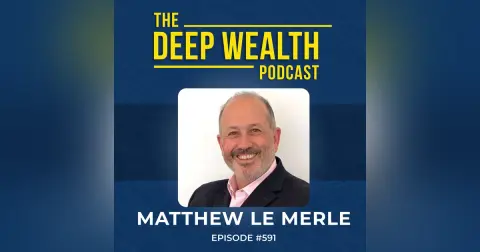
Investor Matthew Le Merle Backed 80 Unicorns. This Is What Founders Get Wrong About Fundraising (#591)
Send us Fan Mail “When you have choices, put happiness at the top of your list.” -Matthew Le Merle Exclusive Insights from This Week's Episodes Most founders sell investors on their product while forgetting what investors actually need to hear. Investor Matthew Le Merle reveals the fundraising blind spots that trigger a no, what must happen in the first minute, and how to flip the conversation. Episode Highlights [00:24:14] Why great founders and teams are only the beginning of an investable ...
 Apple Podcasts Apple Podcasts
 Spotify Spotify
 RSS Feed RSS Feed
 Amazon Music Amazon Music
 Podcast Addict Podcast Addict
 iHeartRadio iHeartRadio
 Castro Castro
 PlayerFM PlayerFM
 Podchaser Podchaser
 Overcast Overcast
 RadioPublic RadioPublic
 PocketCasts PocketCasts
 Audible Audible
 Pandora Pandora
 YouTube YouTube
“When you have choices, put happiness at the top of your list.” -Matthew Le Merle
Exclusive Insights from This Week's Episodes
Most founders sell investors on their product while forgetting what investors actually need to hear. Investor Matthew Le Merle reveals the fundraising blind spots that trigger a no, what must happen in the first minute, and how to flip the conversation.
Episode Highlights
[00:24:14] Why great founders and teams are only the beginning of an investable story
[00:27:00] The fundraising blind spot: founders explain the product but forget how investors make money
[00:28:00] Why fundraising is about the investor, not the entrepreneur asking for capital
[00:29:00] Investors are looking for reasons to say no before most founders finish their pitch
[00:29:45] The first-minute test that can turn investor resistance into attention
[00:39:27] Why the quality of investors becomes a major differentiator as companies scale
[00:55:48] Why a powerful founder vision still needs to fit a five-to-ten-year investment horizon
Full show notes, transcript, and resources for this episode:
https://podcast.deepwealth.com/591
The Deep Wealth Podcast
Most entrepreneurs do not fail.
They just carry too much for too long.
The business grows. Pressure grows faster. Profits get harder to predict. Decisions cost more energy. Over time, focus slips and health takes the hit.
The Deep Wealth Podcast and Deep Wealth Mastery are built from real experience. We're the only system based on a 9-figure exit. This system exists because guessing gets expensive.
🧠 Deep Wealth Mastery
This is for you if you want to:
• Grow a profitable business without becoming the bottleneck
• Build real value so selling is optional, not forced
• Optimize your health before it limits your business and life
One proven roadmap for real decisions.
⭐ Explore Deep Wealth Mastery
https://iapdw.com/idm
🎧 Subscribe
https://iapdw.com/podcast
📘 Free eBook
https://iapdw.com/ebook
💬 Have a question you keep circling back to?
Leave a short voicemail
https://podcast.deepwealth.com/voicemail/
Built by entrepreneurs. For entrepreneurs.
Loved this Deep Wealth Podcast episode?
You built your business from nothing.
Now make it pay off big.
📱 Subscribe Now
As a bootstrapper, every move counts. Subscribe on your favorite platform for Jeffrey Feldberg’s 9-figure exit strategies. From your morning grind to late-night planning, get insights from founders who did it without investors. These tips could change your future.
Drop a Quick Review
Got 30 seconds? Leave a 5-star review. It helps us make better episodes and reach entrepreneurs like you, hustling without a safety net.
Don’t Lose Your Exit (And Your Financial Freedom)
You’ve poured everything into your business. A bad exit could cost you millions. Most deals fail, and even “successful” ones lose half their value. The 90-day Deep Wealth Mastery program teaches you to make your business run without you and boost profits so you capture the best deal instead of any deal.
What Others Say
“Deep Wealth Mastery is pure gold. I wish I’d had it before my exit,” says Stacey C. “The value I’ve gained dwarfs the investment,” adds Sanjay S. “It makes my business great to own and sell,” shares William S.
📘 Grab Free Tools
Check out client success stories for proof. Master the Deep Wealth Strategy Map to plan your exit. Or snag the eBook, From 7 to 9 Figures: The Exit Playbook, for a clear guide.
Click here to start your legacy-defining exit today.
591 Matthew Le Merle
[00:00:00]
Meet Matthew Le Merle
Jeffrey Feldberg: What happens when you spend decades advising some of the world's biggest companies, investing in technologies most people still don't fully understand, and trying to see the future before everyone else does?
Matthew Le Merle has built his career around that question. He's the managing partner and CEO of Fifth Era where his team invests at the intersection of the Internet, artificial Intelligence, agentic technologies, and the blockchain.
Their investment strategies are now in their 13th year, with exposure to more than 1,500 companies, including over 80 unicorns. But Matthew's perspective was shaped long before venture capital. He spent 21 years advising Fortune 500 CEOs, boards, and leadership teams through firms including McKinsey, A.T. Kearney, and The Monitor Group. He later stepped inside the corporate world as a senior executive at [00:01:00] Gap, working across strategies, corporate development, and global marketing.
He's also the best-selling author whose book includes The Fifth Era, Blockchain Competitive Advantage, Corporate Innovation in the Fifth Era, Build Your Fortune in the Fifth Era, The Ministry of Bitcoin, and Second Chance.
What makes Matthew fascinating is not simply that he studies disruption. He spent decades asking a much harder question: When the world changes faster than your assumptions, how do you know what to hold onto, what to abandon, and where to place your biggest bets?
And before we start the episode, a quick word from our sponsor, Deep Wealth and the Deep Wealth Mastery Program. Here's Sanjay, a graduate of Deep Wealth Mastery, and he says, the investment I made in the Deep Wealth Mastery Program, it's a rounding error compared to the value created today and the future value I'll receive.
Or how about William, who says, and I love this, A company that's attractive to sell is [00:02:00] also a great one to own. The Deep Wealth Mastery Program gives me the best of both worlds.
Now speaking of growth and adding value, check out what Leon says. He says that the Deep Wealth Mastery Program changed how and who we hire. We've now begun to hire talent today that we never would have hired if it weren't for the program. The talent we're hiring today is helping both increase our growth and profits and our future enterprise value.
Man, I love that kind of feedback because it's that kind of feedback that's what gets me out of bed every day.
Deep Wealth Mastery System, it's the only system based on a nine figure deal. That was my deal. And as you know, I said, no to a seven figure offer, created a system that we now call Deep Wealth Mastery, and that's what helped myself and my business partners all welcome from a different buyer, a different offer, a nine figure deal.
So if you're interested in growing your profits, preparing for a future liquidity event, whether that's two years away or 22 years away, and if you want to optimize your post exit life, Deep Wealth Mastery is for you. Please email success at deepwealth. com. [00:03:00] Again, that's success, S U C C E S S at deepwealth. com. We'll send you all the information about Deep Wealth Mastery, otherwise known as the Scale for Ultimate Sales System.
That's where you want to be. You want to be with other successful business owners, entrepreneurs, and founders, just like you, who are looking to create market disruptions. Whether you're a startup, whether you've been in business for three or four decades, whether you're manufacturing, whether you're high tech, SaaS, low tech, whatever the case may Come in and network with other business owners, with other businesses, just like you, because they all want to lock in their financial freedom and enjoy both success and fulfillment.
Again, that's the 90 day Deep Wealth Mastery program. It has your name on it. All you need to do is take the next step. Please send an email to success at deepwealth. com.
Podcast Welcome and Setup
Jeffrey Feldberg: Deep Wealth Nation, welcome to another episode of the Deep Wealth Podcast. Deep Wealth Nation, let me ask you this: as we look to the blockchain, to artificial intelligence, now known as super intelligence, as we look to creating market [00:04:00] disruptions and attracting investment into your company, if that's what you're all about, where do you start?
What do you do? Where do you begin? What should you look for? You've come to the right place. We have a very special guest in the house of Deep Wealth. Matthew, welcome to Deep Wealth Podcast. An absolute pleasure to have you with us. Wow, you have quite the story. Why don't you take us back to the beginning?
There's always a story behind the story, so what's your story, Matthew? What took you from where you were to where you are today?
Matthew Origin Story
Matthew Le Merle: Thanks for asking, Jeffrey, and it's great to be here, and hopefully this will be interesting for your audience. I'm not sure this first part will be that interesting. I grew up in the UK, was educated there, including at Oxford, where I graduated a long time ago, and then started in the world of consulting with McKinsey.
They sent me to California to go to Stanford with Allison Davis, who is now my wife. But at the time, we both came to the States at the same [00:05:00] time. And we've been in California ever since. First career was a continuation of what I just described. We became senior partners at large consulting firms ri- around the West Coast in the global financial institutions practice at Kearney.
I ran the global digital and innovation practices for Booz and Monitor, or co-ran them, and so that was first career stuff. And so back then, the clients would have been the world's biggest financial institutions, the Bank of Americas and Visas and BlackRocks and so on. And on the tech side, it was Microsoft, HP, Intel, later Google, eBay, PayPal, and so on.
Coming into the zeros, I pivoted to be a full-time early-stage investor, internet, fintech, digital content. Allison was also an investor. She'd become CFO of BGI BlackRock, which is now the world's largest asset manager. And then she [00:06:00] became a private equity managing partner, joined some boards, and then we launched our current firm about 15 years ago to exclusively focus on what we...
what you can call exponential technologies, AI, blockchain, internet, and we've been doing that ever since. We're primarily venture investors, though we do go all the way through to the IPO
Jeffrey Feldberg: My goodness, you have the who's who in terms of logos and companies of where you've been, what you've been doing. At the risk of asking what many would consider where you are a newbie question, I'll put it out there anyways for the benefit of Deep Wealth Nation.
Blockchain Explained Simply
Jeffrey Feldberg: Here and today, and I know things are changing, especially with the internet and AI and Bitcoin and the blockchain, but what is a blockchain?
Very high level as we sit here today, what is the blockchain and from where we are today to where you see it heading, [00:07:00] what does that look like?
Matthew Le Merle: Yeah. Thanks for asking, Jeffrey, and I think this is very misunderstood because most people are gonna answer that question with a technical answer. I'm not gonna do that. A blockchain was an invention of a person or group of people that wanted to move value over the internet, and the internet, which was very good at digitalizing communications and content, was not at the time, and we're talking about 15 years ago, fit for purpose for moving value.
And there are some reasons for that. I won't go into them all. They have to do with security, identity the double spend problem, and some other things. So Satoshi Nakamoto invented blockchain as a complementary technology to allow the internet to be able to move value, i.e. money and other valuable transactions in real [00:08:00] time at low cost globally.
And that's why it's so important. It's not about hash rates and Merkle roots, and the technology. It's about the fact that it is a complementary tech- innovation that makes us able to move digitalization to the next frontier. So we'd already digitalized communications and content.
Blockchain enabled the digitalization of finance and transactions, and in a minute we'll talk about AI, which has also digitalized intelligence and work. And the three things coming together move us into this new machine to machine, or as we call it, autonomous digital economy
Jeffrey Feldberg: And that's really exciting. We'll get there, as you say, in just a moment, and then I'd love to also talk about your experience on the investment side.
Quantum Fears and Reality
Jeffrey Feldberg: Before getting into that, I don't want to go too far down the rabbit hole. There are some out there who are saying this whole blockchain, I know you thought it [00:09:00] was secure and safe, Jeffrey, but just wait.
You know, Always the doomer's there to tell us why it's not gonna work. Just wait, Jeffrey, you got this thing called quantum computing. And Deep Wealth Nation, when I say quantum computing, just think really fast computers, really smart. They can do things in a fraction of the time that we can do right now.
And these doomers are saying, "Jeffrey, when quantum computing becomes mainstream, the whole blockchain's going away. All those securities and the protection and everything else that you thought you had will no longer be. It'll be cracked, and that's it. It's done." So not to make the whole discussion solely about that very high level, how would you respond to that?
Matthew Le Merle: Yeah. The way I'd respond to that is my whole life and people fall into the same trap which is they take today's state of innovation or technology and then they extrapolate and they create, [00:10:00] as you said, dystopian or doom scenarios, and they forget that innovation never stops. So yes, it is true.
It is true that a superior technology could surface that could destroy the way we do things today. And the doomers would have you believe that quantum computing will destroy cryptography, and everything that is dependent upon cryptography will be open to disruption, bad actors, bad players, and that includes the global positioning system.
That would include the core technologies of every enterprise and every government, and quantum computing would just allow us all to be uh, victims of that technology. The issue, of course, is that cryptographers and innovators are aware of these issues, and so they need to upgrade the state of today's cryptography to make it fit for [00:11:00] purpose if indeed we enter a quantum computing age.
And that process of innovation is true across every problem scenario. You can say the same thing about anything you choose. I could say, the carbon economy is gonna use up all the world's oil, and therefore we're all gonna be dead 'cause we won't have any energy. And that was said in 1972, I believe it was The Club of Rome, and it's a very famous mistake they made 'cause they took at the time the known reserves, the known usage rates for carbon and oil, and they extrapolated them and they said the world will run out of energy in just a handful of years.
And of course, they were wrong. We increased our reserves, we modified our usage patterns, we began to work on sustainable sources of energy, and here we are in 2026 and I think we still have energy, right? And we [00:12:00] use more of it than ever. And so the doom mongers will simply always fall into the same trap.
They'll extrapolate today, they'll come up with a negative scenario. They'll create a lot of FUD, fear, uncertainty and doubt. But the truth is, the innovation never stops and we, focus on solving the challenges as they surface
Jeffrey Feldberg: It is so true with what you're saying, and again, this is not for the scope of this podcast, as I like to say, follow the money. When you follow the money, oftentimes you get to where's the source of these doomsday predictions coming from? Usually it's a group with a vested interest to tell us how it's gonna be and why it's gonna be like that.
So I'll just leave it at that.
AI Agents and Digital Value
Jeffrey Feldberg: And then one other thing to get out of the way foundationally, when I think of the blockchain and artificial intelligence, AI, or super intelligence these days, what's really exciting to me is the use case scenarios, a lot of which hasn't likely even been thought of [00:13:00] yet, but it takes the friction out of doing things together.
So imagine I have all these AI systems or agents or bots behind the scene. They now have the blockchain behind them. I can see the day where they're interacting with each other without processing fees and 3% on top of this for a credit card and all those other kinds of things. They're using the blockchain.
They're using different kinds of cryptocurrencies to do things. Is this really the Matthew? Is he legitimate? Is Jeffrey legitimate? We can get all that out of the way here. I'm gonna go behind this paid gate, this paid moat, if you will, to make sure that it's the real deal, and it's done effortlessly with minimal cost in a way that couldn't be done today.
How am I doing with that? And for the benefit of Deep Wealth Nation, I'm sure you can explain it far better than myself, but what do you see with that?
Matthew Le Merle: Yes.
Innovation and Tokenization
Matthew Le Merle: Thanks for asking, Jeffrey. And I think you mostly got that right, in fact. But the way I, I would say it slightly differently, I would say the process of innovation [00:14:00] is that we have lots of people, you can call them scientists, but innovators who in the early stage are making breakthroughs scientific breakthroughs, and they don't always know how they will be applied, but they're interesting and they open up new opportunity areas The second stage obviously is that people begin to think about how do we take this scientific breakthrough and apply it to solving real world problems.
And that process, there is some discovery and there is a lot of failure, and eventually, hopefully, we start seeing the emergence of real solutions that truly do bring enormous value against solving end user consumer problems and issues. And once that begins to occur, then we start seeing the scaling up of those new [00:15:00] superior solutions and of course the disruption of the existing status quo if the solution actually does a better job of whatever it was that an industry or a business used to do.
Now, obviously you also have solutions that are new to the world and open up new opportunities for consumers that we couldn't even imagine in the past. So that process is not linear. It's extremely bumpy, it's very chaotic. And what you described is where we are beginning to be in terms of digital finance.
But the last fifteen or twenty years has been anything than a straight line. So when we actually set off on this journey, thirty years ago, we said we should be able to digitalize all of the world's payments and financial instruments, and we started trying to do that. And it made some progress, but it ran into [00:16:00] some very substantial problems with legacy technology, and as I already mentioned, the Internet couldn't do all the things we needed it to do.
And we were stuck in the zeros trying to digitalize the global payment system, trying to digitalize banking and finance and asset management, and it got a bit stuck. And that's why Satoshi was so brilliant because the blockchain unlocked a lot, and actually tokenization which was also an innovation, we probably should talk about, tokenization actually also unlocked a lot.
Today it is true, Jeffrey. It is true. You can move value, money anywhere in the world on digital rails at almost no cost almost instantaneously. You can do that. Most people do not do that. So in terms of rolling out that capability to every endpoint, every consumer, every business, every government, [00:17:00] we're not there yet.
We're just beginning. But it is proven. I could send you a Tether right now in Toronto, and you would get it almost instantaneously if we both had digital wallets. I think, what's happened today is that if the audience doesn't believe it, they can now look at the CEOs of the world's largest payment companies, banks, asset managers, the BlackRocks, the Visas, and they will no longer be told this is all rat poison, which Jamie Dimon famously said a few years back, as did Charlie Munger, They used different words. No, today, those same people who were saying this was all garbage five years ago, they're all saying, "It's coming now. I'm preparing my organization, and we're gonna have it." And that is a huge change. And here in the US, we lived for a few years with an administration that said America doesn't need any of [00:18:00] this.
Today, we have an administration that says we have to be a global leader in this, as does every other major country around the world, and I don't think that will ever go backwards now. There's no, to use another an mixed metaphor, there's no putting Pandora back in the box.
We will have digital real-time finance by the time we stop talking about AI. Of course, that's another box that's been opened and can't be closed now.
Jeffrey Feldberg: Absolutely.
Who Is Satoshi
Jeffrey Feldberg: And while we're covering foundational concepts and topics, most people have heard of Bitcoin. They may have heard of Satoshi. In your own words, who is this Satoshi, either person or group? No one really knows. And putting all the conspiracy theories aside, from Matthew's point of view, how does Satoshi play into this?
Why is Satoshi important or maybe not important, but how... We've mentioned Satoshi, so let's put [00:19:00] it out to Deep Wealth Nation should they hear the name again, who Satoshi is.
Matthew Le Merle: Yes so scientists are normally known, and innovators are often known. And so we can say Tim Berners-Lee and Andreessen, Marc Andreessen had critical roles in building the internet. Now, there's a lot of people who worked at DARPA and MIT and at Stanford and so on, whose names are not known, but they also helped us stand up the internet.
So innovation sometimes is because someone does something remarkable. Crick and Watson helping break the back of DNA and unleashing the genetic age. But oftentimes these are anonymous names. In the case of blockchain, Satoshi is the name, but we don't know who stands behind that name.
What's the contribution? Solving one of the greatest [00:20:00] problems that we had, which was the internet was not fit for purpose for moving value, and databases were not very secure, and they were... there's some other issues. They were also owned and invisible to most people, and Satoshi figured out how to make databases public, shared and transparent, immutable and so on, which opens up a whole bunch of other use cases.
So we don't know who Satoshi is or was. We don't know if it was a person or a group. We don't really know even why they were doing it other than they wanted Bitcoin to be possible. But their great contribution, which was given away for free to some extent, was this complementary solution that allows the internet to be fit for purpose for the movement of value.
I think that for the entrepreneurs who are listening in, Most entrepreneurs don't do what they do because they personally want their names to be famous. They are actually trying to solve [00:21:00] consumer problems, and they're passionate about that. And then if they succeed, they may end up with a very valuable company, and they may become very wealthy and visible.
But it doesn't normally begin there. It normally begins with, "I think I can solve a problem better than others, and I wanna give that a go. And then I'll build a company and a team and try and make that happen." Satoshi solved one of the world's greatest problems, but wanted to remain anonymous, and I think we should respect that.
Jeffrey Feldberg: An incredible story in Deep Wealth Nation. You can type the name Satoshi into your favorite either AI bot or search engine or browser and do a deep dive on that.
Inside Fifth Era Partners
Jeffrey Feldberg: And then rounding things out, Fifth Era Partners, your group. Tell us a little bit about that, and now we'll start once we have that and we put the foundational aspects.
From there, we can get into some deeper dive questions. But Fifth Era Partners, [00:22:00] who are you? What are you all about?
Matthew Le Merle: Yeah, so we're investors. I already mentioned Alison and my personal journey. I said we began investing in venture and private equity in the zeros, so 25 years internet, fintech, digital content investing. Today, We're a specialist investment firm, and we just focus on the stuff we're talking about today.
So we invest in AI, blockchain, internet, and related technologies in the early stage through a fund to fund model and in mid and late stage as direct investors. On a public webinar, I can't tell you very much more. I can tell you about our strategies. I can't tell you the specifics because we're an SEC registered RIA and we're FCA appointed in Europe, and that restricts the types of things I can talk about.
So I can definitely talk about strategy, Jeffrey, but if you were to ask me, for tips or for investment ideas, I'm not allowed to give them on a public webinar.[00:23:00]
Jeffrey Feldberg: And no worries there, we are not about that. What we are about though here at the Deep Wealth Podcast which would be immensely valuable to Deep Wealth Nation, oftentimes for Deep Wealth Nation, they're sitting across the table from a future investor. By the way, that investor, it could be private equity, it could be venture capital, it could be for an investor who wants part of the company or all of the company.
So I will use investor big picture-wise for all those roles and all the ones that I didn't mention.
Investor Red Flags
Jeffrey Feldberg: So as an investor from a best practice side of things, let's talk about for starters, what's having you run? Matthew, you're running as fast as you can in the opposite direction. You just got a pitch from a company to invest in and, oh my goodness, not happening for us.
What would cause you to do that? And then a heads up, we'll ask the flip side of that, or I suppose we can distill the opposite of what you're about to share with us of what has you say, "I absolutely want to be in as an investor with this [00:24:00] company." But let's start with the red flags that oftentimes as founders, as brilliant as we can be, we're missing the bigger picture and really losing those investment opportunities.
Matthew Le Merle: Okay. So firstly, I think I've already caveated that we don't do direct early stage investing anymore. We have a fund to fund model for the early stage, and then we do direct mid and late stage investing. But having said that, I used to help run one of the world's largest angel investor groups, Keiretsu, and I was a Band of Angels member for many years, and I've seen many thousands really of CEOs and founders present, and I've worried a lot about the issue of how to help them do a better job of telling their story and raising capital.
So I'm gonna answer your question, but I wanna emphasize that I don't want the entrepreneurs pitching me their their startups because the way we actually make decisions, and I just wanna explain, [00:25:00] as LPs, we back a lot of venture funds about fifty or more right now.
They go out and do the early stage investing, the general partners of those funds, and then we are able to watch everything they've done and make our decisions around the mid and late stage, the follow-on rounds, series B, C, and so on. But going back to your question I think... I actually recorded a YouTube video, which you can see somewhere online, which is called Raising Early Stage Capital, and it's a, a distillation of what I think is important.
Obviously, it begins with great founders and great teams. It's every venture capitalist will tell you that the founder really matters, and some founders cut through the clutter and become very impressive early on and some struggle. That is a combination of innate capability and preparation and hard work and building a great team and so on.
The second thing is [00:26:00] clearly an idea that-- whose time is right. you're attacking a big consumer challenge or need, an end user challenge or need that if solved will unlock a lot of value, both for the users of your product or solution. And you've got to be able to articulate that challenge and why you've come up with a solution then there's a whole bunch of issues that you've got to address are you the only one creating that solution?
Why will your solution be superior? How will you scale it? Will it make money? Is it defensible? So there's a whole bunch of things there. And then, and this is I think where a lot of founders begin to flail, because everything I've just described is about the product, and I would say most entrepreneurs are very good at talking about the product.
But there's some other stuff, what does the company look like? How much capital does it need? What will the eventual exit be, and how will [00:27:00] investors make money? And that back end, most entrepreneurs forget altogether. But investors do care about that, which leads us to another point, Jeffrey.
Pitching for a Yes
Matthew Le Merle: Fundraising is not about you. And most entrepreneurs think it is. They think that they're there to tell the other side about themselves. "Hey, my name's Jeffrey. This is what I'm doing. This is the product I'm building," blah, blah, blah. No. Fundraising is about the other side of the table. It's about The investor.
What sort of investor are you? What sort of investments do you make? Why would you decide to say yes? And how do I position my opportunity in the context of your investment priorities and strategy? And very few entrepreneurs are good at that. When I just answered your question, Jeffrey, I actually did touch upon the major objections that lead an investor to say no.
And this is very important entrepreneurs, if you're listening in. What I just [00:28:00] touched upon were the top 10 reasons why investors say no, and any conversation you're having with an investor, they're almost certainly gonna say no, because that's the reality. Most investors will see 100 pres- presentations and maybe invest once or twice.
So 90% of the time and more they're looking for reasons to say no. And this is something also that is very important. Entrepreneurs go into the room,
And right at the beginning, the investor is just really wanting to say no in a diplomatic, friendly way. And so they're... In their heads, they're looking for the reasons why they're gonna be able to say no.
And your challenge is to flip them into thinking that maybe you're one that they should actually say yes around. And the only way you get to that is you very quickly, like in the first [00:29:00] minute, gotta overcome as many of the objections as possible. And so to remind you, the, objections are, the team's not good enough, the idea is not good enough, the product is not good enough and unlikely to scale, make money, be defensible.
And, the company's gonna require too much capital and I'm not gonna make money, and there's unlikely to be an exit. So if in the first, minute or so, you address as many of those as you possibly can, "Hi, I'm Jeffrey. This is a world-class team. We've had good exits in the past," that would be nice.
"Here's the big opportunity. Here's the unique solution. This is already making money or will make money. Here's how it will scale. Here's how we're gonna be able to defend against others. And we're gonna be capital efficient. we're gonna protect your capital, and here's the type of outcomes we expect."
And then what actually happens is you flip the conversation [00:30:00] into this very valuable moment, which is the investor suddenly says, "Oh my gosh- This could be a situation that I might say yes to, and they lean in, and now they're paying attention. But, as an entrepreneur raising capital, you have to go into the room understanding that if you don't under...
You know, most people's attention span is a few minutes, three minutes or less, and if you don't get them to them quickly with your top line messages, they will have just in their heads disengaged and said, "This is not... This one's not for me." And that's sort of what goes on. So I covered an awful lot, Jeffrey.
That's 20 years of experience. There's a book in there that we wrote and there's some webinars that we recorded, and there's a lot of work we did at the angel groups. But at the end of the day, what I just tried to distill into, three minutes is, I think, the most [00:31:00] important thing every entrepreneur needs to know if they're gonna go out and raise capital
Jeffrey Feldberg: And what's interesting about that, Matthew, couldn't agree more. Here at Deep Wealth, we, in the, our mastery program, the Deep Wealth Mastery Series, what we share right off the bat is always tune into the world's favorite radio station, WII.FM, the what's in it for me, but not as me, Jeffrey, it's whoever is sitting across the table from me.
So in this case, it could be investors. And at the same time, even though you've made it very clear, Matthew, hey, maybe in another life I would get pitches from individual companies, we now are behind the scenes with various funds and ventures, and we're the limited partner behind the scenes. It's, I would imagine, some of the same first principles that you're looking for in those investment funds, and in turn, what they're looking for with the investments that they're making.
Timing and Inflection Points
Jeffrey Feldberg: Let's go back to something that you said. It's a nuance. It's very subtle. Let's [00:32:00] flush it out somewhat, because said in another way, as my friend often reminds me, he says, "Jeffrey, timeliness is next to godliness." I can be too early, I can be too late, or in the Goldilocks scenario, the timing can just be just right.
So a- as an example, to over-exaggerate, I could have come up with the idea of the blockchain. I could have been Satoshi back in the 1950s. This is a terrific idea, way too early. The technology simply isn't there to get me to where I want to get to. So with that in mind, Matthew, you, Thera Partners, the groups that you're investing in and they in turn are investing, you're literally looking to see around corners.
And in the Deep Wealth 9-step roadmap, step one, big picture, we're always looking for that blind spot, that inflection point. It's a whisper, it's a murmur right now, but we identify it early enough, and [00:33:00] we can make a big difference out there in the marketplace. And so talk to us about timing of what you're seeing from your world right now, and not talking specifically about any investments.
Future View For Founders
Jeffrey Feldberg: If we're looking, though, at perhaps we'll call them problems, we call them opportunities here at Deep Wealth, or themes that you're seeing right now that are top of mind today that down the road could be playing a major role. Would love your thoughts on that, of the inflection points, the blind spots, seeing around the corners.
What's going on right now?
Matthew Le Merle: Oh, wow. So that's such a broad question. I would say To be a good entrepreneur, you need a point of view about the future and some inevitable aspects of that future that technology or innovation... And and everything I talk about, by the way, is about technology innovation and technology investing.
So obviously if I was backing a restaurant, it would be a whole different conversation potentially. But if we're backing tech companies, [00:34:00] then what I just started to say, the entrepreneur needs a view of the future and some inevitable aspects of that future that the innovations or technologies that they're gonna be focused on is gonna unlock.
And there's gotta be some belief that products and services that are being used today can be upgraded and be much better for the end user. Or, as I said earlier on on this Jeffrey you're gonna unlock something that has never been seen before, which is that's the Steve Jobs wow moment. But that's quite rare.
most innovation improves today's products and services and makes them better, and that's still a great thing. If you have that future view, and if you've identified some things that lots and lots of people want that solve major pain points that we experience today, and makes things quicker, cheaper, easier, or some combination of the same, then you're moving down the right path.
so what are some obvious things I guess would be a, a [00:35:00] good question, right? What are some obvious things about the future that we already know that should be driving entrepreneurs and innovation today? And I think they're in plain view. They've been in plain view for a long time. It's surprising to me that it's only in the last few years that people are suddenly sitting up and taking notice.
Digitalization Second Shoe
Matthew Le Merle: But we've known for 40 years that we're gonna digitalize everything. Everything humans do is gonna move to digital approaches. We've known that for a long time. Marc Andreessen famously said 30 years ago, "Software's gonna eat the world." And we've known that. The internet was the first shoe dropping, but we still couldn't move value, which was...
we've already talked about, and we hadn't yet digitalized intelligence and the doing of work, which AI is now enabling. So we're in this critical moment when we're halfway digitalized, and we're halfway still paper and human beings that we're gonna now digitalize. [00:36:00] It's the second shoe dropping in a way.
And so I don't think it's quite so much about an entrepreneur worrying about where they could be blindsided. I think it's more about the entrepreneur in having a very clear future view And really working hard towards that endpoint. And I think there's... A lot can go wrong. So just to be clear, most startups fail.
Most entrepreneurs do not succeed. But the direction of travel, I believe, is fairly clear. I would say-- There are some other directions of travel. So the one I focus on is digitalization. And I would say, if all you do is continue to work on that, where, I'm building a company that will help the world transition this industry, that industry, this product, that solution, to a fully digitalized future where software not [00:37:00] only enables real-time, low-cost transactions and communication, but actually the software does the work and actually delivers the value, then I think you're probably in the right direction.
And things like security, identity, privacy, autonomy, all those things become very complicated and very relevant. There are some other directions of travel.
Other Mega Trends Ahead
Matthew Le Merle: So I think clearly moving out of a carbon age into a clean energy age is a direction of travel, and there's a lot of opportunity there.
In life sciences, we are still have not completed the journey towards a fully bioengineered, digitally enabled, bioinformatic-rich, personalized medicine or health or agricultural world. there's a lot of opportunity still to untap in everything that is life science related. And we're gonna go to the stars for good measure too.
And clearly, there's a lot of [00:38:00] entrepreneurial opportunity as we head out from one planet to the space and so on. And I could probably keep on going. the thing we focus on, Jeffrey, is digitalization. And if you're an entrepreneur, we're only just beginning. We're not even halfway.
So there's so much opportunity. I really believe that
Jeffrey Feldberg: And what's interesting, my numbers might be a little bit off, I don't think they're that far off, because Matthew, again, in preparing for today, you've been exposed to literally thousands of companies. You've looked at many a unicorn company that is making a huge difference out there, both on capturing value and then taking that out to the markets.
So when you've seen so many companies, and going back to what you said just right now in terms of being able to capture that, is there, generally speaking, a pattern that would separate a one business from another where instead of [00:39:00] simply participating in a growing market, this pattern is what's helped those unicorns, those successful companies disproportionately capture the value from it?
And you can choose any of the industries that we mentioned, or you can keep it more high level than that. But I know this is part of your thesis of Fifth Era Partners and what you're looking at. I would love to hear what that looks like for you and the team.
Matthew Le Merle: Yeah. Okay.
What Makes Unicorns Win
Matthew Le Merle: In the early stage, I tried to describe what a good team looks like and the types of questions they're ready to answer and that investors need them to answer. Obviously, once you get some funding and you're launched, you've got to build great products, and the products have to work and customers have to want them, and if that's occurring, you deserve some level of success.
Now, most people will fail, so even in that transition from, " I founded something," to, we used to call it Series A, but, I've got a working product and [00:40:00] customers really wanna spend money on it. Most startups don't get there, so you've done well if you've actually got a live product that real customers are really using and are willing to pay for.
I think at that moment in time, the quality of the investors and the people you've been able to attract into your company or project is paramount. And if I look across, the investor community, clearly there are a small number of investors who can really help companies succeed, and then there's most investors who maybe don't have quite such a good capability themselves for helping companies, get progress, and particularly in the venture ecosystem.
So that, that requires some explanation, Jeffrey.
Investor Quality Matters
Matthew Le Merle: In the world of startups, that you can roughly break startups into two categories. There are those [00:41:00] that raise a little bit of money, create a product, and begin to make money and scale in a very bootstrapped, capital-efficient way, and often they're backed by angels or family offices, and they never see a venture capitalist at all.
That's actually most US startups, and there's nothing wrong with that. They often become very successful small or even medium-sized businesses. Occasionally, they go all the way, and they become public companies. The other category is much smaller in number, but these are technology-enabled startups that do get top-tier venture capital.
They become rapid growth stories, getting a lot of additional capital, and the goal is that they eventually either become public or they become multi-billion dollar exits. In that second category, who you attract onto your cap table, on your board as an investor really [00:42:00] matters, and I think that's a big differentiator.
I would say, if I was a founder and I was choosing that path, raise a lot of capital, build a venture-backed company and try and go all the way, then it's very important that you try and attract one of the world's leading investors and or a, a, a handful of them. And if you are starting out, like if you were a life sciences firm company or a AI company or a digital finance blockchain company, there are specialist firms who clearly are the best in their category.
But by the time you're a mid-stage company, maybe you've got a valuation of a few hundred million and you're trying to raise 50 or 500 million, then the quality of the investor is the biggest single differentiator. The team is already a good team. They're scaling well, they're building good products, and now it's about growth [00:43:00] capital.
So I've oversimplified it, but that's my answer to your question, Jeffrey. It's like in the early stage, great team, great idea, able to tell their story. In the seed to Series A, build a great product, make customers happy, and demonstrate that, you can scale whatever it is you're doing.
But by the time it's the mid stage, the quality of your investors and the ones you've attract into your project is probably the biggest single litmus test on whether you'll differentiate and become a unicorn and so on.
Jeffrey Feldberg: What's so interesting with that, I'm not gonna name names just because they're out there, they're the headlines, and things also change. Not even 10 years ago, not even three years ago, even a year ago, if I would have shared what's happened lately with companies that are doing their filings, particularly in the AI sector of this company's gonna file, they're gonna go public, or they're planning to go public, here's their valuation, here's their [00:44:00] growth rate.
People say, "Jeffrey, what have you been drinking, eating, or smoking? That's crazy. Never happened before. Not possible." And yet, here we are, all of that is happening.
Autonomous Digital Economy
Jeffrey Feldberg: But let's take that to the next level because part of your thesis at Fifth Era, as I understand it, is three words, and they mean a lot, and we probably won't have the time to do a deep dive on this but you've alluded to it.
You've talked about it, particularly with AI, the autonomous digital economy. It's a big deal, and most people, I don't think, understand how big of a deal that is right now. What would you say to that, where we are today, reserving the right, you can change it this afternoon or tomorrow depending on where things go, but where is it right now?
What would you want us to know about this? Because this is a big deal for you, the team, your investment thesis, how you're viewing the world. What should Deep Wealth Nation take away from that?
Matthew Le Merle: We are gonna see an [00:45:00] autonomous digital economy in our lifetimes. BlackRock just published a very good report where they call it something slightly different, the machine-to-machine economy.
But I think it's the characteristics of it I've already covered. We've digitalized everywhere, and we've enabled software so that most things human d- do across most industries will be de- device driven first with human involvement secondarily. And I'm exaggerating a little bit, but that will be the more common denominator.
Most companies will be companies that do what they do with devices first
And only use humans if needed. Whereas today, most companies are the other way up. They are people-based, and then they use technology to support what they need to get done. And so they are not machine-to-machine and or autonomously driven [00:46:00] depending upon whose vis- future vision, the language you prefer.
So I think that is the most important thing.
Internet Blockchain AI Stack
Matthew Le Merle: Now, how is it being enabled, this future? It's the convergence of the internet which digitalized communications and content, blockchain that has digitalized value, identity and trust, and AI which has digitalized and is digitalizing intelligence and the performance of work.
And those three things converging really make this happen. Right now, people, take the internet for granted, where, they tend to be quite negative and dismissive about blockchain, and they are over-hyped up on AI. And I say that because all three of these things actually have to be engaged by a builder or an entrepreneur to get really to where we need to head.
So if I was an entrepreneur, I would not have an AI [00:47:00] agentic company without the ability to tr- transact digitally. And so in order for my agents to transact, I have to embrace digital finance and digital transactions, so I better understand blockchain finance. And obviously I do s- we all know, that the agents have to engage over the internet But you better be a master in identity and security because otherwise bad actors are gonna make your own agents do bad things.
So you've got a lot of work to do to have a fit for purpose, digitally enabled agentic company that can compete in this future world, but also be secure and I don't wanna say error-free, but you do... likely you're gonna operate in a heavily regulated future environment, and you've gotta be able to do that.
You can't have, just to use an example, agents that choose to do whatever they wanna do, breaking all the [00:48:00] rules of the world in the process. That's not gonna be a long-term strategy for a successful company. You're just gonna get closed down if that's the way you go about things.
Humans Out Of The Loop
Jeffrey Feldberg: And so building on that, and before we head into wrap up mode, and I want to be very clear, Deep Wealth Nation, what I'm about to share, this is not doomerism. This is not the world is going to end, AI is gonna take us down this path and destroy humanity. We're gonna talk about simple facts. If you look back, every new innovation, people were saying the same things, the same doomers, "Oh, this is gonna be the end of us," or, "It's gonna be the end of this industry," and it never came to pass.
Innovation, the human spirit, all those kinds of things. That said, Matthew, you've gone on record and you've shared it, I happen to agree with you, that there are certain instances it doesn't make sense to have people, humans, in those loops. We should take it out. We should leverage AI specifically the technology.
And in fact, the businesses that insist on [00:49:00] keeping humans or people in those loops are likely gonna lose out to the ones that don't. And so without all that doomerism that machines are gonna replace us and there's gonna be no jobs and our economies are gonna crash, I think it's the opposite. Because if we look out today, there's more jobs today and titles that didn't exist than 10 years ago.
Same thing will happen here, likely at a larger scale. Very quickly from a high level, in terms of that I don't think it's such a provocative argument at all. To me, it's very logical, makes a lot of sense. Would just love your thoughts on that because we're at that crossroads where all these different messages are being put to us.
But for Deep Wealth Nation to navigate of what they should be thinking of where do I deploy my people? Where do I deploy the technology? Is a perfectly reasonable question to ask. High level, where would you want us to be and to know?
Matthew Le Merle: Yeah. It's complicated, this one. No, it is complicated.
Work Society And Happiness
Matthew Le Merle: We've got big [00:50:00] societal challenges coming, the nature of labor and work is gonna shift dramatically. We tend to forget that's happened before. We inherit, macroeconomic formulae that take... tell us that GDP is a function of labor productivity and capital productivity, and we always knew that particular equation put a lot of emphasis on labor and didn't put much e- emphasis on innovation.
And what's happening is that we're about to transform that equation and probably eliminate or at least transform the definition of labor because software labor will become the most important part of that equation. It won't be human labor. I think that for an entrepreneur, if you've embraced the machine or autonomous, business activity, you will be on the right side of that equation.
I think that most established companies that were built [00:51:00] in the industrial era and relied upon human beings and processes that humans ran and managed, they're gonna find it very hard to transition, though they will try. At the level of society, we're gonna have to deal with the reality that I think humans will have, in parentheses, less work to do, and on the other side of that coin, they'll have more time. And the question is, how will they be able to spend their time in ways that they wanna spend it? And how will society deal with the fact that a lot of people they may not have work that is needed in society.
And so that transition from a world in which, the Protestant work ethic, everyone needs a job, and you are good if you have a job, and if you don't have a job, it's a problem, is gonna shift to a future in which that Protestant work ethic needs to be let go. And we've got to embrace the notion that people spend their time [00:52:00] doing things that make them happy, and society should reward happiness and it's fine if you don't work.
If the machine does the work, that's just fine. That's a very different future. And so- I am an investor, and I invest in opportunities that I think can make capital, and value in the five to 10-year timeframe. That's what we're shooting for.
This question, I think, is more of a 20, 30, 40-year question, and it's gonna be, on the one hand very challenging and on the other hand potentially very exciting. And why do I say that? This is the last thing I'll say, Jeffrey on this topic. When we went out of the mercantile period and into the industrial period, it wasn't all good.
You know, If you look at what happened to human beings, they lost a lot. They became cubicle people and, factory floor people. [00:53:00] They had to go to work, for long hours doing oftentimes very routine things that they didn't actually like very much, and they lost a lot of stuff. People may have enjoyed playing the piano or the guitar or singing around a campfire.
I'm mixing, scenarios. But there was a lot of human engagement in communities pre the Industrial Revolution that was lost. And yes, we all got healthier. We live longer lives. We probably are fitter, stronger than people were 300 years ago. But I think most of us can look at what we do and say, "I don't really enjoy some of that."
And the best single example that I think we all know is the, the story of, you wake up in the morning and you look at your small screen, and you go to work and look at your big screen your medium screen, and then in the evening you go home and you look at your big screen. It's all like...
and I say that trivially, but that [00:54:00] happens to be many people's lives. It's screen-based, and they look at it and say "Well, I'm addicted to my phone and I wish I wasn't. And by the time I get home from work I don't have any energy to do anything else than veg out in front of the television."
And you say is that the only world for humans? Can't we imagine something better where the machines do all the work and you get to self-actualize, and society figures out how to give you the money, so to speak, that you need to have a healthy, engaged, enjoyable life that may not include work?
Jeffrey Feldberg: Yeah.
Matthew Le Merle: it's sort of like I think those are exciting questions, but I think the from to is very challenging and, societies will be highly challenged to go from to around this particular conversation.
Jeffrey Feldberg: And we aren't even scratching the surface if we're honest about that. You bring up, though, a great insight that's often missing from the conversation. For these jobs in [00:55:00] general, is anybody asking the people performing these jobs, "Are you even happy in them? Do you want to be doing them? Or could you be putting your time and talents to other things that you would enjoy more?"
And that's a whole other episode. That can be an entire series. So that said, Matthew, before we do go into wrap up mode, is there a question, an important question, perhaps even a topic or a theme that we haven't covered that you want to share with Deep Wealth Nation? And then from there, we'll go into wrap up mode.
Anything that comes to mind?
Advice For Entrepreneurs
Matthew Le Merle: Well, it's not so much a question. The only thing that I would say is I said what I am. I'm an investor. We're trying to back good companies and, teams that can create high quality technology-enabled businesses over the 5 to 10-year timeframe. If this is an audience of entrepreneurs, I think stick to what you are.
You're an entrepreneur, so your goal is to build a company that [00:56:00] leverages innovation and technology to solve real challenges that human beings, users, consumers have, and do it in a way that is, 10 times better than existing industries, businesses, products and services. These are the macro questions we should all think about and be part of the equation, but you can easily get lost in them.
And by the way, I always say that any entrepreneur that comes in and wants to present a company that is focused on a 30-year vision is gonna run into the challenge that the investor can't think about 30 years out. And the problem with 30 years out is your point of view is as good as mine . We can all speculate about 30 years out, whereas 5 to 10 years out is much less speculative. It's a world that is somewhat definable.
I encourage entrepreneurs to have powerful, presentations that are future [00:57:00] back, but focus on the 5 to 10-year timeframe 'cause venture investors are willing to back teams and companies that can have success in a 5 to 10-year timeframe. But if you go too far into the future, the entrepreneur... The investors will say that's very hard for me to back 'cause it's so futuristic."
And there are exceptions, obviously there are exceptions.
Elon Musk told us all he's going to Mars, and he's raised a lot of capital. He may have shifted to we're going to the Moon. But he's still... He's definitely talking about, a little bit more of a future vision. But he's an exception, I would not encourage most entrepreneurs to try and pitch like Elon Musk.
He is very much an exception in the world today.
Jeffrey Feldberg: Fair enough. Some great insights there, and my goodness, we can just talk on that one for many hours or even days a- and beyond that.
Back To The Future Wisdom
Jeffrey Feldberg: So that said, we're gonna go into wrap up mode, and it's our tradition here on the Deep Wealth [00:58:00] Podcast, it's really my privilege, my honor, every guest I ask the same question.
It's a fun question, Matthew. Let me set this up for you. When you think of the movie Back to the Future, you have those magical DeLorean cars that will take you to any point in time. So imagine now it's tomorrow morning, and this is the fun part. You look outside your window, Matthew, and there it is, a DeLorean car.
It's sitting curbside, the door is open, you're gonna hop on in. You're now gonna go to any point in time, Matthew, as a young child, a teenager, whatever point in time it would be. What are you telling your younger self in terms of life lessons or life wisdom? Or, "Hey Matthew, do this, but don't do that." What would it sound like?
Matthew Le Merle: When confronted by choices, put happiness high on your decision-making criteria. It's all like there's a lot of reasons to do things. Never forget you should ask the question, "Is this gonna make me happy and others around me happy?" And I think that would be high on your decision-making [00:59:00] criteria always.
And I think, as we set out on journeys, we sometimes make decisions for other reasons. Good reasons, but other reasons. I would say whoever you are... Like, even for the audience right now, if you're making a choice to be an entrepreneur and to launch a startup,
Just don't forget to ask yourself the question, will I be happy as a startup entrepreneur launching a business?
Is that really what I wanna do? And I think you would probably make a better decision, maybe the same decision, but it would be a better decision if you put happiness high on your decision-making criteria
Jeffrey Feldberg: Great questions. Happiness is a choice. If you have choices, are you factoring happiness into it? It's so easy for us to overlook that, yet later on it can become, oh my goodness, did I miss the boat on this one? So some great insights there.
Where To Find Matthew
Jeffrey Feldberg: And Matthew, someone in Deep Wealth Nation, they have a question, perhaps want to have a conversation or love what you're [01:00:00] doing, some insights, where's the best place online to reach you?
Matthew Le Merle: fifthera.com is our website. We share newsletters, podcasts, other perspectives on investable opportunities, et cetera. Anyone can sign up. For some of the information you need actually to be an accredited investor for a lot of what we do. But that's the way.
And then Alison and I have written a lot of books and you can find them Amazon and so on. Some of the things I've been saying are crystallized in the books. So we've got a book on blockchain, a book on corporate innovation, and actually there's a pretty interesting thing where we went out and interviewed 60 top-tier venture capitalists and angel investors in Silicon Valley,
And we asked them some of the questions you asked me, and we didn't edit it.
So it's just 60 people telling you why did they invest, how did they invest, what are they looking for in entrepreneurs, and so on. That's called, The Intelligent [01:01:00] Investor: Silicon Valley, and it's, just an empirical conversation with 60 top-tier Silicon Valley investors.
And if I was an entrepreneur, I would grab that book, especially if I'm in the Bay Area because I might find myself pitching some of the people who just told me in a book exactly what they're thinking.
Jeffrey Feldberg: Absolutely love that. And the great news, Deep Wealth Nation, go to the show notes. It's all there. It's a point and click for you. Well, Matthew, it's official. Congratulations. This is a wrap. And as we love to say here at Deep Wealth, may you continue to thrive and prosper while you remain healthy and safe.
Thank you so much
Matthew Le Merle: Thank you very much. I hope this was useful for your audience
Final Wrap And Subscribe
Jeffrey Feldberg: So there you have it, Deep Wealth Nation.
What did you think?
So with all that said and as we wrap it up, I have another question for you.
Actually, it's more of a personal favor.
Did you find this episode helpful?
Have you found other episodes of the Deep Wealth Podcast empowering and a game changer for your journey?
And if you said yes, and I [01:02:00] really hope you did, I have a small but really meaningful way that you can actually help us out and keep these episodes coming to you.
Are you ready for it?
The dramatic pause. I'll just wait a moment. Drumroll, please. Subscribe. Please subscribe to the Deep Wealth podcast on your favorite podcast channel. When you subscribe to the Deep Wealth Podcast, you're saving yourself time. Every episode automatically comes to you, and I want you to know that we meticulously craft Every one of our episodes to have impactful strategies, stories, expert insights that are designed to help you grow your profits, increase the value of your business, and yes, even optimize your post exit life and your life right now, whatever you want that to look like.
And every time you subscribe and a fellow entrepreneur subscribe, it's a testament to how together, Yes, we are. We are changing the social fabric of society. One business owner at a time, one liquidity event at a time. So don't let the momentum stop here. Subscribe now on your favorite podcast channel.
You'll never miss an episode. You'll be the first to hear from the top industry [01:03:00] leaders, the innovators, the disruptors that are really changing and shaping the business world, and maybe you're commuting, maybe you're at the gym, maybe you're taking a well deserved break that we spoke all about on this episode.
The Deep Wealth Podcast, it's your reliable source for the next big idea that could literally revolutionize your business. So once again, please hit that subscribe button, stay connected, inspired, and ahead of the curve. And again, your next big breakthrough moment, it might just be one episode away. Maybe it was even this episode.
So all that said. Thank you so much for listening. And remember your wealth isn't just about the money in the bank. It's about the depth of your journey and the impact that you're creating. So let's continue this journey together. And from the bottom of my heart, thank you so much for listening to this episode.
And as we love to say here at Deep Wealth, may you continue to thrive and prosper while you remain healthy and safe.
Thank you so much.
God bless.
Founder
What happens when you spend decades advising some of the world’s biggest companies, investing in technologies most people still don’t fully understand, and trying to see the future before everyone else does?
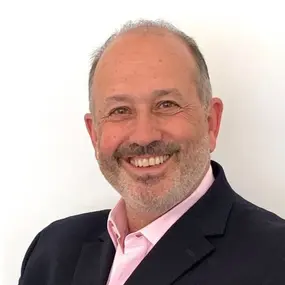
Matthew Le Merle has built his career around that question.
He is the Managing Partner and CEO of Fifth Era and Blockchain Coinvestors, where his team invests at the intersection of the Internet, artificial intelligence, agentic technologies, and blockchain. Their investment strategies are now in their 13th year, with exposure to more than 1,500 companies, including over 80 unicorns.
But Matthew’s perspective was shaped long before venture capital. He spent 21 years advising Fortune 500 CEOs, boards, and leadership teams through firms including McKinsey, A.T. Kearney, Monitor Group, and Booz. He later stepped inside the corporate world as a senior executive at Gap, working across strategy, corporate development, and global marketing.
He is also a bestselling author whose books include The Fifth Era, Blockchain Competitive Advantage, Corporate Innovation in the Fifth Era, Build Your Fortune in the Fifth Era, The Ministry of Bitcoin, and Second Chance.
What makes Matthew fascinating is not simply that he studies disruption.
He has spent decades asking a much harder question:
When the world changes faster than your assumptions, how do you know what to hold onto, what to abandon, and where to place your biggest bets?


