

Former Green Beret & FBI Analyst Dr. Apollo Emeka: The Deadly Founder Blind Spot Holding You Back (#533)
Send us Fan Mail “Enjoy the journey, all of it, as it’s everything.”-Apollo Emeka Exclusive Insights from This Week's Episodes You are not stuck because you lack effort. Dr. Apollo Emeka reveals the deadly founder blind spot that turns can, should, and could into slower growth, weaker decisions, and wasted motion. Listen now to hear the shift that makes the path forward obvious. EPISODE HIGHLIGHTS [00:06:00] Apollo shares how dropping out of high school shaped his decision framework. [00:10:0...
 Apple Podcasts Apple Podcasts
  Spotify Spotify
  RSS Feed RSS Feed
  Amazon Music Amazon Music
  Podcast Addict Podcast Addict
  iHeartRadio iHeartRadio
  Castro Castro
  PlayerFM PlayerFM
  Podchaser Podchaser
  Overcast Overcast
  RadioPublic RadioPublic
  PocketCasts PocketCasts
  Audible Audible
  Pandora Pandora
  YouTube YouTube
 “Enjoy the journey, all of it, as it’s everything.”-Apollo Emeka
Exclusive Insights from This Week's Episodes
You are not stuck because you lack effort. Dr. Apollo Emeka reveals the deadly founder blind spot that turns can, should, and could into slower growth, weaker decisions, and wasted motion. Listen now to hear the shift that makes the path forward obvious.
EPISODE HIGHLIGHTS
[00:06:00] Apollo shares how dropping out of high school shaped his decision framework.
[00:10:00] He explains why can, should, could, and goal keep founders stuck.
[00:11:00] Step one is simple. Decide with heart. Use fulfillment as the metric.
[00:17:00] He rejects pain for pain’s sake. Hard things only matter when tied to a real outcome.
[00:24:00] Goals act like side quests. Decisions create action.
[00:27:00] The passport analogy shows why busy founders miss what is actually required.
[00:44:00] Apollo ends with two filters. Replace should with need or want. Then ask, what’s it gonna take?
Full show notes, transcript, and resources for this episode:
https://podcast.deepwealth.com/533
The Deep Wealth Podcast
Most entrepreneurs do not fail.
They just carry too much for too long.
The business grows. Pressure grows faster. Profits get harder to predict. Decisions cost more energy. Over time, focus slips and health takes the hit.
The Deep Wealth Podcast and Deep Wealth Mastery are built from real experience. We're the only system based on a 9-figure exit. This system exists because guessing gets expensive.
🧠 Deep Wealth Mastery
This is for you if you want to:
• Grow a profitable business without becoming the bottleneck
• Build real value so selling is optional, not forced
• Optimize your health before it limits your business and life
One proven roadmap for real decisions.
⭐ Explore Deep Wealth Mastery
https://iapdw.com/idm
🎧 Subscribe
https://iapdw.com/podcast
📘 Free eBook
https://iapdw.com/ebook
💬 Have a question you keep circling back to?
Leave a short voicemail
https://podcast.deepwealth.com/voicemail/
Built by entrepreneurs. For entrepreneurs.
Loved this Deep Wealth Podcast episode?
You built your business from nothing.
Now make it pay off big.
📱 Subscribe Now
As a bootstrapper, every move counts. Subscribe on your favorite platform for Jeffrey Feldberg’s 9-figure exit strategies. From your morning grind to late-night planning, get insights from founders who did it without investors. These tips could change your future.
Drop a Quick Review
Got 30 seconds? Leave a 5-star review. It helps us make better episodes and reach entrepreneurs like you, hustling without a safety net.
Don’t Lose Your Exit (And Your Financial Freedom)
You’ve poured everything into your business. A bad exit could cost you millions. Most deals fail, and even “successful” ones lose half their value. The 90-day Deep Wealth Mastery program teaches you to make your business run without you and boost profits so you capture the best deal instead of any deal.
What Others Say
“Deep Wealth Mastery is pure gold. I wish I’d had it before my exit,” says Stacey C. “The value I’ve gained dwarfs the investment,” adds Sanjay S. “It makes my business great to own and sell,” shares William S.
📘 Grab Free Tools
Check out client success stories for proof. Master the Deep Wealth Strategy Map to plan your exit. Or snag the eBook, From 7 to 9 Figures: The Exit Playbook, for a clear guide.
Click here to start your legacy-defining exit today.
00:00 - Decisions Shape Destiny
01:11 - Deep Wealth Mastery Sponsor
03:19 - Podcast Kickoff And Guest Intro
04:15 - Apollo Origin Story
06:48 - Military To FBI Path
10:02 - Forbidden Words Explained
12:22 - Fulfillment Over Feasibility
16:41 - Green Beret Lessons On Pain
22:16 - Decision Monsters And Goals
25:52 - Protocol Steps Two And Three
27:14 - Passport Level Priorities
27:59 - Requirements Versus Game Changers
29:01 - Base Hits And Grand Slams
31:05 - Apollo Coaching Framework
34:21 - Team Buy In And Fulfillment
38:51 - Trust But Verify Advice
44:03 - Two Actions To Move Fast
48:43 - DeLorean Wisdom Question
50:52 - Where To Find Apollo
52:21 - Subscribe And Final Sendoff
533 Apollo Emeka
[00:00:00]
Decisions Shape Destiny
Jeffrey Feldberg: Most people talk about decision making like it's a productivity skill. Apollo Emeka treats it like destiny. He's lived in worlds where bad decisions carry real consequences, As an FBI Intelligence analyst, as a US Army Special Forces Green Beret, and as a post-exit entrepreneur. But what makes Apollo compelling is not just the resume, it's the tension underneath it. He went from growing up in a single wide trailer, barely attending school, and earning his GED at 17, after losing his mother to cancer, to building a life around a high stakes judgment, leadership, and clarity under pressure.
His central idea is deceptively simple: goals often keep people stuck, but decisions change identity. That belief became the foundation of his Complete Decision Protocol. A framework built to help founders and leaders stop spinning, cut through fear, and make choices so powerful that the [00:01:00] path forward becomes obvious.
Apollo's insights and wisdom makes you question whether the life you're building is truly yours or just the safest version of what seems possible.
Deep Wealth Mastery Sponsor
Jeffrey Feldberg: And before we start the episode, a quick word from our sponsor, Deep Wealth and the Deep Wealth Mastery Program. Here's Sanjay, a graduate of Deep Wealth Mastery, and he says, the investment I made in the Deep Wealth Mastery Program, it's a rounding error compared to the value created today and the future value I'll receive.
Or how about William, who says, and I love this, A company that's attractive to sell is also a great one to own. The Deep Wealth Mastery Program gives me the best of both worlds.
Now speaking of growth and adding value, check out what Leon says. He says that the Deep Wealth Mastery Program changed how and who we hire. We've now begun to hire talent today that we never would have hired if it weren't for the program. The talent we're hiring today is helping both increase our growth and profits and our future enterprise value.
Man, I love that kind of feedback because it's [00:02:00] that kind of feedback that's what gets me out of bed every day.
Deep Wealth Mastery System, it's the only system based on a nine figure deal. That was my deal. And as you know, I said, no to a seven figure offer, created a system that we now call Deep Wealth Mastery, and that's what helped myself and my business partners all welcome from a different buyer, a different offer, a nine figure deal.
So if you're interested in growing your profits, preparing for a future liquidity event, whether that's two years away or 22 years away, and if you want to optimize your post exit life, Deep Wealth Mastery is for you. Please email success at deepwealth. com. Again, that's success, S U C C E S S at deepwealth. com. We'll send you all the information about Deep Wealth Mastery, otherwise known as the Scale for Ultimate Sales System.
That's where you want to be. You want to be with other successful business owners, entrepreneurs, and founders, just like you, who are looking to create market disruptions. Whether you're a startup, whether you've been in business for three or four decades, whether you're manufacturing, whether you're high tech, SaaS, low tech, whatever the case may [00:03:00] Come in and network with other business owners, with other businesses, just like you, because they all want to lock in their financial freedom and enjoy both success and fulfillment.
Again, that's the 90 day Deep Wealth Mastery program. It has your name on it. All you need to do is take the next step. Please send an email to success at deepwealth. com.
Podcast Kickoff And Guest Intro
Jeffrey Feldberg: Deep Wealth Nation welcome to another episode of the Deep Wealth Podcast, Deep Wealth Nation. You know me, I love my rhetorical questions, and I've got a question for you. When it comes to your business, the decisions that you're making, the places where you are. Are you there yet? Have you reached your goal? How are your profits doing?
Would you love to grow your profits, create a market disruption, take your business to the next level? And you're probably saying, of course, Jeffrey, you didn't even have to ask. But your next question is how do I do that? Deep Wealth Nation, I'm gonna share something with you. Knowledge is not power.
unless you have the right strategy, knowledge isn't gonna take a heck of a lot. It's not gonna take you there. How do you do that? What does it look like? And that is our very special guest we have today in the House of Deep Wealth. [00:04:00] Apollo, welcome to the Deep Wealth Podcast. You're
an incredible entrepreneur, founder, strategist, doing some incredible things out there.
Executive coach, there's always a story behind the story. Apollo, what's your story? What got you from where you were to where you are today?
Apollo Emeka: Whew. All right.
Apollo Origin Story
Apollo Emeka: If you would journey back with me, Jeffrey, to fourth grade. For a second. I grew up super, I'm gonna be gentle just in case my dad listens to this podcast. I grew up super unconventional. But when I was in fourth grade I came home and my mom was sitting in her favorite chair reading a book and I was just like, ah, mom, I hate school.
And she said, oh well, you know, your father and I were thinking about homeschooling you. and I said, oh my goodness. So for fifth grade, I don't have to go back to school. And she said. You don't have to go back tomorrow. And my fourth grade brain just exploded. I could not believe that.
I had lived my whole life in preschool and then going to school and you get in line and you get a hall pass to go to the bathroom and you all these rules, a hundred rules, you gotta follow a day. And then my [00:05:00] mom was just saying we could just snap 'em away like that. And I didn't have to go back to school tomorrow.
And that kind of. Parenting style defined my upbringing. And so I was homeschooled. My parents, it was more difficult for them to wrangle me than it was for the school. So I ended up being no schooled for a lot of my upbringing. And I would dip back into school because I would feel guilty as like a fifth or sixth grader that I was.
Not getting any learning or I would miss social interactions. And so I would go back in and then I would dip back out. And finally I was an avid TV watcher. I think the TV raised me as much as anything else. And two of my favorite shows were Saturday Night Live and X-Files. And so from the time I was 13, I was like, I'm gonna be on Saturday Night Live.
Or I'm gonna be in the FBI and I'm gonna chase aliens. So this whole upbringing, super unconventional. My parents would just let me quit school whenever I wanted, quit sports whenever I wanted. So I had [00:06:00] very little discipline, very little habits and high degrees of like passion and self-confidence. And high school rolled around.
My mom got very sick from pancreatic cancer. Very fast and died really quickly. And so here I was super undisciplined, super passionate with still these big dreams of Saturday Night Live or FBI. And I was determined to make one or both of them happen, and I made one of them happen.
And this is really the moment where the bones of my decision making framework. That I've applied to my own life and that I've helped other executives and entrepreneurs apply to theirs really came to fruition. And, so here.
I am.
Military To FBI Path
Apollo Emeka: I was not gonna graduate from high school.
it was gonna have to take me like two years extra go to alternative high school and this, that and the other. And I was like no, that's not for me. And so I called an FBI recruiter and I said, Hey, [00:07:00] what is it gonna take to get into the FBI? I'm 17 years old and I could not believe.
That I was talking to the actual FBI and she said okay, well just finish high school with really good grades. And I'm like, Uhhuh and then go to a really great college. And I'm like, okay. And it doesn't matter what you study, but get really good grades, get some work experience or become a lawyer or a CPA.
And I'm just thinking, oh, okay. All of this stuff. Sounds like she might as well be asking me to, grow wings and fly. So I realized that I could not rely on convention, on pedigree, on my experiences up to that point to just ride a path to the FBI. So I asked the question, okay, given my current circumstances and the fact that I really want this thing to happen, what's it gonna take?
And that's how I, found my way into the military. my dad signed for me to go into the military at 17. This was right after [00:08:00] nine 11. This was in December of 2001. My dad signed for me to go into the military and I joined as an intelligence analyst and deployed to Iraq pretty quickly. And one of the most valuable things about that experience was.
It was the, the first academic program that I ever graduated from wasn't middle school or high school. It was military intelligence school. And this is where they give you structured frameworks for how to overcome your own biases and mindsets, to externalize and visualize information, to develop multiple courses of action and to make big decisions when the stakes could not be any higher.
Life and death decisions, geopolitical stability on the line. And so that is how I spent my teen years, was learning these frameworks and then applying them in a combat zone. But that, eventually I came off of active duty. My experience deployed helped me understand how [00:09:00] much credibility and credentials matter.
And so I said, you know what? Dang it, I'm gonna get a doctorate. So that way I can make big decisions too, and I can be in rooms where big decisions are being made and deserve to be there. Darn it. Came off of active duty, battled my way through community college, transferred to University of Southern California, go Trojans.
And then got an internship at the FBI and ended up staying on at the FBI for almost six years.
Jeffrey Feldberg: Firstly, Apollo, thank you so much for your service. You're being very modest. You're also in the Green Beret and doing all kinds of wonderful things there. You did what you did so we can do what we do. And my condolences on the loss of your mother. Never an easy.
Thing that you went through so, wow, my goodness.
Talk about from where you were to where you got to, and we're gonna be talking about this, it was no accident that you got there. It wasn't just that you were lucky that you just showed up and it was the right time, the right place. Perhaps there's some luck. I'd rather be lucky than smart as a saying goes.
But there is a whole methodology and we're gonna start [00:10:00] talking about that right now.
Forbidden Words Explained
Jeffrey Feldberg: And I wanna put four words out there that most of deep Deep Wealth Nation is probably using. We're gonna start dispelling some myths and these are the forbidden words, the F words here that we just don't use in Apollo's world.
Can, should. Could goal, and so Deep Nation is saying what's wrong with can, or should or could or goal? I use those all the time. And they're positive words, not negative words. So let's dispel that myth. Apollo, what's going on? Why are those F words, those forbidden words? Can, should, could, and goal banished.
Apollo Emeka: Oh man. Oh, thank you so much for asking that question. Okay, so in order to understand the problem with, especially those first three, the can, should, and could, we have to understand step one of the decision making process. And so step one of what I call the complete decision protocol is to decide with heart.
And so this is where we are making a decision where the key [00:11:00] metric, Is fulfillment. How fulfilling is this going to be? And when I'm working with individuals, is it, how fulfilling is this gonna be personally? And when I'm working with businesses, it's how fulfilling is this decision going to be to the business?
you have this story of someone knocking on the door of your business and saying, Hey I'll, I'll give you seven figures for your business and. The should Monster was probably there, the social monster was there of like, oh my gosh, you're never gonna get an offer like this again.
You better take it. And I know you, you told me that some of your family and friends, were those voices, right? And so, but for some reason, and I imagine it had to do with fulfillment. You turned it down and you said, you know what? And I can imagine that is either. For personal reasons.
Hey, you know what? Seven figures, this is great. And I never thought I was gonna get a seven-figure offer for this, but am I gonna be able to do what I want to do with, seven figures or on the business front? You know what this business [00:12:00] actually deserves to grow. I wanna grow this thing. I wanna breathe more life into this thing.
And seven figures is not gonna feed this business the way that I see it being fed is not gonna be fulfilling. So that is the and then you ended up getting the nine figure offer, which apparently was more fulfilling. So that's the key metric is fulfillment.
Fulfillment Over Feasibility
Apollo Emeka: And we are so programmed to deprioritize fulfillment.
In service of these other words, can I'm gonna do what I can. I can get seven figures right now, right? So I'll do it, but is that what you want? Are you gonna wake up the next day and be like, okay, cool. My bank account's heavier, but I didn't get to fulfill the vision that I had. I didn't get to do the work that I wanted to do.
I didn't get to create the Wealth that was gonna be meaningful for me, right? So you can take that seven-figure offer, but if it's not gonna be fulfilling, it doesn't matter what you [00:13:00] can do. And so, and vice versa. Just because you can't do something doesn't mean that the end goal is out of reach, right?
You can flip a cant into a can by increasing your skills, increasing your resources, increasing your relationships, right? Sometimes the environment can flip A cant into a can, or vice versa. Sometimes the environment, like look at interest rates. Over the last couple of years, look at inflation over the last couple of the years supply chain.
So things that, the environment will flip things and turn cans into cans and cans into cans. And that's why it's so important to not make decisions based on what you can do. Because if if what you can do does not get you what you truly want, who cares that you can do it. And similarly, even if you can't.
Do it. Who cares that you can't do it? Figure out a way because you want this thing that's on the other side of can't. So turn it into a can.
Jeffrey Feldberg: My goodness [00:14:00] so much there. What's interesting Apollo, as you're talking about fulfillment, it's an interesting word we've been talking about F-word today, offline, I was saying one F word is fun, and another F word is. A bit in and now fulfillment. for deep Deep Wealth Nation, this is no news for them. I've shared this quite a bit on the podcast.
You said something interesting, Jeffrey. I'm sure after your nine figure exit, you felt fulfilled and yes, there was fulfillment. I want to share with you though, Apollo that. for me, it was after the first little bit, the fulfillment just went away
I lacked the purpose. And that came to one of the sayings that we now have here in our Deep Wealth Mastery program in deep Deep Wealth Nation, that success without fulfillment is pure failure.
So you can have all the zeros in the bank, you can have all the accolades, all the success, but if you're not fulfilled. Something is not right with That's
Apollo Emeka: Yeah.
Jeffrey Feldberg: Success. And then going back to what you're also saying, it reminds me, and I'm gonna probably botch the word, the [00:15:00] Japanese saying Ikigai,
Apollo Emeka: Oh yeah. Uhhuh.
Jeffrey Feldberg: do something and you leave it.
I like to say, when you have activity and you finish it, are you feeling more energized or less energized? And if you're feeling more energized. on your path to fulfillment. You're doing something right with that. That's at the intersection of a number of your skill sets and what you're
Apollo Emeka: Yeah.
Jeffrey Feldberg: And that can change from where we are today until tomorrow and beyond. But you're certainly in the right area in terms of doing that. So you've shared for us. Really the high level concept of deep nation words carry power. It's not just words on paper. Words are energy. Words carry power. And what's interesting, the quantum field, God, whatever else you'd like to call it, the universe, whatever it means for your spirituality, science, are now all converging on the fact that yes, words.
inner words, our inner dialogue, the stories that we tell ourself, that helps to create our outer world with that. So it's interesting
Apollo Emeka: Absolutely.
Jeffrey Feldberg: that up and, and what's going [00:16:00] on with that? So with the decisions though, let me go back to something because we briefly went over it and let's revisit that.
in the military, you're in the Green Beret, you're in some dangerous situations, some
Life-changing situations, otherwise known as me just being polite. You could have come out dead and
Apollo Emeka: Yeah.
Jeffrey Feldberg: about here or those around you. So when it came to making decisions, those kinds of decisions, that's not just strategy.
There's other things that are going on in there. So from your time in the services in the Green Beret serving the country. Walking away from that, what did that impart within you? What did you internalize that forever change how you look at life now and business and when it comes to making decisions with the information that we have.
Green Beret Lessons On Pain
Apollo Emeka: it's a great question. And I learned, I did 20 years in the military, combined active and reserve time. And the first half of that was as an intelligence analyst. And the second half of it was as a green beret. And I learned so much in my training and experience as a [00:17:00] Green Beret that has transferred to every.
Aspect of my life. I look at life through four domains. The first being health, like you mentioned, if you don't have your health then you don't have anything else. The second is relationships. The third is impact, and the fourth is Wealth. And that experience in that environment taught me things that I carry with me across all four of those.
Domains. And I think one of the biggest things that has been on my mind a lot being in the coaching space, being in the personal and professional development space, is our relationship with pain and suffering and resilience. And I think that there's this unhealthy obsession with. If it's painful and I'm enduring, then I'm doing the right thing.
I'm being resilient. [00:18:00] And it's interesting because these, the special operations community gets used as an example of why pain is good. You hear about these stories like, Jacko Willink and David Goggins, and it's like pain. And at least in special forces.
And my take is I am not a fan of the pain. I'm not a fan of the hard thing for hard sake. I'm a fan of the destination I'm a fan of the outcomes that we're gonna create by doing this work. And so the pain. It is something that I am willing to endure and even embrace because on the other side of that pain is this outcome.
And I've met so many entrepreneurs that think that pain is the answer I need to do an Iron Man, or I need to do 75 hard. I need to just do something that's hard for hard's sake. And I do not subscribe to that. I've never. in my time in [00:19:00] special operations, seeing people do hard stuff for the sake of doing hard stuff.
We do hard stuff because that hard stuff. Is directly connected to getting a desirable outcome. so, it's so funny to hear, people talk about doing hard physical things or these crazy morning routines or these, and it's like, why are you doing that? Because I need to get better at doing hard stuff.
Why don't you set a really fulfilling target, a really ambitious target that's gonna require to hard stuff. And then make it so that the hard stuff that you're doing is actually putting deposits in the bank that's going to get you the thing that you want, versus just proving to yourself that you're like super tough and you can do hard things.
Jeffrey Feldberg: Love what you're hearing because it's not hard for the sake of being hard, even the term hard things or hard work. I feel exhausted just saying that. My own belief is when we're in the zone, when we're in the flow, when the [00:20:00] universe or the spirit or the quantum field or God is within our heart. Everything becomes with ease and it becomes effortless.
And my operating system, the deep Deep Wealth Operating System, that's really where it's at is really very similar to what you're saying. I feel that you're saying it in same concept, different words, because I know there's a three step process, what you have. We're gonna start doing a deep dive with that and
Apollo Emeka: Mm-hmm. Deep Wealth Nation what you're doing, how that looks like.
Jeffrey Feldberg: I love is your very first step. saying, Hey, let's decide with heart. And to me that really resonates because I can tell you the time Apollo, where before I got into business, I wanted to be quote-unquote rich. I just wanted to be rich. And I
Apollo Emeka: Yeah. Oh yeah.
Jeffrey Feldberg: I wanted to be rich. I was looking around Jeffrey, the teenager, okay.
In my very limited view of the world, who's rich out there? Oh well, you know, I have a neighbor. He's a dentist. He's doing really well. He's rich. I'm gonna be a dentist. Jeffrey, why
Apollo Emeka: Yeah. Yeah, Yeah. Yeah.
Jeffrey Feldberg: With your heart and soul? Absolutely not. I just want the money. Worst year of my life as I was failing [00:21:00] grades and miserable and everything else.
And later on switched to business. And we know the rest of that story. And so when you say decide with heart, that resonates with me because for me it's when we chase the passion or we pursue the passion, the money follows not the other way around. And so I know you're starting with the heart and then you're saying, okay, decide with the heart.
Now let's identify the requirements and then now let's find those game changers and go and do that. Let's zoom out for just a second. We're gonna zoom out 50,000 foot in the air overview. This is my favorite question in this kind of scenario. Some people call it Pareto's Law. Fancy word. Fancy law,
Apollo Emeka: Mm-hmm. As the 80 20 principle.
Jeffrey Feldberg: So when you're working with founders, entrepreneurs, business owners, the high achievers, you saying, Hey, yeah, Jeffrey, you know what? 20% of these same issues over here. creating 80% of the, what some people call challenges, I'll call opportunities over there. So we're seeing patterns and it may not be 80 20, it might be 95.
Five or 90 10. [00:22:00] Are there some general patterns that you're seeing? Yeah, Jeffrey, it's this one or two or three things over here. Here's what you and deport nation, I was gonna use the word should. This is what you and De Nation you want to know so you can make informed decisions coming outta that.
Anything that you're seeing there that you can share.
Decision Monsters And Goals
Apollo Emeka: Yeah, I guess, let me crack open. Should, and could real quick. we talked about can and why it's not great to make decisions based on can, can, will change, your abilities, will change, the environment will change. So, why not aim for fulfillment instead of what is possible right now today?
And so should I talk about these three decision monsters. I have cute little pictures of them. They're like Monsters Inc. Style monsters. They're there to help us, but they get in the way a lot in our decision making process. And the first one is the feasibility monster. And he is got tape measures and charts and graphs and Excel spreadsheets and is, constantly coming around and saying, Nope nope, not possible.
Why want something that is gonna be completely impossible? I ran the numbers [00:23:00] and that's never gonna work. And so that's the feasibility monster. The next is the worthiness monster. The worthiness monster is basically just looks like a big mirror with arms and legs and says, okay, look at you like This is possible, but it's not possible for you. Why would you be the one who would achieve this thing? And so then we make our decisions a little bit smaller because we feel we are not worthy, or our team is not worthy, our company is not worthy of this big decision. And then the third is the social monster.
And the social monster just looks like a big ball of emojis. That is all these voices that pop up and say, Hey, what are people gonna. Think if this is the thing you actually want, what are people gonna think? If you go after this thing and you fail, or if you go after it and you succeed and now you're Jeffrey, the rich dentist, what are all of your friends gonna think?
And so those monsters are the monsters that whisper the cans, right? That's feasibility. Monster is whispering. Hey, you can't do that. You can't. Let's do a thing we can do. The [00:24:00] worthiness monster is saying that you don't deserve it. And the social monster is saying you shouldn't.
And so whenever I hear the word should, when I'm working with a leader, I'm like, oh, okay. There's some social undertone when you're starting to say, should, that is coming from a belief that you know, oh, this is just what founders should do, because I saw it on a podcast. This is what companies of this size should do.
We should have a head of marketing, we should have a head of sale. And so we make these massive financial, cultural, operational decisions based on the should and not on based on an actual need. So that's again, why it's so important to decide to have fulfillment as your key and not the can should coulds.
And then goal, the reason why goal is a bad word, is because decision goals. Are like side quests in the brain, linguistically, like when you talk about setting a goal, it doesn't. Change your brain at all. if you've ever [00:25:00] been in a goal setting session or led a goal setting session, you probably know it's like, we're gonna do a bunch of stuff and hopefully we land somewhere around this area.
That's goals, right? Decisions actually create cognitive dissonance in the brain. When you make a decision, your brain consciously and subconsciously starts to measure the gap between where you currently are and the decision that you have made. So if you decide to go to the store every minute that you're sitting on the couch, right?
Not getting your keys, not getting the grocery list, whatever your brain's Hey, we're supposed to be at the store. How do I get you up off the couch to get to the store? And goals do not have the same linguistic, psychological effect on the brain. So this is why I talk about big decisions and not goals, because The brain treats goals like side quest, the brain treats goals, like options. So again, decide with heart is that first step.
Protocol Steps Two And Three
Apollo Emeka: Now asked about the Preto principle and the 80 20. The 80 20, what most folks are doing is [00:26:00] 80% of the stuff they are doing is coming from can, should or could. Where we need to flip it is we need 80% of the things that you're doing to come out of the results of steps two and three in the decision making process.
You mentioned it. Step two is identify the requirements. So we have this big fulfilling decision. If it's on the personal side, it checks all the blocks of what you want from health in your life, what's gonna be fulfilling, what you want from relationships, what you want from impact and what you want from Wealth.
And we're gonna, now we've got this big thing that looks scary and amorphous, and now we're gonna ask the practical question of what's it gonna take, what's it gonna take to fill all of these buckets so that. I'm 10 outta 10 fulfilled in these areas of life. We get really pragmatic. And the reason why I use the word requirements is because we wanna stay away from the things that you can do, or you could do or you should do.
And we want to do the things that are required. So I told you I recently just [00:27:00] moved to Panama. I've gotten more stamps in my passport in this last year than I have in the, all of the years that I lived before that. And, so I think about like international travel. You can look super ready. You can book your flights, you can book your hotels.
Passport Level Priorities
Apollo Emeka: My son can pack up his snorkel and his inflatable boogie board and his backpack, and my wife can bring the dress with the matching shoes and all this stuff. And we can look super ready. Will has spent a whole bunch of time, money, energy getting ready. But if we get to the airport and we don't have passports, we are not going right.
So that's an 80 20 right there. We did all this stuff. That we should, I should bring my snorkel, I should bring my shoes, I should bring my right. But like, no, we have to bring the passports and without it, we're not going. And so often, executives, entrepreneurs, founders, are doing all the things that make them look really busy, that make them feel like they're making the financial, the energetic investments that they need to, but.
You didn't get your passport. You forgot your passport. So that's where we wanna make sure that your bases are covered.
Requirements Versus Game Changers
Apollo Emeka: You've got this [00:28:00] big, now, this big, ambitious, super fulfilling decision in front of you. We want to figure out what are the passport level issues that if you do not do these things, it's impossible for you to make this big decision, a reality.
And then on the opposite side of that of okay, we've secured the bare minimums of what's absolutely necessary. We want to now look at, okay, what are the game changers? What are a handful of game changers that we can bet on, that we can invest in that will dang near guarantee the success of this big decision?
And so, we're looking at what is gonna give you a massive advantage. in getting there. And so that's what 80% of your activities need to be, not, should be, need to be made up of either requirements because we know they're required, right? They're worth investing in.
They're worth focusing on because they are required. And then we jump over all of the can, should, could stuff, and we focus on. placing some bets on some game changers that greatly [00:29:00] increase your chances.
Base Hits And Grand Slams
Apollo Emeka: I'll wrap this up by giving you a baseball analogy. I'm not a huge baseball fan.
Disclaimer, so please, don't poke too many holes in this. Don't poke too hard. 'cause I don't have the baseball knowledge to back this analogy all the way up. But I think about, okay, if you wanna win a baseball game. You have to get runs. People have to make their way around the bases and cross the plate to get points.
And they have to do that more than the other team, right? I'm at least getting that part right. I think. And so in order for that to happen, people have to get on base. You can't teleport from home plate to home plate and counter run, so you have to get on base, right? And so what do you need to get on base?
You need base hits and so requirements. Business and life are like base hits. You've got to get on base to even have a hope of scoring. Now, game changers are like your home run hitters where you've got, every time they get up to the plate, they're gonna be swinging for the fences because if they [00:30:00] hit it at all there's a high likelihood that they're gonna be able to rip one outta the park.
Right? And once that happens, if you have all these base hits and the bases are loaded. And now you have your game changer come in and smacks it outta the park. They just took away the requirement of running around the bases. Now you can walk around the bases, right? And it changes the game because now you're getting four points off of that one hit instead of getting one.
So that's where I, I look at how do we develop a strategy that's got a healthy amount of requirements. A healthy amount of base hits, but then that also identifies these moments and these circumstances where you can hit a grand slam. That, changes the game.
Jeffrey Feldberg: Absolutely love what you're sharing with us because it's grounded in literally from the trenches, pun intended, both literally and figuratively
Apollo Emeka: I.
Jeffrey Feldberg: terms of what's there. And it's just so interesting that not just founders as people, it's the human condition. There are things baked into our thinking. We don't even realize that they're there.
We've just [00:31:00] picked it up along the way from our experiences and everything else that's going along with that.
Apollo Coaching Framework
Jeffrey Feldberg: And so as I'm saying that, it's actually a great segue into, let's roll back the curtain. Let's talk about Apollo's secret sauce. So imagine now, okay, Apollo, I heard you on the Deep Wealth Podcast.
Love what you're doing. I want you to coach me and my team, you'll also do some consulting work for my company. We wanna get from where we are here. To there. Generally speaking, very high level, what does it look like with your system? How long does it take? What am I gonna be doing? And let me preface it by saying, Apollo, I know you could and would be right to say, Jeffrey, hey, every founder, every company is unique.
They're on their own journey. I get that. Generally speaking though, what does it look like?
Apollo Emeka: Yeah, you're right. Every founder, every company is unique. The ones where off the bat to stay in the baseball world off the bat, to what must be true is that the top. Whether it's the top of the business unit or the top of the [00:32:00] organization must be committed to growth and to change and championing growth and change within their organization.
So, because the work starts with the founder, and so the first thing that I do is I help them understand, okay, what is a a 10 out of 10 fulfilling destination for you personally? Because the work is tough, and so we want to make sure that you have designed the work in a way that, again, you don't need another app and reminder and you don't need to morning routine with 90 minute morning routine where you're going through all these things like we want to identify the destination that's gonna make you hop outta bed.
Excited to go into work that's gonna leave you, like you said, feeling like you still have energy for your friends or your family that you're getting good sleep. So we wanna identify what is that 10 out of 10 for the founder, so that way they are grounded in a big decision that's [00:33:00] truly fulfilling.
And so every engagement with me starts with coaching for the executives. First. And so once we have that dialed in, which could be anywhere from a month to three months where they are now getting comfortable with deciding with heart with using fulfillment as a key metric, and they're starting to shift the way that they show up and starting to shift the language that they use now we start to involve.
More people within the organization. And so it starts to radiate out and across from the founder. And so now we start talking about the senior leadership team coaching. We start to talk about radiating out from there. We are facilitating their strategy and tactical planning cadence.
So anywhere from biweekly to quarterly where we are getting in and we're running this decision making process where we're saying, Hey, what's gonna be a fulfilling. Decision for the company. How do we identify the requirements, the what's it gonna take so we make sure we're not wasting [00:34:00] our time doing all this, making it look pretty, but then not checking the actual boxes that are required.
And then also how do we, like you said, We get into these mindsets where we just get a little less ambitious and a little less trusting of innovative or big swing strategies. And so it's carving out that time to say no. What are the grand slams that we need to invest in?
Team Buy In And Fulfillment
Apollo Emeka: And the cool thing is when this work expands to include an executive team, a broader leadership team, or more people in the company. When you start to frame things around Hey, this is a 10 out of 10 for the business. Everybody who's in this meeting is fired up about this big decision. They will help you identify requirements that you maybe wouldn't have thought of on your own until it's punching you in the face.
And I learned in my time in military intelligence especially that the safest, best time to deal with a threat is before it exists. When it's [00:35:00] punching you in the face, a lot of options are off the table. And so when we're in this space where we say, Hey, these are the outcomes.
This is what we want, right? This is what's gonna be truly fulfilling. And we have the opportunity to go around the room and say, Hey, is this a 10 out 10 for you? No, it's not a 10 out of 10. Why not? Because I feel like this is gonna have us working with more clients that don't align with our. philosophy, it's gonna have us working with more jerks.
Okay. Well Then if we said, if we added without working with jerks to this, would it be a 10 outta 10 for you? Heck yes it would. Okay, cool. So we're getting that buy-in at the decision level, and then we're getting everybody's brain power involved in solving the right challenge.
Because the challenge is this fulfilling thing. so that's what engagements look like. It looks like starting with the founder and doing deep work with the founder or the lead executive or executives, and then radiating out to do this work as a team radiating out from there to focus more broadly [00:36:00] on business units get everybody involved and reignite that passion for the work.
By creating 10 out of 10 decisions and getting everyone involved in creating these ironclad plans that are gonna make it a reality. And the thing that is so amazing about this process, so many founders and executives believe that the way to get buy-in is to sell the thing really well, is to tell an amazing, compelling story.
And to convince people, and that's how you get buy-in. But the strongest buy-in that you will get is the kind where people convince themselves of how awesome the thing is. the process that I run is a structured way of inviting people in to convince themselves. Of how fulfilling this decision is going to be to convince themselves that we actually can do this.
This actually is feasible to convince [00:37:00] themselves to take the big swings. that are empowered to take because we know that even if we fail on one of these game changing big swings, we have still covered our requirements of what is necessary. So that's. In general, what an engagement looks like.
Jeffrey Feldberg: what's interesting about that is you're going back to the basics and for honest about it, I have the right motivation and. Going back to the words that we spoke about are forbidden, should, or can, or could. I should be doing this. My board of advisor says I should be doing this. This is what their expect.
Well, no, No. Let's put that off to the side. Or even if it's not my company, I'm not a founder. You're working with an executive, someone in the C-suite, a president, A CEO. getting them to find, if I can use the word, the passion. Okay. This is the company, this is the vision, the mission, the stated goal.
Goal not to use that. So we'll work on that. Take that out. But this is what we want. What's the fun in here? What does that look like for you? I love [00:38:00] how you're getting back to basics with that. And you're absolutely right. Every salesperson, I've been in professional sales my entire life. I know, and it's not in a manipulative way that's in negative or hoodwinking people.
When the prospect can get to the conclusion that they think that my solution, that's really, they came
Apollo Emeka: Absolutely.
Jeffrey Feldberg: it and they're the ones that say, yeah, I'm connecting the dots, even though I've provided the information for them to connect the dots and I've set the situation up. the best place to be because now they have ownership in it.
And Deep Wealth Nation, should you have kids, or maybe you have nieces or nephews or cousins who knows young children, if you've ever had them help prepare a meal. Dollars to donuts that they have eaten what they baked with you versus you making it on your own and giving it to them. Well, I don't know if, I don't wanna take that bet if they're going to eat it or not, because they have ownership in that.
So I love what you're doing with that.
Trust But Verify Advice
Jeffrey Feldberg: Now I wanna go back again to your time in the services for just a moment, because you're in intelligence, you're in the field, you're doing all kinds of things. Whether I'm in the C-suite, [00:39:00] perhaps I am a founder. I'm getting all kinds of information. we know here at Ation that what's being told to me isn't necessarily in my best interest.
Everyone has their own agenda. No judgements on that, and I know there's some good actors or some bad actors. I just may not know that at the time. So with your system and your methodology, how when I'm getting that information, I am now assessing that to put into, okay, this is my passion of what I want to achieve and where I want to go with that.
What would help me along the way of, okay, yeah, this is the real deal here, or, Hey, whoa, slow down, Jeffrey. Step back here for a moment. Something may not be what it is here. Let's do the good old Ronald Reagan. Let's trust but verify here. What does that look like?
Apollo Emeka: I'll tell you it's almost impossible to do that if you haven't made a clear decision about what you want. And once you have made a really clear decision about what it is that you want, it's so much easier to [00:40:00] collect insights. Hey, I want to. Launch this product in a new market I want it to be profitable within the first eight months and dah, dah, dah, dah, dah, dah.
The more clear you are about what you want the easier it is for somebody to say, oh, okay, well here's how I would solve for that. and so now you have because what you want is you want to create a one-to-one function, meaning I've got this input of, my want, and now I'm going out and I'm seeking advice, right?
I wanna make sure that I'm getting advice for the same thing every time, that they're not giving me advice back to some other thing that I don't want. So if you're going and you're generally just saying yeah, I'm thinking about market expansion, what do you think about market expansion? they're gonna be answering their version of that question.
And that's not auditable. So now if you take, and you said somebody else told me and when market expansion, you want to think about these three things and that I shouldn't do it until this, that, and the other. That person may contradict [00:41:00] and say well, no, no, no. That's not what matters.
This is what matters. 'cause they're answering their version of it. And so it's so important, again, to lead with. Concrete fulfilling decisions. So that way, now I know I want market expansion, but I want to do it using the products that I have without creating a new product. I want profitability and under this time I want to be able to use my existing customer service resources and blah, blah, blah.
Give the full equation and ask them to solve for, one or two variables versus asking in general. And that's, it becomes so much easier to audit the feedback. That you are getting, but that is not what we are inclined to doing. I was just, talking to a founder that I work with and she was saying, yeah, I tend to hold onto my early ideas because I don't want people to think that I'm stupid for coming with something that's not fully baked, and so, what we've been working on is, no, actually you're doing all of these experimental things. [00:42:00] And you have a lot of it baked out, but like you don't know how to do all of the stuff that's necessary to make your strategy a reality. So you have to at least give people where it is that you're trying to go so they can help you on the right thing.
Jeffrey Feldberg: Yes. And nation. I hope you are paying close attention. This is not gold. This is platinum because Apollo, with your system, you've simplified and not to confuse simple with simplicity. You've simplified a whole number of things, and really what I'm hearing you say, and you can correct me, Jeffrey, you're on base, Jeffrey off base.
What I'm hearing you say is, when we know what we want, and I'm using want deliberately and people, patient, are you using the word need? Please stop doing that today. Please though judgments use the word want instead. I mean, Need. Needy. It says it all in itself. Hey, this is what I want. I may not know how to get there, but I can find the who, someone who does know how potentially to get there.
But when I know what I want, gonna help me discern if this makes sense. [00:43:00] Or it doesn't make sense. And then from there we can go on to the other parts of your system and then having some, okay, this is a game changer here. I'm gonna go all in and look to do this. 'cause I'm a big believer in that I don't subscribe to what I see so often there.
Okay. Jeffrey, you have your own company now. And you know what, Jeffrey, you should really consider having a plan B. No. I wanna be like that story where the general takes all of his soldiers onto the beach and he burns the boats and the soldier's saying, why'd you burn the boats captain? And he said I burned the boats because we're either leaving victorious or we're
Apollo Emeka: Yeah.
Jeffrey Feldberg: in between. You can't go back to the boats to go home now. And all too often, I've seen such talented founders who have that plan B, and ultimately it destroys them because it's a safety net that they have. Now, I'm not saying. Be reckless or do this or do that. That's crazy and careless, of course, not.
Make that decision. Know what you want and then move forward with it. Of, yeah, this is potentially a game changer. No guarantees on it.
Apollo Emeka: Yeah.
Jeffrey Feldberg: [00:44:00] in. Let's go. And it's so wise in terms of what you're saying.
Two Actions To Move Fast
Jeffrey Feldberg: Speaking of wise, let me ask you this. a listener if they could do one action. We've talked about a lot of different things here and so much we haven't yet talked about, but for a founder to come out of this episode of you and I having this fireside chat, if they could do one thing, a low hanging fruit that could really move the dial, whether it be in their personal life or in the business, anything that come to mind of, oh yeah, Jeffrey, if you did this one thing that could really make a difference for you.
Apollo Emeka: Okay, so I'm gonna give you two things just because you mentioned this earlier. The, a lot of times we say should and what I would say is whenever there's can or should or could replace that word in the sentence with the word need and or want, need or want, those are the only two reasons to ever do anything.
Either you want to do it or you need to do it, or both can, should, could. Those are not great reasons to do a thing. So when you say we should hire a director of [00:45:00] sales by the end of next year, right? Replace should with need, we need to hire a director of sales by the end of next year. And now if that statement is still true, then hire the director of sales.
But if you.
can say, ah, I can't really say with a straight face that we need to hire a director of sales, then, okay, don't do it. And so all of these times when we say can, should, could, and we get into these meetings with teams, when I start hearing should a whole bunch, I'm like, Hey, every time you say should, I'm gonna raise my hand and I'm gonna ask you to replace that with need.
And then I want everyone to hear you say, need. if there are folks in the room who are like, no, we do not need to do that, when we really need to scrutinize that idea. So that's one is just start replacing the word should or can or could with need or want. And if it does not pass the test of need or want.
Then, you know that it is, likely that 80% of activities that is going to be a distraction or a [00:46:00] low payoff activity. Okay? that's number one. But number two is, and this is this most simple thing on earth. The question of what's it gonna take, what's it gonna take is one of the most powerful questions that you can ask.
It's the question that I asked myself. When I was sitting there, a high school an undisciplined non-academically talented high school dropout. What's it gonna take to get from where I am now to the FBI? And so what I would say is I love arbitrary timers. I don't know if you do this, Jeffrey, but when I have a task that feels daunting or amorphous, I'll just I have this thing actually, it's called Red Hot Timer, and you can just like pull it down from the top of your screen.
And for like random time, I'll just be like 11 minutes. For 11 minutes, I'm working on this thing, or seven minutes I'm working on this thing and I'm not gonna look up for seven minutes. So I would say take a timer. It could be on your phone for seven minutes. Write down the thing that you want, decide with heart, and then ask the question, what's it gonna take?
And just write the bullet [00:47:00] points that come out of that. What is it gonna take? What is absolutely required in order to make this thing a reality? And then look at that list and compare it to the things that you're doing. If you're not doing these things and you're doing a bunch of other stuff it's time to shift your priorities.
Jeffrey Feldberg: Wow. What I love absolutely love about this Apollo. It's not analysis of paralysis, and we're going down this whole rabbit hole. Okay, let's have a meeting over here and let's have five more meetings over there. Next thing eight months passes by and, hey, we should have done this in eight hours ago, or eight days ago, not eight months from now.
It's okay, let's. put the pressure on ourselves. It's okay. We'll do an experiment. If it's not gonna work, that's okay. Let's have a brainstorming session. Anything's viable. I'm just gonna put it up there and I'll look at it later and see if that makes sense. And to me, that's really how it should be.
I'll let you in on a little secret. Back in the day in my e-learning company, E Bennet, how does of employees, we'd get asked the question all the time, what? What's the budget, Jeffrey? What's [00:48:00] the plan? never did budgets because things were so. fast, so quick moving.
Changing that the time and effort to put into the budget and the process and the planning.
was waste of time for me because we could have put that right into the trenches, into the action of where things are and we're making decisions on the fly and had some not so great experiences with the budget. So I love with what you're doing and that was us. Every company's different. I get that.
Apollo Emeka: For sure.
Jeffrey Feldberg: And that's how. We tended to roll and not for everyone. I get that. You gotta do what's best for you. Love how you're sharing that with us and what to do of what's there. Paulo, I am looking at all the questions I had put together and I have barely scratched the surface.
We're bumping up against some time. Sadly, we're bumping up against some time. So why don't we do this?
DeLorean Wisdom Question
Jeffrey Feldberg: We're gonna go into some wrap up modes here and it's a tradition here on Deep Deep Wealth Podcast. It's really my privilege, my honor, where I ask each guest the same question. It's a fun question. Lemme set this up for you
Apollo Emeka: All right.
Jeffrey Feldberg: Of the movie Back to the Future, you have that magical DeLorean car that will take you to [00:49:00] any point in time. So Apollo, this is the fun part. It's tomorrow morning, you look outside your window. Not only is the DeLorean car curbside door's open, it is waiting for you to hop on in what you do.
You're now gonna go to any point in your life, Apollo, as a young child, a teenager, whatever point in time it would be. What are you telling your younger self in terms of life lessons or life wisdom or, Hey, Apollo, do this, but don't do that. What would it sound like?
Apollo Emeka: You're a stalker because I just introduced my 7-year-old to the back to the future on Sunday. We literally just watched back to the future on Sunday. So now my seven year old's running around the house going, hello McFly. Yeah, if I could hop in the DeLorean and I could go back to any point, 2007, buy Netflix stock. No, I mean, it's an interesting question. That's hard for me to ask because I value so much the space that I am in. I mean, I am [00:50:00] living a fulfilled life. And I look at the loss of my mother. I look at these different hard things that I've endured or, where, what might have been valuable to see around the corner on things.
And I really just value my path and the lessons that I have learned up to this point. So I, cannot pinpoint a single moment that I would have wanted to go back and change anything.
Jeffrey Feldberg: It is such a common theme. You are in great company, Apollo. I'm not surprised that you're saying that because if there's one theme of the. Is one PATOS Law for that question is, Hey, Jeffrey, enjoy the journey. I don't think I would change a thing because I love where I am and what I thought was my darkest moment.
As I look back now, that's exactly what was needed at that time, because that shaped who I am today and what that looks like. So I'm with you,
Apollo Emeka: Absolutely.
Jeffrey Feldberg: As you're saying. Yeah, Jeffrey. I don't think I would change anything.
Where To Find Apollo
Jeffrey Feldberg: And so let me ask you this. Someone in Deep Nation there hearing us talk. They want to work with you, have you coach them, the team, the [00:51:00] company, help get to the next level.
Where would be the best place online to reach you? I.
Apollo Emeka: So my website is apollo strategy.com. You can go there and reach out or LinkedIn is like my TikTok, so if you? reach out to me also I.
would just love to hear. Hear from you what you took away from this. And I can send you, I have this PDF that has the whole methodology that we just talked about, broken down in about 16 pages.
So if you reach out to me, I will also share that with you. But yeah, you can go to apollo strategy.com to find out more, or you can just reach directly out to me on LinkedIn. On LinkedIn. It is Dr. Apollo icca and I also did end up going back and getting that, that doctorate too to hang on my wall next to the GED.
Jeffrey Feldberg: Wow, love it. What an accomplishment and determination. And hey, you knew what you wanted and you went for it,
Apollo Emeka: That's it.
Jeffrey Feldberg: you're walking the talk. You're eating what you bake as it should be. So De Nation, take a follow up on his [00:52:00] very generous offer. Reach out to him. that conversation, get that 16 page overview.
My goodness, it'll accelerate your success and where you want to be. It'll help get you there a whole lot faster. Well, Apollo, it's official. This is a wrap, and as we love to say here at Deep Wealth, may you continue to thrive and prosper while you remain healthy and safe. Thank you so much.
Apollo Emeka: Thank you so much, Jeffrey.
Subscribe And Final Sendoff
Jeffrey Feldberg: So there you have it, Deep Wealth Nation.
What did you think?
So with all that said and as we wrap it up, I have another question for you.
Actually, it's more of a personal favor.
Did you find this episode helpful?
Have you found other episodes of the Deep Wealth Podcast empowering and a game changer for your journey?
And if you said yes, and I really hope you did, I have a small but really meaningful way that you can actually help us out and keep these episodes coming to you.
Are you ready for it?
The dramatic pause. I'll just wait a moment. Drumroll, please. Subscribe. Please subscribe to the Deep Wealth podcast on your favorite podcast channel. When you subscribe to the Deep Wealth Podcast, you're saving yourself time. Every episode automatically comes to [00:53:00] you, and I want you to know that we meticulously craft Every one of our episodes to have impactful strategies, stories, expert insights that are designed to help you grow your profits, increase the value of your business, and yes, even optimize your post exit life and your life right now, whatever you want that to look like.
And every time you subscribe and a fellow entrepreneur subscribe, it's a testament to how together, Yes, we are. We are changing the social fabric of society. One business owner at a time, one liquidity event at a time. So don't let the momentum stop here. Subscribe now on your favorite podcast channel.
You'll never miss an episode. You'll be the first to hear from the top industry leaders, the innovators, the disruptors that are really changing and shaping the business world, and maybe you're commuting, maybe you're at the gym, maybe you're taking a well deserved break that we spoke all about on this episode.
The Deep Wealth Podcast, it's your reliable source for the next big idea that could literally revolutionize your business. So once again, please hit that subscribe button, stay connected, [00:54:00] inspired, and ahead of the curve. And again, your next big breakthrough moment, it might just be one episode away. Maybe it was even this episode.
So all that said. Thank you so much for listening. And remember your wealth isn't just about the money in the bank. It's about the depth of your journey and the impact that you're creating. So let's continue this journey together. And from the bottom of my heart, thank you so much for listening to this episode.
And as we love to say here at Deep Wealth, may you continue to thrive and prosper while you remain healthy and safe.
Thank you so much.
God bless.
Transformational Leadership Specialist
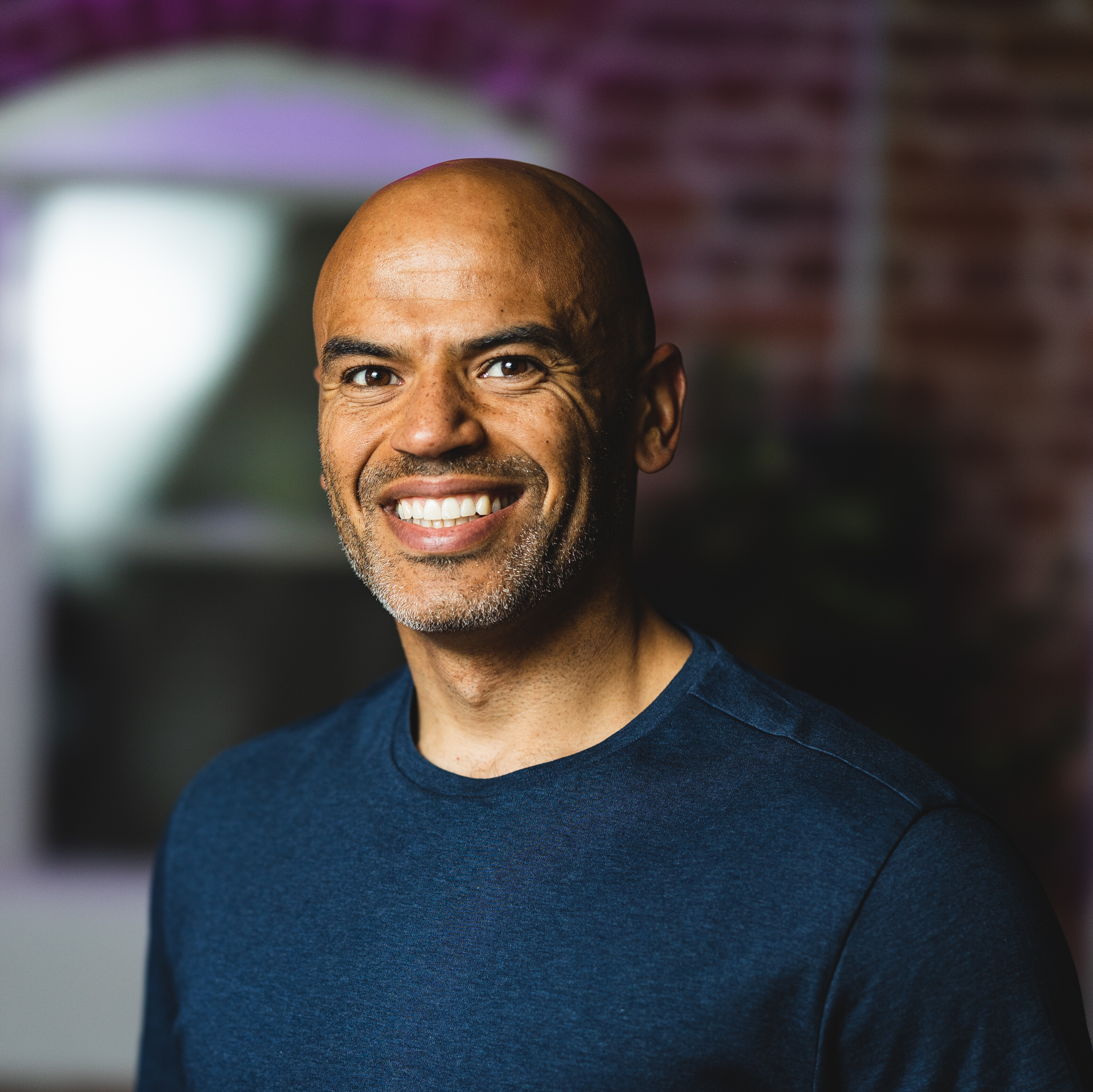
Most people talk about decision-making like it is a productivity skill. Apollo Emeka treats it like destiny.
He has lived in worlds where bad decisions carry real consequences: as an FBI Intelligence Analyst, as a U.S. Army Special Forces Green Beret, and as a post-exit entrepreneur.
But what makes Apollo compelling is not just the resume. It is the tension underneath it. He went from growing up in a single-wide trailer, barely attending school, and earning his GED at 17 after losing his mother to cancer, to building a life around high-stakes judgment, leadership, and clarity under pressure.
His central idea is deceptively simple: goals often keep people stuck, but decisions change identity. That belief became the foundation of his Complete Decision Protocol, a framework built to help leaders stop spinning, cut through fear, and make choices so powerful the path forward becomes obvious.
Apollo's insights and wisdom makes you question whether the life you are building is truly yours, or just the safest version of what seemed possible.


