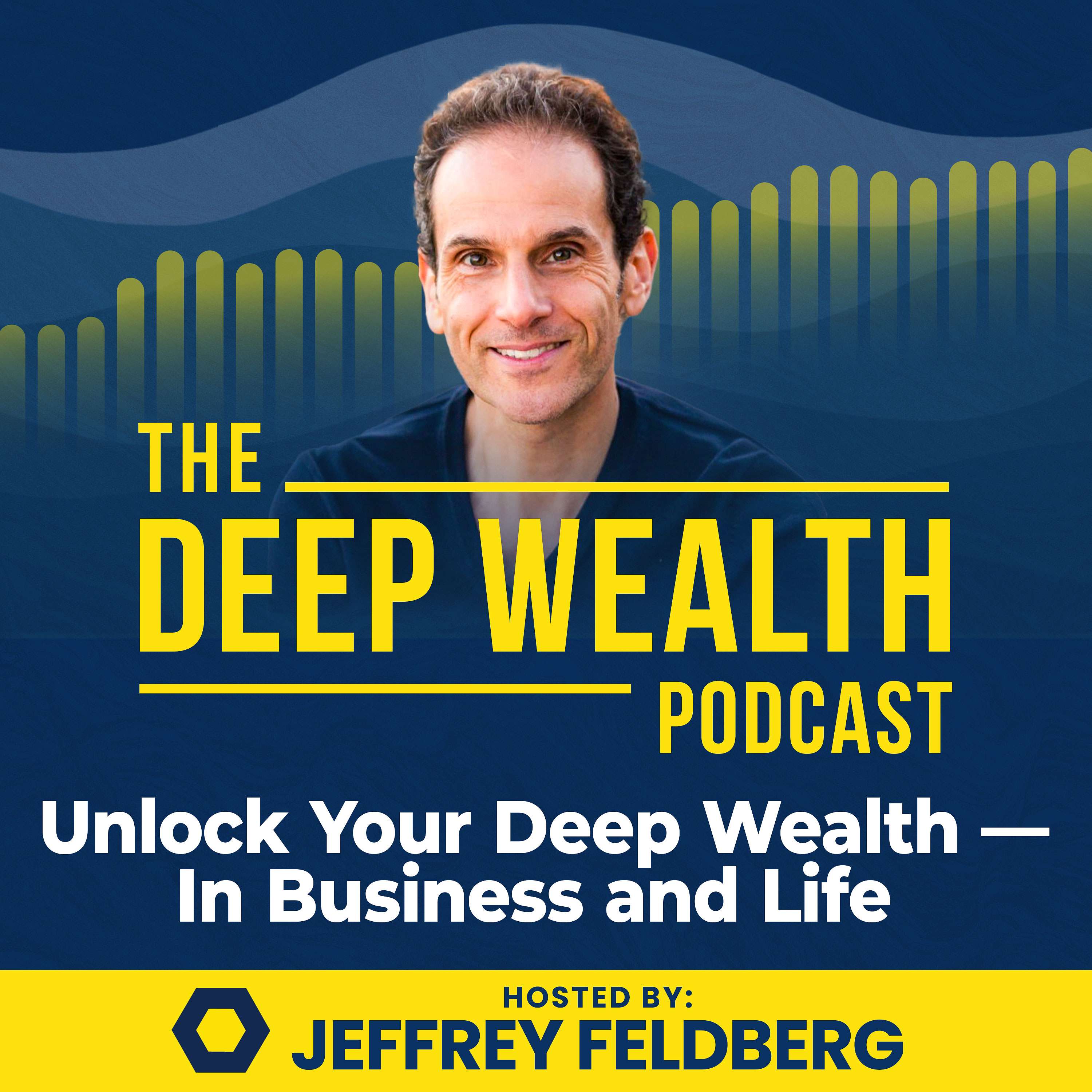


Post-Exit Entrepreneur Randy Lyman: The Success Trap Quietly Draining You and Your Team (#530)
Send us Fan Mail “See the best in everyone and look for the good.”-Randy Lyman Exclusive Insights from This Week's Episodes Your numbers can rise while your leadership quietly drains from the inside out. Post-Exit Entrepreneur Randy Lyman reveals why unprocessed emotion does not stay personal. It spills into trust, culture, and growth. EPISODE HIGHLIGHTS [00:07:00] Randy explains why stable, profitable, sustainable businesses attract buyers and create stronger exit multiples [00:12:00] He rev...
 Apple Podcasts Apple Podcasts
  Spotify Spotify
  RSS Feed RSS Feed
  Amazon Music Amazon Music
  Podcast Addict Podcast Addict
  iHeartRadio iHeartRadio
  Castro Castro
  PlayerFM PlayerFM
  Podchaser Podchaser
  Overcast Overcast
  RadioPublic RadioPublic
  PocketCasts PocketCasts
  Audible Audible
  Pandora Pandora
  YouTube YouTube
 “See the best in everyone and look for the good.”-Randy Lyman
Exclusive Insights from This Week's Episodes
Your numbers can rise while your leadership quietly drains from the inside out. Post-Exit Entrepreneur Randy Lyman reveals why unprocessed emotion does not stay personal. It spills into trust, culture, and growth.
EPISODE HIGHLIGHTS
[00:07:00] Randy explains why stable, profitable, sustainable businesses attract buyers and create stronger exit multiples
[00:12:00] He reveals how achievement can distract founders from deeper frustration, anger, and loneliness
[00:14:00] A simple listening moment changes team trust because people accept disagreement when they feel heard
[00:15:00] Randy shares the three things people need more than money: acknowledgement, contribution, and belonging
[00:19:00] His starting exercise for founders is brutally simple: track what irritates you and who you blame
[00:34:00] Burnout may not be physical exhaustion at all but emotional disconnection and the loneliness of leadership
[00:44:00] Randy delivers the core leadership reversal: the moment leadership becomes about you, you lose
Full show notes, transcript, and resources for this episode:
https://podcast.deepwealth.com/530
The Deep Wealth Podcast
Most entrepreneurs do not fail.
They just carry too much for too long.
The business grows. Pressure grows faster. Profits get harder to predict. Decisions cost more energy. Over time, focus slips and health takes the hit.
The Deep Wealth Podcast and Deep Wealth Mastery are built from real experience. We're the only system based on a 9-figure exit. This system exists because guessing gets expensive.
🧠 Deep Wealth Mastery
This is for you if you want to:
• Grow a profitable business without becoming the bottleneck
• Build real value so selling is optional, not forced
• Optimize your health before it limits your business and life
One proven roadmap for real decisions.
⭐ Explore Deep Wealth Mastery
https://iapdw.com/idm
🎧 Subscribe
https://iapdw.com/podcast
📘 Free eBook
https://iapdw.com/ebook
💬 Have a question you keep circling back to?
Leave a short voicemail
https://podcast.deepwealth.com/voicemail/
Built by entrepreneurs. For entrepreneurs.
Loved this Deep Wealth Podcast episode?
You built your business from nothing.
Now make it pay off big.
📱 Subscribe Now
As a bootstrapper, every move counts. Subscribe on your favorite platform for Jeffrey Feldberg’s 9-figure exit strategies. From your morning grind to late-night planning, get insights from founders who did it without investors. These tips could change your future.
Drop a Quick Review
Got 30 seconds? Leave a 5-star review. It helps us make better episodes and reach entrepreneurs like you, hustling without a safety net.
Don’t Lose Your Exit (And Your Financial Freedom)
You’ve poured everything into your business. A bad exit could cost you millions. Most deals fail, and even “successful” ones lose half their value. The 90-day Deep Wealth Mastery program teaches you to make your business run without you and boost profits so you capture the best deal instead of any deal.
What Others Say
“Deep Wealth Mastery is pure gold. I wish I’d had it before my exit,” says Stacey C. “The value I’ve gained dwarfs the investment,” adds Sanjay S. “It makes my business great to own and sell,” shares William S.
📘 Grab Free Tools
Check out client success stories for proof. Master the Deep Wealth Strategy Map to plan your exit. Or snag the eBook, From 7 to 9 Figures: The Exit Playbook, for a clear guide.
Click here to start your legacy-defining exit today.
00:00 - Success Without Freedom
00:33 - Third Element Framework
01:19 - Sponsor Deep Wealth Mastery
04:08 - Lonely At The Top
04:59 - Randy Origin Story
06:17 - Building For Exit Value
09:12 - Post Exit Emptiness
11:27 - Quantum And Resonance
13:14 - Emotional Leadership Wins
16:29 - Culture Trust And Conflict
18:02 - Low Hanging Fruit Practice
20:28 - Coaching Process Overview
23:15 - Why High Performers Disconnect
24:01 - From Toughness to Connection
25:38 - Earning Respect as a Leader
27:04 - Practicing Vulnerability Daily
28:30 - Third Element Overview
29:35 - Emotions Drive Results
32:21 - CEO Story Healing Trauma
33:40 - Emotional Burnout Signs
37:51 - Ease Over Grind
40:01 - Done Beats Perfect
42:32 - No Shame Culture
44:24 - Servant Leadership Mindset
45:01 - Back to the Future Wisdom
46:29 - Where to Find Randy
47:35 - Subscribe and Final Wrap
530 Randy Lyman
[00:00:00]
Success Without Freedom
Jeffrey Feldberg: What happens when someone builds multiple eight figure businesses earns a reputation as a physicist and entrepreneur and still realizes that external success is not the same as inner freedom.
Randy Lyman has lived that question from the inside. He built and exited multiple eight figure businesses, including an Inc 500 company, and by most standards had already won.
But behind the performance, the growth and the ambition, he found something many high achievers quietly wrestle with: success, can't amplify what we haven't healed.
Third Element Framework
Jeffrey Feldberg: That realization sent him into a much deeper investigation. One that brought together science, spirituality, emotional intelligence, and leadership.
Today, Randy's work sits at the intersection of all four. His book, the Third Element, explores the idea that what blocks, fulfillment, abundance, and even performance, is often not strategy or mindset alone. But unprocessed [00:01:00] emotion.
It's a provocative argument, especially from someone trained in physics and forged in entrepreneurship, and this is exactly what makes his perspective so compelling. Randy now teaches leaders and high achievers at how emotional mastery can reshape not only their inner world, but the way they lead, build, and live.
Sponsor Deep Wealth Mastery
Jeffrey Feldberg: And before we start the episode, a quick word from our sponsor, Deep Wealth and the Deep Wealth Mastery Program. Here's Bill, a graduate, who says, the Deep Wealth Mastery Program has transformed the KPIs we're using to accelerate growth and profits.
Or how about Emry, who says, and I love this, and I quote, the Deep Wealth Mastery Program helped me create the right mindset for both growing my business and later my future exit. I now know what questions to ask, what to do and what not to do, which is priceless. The team and I have found dangerous skeletons and gaps that we're now addressing due to the Deep Wealth program. Today, our actions have a massive ROI.
Absolutely [00:02:00] love that.
And now, speaking of growth and adding value, check out what Bruce says, and I quote, As a business owner, I'm always looking for new programs, systems, CEO peer groups, and strategies to improve my business. Hands down, the Deep Wealth Mastery program is the absolute best. I'm both growing my business and preparing for a future exit at the same time. It doesn't get any better.
And I gotta tell you, as I hear these testimonials, this is exactly why I do what I do. My mission, the team's mission here at Deep Wealth, is to literally change the social fabric of society, one business owner at a time and one liquidity event at a time.
The Deep Wealth Mastery program, it's the only one based on a nine figure deal. And that deal, that was my deal. You know my story. I said no to a seven figure offer. I created a system that we now call Deep Wealth Mastery and that's exactly what helped myself and my business partners welcome from a different buyer, a different offer, a nine figure deal.
So if you're interested in growing your profits, preparing [00:03:00] for a future liquidity event, Whether that's three years away or 33 years away, and if you want to optimize your post exit life, Deep Wealth Mastery is for you.
Please email success at deepwealth. com. Again, that's success, S U C C E S S at deepwealth. com.
We'll send you all the information about the Deep Wealth Mastery Program, otherwise known as the Scale for Ultimate Sales System. Better yet, why not hop on a complimentary strategy call? We'll see where you are at your business and what's standing between you and your financial independence and your dreams.
So that's where you want to be. You want to be with other successful business owners, entrepreneurs, and founders, just like you, who are looking to create market disruptions, whether you're a startup, whether you've been in business for three or four decades, whether you're manufacturing, whether you're a high tech, SaaS, low tech, whatever the case may be.
Come on in and network with other business owners, with other businesses, just like you, because they all want to lock in their financial freedom and enjoy both success and fulfillment. [00:04:00] Again, the 90 day Deep Wealth Mastery Program, it has your name on it. All you need to do is take the next step. Please send an email to success at deepwealth. com.
Lonely At The Top
Jeffrey Feldberg: Deep Wealth Nation welcome to another episode of the Deep Wealth Podcast, Deep Wealth Nation for all you founders out there, even those that are the hired guns, the CEOs, the presidents. Let me ask you something that's saying it's lonely at the top. Does that resonate with you? Are you climbing one mountain, getting to the top only to say, okay, what's the next mountain I'm gonna climb?
Hey, where's the fulfillment? You have lots of questions. You feel misaligned, you feel. Perhaps even burned out. Disconnected. Is that ringing a bell? And I suspect Dep Nation, you're nodding your head. Yeah, Jeffrey. It does, but what can I do? Well, you've come to the right place. We have a fantastic guest in the house of you heard the official introduction.
We have a thought leader and author, fellow entrepreneur. Randy, welcome to Deep Wealth Podcast. It's an absolute pleasure to have you with us. There's always a story behind the story. What's your story? What got you from where you were to where you are today?
Randy Origin Story
Randy Lyman: [00:05:00] Great to be here with you, Jeffrey. Well, my story is one of contrast, so the first 28 years of my life I would. All left brain, how much can I educate myself? How hard can I work to be successful? And so I shut off my emotions to do that, and I achieved good success. At the age of 28, I had multiple million dollar businesses.
This was back in 19 89, 36 years ago. And then I met a woman who I ended up spending three years with, and she introduced me to the unseen, spiritual, emotional side of the human experience. All that I had avoided. And it was a wild experience for me to open up that Pandora's box and to go through the changes that I did, but it changed my life for the better.
Jeffrey Feldberg: Wow. Oh my goodness. There's a lot there that we are gonna unpack. And by the way, deep Nation, I gotta tell you, Randy is very modest. He didn't just. Built companies. He is a post exit entrepreneur, has had multiple exits and has done some incredible things. So as we talk today, nation, I want you to be open [00:06:00] because some of the things that we're gonna talk about you may not have ever covered, or you may be, well, Jeffrey, it doesn't show up on a profit and loss statement, so why are we even talking about it?
Hey, listen, let's go right back to the source. He's been there, he's done that. He's been to the top of the mountain and back. We're just on our journey there. So let's listen to what he's saying. So why don't you walk us through that, Randy.
Building For Exit Value
Jeffrey Feldberg: But first, before you do that, I want you to go back to when you're building these businesses and back in the day when we're talking multimillion dollar businesses, eight figure businesses back in the day.
That's when money was real. That was a lot of money back then compared to where we are today looking back, because after all, this is the deep Deep Wealth Podcast and we have founders who, Hey, I just wanna grow my profits. No plans to sell or, yeah, Jeffrey, Randy, I wanna grow my profits and in the near future I wanna have a liquidity event.
I wanna bring some investors in. I wanna have a full exit. Looking back at some of your exits, anything that stands out for you of, yeah, Jeffrey, I would do it all again. Or, Hey, you know what? I would probably not do this one thing. Anything you can share with us.
Randy Lyman: Well, I wouldn't change anything in my life because all the mistakes I made led me [00:07:00] to learn. All the things I had the opportunity to learn and I made it through all the challenges. I guess something that I realized later in the game is if I build a business to be stable and profitable and sustainable, that's what people really wanna buy.
So whether I keep it or whether I sold it for me, it turned out I built the business the same way. Now some people have other strategies and they're valid as well. The main thing I was looking for is a strong team and strong systems that would support the people while the people at the same time supported the systems.
It had to work both ways, and as I became a better leader, then my job became a lot easier because the people I was working with, I was able to help them become better leaders. I was able to help them grow and expand and support the business. Without as much support necessary from me and not make the business sustainable.
And ultimately that's why I achieved what I did. What we did actually, and that's why I got the exits [00:08:00] that I did. The multiples were incredible because. The systems that were in place and the substance behind it. We didn't just build our business based on technology or we had a patent or something that made us stand out from everybody else in our industry.
We did everything we could to provide better products, better service at a great price, and that's hard to do all three, but that's what really makes a business successful, especially in today's market.
Jeffrey Feldberg: Yeah. I love where you're going with that. And Deep Wealth Nation did you pick up on that? Because Randy, you're doing exactly what we prescribe with our 90 day Deep Wealthmastery program. Ram. In fact, when you go through and you master the Deep Wealthoperating system, one of the strategies, one of the questions, one of the first questions that we ask.
Does your business run without you? Yes or no? No. In-betweens, no stories. Usually we get a lot of ums and uhs and well, let me tell you this, and it's a whole convoluted story or, yeah, I got a leadership team, but it doesn't really run without them. So I love how you shared right off the bat. Yeah, the business run without [00:09:00] me.
And you're right, the next investor, the next buyer, they don't want a second full-time job, otherwise known as your company when you're no longer there. They want this to scale and to grow and to get them their set of profits. So I absolutely love that. And what I also love.
Post Exit Emptiness
Jeffrey Feldberg: And when I began to really get into your work and prepare for today, there's some words that you use and some concepts that we don't really see a lot in the business world.
And we need to, because I've been on the other end of it, and I'm gonna use myself as the example, I'm gonna put myself under the microscope. So from the outside looking in, let's look at day two or day 200. After my nine figure exit from the outside world looking in, oh, here's Jeffrey. Sold his company.
Incredibly young age. Life is set. He's gotta be the happiest guy in the world. And I gotta tell you. It was the opposite. I was miserable. And I also gotta tell you, no one feels sorry for some guy who's been successful in business. All the zeros in the bank account, who's sitting at home in his pajamas, bored out of his mind that you can't come out and play with him because you've got your life, you've [00:10:00] got your responsibilities, your company, whatever it may be that you're doing, no one feels sorry about that.
And I lacked fulfillment. And I lacked that feeling of abundance even though it was all around me because I never had prepared for that. It was a foreign concept to me. I was so focused on, let's cross that finish line. Let's increase the profits, let's get that liquidity event done. Let's finish the exit.
Let's just do it and I'll figure it all out later. Big mistake on my part. So in the third element, I know I'm jumping ahead here a little bit, but you talk about. Blocks of fulfillment, the abundance as the foundation, and even performance, how all that plays into it. And by the way, de Nation, please go to the show notes.
In the show notes, everything that we're talking about. There are links. Please click the link and pick up Randy's book. The third element, the Missing Key to Activating the Law of Attraction and Deportation. If you are a spreadsheet person, a numbers person, Jeffrey, law of Attraction, what are you talking about?
That sounds a little bit woowoo [00:11:00] to me. Stay with us because I gotta tell you. Science is now confirming what some people call the quantum field and how we manifest our inner thoughts, become our outer world. And if you ever have been a student of thinking Grow Rich, Napoleon Hill, he talks exactly about that way back when in the early 19 hundreds of our inner thoughts become our outer world.
So Randy, I'm gonna stop talking, I'm gonna throw it back to you. So, abundance, fulfillment, what are we missing? What are we simply not getting as founders?
Quantum And Resonance
Randy Lyman: Well, for a moment, I wanna expand on what you mentioned with quantum physics. Physics, the sub nuclear physics, and I outlined this in my book discuss it in detail in my book, the Third Element as to how every moment of our life unfolds in response to harmonic resonance with our thoughts. Resonance with our actions and resonance with our emotions.
And it all plays out moment by moment. It's based on the Heisenberg uncertainty principle from 1927 and unrelated. But at the same year, 1927, the double slit experiment where [00:12:00] it was discovered that energy is only energy until it's observed or interacts with matter, and then it becomes matter. So all the world that we interact with is permeable. It's all malleable. It all changes all the time, and we have the ability to change it in whatever way we choose to.
But going back to when you mentioned your exit and having great monetary success and great success through the approach with your planning and your strategy and everything you had to do to make that happen.
Yeah. It's fulfilling for a moment, but what I found was the success that I achieved in my business until I was. Aware of my own emotions and was looking at the world from a different perspective is if I wasn't achieving then I was not happy. And really the happiness I had from achievement was only a distraction from what I felt inside.
When I slowed down and I said, what am I feeling? I felt disappointed. I felt frustrated. I felt angry. Because underneath I was alone, [00:13:00] underneath I felt abandoned. I felt all these things that, we feel as children and then we forget about it. And as adults, we stuff our emotions and we go to work and we get the job done.
Well, emotions are bigger than time and space, and if we didn't feel it doesn't mean it went away.
Emotional Leadership Wins
Randy Lyman: So along the way in the middle of my career. I was able to work through a lot of my emotional baggage from my earlier years. I didn't have a bad childhood, but still when you're four years old, anything can be traumatic, so I became more clear.
And then I started showing up more clear, more caring, more compassionate, able to connect with the people that I worked with, and they started responding to me differently when I was genuine. When I was vulnerable, when I asked for help, when I told them I'm not sure what to do, then people didn't look at me with less respect.
They actually respected me more and they, when I listened to them more, then they listened to me more. I had a situation once where. I first started experimenting with, okay, I'm gonna take these concepts that I'm learning about on my spiritual journey. I'm gonna take [00:14:00] these into my business. And I had multiple businesses and multiple departments.
So I started with one department. There was seven people and. The first couple dinner meetings, we did offsite dinner meetings, first couple meetings, they wouldn't really open up 'cause Yeah, randy's not gonna listen to us. And eventually they started to, and I had one situation where I asked the group, what if, what do you think about being open on Saturdays?
And Robert brought this up and he thinks it's a good idea and we talked about it and I said, well, I don't think we can do it. And I'm glad we talked about it, but don't think we can do it. And Robert said, okay, well now Robert's not the guy to say, okay, Robert's the guy to disagree. And I said, well, Robert, wait a minute.
You said, okay. You said it just so matter of factly why. He says, because I know you listened to what I had to say. And that really hit me like, wait a minute, this is way too simple. But I missed this point for many years. When I actually listened and people knew I was paying attention and listen, then they were okay with me disagreeing.
They were okay listening to me. They were okay with my leadership. And eventually [00:15:00] I came to realize there's three things people. More than they need money. The first is they need to be acknowledged for who they are as a unique individual. Meaning if we interact with them uniquely, not the same as we treat everybody else we call 'em by name.
We ask 'em some questions. We see them as a unique human. Second thing is they need to feel like they're contributing to the cause because I found that a lot of people's lives feel meaningless to them. And now when we're able to create meaning in their life as they're being recognized for their contribution at work, suddenly work can become more important than the rest of their life.
And that might sound odd. But when they find meaning at work, then they also find meaning at home. So do they feel like they're contributing? And then the third thing is, do they feel like they belong to the group? We are tribal beings. Humans, if you go back two or 3000 years ago, and that's just a blip an instant in all overall human time.
If we didn't belong to the tribe, we didn't survive. So again, acknowledgement, contribution, and belonging. And [00:16:00] when I realized this and I changed my. Actions in my behaviors and I treated people differently and I listened more. The funny thing is, not only did I feel better about my interactions, they felt better and really important for the business was we were more successful, we had more growth, we had more profits.
We, we took on more market share, and my job as A CEO is easier as everybody was happier and got along. So yeah, it's an emotional approach, but it really drove the bottom line.
Culture Trust And Conflict
Jeffrey Feldberg: In duplication as you're listening to this. What I love about this, Randy, is you're combining the business side of this. Hey, I had. My team members, they felt seen. They felt heard. They felt valued when a decision was made, even if it went against what they originally came into the meeting with. It was accepted.
There wasn't a fight. It wasn't back and forth. And you didn't quite say this. I'm going to imagine, you can tell me Jeffrey OnBase off base. Because of that, your culture was likely a rich culture, a tight team. They all got [00:17:00] together, perhaps, almost felt like family with each other and going above and beyond.
Hey, I don't wanna let the team down. I don't wanna let Randy down, and I don't wanna let our customers down. I'm gonna go above and beyond, not because I have to, because I want to. How am I doing with that?
Randy Lyman: A hundred percent. They felt true pride, not false pride, but true pride in showing up and what they were doing with the people they were working with, and they appreciated the people they were working with. Another thing I did is I helped people learn to disagree openly and it took some mediations and we had to talk about ground rules and we had to do group discussions.
Where we would say, okay, if you disagree, tell the other person When you do this or this happens, this is how it affects me. This is what I feel. This is what I think from first person. And at first, people are afraid to share their true thoughts. Well, what if I tell this person I disagree or they're ruin my day, or whatever experience I had.
Well, once people start doing that openly, they start to bond and they start to trust each other and the dynamics of the group change because now they know they can be [00:18:00] real. They can be who they are. They don't have to pretend.
Low Hanging Fruit Practice
Jeffrey Feldberg: And so Randy, I'm speaking to you, founder to founder. Now, you're way down this journey in your advance. You've been there though, and you go back and you reflect on a part of your life where you hadn't learned what you had learned just yet. And so you've been on both sides of the equation. What I'm wondering.
Is as founders. How do I know what I don't know. It's hard to do, and we're gonna talk about your coaching and we're gonna keep on going back to the book and what you can do. But if there's one thing that I can do right now as a founder that would begin to welcome the abundance mindset, the ability for me to feel that fulfillment and not see that just on the business side.
Also on the personal side and enjoy life the way that it was meant to be. What would be one low hanging fruit that I could begin today that I can begin to see, okay, yeah, I'm starting this. I'm gonna have some terrific results with this.
Randy Lyman: The easiest place to start, especially for a left brain driven leader, is anytime anything irritates me, write it down, keep a list. Anytime I blame somebody, write it [00:19:00] down, because I found that when I was. Irritated and still today when I'm irritated or I start to blame somebody. That's exposing an opportunity for me for emotional growth.
Meaning I have something I'm hanging onto from the past that I need to go back and feel completely. And I don't mean I'm gonna make decisions based on emotions. I'm not gonna show up processing my emotions in at work. I'm gonna do that in my own time. But if something irritates me, I have the opportunity to look at that.
Whether I'm journaling, I go for a walk, I do breath work, acupuncture. How do I dive deeper into my old emotional trauma? Feel it completely and release it. And when I start looking at the problems I see in the outside world as an opportunity for personal growth, now I'm in control because.
I have really always had a hard time changing the people around me. Yes, I can make temporary changes. Yes, I can force people to do things, but real changes in my life came from changes within myself as I worked through my [00:20:00] own emotional trauma and as I changed my mindset and my patterns, and I changed my thought.
Then my world around me changed, and then I found the success. So again, a list is the best place and people are like, well, no, the world's gotta change. Well, good luck with that. How's that work so far?
Jeffrey Feldberg: I love that. And so what I'm hearing you say is, Jeffrey, be the change that you wanna see in other people. You can start with yourself because we can't control the world around us. We can't control how we show up, how we respond.
Coaching Process Overview
Jeffrey Feldberg: And so as you're talking about this. Let's talk about some of the coaching that you're doing, and so I'm hearing us talk on the Deep Wealth Podcast.
I'm someone in Deep Wealth Nation, a founder, and I don't have the time, but I'm saying, okay, you know what? I'm gonna take the time and I'm speaking with you. Okay, Randy here. I am Virgin on Deep Wealth Podcast. I'd like to go through your system. I wanna go within and really unlock what's always been there.
I just didn't know how to unlock it. So what's your secret sauce? What does it look like? Whether I'm going through the coaching with you or I'm going through your book or your programs, big picture wise, can you walk us through? How [00:21:00] long it typically would take and what I'm going through, what I can expect.
Randy Lyman: It is an ongoing process. First, it starts with the intent. I have to be curious about what else is possible and a person has to be interested in a deeper approach, just how am I gonna do things differently? So we start with, I. Okay, how's this work? And in my book, the Third Element, it talks about how for me, my emotional growth brought me success.
So nobody's gonna go down a dark tunnel unless they see light at the end of the tunnel. So first of all, it helps to have an understanding of this works. Second we have to have somebody show us an example and give us some guidelines on how to do this. So we look at personal issues. Whereas my underlying frustration, anger, loneliness.
Feelings of betrayal, feelings of helplessness, all these things that that I felt as an entrepreneur, as I'm trying to get a group of people to do what I need them to do in order to succeed. That's an emotional journey. And if you say it isn't, then that's a longer [00:22:00] conversation. But first we look at ourselves and then we find more clarity.
Then we find we can show up differently and people will start responding to us differently. So first, personal clarity. Then how am I going to act differently? How am I gonna learn to listen? How am I gonna learn to interact in a way that I engage with people differently? Meaning I'm gonna ask a group, whether it's three people or whether it's 30 people, to be part of decision making.
So I teach groups the steps on how to teach team members and even. Leadership teams, how to make decisions. There's four steps that I take people through and yeah, everybody is, every leader is pretty good at making decisions, but can they teach their team members to make decisions in a way that's easy to follow?
So I had to learn all this because I. this wasn't natural for me, so I share what I learned and personal growth, teaching our team members how to make decisions. Now I can engage my team members in making decisions. They can take on more responsibility, and it makes my load a lot easier. Now, there's other steps [00:23:00] involved, but those are some of the highlights as to how we make a CEO's life better.
We get a better response. From every thought and every action that CEO has, their team is going to give them better results.
Why High Performers Disconnect
Jeffrey Feldberg: So let's talk about that because you bring up an excellent point when it comes to growing a business and we're looking at the external sides of things. Sure. Okay. My KPIs are up, my profits are up, growth is off the charts. And as a founder or CEO check, check, I'm doing all that. I'm wondering why is it that high performers, and whether you're a founder or a hired gun coming in as a CEO, I'm gonna put us all in the same box as high performers.
Why do you think as high performers, we are so good on the one hand, externally of building and the growth and all the things that come along with that, but internally, we're not really seeing what's going on. We don't have that I'll call ability to check in within ourselves of, Hey, yeah, sure, outside is looking great, but when I go on the [00:24:00] inside.
I'm not so sure if it's the same.
From Toughness to Connection
Jeffrey Feldberg: What do you think is going on there?
Randy Lyman: I. Out my own perspective. So if I go back to junior high and high school as young men as boys. We had to be tough. We had to fight our way through the situations, and if we showed any signs of weakness, we were verbally or physically attacked. And so we learned masculine, physical force and aggression to get what we needed.
That was part of growing up as a man. And then as young men we're out in the workplace and we see other people accomplishing things through their actions, and we learned it. If I turn off my emotions, I can get more done. And that serves us for a long time. But at some point in time when we lead larger groups and we mature and we're dealing with groups of people who are more mature and more advanced, then the more feminine traits of leadership matter more, which is connection.
Caring and understanding and compassion. And when we have that and the people we lead not [00:25:00] only think that we're there to support them, but they feel that we're there to serve them and we as leaders are gonna help them succeed and they know that's real, suddenly they're on our side. It's just think about, okay, if I've got a group of people and I like say for example Jim, I like working with Jim.
He's one of my team. He always listens to me and he's on my side and takes care of me. I'm gonna favor him. What if we reverse that? What if now they see I'm taking care of them better than anybody else in their life? Me, who's the leader who could be demanding they do things instead is asking, cooperating and working with them in a way that they feel I'm supporting them now.
They're on my side now everything's works.
Jeffrey Feldberg: I absolutely love that.
Earning Respect as a Leader
Jeffrey Feldberg: And as you're talking about this, you're bringing me back to some conversations that I've had with service people, servicemen and women who have served for our country. They've been on the front lines, they've had friends or family members who have given the ultimate sacrifice, and were so grateful to them for doing what they do so we can do what we do.
And they all share the same things. [00:26:00] Yes, Jeffrey. I was head of a particular platoon or this group of individuals, but just because I was assigned as a leader doesn't mean that they respected me. I needed to, and I wanted to earn the respect along the way, and they would share what they did to the point where, okay, it wasn't just, I'm your boss or I'm your leader, you're gonna do it because they say so.
They're doing it because they want to. And to me, that's the ultimate when they're doing that and it's out there. In the business world, and it seems to be a common theme, sadly, out there, because what I, I tend to see is, well, hey Randy, I'm the boss. It's gonna be done, as I say. And anyone that doesn't do it, if they don't respect me, well there's a door they can go because it's my kingdom, my company.
It's as I say. And sure we can get people for time perhaps to do that, but they're not gonna want to do that. They're not going to jump up and go above and beyond for that. How do we break that social programming that you described, particularly as men as we go through this, where if you show the softer side, you're weak, and that's not [00:27:00] what being a man is all about.
How do we welcome that into our life when we've never done that before?
Practicing Vulnerability Daily
Randy Lyman: Well, first I wanna talk about, one example that I think expands on the F word you mentioned earlier today, which was fun. And Herb Keller, who founded Southwest Airlines and ran it while he was alive, he made it fun for everybody. He made it about the people that he worked with and he was extremely successful.
But we don't have many good examples of that. And I learned by taking chances, I learned by making mistakes. And that's one reason that I'm glad to coach today, is to help people avoid some of those mistakes. But we can start on a smaller level. We can start maybe working with our kids differently or interacting with them differently, maybe interacting with our domestic partner differently, our family members, and being a little more open, being a little more vulnerable.
And yeah, we can be attacked and yeah, we can be. Exposed to things that we're not used to exposing, but when we can practice showing up even with a best friend or say a fellow business owner, the a fellow entrepreneur, we know and we start sharing ideas [00:28:00] and sharing communications that we think, God, I don't know if I'm dare say this or not, if we say it from a place.
Authenticity, then people can hear us and we become comfortable with being authentic. We become comfortable with our genuine self and we learn that we don't have to protect ourselves the same way as adults as we did in high school. It's a whole different world. And when we can learn that being genuine is much stronger than any mask that we can wear, and we practice that on a small scale, pretty soon it becomes a natural part of our life.
Third Element Overview
Jeffrey Feldberg: Yeah, and as you're talking about that, it's bringing me back to your book, the Third Element, and I wanna circle back to that. You do a wonderful job, and again, deep Both Nation. Go to the show notes, click on the link, pick up the book, the third Element. You didn't make it complicated and you put things in eight steps or eight chapters of okay, how this all began.
And you walk us through step by step and you talk about the game and what's going on with power and reclaiming what's ours. Absolutely love that. The emotional wounds, which most people tend to overlook in their lives and how it [00:29:00] plays such a big role. I'm gonna ask an unfair question, and I'm skipping, I'm skipping ahead to the book towards the latter part of it.
High level. Let's tune into the world's favorite radio station, Wii fm. What's in it for me? And it's for whoever we're speaking to. So for the Deep Wealth Nation, they're listening. We're gonna tune into what's in it for them. So when you're talking about the third element from a very high level, what would you want Deep Wealth Nation to know about the third element and why this is important for them to educate themselves about this?
What's in it for them when they know about this and they can begin to welcome and embrace the third element into their lives?
Emotions Drive Results
Randy Lyman: So nothing and nobody holds us back as much as we hold ourselves back. And we can regain our power by taking responsibility, by saying, okay, nothing's random. And even if some things are decided by my soul or group consciousness or whatever that might be, I control my thoughts, I control my actions, and I have the ability to work through my old emotional trauma.
Now, I don't talk about emotions because I'm an emotional person. I talk about [00:30:00] emotions because my experience over the last 36 years looking at the world as the physicist that I am. Cause and effect has shown me that dealing with the emotional side of my personal life and my communications with people and taking that into consideration is so dang powerful.
Again, I'm not an emotional person. I'm comfortable with emotions, but this for me is about what brings results. It's not because I wanna change the world, it's because I can't change the way. The universe is put together and I want people to find their personal power and find more peace and find more success.
That's my goal is for the world to find out, figure out who they are. They're in charge.
Jeffrey Feldberg: And when you're talking about the third element, I know one of the big pieces of this, and we've been talking about this right now, you talk about how if you look at life and fulfillment and success business personal, if you look at it from the big picture as a puzzle. For most people, the missing puzzle piece, it's emotions.
Now I [00:31:00] know people in Deep Wealth nation are say, yeah, Jennifer, come on. I know about emotions. Well, actually, not really. Not the way that Randy goes about describing that and how we should be looking at that. So when you're talking about that of emotions being the missing piece, particularly with manifestation and transformation, what would you want us to know about that?
Randy Lyman: It's not null magic once we understand the rules. And that's why I outline the rules and the cause and effect. in the book the third development, and I talk about how time interacts different with our mind and interacts different with our body and interacts different with emotion. So I take a very logical approach because after 30 plus years, I had a lot of time to think about it.
I break it down into ways people can say, oh, this makes sense. I can do this, or these problems I've been experiencing that I haven't been able to get through with my mind and my actions alone. Now I have a different way to look at this and I'm gonna try these tools that Randy's sharing and see what kind of results I get and the people I work with.
Once they say, okay, I'm [00:32:00] gonna suspend my doubt. And I'm gonna try this even on a small scale, and they try some of the exercises and it works. It changes their lives.
Jeffrey Feldberg: Yeah, and as you're talking about that, anything come to my. Any client or story, even yourself of, yeah, this was happening and as a result, look at what happened because that anything that you can share with us.
CEO Story Healing Trauma
Randy Lyman: I had A-C-E-O-I worked with years ago. And their son had a bad drug addiction challenge, they were really close to their son. And I just said, okay, hang on. Yes, he has his challenges and you love him, but you can't fix him. Let's talk about how this feels to you. And he was able to get in touch with his own deep.
Felt emotions around the challenges with his son. And once he worked through his issues and felt we needed to feel and cried the tears and made it through all the challenge, and me as a, 64-year-old man, I still cried the tears when it's necessary because I'm human. Well, he went through these challenges and he was able to release a lot of his own trauma that his son was reminding him of, [00:33:00] and suddenly.
It wasn't magic from my point of view. His son was able to make it through his drug addiction issues, and he was able to build a relationship with his son, and his son today is extremely successful. Now, people will say, well, how's that related? Well, it is, and I explain that in the book, when we change our internal world.
Then the external world around us has to change in response as a reflection of who we are. So this CEO then was able to have a better relationship with his son, and also he showed up to work more calm without worry about his personal life without worry about his family, and he became a better leader at work after working through this issue.
Jeffrey Feldberg: So important with what you're sharing.
Emotional Burnout Signs
Jeffrey Feldberg: And Randy, this next question, I'm thinking of the community DePaul Nation, because this would really describe most of them. They are incredibly high functioning, successful, admired, uh. if we were to peak on the inside, though they're likely exhausted and for most in depot nation, they're probably telling [00:34:00] themselves, oh yeah, it's burnout.
Perhaps it's just physical burnout. I've been working burning both ends of the candle as the saying goes and haven't taken some downtime. What would you tell 'em? That, hey, it, perhaps it's burnout, but it's not what you're thinking it is because it's not physical. It's actually being emotionally disconnected.
What would be some telltale signs that we can illuminate for them?
Randy Lyman: Well, something you mentioned earlier is feeling alone because. When we're trying to accomplish something and we're really clear on our vision and people are not following us the way we're hoping they'll follow us, then we feel very alone and not necessarily hopeless, not necessarily depressed, but not as optimistic as we could be.
And for me, my intelligence and my work ethic. Were both what got me started, but in the end, they kept me from feeling what I needed to feel. And once I surrendered to the emotions underneath, healed them and moved back into thinking again, which is still valid, and taking action, which is always valid and I did those things.
[00:35:00] My thoughts were more effective and my actions were more effective. So slowing down and investing the time on my own personal growth really paid off in my business.
Jeffrey Feldberg: Okay. And as you look back and how you describe that, what could I be looking within myself or telltale signs, or if it's too close to home, I can go to a loved one, a family member or a friend. Hey, you know me really well. Here's how I'm feeling. I'm just feeling exhausted. Was listening to Randy on the Deep podcast and he said, look for these specific things that perhaps it's emotional and my emotions of what's coming on not physical.
What would be some things that I can be asking either myself or those close to me that they would know me say, yeah, Jeffrey. Actually, I've been noticing that in you in the past while.
Randy Lyman: Am I making time for the people in my life? I love. ' cause what happens is when we start making time for those people we care about, then our emotions come up and those is what we've been avoiding. So one way of avoiding what we really need to address is by working harder and by, not exposing us [00:36:00] to situations where we're gonna feel some pain from the past.
Personal growth is messy. Personal growth is painful. Personal growth is not for not for the meek. It's tough, but it always, it's always so rewarding. So again, look at how we're avoiding with those who are closest us. And if we're not making time to connect with them, part of it's because we're not making time to connect with a deeper part of ourself.
Jeffrey Feldberg: And so really what I'm hearing you say, and not to confuse simple with simplicity, it's going back to basics. Take the time, invest the time, make the time to spend with our family, with our loved ones, the people that are important to us, put on hold some of the business activities that we feel are important, but looking back, probably aren't.
And if you were to ask me, Randy Jeffrey, if you look back, can you tell me the meetings that you had five years ago or five months ago? The short answer is probably not. But I can tell you the time that I was there for my family or for my children, or making the time when I didn't [00:37:00] have the time to be there for them.
Those are going back decades. I still remember that. And coming out of that feeling renewed and feeling, yeah, I'm so proud that I was able to be there for them and being part of their magic moments. I hear you on that. And so it's reconnecting with the things that are important to us.
Randy Lyman: That's a reasonable most of us work so hard is to be able to do things for our family, to be able to have time to connect, to be able to feel better and enjoy life. Those things are emotions and yet those things that drive us are in the end what we end up avoiding once we get on the hamster wheel.
So it's a matter of balance, and when we find that balance, then. Our business doesn't suffer. Our business actually flourishes more once we invest in ourselves and we take a step back for and find a way to become more clear.
Jeffrey Feldberg: And deep with Nation. I'm gonna share something that you may find. Yeah.
Ease Over Grind
Jeffrey Feldberg: Jeffrey isn't so, it actually is so, and Randy would love your thoughts on this, when we're in tune with ourselves, with our [00:38:00] emotions, when our inner thoughts are truly our outer world and we have the ability to manifest. There's the opportunity where whatever we consider success, scaling, growing, the business, fulfillment, I'm gonna use two E words, effortlessness and ease, that we can welcome that without the grind and the hard works.
In other words, the traditional way is, yeah, Jeffrey, you've gotta grind it out or burn the candle at both ends. Sleep is for the week. Spend the time and just make it happen versus, okay, I'm gonna get it right. I'm gonna do the work, I'm gonna invest in myself, go through the system and learn the strategies that Randy's been talking about and what he's been sharing with us in his book.
With the third element that I can effortlessly begin to manifest my goals, my achievements, what I want to see happen. How am I doing with that, Randy?
Randy Lyman: A hundred percent. So there's no way I could have achieved the 9 plus multiple when I sold on ebitda, and there's no [00:39:00] way I could have made the Ink 500 list when I did. And all the other things that we achieved as groups. As teams. I couldn't achieve that just by pushing people. I would've had success, but I wouldn't have had the same business success and.
I would've burned out. There's no way I could've continued doing what I was doing because one person only has so much energy. But when we can ignite passion within the people that we work with, and they have a passion for their job and for the business and for the mission, and for the people they work with, then when you have a group of a hundred people or 20,000 people with passion, it's a lot more than one or two leaders.
Jeffrey Feldberg: Yeah, it really is a different way of looking at things and there's no judgment here. Different doesn't mean that it's not the way to go, actually, it is the way to go, but to be open with that, try the experiment. Deep Nation, try the experiment and see where it takes you. So Randy, let me ask you this. As we've been going through the different areas here, is there one important [00:40:00] question that I haven't yet asked?
Done Beats Perfect
Randy Lyman: Well, I want to share an idea that really helped me a lot, which is really hard for me to learn. Which is, I didn't have to do everything perfectly. I believe when I was younger, I had to be perfect. I had to have all the answers. I couldn't make any mistakes. Now, if I'm building airplanes or medical equipment, I damn well better get it right.
But when it comes to leadership and personal interactions and our relationships, we're gonna make mistakes. But when we can admit to the mistake, admit to ourselves, admit to others, when it's appropriate, and we can correct. Then we learn from our mistakes and then we can take more risks and have more opportunities for learning.
For me, most of what I learned was by making mistakes. It wasn't by doing everything right the first time. I did very few things correctly the first time, but once I realized that I didn't have to be perfect and the people around me didn't have to be perfect, and then here's something even more powerful.
When the people I worked with realized they didn't have to be perfect, then they took risks. [00:41:00] They shared their opinions, and they took chances, and they contributed more because they weren't worried about being judged.
Jeffrey Feldberg: It's interesting as you're talking about that, you're taking me back to the Deep Wealthnine step roadmap. In step two X-Factors, we consider an X-Factor. Every company has three to five of them, and an X-Factor is where a company is unique. They're world class that the competition with all of their money, all their resource it would be very difficult to replicate or to copy.
Examples of that would be. The company culture, which by the way, we can have a rich and thriving culture. Or the flip side of that, it could be a toxic culture. It can go either side with that, but a rich and thriving culture, or the leadership team, those are foundational X-Factors. And with what you're talking about now, done is better than perfect.
Have that mindset of experimenting, taking the risk, and hey, you know what? If it doesn't work out, it doesn't work out we'll pick ourselves up and we'll try again. It's so critical that those are foundational concepts in the Deep Wealth Mastery Program. Even the wording that [00:42:00] we use, let's try an experiment.
Let's see how it goes. The word experiment in my mind, okay, it's not a done deal. I'm not gonna be betting the farm. It's a relatively small risk that if it doesn't work out big deal, we'll try something different the next day and we keep on going. So absolutely value what you're sharing of what we should be thinking about out there and Deep Nation.
Are you using that terminology? Are you taking the risks? Are you doing the experiments? Are you understanding that done is better than perfect? As opposed to chasing perfection, which is a fool's game? No one wins at that. Thoughts about that, Randy?
No Shame Culture
Randy Lyman: Well, when I was younger, I would shame people who made mistakes hoping they wouldn't make the mistake again. But that didn't help anything. That just ruined the culture. That just ruined everybody's enthusiasm. And once I removed my own shame and I worked through that, and then I removed shame as a motivator, and this was almost 40 years ago.
That was the first step in really getting people to open up and to take risks. The people we work with, it's a risk to them to even share their [00:43:00] opinion until they know they're safe. I want the opinions from everybody I work with 'cause they know their job better than I do. They're doing it every day.
And if I don't create the environment where it's safe for them to share their ideas, then I'm holding the business back. I'm holding everything back.
Jeffrey Feldberg: Absolutely. You're actually reminding me we had a another leader on the podcast and shared the story. Of how he was about to lose their most prestigious, most valuable client in the company. He didn't know what to do, had a meeting, and he just went in front of the company. Very vulnerable. I don't know what to do.
I'm asking for your help. Here's a situation. What do you think we should do? How should we handle this? Two things. One, they ended up keeping the client two as important. When the meeting was done, one of the team members came up and this is the founder, and came up to the founder and said, that was one of the best meetings we ever had.
I really appreciated how you trusted us. You shared how you didn't know what to do. You're feeling scared. You wanted our help. I really valued that and he rallied the whole team to work [00:44:00] together, not be afraid to. Put the ideas out there. Maybe it worked, maybe it didn't, but to figure it out as a team, and it sounds so simple, not to confuse simple with simplicity.
What you're sharing though is such a powerful strategy, but also goes back to us being confident with ourselves. Going back to the emotional side that you were talking about, it sounds like once we unlock that, what you've seen with yourself, with your clients, it opens up a whole new world.
Servant Leadership Mindset
Randy Lyman: The moment we make leadership about ourselves, we lose. It always has to be. About helping those, serving those who we lead. The true essence of a king or a queen is to be of service, not to be served. We are here with the responsibility to help the privilege and responsibility to help those who we lead become better people, become better team members, become better human beings to find their own power.
And when we do that, when we make it about them, then. We succeed again, the moment we turn it back to us and we're important, we lose.
Jeffrey Feldberg: [00:45:00] It's a great way of looking at things.
Back to the Future Wisdom
Jeffrey Feldberg: And Randy, as you're talking about that is actually a perfect segue as we go into wrap up mode. It's a tradition here on the Deep Deep Wealth Podcast. It's my privilege and honor where I ask each guest the same question. It's a fun one. Let me set this up for you. Randy, when you think of the movie Back to the Future, you have that magical DeLorean car that will take you to any point in time.
So Randy, imagine now is tomorrow morning, you look outside your window. Not only is the DeLorean car curbside, this is the fun part. The door is open, it's waiting for you to hop on in which you do. You're now gonna go back to any point in your life, Randy, as a young child, a teenager, whatever point in time it would be.
What would you tell your younger self in terms of life lessons or life wisdom or, Hey Randy, do this, but don't do that. What would you say?
What comes to mind?
Randy Lyman: See the best in everybody I interact with. Find a way to appreciate them for who they are, even if they have challenges, even if they have problems, everybody has some sort of light glowing inside of them. We're all [00:46:00] spiritual beings on a human path, and when we look for the good in people, we will find some good.
Now. Some people are gonna find more good than others. But if we don't look for it, we're not gonna find it. And I wish I would've had more appreciation and compassion for people at an earlier age.
Jeffrey Feldberg: What great advice. See the best in everyone. Look for the good. Who doesn't want to feel seen and heard today more so than ever? Absolutely love that deep nation. See the best in everyone and look for the good, what Sage advice that is.
Where to Find Randy
Jeffrey Feldberg: And Randy, someone in Nation, they want to speak with you. They have a question.
Perhaps they want to go through the coaching with you. Where would be the best place online to find you?
Randy Lyman: Best place to find me online is randy lyman.com, RAND. I-L-Y-M-A n.com. There they can access my social media links. They can access my book, some of the free offers that I have. They can see some of my philosophy and they can book time with me to see if what I have to offer will really help them [00:47:00] find a deeper part of themselves and help them find more success in every part of their life, and especially in their business leadership.
Jeffrey Feldberg: Anti palpation. It doesn't get any easier. Go to the show notes, the links are all there. Take Randy up in his offer. Firstly, get the book. Get the third element, reach out to Randy, have that conversation. You'll be connecting the dots, and the only question I'll be asking is, why didn't I do this sooner? So that said, Randy, congratulations, it's official.
This is a wrap. And as we love to say here at Deep Wealth, may you continue to thrive and prosper while you remain healthy and safe.
Randy Lyman: Thank you so much, Jeffrey. It was great being here.
Subscribe and Final Wrap
Jeffrey Feldberg: So there you have it, Deep Wealth Nation.
What did you think?
So with all that said and as we wrap it up, I have another question for you.
Actually, it's more of a personal favor.
Did you find this episode helpful?
Have you found other episodes of the Deep Wealth Podcast empowering and a game changer for your journey?
And if you said yes, and I really hope you did, I have a small but really meaningful way that you can actually help us out and keep these episodes coming to you.
Are you ready for [00:48:00] it?
The dramatic pause. I'll just wait a moment. Drumroll, please. Subscribe. Please subscribe to the Deep Wealth podcast on your favorite podcast channel. When you subscribe to the Deep Wealth Podcast, you're saving yourself time. Every episode automatically comes to you, and I want you to know that we meticulously craft Every one of our episodes to have impactful strategies, stories, expert insights that are designed to help you grow your profits, increase the value of your business, and yes, even optimize your post exit life and your life right now, whatever you want that to look like.
And every time you subscribe and a fellow entrepreneur subscribe, it's a testament to how together, Yes, we are. We are changing the social fabric of society. One business owner at a time, one liquidity event at a time. So don't let the momentum stop here. Subscribe now on your favorite podcast channel.
You'll never miss an episode. You'll be the first to hear from the top industry leaders, the innovators, the disruptors that are really changing and shaping the business world, and maybe you're commuting, maybe you're at the gym, maybe you're [00:49:00] taking a well deserved break that we spoke all about on this episode.
The Deep Wealth Podcast, it's your reliable source for the next big idea that could literally revolutionize your business. So once again, please hit that subscribe button, stay connected, inspired, and ahead of the curve. And again, your next big breakthrough moment, it might just be one episode away. Maybe it was even this episode.
So all that said. Thank you so much for listening. And remember your wealth isn't just about the money in the bank. It's about the depth of your journey and the impact that you're creating. So let's continue this journey together. And from the bottom of my heart, thank you so much for listening to this episode.
And as we love to say here at Deep Wealth, may you continue to thrive and prosper while you remain healthy and safe.
Thank you so much.
God bless.
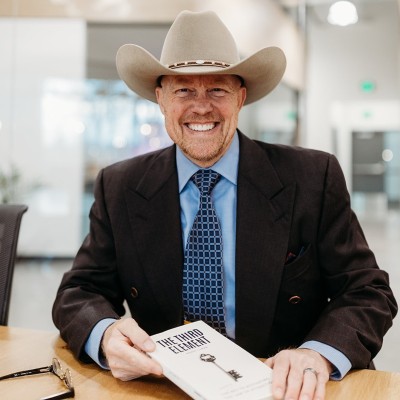
The Purpose-Driven Leader
What happens when someone builds multiple eight-figure businesses, earns a reputation as a physicist and entrepreneur, and still realizes that external success is not the same as inner freedom?
Randy Lyman has lived that question from the inside.
He built and exited multiple eight-figure businesses, including an Inc. 500 company, and by most standards had already won. But behind the performance, the growth, and the ambition, he found something many high achievers quietly wrestle with: success can amplify what we have not healed. That realization sent him into a much deeper investigation, one that brought together science, spirituality, emotional intelligence, and leadership. Today, Randy’s work sits at the intersection of all four.
His book, The Third Element, explores the idea that what blocks fulfillment, abundance, and even performance is often not strategy or mindset alone, but unprocessed emotion. It is a provocative argument, especially from someone trained in physics and forged in entrepreneurship. And that is exactly what makes his perspective so compelling. Randy now teaches leaders and high achievers how emotional mastery can reshape not only their inner world, but the way they lead, build, and live.


