


5X Founder Josh Davis: How To Eliminate This ONE Founder Bottleneck Holding You Back (#543)

Send us Fan Mail “Surround yourself with mentors who have been where you want to go.”-Josh Davis Exclusive Insights from This Week's Episodes Founder dependency kills growth, drains energy, and makes buyers nervous. 5X Founder Josh Davis reveals how A players, clean systems, and better delegation help you scale beyond yourself. EPISODE HIGHLIGHTS [00:12:00] Josh realizes growth cannot keep consuming every part of life, family, and focus [00:20:00] The private equity transition exposes where s...
 Apple Podcasts Apple Podcasts
  Spotify Spotify
  RSS Feed RSS Feed
  Amazon Music Amazon Music
  Podcast Addict Podcast Addict
  iHeartRadio iHeartRadio
  Castro Castro
  PlayerFM PlayerFM
  Podchaser Podchaser
  Overcast Overcast
  RadioPublic RadioPublic
  PocketCasts PocketCasts
  Audible Audible
  Pandora Pandora
  YouTube YouTube
 “Surround yourself with mentors who have been where you want to go.”-Josh Davis
Exclusive Insights from This Week's Episodes
Founder dependency kills growth, drains energy, and makes buyers nervous. 5X Founder Josh Davis reveals how A players, clean systems, and better delegation help you scale beyond yourself.
EPISODE HIGHLIGHTS
[00:12:00] Josh realizes growth cannot keep consuming every part of life, family, and focus
[00:20:00] The private equity transition exposes where scrappy founder energy becomes the bottleneck
[00:23:00] Buyers look hard at financials, people, and systems before trusting the deal
[00:26:00] Josh sees that the company can only grow as high as his personal capacity
[00:29:00] Weak recruiting and cheap compensation keep founders trapped in bad hiring cycles
[00:35:00] Founder dependency makes buyers demand longer transitions and deeper risk protection
[00:39:00] A strong executive assistant becomes the first practical move to buy back founder time
Full show notes, transcript, and resources for this episode:
https://podcast.deepwealth.com/543
DM Josh on LinkedIn “A Players” for a free resource
The Deep Wealth Podcast
Most entrepreneurs do not fail.
They just carry too much for too long.
The business grows. Pressure grows faster. Profits get harder to predict. Decisions cost more energy. Over time, focus slips and health takes the hit.
The Deep Wealth Podcast and Deep Wealth Mastery are built from real experience. We're the only system based on a 9-figure exit. This system exists because guessing gets expensive.
🧠 Deep Wealth Mastery
This is for you if you want to:
• Grow a profitable business without becoming the bottleneck
• Build real value so selling is optional, not forced
• Optimize your health before it limits your business and life
One proven roadmap for real decisions.
⭐ Explore Deep Wealth Mastery
https://iapdw.com/idm
🎧 Subscribe
https://iapdw.com/podcast
📘 Free eBook
https://iapdw.com/ebook
💬 Have a question you keep circling back to?
Leave a short voicemail
https://podcast.deepwealth.com/voicemail/
Built by entrepreneurs. For entrepreneurs.
Loved this Deep Wealth Podcast episode?
You built your business from nothing.
Now make it pay off big.
📱 Subscribe Now
As a bootstrapper, every move counts. Subscribe on your favorite platform for Jeffrey Feldberg’s 9-figure exit strategies. From your morning grind to late-night planning, get insights from founders who did it without investors. These tips could change your future.
Drop a Quick Review
Got 30 seconds? Leave a 5-star review. It helps us make better episodes and reach entrepreneurs like you, hustling without a safety net.
Don’t Lose Your Exit (And Your Financial Freedom)
You’ve poured everything into your business. A bad exit could cost you millions. Most deals fail, and even “successful” ones lose half their value. The 90-day Deep Wealth Mastery program teaches you to make your business run without you and boost profits so you capture the best deal instead of any deal.
What Others Say
“Deep Wealth Mastery is pure gold. I wish I’d had it before my exit,” says Stacey C. “The value I’ve gained dwarfs the investment,” adds Sanjay S. “It makes my business great to own and sell,” shares William S.
📘 Grab Free Tools
Check out client success stories for proof. Master the Deep Wealth Strategy Map to plan your exit. Or snag the eBook, From 7 to 9 Figures: The Exit Playbook, for a clear guide.
Click here to start your legacy-defining exit today.
543 Josh Davis
[00:00:00]
Meet Josh Davis
Jeffrey Feldberg: Some founders build businesses, others rebuild broken ones, scale them fast and then walk away with the kind of lessons you only earn the hard way. Josh Davis is one of those people. He's a five time founder, acquirer and turnaround operator who spent his career stepping into complexity, finding what's broken, and building companies that actually work.
Under his leadership, a logistics business grew into one of the fastest growing companies for acquisitions, high performance teams, and award-winning software before being sold just three years after startup to one of the largest transportation companies in North America backed by private equity.
Over the years, he's led more than 10 acquisitions and turnarounds across industries, and today through JL Davis Enterprises, he helps founders scale with the right people, the right systems and the right culture. But what makes Josh interesting is not just the growth story, it's the tension underneath it. The [00:01:00] grind of building without losing yourself. The challenge of creating something valuable without sacrificing your family, your faith, or your culture. He speaks with the perspective of someone who has seen how easy it is to chase scale and miss the point entirely, and how much harder it is to build a business that creates both enterprise value and real life value.
Josh has been recognized nationally, including business in Vancouver's 40 under 40, and the top 40 under 40.
Sponsor Deep Wealth
Jeffrey Feldberg: And before we start this episode, a quick word from our sponsor, Deep Wealth and the 90 Day Deep Wealth Mastery Program. Here's Jane, a graduate who says, and I quote, the Deep Wealth Mastery Program prevented me from making what would have been one of the biggest mistakes of my career. I almost signed on the dotted line with an unsolicited offer that I now realized would have shortchanged my hard work and my future had I accepted that offer. Deep Wealth Mastery has tilted the playing field to my advantage.
Or how about Lyn? Wow, he gets right to the point, [00:02:00] and I quote, Deep Wealth Mastery is one of the best investments ever made because you'll get an ROI of a hundred times that. Anyone who doesn't go through this will lose millions.
And as you're listening to these testimonials, are you wondering if you have the time? Are you even thinking that you've got this covered, you have the advisors or people in your network? Well, I got to tell you, these myths, they're often behind the 90 percent failure rate for liquidity events. Think about it. You have one chance to get it right for your financial freedom. You really want to make it count.
And when it comes to time, let's hear what William has to say. We just got in this testimonial, William says, and I quote, I didn't have the time for Deep Wealth Mastery. But I made the time and I'm glad I did. What I learned goes far beyond any other executive program or coach I've experienced.
So what do you think?
As I hear that, that's exactly what gets me out of bed every day. That's my mission. That's the team's mission here at Deep Wealth to literally change the social fabric of society. One business owner at a time, one liquidity event at a time, and my Deep Wealth [00:03:00] Nation, what I want you to know, the Deep Wealth Mastery Program, it isn't theory.
It's from the trenches. It's the only one based on a nine figure deal. And that deal, that was my deal. You know my story. I said no to a seven figure offer. I created the system that later on, myself and my business partners, we said yes to a different buyer, a different offer, a nine figure deal. That's what we now call the Deep Wealth Mastery Program or the Scale For Ultimate Sales system.
It's built by business owners, for business owners, so if you're interested in growing your profits for preparing for a future liquidity event, and that may be two years away, it could be 22 years away, whatever the time may be, you want to do this now, and you want to optimize your post exit life, Deep Wealth Mastery is for you.
To get started, email success at deepwealth. com. Again, that's success. S U C C E S S at DeepWealth. com. You'll receive all the information about the Deep Wealth Mastery Program or better yet, why not hop on a [00:04:00] complimentary strategy call.
We'll go through exactly where your business is today and what's standing between you and your financial independence and your dreams. So that's where you want to be. You want to be with other successful business owners, entrepreneurs, and founders, just like you they're looking to grow their businesses, create markets.
Market disruptions and unlock their financial freedom to get what they deserve. And whether you've been in business for three years, 40 years, you're a startup, you're manufacturing you're in high tech, low tech, whatever the case may be, coming in and network with other business owners, it's a safe space.
It's a confidential space with business owners, with businesses just like you, because they all wanna lock in their financial freedom and enjoy both success and fulfillment. So again, the 90 Day Deep Wealth Mastery Program, it has your name on it. All you need to do is take the next step. Please send an email to success at deepwealth. com.
Podcast Welcome
Jeffrey Feldberg: Deep Wealth Nation welcome to another episode of the Deep Wealth Podcast. Well, deep Health Nation. We have a fellow founder, not just a founder, a post exit entrepreneur. [00:05:00] Lots of stories from the trenches, lots of successes, but I'm gonna put a pause in it right there. Josh, welcome to the Deep Wealth Podcast.
An absolute pleasure to have you with us. There's always a story behind the story, and you have an incredible story. So what's your story? What got you from where you were to where you are today?
Josh Origin Story
Josh Davis: Thanks a lot for having me, Jeff. Yeah, it's quite a loaded question. I'll try to make it as interesting as possible. I've been in the trenches for about 18 years. Ever since I was a kid, I always knew I wanted to be an entrepreneur. Both of my grandfathers were successful entrepreneurs building something from nothing.
And so being a kid. and witnessing that it just planted a seed early on and you know, I watched my parents go through some financial struggles as a kid and go through divorce and things like that. And so that really ignited my passion after that to. To really build a business and be able to help my parents in the future.
And so that kind of kickstarted my journey. originally the [00:06:00] plan was go to business school, get a business degree and that's what I always thought I wanted to do. But unfortunately one of my grandfathers. Got sick with cancer and I ended up dropping outta business school and taking care of him um, for a few years before he passed on.
And through that I, that just continued to expand my. Curiosity about entrepreneurship and learning more about his life story. And we gotta travel and went on a, an amazing sailing adventure together and did all these things. And so once he eventually passed away, which was, quite a dramatic moment in my life, I started pursuing my entrepreneurial ambitions.
And I think I, went hard for about eight years. I had some success, had a number of failures and. Then fortunately, I eventually figured it out. My wife and I we started a business a week after our honeymoon. We scaled it and exited to private equity within three years. So that's the quick snapshot.
And now today we run a [00:07:00] family office and we do acquisitions and business consulting, helping either our own businesses scale or helping other founders scale the right way with our own systems. So that's a little bit about me.
Jeffrey Feldberg: Oh my goodness, so much there.
Grandfathers Influence
Jeffrey Feldberg: Josh, let's go back though to the earlier years because you said something interesting where you're fortunate and it sounds as though you had for your mentors, for your founders, your grandfathers, and so growing up as a young child. What was that like when you look back?
What was the impact back in the day? Maybe you didn't even realize it, but now that you look back, oh yeah. Okay. I can connect the dots.
Josh Davis: Yeah, so. both of them. one was a mayor, of a city and built up a construction business and then like hardware stores and things like that. And then my other grandfather was in the mining industry. And so one thing that I, always noticed as a kid, just how many.
People in their lives, like old employees or people from their past that would come and visit them and share all the old stories and just, I could just see these relationships and how both my [00:08:00] grandfathers impacted so many people's lives and how many friends that they had. And just like looking back on that now, just seeing how well they treated people and, creating good jobs for people. and so that was definitely a big thing that I, think it was just like planted in me. But thinking back on it now, and then the other thing that was really inspiring was the ability to like. something up, not, take care of your family, take care of other people, give back into the community.
I just, watched that on both sides of the family growing up. And I used to play business person with my little sister, setting up a desk and a phone and things like that, and I'd imitate my grandfather. it was from a very early age, I recognized it was different.
Yeah,
Mentorship Lessons
Jeffrey Feldberg: For the listener in Deep Wealth Nation, Josh, they didn't have what you had. These incredible, in this case, your grandfathers, these two men who unbeknownst to you at the time, they were sculpting you and shaping you to become the success and the man that you are [00:09:00] today. For someone who never had that, they now find themselves.
I now have that opportunity. Perhaps it's with their own children or perhaps it's with some other young people in their lives. What advice would you give them of looking back, what made the difference for you from your grandfathers?
Josh Davis: Yeah, I think. Especially my one grandfather who I spent most of that two years with him while he was battling cancer. I think something that was very impactful for me was just his, the real raw stories of the truth of building a business. So like when I was born. They were already successful.
going back and hearing the stories of having nothing and, putting things together, dropping out of school, like all the, things that you don't see, you know, even, my wife and I experienced, people think we just all of a sudden got successful out of nowhere it's many years of in the trenches, long nights stress, not knowing how you're gonna pay the bills.
And I think for me. That was very helpful to [00:10:00] hear the real behind the scenes of what it's really like to build a successful business and a successful life. So and I do a lot of mentorship with y young business owners and entrepreneurs, I try to be as real as possible. Tell them, you know, all the tough and the realistic things that do happen in, in sacrifices, in building a business.
Faith Family Purpose
Jeffrey Feldberg: As we're talking about that, Josh, when I was preparing for today, one of the things that came through with your journey, your story, you speak a lot about building with faith and family and purpose. As a system, as being all intact, and as I look back on my journey, I said, wow, Jeffrey, did you really drop the ball?
In some of those areas where I let the business needs go before all else and made a lot of mistakes because of that. Along the way from your side of things, what does that look like for you? A faith, family and purpose being intact, and then the follow up? How do you deal with that when you have. I'm building a business.
I have these pressures, I've got payroll I need to meet, and I have these other [00:11:00] pressures going on. So what was that like for you? What can you share with us? I.
Josh Davis: Yeah I would say that framework that I talk about a lot and I've built that really happened post exit. I've had a few exits, but one substantial one. I really built that framework to change the way that I was doing things previously. And so what I would say. Especially when my wife and I first started the business a week after our honeymoon with one other partner.
We had no kids. We were young and everything revolved around the business. We didn't, own a house at the time. We had, you know, a nice apartment downtown and things like that. So we didn't have, we could take a lot of risk and we could, basically everything that we put into the business, we could do that.
And, we can work, extremely long hours and weekends and, looking back on it. our whole life revolved around the business. I don't know if I'd recommend recently married people going into business together immediately. I think that was, challenging.
It [00:12:00] definitely made us stronger. And it set us up for success and set us up for when we have family. Now we've got two kids and life's quite different having young kids now.
Pregnancy Shift Exit
Josh Davis: But I would say the shift that happened with me and thinking about faith, family purpose was when my wife got pregnant.
So when my wife got pregnant we were driving into work. And we didn't talk about this. But as we're driving into work, business is scaling. We're one of the fastest growing logistics companies. And she's like, dear like, I've been thinking about this and when our daughter's born, I don't know if I want to keep working in the operations of the business.
And so, I remember gripping the wheel and just thinking to myself like. How are we gonna do that? Everything we had is in the business. We were barely paying ourselves like nothing. Everything went into continue to fund the growth, and so that's really what kind of. Change the journey made us [00:13:00] take a step back.
What's important once we have kids, our faith, our family, our purpose. And ultimately that was one of the reasons why we decided to sell that specific business. It just got to the point we didn't have outside investors. It was just our partners and I investing what we had and scaling organically.
And it just got to a certain point that to continue to grow. We had to take outside investment. And so that's what happened. And then we sold to one of the largest transportation and logistics companies in North America that was owned by a US private equity firm. And then I worked with them for two years.
Post Exit Identity
Josh Davis: And then once I transitioned out this is a little bit of a long-winded answer, but I'd say you know, once I stepped down as CEO. I took time off went through a little bit of identity crisis, not having all these employees and all these meetings, and was just quiet. I had two kids.
I had a toddler and a new baby at the time, and I spent. Six months, being the [00:14:00] present dad and taking my family on trips. And then I just realized, and it was my wife who gave me a bit of a nudge you know, I'm not meant to be a stay-at-home dad. I'm meant to build and scale and be in leadership.
And so that's where. It was a bit of a process, but we came up with the faith, the family, the purpose as we build and scale. So that, we sold the business almost six years ago and then I stepped down about three and a half years ago as CEO.
Jeffrey Feldberg: Joshua, it makes you feel any better. Post exit for myself as well. I did not find that happily ever after, and lunch was a highlight of my day. Very similar to you. I had a newborn. My eldest at the time was around five years old and no one feels sorry for the guy at home in his pajamas. Lots of zeros in the bank account who's bored out of his mind.
No one wants to come out and play because they got their lives or their companies or their profession, and absolutely get that. In fact, in default mastery with a default nine step roadmap. Step [00:15:00] 10. We actually put that at the beginning. Step 10 was a post exit. I failed at that so badly. I said, okay, I want everyone to know about this, but right up front of what not to do, look up failure post exit.
There's Jeffrey's picture. And I said, okay, here's what I did. Here's what you're not gonna do. And so I'm right there with you. You're not alone. With that.
Exit Lessons Learned
Jeffrey Feldberg: So let's talk about your building of the business, but your exits as well. And then on the acquisition side, because De Nation, Josh is really modest, five time founder, lots of acquisitions along the way.
He's a turnaround guy, so he comes in, makes it better, adds more value, finds what's broken. What I love about your story, you've been on both sides of the table, the founder and then the acquirer. So when you look at, okay, yeah, that huge exit, you also had others along the way. When you look at, okay, I'm building the company and now I'm gonna go into a liquidity event, whether that means I'm selling all of it or I'm keeping some of it some chips off the table.
When you look back, is there something that sends out as, yeah, Hey Jeffrey, if [00:16:00] I was gonna do it again? I would do this all day long, or I would run in the opposite direction. I would not do this other thing all day long. Anything that comes to mind that you can share with you both Nation, given your experience?
Josh Davis: Oh, that's such a good question. I could go a couple different directions with this. yeah, I would say Me as a business owner, I like building for the long term. And so I think one thing that I learned through building that high growth startup and exiting, like I didn't actually want to sell. there was, my other partner had some other business investments, so he wanted to sell, my wife wanted to be outta operations, and then we've got this, company from starting from three of us and was quite, for us, was really big at the time. we needed to make a decision to continue to fund the growth. And so, but yeah it's hard when you build a business. You put everything into it.
You care about the people you like, the business you're having fun, you enjoy. There's a lot of chaos in it. Selling a business is really hard. [00:17:00] And so, I wanted to say like, you know, if you can, build a business for the long term and just, keep holding onto it, and if you have the ability to build it the right way and pass it on to your kids and things like that.
But don't wanna say that because in our circumstance we had to sell for multiple reasons. I'm happy that we ended up doing it and I feel very fortunate and blessed that I'm in a position now. Where I have enough capital. I don't have outside investors inside my family office where I can choose to build for the long term and I can make decisions differently than I did when I was, scrappy startup.
No. Outside investors. So yeah, hopefully that kind of answers your question, but I would say like Looking back on it, if I did have the ability to build and scale for the long term I would've, but the industry we're in and the timing of it it was best not only for us, but also for the stage of the company we're in best for the employees being part of a bigger, you know, stable, private equity backed, [00:18:00] strategic, lots of opportunities for growth for the team members and stuff like that.
So it was a bittersweet situation on the exit.
Jeffrey Feldberg: It's interesting as you're talking about that you're having me think back along my journey and we bootstrapped everything and what always. It never cease to amaze me was we return a corner, profits are coming in, now we're getting the return on investment company gets to a certain size. Okay, well I now have to reinvest in the infrastructure or get more talented people in different areas and it just adds up and okay, well there goes a profits, I'm gonna put it all back into the company.
So absolutely hear what you're saying. And Deep Nation. What's interesting Josh, and thank you so much Josh, for being vulnerable and open with us as founders, we really gotta ask ourselves. Am I the best person to take the company to the next level because it means checking the ego at the door. It's not about me, it's about my stakeholders, it's about my team.
And Josh, similar to you, I realized from my company, could I do it? Could I take the company to the next level? Yeah, [00:19:00] I could. Would I be the best at it? Absolutely not. It was skillset sets I didn't have, it was now the company went from being the scrappy startup. It was a corporate entity. I'm not a corporate guy.
And so for me it was, okay, I've gotta fire myself and let's find the right people who can take it to the next level. Not for me, but for the team, for the business, for the customers, the clients that are depending on it.
PE Microscope
Jeffrey Feldberg: And it sounds like you were there, and I'm wondering when you were going through. The due diligence now, and you're under the private equity microscope and they have their army of all these advisors and lawyers and these really smart people.
What was that like for you as the business owner? You're getting asked all of these questions and you're under the microscope. What was going on there?
Josh Davis: Ooh, that's another good question. So like, we were on two year transition. So during that kind of. Transition, earn out period. Not a lot changed. obviously was some corporate changes, but overall I was, still CEOI [00:20:00] was, making the decisions for the business.
Obviously I had people to answer to and I had finance meetings. that's one thing I would say is a lot of finance meetings, a lot of. Meetings on the numbers. And at first I didn't like it 'cause we were basically like, as long as we're scaling and growing, we're totally fine.
But, you know, I really grew to appreciate, financial reporting, budgeting, things like that. So I definitely at first didn't necessarily like that. But then after looking back on it, I've used some things that I've learned there. In my businesses since. So, that was helpful. you know, after your, earnout period and then you gotta start doing integration, that's where I realized, just like you said, is like.
I'm not a corporate guy. and I never intended to necessarily leave, like in my mind I was like, as long as the partnership's working good, I can do this forever. but then once we started getting the integration and stuff and I knew things needed to change and, different stuff like that, that's where I actually realized I was the kind of the bottleneck because I [00:21:00] still wanted.
To run, you know, a scrappy entrepreneurial culture and just be, aggressive in sales and growth and building the team and leadership development and all that stuff. And once it gets to a certain point the business cycle, It does need a little bit more structure and corporatization and stuff like that.
that's where I realized, you know, this was the right step for the business, but I wasn't that corporate guy to go onto that executive team. And so I made the tough decision to step down and yeah the, most of the team members are still there. The business is still, you know, doing well.
And so yeah, I'm really happy to see that from afar.
Buyer Red Flags
Jeffrey Feldberg: And Deep Nation as you're thinking about that, as you're taking it all in, I want you to listen really carefully now to the next part with what I'm about to ask Josh. So Josh, in my own journey as an example, I often say that that very first buyer who approached us and gave us that seven-figure offer that was the wolf in sheep's clothing and very smart, sophisticated buyer, all the tricks up his sleeve.
At the same time, it's like that old saying, when you [00:22:00] point a finger at someone, four fingers are pointing right back at you. And yes, that seven-figure offer was very deliberate on that buyer's part. Instead of the nine figures that we are worth, there are things that I was doing or not doing in this case that didn't help my case.
And so when you went from, okay, maybe even owning your own company and you're now growing through acquisitions, or now when you cross over to the other side and. Private equity, you're looking at buying companies. What would you want a founder in nation to know of what buyers and investors are looking at that either has 'em do one or two things and neither are great?
Hey, I'm gonna run for the hills as fast as I can. I don't like what I'm seeing here. I don't need a second full-time job, otherwise known as running your company when you're no longer around, everything's falling to pieces, or, Hey, your company's a mess. I'm gonna penalize it. The enterprise value is gonna get significantly lower.
So what does that look like as a buyer? What were some telltale signs when you're looking to invest in or buy companies that you want us to know about of, of typical [00:23:00] mistakes?
Clean Books Team Systems
Josh Davis: Okay. Yeah there's a number. I think. The big ones would be financials, people and systems. So I would say, one thing I learned through that exit is making sure your books are clean. You're doing, proper reporting, making sure you're doing accruals properly.
Like, Just really get your financial backend really cleaned up. When you're going to market, make sure if you've got any normalizations, make sure you're clear on that. Things, even when we're looking into do acquisitions. if the financials are messy and there's these different weird things that are running through the business, it.
it makes you just worried. What else are you missing? What else are you digging into? So if like, your books are really clean, you've got your clear, normalized EBITDA and things like that. So that's really important. So before you go to sell, if you're running a lifestyle business, running a bunch of, different things through the business that maybe don't need to be a part of the operations, you want to get really clear on that and you [00:24:00] want to be upfront with that to the seller.
So that's a big one. The other one, and this one is really, really important, is. For any founders that are really stuck in the weeds of the business. So if you're involved in the big, all the big sales the firefighting, the operations, you have a lot of the key relationships, not just internally, but with the customers.
could get penalized for that and it makes potential buyers very nervous. That the business relies too much on the founder and the owner. So, I think it's really important before going to market, to making sure you have the right people in the right seats and you're delegating.
You've got, whether it's a general manager or an operations manager, making sure that. The business doesn't rely so heavily on the founder. You can definitely get a significant multiple, and buyers even like ourselves, we don't wanna buy a business that relies so much on the founder and all the customers only like dealing with the founder.
That creates a [00:25:00] lot of potential challenges and potentially a longer transition as well. So that's really important. Making sure you have the right people in the right seats, and then obviously systems, the more that you can. To have documented systems and the right technology and the businesses like can be more turnkey for the next buyer.
That just gives you a better chance of getting a higher multiple and a, and a deal getting across the finish line. So those are three kind of big things that I learned through selling our company and then as well as companies that I'm, looking to buy.
Founder Not Center
Jeffrey Feldberg: And so as we're talking through this, let's make it personal. If you could, let's go back a little bit to yourself, and it could be present day. It could be back in the day when you're in the seat and, okay, I'm the founder, I'm the business owner, or maybe I'm even investing or now buying a company. Great. I own an outright.
Do you remember the moment when you first realized that, Hey, this company can actually be successful from the outside looking in the inside looking out. But I'm not at the center of it.
Founder Bottleneck Breakthrough
Jeffrey Feldberg: It doesn't run [00:26:00] having me in there. Actually, it runs better without me in it.
Josh Davis: Totally.
Jeffrey Feldberg: What was that moment like? Can you share with us in terms of what that was like for you and the mind shift that happened after that?
Josh Davis: Oh, That is a big thing that I had to learn if I really wanted to scale a business. I learn quite quickly. The more that I'm involved in my hands in too many things and too many of you know the big decisions, and I don't have the right people in the right seats, in the right systems. in my own businesses, I was the ceiling of the business.
The business could only go as high as I had capacity. And so it was a light bulb moment in one of my companies, once we hit about 35 million. In revenue. It was, really difficult to get to that next level, and that's when, I talked to different mentors and read different books and I realized that I was the bottleneck.
And so that's when I got really focused on making sure that we hire a players, we put the [00:27:00] right people in the right seats, and as much as possible, push the decisions down as far as possible so that I was able to focus on the things that only I could do. And that really lit me up. And so it was quite a process, but eventually I saw just.
Delegation And Leverage
Josh Davis: How much a business can scale if the founder gets outta the way and I'll be honest, with the audience here, at one point in my life, I don't believe it anymore. I thought I was the only person who could do it. I was like, nobody can do it as good as me. I need to be involved in this.
The big sales meetings, like even though I try to be a humble person, it was just in the back of my mind that nobody could do it as good as me, and it took time. But once I passed things off, and even in some cases where someone who doesn't have as much experience as me, and they do it differently than me, even if they do it 80%.
Of the way that I would do it, and I didn't have to be involved. I just saw the magic of the leverage and the compounding of that. So don't wanna pretend like I was always like [00:28:00] this it probably was 10 years before I, it really sunk in that the most important things a founder can do is hire the right person, put 'em in the right seats, show them what great looks like.
Give them clear metrics and let them, run and scale their part of the business. And that's how I'm able to run multiple companies today without being so much in the weeds like I was.
Jeffrey Feldberg: And for someone in Deep Wealth Nation as we're listening to this, because we've all been there and some of us are still there as founders. Hey, yeah, Josh, Jeffrey I, I hear you, but you're right because. I'm the best person to do it. No one can do it as quick as me. And I've brought people in before and they've failed.
I've had to fire them. It costs me money. It costs me time. So for that founder that is drinking their own Kool-Aid, where 90% still isn't good enough, 80% of a person's 80% is good to me, still isn't good enough. 60% isn't good enough. What would you say to them to help them get over that self-limiting belief of, hey, it doesn't have to be just you.
You can have a bigger, faster, more profitable company when you have other people [00:29:00] coming in. Essentially, we're firing ourselves from the roles we shouldn't be in. What would you tell that founder I.
Hiring A Players Process
Josh Davis: And actually I've got something for the audience now that you said that at, I, we could talk about that at the end. But the one thing that was happening to me was I didn't have a strong enough recruiting process and I also wasn't, setting the comp structure correctly to attract that a player, that person that's really gonna help take things to the next level.
So I was there I would try to cheap out a little bit on comp, or I wouldn't run, a rigorous. Recruiting process with test projects and making sure you have the right fit. So if you keep doing that and you cycle people up and it's not working. I've been there. But the key is getting really clear on what you need, what that person looks like.
Running a really strong recruitment process to get that. I have a definition of an A player, but to get that right person for your role, to take that stuff off your plate and help [00:30:00] take things to the next level. So I think that's the key. It really comes down. To being crystal clear of what you need, what needs to be off your plate, and then going out and getting that person having a proper process to be able to attract and retain that person.
So, it all comes down to getting the right person. You have the right person, it's gonna be freeing. it's gonna help take you to the next level, the wrong person. It's gonna create more chaos, drag you back into the weeds, more frustration. And I've totally been there. And that's where I developed a framework to hire a players and get them in the right seats.
And as soon as I did that, it, was a total game changer for me.
Jeffrey Feldberg: So get the right people. They don. Have to be perfect.
Systems Metrics And Expectations
Jeffrey Feldberg: Done is better than perfect, and what I'm hearing loud and clear. Couldn't agree more. Make sure that we have some metrics. What gets measured, what gets done. We have KPIs, we have systems in place. Documentation. These are my expectations. These are the outcomes I want to see achieved.
You figure out how to do it. I'm here for you. You have questions. Come here. Go work your match. [00:31:00] Go do what you do. And nation, there's a lot of terrific, not gold, but platinum in that.
JL Davis Enterprises Overview
Jeffrey Feldberg: And so Josh, jail Enterprises. Walk us through that. So as an example, a bit of a generic question, and Jeffrey, Hey look, every company's different, every founder's different.
I get that someone approaches you. Yeah. Josh, I heard you on the Deep Podcast and love what you're doing with your company and how you're helping other founders scale and build. Here's my company, help us. So what does your process look like in terms of the systems and the timing and the kinds of results that I could expect?
What would you and the team be doing?
Josh Davis: Yeah, so we run a family office. So we are, operating. We're not just financial buyers. We're actually. Investors and operators and acquirers. So that's one arm. We're actively acquiring, investing and scaling businesses. One arm and then the second arm, we have a consulting division.
And the consulting division it started out because. A lot of business owners would come to us and they would want [00:32:00] us to invest in their business or acquire them, but it just, it wasn't the right fit. It wasn't the right industry, or it wasn't a type of business that made sense for our family office.
And so, going through that process, similar to a lot of the things that, that you've been talking about, Jeff, is like. Where do these guys go to get help to get outta the weeds? Where do they go to get their business set up for success before they go to that M&A advisor? There's a lot of times, you know, especially in, you know, small businesses where there's a few tweaks that they could do their business that could give them a way greater chance of having success of a sale.
So. It birthed outta that. People said, Hey, can you, my wife Loretta, can you advise on us? Can you help us with this? And so we ended up doing some acquisitions in the consulting space and we built a leadership development program. We acquired an executive search recruiting firm. We acquired another hr firm as well.
And then we basically took our frameworks. Of how we [00:33:00] build and scale businesses, mainly focused on the people side, people and system side. And so, yeah, basically if it isn't the right business for us, an investor acquire, and there's an ability for us to help that founder, get outta the weeds, put the right people in, the right seats, the right systems, the right technology that's where we help.
And so, I find a lot of times, if you do it the right way, you may not even want to sell the business at all. You may actually enjoy running it again. So sometimes once people get the right people and systems in place, they actually might not be as, desperate to exit, or they can build things up a little bit further before they take it to market.
So that's what it looks like. I've got. Different divisions inside JL Davis Enterprises that can support on the people side. I've got a technology company that goes in and sets up different systems. We can build software or implement CRMs and different technology as well. And then on the biggest thing for us is the executive search recruitment side.
Making sure you [00:34:00] get that right person in the seat so that you can get outta the weeds and build the business that, that you dream of.
Acquisition Fit And Founder Dependence
Jeffrey Feldberg: And when you are looking at different businesses, it's the good old les's law. One of my favorite questions in this kind of scenario, understanding that yes, sure every business is going to be different. That said, les's law says, Hey. 80% as an example of the things that I'm achieving, 80% of my revenue is coming from 20% of my customers, or it might be 90 10 or 95.
Five. So let's look at for just a moment, the glass half full here for just a moment. As founders, it's usually glass half full or half empty. But for the founders that you're looking at, for these companies that you're speaking with. Is it the 80 20 principle? Yeah. You know what, Jeffrey? The companies that are struggling, 80% of them are having the same issues in this 20% over here.
So in other words, these areas here are where most of the companies are struggling with. Well, are there any patterns that you're seeing that are having you say, Hey, thank you, but no thank you. I don't think we can help. Or, yeah, we can help, but you shouldn't have been here in the [00:35:00] first place.
Josh Davis: Yeah, especially. we're not doing like large acquisitions, like we, target smaller businesses and then we put in our tech, our systems and our sales processes to scale. So I'd say in the type of businesses that we're looking at a lot of the time the business just relies so heavily on the founder.
And so, not to say that we don't do acquisitions like that, we've done them before. It's just when you do an acquisition where everything relies so much on the founder. And they're the, biggest piece of the culture or the key relationships. We just have to be very serious about that transition plan.
And we gotta be very intentional and, you gotta have some alignment with values and things like that because you're gonna get really intimate with that founder to be able to transition that business to your team. So it's, I would say it's always better. If somehow the founder can build, a brand have a few of the key team members and it not relying so heavily for [00:36:00] them on the leadership and the key accounts.
Yeah I see that a lot in small businesses. It's just kind of a natural thing that you do. But yeah if, if there's a way to get yourself. Outta the weeds and out of, all the kind of key relationships that has a way better chance of having a quicker sale and making buyers feel more comfortable.
Jeffrey Feldberg: That's so interesting out there. Sometimes it's right in front of us. It's hiding in plain sight of what we should do and and not do.
What Great Companies Do
Jeffrey Feldberg: And so the flip side of that, whether it be your companies, Josh, or other companies, wow, this would be a terrific company to invest in. They are doing all the right things.
What are they doing that's making it work so well?
Josh Davis: Yeah, I think, the first thing I'd say, the ones that are working well and, I gotta be careful here, I usually don't buy companies that are. Fully running perfectly. I'm always looking for a way to add some value on that. So I will share from experience of the companies that are doing well, the companies that are doing well.
I keep saying this, but it, it's really having a strong leadership team, [00:37:00] so having the right, people in the right seats and having roles clearly. Define so that a buyer comes in and can see, you know, there's someone who oversees, you know, the operations or the sales side and, you can see there's like a stronger leadership team, so you're not gonna come in the business and have to step into all these different spheres of the business.
So always starts with the people. if you've got a strong leadership team, things are, growing and scaling. That's always very positive for if you wanna sell your company, seeing growth. And then just having clear systems, like I think the businesses. That I go into I mean, A big part of my due, obviously I've got lawyers and accountants, I got teams that go in and, always dig into numbers and things like that. But for me it's understanding the processes. So how to, from quote to cash. How do we document that? How can I understand that? So the really great companies have a strong, leadership team, leadership bench, whatever it can be.
A supervisor doesn't have to be like [00:38:00] full executive team if it's small business. And then clearly document it systems and processes. And usually if you go the right people in the right seats and good systems, everyone's clear in scorecards the business. Most likely is gonna be growing, which yeah, any buyer coming in it's always a, a bonus if the business is growing.
One Move To Start
Jeffrey Feldberg: Wondering, Josh, someone who's listening here in Deep Wealth Nation. Oh my goodness, guys, Josh, you seem like a great guy. You're a successful, I've got so much going on. I just dunno where to start. Where to begin? Looking back, if you could recommend one strategy, and by the way, the strategy could be. Do this or, Hey, if you're doing this, stop doing this.
If there was one thing that could really move the dial based on you scaling businesses, buying businesses, selling businesses, some of that secret sauce that's helped you along the way, if there's one strategy that you could pull out and highlight, yeah, deportation. Give this a try. Anything that comes to mind.
Josh Davis: It does, I'm gonna be very specific, but it does come down to that. I keep preaching on [00:39:00] the, a player and the people piece. But one total game changer for me was hiring a very strong executive assistant. that's one thing for any founders that whether we're consulting with or we're acquiring with, we always start with that because typically what happens.
Is the founder. Not even knowing it is involved in so many administrative tasks, so many things with their inbox and their calendar, and your inbox typically turns into your checklist. I was like the worst at that. But yeah. One secret sauce for me and not cheaping out on this finding.
A really strong executive assistant, having a clear process with them, getting off all the tasks that you know are low level tasks. You know, $50 a hundred dollars, an hour task, get all those tasks off of you so that you can focus on the things that will really take the business to the next level.
So I [00:40:00] always say this, any founder, get someone to help you manage your inbox, your calendar, scheduling meetings, all the administrative tasks. Once I did that. And I freed myself up. I bought back significant amount of hours of my time, and then I could focus on the things that could really help scale my business.
Jeffrey Feldberg: It reminds me of that frog and boiling water story as founders. Oh, I'll just take this on. Oh, I'll start doing that. It's just a few minutes here or there, and next thing we know, wow, it's not only consuming, but it zaps our energy and our focus. So nation, you heard it right from there, right from the trenches.
Find yourself some help to offload, as I like to say, delegate, automate, or eliminate and find some help to take care of some of the administrative things so that you can focus on what you do best. And maybe it's not even in the company, maybe it's doing some other things, but you have a successful company because you have the right people in place.
And let me ask you this before we start going into wrap up mode. Josh, I have so many questions I haven't even had a chance to ask. We've just scratched the [00:41:00] surface on there. But is there one important question that you and I haven't covered just yet that you want to share with Deep Wealth Nation?
Life After The Exit
Josh Davis: I don't think there's another question, but I think one thing that you said, one thing that I would say, I. That is very, very important. That I didn't realize is if you are gonna sell your business, you gotta think about what life is gonna be like after that sale and what you're gonna do.
And I know both Jeff, you and I have been through that, that. The grass isn't necessarily always greener on the other side. Having more money and financial freedom and stuff like that's definitely like, it's a good feeling for sure. But if your identity is so wrapped up in the business and then that shuts off yeah, you can go through, a bit of a, who I am after that. And it can be really hard and I struggled for six months. it would've been really helpful to talk to guys like yourself, Jeff, who's been through it, and just [00:42:00] realizing when you sell and exit, what is the plan after that? And I find that's where a lot of founders can get into the situation where, money isn't necessarily gonna buy happiness and you gotta continue to have impact and fulfill your purpose once you sell. So what is that, what's your next venture gonna be?
Jeffrey Feldberg: You're so spot on. Hey, money helps. Money can make things easier. Money can take some of the pressure off. When it comes to happiness, though. Happiness is an inside job as the saying goes. And having that purpose, having that, yeah, I can't wait to get outta bed today to summer because I have this, whatever this is so important.
And right there with you, we've both been there, done that. And we both know, hey, it's not at least for the two of us, not where we want to be. And for most founders, not where we they wanna be either. So, Deep Wealth Nation, find your purpose outside the business, especially while you're still in the business.
Create some time. I know you don't have the time, but create some time to do some trial balloons. Hey, I hated that activity. Never do it again. Oh yeah. You know what? I love that [00:43:00] activity. I don't have a lot of time right now, but I'm gonna keep on doing that activity maybe once a week or a few times a month, and I'm gonna keep building this life outside the business.
So when it comes time to ask it at one point, it's a smooth transition. There's a lot of wisdom in there.
Back To The Future Advice
Jeffrey Feldberg: And speaking of wisdom, Josh, it's a great segue to go into our wrap up mode. It's a tradition here on the Deep Podcast. It's both my privilege, my honor. I ask the same question to every guest. It's a fun question.
Let me set this up for you. When you think of the movie Back to the Future, you have that magical DeLorean car that will take you to any point in time. So Josh, imagine now it's tomorrow morning and you look outside your window. Not only is the DeLorean car curbside, this is the fun part. The door is open and it's waiting for you to hop on in.
So you hop into the DeLorean car, you're now gonna go to any point in your life, Josh, as. A young child, a teenager, whatever point in time that would be What, one line, what piece of advice would you tell your younger self in terms of life wisdom or life lessons, or, [00:44:00] Hey Josh, do this, but don't do that. What would it sound like?
Josh Davis: My gosh, Jeff, that is such a good question. I'm gonna have to just think about that for a sec. if I was to go back and I'll relate this to business and I was to tell, my younger self, let's say a teenager, and wanting to be like my grandfather's and build a business I would tell myself just how important it is to have mentors and strong people in your life that have been where you want to go.
And so, the reason why I would do that, and I won't take too long in this, is like after I lost both my grandfathers, I went for a period of, let's say seven years trying to do it on my own, trying to make it work, reading different books and things like that. And then once I realized. The power of having a mentor, someone who can be a sounding board, someone who's been there, done that.
That is one thing that really took me to the next level. And [00:45:00] so I would say to anyone building a business. It's really important to find mentors, people that have been further along than you, because they can help you limit some mistakes or give you ideas or bounce things off you that you just sometimes just can't figure out on your own.
I think that is something that is really important. I wish I found mentors earlier after my grandfather's passed away.
Jeffrey Feldberg: Such terrific advice. Absolutely love that. Surround yourself with mentors who have been where you want to go. And you know, it also goes back to we are the average of the five people that we spend the most amount of time with. And so look at who you're surrounding yourself with, and you may not realize that those are your mentors.
But have they been to your words, Josh? Have they been already in their lives to where you wanna be or have they not? And so some terrific advice there.
Where To Connect And Framework
Jeffrey Feldberg: And Josh, some of the deep both Nation, they have a question for you or the team or maybe they're curious, Hey, perhaps Josh and team can help us where we want to go and we can figure some kind of business arrangement out.
Where would be the best place [00:46:00] online for someone to find you?
Josh Davis: Yeah, to connect with my group of companies. They can go to our website, jl davis enterprises.com. If it's a founder that wants to connect with me personally, I'm very active on LinkedIn. So they can find me at scaling with Josh Davis on LinkedIn. And yeah, just one thing that. Popped up when we were talking about this.
I keep talking about A players. I do have a, framework that I have. So if anyone listening wants access to my framework, you can DM me the word A players on LinkedIn and I'll send you the exact framework that I use to recruit, hire, and build high performance teams. So, it's something that I've developed.
Over 10 years and yeah, happy to share it with any founders that are having trouble struggling, getting the right people in the right seats. This has been a game changer for me.
Jeffrey Feldberg: Absolutely love that. So Deep Wealth Nation, firstly, great news. It's all in the show notes. It's a point and click. It doesn't get any easier. And send a direct message to Josh, a players, send that in. You'll get this incredible resource that made the difference for him. [00:47:00] Well, Josh, it's official. Congratulations.
This is a wrap. And as we love to say here, default may you continue to thrive and prosper while you remain healthy and safe. Thank you so much.
Josh Davis: Thanks Jeff. Appreciate it.
Subscribe And Final Thanks
Jeffrey Feldberg: So there you have it, Deep Wealth Nation.
What did you think?
So with all that said and as we wrap it up, I have another question for you.
Actually, it's more of a personal favor.
Did you find this episode helpful?
Have you found other episodes of the Deep Wealth Podcast empowering and a game changer for your journey?
And if you said yes, and I really hope you did, I have a small but really meaningful way that you can actually help us out and keep these episodes coming to you.
Are you ready for it?
The dramatic pause. I'll just wait a moment. Drumroll, please. Subscribe. Please subscribe to the Deep Wealth podcast on your favorite podcast channel. When you subscribe to the Deep Wealth Podcast, you're saving yourself time. Every episode automatically comes to you, and I want you to know that we meticulously craft Every one of our episodes to have impactful strategies, stories, expert insights that are designed to help you grow your profits, [00:48:00] increase the value of your business, and yes, even optimize your post exit life and your life right now, whatever you want that to look like.
And every time you subscribe and a fellow entrepreneur subscribe, it's a testament to how together, Yes, we are. We are changing the social fabric of society. One business owner at a time, one liquidity event at a time. So don't let the momentum stop here. Subscribe now on your favorite podcast channel.
You'll never miss an episode. You'll be the first to hear from the top industry leaders, the innovators, the disruptors that are really changing and shaping the business world, and maybe you're commuting, maybe you're at the gym, maybe you're taking a well deserved break that we spoke all about on this episode.
The Deep Wealth Podcast, it's your reliable source for the next big idea that could literally revolutionize your business. So once again, please hit that subscribe button, stay connected, inspired, and ahead of the curve. And again, your next big breakthrough moment, it might just be one episode away. Maybe it was even this episode.
So all that said. Thank you so much for listening. And remember your [00:49:00] wealth isn't just about the money in the bank. It's about the depth of your journey and the impact that you're creating. So let's continue this journey together. And from the bottom of my heart, thank you so much for listening to this episode.
And as we love to say here at Deep Wealth, may you continue to thrive and prosper while you remain healthy and safe.
Thank you so much.
God bless.
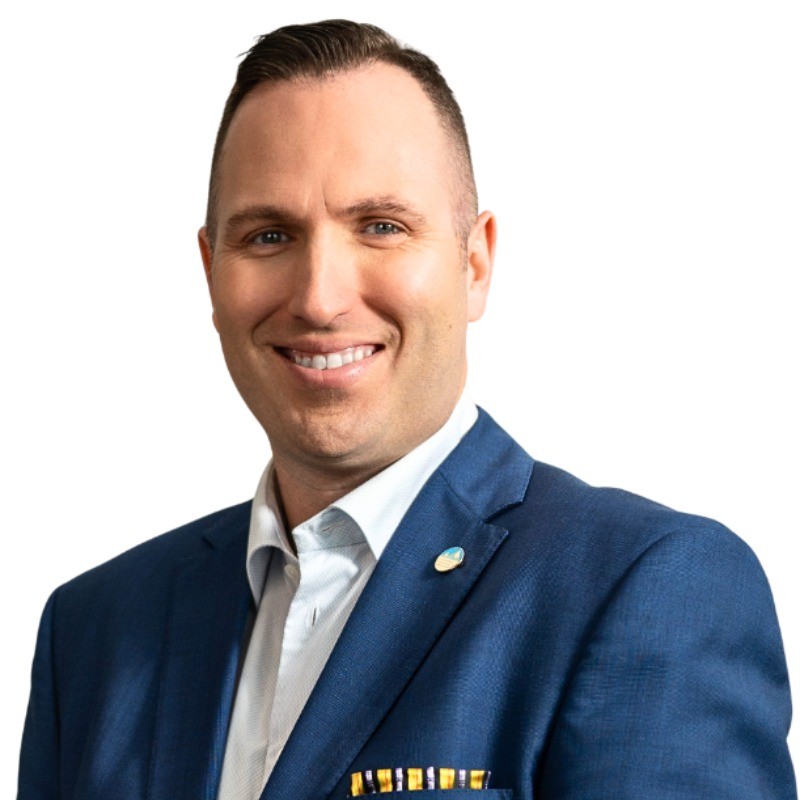
5x Founder | Acquirer | Entrepreneur
Some founders build businesses. Others rebuild broken ones, scale them fast, and then walk away with the kind of lessons you only earn the hard way.
Josh Davis is one of those people.
He is a five-time founder, acquirer, and turnaround operator who has spent his career stepping into complexity, finding what is broken, and building companies that actually work. Under his leadership, a logistics business grew into one of the fastest-growing companies through acquisitions, high-performance teams, and award-winning software, before being sold just three years after startup to one of the largest transportation companies in North America, backed by private equity. Over the years, he has led more than ten acquisitions and turnarounds across industries, and today, through JL Davis Enterprises, he helps founders scale with the right people, the right systems, and the right culture.
But what makes Josh interesting is not just the growth story. It is the tension underneath it. The grind of building without losing yourself. The challenge of creating something valuable without sacrificing your family, your faith, or your future. He speaks with the perspective of someone who has seen how easy it is to chase scale and miss the point entirely, and how much harder it is to build a business that creates both enterprise value and real life value. He has also been recognized nationally, including Business in Vancouver’s Forty under 40 and Canada’s Top 40 under 40.


